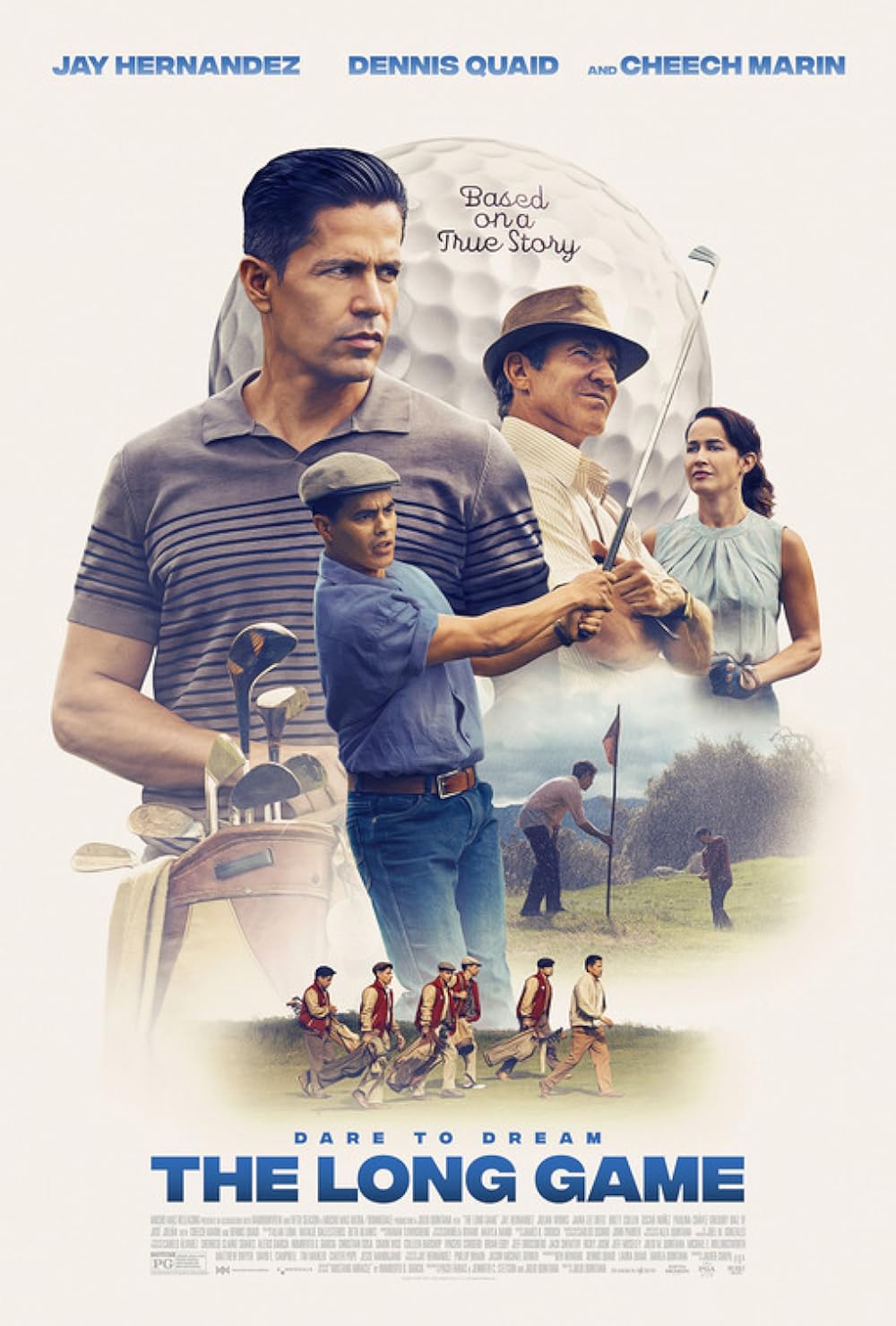
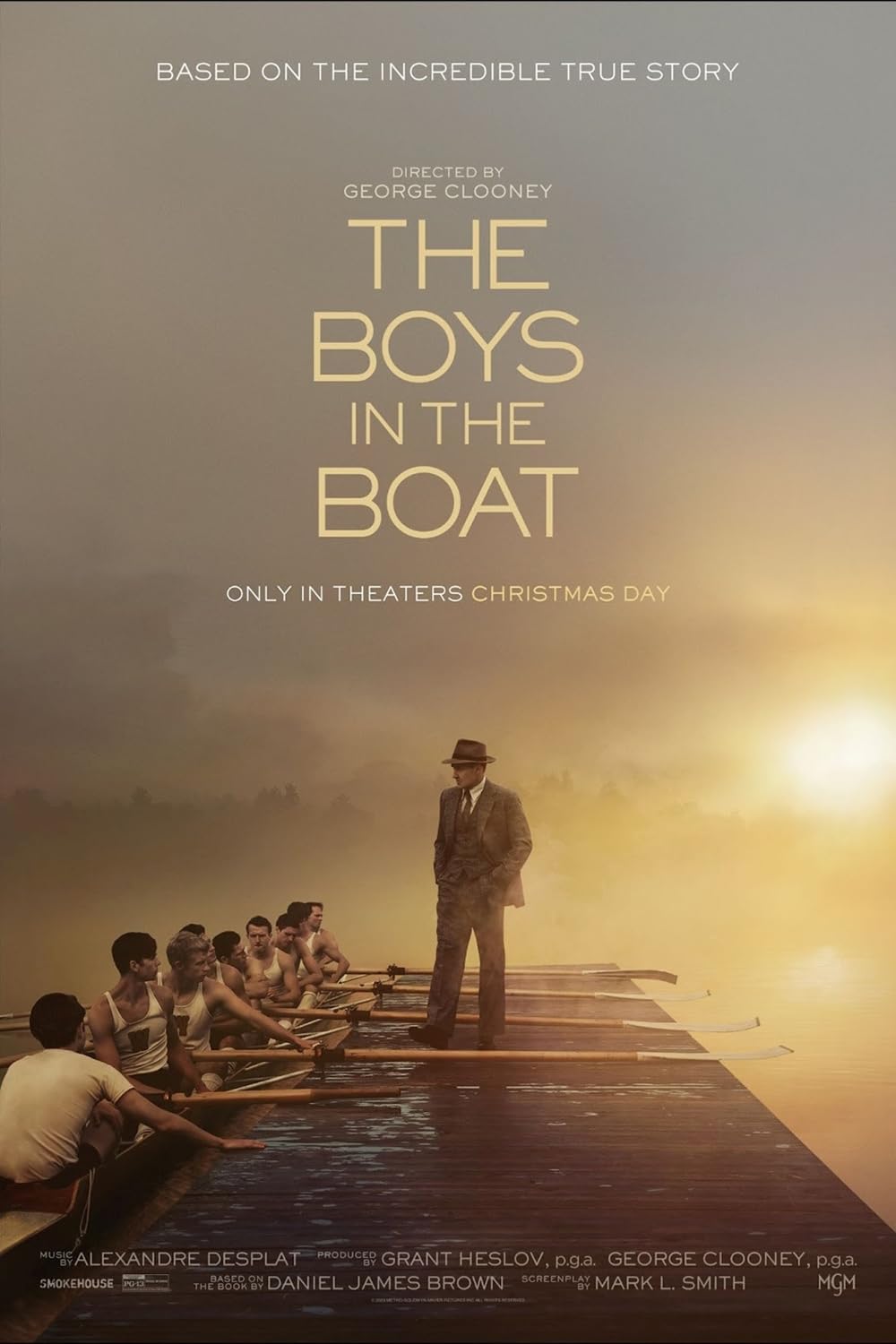
I flew this week. On my flight, I watched The Boys in the Boat and The Long Game.
Each movie is a triumphalist underdog sports movie. Each movie is dedicated to a sport that I know little about. I think I’m marginally more fond of or impressed by crew (specifically, eight-person rowing teams) than golf. I like the drama of team sports, and appreciate the skill required to work that smoothly together, even if I have little interest in crew in general. I admire the skill and tenacity of golfers, certainly, but if I had to pick between a movie about golf and a movie about crew, well…
I’d pick the boat.
I’ve heard that you’re supposed to be more prone to enjoying movies that you watch on an airplane. Perhaps that’s because they pull you out of the noisy, cramped tin can soaring through the air at uncomfortable speeds and deposit you (for a limited time) in some other world of dramatic and emotional experience. Regardless of whether what I’ve heard is true, it can’t rescue a movie from simply being worse than its competition.
And “worse than the competition” is a galling and ironic position for a triumphant underdog sports movie to be in, don’t you think?
The Boys in the Boat lost this race. I’m sure that there could have been a version of that movie which I thought was better than The Long Game, but honestly the two weren’t even close. The Boys in the Boat leaned too heavily into nostalgia. It wasted time on a framing narrative that added little, when it could have given us more time with the people who ultimately made up the crew.
Sports movies as a genre are thin on good characterization. They often put more effort into building up and dramatizing the sweat, rather than building on the people doing the sweating. In those threadbare movies it’s like someone forgets that sports are played by people, with human concerns and human drives.
The Boys in the Boat falls into that trap. It tries, here and there, to build up one or another character. But it never gives those characters the time and emotional weight they’d need to actually shine.
For example, I know that it’s the Great Depression and our protagonist Joe Rantz is struggling. I know that he has to chose between food and tuition, and can’t really afford either of them. I learn later that he raised himself after his parents abandoned him at the age of fourteen. Yet none of that’s ever given much emotional time or weight. A story about someone who starts rowing because it might help pay for tuition, and who burns himself up in strenuous exercise while barely being able to afford food should be intriguing… but it just falls kind of flat. The movie’s cozily nostalgic framing narrative doesn’t help: it’s a truly bizarre tone to open a movie about driven and hungry people striving to prove themselves against the moneyed and privileged.
Moreover, I know almost nothing about any other member of the crew, besides a few throwaway lines or bits of thin characterization. It’s never quite enough to actually drive the movie’s dramatic and emotional core. Instead, it feels like it hits a series of familiar notes because it has to—if it didn’t, it wouldn’t be a sports movie, and then what would it be doing with itself?
The Long Game, on the other hand… this movie knows what it’s doing. Honestly, it’s so much better that it doesn’t even feel right to put it in the same category as The Boys in the Boat. Yes, it’s a triumphant underdog story, and yes it’s about a sport. But where The Boys in the Boat tries to cobble together what seems like a mostly factual story without any emotional connective tissue, The Long Game understands that we need to know and care about our characters’ drives.
Our first protagonist, J.B. Peña, is a Mexican-American veteran haunted by his memories of World War 2. Golf is his escape, the way he can lose himself, tire himself out, when his memories try to eat him alive. Beyond his need for golf as an outlet, he has a fervent desire to see Mexican-Americans more accepted and respected in the US—for himself, and for the kids that he teaches.
Our second protagonist, Joe, is a Mexican-American high schooler who desperately wants to be accepted, recognized, and not belittled or made fun of—and who already knows that this isn’t available to him in the world he lives in. He’s good at golf, and takes some hidden pride in that. But he’s stuck outside of golf. Golf is the sport of the white elite who belittle and ostracize him, if not outright abuse him, and he’s only welcome in their world as a servant or entertainer.
We’re given other protagonists too, but these are the core duo that drive the story. And damn do they drive it well.
Like The Boys in the Boat, The Long Game includes obligatory sports montages. We’re treated to sport players sporting. There are dramatic shots of competitors striving against each other. But in The Long Game, instead of being the big focus of the movie these sequences are present just long enough to set the scene and deliver a tone before we’re given another emotional and dramatic story beat.
I’m going to reach into the world of sports documentaries here for another example. The Last Dance managed to convey all the drama and excitement of its material while only showing a few shots of any given game. It knew that the heart of the story was in the ways the people playing the game related to each other. Their drive to succeed, both together and on their own, took center stage. Their private demons and their struggles, the ways in which they infuriated each other and respected one another, those were the things that made that story so compelling.
The Last Dance didn’t ignore the game of basketball. It didn’t ignore those thrilling moments of victory or defeat. But it understood that its story existed outside any given game—and that any given game’s outcome was always most exciting and interesting in its larger context.
The Long Game felt like it understood that. The Boys in the Boat… didn’t.
 Fistful of Wits