
I’m traveling! Here’s a bee-laden flower from a few weeks ago in lieu of a longer post.
I’m traveling! Here’s a bee-laden flower from a few weeks ago in lieu of a longer post.
If you’re upset with the status quo of Massachusetts politics, voting yes on Question 3 might feel good. It offers what seems like a simple fix for a system that feels unresponsive and unhelpful. I agree with much of what Question 3’s proponents say is wrong with the MA state government and electoral system.
Despite that, I strongly urge you to vote against it. Their solution is even worse than what we already have.
The problem is rooted in a few things: our current voting system, the cost of running a political campaign (and the advantage of having lots of cash), and our campaign finance laws.
Running a political campaign is expensive. Voter outreach and the advertising necessary to get name recognition for your race is expensive. Wealthy people, or people who curry favor with wealthy donors and super PACs (or better yet, wealthy people who curry favor with wealthy donors and super PACs) are in a much better position to get the word out about their candidacy, and thereby get votes. But no matter how big a problem the money is, and how much it skews our current political environment—which is a lot, by the way—our voting system remains a large enough problem that Question 3 will fix nothing. Actually, Question 3 will only make things worse.
I’ll give you some examples.
Continue readingThis post is (obviously) a follow-up to 5e is wrong about Charisma. If you haven’t read that post, this post is going to confuse you. If you aren’t familiar with Dungeons & Dragons, or what a roleplaying game is, or what saving throws are, this might be a bit of a stretch.
I haven’t dug deeper into the abilities of various monsters here. I have gone through every spell in the 2014 Player Handbook (PHB) which targets a mental saving throw. That means any spell that requires an Intelligence (INT), Wisdom (WIS), or Charisma (CHA) save. I’ve laid out a table with the spell names (sorted by level, alphabetized), what the original / current saving throw is, and what saving throw I suggest. Where further expansion on my thinking seems necessary, I’ve added notes below the table.
I’ve also laid out my thinking about what the mental attributes represent in their respective saving throws. Strangely the 2014 PHB doesn’t lay out much guidance on this front. The relevant pages are p179 and p205 PHB, and both entries are quite short. The pages preceding p179 are useful for descriptions of attributes, but they run afoul of my gripes aired in my previous post. The 2014 Dungeon Master Guide (DMG) has better guidance in a table on p238, but it seems clear (from comparing that table to the required saving throws of many 5e spells) that many of 5e’s spells from the 2014 PHB only loosely follow the guidance on that page.
So… what are the underlying principles that I’m trying to follow?
Continue readingI used to think I hated country music. Johnny Cash made me reconsider. Now I admit that I do like some country, even if most of it isn’t to my tastes.
But what the devil got me into reading romance genre novels?
When I was younger I volunteered at a library (my hometown’s Fletcher Free, with the wonderful Lorrie and Bill). I handled everything that came through Circulation’s check-in during my shift, and I would shake my head every time I scanned in another Harlequin bodice-ripper—figuratively, not literally, because that would have been too much head shaking. They were extremely popular, getting comparable traction to the detective novels & legal dramas. Those old paperbacks were well-worn and much-loved, with technically-still-clothed beautiful men and women on their covers. Given how close the books were to falling apart back then, I wonder whether any of those books have survived the intervening decades.
Romance novels did not appeal to me. I was still in middle school, and I did not have the imaginative empathy necessary to wonder (much less understand) why people might like them. This, despite the fact that I’m pretty sure younger-Henry had already discovered internet porn.
I had lots of judgments. I never explicitly stated my judgments to the readers, but they were probably obvious to anyone paying much attention. Most readers returning romance novels wouldn’t have seen this, because they didn’t drop off their returns face-to-face. They preferred the anonymity of the off-hours book return. Given the alternative I offered, I get it.
These days, my relationship with romance novels is more like how I feel about country songs. I still don’t enjoy most of them, but I do read a few. Some I even really like. Obviously I didn’t dip my toe into the romance-waters just because other people like the genre—if that were enough, I would have devoured these books long ago. As I mentioned above, romance is popular. It sells.
So what changed?
Continue reading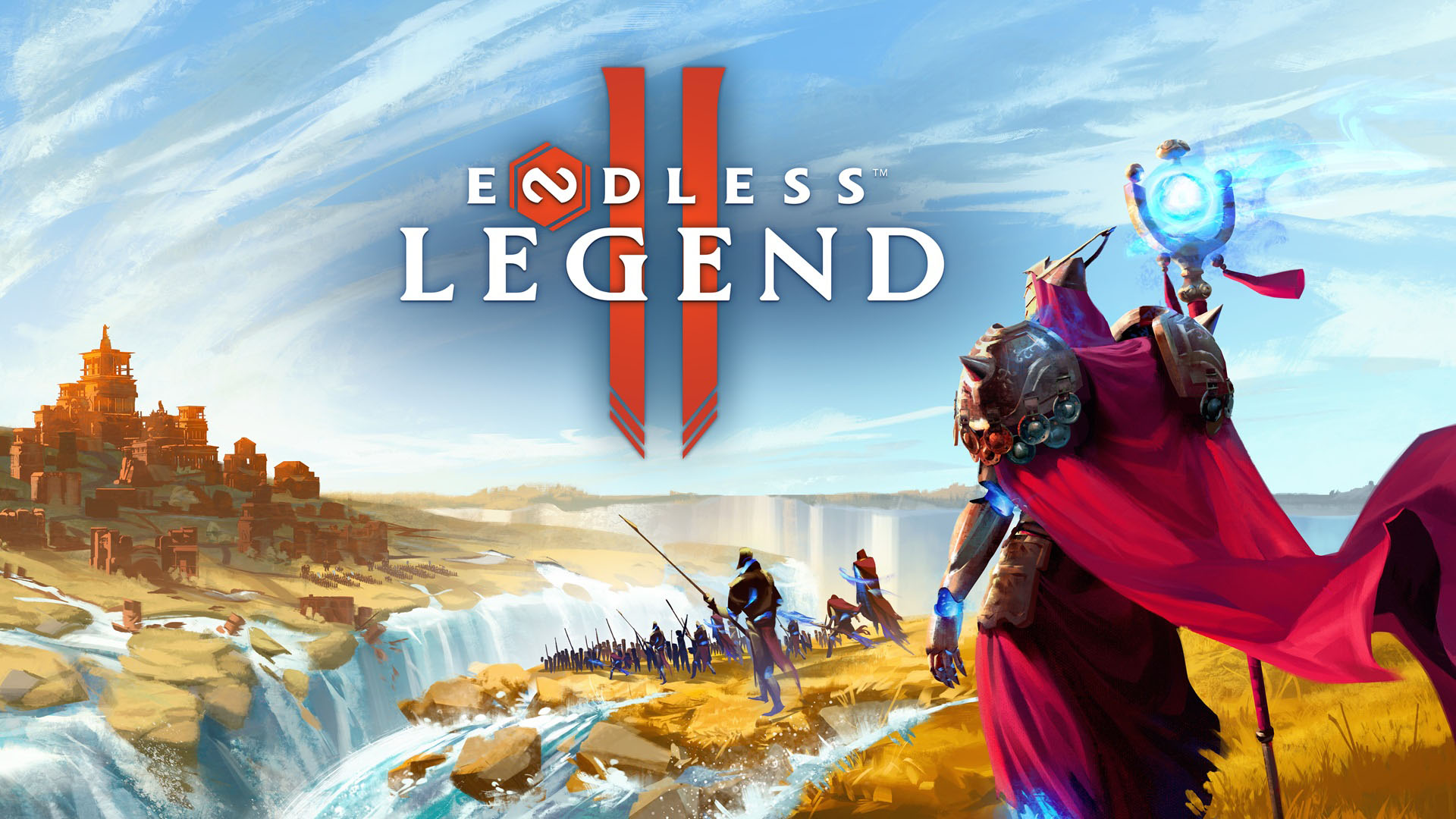
Endless Legend 2 is out.
I’m shocked to realize that I haven’t written anything about the Endless games here. I planned to connect my thoughts today to what I’d previously written about Amplitude’s games, only to discover that there was nothing to connect to. I haven’t ever mentioned Amplitude Studios, let alone their interconnected series of Endless games.
It’s time to rectify that. I’m a huge fan of Amplitude’s work.
I freely admit that Amplitude doesn’t always hit home runs. I admire, however, that they consistently take big swings. They also (to my eyes) create some of the prettiest games, offer incredibly informative and accessible and layered UI, and with their Endless games weave all that into a single sci-fantasy setting that neatly legitimizes many of a 4X game’s mechanical abstractions.
Dust is narratively superior to a classic 4X’s generic abstracted “gold.” I will fight you over this.
I haven’t yet played enough of Endless Legend 2 to give you a thorough review. I’ve struggled to find time for a new 4X while juggling childcare. That’s especially true when my laptop can’t run the game and my desktop is in the baby’s bedroom. I played some of the early access versions, but only in bits and pieces. My knowledge is thus both partial and out of date.
I have however played enough of EL2 and other turn-based 4X games to understand the promise EL2 offers. Amplitude Studios is trying another big experiment. Regardless of how it turns out, I think they’ve once again already improved the genre.
It all comes down to Tidefall.
Continue readingI have a problem. I grumble nearly every time I think about DungeonWorld. It’s gotten worse, and I’m at risk of full blown curmudgeon-itis.
I have to talk about D&D first. For better AND for worse, D&D remains most people’s touchstone for roleplaying games. DungeonWorld isn’t D&D, but obviously looks and sounds like it should be similar. Based on my recent conversations with newer explorers of the hobby, DungeonWorld is the not-D&D game that they are most likely to have tried. Those who aren’t exploring lots of different RPG systems will try out D&D, look at DungeonWorld… and then often go back to D&D. Whenever I hear that, I feel disappointed—not with them, but with how much better DW could have been.
Maybe my sample group is weird. That’s totally possible.
DungeonWorld (DW) is the Powered-by-the-Apocalypse (PbtA) game that I like the least. That has been true for a long while. This opinion pre-existed and is totally distinct from my thoughts about Adam Koebel (here’s some now-old news on that front). Maybe I’ll talk about that drama some other day, but probably not.
I’ve had fun playing DW. I’ve had fun running it. Heck, I ran it during its playtest and had a delight with my friends. Back then D&D’s 4th edition was still au courant, with its Daily, Encounter, and At-Will powers for every character class and its clearly MMO-inspired design. In retrospect I do like how D&D 4e worked as a tactical puzzle game, but DungeonWorld felt like a much-needed alternative. It was a game that felt D&D-ish and which didn’t assume everyone needed a tactical map to play their tabletop RPG.
I still really like the ways in which DungeonWorld encouraged the GM and players to all collaborate on the narrative and the setting. This wasn’t unique to DW: PbtA games regularly played around with more-collaborative systems. But DW had explicit mechanics by which players could contribute. That plus a great set of players led to The Underwatch, one of my favorite campaigns that I’ve run.
No, my problem with DungeonWorld is a personal gripe that I don’t expect others to share—and which I fervently want to convince you is correct:
Continue readingVampires and billionaires were a thing in the 2010s, objects of fascination and fantasy. This was exemplified by the Twilight and 50 Shades books and movies. Those stories were part of a return to a fascination that we’ve had before, and part of a larger pattern of fetishizing terrifying concentrations of (abusive) power. As has been true previously, the themes that reached the larger zeitgeist were fantasies about some powerful and implicitly dangerous hunk who would obsess over us, sweep us off our feet, and (romantically) ravish us while also offering us impossible financial security. We might also have the personal validation of being able to “fix” the bad boy / billionaire / vampire or make him feel true love for us (they’re kind of the same thing, and they’re evidence that, first, we were right that he wasn’t totally unredeemable, and second, that we were special somehow because he changed for us). The overtones of contagion (and the fear of disease) from earlier vampire crazes still lingered in the background, but they were downplayed in favor of emphasizing the weird power dynamics between a mortal and a mostly-immortal lover.
I don’t think it’s surprising…
Continue reading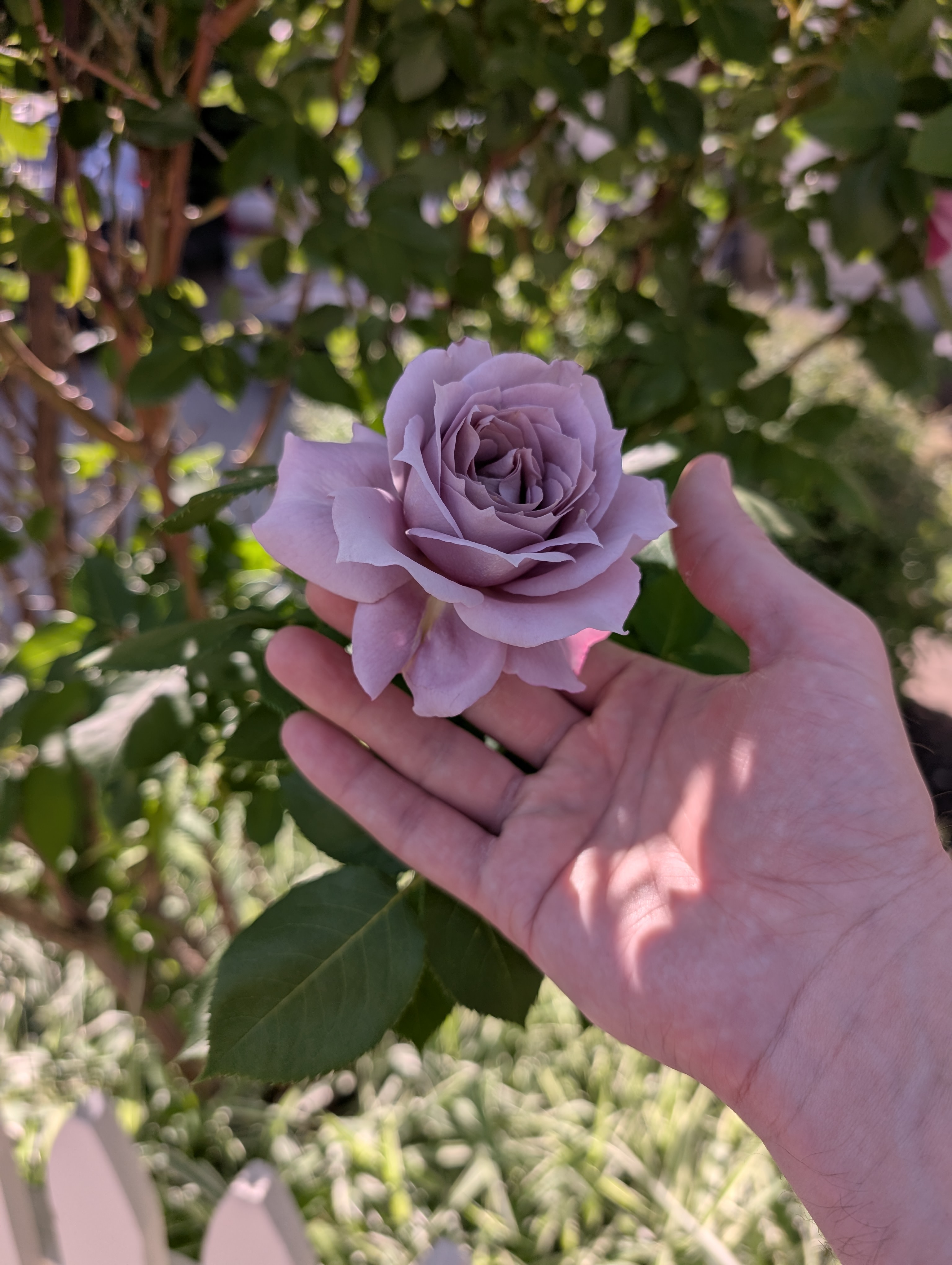
This post is brought to you by teething, and by the letter Z.
Teething is the process by which hard, calcified structures slowly erupt from your tender flesh over a prolonged period of time. Many who’ve gone through this process swear that it has some eventual helpful end, and that the resulting shards of calcified material protruding from one’s gums are useful. Most of these people have, mercifully, forgotten the experience of the process.
The letter Z is a symbol commonly used in triplicate to communicate what I have recently missed. I mean sleep, not snoring. I’m probably snoring enough. Why am I missing sleep? Well. In case it wasn’t obvious…
Continue readingI do listen to a wider variety of music, but when it comes time for me to focus…
Continue reading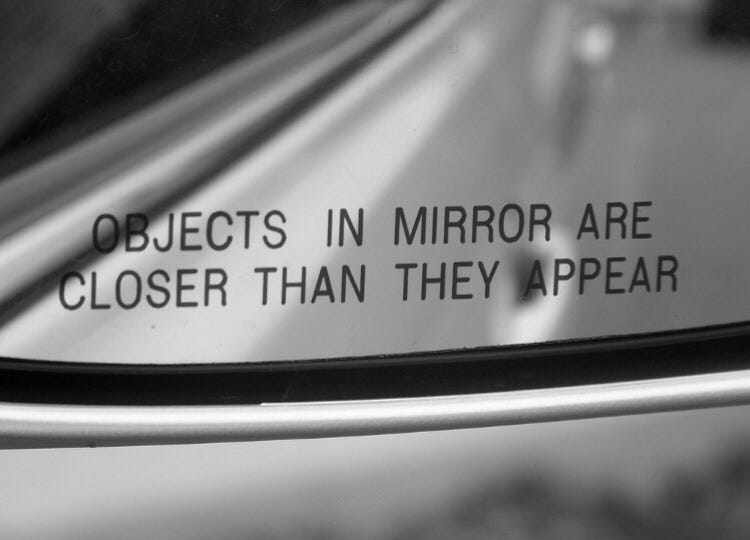
I was catching up with a friend recently and learned that she had, in the years since we’d last spoken, nearly died from an ectopic pregnancy. Hearing that felt sad and spooky.
Ectopic pregnancies, for those of you who don’t know, occur when the fertilized egg implants outside of the main chamber of the uterus. Generally this means the fertilized egg is stuck in the fallopian tube, but they can be in more exciting places. This fertilized egg cannot be brought to term—the fetus can’t develop and survive anywhere but the uterus, because the rest of the abdomen (including the fallopian tube) lacks the blood flow and nutrients and the ability to stretch and encompass a growing fetus. If the fetus grows enough while not in the uterus, it will kill the parent.
My friend didn’t recognize her condition before she was already in trouble. She spent a good while close to death in the hospital as a result. All I could think as she shared this was, “the bad old days are closer than they appear.”
Continue reading
