*Let’s not talk about the movie
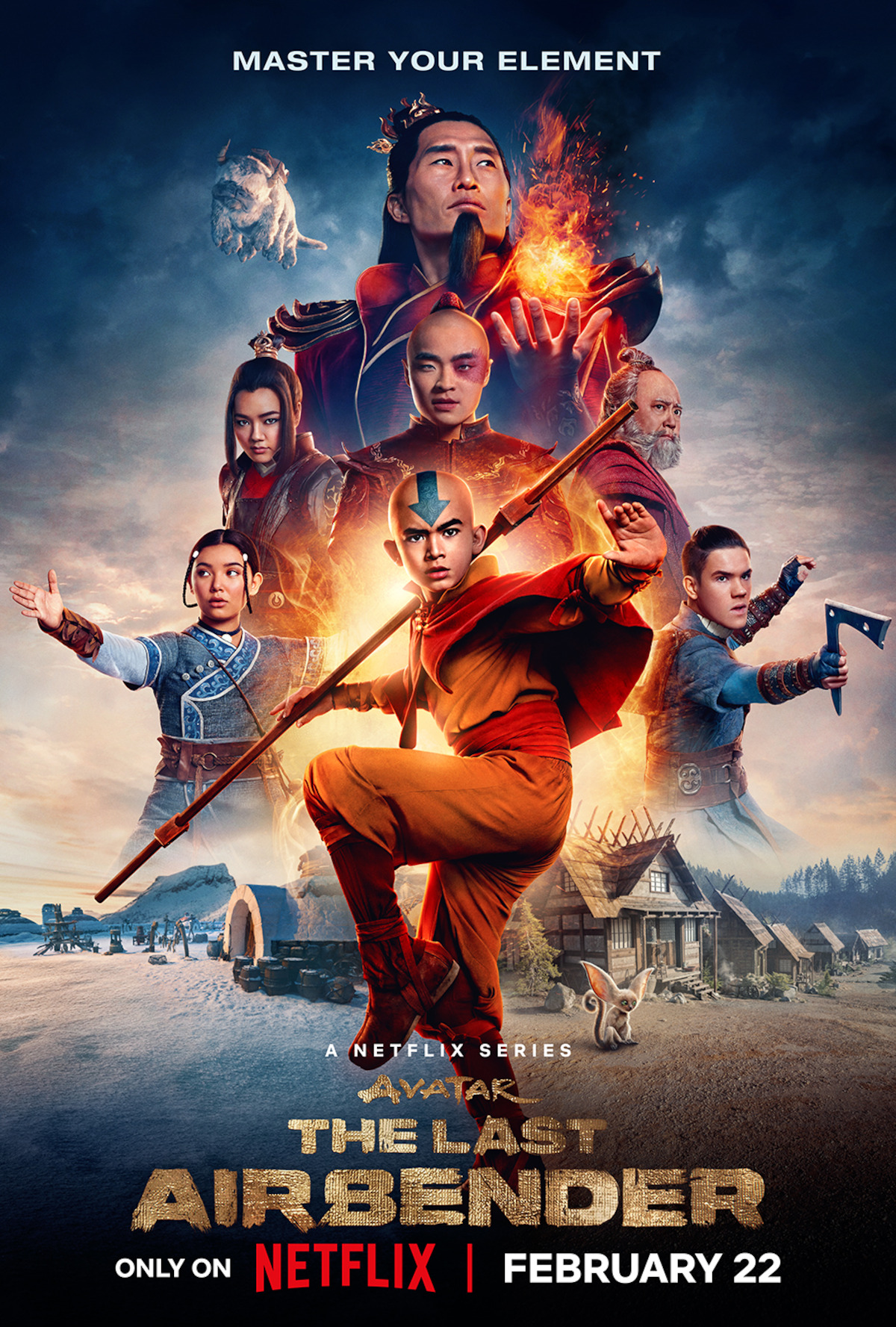
This adaptation can’t exist independently of the animated version for me. My familiarity with and love for the animated show clouds my judgment. I don’t think I can just call this show bad, because I’ve really appreciated parts of it, but I also can’t say it’s good.
I don’t like this live action Avatar: The Last Airbender as much as the animated version, for a number of reasons. The two shows feel like two different interpretations of the same starting material, and while I can see why the live action version made at least some of the choices it did, I think some of those choices will rob the show of its dramatic potential down the line. If you’re still on the fence about watching this version of Avatar, let me temper your expectations and tell you what I’ve enjoyed… as well as what I haven’t.
Oh yeah. I’m going to spoil this show. If you haven’t seen the animated version already, do yourself a favor and watch it.
My first read is that this show filed off the characters’ edges and reduced their complexity.
I think that interpretation, however, is influenced by everything I know from three seasons of the animated show. When I reflect on the animated show’s first season, and on the episodes which have been condensed into what I’ve seen of the live action show so far, much of the animated show feels like it is fumbling towards finding itself. I do this live action version a disservice by remembering the A:TLA which I loved after finishing all three seasons, instead of comparing the two versions beat for beat.
For one thing, the animated show plays with gags that feel wrong when I imagine them in a live action setting. Some of the animated show’s wonderful visuals simply don’t work in live action; they’re literally cartoonish, and not something live humans could or should reproduce. I imagine it was very difficult choosing what to adapt and what to abandon.
That said, the live action show feels downright po faced by comparison to the animated version. Instead of leaning into humor, and leavening extremely serious topics with moments of delight or comedy, I feel the live action show goes too far in the opposite direction towards playing into the story’s pathos. There are funny moments, but not only do the characters take themselves too seriously, the whole show feels like it takes itself too seriously.
Part of the original show’s magic was its ability to include extremely serious topics like war, mass murder, and the tragic loss of loved ones, while still being able to laugh. It had the range to hit highs and lows, and that range meant that there was more contrast between the ends of its emotional scale. That contrast made its dark spots darker and its bright points brighter, and lent the show more emotional intensity when it needed it most.
This new show has some laughter, yes, but it isn’t willing to embrace the humility of being a comedy. Not reliably, at least. It’s more consistently serious mien makes the live action show feel stiffer—there’s less dramatic tonal difference between its moments of doom and gloom and its brief moments of delight.
Another issue comes down to timing, and the show’s storytelling method. The live action version is shorter than the animated show’s first season, clocking in at 430 minutes compared to the animated version’s 477. Even if we shave 2 minutes from every animated episode for intro & outro, it still has a 437 minute runtime (and that ignores the fact that the live action show has a solid 6 minutes of credits in most episodes, which would cut the live action show to around 382 minutes total). All this means that the live show is trying to fit all the same material into less time.
Worse, the live show faces what I’ll call the novel problem (see my piece on novels vs novellas in Murderbot), whereby a story is expected to deliver a rewarding arc in a given episode while still feeling like it’s a seamless part of the larger season. This is standard in current limited-run shows with 8 episode seasons. The animated show had a season arc, and benefited from being watched in order, but its stories were significantly more episodic and bite-sized. That episodic focus meant that any given episode could take more and smaller steps in character development, or show off a small moment of growth and change, without the need to fit as seamlessly into a larger whole. Those episodic stories parallel the Murderbot novellas, while the larger continuous arc falls into the problem of writing a novel. All this means that, even after removing the padding of unnecessary scenes and trimming down on gags, the live action show has to reproduce the emotional journeys of the cartoon in less time and without the ability to give each disconnected transformative experience a chance to shine on its own. I think that’s a big part of the live action show’s struggle, and why it feels weird when compared to the animated version.
Now, let’s dig deep into characterization critiques. It is difficult for me to address these in proper parallel; I don’t think I can compare characterization in the live show to precisely the same narrative moment in the animated show. The shows tell their stories differently, after all, even if the narratives rhyme. Instead, I’ll talk about what I see, what I appreciate, and what difficulties I see the live show creating for itself long-term.
Aang first.
Aang in the animated show is playful and puckish. The foundations for problematizing his playful nature are laid early, but through the first half of the first animated season his playfulness mostly feels grounded in his still being a kid. It becomes increasingly clear, however, that his playfulness also shows up because he’s avoidant and doesn’t want to face the painful emotions and experiences that confront him so frequently. Animated Aang jokes around and tries to lighten the mood constantly, because he wants to help others avoid their distress too—and because he doesn’t want to see other people facing the struggles that he can’t handle for himself.
This is an astute characterization that I love, because it leads to so much character growth over the course of the show. We see Aang learn to face those issues that dishearten him so badly. He retains his playfulness, but it’s tempered by a new ability to deal with hard truths (sometimes).
Live action Aang feels… flat. More one-note. There’s a little playfulness, but the live action show barely has time for japes and jokes, and its sense of comedic timing feels off. This means that live action Aang faces more straightforwardly into his pathos and tragic background, without the puckish playfulness, without as much of the avoidance that so plagues his animated counterpart. He feels too serious, and neither playful enough nor childish enough.
Long term, I think that will make much of Aang’s later storyline really difficult to sell. So much of Aang’s struggle is tied up in his simultaneous attachment to the world and avoidance of suffering. For those unfamiliar with Buddhist teachings, that combination is a recipe for constant struggle and distress. Aang’s attachment to the world, his avoidance of suffering, and his use of playfulness to avoid the suffering made his character arc feel extremely rewarding.
This show still tugged on my heart—I teared up, seeing Aang discover Brother Gyatso’s body!—but Aang doesn’t feel as complex or well-rounded as a character. Aang midway through the first animated season still felt kind of simplistic, but the show clearly established his later struggles. In many ways Aang felt like an embodiment of the Air Nation’s philosophies of non-violence and avoidance of confrontation. That’s less true in the live action show. I think Aang’s narrative arc—if it isn’t changed dramatically—may suffer for it.
On to Sokka.
Animated Sokka is sarcastic and rough. He’s funny, in many ways, and commendable in others… but he’s also often unlikeable. Those unlikeable parts of him—the ways in which he’s frustrating or mean to characters we like, often by dominating and lording it over others—make his status as the straight man for others’ jokes far more amusing. We like seeing him be the victim of a prank or a bit of misfortune because those things take him down a peg! It’s okay to laugh at sarcastic and annoying Sokka’s suffering, because it feels like he’s getting his comeuppance.
Live action Sokka, like live action Aang, feels less complicated. He’s just… normal. The ways in which he’s lording it over others or being annoying in the live action show, so far, feel almost appropriate. The show goes out of its way to empathize with him at times, recognizing his struggles trying to protect those he loves despite being in way over his head. In many ways, he’s too sympathetic. Or maybe he’s the right amount of sympathetic (I would not want Sokka’s life) but he’s not aggravating enough. Without the sarcasm, without the power struggles or pettiness, he’s not a good foil and he’s unsatisfying as comic relief.
Worse, by filing off Sokka’s rough edges and making him less annoying, I foresee difficulty making his growth arc anywhere near as satisfying as it was in the original show. Animated Sokka started off as enough of an ass that his gradual transformation into a supportive team player was stirring and satisfying. Live action Sokka has never been as insufferable, and by empathizing with his struggles without showing him as an ass, the live action show robs itself of the dramatic movement from being a possibly-admirable but often-unlikeable character to being both admirable and likeable.
It’s a loss for the show.
Live action Katara feels more difficult to address. In many ways, she feels more blank than Sokka or Aang. I think that’s somewhat true to the animated show as well. She’s growing, and we’re seeing a little more characterization around her memories of her mother’s death, but… I don’t feel like I have enough to go on yet. So far she feels rather one-note.
Of the core characters, Zuko felt the most right to me. He’s obsessed. He knows what he wants, he knows how to get it, and he’s damned if he’ll let anything else distract him from that—even if his uncle would really like him to listen to some carefully worded warnings. Zuko is great. I’d love for him to yell about his honor a little more, but I think he’s well positioned to recreate his character arc from the animated show, and I’m really happy about it.
Unfortunately, Uncle Iroh is a little off.
Sometimes Uncle Iroh feels feels good or right, usually when he’s sad. I’ve talked about him repeatedly with Ley, who likes live action Uncle Iroh less than I do, and I’ve tried to understand what I don’t like about him. I think it comes down to how he plays with his status, and how he takes up space.
This is where the humility of comedy comes in. Remember how I said the show wasn’t willing to embrace the humility of being a comedy? That’s live action Uncle Iroh’s problem in a nutshell.
Animated Uncle Iroh feels small, humble, and willing to forsake his own grandeur. He is one of the highest status people in the show (literally the brother of the Fire Lord), but the audience would almost never know it from his bearing or his interactions. He is gracious, he’s forgiving, he’s warm, and kind, and he’s humble. He’s willing to accept what others would see as insults. He indulges in small pleasures, finding delight in life even as he’s extremely aware of the suffering around him and of his own mortality. What’s more, he does this in ways that run counter to the apparent values of the Fire Nation’s dominant ideology and aesthetics. He feels like a direct reference to the Buddhist story of the tiger and the strawberry, appreciating joy and beauty no matter the circumstances.
In many ways, animated Uncle Iroh feels like a nod to the tradition of wise men, drunken poets, and philosophers. He possesses great wisdom and has little need of the worldly trappings of success or power. He cares little what others think of him, often appearing foolish. It’s never beneath him to offer himself as a source of amusement for others, and he constantly serves up comedy that bounces off Zuko in his role as the irate straight man.
Live action Uncle Iroh, on the other hand, never feels as small, or humble, or willing to forsake his own high status. He has a more regal bearing, and a bigger delivery. He’s not just your friendly uncle who loves his tea, he’s also definitely a man who holds imperial rank and embodies it in a way that the animated character rarely did. As Ley put it, he’s “too Broadway,” taking up lots of space in a way that animated Iroh did not.
Animated Iroh is humble enough to sacrifice others’ perceptions of him and his seriousness—whether intentionally or unintentionally. Thus, he’s able to deliver comedy in a way that the more regal live action Iroh cannot. And, as with the animated show’s variation in emotional tone I mentioned above, animated Iroh’s humility gives us a beautiful contrast to those few moments when he does command and receive respect. Because live action Iroh never matches the same humility, his seriousness never feels as impactful or revealing.
Live action Iroh’s consistently higher status also means that he doesn’t control situations from apparent low status in the same way that animated Iroh did. Animated Iroh used misdirection, played himself down, didn’t give away his own preferences or desires (except those which caused others to underestimate him), and otherwise portrayed himself as a harmless non-threat. He cultivated others’ perceptions of him as a buffoon. All this meant that whenever we saw animated Iroh achieve something or get what he wanted, we could appreciate how wily he was and admire his abilities to work a system obsessed with violence, confrontation, and domination. It had all the satisfaction of a good Trickster story. Live action Iroh has shown himself willing to misdirect and maneuver, but he’s never felt wily or tricky… which also means we haven’t seen Zuko learning to value either of those things from him, or to otherwise grow to respect Iroh more.
I’m sad about that. Animated Zuko’s transformation from dismissing his uncle as a frustrating idiot to respecting him, loving him, and understanding some of his uncle’s teachings was crucial to Zuko’s personal growth. Without that change, I’m not sure how well Zuko’s storyline in future seasons will deliver the emotional and ideological shift that is so critical to his character arc.
Given all this, I worry a little about a second season. Would Toph be less prickly and more cooperative? Would they smooth her out too? I’d hope not, but given what they’ve done so far I don’t know.
So where does that leave me on this show in general?
I understand the constraints that have shaped it. I don’t envy those involved in making it. This live action version must have been difficult to create. Sadly, I think it’s doomed to dissatisfy those who fell in love with the animated version years ago, and who now look back on the original with rose tinted lenses.
That’s because this show doesn’t give itself the same dynamic range—emotional, tonal, character-wise, etc. Without that range, the show’s highs and lows don’t feel as impactful.
This isn’t helped by the smoothing of the characters. They too feel like they’ve been flattened, whether that’s because they aren’t flawed enough, aren’t big enough, aren’t playful enough, aren’t humble enough, or aren’t wily enough. Without those extremes, the characters don’t feel like they have as much room to grow and change in satisfying ways. Without the bigger differences in tone, and without the mostly playful and child-friendly quality of most of the show, the show’s more serious moments don’t stand out.
Oh, and, I miss seeing consistent and well-animated versions of actual martial arts as the basis for bending disciplines. The animated show had clear delineations between arts, for example with ba gua for air bending and tai chi for water bending. We see the benders in this live action show do some proper martial arts occasionally, but it seems more fleeting and less distinct. I guess it’s hard to find actors of the right age and appearance who can also perform the relevant martial arts.
Having said all that, I think someone who hadn’t watched the original might enjoy this. I don’t know if they’d enjoy the cartoon more.
I’ll keep watching this show to the end, and I’ll let you know if my opinion changes once I get there.
 Fistful of Wits
Pingback: Expectations and Avatar: The Last Airbender | Fistful of Wits