My Apologies to Iron Man: Why Power Armor Doesn’t Make Sense

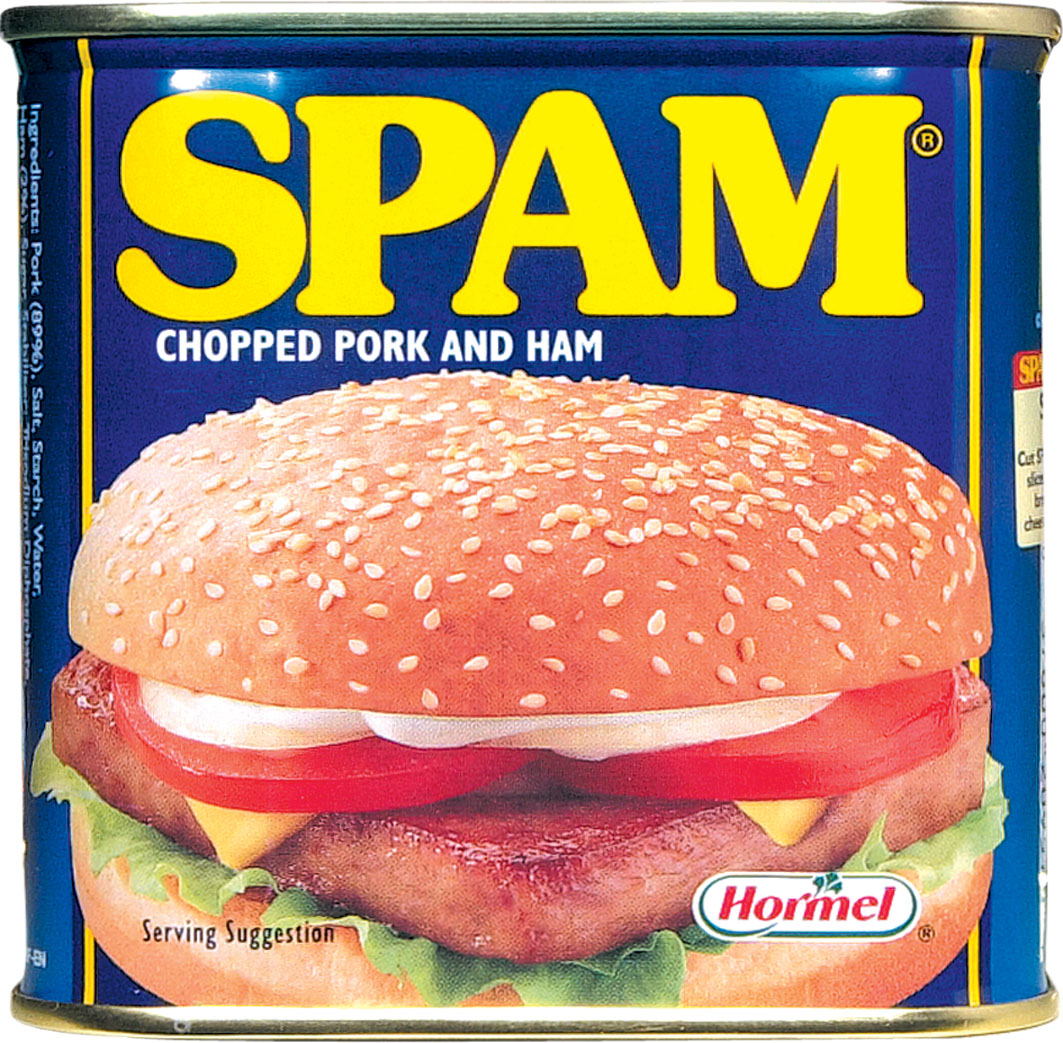
Spam-Can

The contents of Iron Man’s suit after the third explosion.

My argument is somewhat more elaborate than this, but the gist of it is thus:

  1. Place monkey in tin can.
  2. Shake can vigorously.
  3. Remove pulped monkey from can with preferred utensil.

***

What’s the deal with power armor?

I love science fiction, and I often enjoy seeing science fiction become science fact (even if it is scary at times).  Plenty of things that we’ve dreamed up in our stories eventually come to pass in real life, whether it is because they inspired others to make them or because they were the product of careful forethought on the part of an author.  But what about power armor?  It’s been a staple of military-oriented science fiction for decades.  For the sake of simplicity, I’ll assume that power armor is an armored exoskeleton which offers its onboard human operator enhanced strength, mobility, and protection (sounds pretty cool, right?).  Yet while I’m usually pretty excited about science fiction becoming reality, I’m not so sure about seeing power armor become real.  Let me explain.

The Army’s TALOS project is now pushing for an armored exoskeleton, something which is essentially power armor.

R&D has a reputation for being a little bonkers sometimes; people fixate on really cool ideas and try to make them work, regardless of whether or not the ideas are practical or have any clear application.  That’s perfectly alright, in my opinion, as we never know where such things might take us.  Military R&D often turns that fixation up to eleven, which becomes a bit more problematic.  Sometimes the things we develop are impractical or nonsensical to implement (like 747s mounting lasers to provide missile interception), sometimes the tactical or strategic role intended for a weapon disappears before it is completed (as with Japan’s WWII submarine aircraft carriers), and sometimes the intended capabilities don’t make very much sense in the first place.  In the case of power armor, it all has to do with these things called “bodies.”

Continue reading

Who Did it Better: Elysium vs Johnny Mnemonic

Zeeblee

I just saw Elysium, and in discussing it with a coworker we determined that it was indeed a cyberpunk film.  Our fellow coworkers weren’t familiar with the genre, and in introducing them to it we remembered the 1995 film Johnny Mnemonic.  We then realized that Elysium shares many aspects of the classic William Gibson story.  From this point on there will be spoilers, and unlike previous posts I won’t be whiting them out, so if you don’t want either film’s secrets to be revealed, you should stop reading.

Continue reading

The Rebirth of Sci-Fi and Fantasy Movies and Television

I’m not really a movie guy; I’m much more comfortable sitting at home with a book in one hand and a glass of bourbon in the other while orchestral versions of Final Fantasy (and other video/computer game) music floats in the air. In part, this is because of my social inclinations:

  • I’m highly introverted and need alone time; why would I pay to be surrounded by the noises and smells of other people?
  • I like that I can read a book at my own pace instead of waiting around; the average movie pacing is too slow for me.
  • If I watch a movie in theaters, I can’t re-watch it without paying again.
  • Books are within the domain of my imagination.

But largely, this is actually more generational than anything. When I was growing up, geek movies and tv shows were terrible. Sure, you had Star Wars, but what else was there? You could either go for the inanely slow and confusing (2001: A Space Odyssey), the campy and cheesy (Galaxy Quest, which I love), or the underbudgeted (original series BSG). This is most clearly seen in superhero movies. They were either overly melodramatic and operatic (every Superman movie ever) or ridiculously silly (Jack Nicholson as The Joker; Arnold Schwarznegger as Mr. Freeze; Jim Carrey as The Riddler). Now, I don’t mean to impugn Batman or Batman Forever. Those movies were good in their own right, with Jack Nicholson portraying a much more over-the-top Joker, and Jim Carrey being on of my — guiltily — favorite movie comedians. But there was a certain sense in which science-fiction and super hero movies and fantasy movies were all made very tongue-in-cheek, with a sense of ‘we don’t really take this seriously; isn’t it so silly?’

Continue reading

Deathstalker

If you ask me what my favorite fantasy series is, I probably won’t have to hesitate too long before churning out a list of 5, debating with myself as to the respective merits and flaws of each series, and ultimately saying ‘if I have to pick…no, I can’t’.

But if you ask me what my favorite sci-fi series is, especially if you ask for an epic series, there won’t be much doubt. Sure, I might hem and haw over I, Robot, and whether it qualifies as a series, and I might linger briefly on the formative nature of the Foundation series, but while I’ll stop here or there on the way, I know exactly where I will end up: Deathstalker by Simon R. Green.

Continue reading