Time Cut (Netflix 2024)

Time travel and slasher movies seem like a rare combination, but there might be something in the air. Last week I watched Totally Killer and really enjoyed it. I think the universe heard my enthused raving, because Time Cut just came out.

I have, in the course of a few short days, seen the number of time travel slasher movies I’m aware of double. Maybe this is the new Moore’s Law and next week I’ll learn about two more? Anyway, I liked Totally Killer a lot, so I had to give Time Cut a try.

Continue reading

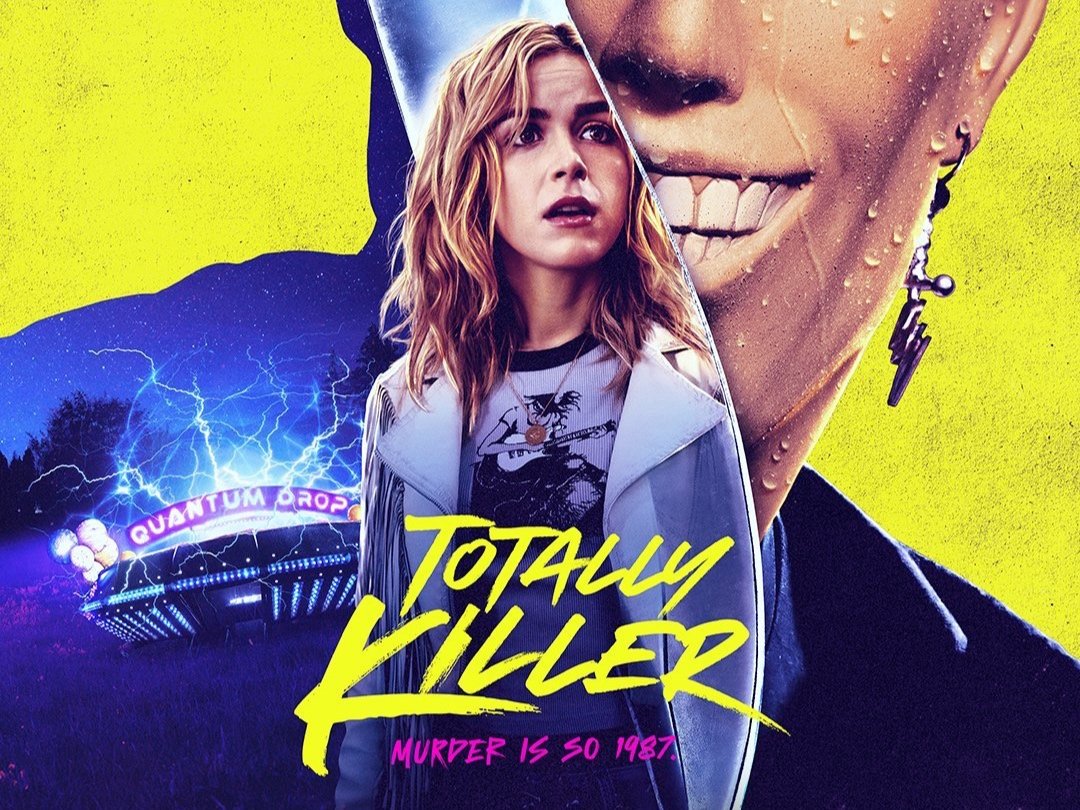
Totally Killer (2023)

Totally Killer has been sitting on my to-watch list since it came out last year.

I’m glad I finally got around to watching it. I had a damn good time. I’m very aware, however, that I was watching this movie through the lens of my love for time travel movies. I have a weakness for them. I feel less comfortable rating this movie as part of the slasher genre—I don’t have the context, it’s not a genre I know as well.

Yes, in case you missed it, this is a time travel movie that was caught in a horrific lab accident and fused with a slasher flick: teenage Jamie Hughes from 2023 is thrown back to 1987 and tries to save her mother and her mother’s friends from a serial killer, without creating a paradox that will erase herself from existence. Your mileage may vary, but I…

Continue reading

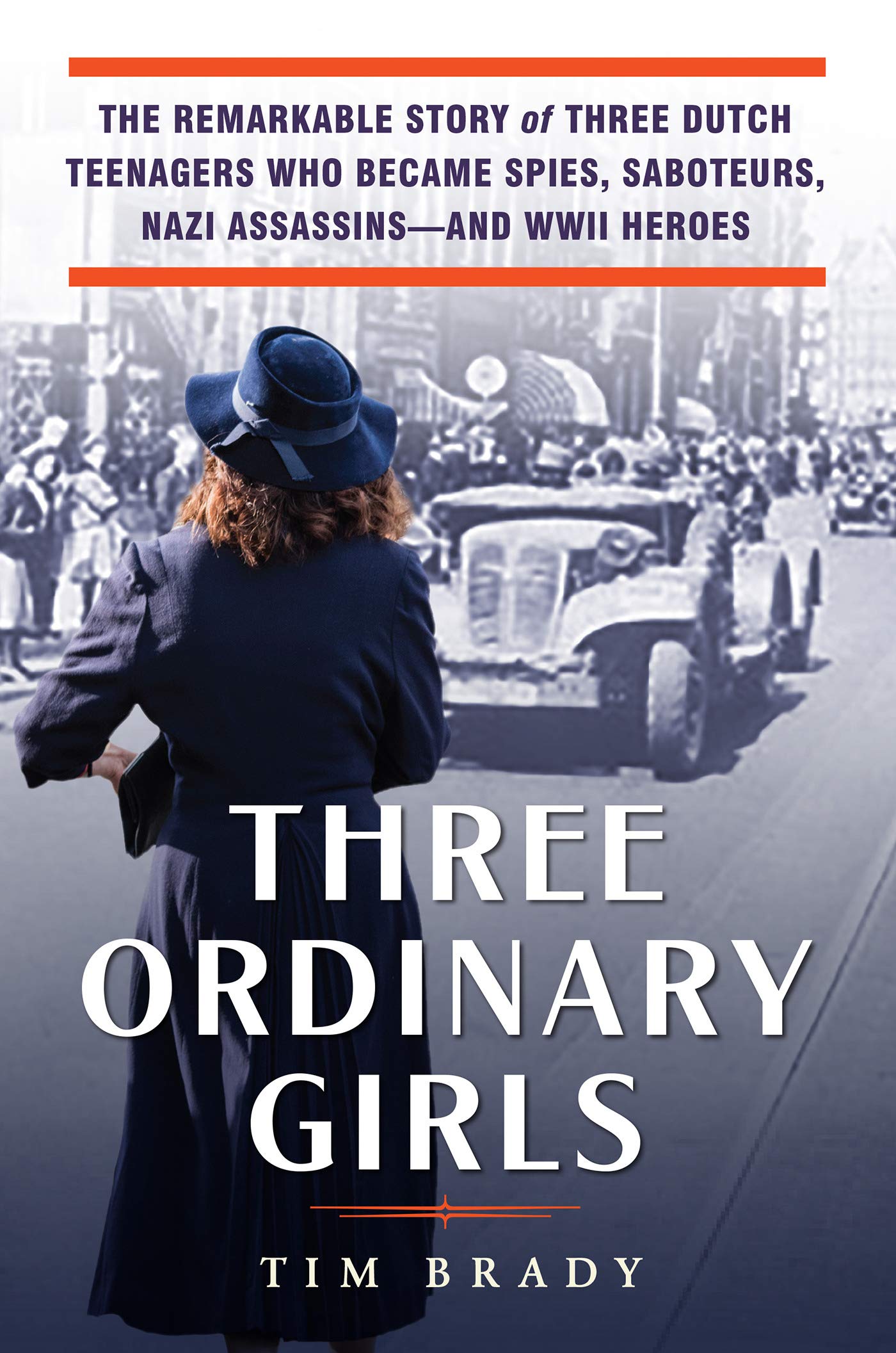
Three Ordinary Girls, by Tim Brady

Reading Three Ordinary Girls was an odd experience for me. I both enjoyed and actively disliked this book. Complaints first.

When a nonfiction book cites Wikipedia, I cringe. It conjures memories of my teachers telling me that Wikipedia wasn’t an acceptable source for my papers (despite being better on average than most encyclopedias, which my teachers did accept as source material). Maybe I’m stuck in the past’s paper-writing habits, but surely Tim Brady can hunt down whatever sources the Wiki editor used, and reference those instead? I think what bothered me most was that nearly all of the referenced sources in this book boil down to just a few pieces, referenced over and over again. I couldn’t help but wonder whether I should have read those books instead. I would have liked more depth and breadth of source material.

Now, that may be empty quibbling: those few referenced pieces are the extant primary and secondary sources, in most cases sourced directly from the people involved. They include interview material from the “ordinary girls” in question. But… I would expect someone writing a nonfiction book to at least cite original sources for the material cribbed from Wikipedia. Maybe I’d feel differently if the book read less like someone had simply punched up a previously existing secondary source and slathered it with in-the-moment details cribbed from a primary. Or maybe this is just Tim Brady’s style (I haven’t read any of his other books). Either way, I don’t like it. Maybe you won’t mind.

All that said…

Three Ordinary Girls is gripping. The lives of these young Dutch women during the Nazi occupation of the Netherlands, and the actions they take as members of the resistance, are exciting and frightening. Their story is painful and dramatic and evocative. It’s bloody. It’s scary. It’s a potent reminder of the banality of human cruelty, and of the messy and complicated ways in which people act when their world is tossed upside down. It’s another example of how occupation, revolution, collaboration, and resistance are overlapping and confusing and violent, with few places of certainty or security. And it’s a testament to the bravery and convictions of the three young women whose stories this book tells.

To its credit, Three Ordinary Girls doesn’t try to reassure the reader with a sanitized, polished, or clear cut glamorous war story. That may be what I admire most about it. There are many admirable stories about how people stood up and did the right thing to oppose the Nazis. But those often ignore the painful truths of how that resistance was hard, and confusing, and traumatizing, and sometimes resulted in bloody mistakes, internal conflict, and power struggles. I appreciate the way in which this book captures all of that.

For those reasons, I’d probably recommend this even if it were less well written and researched. Well, maybe not less well researched… I do prefer my historical nonfiction to remain nonfiction. But yeah, it’s good as long as you’re ready, willing, and able to stomach the awfulness.

But… there’s a lot of awfulness. Be ready to be distressed. The Nazi occupation of the Netherlands was violent, cruel, and bad in just about every way you can imagine the Nazis being. The only redeeming quality to it was that they (the Nazis) didn’t engage in quite as much wholesale murder as they did in Eastern Europe. Scant comfort.

If you don’t already know enough about teenagers in the Dutch resistance during World War Two, and want to know more, check this out. If you aren’t up for reading about brutality and murder in uncertain times, you should probably look for something else.

More Miska: 1/9/2016

Same deal as before.  Very first draft material, following more or less from the previous posts.  Enjoy!

Continue reading

Flash Fiction: J.S. Bach: Goldberg Variations – Variation 14

This is goofy.  I’m writing a new piece of flash fiction from Chuck Wendig’s usual challenge (I’ve skipped a few, my apologies), and, well… I’m not sure what to do.  The challenge involves using a random song as both your title and as inspiration for the piece itself.  I’ve done that before; so far, so good.

I shuffled until I got a named track (my first result was “Track 9” from an untitled trance album), and now (as you can see) I’m writing a story called J.S. Bach: Goldberg Variations – Variation 14.

In case you don’t know what that sounds like, here’s a video (the piece is roughly two minutes, though the video continues afterwards).  I’ve tried embedding it, but the time-specific feature doesn’t seem to be working.

My version is played by Glenn Gould, at roughly twice that speed, clocking in at 59 seconds. Please excuse me while I stare into space and figure out what the hell this means story-wise.

Right.  Got it.  This might be a little odd, but I think it works.  Enjoy!

Continue reading

Miska Redux

I’ve been working on my Miska story for class, and as such have more material for you.  Some of it is rewritten old stuff, some of it is new.  I think I’ve done a better job of firming up her voice, and showing off her life.  I hope you enjoy it!

Continue reading

Writing Exercise: Experimental Miska Piece

In the course of writing an exercise piece for class, I ended up writing what might work as a short scene for my Miska story.  It’s a bit odd, given that I changed narration style, but the core conflict feels right.  I hope you enjoy it!

Continue reading

Miska, snippet 3

Two previous scenes with Miska are up so far, here and here.  Let me know if you like this!

Also, I’m going to be on hiatus next week; I’ll be working for an awesome theater camp in upstate New York (or as one of my friends calls it, “Narnia”), and I’ll be way too busy to post anything and probably won’t have access to the internet anyway!

Enjoy some more Miska after the break.

Continue reading

More Miska

dolomites-20110817-dsc_0028

Last week I gave you a story about Miska, who wants to leave home for the sea.  Here’s a little bit more for you, maybe not directly after the previous piece but definitely following it.

Enjoy!

Continue reading

Miska, The Girl Who’d Be A Sailor

lorraine

Miska is a character who’s shown up in several of my drafts of various stories in the Elven Progenitors universe for a while now.  She started off as a secondary character in the backstory of another secondary character, but quickly took on a life of her own in my imagination.  I always wanted to find out how she’d come to be where she was, and I tried, again and again, to write it.  But every time I tried, I lost interest within a few pages.  I was just dead *bored* with what I was writing, which I took to be a bad sign.  I tried, and tried, and eventually I gave up and put the story on the backburner, but yesterday I had an epiphany and started writing down notes like mad.  My first scene based on those notes follows.  It turns out, I wasn’t going back far enough; I needed to see how it was that Miska, the Pirate Queen, went to sea in the first place…

Continue reading