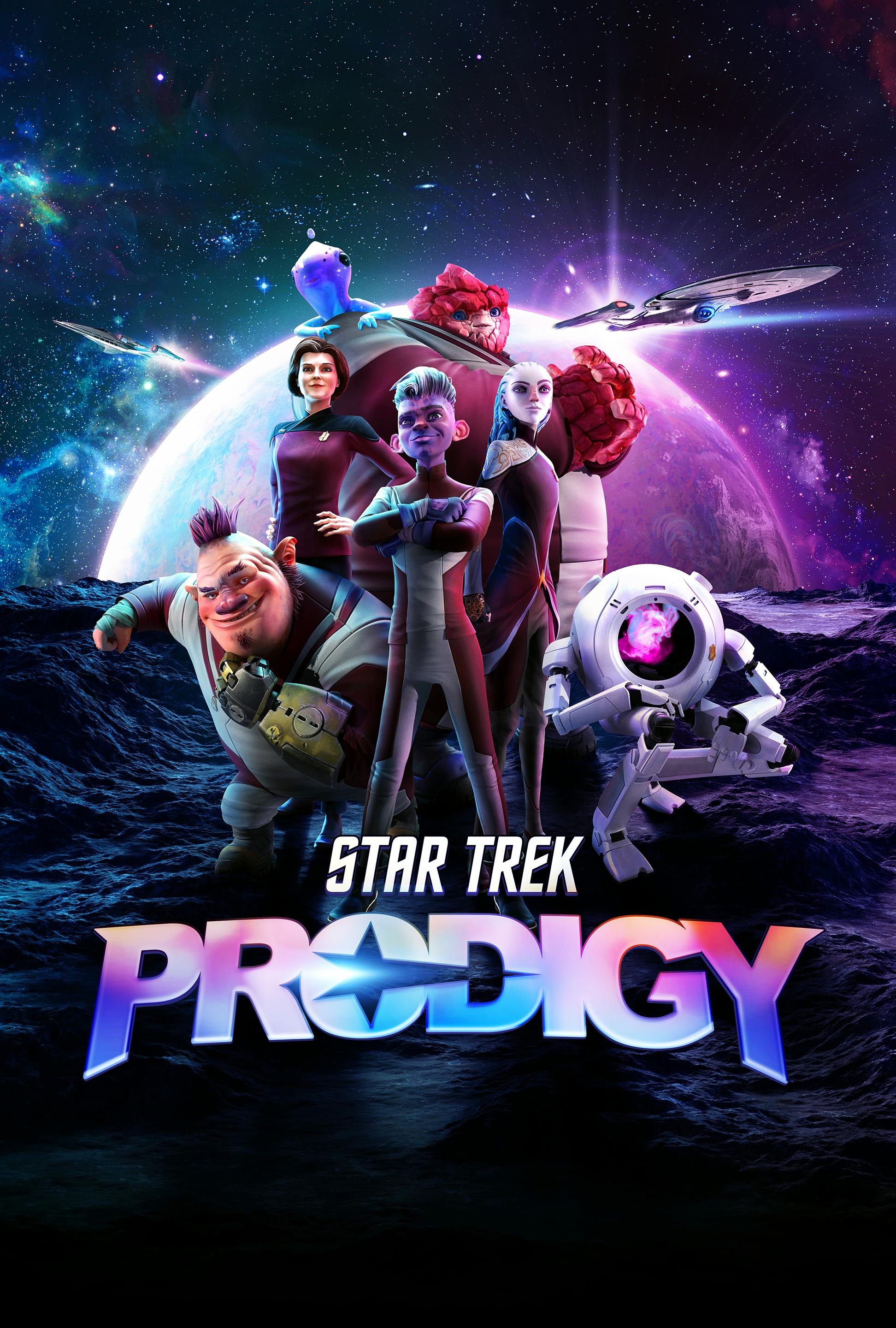
Star Trek: Prodigy, season one

This is for season two, but you get the idea.

As someone who grew up on Star Trek: The Next Generation, Star Trek: Prodigy didn’t quite feel like a Star Trek show until episode six. That might be a good thing. As much as I love TNG’s broad focus on an ensemble cast with highly episodic story telling, Prodigy’s early adventure-focused plots with clear continuity from one episode to another gives us a narrative throughline that TNG sometimes lacks.

That narrative throughline and dramatic adventure feels a little like Star Trek: Discovery. Discovery felt a little off to me in its first couple seasons, due to its fixation on a single overarching narrative and its exploration of Michael Burnham’s character to the detriment of the broader ensemble cast. It wore the trappings of Star Trek, but felt more like a Star Trek movie turned into a miniseries instead of a Trek TV show. Unlike Discovery, Prodigy bridges the gap from overarching-narrative to interspersed episodic and big-narrative episodes and makes a smooth landing in that Star Trek sweet spot with episodes six and seven. It starts without the Star Trek trappings, but ultimately feels more Trek to me than the first season of Discovery ever did.

Admittedly, I haven’t yet watched much further (I think I’m on episode twelve of season one). I’m not sure that matters. Even with continued exploration of the slightly-more-main characters, the show would have to veer sharply into main-character-ism to lose what it has already established. I think the tonal shift happened at the right time too. The dramatic narrative of the show’s opening episodes feels right for a space adventure, and the transformation into a Star Trek show happens as the crew finally gels and discovers that—despite their disparate backgrounds and disagreements—they share a moral core that is increasingly influenced by the ideals of Starfleet and the Federation.

That transformation feels deeply satisfying. The crew’s growing recognition of their shared moral core feels deeply satisfying too. There’s something funny about that to me; when I started watching Prodigy I wasn’t sure I’d be able to love the show. The first couple episodes felt so strongly like a kids’ show—without the idealistic themes I love and identify with Star Trek—that I feared I’d be stuck enjoying it on only one level as decent children’s fiction. The show’s growth as it moved beyond the opening episodes proved those fears wrong.

If you appreciate good children’s literature (yes, I’m using that to describe a TV show), or if you love Star Trek, then you should do yourself a favor and watch this show. My friends who recommended it to me were totally right. Prodigy takes a couple episodes to really get into gear, but it’s a delight.

Butterfly in the Sky (2022)

I have started (but not yet finished) Butterfly in the Sky, the documentary about the creation of Reading Rainbow. I stopped when I did because I knew that if I kept watching I’d watch all the way through, and I had work to do. The documentary hooked me and delighted me—much as the show did when I was little.

I grew up on Reading Rainbow (and Star Trek: The Next Generation, which created some confusion for young me). Young me didn’t understand why Geordi La Forge didn’t need his visor when he was telling me about books…

Continue reading

Star Trek: The Lower Decks

I have discovered that The Lower Decks is a fine entry point for new viewers to Trek. I wonder whether that was done by accident, or whether there was some co-aligned intent that made it so. Regardless, my partner really enjoyed it. We’re both looking forward to the next season coming out in a little over a month.

Did it help that I’m overly familiar with Trek? Probably.

I grew up on The Next Generation. I’m pretty sure some half-remembered version of “Remember Me” (Dr. Crusher is caught in a collapsing warp bubble, people disappearing around her while she’s the only one to notice) fused with The Nothing from The NeverEnding Story and a fragment from Bucky O’Hare to fuel a lingering childhood fear. The climactic moments of “Conspiracy” (brain parasites infest Star Fleet) were also etched in my memory.

But my Trek-neophyte partner liked it even without my input. They were laughing before I answered any of their questions.

The Lower Decks excels at being accessible to viewers who aren’t veteran Trekkies for several reasons. Reveling in its Trek-ness, the show wears the setting’s tropes on its sleeve. This earnest obviousness is a huge advantage. The show is so clearly enamored with its setting, it shares an infectious delight even while it pokes fun—and it doesn’t feel like it’s satirizing Trek so much as celebrating it and laughing at the same time. All of that made it easier for my partner to pick up on the setting of Trek without other context, while still having fun with it: several times, they cackled while asking “that’s a thing?” (They were right, it was a thing.)

Similarly, the characters are both varied and endearing while remaining plausibly Trek. They play to their comedic bits and obsessions, but the writers preserve their “humanity.” And I actually think this show does a better job of exploring the characters of its cast than Discovery does, and in far less runtime.

I’ll elaborate: this show feels more Trek than Discovery does to me, because of its unabashed embrace of the ideals of Star Fleet. In that way it feels more like the TNG I grew up with, more hopeful and earnest and less focused on following some larger dramatic arc. The important deliberations of this show are ultimately smaller in scope, and we have more time to watch people being people at people-scale instead of losing the little personal details as they’re dwarfed by the Big and Important Drama of the season.

Right now, I prefer this.

Back on track, part of what makes The Lower Decks accessible—and such an ideal entry point—is its plethora of easy references to other Treks. Normally I’d call that a bad thing. In many cases, those references would impede a new viewer with obvious missed in-jokes that feel like hostile gatekeeping. But this show references other Treks in a way that prepares viewers for the genre as a whole, ties it into the larger setting continuity, and makes those other Treks more fun later. It’s extremely well done.

Now, most times, I wouldn’t say that being a good genre starting point is an accessibility feature for a series itself. But when this show excites someone who’s never watched Trek before, it also makes them more invested in itself. It’s a virtuous cycle. It’s an admirable achievement, too.

So if you like Trek and haven’t watched The Lower Decks yet, I recommend it. If you’re wanting something that comes in manageable bites and is good fun, I recommend it. And if you’re wanting to introduce someone to Trek but you’re not sure where to start, this show is a delight.

Have fun.

Star Trek, Discovery, Idealism

Star Trek has been a part of my life since I was tiny. I grew up on The Next Generation, watching it curled up on the couch with my older sibs. While I remember the death of Tasha Yar, I don’t remember Riker without a beard (I see the impossibility there, presumably my brain edits out most of the worse stuff).

I was, arguably, too young for the show. I know it wasn’t geared towards toddlers. Some of my earliest nightmares grew out of Star Trek episodes. Those did not stop me from watching.

Of course, the same can be said for watching my sibs play Doom. Maybe toddler-Henry’s judgement just wasn’t that good. Toddler-Henry almost certainly valued spending time with sibs more than not having nightmares. That’s still true.

All of which is to say, Star Trek has a special place in my heart. Moreover, at a formative age Star Trek fed me an underlying idealism that serves as the keystone for good Star Trek stories. If you’ve watched enough older Trek you know what I’m talking about. When it isn’t there, the Star Trek-ness of the story just falls apart.

That idealism isn’t always well-written. But I admire it all the same. With it, generations of Star Trek have tried to do something that much of the rest of its contemporary narrative milieu dismissed as naive, or uninteresting, or hopelessly unrealistic. Unlike those other stories, well-written Star Trek refuels me.

All of which brings me around to Star Trek: Discovery. I’m working my way through it, bit by bit, but as much as I’m having fun seeing science fiction in the Star Trek universe it still doesn’t feel quite like Trek. This won’t surprise anyone who’s familiar with both Discovery and older Trek. Discovery’s first (and second, so far) season are dramatic and often exciting, and they have more character growth and development than I remember from TOS or TNG, but… they don’t hold the Trek idealism that I love. There are glimpses of it, moments when that idealism comes through, but it’s mostly hidden behind their larger threatening story arcs.

The most Star Trek thing I’ve seen in them so far have been Captain Pike and Number One, part of why I’m so excited for Star Trek: Strange New Worlds.

I have heard good things about Discovery’s third season, however. I’ve heard that it feels more full of the old idealism. I could really use that right now. So I’m still plugging away, doing my best to appreciate the science fiction show wearing Star Trek’s skin, and looking forward to it growing into something more hopeful and idealistic.