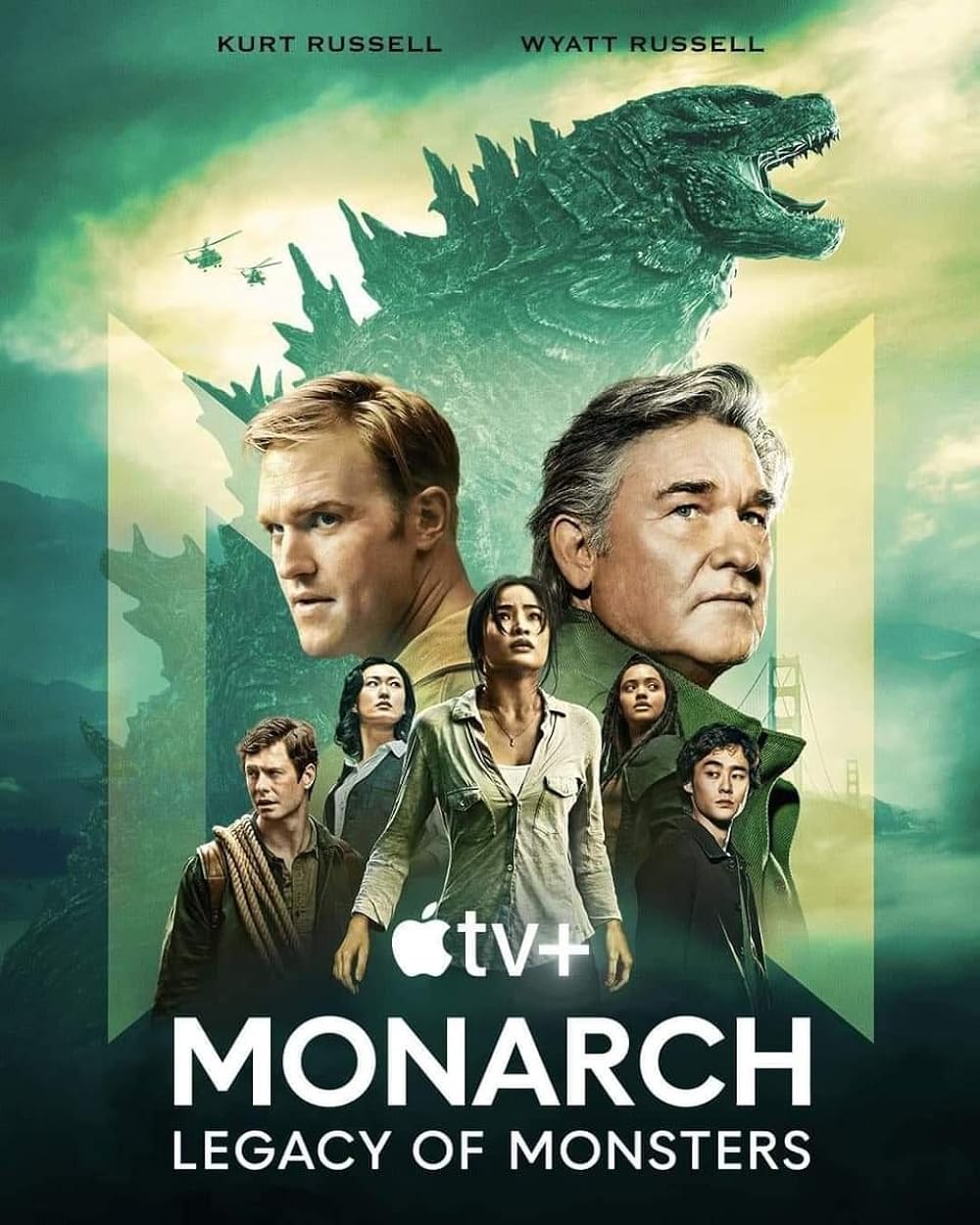
What’s my verdict after finishing season one of Monarch: Legacy of Monsters? No spoilers, I liked it. I even loved some of it. But I didn’t love all of it equally—for one, I didn’t care much about the big monsters most of the time.
My lack of interest in most of the monsters turned out just fine! That didn’t detract from the show, because Monarch is far more focused on people, and humanity, than on giant stompy monsters. And it was Monarch’s focus on people that I loved.
I think there are some interesting details in why I loved the parts I loved, and what didn’t work as well for me. Come check it out.
This show did awesome stuff, in my eyes, with human drama. It’s the human relationships that felt important, that mattered. The human obsessions. The human choices. That’s what pulled me through this story to the end. That’s where I felt most deeply invested. Those human relationships and hopes and dreams were where the pathos, the evocative feels-grabbing heart of the show, really shone.
I say all that despite having felt a little detached and less invested through the middle of the season. I felt like some of the human-scale emotions, and relationships, and choices felt unmoored. It was odd, given how well the first episode had worked for me, to feel that drop-off in my investment. It was odd to feel the way my investment fluctuated with who was on screen and which set of characters we were watching. I think I understand now why that happened, and I think I can explain without spoiling anything.
There are two main timelines for this show’s story: one in the 1950s, and one in 2015. The storyline that starts in the 1950s was by far my favorite. It hops around in time a little, giving us context and tension that builds and builds, and it feels really grounded in the human drama. I felt like the actors were given a lot to work with, and then were put in situations that served their characters’ drama well. Excellent stuff, good writing, fun creative choices, a story that felt poignant… I loved it.
The storyline in 2015 felt more rushed, less able to breathe. The characters felt less grounded in anything relatable. When there were interesting and dramatic human-feeling issues, they often felt more pressured, like they weren’t allowed enough time to develop, and to feel as real, because the show needed to keep moving. The larger external plot pulled characters along without giving the internal issues a chance to show through or be explored.
As someone who likes adventure fiction, and fast paced genre fiction in general, that paragraph above feels a little weird to write. But there’s something important in there. I don’t know whether I would have felt the same lack if I hadn’t been able to compare the 2015 storyline to the 1950s storyline. I don’t know whether slowing down the 2015 storyline would have made a difference, or whether I wanted a different set of responses from the characters in the 2015 storyline, or what.
A lot of my uncertainty exists because I like the overall course of the story. I like how the two storylines play off against each other, and how each of them wraps up. When I imagine what I’d do differently, I can see that it’s difficult to make those changes and still reach the 2015 storyline’s conclusion without sacrificing more of the narrative’s connective tissue. I don’t know whether the narrative arc would survive being pulled thin like that.
Maybe the problem is that the two different storylines are set and told within different genres! The 1950s storyline offers a beautiful and poignant tragedy, something that thrives because it gives us those more down-to-earth human moments and allows the characters’ personal and professional struggles to take so much focus and feel so important, even against the background of something the size of Godzilla. The 2015 storyline is far more of an investigative thriller with bigger action sequences—of course people aren’t given a chance to breathe, they’re too busy rushing to the next important thing.
If the two storylines weren’t different genres, I might notice the disconnect in emotional depth and character growth less. Tragedy and drama are built for that depth, but while some investigative action-thrillers give time for character growth and emotional depth, it’s more rare. That growth is especially difficult to include when you’re trying to tell two storylines at once and have only half the show’s time and focus.
Hilarious. My first post about Monarch: Legacy of Monsters spoke of hubris. Perhaps it is ironic that my disconnect with portions of the show grows from the show’s ambitious attempt to tell two storylines, in different genres, simultaneously.
I won’t call this show Icarus; there’s no melting wings of wax here, the show doesn’t fail in my eyes. I was slammed in the feels towards the end of the 2015 storyline. It was good. And… I think it could have landed even better, or felt that strong for significantly more of that storyline. They could have flown higher if they’d had another episode or two for the 2015 characters’ drama and pathos, rather than just the logos of 2015’s narrative arc.
Alternatively, I suppose they could have written slightly different drama for the 2015 storyline. But that would have risked not pairing as well with the 1950s storyline, which would have been a real shame. Anyway, I’ve only just finished the show and I’m not ready to completely rewrite it in my own head. Not yet.
Instead, I suggest that you watch it. Maybe you’ll have a different reaction than I did. I’d be curious to find out. Either way, I hope you enjoy it, I think there’s a lot here to like.
 Fistful of Wits