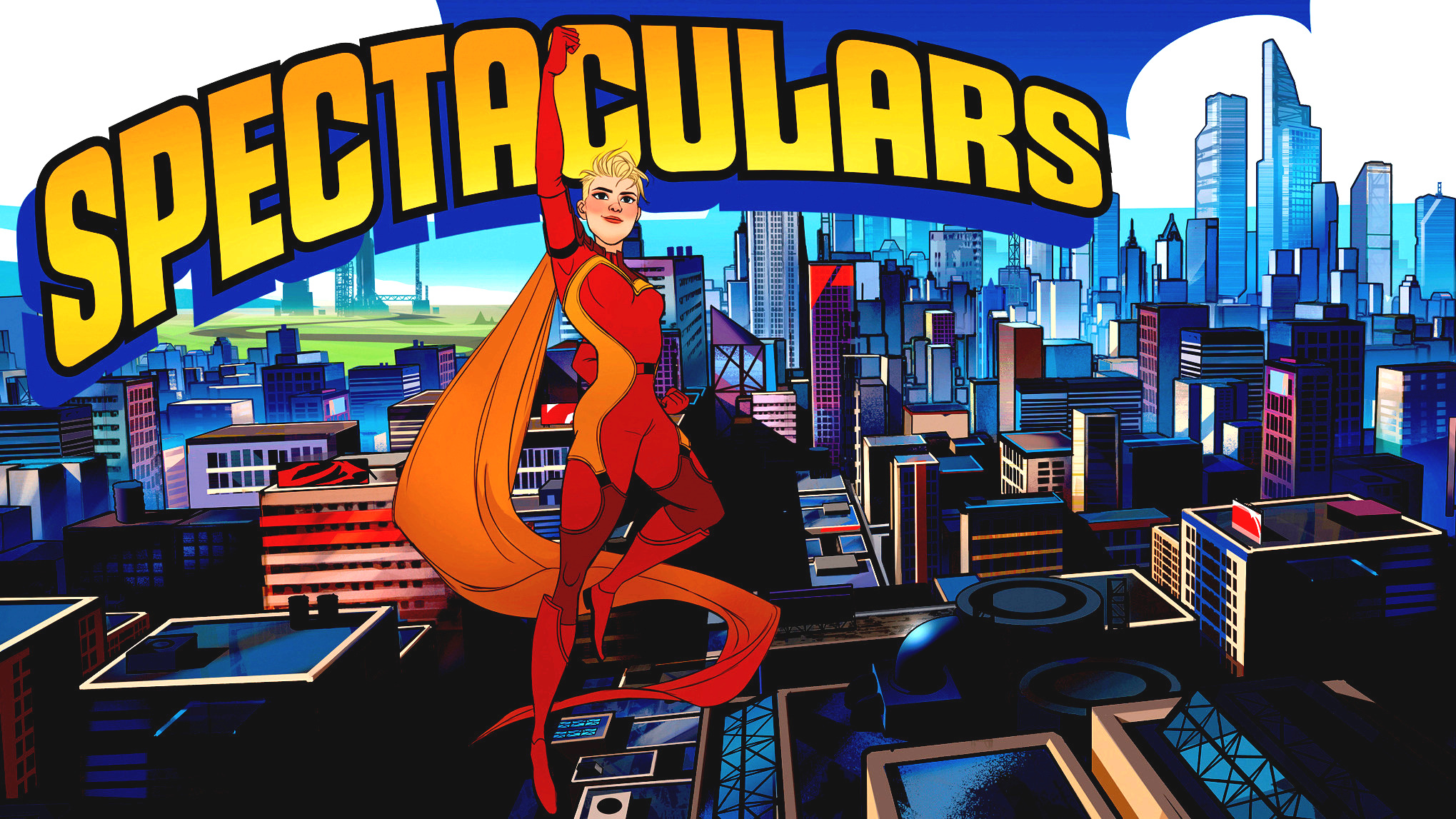
Spectaculars is a superhero RPG with a simple roll-under percentile die system. There are no cumbersome lists of modifiers, and the math required at the table should be accessible to precocious eight or nine year-olds. The game is clearly a love-letter to superhero comics, right down to players’ ability to invent backstory and create connections at the drop of a hat by spending “Continuity Tokens” to make up past issues with a relevant story detail. The game could also easily mimic the feel of superhero cartoons like Batman: The Animated Series, or any other episodic story where inventing background is expected or would be useful. Whatever your inspirations are, Spectaculars shines brightest when you’re playing episodic adventures in the context of a larger narrative arc. This is especially true if you’re more excited about your game’s larger story than you are about the gritty details of how a specific power works, or quantifying whose ”Mega Power Blast” is bigger.
I’ve been playing Spectaculars since 2020. Some friends of mine set up a shared online superhero game with multiple storytellers and groups of players to keep us busy during the Quaran-times. We all played in the same story world, but each group played in a slightly different context (e.g. one group was focused on a single city, while another investigated supernatural mysteries and horrors). I’m now enjoying my second campaign—we’ve been playing through the game’s premade arcs, which each come with lots of opportunities for players to shape the world’s locations, villains, and general narrative as they see fit.
The game awards players those Continuity Tokens I mentioned above (up to one per player per “issue”) as a reward for playing through interlude scenes, all of which are created as a collaboration between a player and the storyteller. These scenes must connect to the characters’ Turmoil or Aspiration, struggles and goals that the game offers some advice for creating. Those interludes—and the interlocking stories they create—are often exciting and hilarious.
My favorite moments in this system have all been tied to my friends and I coming up with fun backstory for our characters, or playing side scenes outside the regular issues of our game’s “comic.” Those side scenes might be interludes, or they might be us giving a little extra time to something an issue’s pre-written material doesn’t think we’ll focus on, but they’re a delight. We often speak about our actions or various scenes using the language of a comic book panel or page, and that shared context helps a lot.
This is not the best roleplaying game. The skill system, and the powers systems, and the combat and so much else all feel a little bland by comparison with other games I enjoy. But those bland features are functional, and they aren’t convoluted or painful unlike in many other RPGs. Meanwhile, the ease of reshaping the game’s narrative with the help of Continuity Tokens is excellent, and it’s so simple that I’m tempted to strip it out wholesale for use in other games.
Your mileage may vary. I doubt I’d enjoy Spectaculars as much if I didn’t like the particular flavor of weird creativity my playgroup has created together and embraced wholeheartedly. But if you’re a system-nerd like me, and if you have any appreciation for comics and the art of storytelling in comics, Spectaculars does some really interesting things that you might enjoy.
 Fistful of Wits