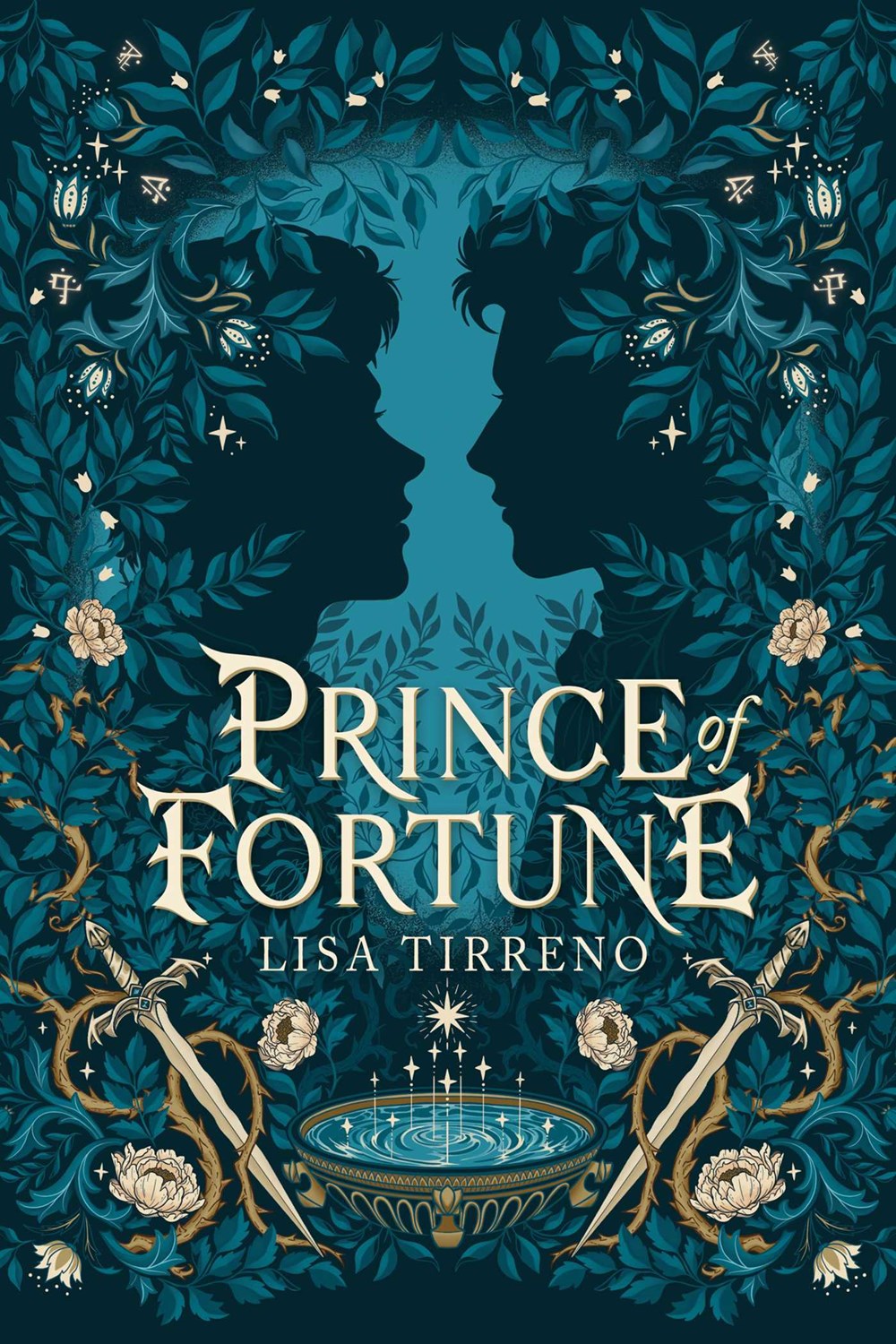
Lisa Tirreno’s Prince of Fortune is a romance in a fantasy setting with strong Regency era vibes, gender equality, and open queerness. It’s sweet, cute, heartwarming, and feel-good despite a hefty dose of political intrigue and a small helping of combat and war. Even better, it doesn’t try to make itself a series; you can pick this book up, enjoy the story’s gay romance and warm fuzzies, and know that everything has come to a close when you put the book down at the end. I found that soothing.
Would I want more?
Yes. And (kind of) no.
Yes, I’d like more stories like this from Lisa Tirreno. I hope she is writing another book. I also hope that book isn’t a direct sequel to this one, with these characters. I liked the end of this story for these characters. I could be sold on another story about Prince Edmund and Lord Aubrey, but my impulse is to leave them in the background of another story in the same setting. I’d rather the next story focus on other people in this world.
Speaking of “another story in the same setting,” I quite liked this setting. This world delivers on the social constraints and conventions that make Regency era novels feel simultaneously separate from our world and yet still engaging and comprehensible. What’s more, Tirreno uses a simple and straightforward approach to gender equality and queer inclusion—it’s just normal, don’t worry about it—and that solves any need to follow all of the actual Regency period’s social conventions. That’s all established early on as part of establishing the book’s circle of belief, and felt perfectly good to me.
That said, I’m not sure that Lisa Tirreno thought through all the ramifications of her worldbuilding. I don’t blame her; she found what she needed to make a fun story, and she ran with it. But when I think harder about it, I can find the cracks.
They’re especially evident in this setting’s fusion of Napoleonic warfare and magic. Given everything else established, there ought to be artillery—yet we never see any deployed despite nearly textbook cases for its use. Meanwhile, the very development of gunpowder in a world where some people are known to throw around great quantities of water (notoriously bad for black powder weapons) or fire (notoriously dangerous for explosives) felt like something I just had to accept as a given rather than something that fit well with everything else. I was willing to accept these things, but I wish I didn’t have to.
Similarly, the ramifications of there being Seers whose visions of the future were understood to be infallible felt like it was unexplored in the larger setting. To some extent this was settled by Tirreno’s implications that Seers’ visions were cherished but poorly understood, and that there was some dispute about how to best use those visions. But I almost wish there had been some implication of an ongoing philosophical debate about how to understand and use those visions. Barring some religious restriction, philosophers in that setting would have been gnawing on those questions for generations—heck, even if there were social constraints against debating how to understand and use Seers’ visions, there’d be sufficient curiosity and potential advantage to have someone thinking and writing about it. Now, I said “almost wish” above because all of that extra background material would need to be woven into the story well enough that it blended in without eating up time and space as exposition—the story didn’t need more time spent on distractions, it flowed well as it was without big clunky passages of philosophical arguments.
There were more rough spots, I’m sure. But the truth is, while the worldbuildling may have had gaps in it, I didn’t pay attention to those while reading. I only thought about them afterwards. While reading I was having too much fun with the characters and the social drama, which all worked well.
Would I recommend this? Yeah. If you’re looking for Regency vibes and gay romance, or if those things don’t bother you and you want something really heartwarming, this book will do it for you. You know best whether the nitpicking I mentioned above will bother you—if that won’t ruin your fun, or if you think you’ll get through the book just as I did, I think you should go for it.
 Fistful of Wits