Vampires, billionaires, & entrenched power, 9/10/26

Vampires and billionaires were a thing in the 2010s, objects of fascination and fantasy. This was exemplified by the Twilight and 50 Shades books and movies. Those stories were part of a return to a fascination that we’ve had before, and part of a larger pattern of fetishizing terrifying concentrations of (abusive) power. As has been true previously, the themes that reached the larger zeitgeist were fantasies about some powerful and implicitly dangerous hunk who would obsess over us, sweep us off our feet, and (romantically) ravish us while also offering us impossible financial security. We might also have the personal validation of being able to “fix” the bad boy / billionaire / vampire or make him feel true love for us (they’re kind of the same thing, and they’re evidence that, first, we were right that he wasn’t totally unredeemable, and second, that we were special somehow because he changed for us). The overtones of contagion (and the fear of disease) from earlier vampire crazes still lingered in the background, but they were downplayed in favor of emphasizing the weird power dynamics between a mortal and a mostly-immortal lover.

I don’t think it’s surprising…

Continue reading

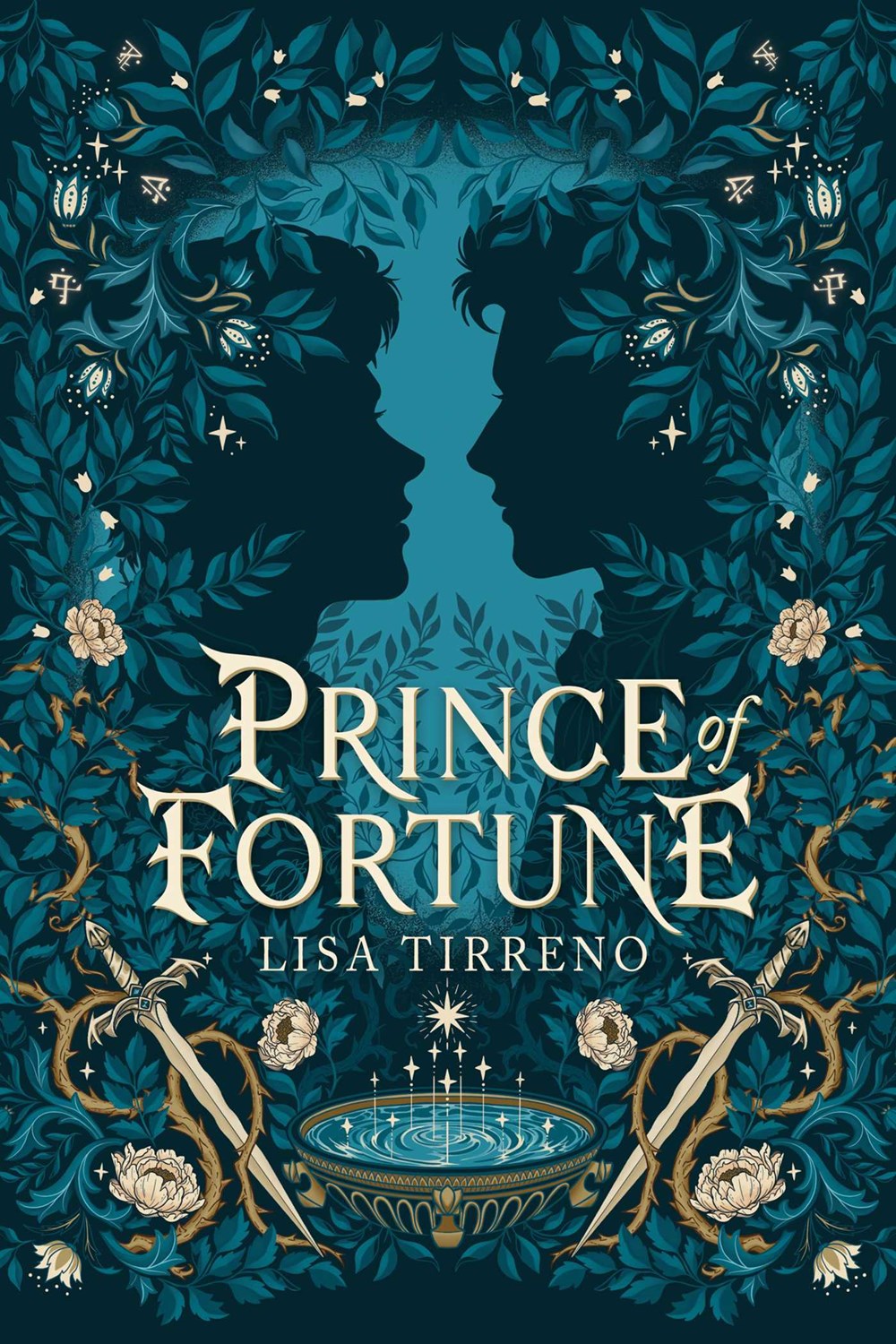
Prince of Fortune, by Lisa Tirreno

Lisa Tirreno’s Prince of Fortune is a romance in a fantasy setting with strong Regency era vibes, gender equality, and open queerness. It’s sweet, cute, heartwarming, and feel-good despite a hefty dose of political intrigue and a small helping of combat and war. Even better, it doesn’t try to make itself a series; you can pick this book up, enjoy the story’s gay romance and warm fuzzies, and know that everything has come to a close when you put the book down at the end. I found that soothing.

Would I want more?

Yes. And (kind of) no.

Continue reading

Megamind (2010)

I’ve now seen this movie a second time. I liked it the first time I saw it, and had fond memories of the movie. I don’t remember where I was the first time I watched it, though I don’t think I saw it in theaters. Regardless, it was years ago.

I just watched it again this last week with my niblings. I’m unsettled.

Megamind is a good, fun movie. Mostly. It’s so painfully close to just being a good fun movie, and it still can be if I only empathize with the main character Megamind. That’s probably what I did the first time I watched this.

This time around, I saw things from Roxanne Ritchi’s perspective. In so doing, I realized that Megamind is a horror movie. Now I can’t un-see it.

Is that a bad thing? Well…

Continue reading

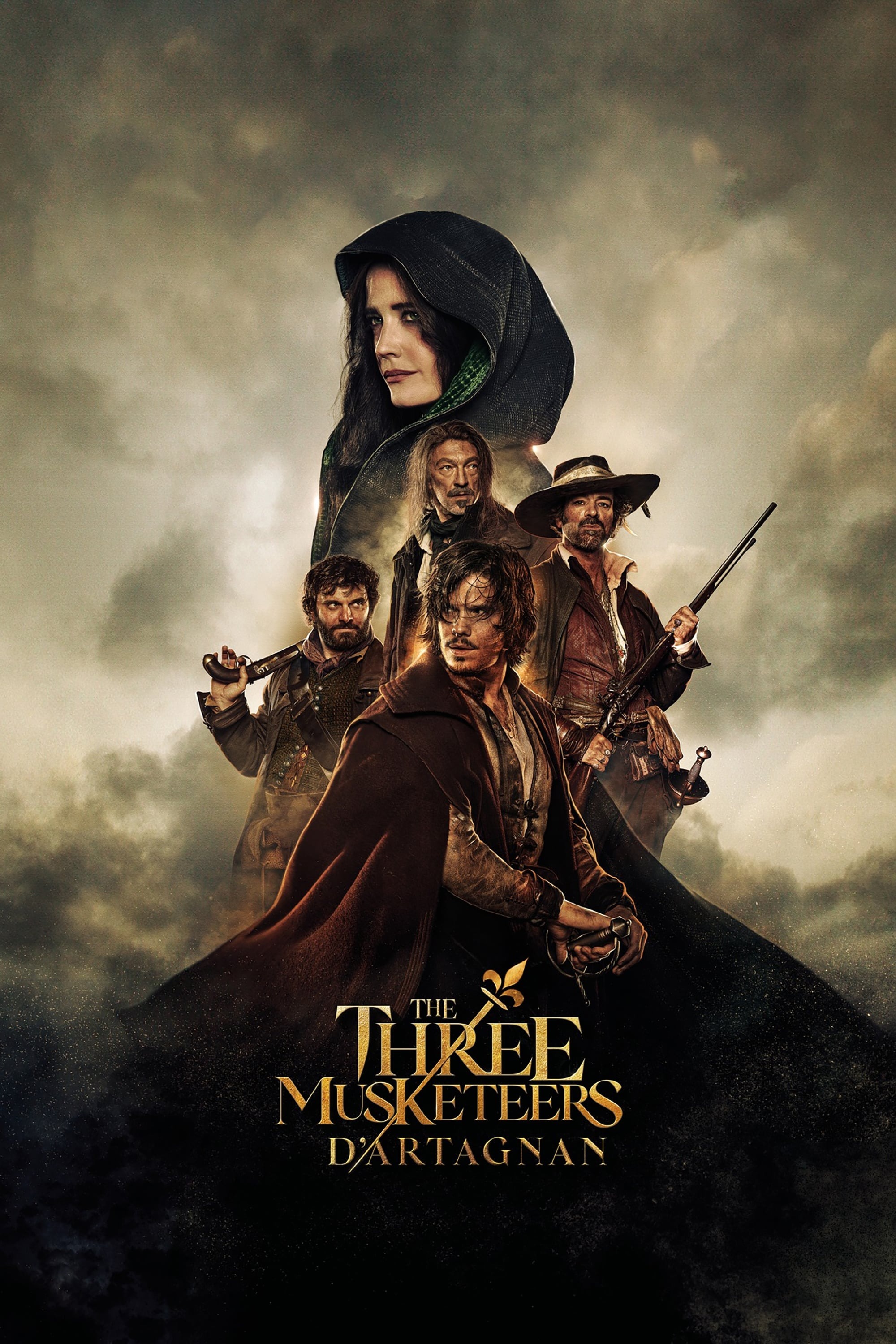
The Three Musketeers: D’artagnan (movie, 2023)

I saw this months ago, and only just realized I’d never mentioned it here.

I thought The Three Musketeers: D’artagnan was fabulous. Maybe I was brain-addled, or drugged without my knowledge, but by the end of the film I felt happy, and satisfied, and excited, and… just wow. I was floating. I really liked this movie. It’s one of the rare movies I’ve seen that made me immediately want to watch it again.

If you hate swashbuckling, swordplay, skullduggery, or the idea of watching a combination spy thriller and political drama full of swordfights set in 17th century France… clearly we have different tastes.

On the other hand, if any of that sounds fun to you… this might be the best version of The Three Musketeers I’ve seen.

Continue reading

When will I learn? Reading Freya Marske around family

I’m reading the new Freya Marske book, A Power Unbound, to review for GeeklyInc. I made a mistake.

To be clear, I have no regrets about reading this book. I enjoyed the prior two (you can find my thoughts on them here and here), and…

Continue reading

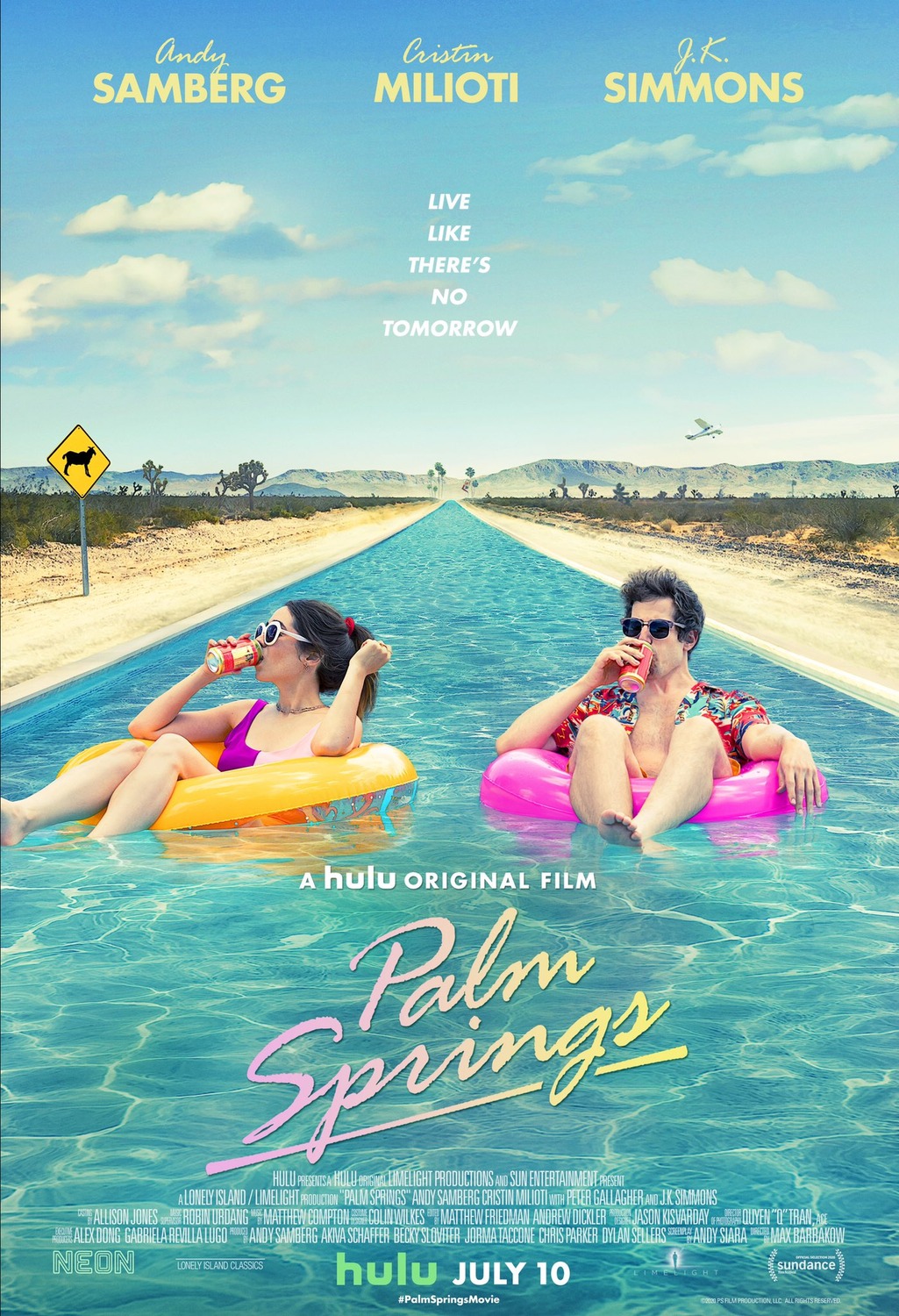
Palm Springs (2020)

So, look, Palm Springs checks a lot of boxes for me.

Palm Springs could have been half as good and would still have entertained me. Instead, this movie had me cackling and murmuring appreciatively by turns.

It’s a deeply philosophical character study wrapped up in a semi-absurdist grim comedy about life, and what it means to be a part of it. It’s my kind of good movie.

It’s got time loops. It has characters who feel believably human throughout the situations they’re stuck in. It takes the opportunity offered by playing with time loops to delve into what makes those characters tick, what they believe about the world, and how that drives the decisions that they make. There’s some love, there’re plenty of personal realizations and comedic moments, there’s a bit of enlightenment, and there’s a whole lot of dying (with very little gore).

I loved this movie.

That’s because…

First off, I’m a sucker for time travel. I’m even more of a sucker for time loops. I’ll enjoy stories built on either of those things, because they delight me even when other parts of a story aren’t as good.

Another thing I like: I like stories with characters who feel believably human. I like characters who feel internally consistent. I like characters who—even if they disavow this—have personal philosophies and worldviews that I can understand through observing the characters interacting with each other and their world.

Watching believably human characters play off each other and struggle with their beliefs about the world and life, seeing that done well, that’s a treat. It’s even better when I recognize some of the philosophical and spiritual underpinnings of the perspectives in play. 

Now, I don’t want all of my movies to be about people struggling with those perspectives on life. Nor do I want every movie I watch to be about people struggling with their worldviews as they intersect with others’. Someone no doubt argues that every story is that, probably Truby, but that’s missing my point.

Besides which, Palm Springs does all that without making it feel cumbersome. I say that it’s deeply philosophical, but none of that gets in the way of enjoying anything else going on in the movie. It’s the perfect approach to an “all-ages” philosophical text; much like those exemplary Pixar movies designed to entertain children and adults simultaneously, Palm Springs is accessible at any one of a variety of levels.

Though, uh, it’s not exactly a kid’s movie.

Still. If you want to watch Palm Springs as a romance, that’s available. If you want to watch it as an exploration of the Hindu and Buddhist teachings on reincarnation, proper action, suffering, and enlightenment, that’s there too! And if you’re looking for a grim comedy where some hooligans make a bunch of regrettable choices and suffer (somewhat) for them, that’s there in spades.

This movie will inevitably be compared with Groundhog Day, because… time loops. And because they’re so similar. Also, heh, this post is going up on Groundhog Day despite me having watched the movie maybe a month ago.

What I mean is, Groundhog Day is *the* present cultural touchstone for anything like Palm Springs. Hell, Groundhog Day digs through a lot of the same material and wrestles with many of the same philosophical questions. I doubt Palm Springs would exist without Groundhog Day. In a number of ways, Palm Springs feels like a modern update to the older story. 

That modern update makes a huge difference for me. In a good way.

Annnnnnd here we hit the *SPOILERS*.

For all that Groundhog Day and Palm Springs cover similar ground, Groundhog Day is trapped in a romance story’s paradigm. Winning the love (and belief) of someone not stuck in the time loop through engaging in proper moral action—and through showing off whatever skill you’ve developed over your eternity in this time loop—is the path out. That conclusion isn’t stated explicitly, but it’s sure as hell implied by the movie.

It’s a romance story. Love saves the day. Being a more moral human helps, and is important, but love saves the day.

Palm Springs offers that conclusion, and then explicitly rejects it. Right action, doing the right thing, atoning for previous faults or doing good wherever you can… don’t get you out of the loop. Being in love also doesn’t let you escape. Not even reaching peace and acceptance will bring you out.

But… they’re all important.

Escaping the time loop takes significant, hard work. And escaping the loop is important to the film’s plot. But it’s not achieved because “love saves the day,” it’s not “following the romantic plot brings escape from misery.” It’s something orthogonal to any of that.

No, the experience of finding peace, and of (mostly) doing the right thing by others, and of being able to love one another, those are all important for their own reasons. They have their own value. They can make existence better. And, critically for how this film compares to Groundhog Day, they ultimately aren’t the key to escaping the eternal time loop which is such an easy metaphor for existence.

Basically, Groundhog Day is a story about a trapped guy growing enough that he finally gets the girl and thereby finds freedom. Palm Springs is about people reaching enlightenment and finding joy—together, and as individuals.

I love that change. It means that Palm Springs doesn’t fall into the same Hollywood romance-logic trap. So many romance-genre stories build up romantic attachment into an impossible ideal that leaves any human relationship feeling flawed or inevitably doomed by comparison. Palm Springs nimbly vaults across that yawning chasm of bad writing which plagues so many genre stories, and feels more real and more human as a result. Because of that, I can enjoy the romance storyline without wanting to tear my hair out. I love it.

Another thing: Groundhog Day focused solely on one person. No one else was in the loop as well. That meant that there was no way for anyone else’s perspective on the world, on life, to respond to and adapt to any internal shift experienced by Bill Murray’s character. Yes, he could talk to other people, and yes they could share their whole perspective with him, and sure, he could come back and talk to them again another day with a different perspective. But everyone else was stuck in one place and time in their lives.

Palm Springs doesn’t do that. With multiple characters caught in the loop, it gives us a richer connection, more byplay between characters. The other people in the loop can come to their own realizations, they can grow and change and travel their own personal courses. They aren’t static.

That makes a phenomenal difference. What’s more, it means that when we’re given a deeper look at the life of these characters, their jumping off point for each repetition of the day, we can see how they’re trapped in turn by their own circumstances, their own pain. That, in turn, recontextualizes everything that’s come before. Laying bare the private sufferings of the characters, peeling back the layers for the audience throughout the movie, lends nuance. It makes them feel more human, and more comprehensible.

It also makes their growth, their changes, and the ways they play off each other so much richer. Those slow revelations feed neatly into how the characters’ perspectives bounce off each other over and over, changing a bit every time. It’s a well-established screenwriting technique—Truby loves it, see The Anatomy of Story—but this might be the clearest depiction of it that I’ve seen yet. It’s part of what had me muttering appreciatively, or just saying “wow,” throughout the film.

*END SPOILERS*

So.

Yes, I think you should watch it. I’m sure there are people who will see this movie and feel nothing, or be frustrated by things that I didn’t notice. Maybe if I watched it again I’d have a more critical perspective. But if you, like me, enjoy time loops and good human characters and dark comedy and a bit of romance and some philosophy… watch it.

Palm Springs is my kind of good movie.

A House With Good Bones, by T. Kingfisher

My experience of reading A House With Good Bones was weird, because I made some silly assumptions. It was also fun, and good, and I’d recommend the book. However, this isn’t an in-depth review; I’ll share more about this book elsewhere through GeeklyInc, so I’m focusing on my reading experience here. When I dive deep into the book, I’ll let you know.

Onwards.

I’ve previously read and enjoyed several other books from T. Kingfisher (Ursula Vernon). I’ve come to expect, for better or worse, a certain flavor of genre fiction. Her Saint of Steel series and her Clocktaur War books are all fantasy romance with other genres laced in (murder mystery, adventure, horror, etc). I foolishly allowed myself to think that everything she published as T. Kingfisher would therefore also have strong romance genre elements, and would feel like romance overall.

I was wrong!

Okay, I wasn’t that wrong. There are still hints of romance genre conventions here. There are plenty of things in this story that feel like they belong in a romance novel. They’re fun when they show up and they help lighten the mood. But the book doesn’t deliver all the requisite story beats for it to feel like or qualify as romance. Instead, it has just enough romance to allow the audience to enjoy a little bit of that flavor while enjoying all the rest of what the book is really about.

Which is horror. Spooky, weird horror. Spooky, weird gradual horror that reminds me powerfully of the RPG Unknown Armies, which is in turn inspired by the fiction of Tim Powers (who you’ll be shocked to know also writes some spooky, weird horror).

And Ursula Vernon, aka T. Kingfisher, is good at writing this horror.

I already knew she was good at other flavors of horror. Her Saint of Steel books revolve around the murder mystery and fantasy horror genres (yes, with romance), and I had a grand time with those. But the horror of those books is different from the horror of A House With Good Bones. And that difference, plus the less-present romance, threw me for a loop.

To dig into that flavor metaphor, I took my first bite of this dish thinking I was eating Italian and found out I was eating Indian. Sure, both words start with “I,” both cuisines make good use of tomatoes, and both are delicious—but what I got was not what I was expecting.

I figured out what was going on pretty quickly. I was happy with it. I spent a good portion of my time with this book smacking my lips and saying “huh!” and trying to suss out the different ingredients.

So. Yes, I recommend this book when it comes out. Yes, I had fun with it. Yes, if you like T. Kingfisher’s other work you’ll probably enjoy this too. But keep in mind that this is—first and foremost—something besides romance. With that, I think you’ll have a good time.

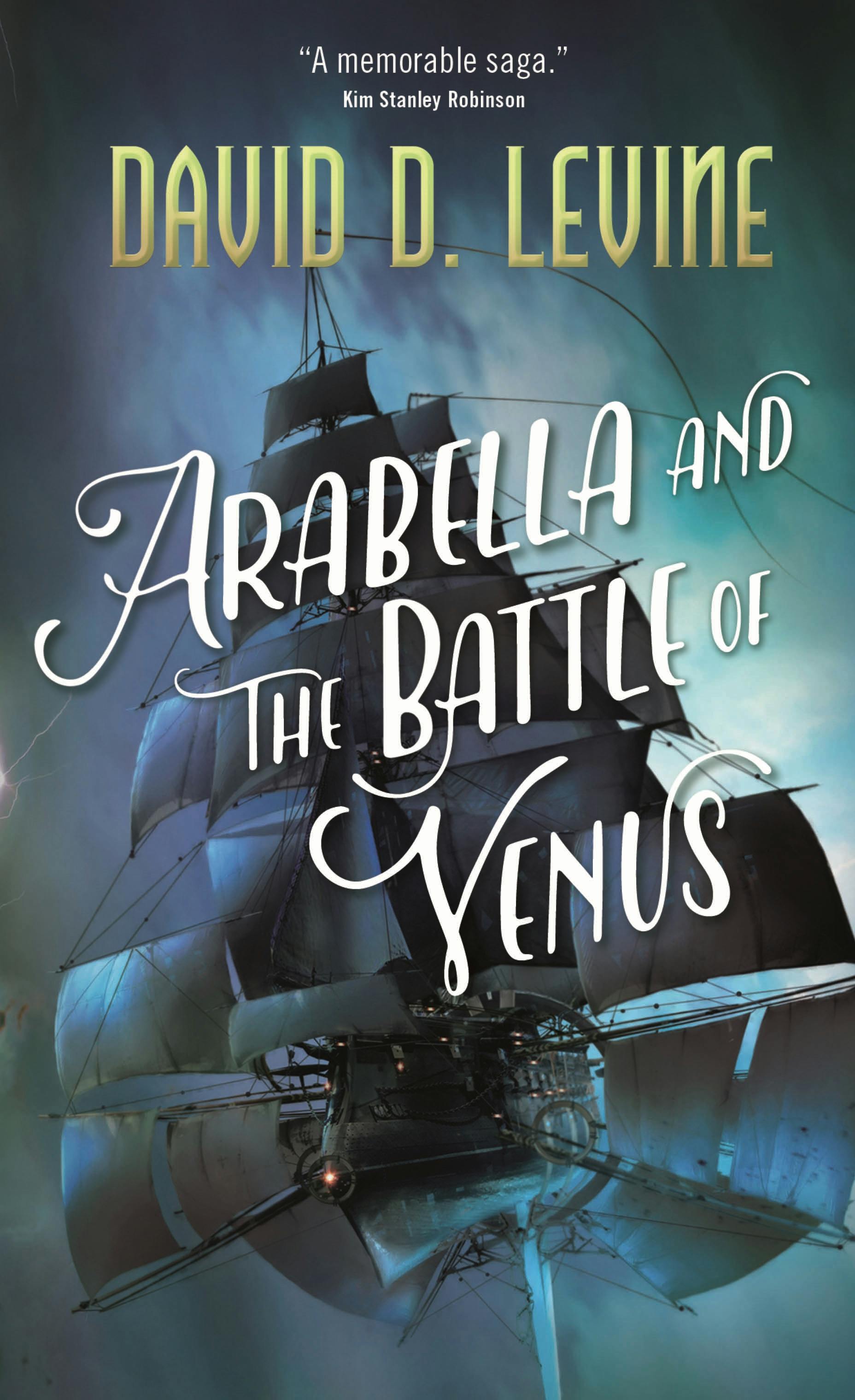
Arabella and the Battle of Venus, by David D. Levine

I really enjoyed the first book in this series, Arabella of Mars, and I’m glad to say that Arabella and the Battle of Venus lived up to all my expectations and then some. David D. Levine has crafted another excellent adventure story in his science fiction alternate history setting. If you like Regency-era drama, Age of Sail adventure, and historical science fiction, these books will (heh, it’s funny if you’ve read the books) float your boat.

If you took my advice and read and enjoyed the first book (yes, I advise you to enjoy the book), I think you’ve got a safe bet with this one. Arabella and the Battle for Venus is a solid sequel. Reading it was a delight, though I did squirm a little bit (more on that in a moment). It offers another excellent adventure while cleaving to the genres of the first book, and reminds me of the enjoyment I found reading Hornblower books in sixth grade but with altogether more depth… and the promise of additional depth to come.

Now, mild thematic and book jacket-level spoilers.

There is a little more weight lent to the romantic subplot this time around, as one might expect from a story about a young woman racing across a war zone to free her fiancé from a POW camp. I hadn’t expected there to be any other romantic complications, though I should have, and those stressed me out a bit! They’re what made me squirm, maybe for the same reasons rom coms do. I’m still not sure I fully understand that part of myself. But—despite my squirming—I think the book and characters are probably better off for those complications. They help to grow Arabella emotionally from where she started in the first book, and I appreciate that.

I’m going to take a tangent here, weaving back through the first book. I’ll eventually return to this book, and my tangent will have some vague thematic spoilers without hitting any concrete plot points.

My biggest concern with the first book was that it wasn’t clear to me whether Arabella—the character or the books in general—would more clearly confront the colonialism and racism of the setting over the course of the series. The first book had some confrontations with these ”isms,” in fairly constrained contexts, but our point of view character Arabella did not seem fully aware of their pervasiveness or their larger ramifications. Nor did she seem cognizant of the implications of her own life on Mars as an Englishwoman living among Martians.

In short, the Arabella of the first book was convincingly blind to problems that her privilege didn’t require her to face. Honestly, that felt very real. I think it was an understandable writing choice, and a solid one.

Crucially, this is not to say that Arabella was willfully blind or actively in denial. She set herself on the right side of those conflicts when they arose, opposing and loudly disagreeing with racist arguments. But it wasn’t clear whether the later books would also dig into the inherent colonialism of the setting.

So. I hoped, and I read into the titles of the two following books and the jacket blurb of this book (Battle of Venus), and I made some assumptions from my sense of the author. All of that, plus the tonal hints of the first book, encouraged me.

Having finished book two, it looks like I was right to be encouraged. I’m glad to say that Levine does continue to bring these issues to the fore. Problems and disagreements slowly and seamlessly bubble up into Arabella’s awareness through her immediate context. The positions Arabella takes and the solutions she finds all suggest that Levine is continuing this thread of growing Arabella’s awareness of the injustices around her, and that these things will all come to a head soon.

Now, Arabella doesn’t feel especially radical from a modern perspective. Arabella’s positions and opinions—as they’ve developed so far—don’t feel revolutionary. Except… they kind of are.

Context matters!

Arabella has a keenly felt sense of justice. She has a disregard for her society’s gender norms that is heartening to a modern reader and would probably place her at the forefront of the women’s suffrage movement in her time, which was (contextually) a pretty damn radical place to be. Her opposition to racism and racist arguments is similarly steadfast, and admirably radical for the time. And that opposition extends to the casual anti-Martian & anti-Venusian racism she encounters, which I think is present to set up for her bigger and more overt confrontation with colonialism in the third book—though that’s merely genre-savvy speculation, since I haven’t read book three yet.

Basically, it looks like Levine has planned all this from the outset, just as I’d hoped. He pulled apart Arabella’s various stages of personal growth and burgeoning awareness into three books, allowing her emotional and political arc to develop across multiple perfectly solid adventure stories. If he’d tried to write this personal arc all in one go, the book would have felt congested and emotionally tumultuous—Arabella’s growth would have felt implausibly rushed and unreal. Instead, because Levine paid attention to spacing this arc out across narrative time and separate books we’re able to enjoy Arabella’s personal growth without ever choking on it.

This is another good example of the dynamic I mentioned in my reflections on Murderbot.

Given all that, I suspect that Levine will stick the landing in book three. I’ll let you know once I’ve finished it.

Okay, that’s enough for now. Like I said at the start, I’m really enjoying these books. Unless those genres I mentioned above sound like torture to you, I suspect you’ll enjoy these books too. Try them out!

Wait, one last thing. Based on his Author’s Note, David Levine finished this book while losing his wife to cancer. Finishing a book is hard enough in good times. I can only imagine that doing so (and doing it well) while experiencing that loss must be tremendously painful and difficult. David, if you read this, thank you for this story. And thank you for persevering to share it with us. May Kate Yule’s memory be a blessing and a comfort for you.

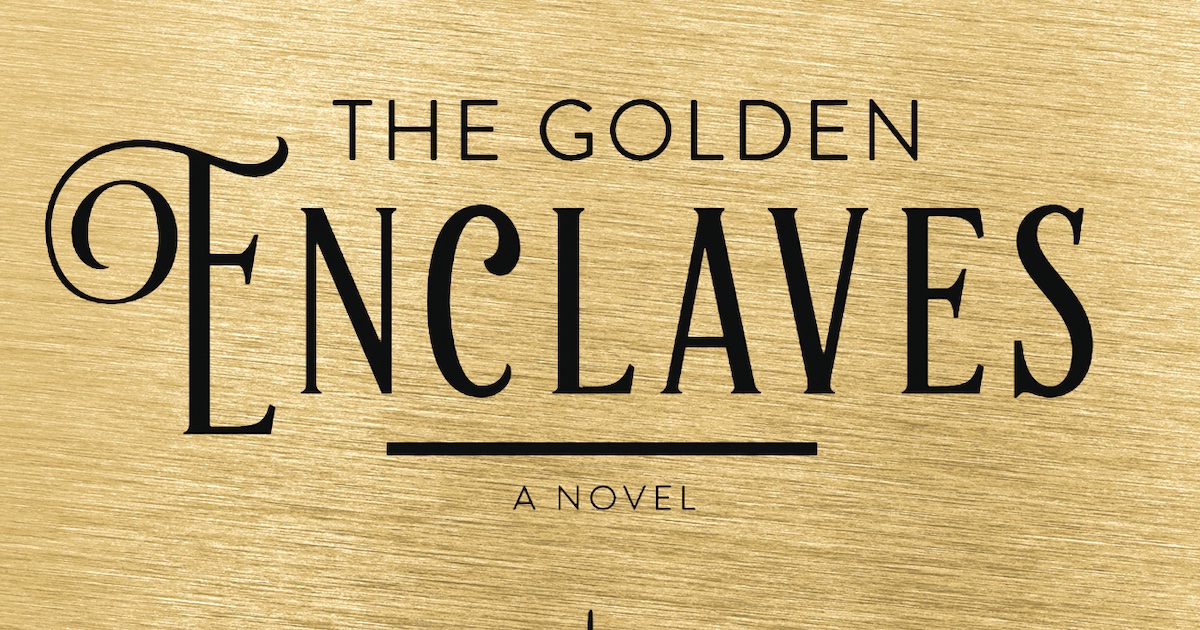
The Golden Enclaves, by Naomi Novik

I’ve deeply enjoyed reading Naomi Novik’s Scholomance series. I’ve recommended it to many people. And now, having finished it, I’m going to recommend it to you again.

This is how I started my review for the first book in the series:

“[W]hat if Harry Potter, but the school is *literally* a death trap full of monsters and there aren’t any adults around to ‘help?’” Add some socioeconomic inequality, teen drama, a pinch of prophecy, and an antisocial and justifiably angry teen girl for a narrator, and you’ll have a pretty good idea of what Naomi Novik’s A Deadly Education is like.

The Golden Enclaves delivers a solid close to that story. It is the third and final book in the series and—while the book ends with room available for more sequels if Novik changes her mind—the story is definitely concluded here in ways that will satisfy most readers. “Most,” because I know some folks will just want the story to keep going with these characters forever, which I believe is all according to plan for Novik (or at least a feature rather than a bug).

This book does what I wanted it to do. It resolves many hanging plot threads, it answers a series of questions I’d had since the first book, and—maybe most importantly—it dreams up a future in which people are able to make the world a better place, by hook or by crook. It has hope.

*That’s* the bit I’m most impressed by. That hope.

This book is full of a lot of struggle. It’s full of lots of traumatized kids. People die, or are hurt in awful ways.

But it’s hopeful. And it’s not hopeful in the Harry Potter “let’s go back to the world as it was, and pretend that without resolving any of the issues we’ve discovered everything will be fine” kind of way. It’s hopeful in the “let’s do our damndest to make the world a better place, without destroying it in the meantime” kind of way. The whole series has been hopeful like that, but this book really sticks the landing. And I love it for that.

So many YA and YA-adjacent stories are dystopian, and the resolutions to their dystopian problems rarely feel hopeful or real to me. Either the dystopian world remains awful, or the attempted fix doesn’t work, or the fix works but reeks of deus ex machina and only works because the author says it does.

Novik set up a whole bevy of problems in the first two books and made it clear that the world was an unfair and often awful place. She offered (difficult, dangerous) ways for her characters to work around those problems.And this book, like its series as a whole, manages to follow that thread through to the end without either disappointing me with a total lack of plausibility or falling into hopelessness.

Annnnnnd I hadn’t realized until now that I never reviewed The Last Graduate, the second book in this trilogy. That was an oversight. I’m not going to rectify it before I finish this post though, so here goes.

A warning: if you didn’t like El’s voice as the narrator in the first two books, this series might not be for you. Novik was extremely successful with her creation of her narrator’s voice. She does a good job of keeping everything inside El’s head, and of maintaining El’s voice as a consistent thing. Novik also manages to weave her story and world through El’s unreliability as a narrator without leaving us, her readers, totally bereft of clues that El might not be the most objective and reliable observer. I really admire that. It’s one of the things I love about these books. If that bothers you… you’re out of luck. Try a different series.

A separate warning: one of my friends mentioned El knowing or narrating a few things in this book that seemed outside of her scope of knowledge. I didn’t notice those as I was reading—I was quite caught up in the story and may have missed them. You might stub your toe on them though.

I’m not planning to dive deep into the plot of this book, but I will say that reading more will probably spoil you for the previous books with implications if nothing else. I’ll also casually drop in a few spoilers after this paragraph without further warning. If you care about that, I suggest giving the first book a go. I loved all three, I recommend them, and Novik has done a good job of starting this series as she meant to continue it. The series isn’t bereft of twists, but it’s very thematically consistent—if you like the first book you’ll probably like the rest, and vice versa.

The Golden Enclaves picks up precisely where The Last Graduate leaves off. Very precisely. And the rest of the story doesn’t honestly take all that much time as the setting reckons it. There’s a little slow period near the beginning as El tries to recover from her time in the Scholomance (more or less a machine for traumatizing children until they’ve survived hell). But after that, things move a bit faster. And they snowball wildly out of control, as El finds out what’s been going on outside the Scholomance while she and all the other kids were locked in hell.

Despite this—or actually because of it—there’s still plenty of time for Novik to ladle in several more hefty servings of revolution and commentary on inequality, until they become a driving factor of the story. That’s perfect, because it’s part of what I’m here for. She also adds more queerness, as she did in The Last Graduate, but where it felt unforced in The Last Graduate here it feels more like a surprise.

Don’t get me wrong, I’m still here for it. I’m glad that Novik added more queerness, I’m glad to see it in this story. And next time I would love to see her do more of that earlier in a series. Having El find out that she’s surprise-bi in book three, however, felt a bit like a curveball given how carefully Novik sets up almost every other story element, like Novik improvised that element where she’d planned all the rest. Or maybe I was too oblivious, because one of my friends was shipping El and Chloe really hard at the end of book one.

Anyways. My words and thoughts are wandering.

If you want to read about wizard revolutions, or about magically obstinate people warping the world around them into a less destructive and more just place, this is for you.

I love this book. I love this series. I recommend them both. I hope that you enjoy them too.

p.s. my partner pointed out that I gushed more about this book in person than I did here, and I’ve made a couple edits following that. Don’t hold my gray brain weather’s bland tone against this series, I really did delight in these books, and in sharing them by reading them aloud to my partner.

Review of A Restless Truth on Geekly Inc

I’ve got another review on GeeklyInc for you, here. This one’s about A Restless Truth, sequel to A Marvellous Light, both of which I enjoyed a great deal. Spy fiction, high society drama, romance, magical intrigue… it all fits well together. I may give you more of my thoughts on the book here in the future, but for now I suggest heading over to Geekly Inc to see my words!

The tl;dr: Freya Marske does an excellent job blending sapphic romance, murder, magical society drama, and sexy times. I continue to be delighted by her blending of spy fiction and society drama, and I’m looking forward to book three!