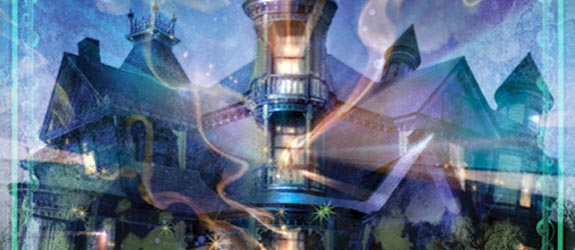
Last Days of Loneliness, a YA horror story pt. 2

Like I promised, I’ve got some actual text for you today.  I’m a bit late because I’ve just finished pounding through Marcus Sakey’s Brilliance, which I rather liked, but hopefully this material will make up for it.

Keep in mind that this is all still rough.  I’m not even sure that the narrator’s voice is appropriate, so whatever ends up being final may look wildly different.  With that said… I do hope you enjoy it.  Also, please do comment if you think something works particularly well, or really needs to be changed.  The beginning of the story lies after the break…

Continue reading

Last Days of Loneliness, a YA horror story

A number of years ago, one of my writer friends mentioned a story concept that she wanted to share with me.  She wondered what would come of a Lovecraft-inspired horror story in which the protagonist was a high school girl who had just recently moved to a new town.  I immediately latched onto the idea.  We spent a few hours bouncing ideas back and forth, and at the end of our brainstorm session I asked whether she would like to collaborate with me on the project.  She said yes.

I started writing material for the story, occasionally ignoring school work that I really should have been doing at the time.  I soon had a great deal of (questionably valuable) material to share with her, but she’d fallen into a work-hole and been unable to claw her way out.  She ceded the project to me, though we continued to share our thoughts on it.

Fast forward a few years: after finishing my thesis, graduating, and getting back into the swing of writing for a while, I dust off my old drafts of this nascent YA horror novel and get some other people to take a look.  The drafts are, to put it figuratively, mostly made of poo.  I’m now aware of the fact that I have little idea of how to write a teenaged female narrator, which makes looking at my past struggles all the more painful.  But there are some pieces that seem like they still hold some value.  The concept and the basic story beats still seem basically solid, and the story clearly has an excellent ramp up to the climax.  Now the time has come to strip the piece down to its bare bones and tinker with it for a while.  Oh, and write a variety of new attempts at a teenaged female narrator, while reading as many pieces with teenaged female narrators as I can (preferably from the right genres).

In case you’re wondering where this is going, yes, I’ve got some material to share with you today.

Continue reading

Avatar: The Legend of Korra

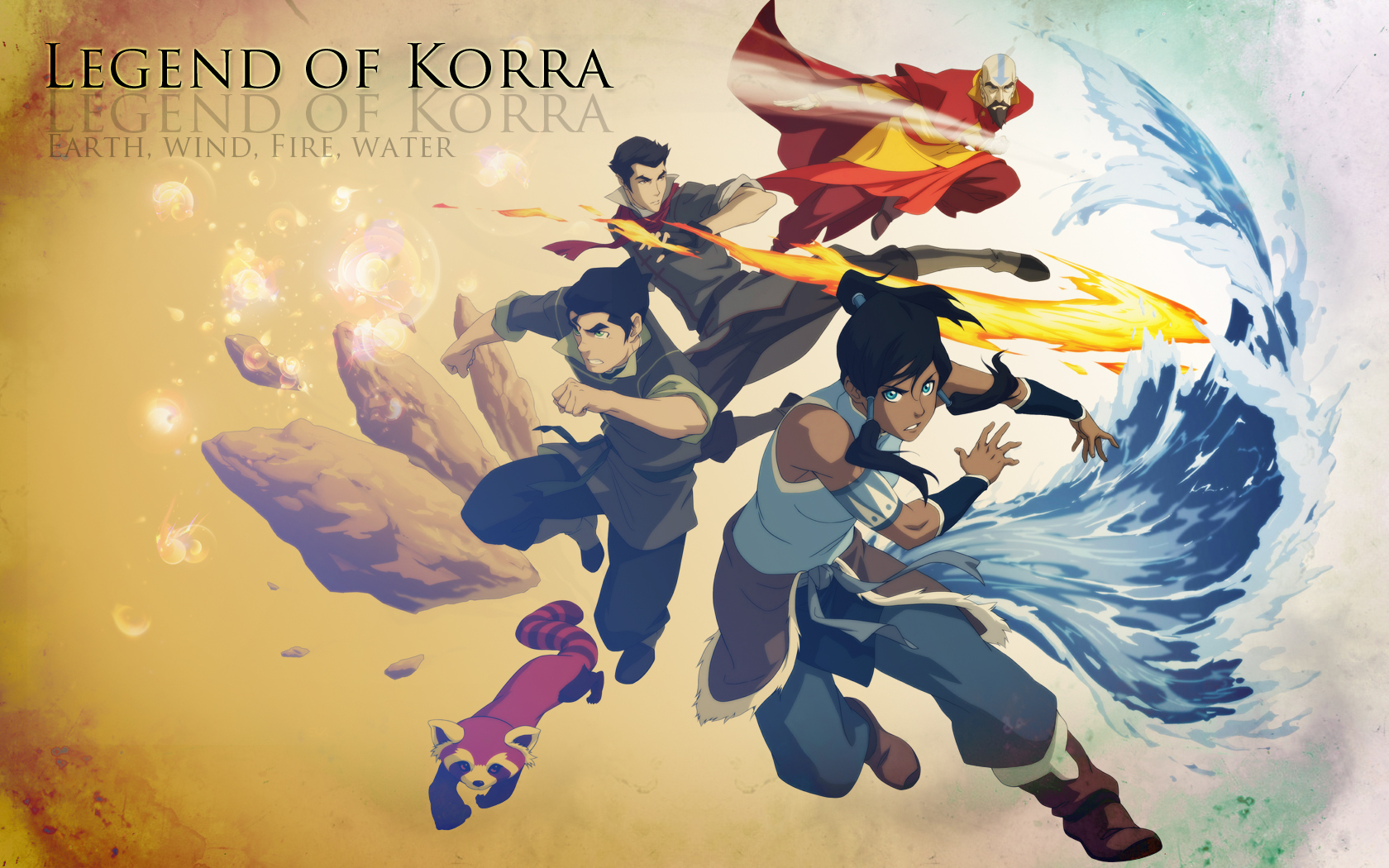
I-made-these-wallpapers-avatar-the-legend-of-korra-31681592-1680-1050

There are lots of things to like about the Avatar series.  I find it hard not to like excellently conceived and delivered all-ages content, especially when it does little to dumb down what it has on offer just because kids will be watching.  Both Avatar: The Last Airbender and Avatar: The Legend of Korra have ultimately delivered that, and at this point I’m definitely a fan (*careful, that link goes to Nickelodeon’s streaming site, and there’re potential spoilers on the page*).

I’ll admit that for a while I was much happier with the first series than with the second, but Korra has been growing on me.  Most of all, I’m really happy about season three and very excited for season four.  Please be aware that I’m going to spoil bits of seasons one and two for you here.  If you haven’t seen them, I’ll put it like this: they’re not as good as they could have been, but they have their own wonderful moments.  Better yet, they set the stage for excellent things to follow in their footsteps, and I would certainly say that they’re worth watching because of it.  And because, you know, there really are some good moments in there.

Now that I’ve warned you, my thoughts thus far are as follows:

Continue reading

Wood Sprites, by Wen Spencer

81WZgAzpC-L


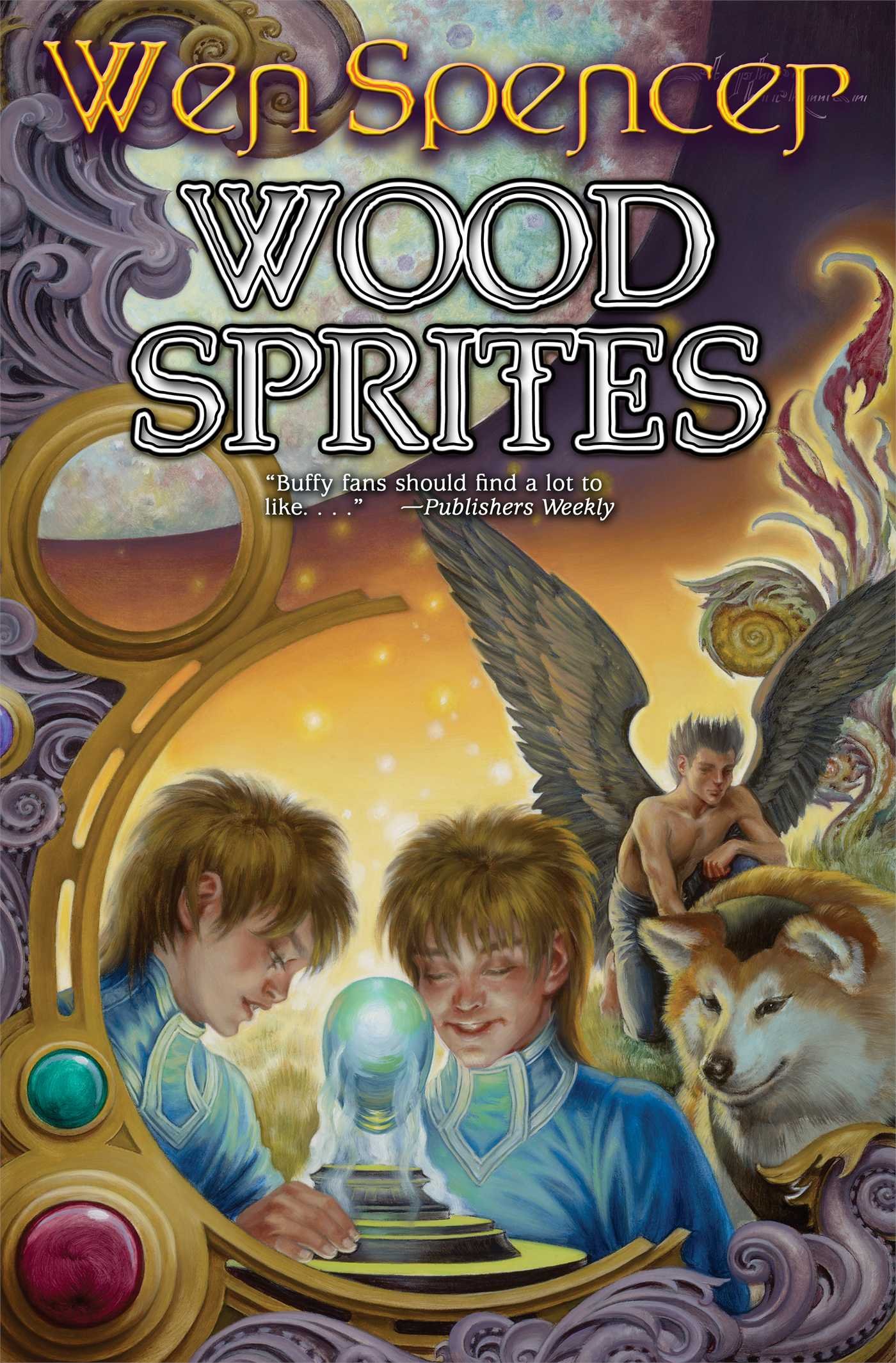
I can identify the plot elements, but I have no idea what’s going on with this cover.


I reviewed the first two books in this series last fall (almost exactly a year ago, as a matter of fact), and somehow failed to review the third.  But Wood Sprites, fourth in the series, has just come out, and there was no way that I’d leave it untouched after how much I enjoyed the first few.

To be perfectly honest, while the first few books were fun they were also frequently uncomfortable; Wen Spencer includes toxic interpersonal relationships, abuse, and worse trigger-warning worthy things, though from my limited perspective she treats it more honestly than many other fantasy authors do.  While Wood Sprites is a far safer read, it still doesn’t shy away from putting its protagonists through a series of terrible circumstances.  This feels appropriate, given that the protagonists are 9 year-olds in the center of a multi-generational secret war.

One thing that I should note, however, is that this book is full of spoilers.  While its events take place far from the events of the first three books, its story weaves intricately into the story told in the other books and fills in gaps that I barely even knew existed.  I would almost recommend this book as a standalone introduction to the series, but…

Continue reading

Rimworld: The Magic Continues

hOGk3vJ

Correction: with Alpha 7‘s release, the space magic continues.  Or, uh, the starving frontier space magic, beset by violent thugs and now diseases.  But let’s look on the bright side of things: even as Ludeon has introduced plague, it has also given us the prosthetics and organ harvesting and transplantation, in addition to a welter of other neat new features.

The introduction of prosthetics is far more important than you might realize.  The last version, Alpha 6, introduced a complex medical system which tracks injury and debility by location, though perhaps without quite the same granularity as Dwarf Fortress‘:

DFCombatLog1

My Alpha 6 colony had a slowly growing number of people who’d lost appendages to chronic cases of gunfire and explosions.  I was forever terrified of having my wonderful and productive citizens maimed horribly while defending the colony.  Now, it looks like we can give our debilitated friends a leg up, so to speak, by building prostheses for them to replace whatever they’ve lost.  Given the constant scarcity of more advanced medical supplies, I foresee specifically targeting raiders with cybernetic prosthetics so that I can strip the things I want from their cold, dead bodies.  Or from their warm and unconscious bodies, if they somehow survive the fusillade of bullets and seem like they aren’t worth rehabilitating.

This is Rimworld, after all, and I already do my best to hunt down fleeing raiders when they’re wearing or carrying things I find especially desirable.  It’s hard to come by powered combat armor without taking it off the body of an erstwhile attacker.  Traits have already made a meaningful entry into the game, affecting everything from move- and work-speed to mental stability and opinions of cannibalism, and there’s nothing quite like having a murder-happy speed demon ready to hunt down your fleeing enemies.  You just have to make sure that they never suffer a mental break or suddenly decide to betray you.

Continue reading

The Adventures of Tintin: The Secret of the Unicorn

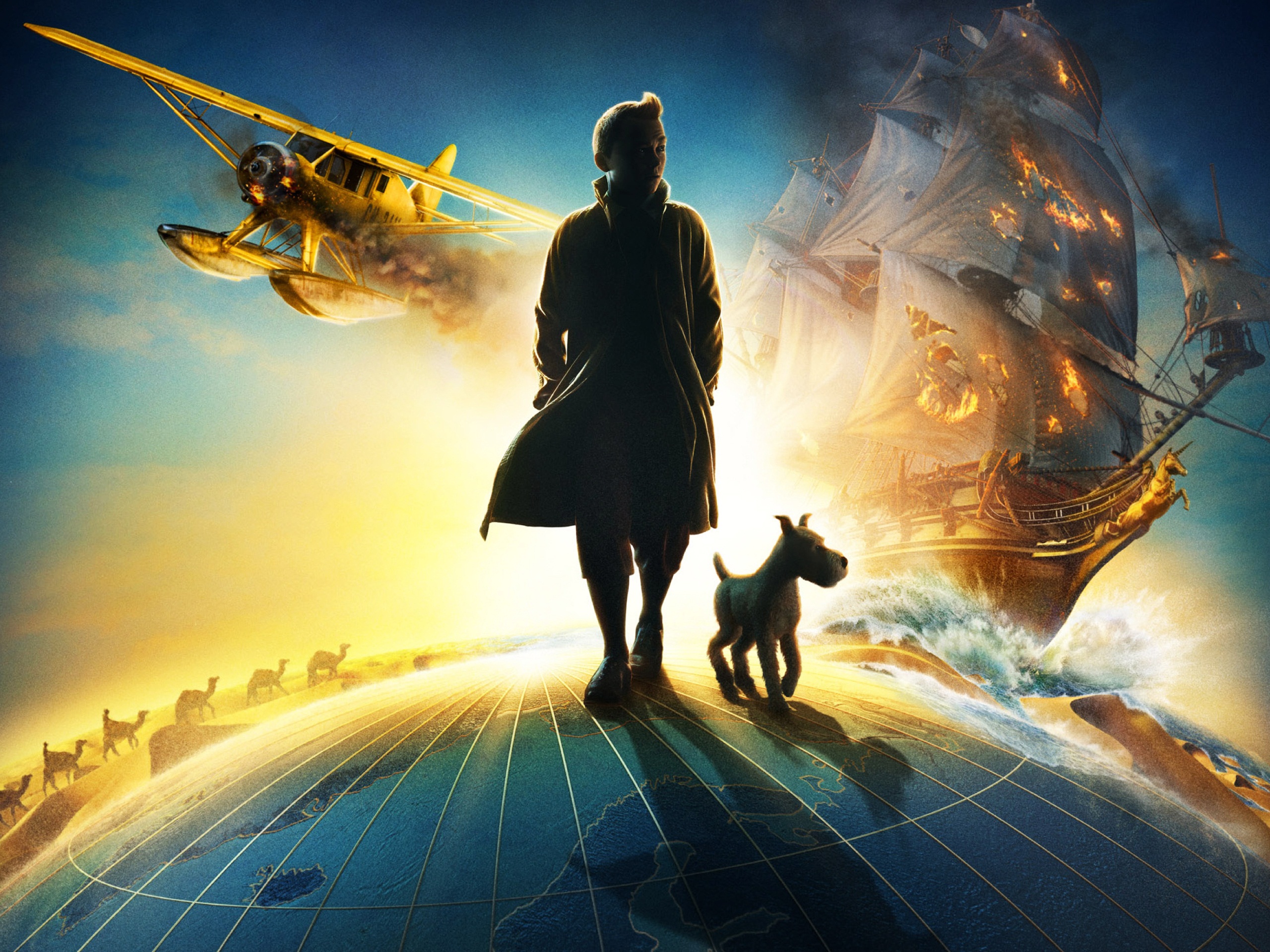
2011_the_adventures_of_tintin-normal


I finally watched the “new” Tintin movie.  I’m obviously biased, given that I grew up reading the Tintin books and loved them uncritically for many years, but… I thought the movie was magnificent.  There’s something spectacularly fun about the pulp adventures of Tintin, and the movie delivers the essence of that in spades.  The story is still problematic when it comes to representation, as there’re no main characters who aren’t white males, but the movie also manages to remain faithful to its source material without engaging the more racist undertones which can be found in some of the original works.

And when I say faithful to the source material, I really do mean that it’s basically all there.  The movie is a composite (plus a little something new to serve as glue) of several Tintin stories, and there are scenes which have been pulled frame for frame from the originals.  There are even references to prominent features of unused story lines, often featured as props (like the red jeep from Land of Black Gold).  The only thing that I really missed was Snowy’s constant private cynical narration, though his stunning and dogged competence was in fine form.

As I’d expected it to be, the movie was action-packed and full of nonstop excitement, accurately recreating my memories of the stories that I’d so loved as a child.  But it was able to do things which had been impossible for the original comics, with gorgeous transitions that reinforced the hallucinatory exposition of my favorite drunk, Captain Haddock.  I’m not sure that I’ve ever seen a better realized set of scene shifts, and they were made all the more possible through the excellent CGI used for the film.  There’s just something about watching the world ripple and change, transforming a landscape of sand dunes into monstrously high seas; Haddock’s impossible descriptions of his ancestor’s exploits become all the more wonderful as they are shown through his imaginatively drunken state.

Speaking of the CGI, I have to say that they really hit the nail on the head.  They managed to keep things cartoonish enough that they felt palpably unreal, while still being realistic enough to feel believable, relatable in much the same way that the comics themselves felt when I was young.  I’m really happy with how the movie felt, and I’m glad that there’s talk of making another.

So, I liked this movie a great deal and I would happily watch it again.  It doesn’t solve all the problems of the source material, but it does a good job of avoiding the source material’s larger blunders while capitalizing on its strengths.  The characterizations felt true to form, and the alterations made to the original material never felt like they were unfaithful or detracted in any way from the originals.  If you ever liked reading Tintin, my guess is that you’d like watching this movie.  If you didn’t like reading Tintin, I really can’t help you with that (and you may or may not like this movie, who knows).

p.s. Sorry to cut this one short, I have to go facilitate a hero’s journey by pretending to be an evil dean intent on shutting down Simmons’ MA in Children’s Lit and MFA in Writing for Children.

The Sorcerer’s House, by Gene Wolfe

sorcerershouse-strip1


I should probably re-read this book.  In fact, from what I understand I should probably read and then re-read a good deal of Gene Wolfe‘s work.  There’s a lot of it that I haven’t bothered to pick up at all, but the attention he pays to the construction of his novels is something from which I stand to learn a great deal.  It’s no surprise, then, that The Sorcerer’s House is a slowly unfolding marvel of consistent inconsistency, even on my first read-through.  And what the devil do I mean by that?

I’ll start with the narrator.  We are treated to the sometimes pleasing, sometimes grating prose of one Baxter “Bax” Dunn, as the entire story is told through the lens of his letters (with the addition of a few letters that were sent to him).  It is an epistolary, and as such we are entirely at the mercy of Bax’s representation of events as he begins to deal with moving into (squatting in, really) what appears to be a supernaturally expanding house.  But one of the few things that we know of Bax is that he was recently released from prison after being convicted for fraud.  There are other confounding factors at play as well, hinted at but generally sidelined as being of little relative importance, but I’ll leave those for you to discover when you read the book.  Suffice to say that the narrator is tremendously unreliable, to the extent that I’m not sure how much of the book actually happened (I’m certainly unsure how much happened as he represented it, and I think I’ve caught at least one lie).  As if that wasn’t enough, he often walks forward or back through the course of events until you’re working hard just to keep the timeline straight in your head.

On a similar note, I’m impressed by how palatable Wolfe manages to make a character I so grew to dislike.  Dislike might be the wrong word for it; there were so many things about Bax which I found so unlikeable or frustrating, but he exuded such amiable bonhomie that I found it difficult to hate him for very long, as he’s perhaps the very definition of sleazy but charming.  I can only imagine it was second nature to him.  The fact that I’m able to tell you all of this about Bax is part of what I so admire about Gene Wolfe.

There’s a great deal more to say about this, but as per usual I’m going to segregate the spoilers.  So for my pre-final closing thoughts, or whatever you call this bit, I just want to say that this is a fascinating read even if you don’t end up liking Bax very much.  And if you can deal with the several-decades-old gender relations.

Continue reading

When You Reach Me, by Rebecca Stead

whenyoureachme


This book came highly recommended, and it seems only appropriate to pass on the favor to you.  It’s not a long read, nor is it a difficult one, and I can’t say that the ending came as much of a surprise to me… but I simply loved reading it.  It felt both extremely real and wonderfully thought out; it contained a loving homage to another children’s novel which I adore, and yet was clearly its own story, laid out as a puzzle with all of the pieces lying there right before your eyes, waiting for you to put them together.

You know, usually I’m able to talk about a story without giving away any spoilers that I think will unduly influence your understanding of the book.  Or else I’m able to sequester all of the relevant spoilers in a place just for those who’ve already read it or are willing to spoil themselves.  But this time I think I have to leave it be.  I’ll even say that you shouldn’t bother reading the dust jacket’s inner flaps.  Just pick up the book.  I doubt you’ll take more than two days to read it, and you could probably go through it in an afternoon if you had the time.  There’s something too good to spoil about following the narrator’s journey as she slowly tells us how it is that she pieced together the puzzle, and I’m impressed with the narrator’s consistency as she reflects back on the events she describes in the book.  It’s a skillfully told story, and I hope that you’ll take my word for it and pick it up.  Find it here at Rebecca Stead‘s website, or find it at your local library!

Historical Context Matters: Now With More Context

On the 11th I posted the first of my background pieces on the Elven Progenitors setting.  Now I’ve got more material for you.

Last time I covered city names, the names of bodies of water, the basics of city-states, mother-daughter city relations, Elf-home, the Northmen, and the return of slavery.  I still need to talk about the divisions amongst the elves, the cold war, where people get their slaves, why orcs aren’t fighting everyone all the time (and whom they are fighting), the alternative flora and fauna, and maybe something about the Elven Republic.  But there’s no way I’m going to cover all that, so I’ll settle for telling you a bit more about elves.  But to whet your appetite, first, the original conceit of the setting; then a brief background on how much of the world has been explored and settled.

The original conceit of the setting, when I was first developing it with my brother for a series of quick adventures that we wanted to play (yes, it started as an RPG setting), was that we were playing in an alternate version of our own world.  While we didn’t want there to be any magic as most people would recognize it, we did decide to switch things up when it came to evolution, and I’ve used “artistic license” (i.e. unrealistic lies) to hand wave past a few of the problems which follow.  Specifically, the first sapients to evolve were what we would call elves, and they bred all of the other races of sapients in addition to making some awkward accidents along the way.  I know that this doesn’t make much sense when it comes to an evolutionary time-scale (except for the part where elves are actually long-lived enough to breed other species meaningfully), but if you’ll ignore that problem and accept that elves can effectively do magical things with breeding then I suspect you’ll enjoy what follows.

At the time of the great war, elves and their various subject races had cities in Elf-home (Africa), Europe, and western, central, and southern Asia.  A select few elves had performed extensive studies of ocean currents and hypothesized the existence of a land mass to the west of Europe, though with the outbreak of civil war they kept this knowledge secret.  They worried that access to the resources of an entirely new continent would represent a dangerously unbalancing factor in the war, and could only lead to further suffering.  They were also concerned that, if a peace settlement were achieved, the struggle to settle in the New World would re-ignite the civil war.  Therefore, unbeknownst to those fighting the great war, they repurposed a breeding project which had been sidelined by the war and used it to develop a self-replicating massive area denial bioweapon; as more of their fears about the conflict came to pass, and it seemed clear that allowing either side to spread to the New World would only exacerbate the civil war, they deployed their weapon in the New World to prevent exactly that.

Now, with that teaser out of the way, how about a little more detail…

Continue reading

Coming Soon: Another Huge Background Post

Not today, but tomorrow with a little bit of luck.  I’ve got a lot more for you, mostly dealing with elves despite the fact that they’re quite rare in my stories of the setting thus far.  It turns out that the setting is called Elven Progenitors for a good reason, and nearly all of the background politics has its basis in the conflicts of the elves.

So, look here tomorrow for more information on the setting background, and if you haven’t read my short stories you should go do that while you wait.  Here’s a link to the first background post, and here are links to Paying the Tab, Jerome Goes North, Jerome’s Tropical Vacation, A Simple Misunderstanding, and Rum Luck.  My apologies for prolonging the wait, I’ll have more for you soon.