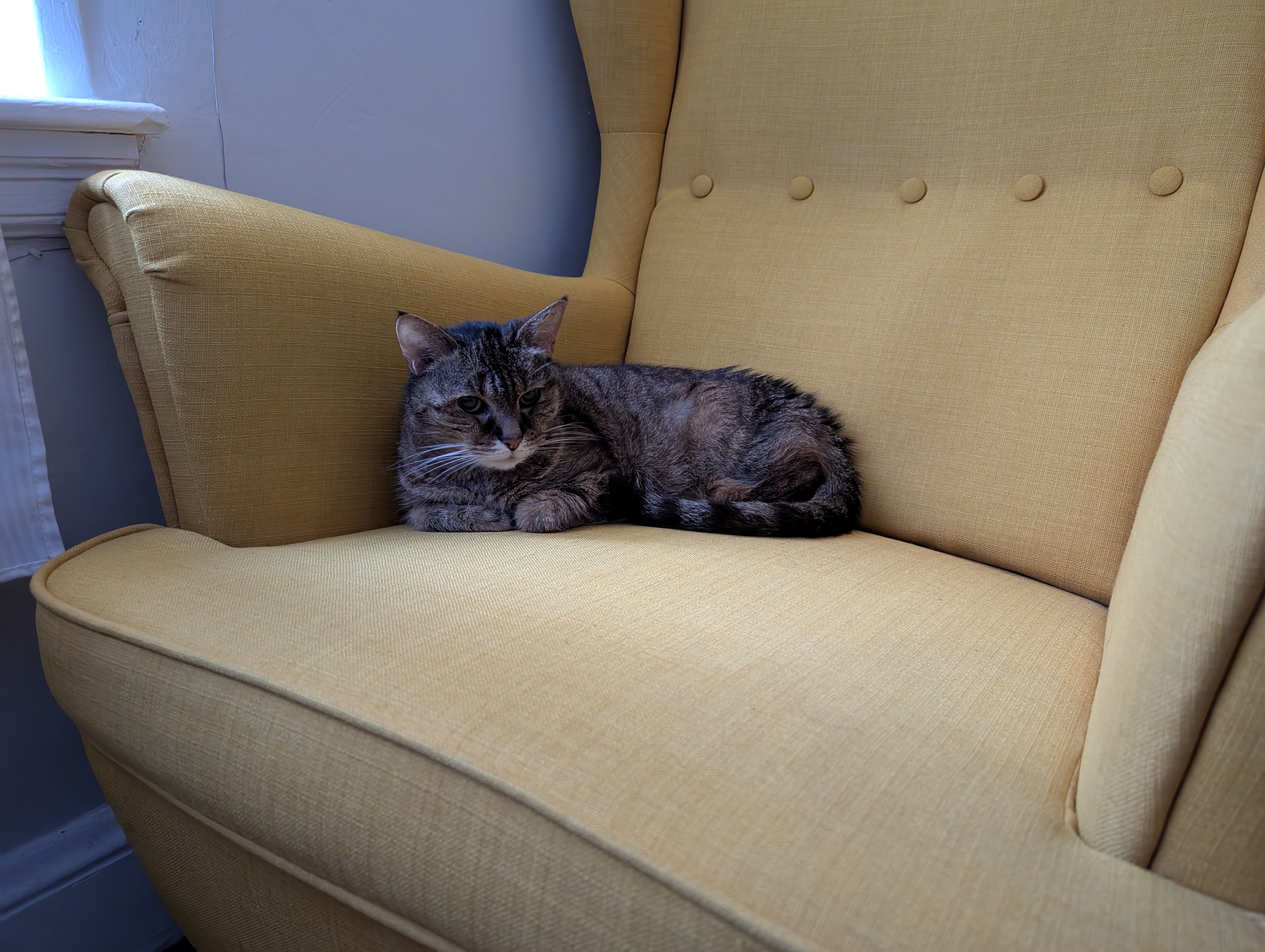
Alex the cat, 6/13/25

The busy-ness will continue until morale improves. Or maybe that’s until baby gets much older? Either way, I missed my usual post here yesterday and I’m here to offer you a cat.

I did read Stuart Gibbs’ first FunJungle book in the last week, Belly Up. It’s great. It is a neat distillation of the noir-ish detective story reinterpreted for a middle grade novel, and set in a zoo. There’s a whole series of these books, and I’m itching for a go at the next one. Maybe when I’m more awake and have more time I’ll give you more in depth thoughts, but now the baby is waking and I must feed him.

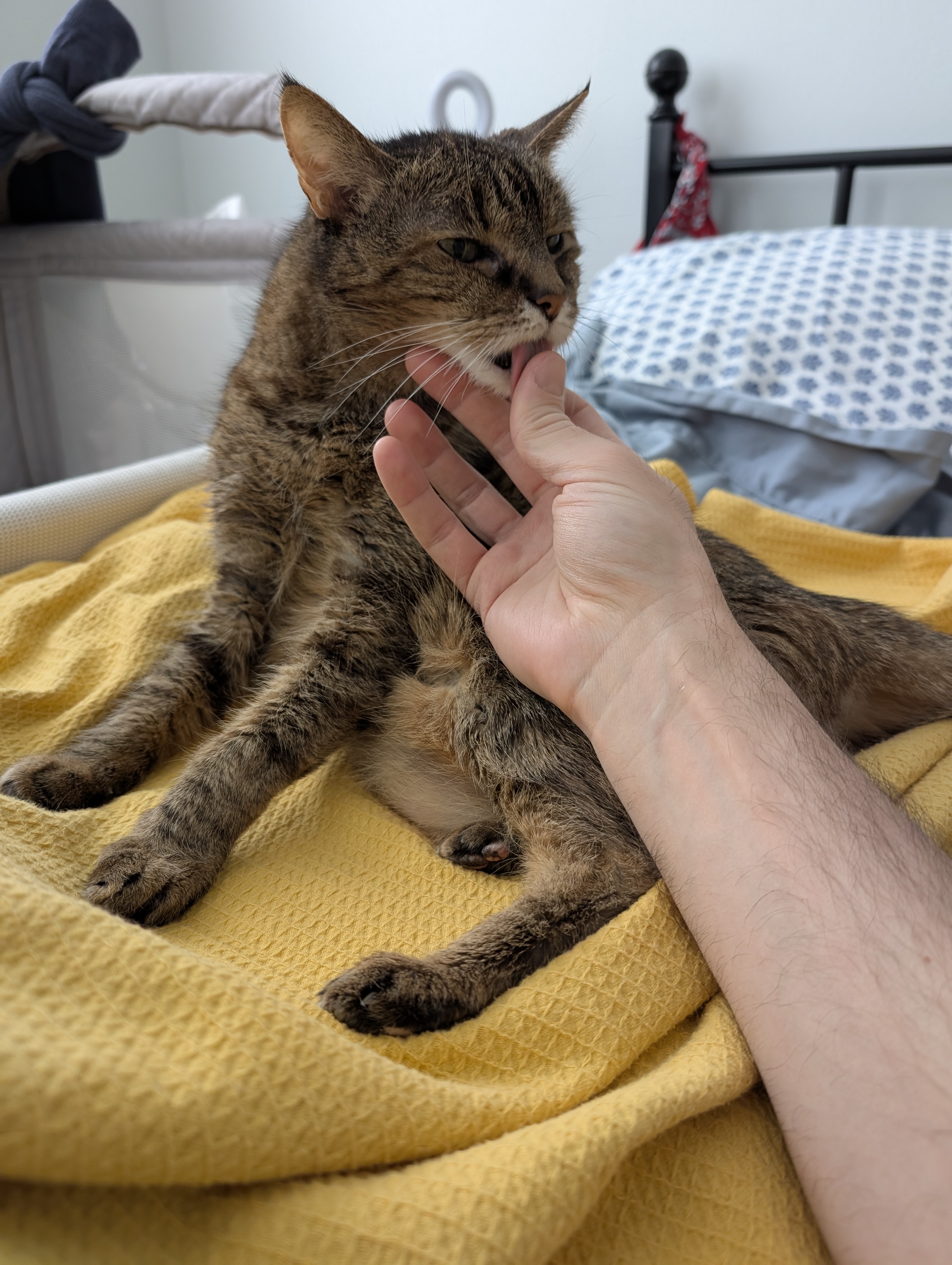
More Alex, 06/05/2025

Alex is a good kitty. She sleeps so that I don’t have to. That’s how that works, right?

I read The Ruins of Gorlan by John Flanagan, the first book in the first Ranger’s Apprentice series. I have a bunch of thoughts. Those won’t make it up here today, because despite Alex doing a good job of sleeping for me she has not made me feel more awake or alert. Nor has she taken care of the baby.

I’m glad that these books exist. And I think we’re sorely in need of newer work.

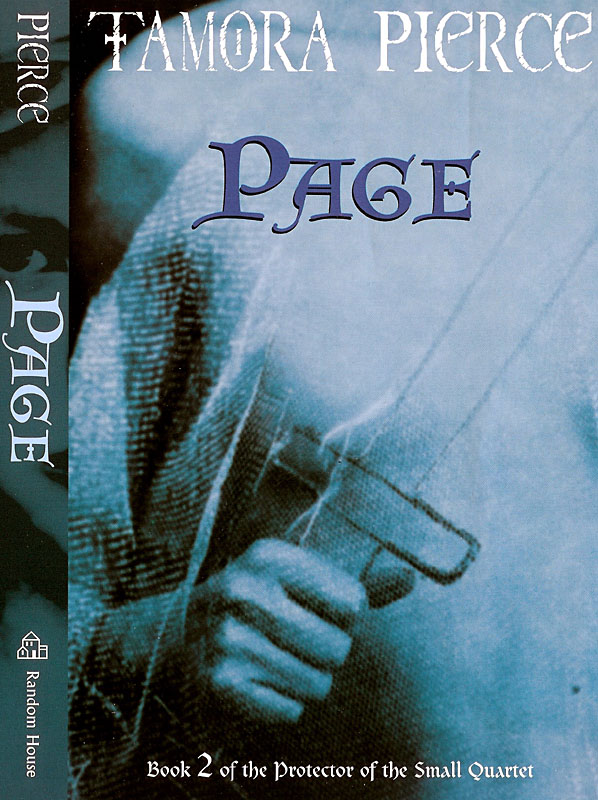
Page, by Tamora Pierce

I’m clobbered again today, but I’m alert enough to tell you that this Tamora Pierce series continues to be good. Page is great. I devoured it despite my sleep deprived state.

Continue reading

First Test, by Tamora Pierce

First Test, by Tamora Pierce, was published in 1999. It’s an excellent middle grade fantasy story grounded in one girl’s struggle against gender discrimination, hazing, and abuse while she pursues her dream of knighthood. First Test takes place in Tortall, the same story world as Tamora Pierce’s series about Alanna the Lioness. Where Alanna sought and (spoilers for that series) achieved knighthood while hiding that she was a girl, our protagonist Keladry seeks to follow openly in Alanna’s footsteps. But while that path is now officially open to a girl, reality hasn’t yet caught up. If you want a middle grade story about a young girl facing adversity and misogyny in a hostile school environment, this is a solid option.

First Test is, first and foremost, a story about a young girl and her struggles. Young Henry probably would have loved it… but he probably wouldn’t have read it (I mean, I didn’t read it, but I also wouldn’t have). Even if it had caught my interest, being mocked by my peers for reading ”a girl’s book” was a real and pressing concern. That was a big part of why I missed the Alanna books when I was young.

Oddly, that social pressure also feels connected to First Test’s message.

Continue reading

Skull Island (Netflix, 2023)

I grew up loving Johnny Quest’s zany pulp adventures. Skull Island feels like an updated version. Unfortunately, two episodes in it feels like the writers only updated some of the original concept and didn’t go far enough. It gets enough right that I’m still hoping that’ll change, but…

Continue reading

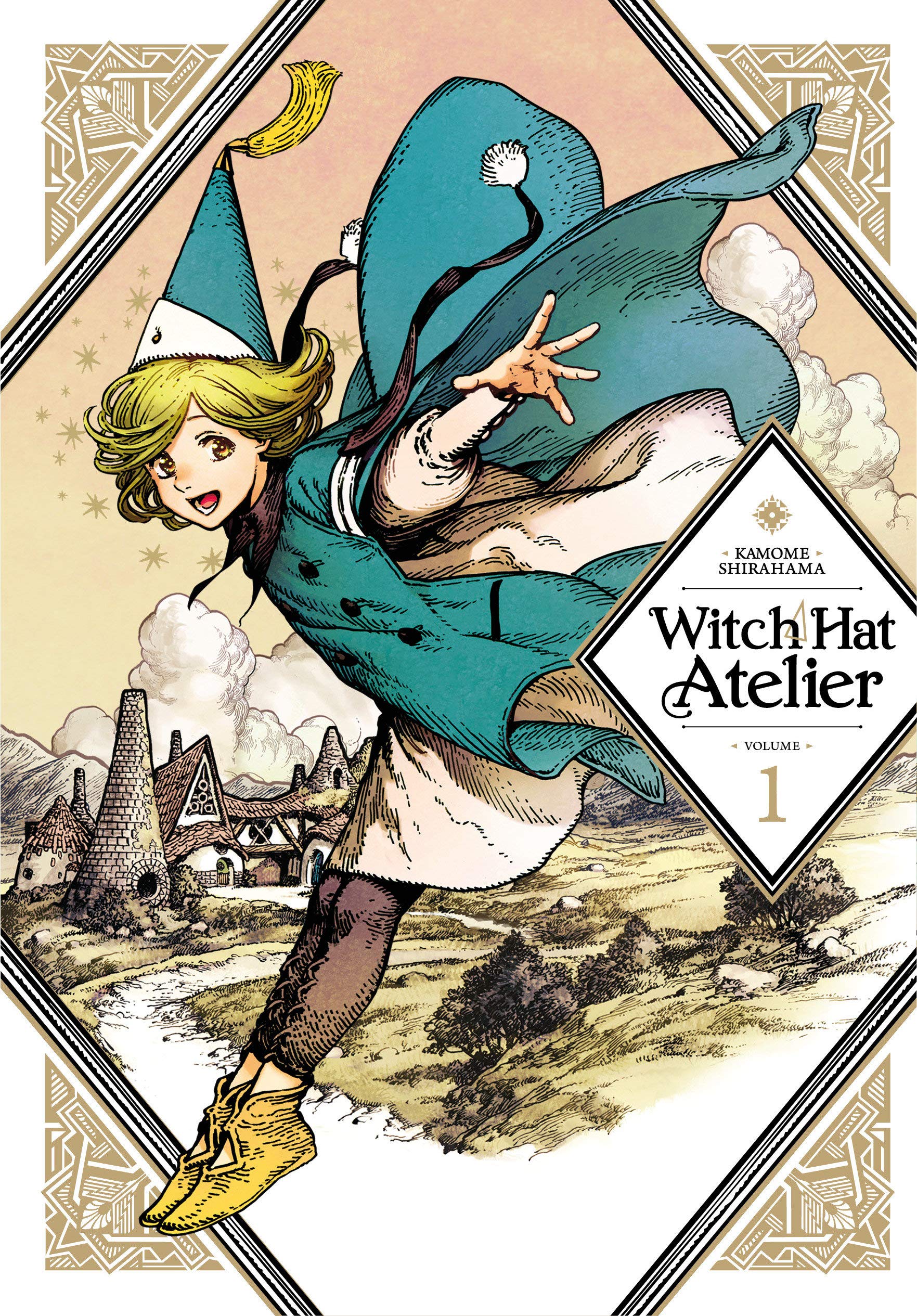
Witch Hat Atelier #1, by Kamome Shirahama

This is strangely great.

No, “strangely” is wrong. Nothing about Witch Hat Atelier feels especially unusual, trope-wise. It feels… expected. And I love it. It smoothly delivers a genre experience that I love, and I want more.

I’ve only read the first book so far. I raced through it this morning, and I’ve already requested the next three. I’m amazed at how well the story manages to move comfortably inside its genre’s expectations while still catching my attention and winning me over.

It’s a healthy reminder of how much delight can be drawn from indulging in competent genre fiction. There are certain themes that I often enjoy (restricted access to magic, young magic users stepping up to face adversity, gradual revelation of infighting and intrigue within the magic world, gradual revelation of deeper complications about *why* magic is restricted), and when given books full of those I frequently fall into the story nose first. The first book of Witch Hat Atelier hits all those notes without knocking me out of the groove at any point. While this means that I haven’t been surprised yet, it moves quickly enough that I’m delighted to just be along for the ride. There’s just something marvelous about watching plucky young magic users improvise their way through magic to get the job done, especially when everyone assumes that they’ll fail.

I haven’t read enough of the series yet to say how it will shape up long term. I haven’t even read enough to say that any of the characters feel like they’ve grown beyond their familiar introductory archetypes. It doesn’t matter. Kamome Shirahama has done well here so far, and I’m looking forward to more.

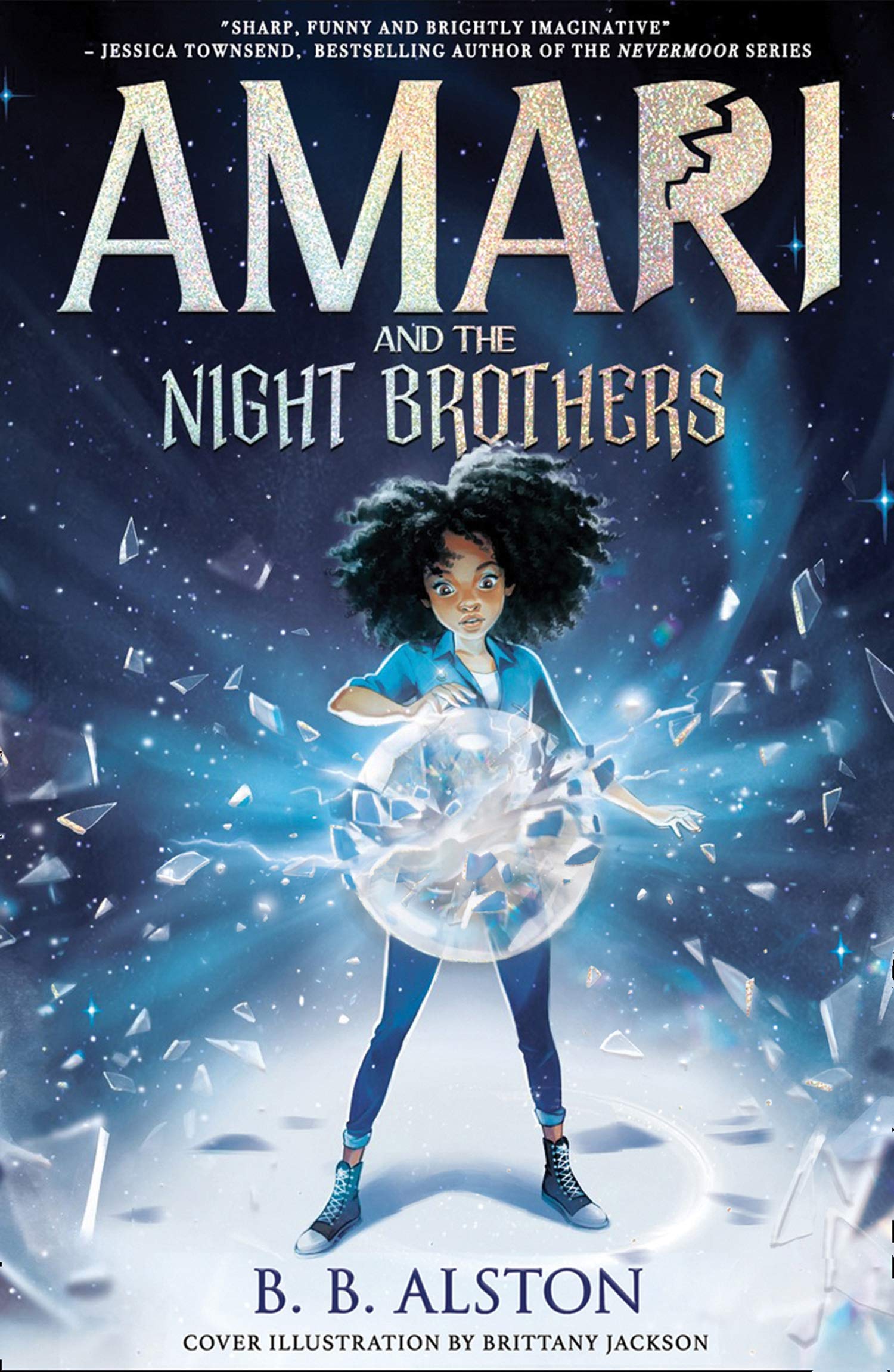
Amari and the Night Brothers, by B. B. Alston

Some books reshape their genre. Others expand it to include a wider range of voices. Some do both. I often like books that do the first. I believe we as a society and community need books that do the second. For examples of books that reshape their genres, I’d offer up The Ballad Of Black Tom and The Fifth Season. For books that expand their genre, those two still work… but I can also add A Dead Djinn In Cairo, and now B. B. Alston’s Amari and the Night Brothers.

Amari and the Night Brothers feels like another step in the same chain as A Dead Djinn In Cairo. It doesn’t, in my eyes, revolutionize the underlying components of the genre (yet), but it’s solid and has a refreshingly different perspective from the usual run of Middle Grade supernatural school protagonists. Amari—the main character—is black (as is B. B. Alston) and in a genre so dominated by white writers and white characters that’s pretty dramatic. It feels sad to say that’s enough, but I think it’s true.

As I said, this book didn’t fundamentally change or subvert anything I expected from the genre. I was able to plot out the tropes and most of the twists pretty well beforehand. But it’s good. Those tropes I saw coming felt right, and their resolutions felt rewarding. This story does everything I’d want a solid book in the MG supernatural school genre to do (with allowance for a little bit of deus ex machina), and it does it with heart and with a different set of assumptions about the world than so many other stories I’ve seen and read. That’s what I love and admire about it, why I’d recommend it.

And unlike A Dead Djinn In Cairo, I’ve seen enough of B. B. Alston’s work here to believe that there are other interesting things coming down the pipe, ways in which this story is going to grow, and tell its story differently. Amari and the Night Brothers already had my interest standing on its own. And I look forward to seeing what new paths B. B. Alston adds to this well-trodden genre.