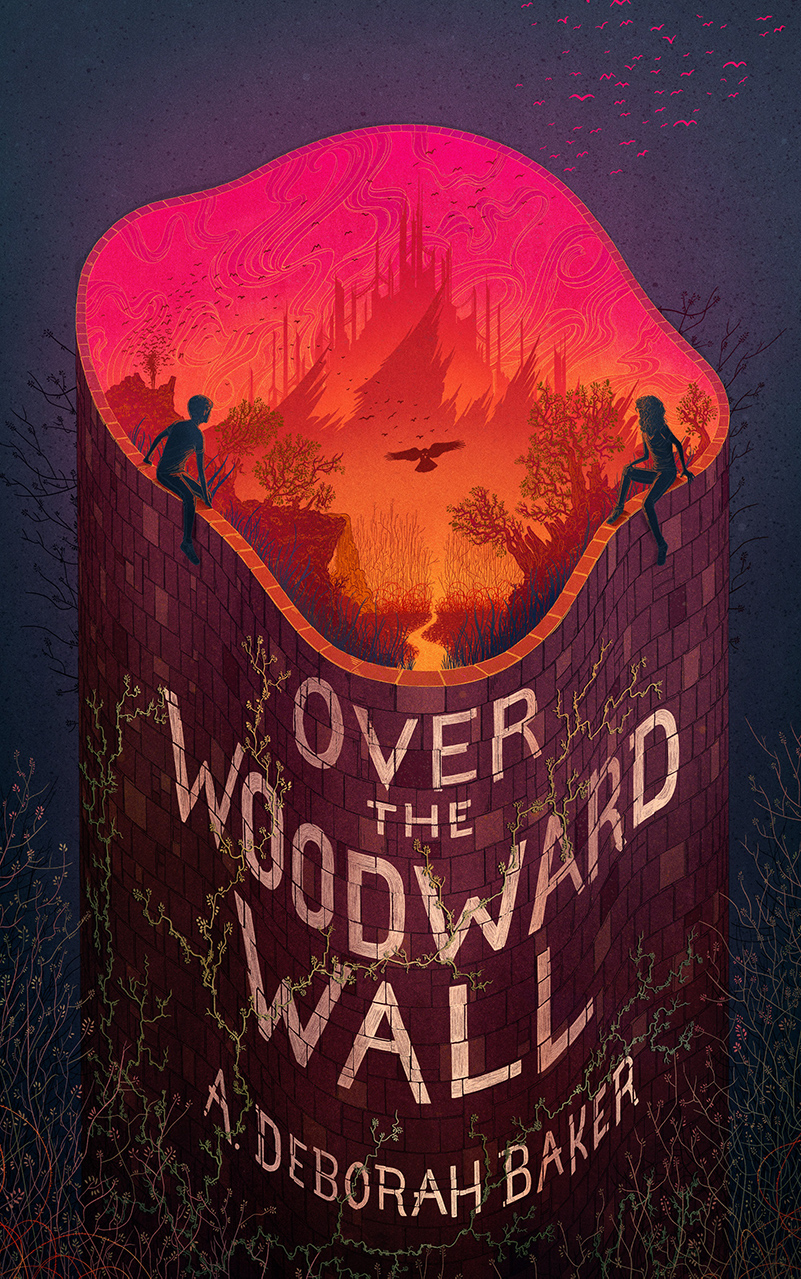
Over the Woodward Wall (written by Seanan McGuire under her pen name A. Deborah Baker) is the first in a series of middle grade adventure stories in a mixed up sometimes-lovely sometimes-scary fairytale land. In many ways, it evokes Alice’s Adventures in Wonderland. The setting’s surreality contrasts perfectly with the very real-feeling children who are this story’s stars, and the book does an excellent job of conveying earnestly true human experiences and life lessons while taking us on a dreamy-and-nightmarish impossible (sorry, I mean improbable) journey.
This should be a guaranteed home run for me. However, my fondness for this book ebbs and flows, a cycle driven by my mixed opinions about the narrator. It is my fondness that shifts though—I like it, I just like it by varying amounts depending on my mood. So what do I simultaneously admire and want to complain about?
This narrator knows too damn much, and I’m grumpy about it. Sometimes they want to share, sometimes they almost (but only almost) overshare, sometimes they withhold information that I wish they would share. They’re inside the characters’ heads even while they know far more than any of the characters could know. I won’t even touch where the narrator is temporally, because while they narrate things in-the-moment they definitely also leave us with the distinct impression that they (the narrator) are in the future. They know things that wouldn’t make sense otherwise.
I realize that some narrators are omniscient, but this narrator is omniscient and… snarky is nearly the right word for it. It’s more like both wise and opinionated, and caring but unwilling to offer reassurance about whatever is going on. All told, the narrator’s voice feels extremely well written. It clearly and cleanly evokes its particular mood(s).
And sometimes I’m fed up with it.
How else can I put this?
Our two main characters, Avery and Zib, each feel precise and distinct. Impetuous and resourceful and untrammeled Zib yearns for adventure and novelty, precise and restrained and straight-laced Avery yearns for home and security. They feel real, and good, like believable children on the cusp of growing up. They have a little of that protagonist shine that helps them overcome troubles which they probably wouldn’t otherwise be able to survive, and they are certainly lucky, but their personalities and their stories feel right.
The fairytale setting of the Up-and-Under, as its residents call it, delivers awe and wonder and fearsome threat all at once in a marvelous dreamlike mix. It follows many of the same absurd rules of nonsense literature pioneered by Lewis Carroll and Edward Lear, but with far closer adherence to the sensibilities of adventure. Actually, the book makes the adventure part of the story—and the setting’s urge to conform to adventure story tropes—very explicit. The story’s setting (the Up-and-Under) knows these children are on an adventure; it’s simply trying to make sure they have one (and the setting doesn’t mind if this adventure ends badly for all the protagonists involved).
I love all of that. I would recommend this book based solely on that.
But the narrator is a huge part of how the book delivers all of this information, and conveys the attitude necessary for us as readers to understand that this book’s setting is a self-aware and explicit homage to literary nonsense adventures. Most of the time I love it. I certainly appreciate what the narrator achieves.
And sometimes, just sometimes, the narrator gets on my nerves. I think the narrator’s voice is right for what the book is trying to deliver. I think the narrator is well written. But sometimes the narrator’s omniscience and its attitude and its simultaneous ability to know what’s going on inside the main characters’ heads and unwillingness to share what I want to know… it’s too much.
I think it happens most when I reach a narrative sticking point. Some big decision or peril has arrived, and I want to know which way things will go, but the narrator spends just a little too long being oh so very aware of the story instead of just getting on with it or telling me what happens next. It’s like the narrator’s intelligence gets in my way, when all I want is to get on with the story.
So most of the time, I’m very happy with this book. Most of the time, I’m in awe of this narrator and I think “A. Deborah Baker” (Seanan McGuire) has done a marvelous job. And every so often I want to squeeze the narrator and shake them until they damn well spill the beans.
I think this feeling isn’t helped by the fact that Over the Woodward Wall is the first book in a series. There is some resolution within the book, but not all the resolution that I would like. Fortunately, this book came out several years ago and the sequels already exist.
If you like dark fantasy and literary nonsense and children’s adventure stories, you will love Over the Woodward Wall… as long as you don’t mind the narrator. I recommend giving it a try. You’ll know pretty quickly whether or not it’s for you, and it’s worth checking out.
Oh, and: this is definitely an all-ages book. It’s written to be accessible to a precocious young reader and engaging for older readers who like portal fiction and adventure. It might be a little scary at times, but it steers a compelling course without lingering in the frightfulness.

