Hard Work Brings Rewards, National Narratives cont.

When I brought up the Protestant work ethic in my previous post about National Narratives, I glossed over important details and context. The Protestant work ethic is more than “hard work brings rewards,” and it important to know where it came from and what else it’s informed. Its past continues to shape our naturalized beliefs today.

Before I dive in further, I have to define what I mean by “naturalized” (see ‘naturalization’).

First off, in this case ‘naturalize’ is a verb used in semiotics, and has little to do with immigration.

Naturalize (a sign): to make a sign or a set interpretation of signs (a code) appear natural or inherent truth; a naturalized arbitrary cultural arrangement will seem common-sense, normal, or self-evident.

These naturalized arbitrary cultural arrangements can range from deeply held ideological beliefs to surface level impressions. The degree to which codes are naturalized can vary as well, as can the degree to which a code is naturalized across a population. These codes can vary in their complexity and in their interpretation or justification. The important part, for our purposes, is that these codes are held as self-evident, normal, or common sense. Inherent, and natural.

Here are six concrete examples of arbitrary cultural arrangements in the US: “Irish people are drunks,” “WASPs are uptight,” “black people are lazy,” “people have a right to own firearms,” “there should be freedom of speech,” “all people are created equal.”

So let’s look at “hard work brings rewards” as it relates to the Protestant work ethic.

When you trace its roots, the Protestant work ethic is founded on specific beliefs about the possibility of reaching Heaven, and the difficulty of knowing who could or would reach Heaven. It relies on the belief that having true (Christian) faith is the only way to go to Heaven, and the assumption that good people want to go to Heaven. Furthermore, it is founded in the concept of good works, and the idea that true faith in God can only exist if faith is present in conjunction with those good works (provided there’s an opportunity for good works—there’s some disagreement among Christian sects about the necessity of good works for salvation, and about what defines “good works”).

In summary, this belief combines “true faith brings the reward of Heaven,” and “true faith requires good works,” into “good works bring the reward of Heaven.”

Not only that, but because possessing true faith in order to go to Heaven is presumably the ultimate goal of any good Christian (remember: “good people want to go to Heaven,” and “Christianity is the only way to Heaven”), therefore good Christians must perform good works.

Notice all the value statements here, all those ‘goods.’ We’ll come back to them later.

Let’s examine this belief from the inside—the naturalized belief that “good works bring the reward of Heaven.” What if we follow its internal logic when thinking about people in society?

True faith isn’t reliably visible. But a person’s actions are. If someone performs good works, we may reason that they may have true faith and may thus go to Heaven. Good works bring the reward of Heaven (we’ll assume that this person has faith).

Conversely, by this reasoning someone who does no good works lacks true faith. If they lack true faith, they are damned. While the arguments about this are long and varied, the usual answer is that their damnation is probably their own fault.

Thus, if “good works bring the reward of Heaven” is a naturalized belief—if we think it’s inherently true—then it should also be true that someone’s lack of good works means they won’t go to Heaven. It allows us to make a moral judgement about them: they’re not good enough. They might even be a bad person.

That’s a value statement which can be inferred from this naturalized belief.

But what if society reapplies this code, “good works bring the reward of Heaven,” in a secular context? It could be simplified to “work brings rewards.” Or perhaps “hard work brings rewards.”

But it still carries many of the same implications when thinking about members of society.

Again, let’s follow this belief’s internal logic.

If “hard work brings rewards” is inherently true, and someone works, we’d expect that they would be rewarded. If they’re not rewarded, they must not have worked hard enough—and their lack of rewards can’t be bad luck or adversity, because we know that “hard work brings rewards” is true. As with true faith, good works, and going to Heaven, if someone works hard enough they’ll be rewarded enough to overcome any amount of trouble. Like damnation from the exploration above, someone’s lack of prosperity is their own fault.

Moreover, if “hard work brings rewards” is true and someone isn’t rewarded, they must not be a hard worker. It isn’t difficult to make the leap from someone not being a hard worker to not being a good person. That’s especially true when your beliefs about the rewards of hard work are founded on moral beliefs about good works and going to Heaven. According to this belief, people who aren’t hard enough workers may be bad people. That’s another value statement—more on that in a moment.

There’s an important difference between the religious and the secular forms of these beliefs. It isn’t possible to see someone go to Heaven. But we can see people rewarded, or not rewarded.

According to the strictest form of these beliefs, when someone’s good works are lacking we can guess that they’re not a good person. But when someone lacks rewards, we know that they’re not working hard enough. We know that they’re not good enough to enjoy prosperity.

This is long, but hold on: because of the strong associations between rewards and goodness—and between lack-of-rewards and not-goodness—if someone is rewarded, wealthy, or prosperous it’s easy to believe that they’re a good person. And if they’re not rewarded, wealthy, or prosperous it’s easy to believe that they’re a bad person.

And all that reasoning is based on arbitrary cultural arrangements, codified interpretations of a series of signs that we think have specific meaning that is somehow inherently true… even when there’s nothing inherently true about any of it.

It’s easy see the legacies of these lines of thought. They’re deeply ingrained in American society, especially in the secular form. The belief that “hard work brings rewards” is often referred to as Achievement Ideology, and both are integrally linked to the American Dream.

The belief that people who haven’t been rewarded with prosperity may be moral failures or are otherwise to blame has been part of British and American legislation around poverty and welfare for centuries. The moral failing involved varies, depending on who makes the judgement, but it is often laziness, or sin, or some other behavior disliked by the person who believes “hard work brings rewards.” Drunkenness and addiction are often held up as examples, despite research suggesting that these are correlated with environmental stress, and may be reduced through reducing environmental stress.

Yet those moral failings are often taken as signs that people do not deserve aid or succor.

Carnegie’s The Gospel of Wealth, a basis for modern day philanthropy, very explicitly warns against giving charity to the “unworthy” (p.16, 18) and valorizes the “industrious workman [who says] to his incompetent and lazy fellow, ‘if thou dost not sow, thou shalt not reap,’” (p.6). Modern American welfare, with its work requirements and restrictions, is similarly caught up in the idea that giving to people who don’t deserve it is perilous. And Britain’s New Poor Laws in the Victorian Era intentionally made the support they offered no better than living in abject poverty, out of concern that people would rather claim support than work. These are the same laws which gave rise to Charles Dickens’ famous novels about impoverished people in Victorian England.

Yet it’s entirely possible to work hard and receive no reward. American slavery is an obvious counterargument to the naturalization of the idea that “hard work brings reward.” Barbara Ehrenreich’s Nickel and Dimed delves into the experience of the low wage labor market in the 1990’s after the US’ 1996 welfare reform act, and how little reward hard labor brought.

The few existing experiments involving unconditional financial giving and support to members of communities (often called Universal Basic Income) suggest that the fear of laziness the New Poor Laws were based on, and which Carnegie articulated, was largely baseless. The Canadian experiments of the 1970s showed little decline in employment after the introduction of Basic Income, and Namibia’s experiments from 2008 to 2009 were successful on multiple fronts, including “facilitat[ing] an increase in employment and income” (BIG Assessment Report, p.68).

“Hard work brings rewards” is a naturalized code. It’s an arbitrary cultural arrangement, a belief that is not inherently true. Plenty of people work hard and get nowhere, while others work little and yet prosper.

I don’t write this to demean hard work, or to claim that people should not work hard. I am too much a product of our society to not value hard work, especially for a good cause.

But what might our world look like if we recognized that those who’ve prospered aren’t necessarily good, and those who’ve suffered aren’t bad? How much better might we treat each other? How much more willing might we be to make ways for us to support each other?

Last time, it took the Great Depression for us to have this epiphany—and we may be on track for another Great Depression. Last time, because of Southern Democrats (and others) clinging to racism, we only helped some of our fellows.

What if we did better this time?
The Churn, Starhome, Ozbek’s Folly

The Churn is a place of ancient cataclysm and ruination, a vast crater many miles across with a still molten caldera at its heart. Called Ozbek’s Folly by some, Starhome by others, the bowl of the Churn is shrouded in endlessly circling winds that carry the dust of millions dead. These winds harry sand over bedrock, stripping down all that cannot find shelter in a safe lee. Where ridge lines of fractured rock rise above the blasted terrain, narrow ribbons of greenery thrive in their wind-shadow. So too do crevasses harbor streams, rivers of life that the knowledgable may follow into the crater’s center where oases ring the caldera in the eye of the Churn’s storm.

The stories told of the Churn say that whatever caused it still lies at its heart, wreathed in the molten rock it wrought so long ago.

There are those who live within the Churn’s ever-windy desolation, people who have grown strange over time. They have changed in their generations of clinging to the green, of braving the scouring winds to find new life or old traces of the time before. They have altered themselves in their generations of imbibing the waters which rise from the rents in the earth near the caldera’s heat. Feared by those who live beyond the Churn’s high and crumbling walls, the crater-folk mostly keep to themselves.

When people from outside the Churn venture in, they all report being watched and tracked. Some outsiders who have visited and survived tell stories of their companions being eaten; some say by crater-folk, or by other hungry things which dwell within the churn—sometimes both at the same time. Others dismiss these claims, or accuse the storytellers of covering their own desperate cannibalism. These others point to the tiny but highly profitable trade with crater-folk as proof that they are not hungry monsters: some few have managed to exchange good tools and supplies for rare herbs and rocks, or for small precious otherworldly things much sought after by the outside world.

Despite its permanent dust storm and the vicious nature of travel within the Churn, people continue to seek its heart.

Those who call it Starhome claim that a fallen star sings from the center of the caldera, its song raising the winds which circle it without cease. They wish to gaze upon its beauty, and to discover its secrets. Some few, no doubt, would take it for themselves if they could. Starhome, to hear them describe it, holds at its center a marvel from beyond this world, something so purely divine that it could make one like unto a god. In their eyes, the caldera’s molten rock is merely the final barrier to the shining glory within, while the waters of the oases around it contain the essence of that star and may share its blessings on those who drink of them.

Those who call it Ozbek’s Folly put more weight in the stories told of the land as it was before the Churn. They say that the crater obliterated the city of Ozbek, a once towering center of might and learning. According to them, the city had such power as to seek the inner mysteries of the universe, and such poor judgment as to succeed. But because of their mistakes, which cost the lives of uncountable people and their city, the remnants of their civilization are now available for any who would venture within the Churn. At the city’s dead heart, now a smoking caldera, the most precious of their artifacts may yet remain.

Those who dwell within the Churn have other stories. But beyond hints which needle at the lies the curious tell themselves, the crater-dwellers keep those stories to themselves.

National Narratives

The US has got a doozy of a narrative shift in store for it. I think we’re either going to change our national narratives, or we’re going to find all the ways that our previous narratives don’t match our new reality well. Or both. We could definitely do both.

And that process is going to involve a lot of pain.

These aren’t unique or special thoughts. Most folks I’ve talked with recently have had similar ones. I know I’ve read things like them in other places. I think both John Scalzi and Chuck Wendig have been writing about things related to this, as has Graydon Saunders.

But I’m thinking about all of it from a particularly narrative-based focus.

The New Yorker article Reality has endorsed Bernie Sanders is particularly relevant here.

So, I suppose, is my post last week about finding hope in books.

Let’s talk specifically about narrative.

The New York Times has a piece on the surge in unemployment which includes some good words from Professor Alice Fothergill at UVM: “A lot of people in the United States are very proud of feeling self-sufficient and independent… This is something that is definitely going to be very, very difficult.” She also noted that those who feel ashamed about seeking help are often the ones who need it most.

That same article also had this marvelous quote:

“In its unsparing breadth, the crisis is pitting two American ideals against each other—the e pluribus unum credo of solidarity and its near-religious devotion to the idea that hard work brings rewards. Those notions coexist peacefully in prosperous times. Today, both are being put to the test, forcing the newly unemployed to re-evaluate beliefs about themselves and their country.”

Those ideals are two stories that we tell about what it means to be American. They’re our national narratives. They’re institutions and ideologies, if you want to get into the weeds. These narratives are not always well-rooted in or supported by reality, but being well-supported by reality isn’t a narrative’s job. The narrative, the ideology, isn’t here to accurately reflect our world; its role is to tell us where we fit in, and what we should do. These narratives are often more aspirational than descriptive.

Follow me as I wander through a few more articles:

Some businesses are pledging not to fire their employees. Some are going further to take better care of their employees. I don’t know that I believe the article’s supposition that there will be any reputation-based reckoning for the companies that callously fire their employees. I’ll wait and see. Personally, I’d *like* there to be something, but… yeah, I’ll wait and see.

The Economist has data from the Spanish Flu about how social distancing preserved economic function in the 1918 epidemic, which is both neat and reassuring.

And it’s sensible in light of FiveThirtyEight’s piece on the cost of life which basically agrees that human lives are individually expensive, or at least that we’re willing to put a large number of resources towards preventing human deaths. But I think another profound acknowledgement is buried in a side comment: large scale losses of life also strip society of other things which are entirely in excess of the value of an individual life (arts, culture, education, etc). While we can tally up what we’re willing to pay to prevent a death, we can’t actually account for the full cost of a life… and the loss of many lives creates a loss greater than the sum of its parts.

Wandering back…

That “e pluribus unum credo of solidarity” is the narrative bedrock on which phrases like “united we stand” are built. From many, one. It’s how we come together as a country, as a unified community. It’s no mistake that “e pluribus unum” is on so many official seals of our government. It was adopted as an official motto in 1782 by an Act of Congress. Even when people don’t know what e pluribus unum means, you can see this in the devotion and considerate care people give each other during and after natural disasters (here for article, here for meta-study).

That belief that “hard work brings rewards” moves hand in hand with Professor Fothergill’s point that many people in the US “are very proud of feeling self-sufficient and independent.” Those elements are stories that’ve been part of our national narrative for ages, often referred to as the Protestant work ethic. They fed the romanticized vision of the Western, among other things, and when taken to the extreme encourage focusing on work to the exclusion of most other aspects of life.

They’re also foundational to other more toxic narratives, as people reason out from these ideals as though they were unquestionable truths.

For the past decades, we’ve prioritized the narrative of hard work and independence over the narrative of from many, one. We’ve taken apart our social safety net. We’ve told ourselves that we wouldn’t be the ones needing help. We’d be the ones who were smart, who worked hard, who reaped the rewards of our own work unlike those shirkers over there—because if hard work brings rewards and someone isn’t rewarded, they must not be working hard enough. We were Aesop’s ant, not the grasshopper.

Except, maybe, we as a country were wrong. Maybe sometimes people suffer regardless of whether they deserve it. Maybe people saw the success of mid-century white America and forgot what it was built on, what made it possible. Maybe we saw the later continued growth of corporate America and told ourselves that everything was okay as long as the big numbers went up—because eventually that would help everyone, even the little people. Someday.

It turns out that removing the things that help others around us also weakens us. Avoiding human deaths is good. Not avoiding them—even stripped of ethical or moral judgment—is still expensive.

Look.

It’s fine to take pride in supporting yourself and doing well. That’s healthy. But I don’t think it’s healthy for that to be the only place we find pride in our lives.

It’s important for us to take pride in supporting each other, and others around us. And to remember that we don’t *only* support our fellow humans by giving them money (though money matters, especially given the society we live in). It’s high time we remember that E Pluribus Unum is as much a part of our national narrative as any other ideas are. And with that in mind, and as we take care of each other by not getting each other sick, let’s find ways to make our country a little better at being kind and supportive instead of embracing something as callous as “live and let die.”

Finding Hope in Books, Quick Thoughts

There’s a fifth book out in the Commonweal series by Graydon Saunders. Thus far, I’ve only posted here about The March North (an oversight on my part), but I love the whole series. I acknowledge freely that this series is not for everyone—it is not particularly accessible to a casual read—but there’s something to this series that I love, and which moves me in ways that I haven’t found regularly in books for quite a while.

A brief jaunt sideways: I have been a long-standing fan of the Ring of Fire series, started by Eric Flint with the book 1632. At this point it’s long, involved, and serpentine in its narrative’s twists and turns across concurrent books, but I have continued to read (almost) every new entry in the series. For a long time this series was comfort food. Even as I came to recognize the ways in which its idealized portrayal of a particularly inclusive and community-based set of American beliefs didn’t always match history (and didn’t include as many kinds of people as I’d like it to), the idealism that served the series as its foundation was heart-warming and reassuring. We’re better off working together, we’re better off including people and sharing our beliefs, we’re better off helping each other. We can disagree and still find ways to build together. We are stronger together than we are apart, and people are the heart of a nation; aristocracy, as a tiny and overly self-centered fraction of the populace, is at its best an ornamental contributor which can do the most good by advocating for and making space and prosperity for those less well-off than themselves.

It’s obvious why the series felt so comforting when I compare that message with the messages told by many of the other authors I was reading when I started the Ring of Fire series. 1632 was uplifting where other stories were dour, it embraced community where the others proclaimed lonely individualism as the only option, and it had people working together to make a better future where other stories showed people scrabbling against each other to come out on top. For all that I now see gaps in the stories, the Ring of Fire series felt like a salve. It was hopeful.

Which brings me back to the Commonweal series by Graydon Saunders.

This series caught me on so many levels.

On the surface, it’s refreshing to find books which frequently make use of gender neutral pronouns and don’t bother to gender most characters, while also making it clear that there are a variety of people and genders present rather than letting the reader always assume that “unmarked” means “male.” Similarly, it’s a pleasure to find books which so clearly include a wide variety of sexual preferences and orientations as utterly normal. Saunders does an excellent job of creating a setting in which people are welcomed and in which persecution along our own societies’ fracture lines feels alien and anathema.

But the philosophical and ethical determination underpinning the Commonweal is even more inspiring, and it’s all the better for the way in which Saunders bakes the Commonweal’s principles into the narrators’ assumptions and reasoning. Because all of the books are written in the first person (though the narrators vary), these principles are revealed gradually as people wrestle with moral and ethical quandaries or face the unthinkable.

How does one best further the survival of the Peace without exercising dominion or exalting anyone over anyone else? How can a society faced with extinction-level threats move itself into the future without sacrificing its ideals? And how can powerful people exist in such a society when their own capabilities may threaten that society?

How can societies which assume the equality of their members and acknowledge the personhood of outsiders persist in a dangerous world? And what does doing that look like… in a world wracked by a calamity of wizards and all the damage of millennia of magical war?

Which brings me to the setting itself, which continues to delight me. As someone who grew up on genre fiction and learned early on that sometimes settings just didn’t make sense (and that that was okay), it’s a treat to find a setting which digs deep into the reality of a world in which “a wizard did it” is both an explanation and a curse. Even better, it very seriously examines how a community of mostly not-wizards can survive when magic users have existed in a Hobbesian state of nature for long enough to twist much of the world into a fire-and-forget arsenal of “war by other means.”

It’s a deeply nerdy exploration.

And the answer is: that’s hard.

But it’s a story about a community that is dedicated to not only surviving, but to not compromising on their fundamental ethical ideals. And that feels good to me.

It matters that those ideals are ones which appeal to me, of course.

Katherine Addison’s The Goblin Emperor is one of the few other books I’ve read recently that feel similar. Octavia Butler’s Parable of the Sower fits too. Not, in either case, because the writing is similar… but because the feeling of hope and perseverance despite obvious terrible circumstances is so powerful.

I’ll have to write more about this series again later, but I strongly recommend The Commonweal. If you’re good with trying military fiction, start with The March North. If you’d rather read about experimental transhuman wizard school, start with A Succession of Bad Days.

World Building: The Thousand Year Empire

I’m putting together a game for teens stuck in social distancing mode due to Covid-19, to be played over Discord. I’m using Exemplars & Eidolons, which I mentioned here. This is all being run through the auspices of the LARP camp where I work. I created this setting years ago, and have expanded it through several games since; for the quick and dirty version, think Romance of the Three Kingdoms meets Avatar: TLA, with a soundtrack by Lustmord and Dead Can Dance.

***

The Thousand Year Empress disappeared 20 years ago. No matter what else they disagree on, everyone can agree on that. Some say she was murdered, others that she died of disease or old age, and yet others claim that she ascended into the Celestial Firmament and left the mortal realm to its suffering.

Another thing all agree on: the Empire has suffered ever since.

Without the Empress’ guidance, her vast Empire has descended into chaos. Provinces take up arms against each other, proclaiming themselves Protectors of the Empire or rightful people’s rebellions. Several provinces claim to have the Empress’ true heir to guide them: sometimes one of her children or more distant descendants, sometimes claiming to have the reborn Empress herself.

Drought, flood, and famine scour the lands. Bandit armies rise and maraud. Some provinces fall to plague. There are rumors of disappearances, of demons, and of other worse things. And it is known that in some places the dead themselves rise and set themselves against the living. Some even say that the dead walk at the behest of the Empress, whose talking corpse leads them to retake her domain from beyond the grave.

The Empire as it was is gone.

But it need not be so forever; there are still pockets of stability, and many struggle to protect the land and each other. Many members of the Empress’ ancient knightly orders—both honorable and disgraced—and many of her ministers still strive to prevent bloodshed, to restore peace, and to build upon what they saved from that which came before. Here and there provinces band together in amity, supporting each other against the dangers of the world. It is a dangerous time, but it is a time when a dedicated few may make a difference.

What will YOU do?

Cold War Spies in Blades in the Dark

Last winter I revisited a game idea I’d had: inspired by Saladin Ahmed’s suggestion to tell a spy story about spies from disadvantaged minor nations during the Cold War, I wanted a game that would push the dilemmas experienced by those intelligence agents to the forefront. How do you achieve your goals when you’re tiny pieces playing a much larger game? How do you make sure your nation isn’t simply eaten and discarded? How do you achieve your own goals, and how do you do all that while holding onto your humanity?

I knew that GURPS and a good storyteller *could* do all that, but I wanted something that felt more like Monsterhearts (more on my love for that game here) with mechanics that pushed those experiences to the forefront. I spent a while jotting down notes and trying to puzzle out how it would work. I came up with the idea of people choosing particular trainings for the characters, each relevant level of which would give them another die for a skill roll. I thought of measuring stress as a clock (Apocalypse World style) to denote the growing burden of keeping your cool while everything around you is going to hell.

And then I bought a copy of Blades in the Dark (and here) and realized that what I wanted had already been developed.

Now, admittedly, I don’t yet know of a BitD hack that does everything I am looking for. I also haven’t dug deep into the pile of BitD hacks out there, either in circulation or in development. But I no longer think I need to design all of this from the ground up. I think Blades in the Dark, with some modification, should work extremely well for what I want.

I still must find some way to reward continued player-player interactions, encouraging some collaboration without assuming that everyone is on the same side all the time. I don’t want to sacrifice the experience of questionable loyalties, self doubt, and second guessing your own judgement—but I also don’t want to make those things so grating or dominant in the game that it’s impossible to play without giving yourself ulcers. Similarly, as long as I’m letting player characters not all be on the same side all the time (or even all be part of the same Crew) I’ll need to find some way to either replace the Turf mechanic or modify it, and some way to alter the underlying Crew dynamic.

Suffice to say, there’s still a lot for me to figure out. But this looks fun, and maybe some of you would like to see it?

Please let me know if you’ve seen other Cold War spy BitD games. I’m thinking more Quiller Memorandum or The Witch Who Came In From The Cold, less James Bond.

Here’s a few of the other BitD hack resources I’ve found, though none do quite what I’m looking for:

(https://www.reddit.com/r/bladesinthedark/comments/8l5ysh/has_there_been_a_simply_spy_thriller_hack/)

(https://forums.somethingawful.com/showthread.php?threadid=3713405)

(https://itch.io/t/420201/share-your-projects-forged-in-the-dark)

(https://thysane.itch.io/the-spies-that-death-forgot)

And, of course, the Forged in the Dark forums:

(https://community.bladesinthedark.com/c/forged-in-the-dark)

Haunted Mines of Frozen Time

In the western hills, below the growing height of the volcano Tupol, ancient quarries etch the slopes and lay bare the stone beneath. Near their bases, where erosion paints runnels through the scarce remaining dirt and channels the upslope waterfalls into a well-fed river, tunnels gape like burst cysts in the quarries’ walls. These tunnels eat into the hillsides, following the thick sheet of soft, mottled blue-green glass which miners first sought ever deeper under the old, cold lava flows which buried it.

The trees which grow on the abandoned mines’ tailings twist in odd shapes, their forms uncannily human. The forests below, fed by the river which leaches those tailings, echo those uncanny forms over and over again. The forests are well-known for being haunted.

The glass those long-dead miners sought still lingers in the hills, precious and coveted by archaeologists, alchemists, and artificers. It shivers in the cold, and shimmers with a light from within that waxes with the dying of the moon. In the deepest dark of the new moon, the glass is even said to whisper, growing louder and louder as it Continue reading

Mining my boarding school experience for Cesium Deep

This one is going to be a little more personal. Also a little more disjointed.

I went to a mixed boarding / day school for high school. I was there as a boarder.

My time in my dorm was both great and awful. It’s part of where I’m drawing inspiration for the story I’m writing about Cesium Deep.

When I say that my time in my dorm was great, I mean that I met and made friends with some awesome people. I came to love living in a community, and felt close to some of my dorm mates in a way that is hard to explain. Some of those friendships existed because we were teens who were able to live in the same space and share our passions and interests in ways that I hadn’t really thought possible before boarding school. Sometimes, living in a dorm was a hell of a lot of fun.

But some of those friendships existed because we survived the awfulness together.

I don’t think it’s surprising that no one else from my dorm came to our 10th reunion.

When I say that my time in my dorm was awful, I mean that Continue reading

Trouble Writing Cesi

When I was first writing Bury’em Deep, the editor I was working with through my mentorship program asked me to write scenes from inside Cesi’s head. She wanted, ideally, for the book to include sections or chapters from Cesi’s perspective.

It was a good idea, and Continue reading

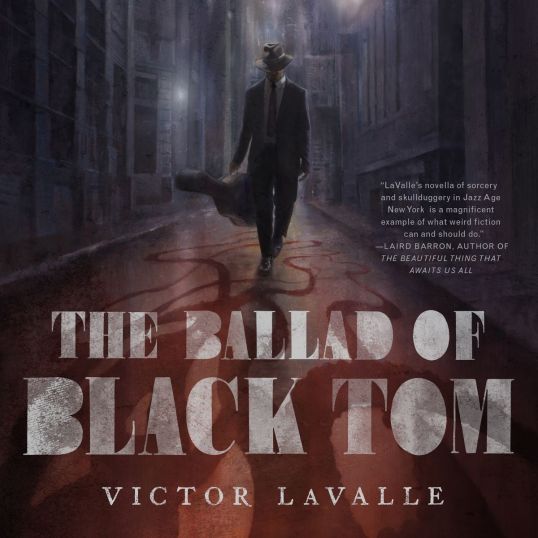
The Ballad of Black Tom, by Victor LaValle

the-ballad-of-black-tom-1

Victor LaValle doesn’t rehabilitate HP Lovecraft; he takes all the good, sheds the malevolent dreck, and adds to the horror a heart and depth that HPL never managed to find. The Ballad of Black Tom (on B&N and Amazon) is a far better imagining of HPL’s The Horror at Red Hook; it has a humanity to it that Lovecraft couldn’t write, and is in every way a superior story.

LaValle uses the story of a young black man to artfully tie the everyday horror of injustice, and humanity’s easy inhumanity, to the overarching themes of cosmic horror and the pursuit of power. He does so while retaining the wonder and strangeness of HPL’s more evocative works, even as he roundly and repeatedly critiques HPL’s own prejudices both implicitly and explicitly. This story is a treat.

If you ever found any redeeming quality in a story by Lovecraft, any frisson of horror that moved you, I suggest that you read this book. If you steered clear of HPL’s work because of its noxious toxicity, but are willing to give horror with heart a try, I recommend this book a hundred times over.

It’s a shame that so much of cosmic horror is tied to HPL these days. HPL’s large collection of ‘-isms’ are so inextricably tied into his stories that they are themselves a source of horror. But Robert W. Chambers wrote cosmic horror before him (with The King in Yellow), and The Ballad of Black Tom is proof that there’s good cosmic horror after him. I’m glad to have a story I can wholeheartedly recommend which doesn’t cover or ignore HPL’s awfulness, but instead acknowledges and rejects it completely.

If you want more other stories like this, there’s a collection of four novellas (including The Ballad of Black Tom) called Reimagining Lovecraft. I haven’t read the other stories yet, but I will soon.