No review for today, just me making more material in the setting I created with When Dawn Broke. I haven’t done an exhaustive examination of what the bits and bobs I casually conjured up in that first piece would mean for a setting, so I’ve decided for now to continue to fly by the seat of my pants with this one. Sorry, Stephanie. Enjoy the short scene after the break.
Author Archives: Henry
The Queen is Dead, Long Live the … Oops
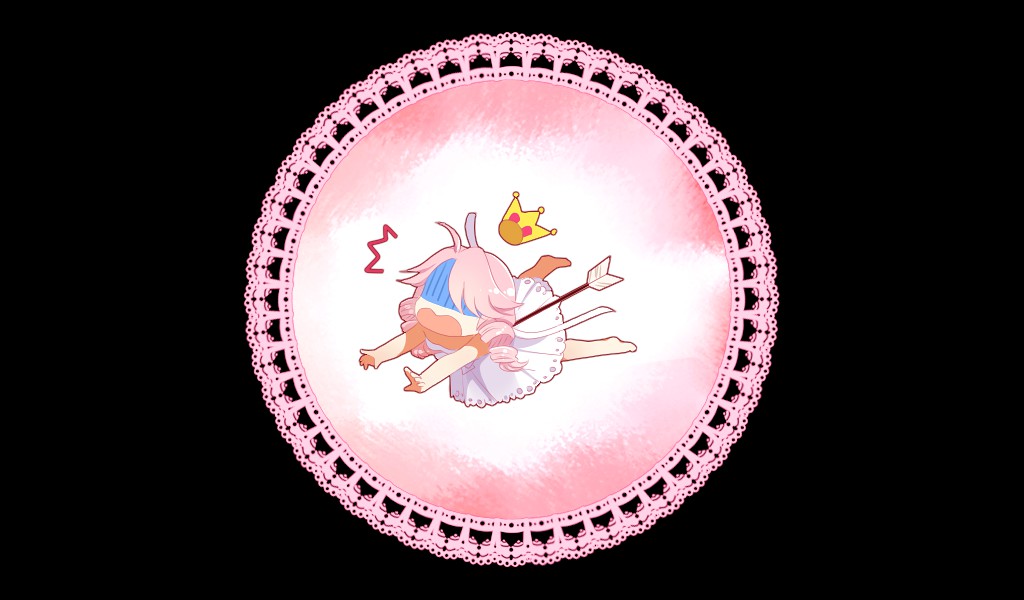
It wasn’t my fault, I swear.
I died because I didn’t know enough battlefield medicine. It turns out that you’re not supposed to push an arrow through yourself when it’s stuck in your chest.
It wasn’t really my fault: I’d never been lonely enough to put lots of time into mastering the basics of medical care, and I’d spent all my time focusing on intrigue, learning who’s who, and figuring out what plots I might have to worry about in the weeks before my coronation as Queen of Nova. After my disastrous showing at the grand ball, I’d tried to play catch-up with my long neglected social skills. Somehow I never got around to learning what to do about arrow wounds.
I just didn’t think they’d be an issue, you know? Or at least, not as big an issue as accidentally starting a rebellion by pissing off my nobles. I’d already had one of them assassinated, and had only succeeded because of all the time I’d put into mastering my network of agents. Next time, I’ll make a different mistake. I’m sure of it. Welcome to Long Live the Queen.
Reserved For The Cat, by Mercedes Lackey
Reserved for the Cat is another one of Mercedes Lackey‘s send ups of old fairy tales, still predictable and still entertaining. It’s a fine retooling of Puss in Boots, but as with all of the other Elemental Masters stories you can’t expect too much in the way of surprises. Well, that’s not quite true: it does diverge from the original story to offer the heroine a more decisive place in the final climax, but I’ve come to expect that from Lackey’s reworked fairy tales and can’t really count it as a surprise.
I doubt that Reserved for the Cat will win any particular awards, but if you’ve enjoyed the other entries in the series I expect that you’ll like this one too. In fact, you’ll probably like it more than some of the others; unlike in Shadow of the Serpent, the heroine here actually has a chance to take care of her own problems. And unlike the original Puss in Boots, the cat here creates nearly as much trouble as he solves and has to deal with the problems his own overconfidence has created. I find that altogether more satisfying than the alternative.
My thoughts on the book’s high notes after the break.
The Wizard of London, by Mercedes Lackey
The Wizard of London is Mercedes Lackey‘s reconstruction of The Snow Queen, by Hans Christian Andersen. It comes as the fifth book in her Elemental Masters series, and follows in her tradition of giving the heroines of the story considerably more power and input than they had in the original versions. As with almost all of the other entries in this series, this one is also set in England in the early 1900’s.
If you’ve read any of Lackey’s other books in this series (or indeed, nearly any of her other books at all), then this story’s style will be intensely familiar to you. Even if you don’t know the original fairy tale, there are few surprises to be had here; the biggest puzzle I faced came in deciding which of the groups of main characters would be the primary representatives of the original fairy tale. That said, Lackey is a solid author and routinely manages to make the predictable entertaining, which in my opinion is quite an accomplishment.
Do I think you would enjoy it? Most likely, yes. Do I have a few other thoughts to share? Read on.
The Wind Rises: Touching and Troubling
Last night I went with my friends to see The Wind Rises, Hayao Miyazaki‘s most recent film. As an artistic creation, as a story, it is both touching and impressive. Yet I found the story and the film’s romanticism, in the context of modern Japanese politics, to be unsettling. It is a tale about an actual historical figure, but to the best of my knowledge is heavily fictionalized. In other circumstances, with a different subject, I might feel less conflicted about the end result. But while I love this film as a piece of art I’m still not sure how to feel about it in a wider context. Let me explain.
As I would expect from a Studio Ghibli production, the movie is gorgeous. More than that, there’s a dreamlike quality to the film that is both endearing and entirely expected. This is heightened by the audio design, which uses a whole chorus of voices melded with more standard sound effects to produce the sounds of engines, wind, trains, and even earthquakes. In many ways this softens the sound profile of the film, and leaves even moments of supposed reality still faintly surreal.
Appropriately enough, this movie tells the story of a dreamer, a boy obsessed with flight who is limited by his poor eyesight and finds solace instead in designing the machines that will fly. He pursues his dream of flight with a singular devotion that puts others to shame, and as much as anything else this film tells the story of the joys of flight and the tumultuous path of following one’s obsessions.
But the person this film is about is more than an inspired dreamer; he’s also one of the leading architects of the Japanese Empire’s air force. In many ways, he is the seemingly oblivious representation of Japan’s military expansion into the rest of Asia, along with all the suffering that that implies. The film barely touches on this, preferring to focus instead on the majesty of flight and the joy of pursuing the perfect craft.
I am, of course, over-simplifying. This is a movie about a man, myopic in his focus on the few things that truly matter to him. It is less about history and more about one person’s (fictionalized) love and dreams. We are treated to bittersweet romance, the joy of obsessions followed and realized, and the pain of knowing that all of the beautiful things that one creates will only see suffering and will likely never see times of peace. Though there are moments of brightness, this is not a happy movie. And despite its fictional nature and close connection with unreality, it’s a very real and human film.
So why am I unsettled?
Rimworld: Sci-Fi Frontier Shipwreck Fiction
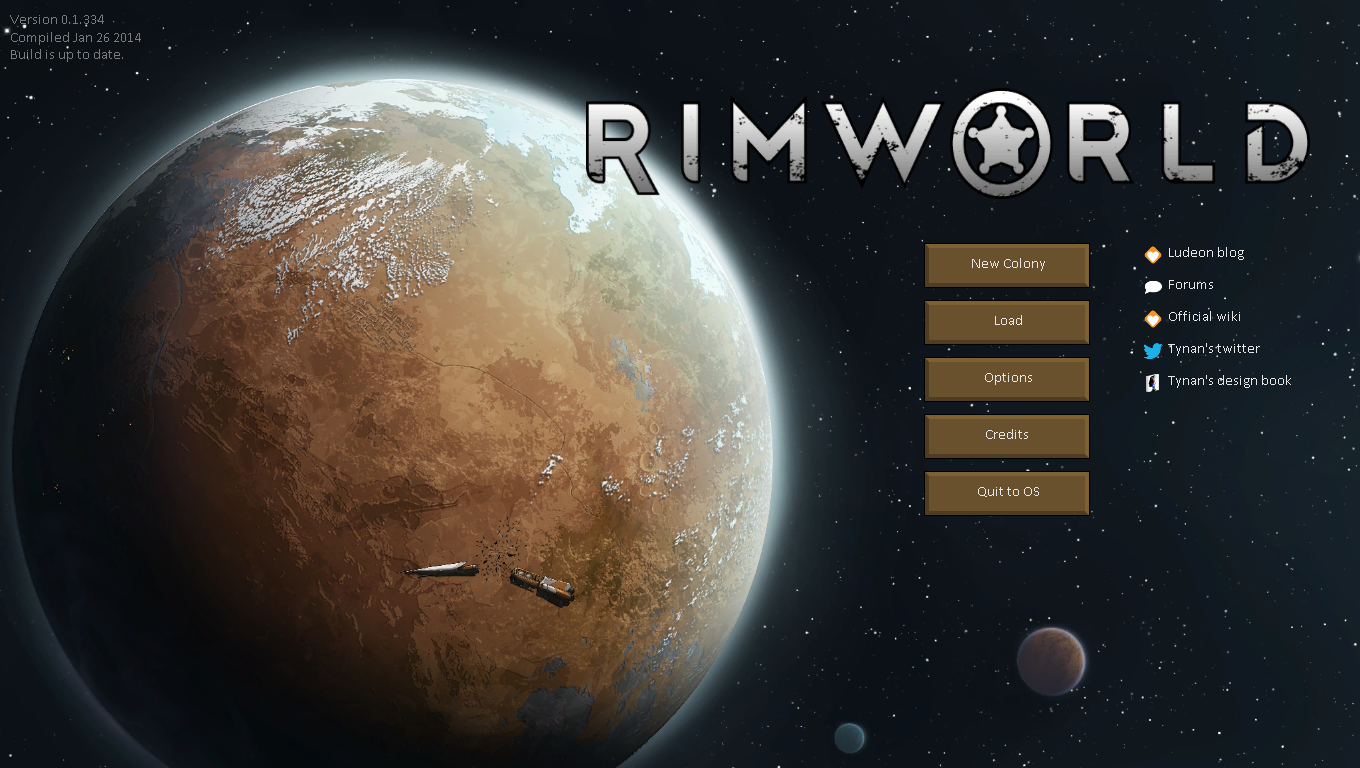 I set down on the planet with complete awareness of the dangers that I would face, and a steady sense that I would do better than those who had come before me. As I established my new outpost, eagerly digging into the cliff face nearby to harvest the easily accessed metal and provide my fellow accidental colonists with shelter, I was certain that I was in the right place, doing the right thing. I planned out my dwelling carefully, designed it with defense in mind, and laughed at the idea that I might have missed any of the silly issues which had so beset the Let’s Plays that I had watched before I picked up the game.
I forgot, of course, to plant any food. Welcome to Rimworld.
Feed, by Mira Grant
Feed‘s appeal is a dangerous, slow, and creeping infection: you likely won’t recognize that it has its hooks in you until it’s too late, and at that point you’ll be too far gone to care. In its early stages you’ll pick up the book every so often to read the next chapter, intrigued by the ease with which Mira Grant (aka Seanan McGuire) has created these characters and given you a look at what it might mean to live with a real zombie apocalypse. The midpoint of the infection is your last chance to cut your losses, as the curtain lifts on the real story of the book and intrigue and conspiracy begin to unfold before you.
There’s an exceedingly brief threshold in which you might be able to put down the book, and then the late-stage symptoms set in. You will put off other work and be made upset by anything that comes between you and finishing. Your only goal, at that point, is to make sure that you’re able to follow the rest of the story to its conclusion. The last hundred pages are a rush, an excellent demonstration of a dramatic climax at its finest, and they’re irresistible. Almost as soon as I had put down the book, I was already putting the next two on hold at the library.
Heck, I even did something else I haven’t done in ages and started reading the sample opening from the beginning of the next book, where it hid in the after-material. I strongly suggest that you indulge yourself and give the book a try. For those of you who want to hear more about the book, read on below…
The Human Division, by John Scalzi
Usually by the time that I hit book five of a series, I need a break. I’ll feel a little tired of the author; I’ll have come to expect their turns of phrase, I’ll know some of the ways in which they think, and I often have some inkling of where the story will go before it ever gets there. Tired isn’t quite the right word, but you get the idea. It’s right around then that I start looking at other books longingly and prepare to binge my way through a different series.
But John Scalzi has completely avoided this predicament. I mean, sure, maybe I expected some of what was coming from Zoe’s Tale, but that’s mostly because it covered a lot of territory that I had already read in The Last Colony.
Where am I going with all of this? Here: The Human Division is great, and I want more. In fact, I want to see the next book in my hands as soon as possible. I accept that this might take some time, as I am certainly aware of the frustratingly slow pace at which stories are often written, but nevertheless. This series is exceptional, and reading it feels a bit like I imagine being sucked out of an airlock must feel. Except that the frigid void of space is actually a deeply engrossing series of story lines, and you don’t end up boiling your liquids out through your pores while freezing at the same time. Ok, look, the analogy was a bit forced, but these books will grab you and pull you along mercilessly with all the force of an explosive decompression, only freeing you once you’ve come out the other side.
Treat yourself to a good time and read this series, you won’t be disappointed. Would you like to know more?
Zoe’s Tale, by John Scalzi
We now return to our scheduled review of Scalzi’s book Zoe’s Tale, the “odd one out” in the series started by Old Man’s War.
Zoe’s Tale is the parallel novel that accompanies The Last Colony. I’m impressed that Scalzi even attempted to write a second book covering much of the same temporal territory, and I’m even more impressed that he was able to write something that stood on its own despite the fact that I already knew (almost) exactly what was going to happen.
I understand that some people (like my friend Ben) don’t like Zoe’s Tale as much as they like the other books in the Old Man’s War universe. And I can see why: if you were looking for a totally new story, Zoe’s Tale isn’t the place to go. On the other hand, if you are just looking for a good read and are ok with covering some ground that you’ve already been over before, Zoe’s Tale is perfectly solid and enjoyable. My opinion of the book may be influenced by the fact that I didn’t have to wait for it to come out and didn’t have to wait for the next book in the series; there are a number of failings which instant gratification will fix.
But I don’t think it’s fair to call the repetition in Zoe’s Tale a failing. Maybe I just feel this way because I’m impressed by Scalzi’s ability to weave a second story in behind all the elements that I already knew, but I really do think that Zoe’s Tale is quite excellent. Scalzi manages to take a story that I’ve already heard before (right down to many of the essential details, and occasionally even the conversations) and offers it back up in an exciting fashion, following a character that I’ve only ever seen moving around on the sidelines before. It’s great. Also, damn, what a climax.
Enough of generalities! Let’s get down to some specifics, shall we?
Robocop: Villains Are People Too
We interrupt our regular Scalzi-related review to bring you this important news bulletin: we have seen Robocop, and we have found it Good.
I went in having only seen a few trailers and otherwise knowing nothing about the movie. I’d expected to see a poor reboot of the original; I’d thought it would be a bad action movie that would try and fail to recapture the fun that I’d had before. What I got instead was a deeply critical commentary on the perils of the militarized police state and the inadequacy of force when it comes to establishing peace, with additional treatises on the dehumanizing influence of unrestrained and unethical corporate practices. Also, Samuel L. Jackson as an O’Reilly-esque opinion-show host.
I am very satisfied with this.
The short version without spoilers? It’s great, go watch the movie. If you want more, keep reading.
 Fistful of Wits