Dandadan is a lot. Episode one made me nervous. It also caught my attention. I stuck with the show, and now episode seven has made me cry big, heartfelt tears.
This show is not what I expected. It frequently has an extremely middle school-ish feel, yet it has also sent me on an emotional rollercoaster. It’s goofy and weird, with an upbeat and sometimes jarring energy. While it is written about (and presumably for) young teens, it feels less siloed in its gender appeal than many other shows I’ve seen aimed at a similar age range.
This show is definitely not for everyone, but… I really like it. Let me tell you why.
Are you tempted to make every NPC in your game a deep and complex character?
Don’t.
I love creating and playing NPCs in my games, and it comes easily to me. Part of this is because I’ve done improv theater—lots of improv theater. But mostly it’s because I use a few basic guidelines when I’m coming up with NPCs.
Since I apparently haven’t written anything about making or running NPCs since that article about naming them from over a decade ago, I figure this post is overdue.
Your regularly scheduled programming has exited my brain stage right.
The wisdom I’ve found most useful this week comes from my similarly distressed elders: don’t borrow trouble. What I fear may yet come to pass, but it probably won’t look exactly as I imagine it. More importantly, I won’t gain anything from letting my dread wax eloquent—unless I’m imagining ways to create solutions that are within my power to work towards.
That’s all easier said than done. I’ve only managed to follow this advice some of the time.
I’ve been thinking about my current need for distractions, and for narratives that give me hope and feel empowering and encouraging. I’ve also felt a growing urge to make those narratives for myself and for others. But even as I feel the need to do that, and wonder about how I might do it, the task itself feels a bit like climbing out of a well without a rope.
I’ve been scripting a comic recently. Maybe that’s part of the recipe. It certainly feels like it hits some of the necessary notes. I’m meeting with the friend who came up with the comic’s original concepts today. I hope he likes where I’ve taken things.
Perhaps it’s also time to revisit my old Protectors stories. They feel especially timely once again. I just need to have them critiqued and rewrite them a bit more before I can shop them around… or find a way to publish them myself at this point. Maybe it’s time to push harder in that direction.
This election didn’t deliver what I’d hoped for. So far it’s doing a good job of delivering what I feared. Regardless, I hope you’re all ready to weather whatever storm is coming your way, and are enjoying your good times while you have them. Take care, and good luck.
Time travel and slasher movies seem like a rare combination, but there might be something in the air. Last week I watched Totally Killer and really enjoyed it. I think the universe heard my enthused raving, because Time Cut just came out.
I have, in the course of a few short days, seen the number of time travel slasher movies I’m aware of double. Maybe this is the new Moore’s Law and next week I’ll learn about two more? Anyway, I liked Totally Killer a lot, so I had to give Time Cut a try.
Totally Killer has been sitting on my to-watch list since it came out last year.
I’m glad I finally got around to watching it. I had a damn good time. I’m very aware, however, that I was watching this movie through the lens of my love for time travel movies. I have a weakness for them. I feel less comfortable rating this movie as part of the slasher genre—I don’t have the context, it’s not a genre I know as well.
Yes, in case you missed it, this is a time travel movie that was caught in a horrific lab accident and fused with a slasher flick: teenage Jamie Hughes from 2023 is thrown back to 1987 and tries to save her mother and her mother’s friends from a serial killer, without creating a paradox that will erase herself from existence. Your mileage may vary, but I…
There are many ways to play TTRPGs. As long as you’re all having fun you’re doing it right.
It’s easy, however, to stumble over one’s assumptions. Mismatched assumptions about creative control, who’s taking narrative initiative, and what to expect in play are a quick way to sour your fun.
This is a tangent from the “social skills of storytelling” series, working from two inspirations:
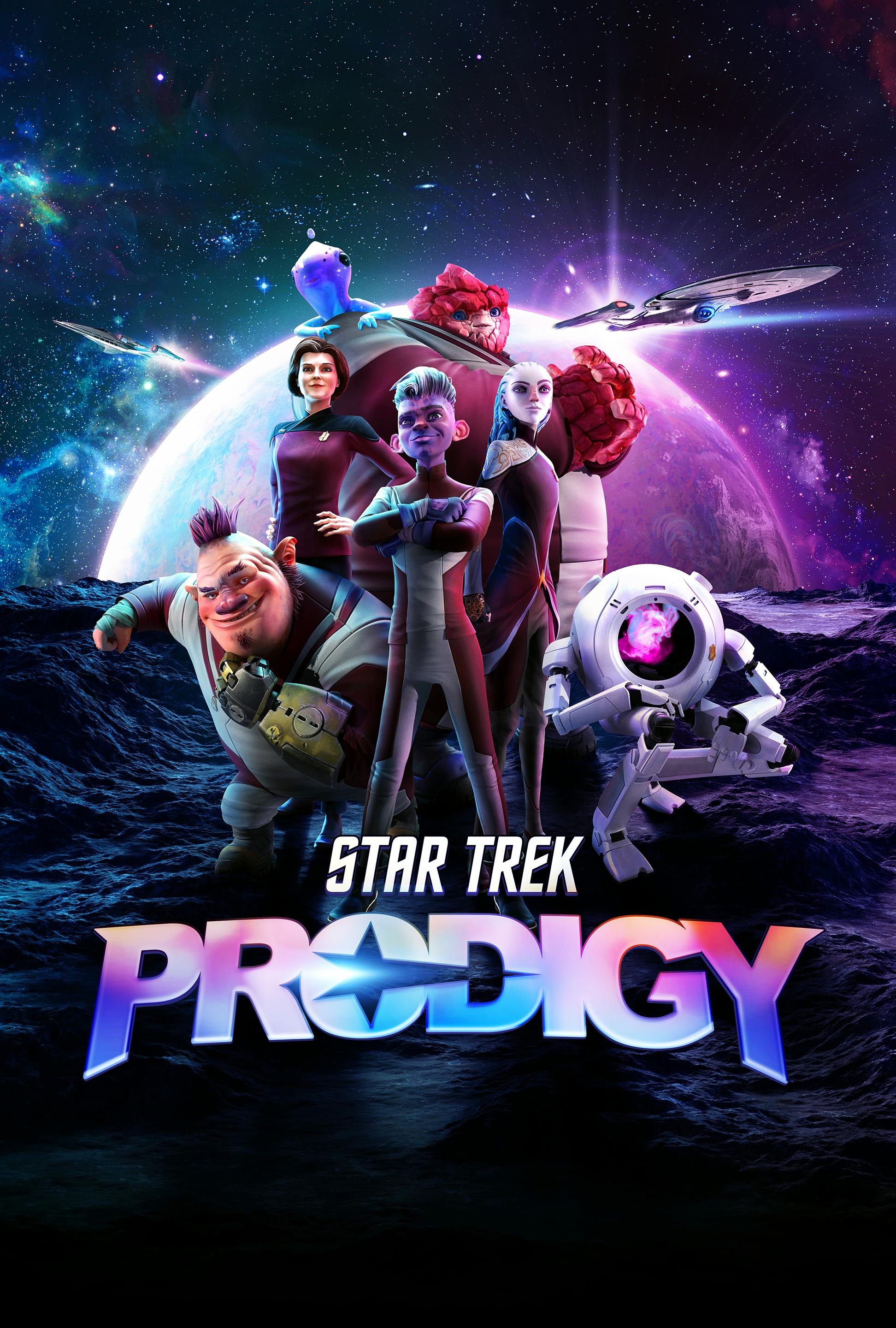
As someone who grew up on Star Trek: The Next Generation,Star Trek: Prodigy didn’t quite feel like a Star Trek show until episode six. That might be a good thing. As much as I love TNG’s broad focus on an ensemble cast with highly episodic story telling, Prodigy’s early adventure-focused plots with clear continuity from one episode to another gives us a narrative throughline that TNG sometimes lacks.
That narrative throughline and dramatic adventure feels a little like Star Trek: Discovery. Discovery felt a little off to me in its first couple seasons, due to its fixation on a single overarching narrative and its exploration of Michael Burnham’s character to the detriment of the broader ensemble cast. It wore the trappings of Star Trek, but felt more like a Star Trek movie turned into a miniseries instead of a Trek TV show. Unlike Discovery, Prodigy bridges the gap from overarching-narrative to interspersed episodic and big-narrative episodes and makes a smooth landing in that Star Trek sweet spot with episodes six and seven. It starts without the Star Trek trappings, but ultimately feels more Trek to me than the first season of Discovery ever did.
Admittedly, I haven’t yet watched much further (I think I’m on episode twelve of season one). I’m not sure that matters. Even with continued exploration of the slightly-more-main characters, the show would have to veer sharply into main-character-ism to lose what it has already established. I think the tonal shift happened at the right time too. The dramatic narrative of the show’s opening episodes feels right for a space adventure, and the transformation into a Star Trek show happens as the crew finally gels and discovers that—despite their disparate backgrounds and disagreements—they share a moral core that is increasingly influenced by the ideals of Starfleet and the Federation.
That transformation feels deeply satisfying. The crew’s growing recognition of their shared moral core feels deeply satisfying too. There’s something funny about that to me; when I started watching Prodigy I wasn’t sure I’d be able to love the show. The first couple episodes felt so strongly like a kids’ show—without the idealistic themes I love and identify with Star Trek—that I feared I’d be stuck enjoying it on only one level as decent children’s fiction. The show’s growth as it moved beyond the opening episodes proved those fears wrong.
If you appreciate good children’s literature (yes, I’m using that to describe a TV show), or if you love Star Trek, then you should do yourself a favor and watch this show. My friends who recommended it to me were totally right. Prodigy takes a couple episodes to really get into gear, but it’s a delight.
Consent is vitally important to RPGs (especially horror RPGs), yet is often taken for granted. Often, consent’s building blocks—trust, plus shared social expectations, desires, and goals—are only analyzed after something has gone wrong and the illusion of agreement is broken. I don’t think anyone needs to constantly check for consent at every new moment in their games, but you can save yourself some anguish if you establish those building blocks before playing.
I write a lot on this blog about the social skills involved in being a storyteller, because I think many of our RPG books ignore the topic. What’s more, many RPG-related blogs and YouTube channels that I admire share advice about the mechanics and structure of RPG systems… but don’t cover the social dynamics. It seems like a collective blindspot. We assume that people will know what they’re doing, or that they’ll muddle along well enough.
Some of this has changed since I started running TTRPGs about 30 years ago. Many RPG books now include the basics of safety mechanics like lines and veils, the X-card, etc. But there isn’t much on how to find consensus or foster buy-in amongst your players. You have to learn the tricky art of building agreement and engagement in your own gaming group with few pointers and little advice.
On the one hand, I get it. I think the arguments run something like the following:
There’s so much variation in social expectations between gaming groups that no system could truly be one-size-fits-all. Those interpersonal connections are outside the scope of a roleplaying game. People should figure out what works for them, and do that.
But on the other hand, those arguments are an avoidant pile of crap.



 Fistful of Wits