Rewrites, Dying, and Seeing Beauty

I wrote a scene in my Protectors setting soon after New Years, one that resonated really strongly with me. It felt good. It was obviously either the emotional climax of a story, or one of two emotional climaxes. That scene just as obviously needed more material to support it. It was, in some ways, like finding out that I’d built the middle of a bridge’s span and still needed to build the rest.

As I wrote the rest of the story, I discovered that—to remain honest to the characters and story—I either needed to write something that felt depressing and which I didn’t want, or I had to find a very different way of reaching the conclusion I’d hoped for. My first attempts at this didn’t go well. I tried forcing the conclusion I’d hoped for, and it felt dishonest, jammed into place. Then I mapped out what would happen in the depressing version, and just felt sad.

So, rewrites. Rewrites and talking with my mom (and crit group) about my narrative struggles.

My crit group agreed that I probably had to write out both versions and see what happened. They also noted that writing the depressing version might be more in keeping with the setting. My mom, on the other hand, offered up some observations from a book she’d read recently about mortality and the experience of approaching death and dying (Advice for Future Corpses (And Those Who Love Them): A Practical Perspective on Death and Dying, by Sallie Tisdale).

A little context: my mom has done a lot of work with the elderly (and is now reaching elderly herself). When I was a kid she did a good deal of work with patients in hospice—palliative end-of-life care. Her second husband, my stepfather, was a good deal older than she was, and the two of them met because they were both working in hospice. They read many books together, especially about philosophy, meditation, and the experience of growing old and dying. My stepfather died last fall. What I’m trying to say is, it’s hardly new for my mom to share something from her readings about mortality.

If you’ve read any of my stories in my Protectors setting, you’ll understand what I mean when I say those stories are rarely about growing old but often about the experience of encroaching death. My mom’s contribution was pretty on point.

The bit she mentioned was an experience which is sometimes shared by those who are dying, one she said my stepfather had spoken of: the heightening of one’s appreciation for the everyday, and for beauty in the everyday world. Not that the world is itself different, but that—in the process of dying, faced with imminent death—the world’s vibrancy and glory are more evident, more accessible.

And that felt like the missing key.

Thinking on it now, this feels like part of the gratitude and joy, or the quiet meditation on beauty, which I see in some Buddhist meditative tradition. And that experience of beauty, gratitude, and joy was the second step I needed to follow the first emotional climax. The transformative nature of those feelings, the fundamental shift from despair and depression to wonder and awe, is at the heart of the emotional shift I needed.

I still have to write it and make it stick, of course. I’m part way through that. I’ve got to put together another few scenes, replace a few others with new ones, and then print it up and see whether it makes any sense. I don’t expect it to work on the first (second?) attempt, but maybe it will at least look a bit more like a finished bridge… something I can work with.

Thanks Mom.

The Crystal Glade

The delicate traceries of crystalline trees rise from the glass-covered loam of an ancient forest. They glimmer, refracting sunlight until it dances across the earth around them, shimmering in their vitreous leaves. It is dangerous to walk among the trees with eyes or skin uncovered: many have been blinded by the brightness of the Stone Trees or burned when a leaf’s lens seared their flesh, and the fine-crushed debris of last year’s leaves will shred its way through any foot. On still and sunny days, the land around the Stone Trees smokes and bakes. On windy ones, the rainbows they cast dance.

Meditating in the heart of the Stone Trees’ glade is both a rite of passage and a form of augury for the wise ones of the local people. These practitioners say that the most potent prognostications are revealed beneath the sun’s brightest light, but they caution against the casual pursuit of such knowledge—the Sun-of-the-Trees can take as quickly as it gives, and more than one would-be oracle has fumbled their way out from the Stone Trees blind, bleeding from their dreadful stumbling.

The blood they leave behind soon disappears.

Near the edge of the Stone Trees, the glassine sheets of sloughed crystalline bark lie heavy and still amidst the leaf debris of the surrounding wood. The boundary there, between the old wood and the crystal trees which rise from their midst, is feathery and ill-defined. It wavers back and forth. Those few who’ve tried to track the edges of the stone tree grove within the vast and aged forest all disagree as to where the true edge lies. Sometimes, they even disagree with themselves. The only thing they can regularly agree on is that the boundary seems to move at times, replacing wooden giants of the forest with the refractive stands of the crystal trees. But the border shifts back as well, and a year after disappearing some massive trees thought lost to the stone and glass reappear as they were, fresh with their missing year’s growth. None have seen the border there shift and carried the tale of it back with them, but plenty have disappeared.

Those that disappear have never returned with the massive trees.

The center of the Stone Trees’ glade remains undisturbed, however. While the boundary may waver around the glade’s edges, the center does not shift. The locals say this is because the Sun-of-the-Trees—that refracted kindling glow that haunts the Stone Trees on even cloudy days, rising to blinding brilliance in full sunlight—lives there and holds the grove still in its presence. Those who doubt or discount local stories claim that the phenomenon is astrological and geological in nature, tied to the movement of the stars and the composition of the earth beneath the glade. While some have attempted to dig into the earth beneath the fractal crystal spires, to test their hypotheses, their expeditions have uniformly ended in disaster and failure. Digging through vast taproots harder than iron, facing frequent tunnel collapses as though the earth itself wished to smother interlopers… even the largest projects lose their workers when they hit the first crystals, breaking tools and hopes on the stone trees’ adamant foundations.

Most stories told of those digs ooze with the work’s dangerous drudgery. But some few shed the banal to speak of whispers down in the dark, or to hint at revelations seen in the gleam of a crystalline root. Few who’ve worked one mining expedition will ever sign up for another.

The Stone Trees have proven similarly resistant to attempts to remove them from their glade, though the acquisitive may sometimes depart with bark, leaves, or even a small branch. These artifacts and keepsakes are treasured by collectors of oddities, and have sparked the curiosity of many. But while plenty of the curious have attempted to enter the glade, far more stop at the edges, sit down, and simply listen to the music of the trees as they chime in the wind. It is, they say, the most enchanting sound they’ve ever heard: a portal to a space beyond, and a source of peace in the world.

The Breakers’ Strand

Out on the edge of Cape Hope, the Breakers’ Strand beckons. It is a dangerous lure, a vast and beautiful stretch of shimmering sands and tufted sea grass, marred by the ruined hulks of dead ships. Though its sands are coveted by Cymearnian glassmakers, it is a desolate place: vessels’ ribs emerge from the Strand’s shoals and sandbars like skeletal fingers, waves frothing happily around the remains of their victims. The Breakers’ Strand claims many lives every year, and sailors sing of its reach. Scared, they compose poetry, odes offered to the Strand in the fervent hope that it will accept their words… rather than clutching and dragging their hulls to their doom.

The Breakers’ Strand runs at least forty miles, but its outer windswept edge reaches even further into the sea. The currents deposit many gifts upon its beaches, and the heavy waves sometimes break through the Strand’s boundary into the brackish bogs and fens of Cape Hope on the Strand’s inland side. Here and there, amongst the Strand’s small occasional inlets, those bogs and fens form estuaries and salt marshes. Locals live in isolated villages, fishing communities sheltered by the Strand, and they sail out from the lees on either side of Cape Hope. None sail the waters along the Strand itself, unless they absolutely must.

Cape Hope straddles the only sea route between the ancient and storied vastness of Cymearn and the burgeoning wealth of the Guild-Cities. All shipping which would travel between them—as indeed most would—must tempt fate and ride the strong winds and powerful currents of Cape Hope to pass the Breakers’ Strand. The only other routes around all put so far out to sea that most journeys run afoul of flukey winds, requiring more stores and fresh water than it’s worth.

Of course, those reliable winds that scour the Breakers’ Strand make it all the more dangerous. Worse, they never seem to clear the frequent fogs which rise from Cape Hope’s marshes. Ships may believe they’ve given the Strand its proper sea room only to be driven onto its shifting sandbars, or pulled into the low fog-shrouded shoreline by the sea’s currents. If such ships are fortunate enough to come ashore in fine weather, they may manage to escape before their ship is bludgeoned to pieces. But few are so lucky: most that run aground on the Strand are broken in rushing seas, beaten apart, their sailors rendered unconscious by vast waves casting them violently, again and again, against the sand of the Strand’s shallows.

Ships’ corpses are not left unattended, of course. Salvage work is common amongst the locals of Cape Hope. Many local homes are built from ships’ timbers-turned-driftwood, and beachcombers wander the Strand after any storm to pick over whatever wrecks they might find. Most finds are small things, useful but picayune, but every so often a salvager may strike it rich: a ship’s pay-chest, or rare luxuries which survived the salty sea. More often, beachcombers are paid by shipping concerns for the slow trickle of their reports or findings—whether that means confirming the loss of a missing ship, or recovering some fraction of the ship’s lost cargo. There are even those merciful (or guilt-ridden) locals who risk their lives to rescue sailors when they may, forging out into the lethal surf to retrieve those blown ashore in terrible storms. The less adventurous or driven are sometimes employed to maintain the lights built by the Guild-Cities on either end of the Strand. Useful though they may be, those lighthouses remain insufficient to their task.

Of course, those lighthouses aren’t the only lights seen at night along the Strand. In fog, or on cloudy or stormy nights, less scrupulous beachcombers turn shipwrecker, carrying lanterns along the dunes to coax passing vessels to their doom. These scavengers would speed along their work, bringing unsuspecting ships into peril at places of their choosing. None of the small fishing villages that pepper the Cape’s coast and rise from its fens boast of these practices, but they are known.

Harder to explain are the lights seen even with no shipwrecker present, emerging from the bogs or riding across the Strand. Local lore warns that one should always flee those lights, whether they are ghost ships or simple lonely spirits. This advice is doubly true for any who’ve pulled a ship ashore to pick apart its carcass. The ire of the dead is not known for fine distinctions or discretion, and enough have died upon the Strand or in its waters to muster centuries of ghosts. For every sailor rescued from being beaten to death by the sea itself, many more are never saved. They instead have added their bones to the beautiful beaches, their last passage unknown.

A Deadly Education, by Naomi Novik

This book reads like fanfic grown wild and untamed, the sturdy and feral descendant of stories past. That, in my mind, is a good thing.

I tried to sum up the novel’s concept, as practice for making pitches and loglines, and came up with something like… “what if Harry Potter, but the school is *literally* a death trap full of monsters and there aren’t any adults around to ‘help?’” Add some socioeconomic inequality, teen drama, a pinch of prophecy, and an antisocial and justifiably angry teen girl for a narrator, and you’ll have a pretty good idea of what Naomi Novik’s A Deadly Education is like.

I enjoyed the hell out of this book.

I did not, apparently, read the first released edition. Before posting this, I read a little bit of other commentary on A Deadly Education, to doublecheck my own impressions, and found some critiques of what seemed like racist content that I had entirely missed. It turns out that I wasn’t oblivious (this time): Naomi Novik acknowledged those critiques after receiving them last fall, said the language was unintentional, undesired, and unnecessary, and removed it from later versions of the text (including the version I read).

Honestly, the only thing that seemed off to me was the lack of more queer folks. As someone who works with kids and teens, I’m kind of surprised that there was so little overt inclusion of characters who weren’t cis and het, even in the background. Yes, it’s easy to read one or two characters as queer, but “plausibly deniable” inclusion just isn’t the same thing. I know that Novik has included queer people in her Temeraire books (only as side characters sadly, but important and beloved ones), and—given the change in context from Napoleonic-era historical fantasy to modern teen fantasy—the general lack seems like an avoidable oversight.

Now, of course, dating and romance necessarily take a back seat to simply surviving in this story. Certainly it could be argued that our protagonist, outcast that she is, is paying more attention to other things than the sexualities and genders of those around her. But she’s also an astute social observer, and I would expect her to pay attention to who was dating whom (or who was crushing on whom) if only for the way that those relationships would change power dynamics in the Scholomance. Surely someone in that hell-pit of a school is openly queer.

That said, the lack of more queer rep was not a dealbreaker for me. I was still stuck in this book, pulled back in repeatedly. I’d open it while my computer turned on, and then keep reading while the machine patiently waited for my password. I’d open it when I sat down for lunch, and lose an afternoon. I’d open it as I lay in bed, and then struggle to put it down and sleep. This book grabbed me, and I want the sequel.

Putting those issues aside, I rather liked the book’s commentary and focus on inequality, and the way that inequality is baked into the setting as a driving force. It’s poignantly, painfully honest—and reminds me in a good way of later themes in the Temeraire series. The resources available to any wizard are a vital concern, and they’re literally life or death for students in the Scholomance. People will do nearly anything to get an edge, or keep one, and that desperation is the lifeblood of this book. I’m so glad that it’s brought to the forefront here.

Yes, I recommend this book. If you wanted more teen wizards, awful and dangerous schools, teenage drama in terrible circumstances, or delightfully and justifiably angry female narrators, this book will make you very happy. Indulge yourself.

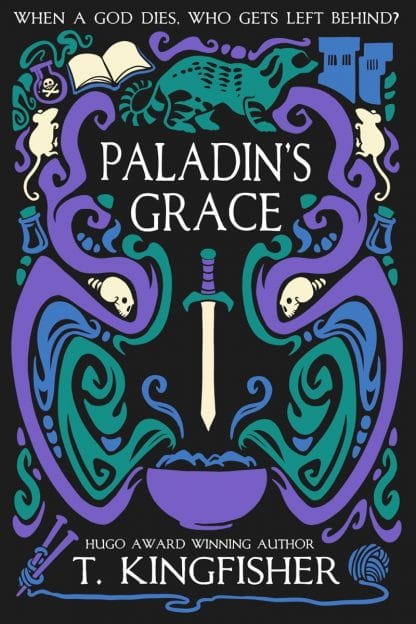
Also, if you want another perspective on the book, check out this naga’s thoughts. I used the image at top from that site.

Soul (2020)

I liked this movie, but had some complicated feelings about it.

On the one hand:

Soul is, in my opinion, a higher quality movie than many other current American movies. I enjoyed it, and yes, it did make me cry a bit. Soul also does a better job of including non-white people, and specifically black people, than most previous Pixar movies. The same is true of Soul in comparison to animated movies in general, beyond Pixar. As such, it represents an improvement on the current state of American movies both in terms of representation and in terms of other elements of artistic quality. Basically, yes, Pixar continues to know how to make good movies.

On the other hand:

Doing a better job of including non-white people, and specifically black people, than most previous Pixar movies? That’s a comically low bar. The same holds for most movies in general. It honestly isn’t hard to expand the portrayal of black characters beyond being poor, criminal, or poor and criminal… and yet American film and TV continues to stagnate there (with a few notable exceptions). So while Soul does improve on this front—and I’m glad that it does!—I’m reluctant to give Soul too much credit beyond acknowledging and being glad that Pixar is moving in the right direction.

Perhaps more importantly, there are a number of critiques of the movie—predominantly from people of color—about how people of color show up in the movie. These critiques include but are not limited to the discomfort and weirdness around *SPOILERS* putting a white woman’s voice in a black character’s body for a decent chunk of the film, or having the black character be disembodied for much of the runtime *END SPOILERS*. While my opinion on this front really doesn’t matter, these critiques seem fair to me.

Where does that leave Soul?

I enjoyed watching it. I think it’s a good movie. I would have liked to tweak the end a smidge to hone a theme that I think was present but not quite fully realized… but that’s okay. I also think those issues mentioned above are real and present, and the critiques I read (or which were read to me) around the time Soul came out make sense.

If we lived in a world where there was not such a poverty of representation for black people in movies, animated or otherwise, I think none of these critiques would be especially trenchant. If we lived in that world, Soul would simply be a good movie with touching observations about what it means to be a human, to be alive. As part of a larger constellation of abundant and varied representations of black people, Soul would be great.

We’re not in that world, not yet. We have a long way to go. Soul is a step in the right direction, but it’s not perfect. We have to keep moving.

A side note… I have to remind myself sometimes that it’s okay to make mistakes, and it’s okay to make art that isn’t perfect, or doesn’t match the ideal in my mind. And, when I screw up, I have to remember that anyone who walks is going to fall on their ass sometimes. I must keep my art sufficiently removed from my self that I can accept criticism of it (and can critique it myself) without throwing myself into debilitating self-doubt, anxiety, and depression. And then, of course, I have to try again.

Some of my patience for Pixar and Soul comes from the fact that I literally don’t have skin in the game. But some of it comes from wanting people to make art, and knowing that that means accepting some missteps along the way (as long as people are willing to learn from them, unlike J.K. Rowling’s transphobia for example).

Will Pixar learn to do better? Will they continue trying to do better? I don’t know. But I hope they do. And they can improve things by doing more of what they already do, and what they’ve already started to do.

Pixar is really good at making meaningful stories that I have treasured for years. I’d like them to keep doing that, and I’d like to think that they’re good enough, skillful enough, and have their hearts in the right place enough to help relieve that poverty of representation I mentioned before. Pixar can’t do it on their own, but they (and many other folks) can make life different. Better.

I look forward to it.

Lupin, and knowing the course of the arc

I’ve been enjoying Lupin (on Netflix) a great deal. My partner and I have been watching it together. But as we finished episode three, something started bothering me—not really a problem with the show, but instead a disconnect between, on the one hand, the trajectory of the show’s tonal arc and narrative resolution, and on the other, the number of episodes available.

I could see that there were only five episodes so far. I know that Netflix posts all episodes at once, which meant that those five episodes were all that exists (for now). But the change in the show’s tone from the end of episode one to the end of episode three, and the narrative arcs that remain to be wrapped up at the end of episode three, don’t line up with five episodes being the sum total of the show.

Unless the show is a downer, or ends with many elements of the denouement implied rather than being explicitly laid out. But neither of those possibilities match my genre expectations or the precedent the show has already set for itself.

For Lupin, there’s an easy answer: the first five episodes are the first half of the season (thanks internet), and more episodes are supposed to come out sometime in the summer of 2021. Now I know that I’m going to be treated to a cliffhanger when I hit the end of episode five, and I shouldn’t expect everything to wrap up neatly, or even to offer resolution on any front. That’s fine by me, even if I do wish I could have all the story right now.

On the topic of arcs…

I wrote a scene around two months ago, something that came to me while I experimented with some other story beats. But the scene was the emotional turning point of a larger story, without any other material to support it. The scene alone made me cry, but I couldn’t figure out what else I needed to add for the rest of the story.

It was a bit like magically building the middle of a bridge first: I could see it hang there in the air, and it was beautiful, but I wasn’t sure how the hell I was supposed to connect it to anything else. I had this sense that the moment I tied any other scenes into it, tried to support it from earlier or later in the story, the middle would come crashing down… unless the rest of the piece was perfectly aligned. This was not conducive to writing more.

Last Friday, I finally pieced together a first draft outline. This week I’ve churned out some excellent bad first draft material. I know what I need in order to fill out the rest of the story. Except…

As I’ve made progress, I’ve realized: that scene, which feels like the emotional climax of the story, doesn’t need anything after it in the story for it to feel impactful. Everything I write after that scene in some way waters down that climax—unless I can find new ways to build the climax and denouement into each other. Maybe more troublingly, the course I choose for the story’s conclusion after that climax changes the story’s tone and themes completely. There are (at least) two extremely different options before me, and I’m stuck on indecision.

It like I’ve looked at the center span of the bridge that I made, hanging magically in the air, and suddenly discovered that the bridge doesn’t have to come down where I thought. The emotional and narrative arcs could arrive in more than one place (this is normal) but I can’t decide which destination feels more right (this is less normal). I can’t decide which is more honest to the characters, the story, the setting, or the genre. I can’t tell whether my inclinations towards the different possible destinations come from past grief and depression, from my artistic sensibilities, or what.

I’ve mapped out one version, and I’m going to write it. But with the conflict I feel about it, I have to try at least one other ending. And because I’m still making the story, it’s a bit like reaching episode three of a five episode set and having to choose whether that’s it, or whether there are another five episodes coming.

Which story is better?

How can I know?

We’ll find out.

Isle of Lyn

The last of a string of islands, its land rises from a pebbled shingle beach on the windward side up to a rocky set of cliff faces on the leeward. Three small ruins sit atop the cliff’s heights, each a collection of collapsing fieldstone walls, but the isle’s largest ruin rises in a series of mounds from the isle’s central span. The mounds are crowned by rising stonework which pierces upwards through the earth, a spear of stone for each small hill crest. A few of these rising structures still hold some remnants of roof, but most have been stripped bare down to their narrow stone skeletons. Most notably, however, each mound and each spear of stone runs in a straight line pointing just off windward, aligning perfectly with the smaller islands in the string that runs to windward.

With the exception of large storms’ gusts, the wind always blows from the same direction.

The last people to live on the island might best be described as a dwindling cult, a series of occupants too devoted to their obsession with the ruins and the island chain to care for their own basic needs. The wreckage of their settlement rests near the windward base of the isle’s central valley, weatherbeaten wood and bits of fieldstone foundation. Most houses were constructed from the wooden ships of those who’d sailed to the island, hulls dragged ashore and broken down for shelter from the elements. Perhaps the greatest mystery of the cult was how and why any joined in the first place, with an alarming rate of conversion among those who visited the little colony which died there.

The dead settlement’s small fields have been long neglected, disappearing into the turf while a few volunteer crops persist. The goats brought to the island dot the green slopes, staring at newcomers so bold as to land ashore, watching any who pass nearby through the island’s waters. The goats avoid the central valley. Once cleared for easy passage, it now lies overgrown with long grasses and burgeoning brush.

It is unclear why any who visited this desolate place would have chosen to remain, let alone settle and devote the rest of their lives to tending it. The fact that so many did, that so many set themselves down in a place where the very consistency of the wind might drive one mad, baffles those who’re cursorily familiar with the island’s history. But some few observations made from the sea, or from the pebbled shingle at the islands windward edge, point to a deeper mystery.

The foundations of the old settlement houses, like the ruins atop the leeward cliffs, are fieldstone-built. Such stones are easy enough to find on the island, similar enough to the larger rocks on the pebble shingle as to be easily imagined elsewhere ashore. But the stone spears which rise from the mounds are worked, their stonework well cut and cunningly joined. Moreover, none of those stones come from anywhere nearby. The closest similar known source would require delivery over hundreds of miles, much of that open water.

Finally, each of the stone protrusions is large enough to fit several people inside, and most accounts from those who’ve visited them swear that they are hollow. No one has been down inside them in years, to the best knowledge of the outside world. If any have, they have not shared their discoveries with anyone else… though that is certainly possible, especially given the occasional fresh shipwreck found in the waters near the Isle of Lyn, or beached upon its shore.

The few old accounts of the stone spears’ interiors do not agree with each other, often in such open disagreement as to suggest that the writers were hiding something. This is often argued by those who’ve studied the Isle of Lyn, especially by those who’ve traced how many of the old writers ended their lives on the island as part of that dwindling obsessive cult. Until someone else ventures there, all that remains is quiet speculation about these strange ruins so isolated from the rest of the world.

Blythe’s Keep

Blythe’s Keep rests atop a precipice, other stonework peeking through the tall grass beneath the fortified tower, the rugged slope giving way to a half-broken cliff. The cliff descends steeply to the well-traveled road below, giving anyone at its crest a commanding view of the lowland. The road holds traces of ancient highways, massive paving stones laid snugly together, broad leafy trees spaced alongside to shade the path.

Some distance past the cliff, a tributary of those paving stones wend away from the highway, climbing the gentle slopes which rise to the keep’s cliff face. Their old course now lies buried by landslide and overgrowth, and whatever they led to—older than the keep, without a doubt—remains hidden as well. The main highway continues on, undisturbed.

The keep is recent, in the comparative ages of laid stone. Built under the direction of the warrior called Blythe, it rises about five stories from the clifftop and is still broad at its tapered peak. The remains of its sloped roof peek above the weary crenelations of the roof’s edge. From its position at the top of the cliff, any occupant of the keep could interdict traffic along the road as they wished. They could, similarly, prevent anyone from interfering with travelers upon that road.

The stories about Blythe generally agree that he was an affable bandit who rose to prominence by winning over the people living in the lowlands around the cliff and its hills. With their allegiance, he levied tolls on any who passed along the highway that ran below his cliffs, while also running off his more violent or less restrained competitors. The money he gathered with the support of the local folk went into maintaining the road, buying better tools for the locals, and building the beginnings of the watchtower which would become his keep.

It’s also well known that Blythe had an acquaintance, Insuza, with an interest in the old, dead, and arcane. Her particular expertise varies by the retelling, but it’s always considerable. Stories vary on the nature of their relationship: lovers in some tales, comrades in arms in others, sometimes both, sometimes merely professionally connected. Regardless, in every story about his keep, Insuza was consulted early and often during its construction. Something about the keep, something about where it was built—and perhaps what lay beneath it—drew her like a moth to the flame.

At some point, however, she disappeared. The keep was finished, and only Blythe remained. Blythe died a petty lordling, with his own fortified tower that he rarely left, but without any heirs to his name. All agree that he was lonely, that he slept poorly, and that it was best not to mention Insuza in his presence.

Antiquarians argue about what could possibly have driven the involvement of Insuza, and collectors of old tales disagree about what happened to her. Some point to the ancient stones which stick out like jutting teeth from beneath the tower’s feet, and say that Blythe found ruins when he laid the foundations of his keep. According to them, Insuza’s expertise was requested to know where it might be safe to build. When her knowledge was no longer needed, they say, she departed.

Others agree that ruins were found, but say that Blythe and Insuza ventured down into them only to find something horrid. Here the tales diverge once more; one branch believes Insuza emerged from the ruins, while the other claims she was lost below. Regardless, all agree that Blythe blocked off access to the ruins and set himself to guard them with his keep, perhaps patiently waiting for Insuza’s return from her research elsewhere… or dreading the moment when she’d come knocking from below, in some more horrible form.

Update, 1/27/21

This week has not gone according to plan. Last week didn’t quite either, but this week has been worse.

Suffice to say, the writing isn’t happening as intended. As desired.

However, I’ve finally read a few books again. I somehow went through a rather bad dry spell for the past several months. Maybe more like the last year. I guess I’m not actually surprised.

But reading these books has been reinvigorating, exciting, inspiring. It’s like I spent long enough drawing down my reserves of enthusiasm that the wells ran dry, and these books are filling me back up again. They’re not all exactly what I’m looking for, or fine literature per se, but they’ve all reminded me of what I love about fiction. Reading them has been wonderful.

I’ll probably write about the books here another week, when I’m not driving my partner to their grandfather’s (tiny, outdoor, socially distant) funeral.

Life ends, life continues. C’est la vie.

And as my mom pointed out, maybe this will be good fuel for more writing to come.

The Cairn of Morag

High in the windswept hills, where rain and fog shroud the grassy slopes and leave dew on brambles and gorse, a vast pile of boulders rises from between the slopes. As tall as the hills around it, taller even, the pile is known as the Cairn of Morag, and it is large enough to bury a giant. Should an intrepid explorer choose to risk themselves, it would be possible to squeeze in through the gaps between the stones, where wet trickles down and the darkness echoes with the quiet rattles of shifting pebbles and small skittering feet.

Mosses and lichens sheathe the outer stones, a green-and-gray coat that hides the cairn from distant eyes amongst the surrounding hills. The cairn is home to birds, snakes, rabbits and other small creatures, but travelers in the area speak of something far stranger: near dawn and dusk, stories say, a red fox prowls the stones with eyes that glow like the sun. Rumor has it that those who’ve seen the lights on the cairn come down with fevers, beset by visions, haunted by the dead. This illness is, perhaps, a judgement; those who’ve killed find themselves hunted in their dreams by the beings whose blood they’ve shed. Those who’ve lost loved ones speak of reconnecting, with all the touching love and horror such a meeting may bring.

The people who live below Morag’s Hills, farmers and shepherds, masons and miners, leave out small offerings to the fox and avoid looking towards the cairn. Some of their stories say Morag was a giantess, a shapeshifting witch who blessed the land around her hills and taught the first smallfolk there to farm. Those stories say that she was struck down by a jealous god, or perhaps a demon, but was too strong to be truly slain. Stuck in the realm between life and death, her old body buried by the smallfolk she had cared for, she took on the form of a red fox with sunlit eyes to watch over her hills until the moon fell from the sky.

Other tales claim that Morag was once human, a sorceress who ruled the nearby land from her hill-keep and drew down the light of the moon to feed her growing hungers. In these stories, Morag feasted on the flesh of her subjects, simmering them in her twelve cauldrons until the meat fell from the bone, reducing the blood-broth to jelly. When the stars could finally watch no more of her profane rites, they sent down servants and maledictions, burying the hungry Morag—and all her treasures—beneath her own tower. These stories say that the red fox, Hale, is the last surviving servant of the stars, and that he continues his watch over Morag’s cairn to be sure she never rises again.

Whatever truly happened, whether those stones cover a giantess, a sorceress, or some legacy more banal, few these days approach the cairn. Only those greedy or desperate enough to seek the truth, or willing to risk their lives to see the dead, travel high into those hills near dawn or dusk.