What I Usually Write, or, Responsibilities to One’s Audience

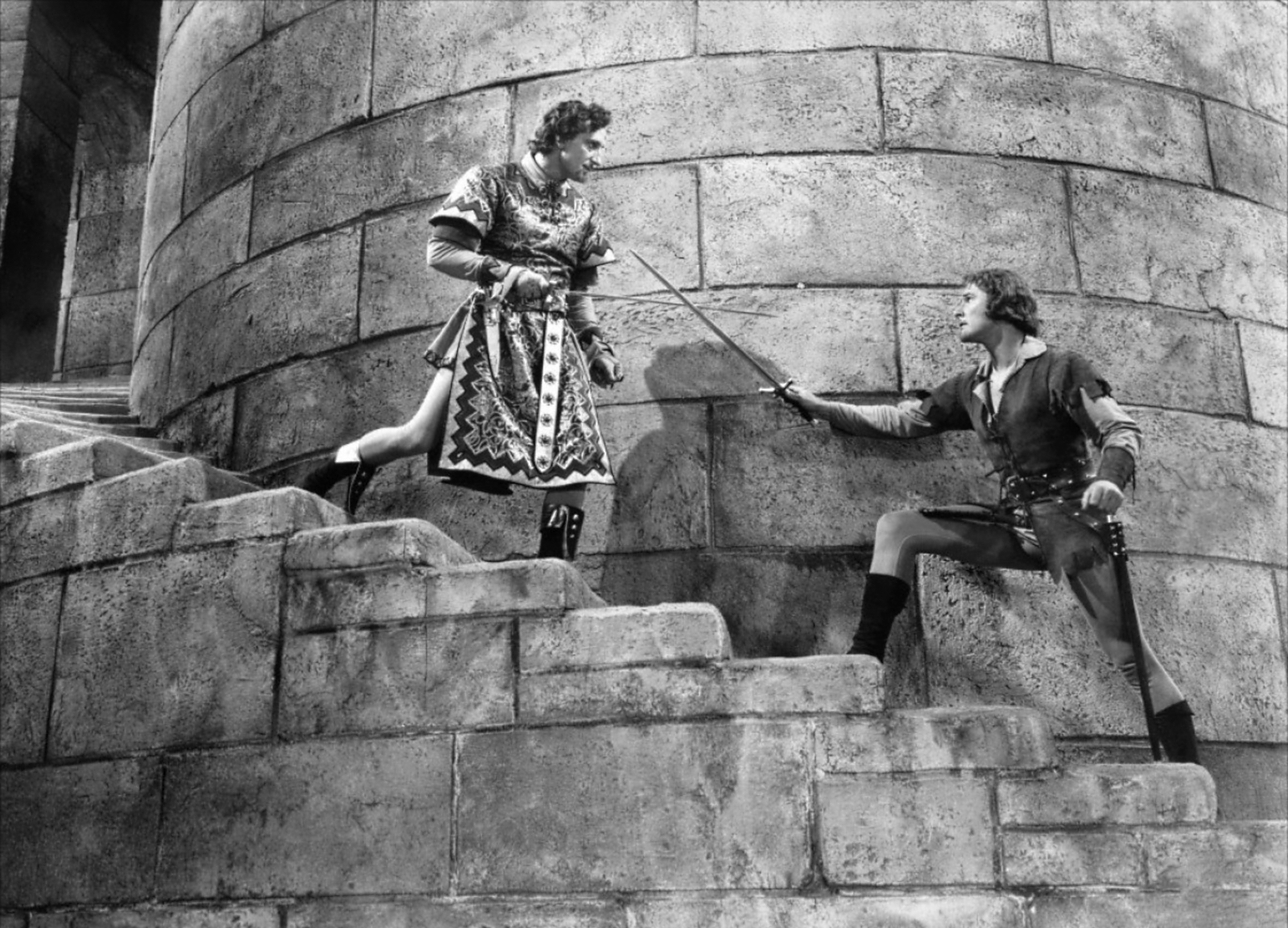
Annex - Rathbone, Basil (Adventures of Robin Hood, The)_02

More or less what I grew up with.

I love adventure fiction.  It’s makes up a large portion of what I write, probably because it’s what I grew up reading in books and creating in role-playing games.  When I don’t write adventures, I still generally use the climactic structure to resolve the primary tensions of the piece.  Unless I feel like experimenting, I don’t usually do the “unfinished story” thing and leave such tension unresolved.  But you probably already know this, so why the hell am I telling you?

Continue reading

Won’t Break Your Heart: Sorcery & Cecelia, by Wrede and Stevermer

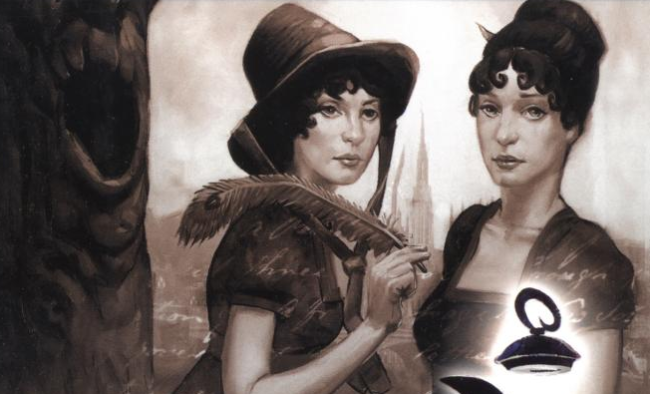
sorcery and cecilia 650

I hadn’t quite expected this to be so good.  In fact, I futzed around and failed to really start it for about four weeks (or maybe longer).  But there was some point, maybe around page 80, when I seem to have flipped a switch; suddenly all I wanted to do was finish the book.  It’s lovely and wonderful, and I would certainly recommend it to pretty much anyone who has any interest in epistolary novels, or female protagonists in post-Napoleonic Wars England, or magic, or even just fun stories.  To be clear, given how readily I’ve bounced off of other similar characters before, I had no idea how much fun they could be.

Sorcery & Cecelia (which I have learned, much to my delight, is part of a series) was written back in the 80’s as a Letter Game.  Patricia Wrede and Caroline Stevermer decided to write letters to each other in the voice of their two respective characters, relating gossip and intrigue, and telling each other about the fabulous and exciting things which they were each getting up to.  When they’d finished their game, they looked at their collection of letters and realized that they’d basically already written a novel.  With some editing for details, continuity, and pacing, they found that they had a perfectly acceptable manuscript, and then managed to get it published.  I am exceedingly glad that they did.

Look, I don’t want to ruin any of the book for you by mentioning things.  Suffice it to say that the two main characters’ adventures and intrigues make excellent reading, and Kate and Cecilia are absolutely brilliant as heroines who must vanquish their antagonists, while carefully acting within the constraints imposed on them by society.  Do yourself a favor and pick up this book.  It’s really quite good.

p.s. Thank you to the visitor who recommended this to me one morning in Mama Dorr’s kitchen.  I wish I could remember your name to thank you properly, especially after the excellent conversation we had about epistolary stories and your research into the subject. [Edit: The visitor was Naomi, but I appear to have misattributed the recommendation!  It was still an awesome conversation, but Thomas may have been the original source.  I might manage to get to the bottom of this.  Maybe.]

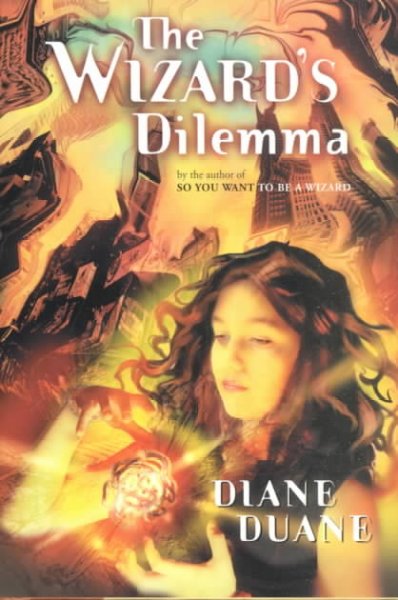
The Wizard’s Dilemma, by Diane Duane

JacketWelp, this one took me a long time to finish.  I’m still not quite sure how that happened.  Part of it was that I started the book while I had far too many things on my plate and thus got distracted.  But part of it was that at a certain point in The Wizard’s Dilemma, I felt like I could see where all of the pieces were, where they needed to go, and had a pretty good idea of how they were going to get there… and I really wanted them to just be there already, instead of making me wait.  I suspect that this is the price I pay for reading so much.  Or perhaps for being impatient.

It turns out that I was right about most of those various story beats, but seeing what Diane Duane did with them was far more satisfying than what I’d imagined.  I probably should have seen that coming, given that I’ve read the earlier books in the series and know how good Duane is at her work.  Once I finally got over my block and moved into the last parts of the book, I didn’t want to put it down.  And then, of course, the climax made me cry.  Whatever the real reasons for my reading delays, I feel quite certain in saying that this was an excellent book, one worth reading, worth recommending, and one that leaves me wanting to read the next one in the series.  Just like the previous books in the series.  I probably could have seen that coming too.

So, why the heck did this book make me cry?
Continue reading

Unsounded: Way Better Than It Sounds

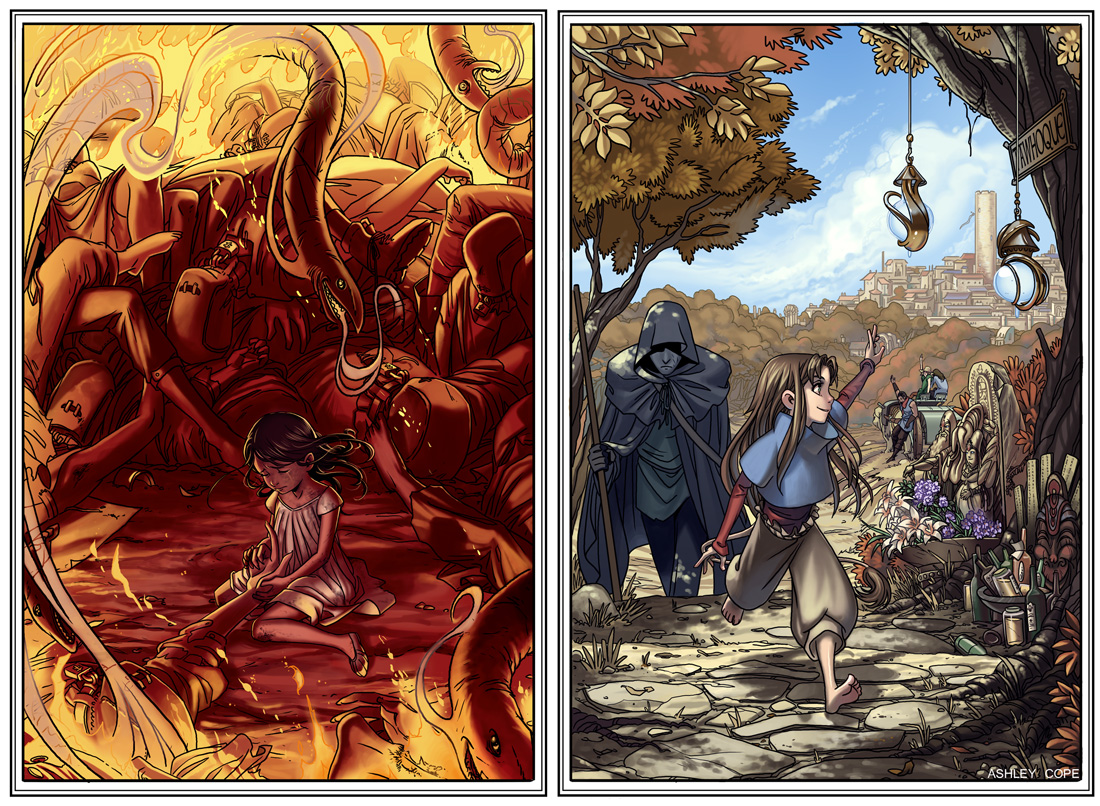
Unsounded_chapter_covers_by_ShardGlass

Ben, my housemate who hooks me up with many fine comics (along with the many other things they do), has pointed me towards Unsounded, a most excellent webcomic.  In addition to offering beautiful eye-candy (check out the designs for the covers of Chapters 2 [left] and 1 [right] above), this is a comic that already feels like a window onto a deeply thought out and well crafted world.  Maybe it’s only skin deep, but I doubt it.

Admittedly, I recommend this webcomic to you on the strengths of the printed collection of the first three chapters.  It’s remotely possible that there is some difference between the book and the webcomic version, perhaps simply in the act of holding the physical book in my hands, that changes how I feel about the comic.  Actually, if anything it would have to be the collected early sketches and two short stories added to the end of the book that would change my opinion.  But those only make me feel more certain that this is something deep and complex that I don’t yet know enough about to be able to appreciate fully… and I say that knowing that I already plan to read the rest of Unsounded’s archives.

So if you’re at all interested in reading about the stories of a young thief on a quest to prove herself to her crime lord father, and her magic-using zombie escort who’s been blackmailed into protecting her, then I suggest that you get reading.  Still not sold?  Let me put it this way: I have examined nearly every page I’ve read so far, looking at the little details, searching for another little hint, because I cannot kick the lurking feeling that I’m missing something that signals far more yet to come.  Ashley Cope has done a marvelous job so far of building a story world that all feels like it holds together, revealing new treats around every corner and hinting at far more yet to come, all without ever falling into the classic expository trap of telling instead of showing.  It’s worth reading just to see the quality of her craft.  Check it out.

p.s. I was planning to write up another flash fiction piece from the excess prompts that I generated before, but I haven’t gotten around to watching True Grit yet, and I really wanted to try combining The Matrix and True Grit.  Some other time.

Concept: A Tintin Adventure Flowchart

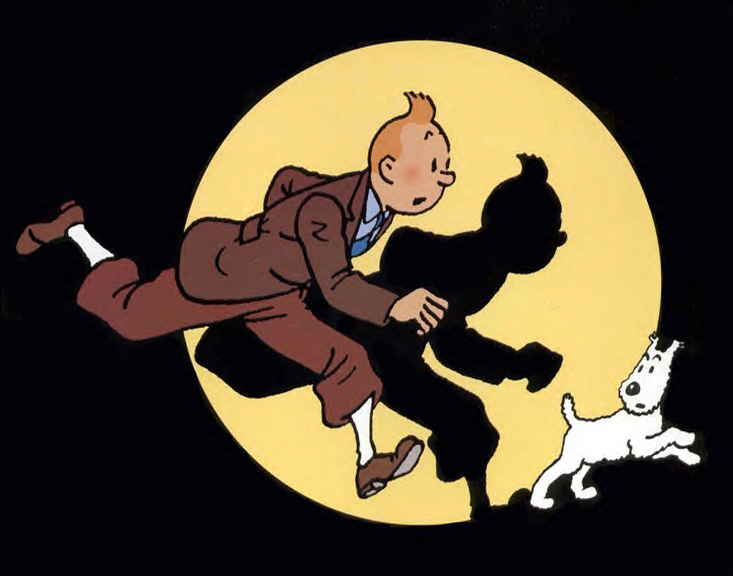
tintinI think I’ve mentioned my love of Tintin previously.  But I’ve just had a fabulous idea, so you’re going to hear about it again.

Some necessary background: Charles Stross wrote an excellent book, The Jennifer Morgue (part of the Atrocity Archives series, very much worth reading).  He based the story (careful, spoilers) on a combination of real world events and James Bond clichés, and did it excellently.  He did this in part by analyzing the Bond oeuvre (I suppose I should say the Fleming oeuvre, but Fleming really didn’t have that much to do with most of the movies) and creating flowcharts of Bond film opening scenes and general plots.

Yes, you read that correctly.  He watched all the Bond films with a friend and wrote up flowcharts to describe what they saw going on.  Here’s the flowchart of a Bond movie opening scene, and here’s the flowchart of a Bond film writ large.

Now, I love Tintin very much, but there are some problems with the old comics.  Consider:

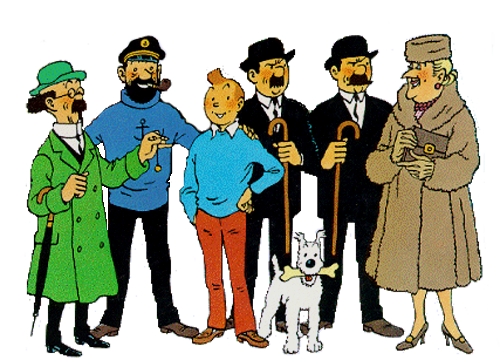
20140112153933!Tintin-mainCastI’m amazed that Castafiore is even included in the cast of characters.

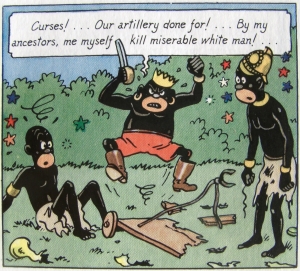
Angry_King_in_Tintin

Yeah, that’s objectionable.

So I’ve been thinking that I should try writing new Tintin stories.  Well, not Tintin per se, but adventure stories like Tintin’s, without the same racist depictions and with better representation all around.  And Stross’ flowcharts have inspired me.  I plan to go through and re-read a number of old Tintin stories, and try to make a Tintin adventure flowchart that I can follow when the time comes.  It might turn out that this is impossible, and Hergé simply had too many different stories, but I suspect that I could pull something useful out of all this.  What do you think?  Are you interested?

Tombs=Raided, Hearts=Won; Tomb Raider Rocks

tomb-raider-5

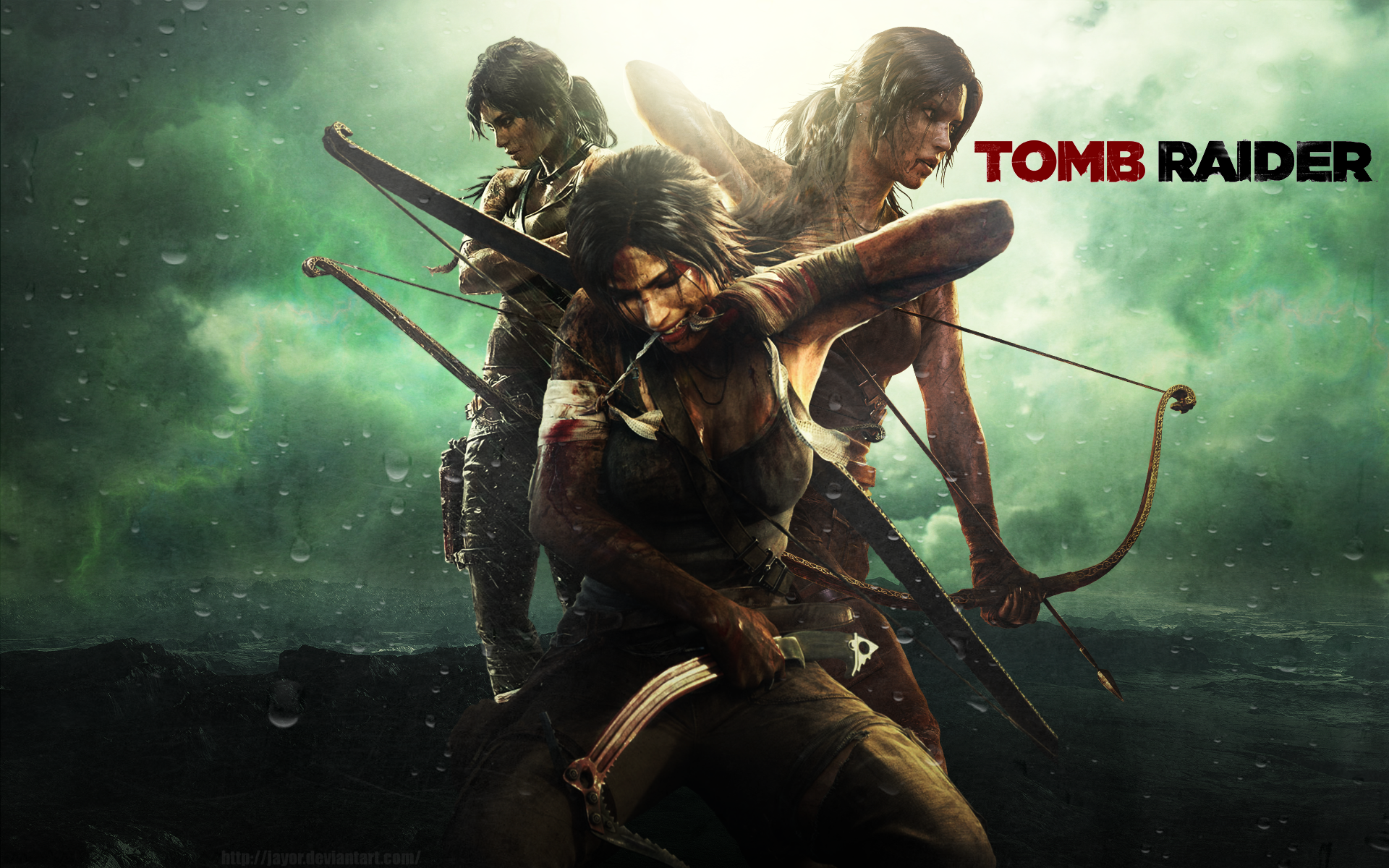
I don’t usually wish that I paid more for a game.  But I liked Tomb Raider so much that I almost wish I hadn’t bought it on sale.  I want the people who made it to know how much I liked it, and I want them to put as much high-quality work into making the next one as they put into making this one.  Because there’s a next one.  I mean, even if I didn’t know that Rise of the Tomb Raider is coming, I wouldn’t have any real doubts (except, I suppose, if the studios involved fell apart or lost the rights, which would be terrible).  The end of Tomb Raider left it clear that Lara is nowhere near finished with being the awesome badass which she’s become, and that makes me very happy.  Watching the announcement trailer for the new game has reduced me to a quivering pile of enthusiasm.

Why am I so happy about all this?  Tomb Raider is a brilliant game, and does things with story-telling that remind me why games are such a fascinating medium in the first place.  It’s an adventure novel with audience participation, a new entry in a genre that I love, and it evades the problematic trappings that spoil so many other adventure stories for me.

Ok, spoil is a strong word.  I love adventure stories enough to enjoy them despite their frequent problems, but being able to enjoy one that isn’t so inherently problematic is a breath of fresh air.  It doesn’t hurt that this particular story is extremely well written, with characters who feel like real people, and who share history with each other that seems fitting and unforced.  It’s a little bit like someone crossed Tintin with Indiana Jones, turned the tone dial to ‘gritty and a bit bloodthirsty,’ and then put you through the Bildungsroman of Lara Croft as she goes from untested and unconfident archaeologist to self-assured and competent survivor and adventurer, hellbent on keeping herself and her friends alive.  Wait, no, that’s almost exactly what it’s like.  It’s glorious.

Look, you don’t have to take my word for it.  You can play the game yourself.  But if you want to read more of my thoughts on the topic, including the few reservations I have, please be my guest:  Continue reading

Behind the scenes of the new campaign…

Monday’s post gave a taste of the game that I’m preparing, but didn’t go into any details about what would follow.  That was intentional.  If there’s any chance that I’ll run this game for you, I strongly suggest that you don’t read what comes after the break.  If you want to see some of what I’ve come up with, and maybe a bit of how I came up with it, read on.

Continue reading

A new campaign in the works…

This post is only going to include non-spoiler material, appropriate for the opening of the game.

You (the players) are the King’s officials, expected to enforce his decisions, act in his interest, and carry out his wishes in the wider Kingdom.  Mostly drawn from the wealthy and noble classes, the King’s officers are expected to outfit themselves out of their own pocket and see to their own expenses.  There are always a few exceptions to the norm of “wealth and privilege,” since an individual’s skills and qualifications for this particular job are far more important than their bloodline, but exceptions are likely to have an interesting story for how they became one of the King’s officers without the usual entrée.  In many ways, you might think of the King’s officers as Musketeers with a little less in the way of Alexandre Dumas.

The game is set in the Kingdom of Duval, and begins with the players being sent from the capitol city of Duval to the backwater county of Mont Mondal.  Count Xavier of Mont Mondal was recently imprisoned for treason against the throne, when he broke his oath of fealty.  He was executed along with many of his closest companions, and the executions have created quite a disturbance at court.  One of his companions, the wizard Castanedra, fled back to Mont Mondal on the same night that Xavier was taken prisoner: you and your compatriots have been tasked with capturing her and returning with her in your custody.  You have also been instructed to raise the county’s levies and send them to the capitol, to join with King Mander’s other forces already mustering for war against the Kingdom of Meius to the east.

While thoughts of war on the nearby eastern border weigh heavy in everyone’s mind, how are you and your companions going to run this powerful wizard to ground and bring her back to Duval?

Other things that people from the Kingdom of Duval would know:

-Meius and Duval share a border that runs through an agriculturally rich valley.  North and south of the valley the terrain becomes increasingly hilly and mountainous, leaving only one clear passage between the two kingdoms.  While the kingdoms have a long history of trade with each other they’ve recently suffered through a series of trade disputes and feuds, and there are now frequent border raids which have further angered each side.

-Count Xavier (that’s pronounced “Sh-avier,” more or less) had a meteoric rise to match his catastrophic fall.  He was ennobled and granted County Mont Mondal a little more than ten years ago, and he and his companions were widely recognized as having done a great deal to make Mont Mondal actually livable for Duvalians.  Xavier and his companions drove out a large clutch of magical aberrations which had claimed the land as their own, and then kept the local bandits in check.  While his breaking of his vow of fealty clearly put him in the wrong, some people have even gone so far as to say that they wish the king hadn’t had Xavier and his companions executed for their treason.  Not that they’re likely to have said as much to the king.  The king, after all, is known to have a bit of a temper.

-The city of Duval is slowly being surrounded by the many thousands of soldiers who have answered their liege-lords’ calls.  The various levies have been joined by a few mercenary companies looking for work, and their spirits are high as they prepare to fight against Meius.  The king’s armies only wait for a few more levies (like those of Mont Mondal) to join them before marching against Meius in the east.

The Adventures of Tintin: The Secret of the Unicorn

2011_the_adventures_of_tintin-normal


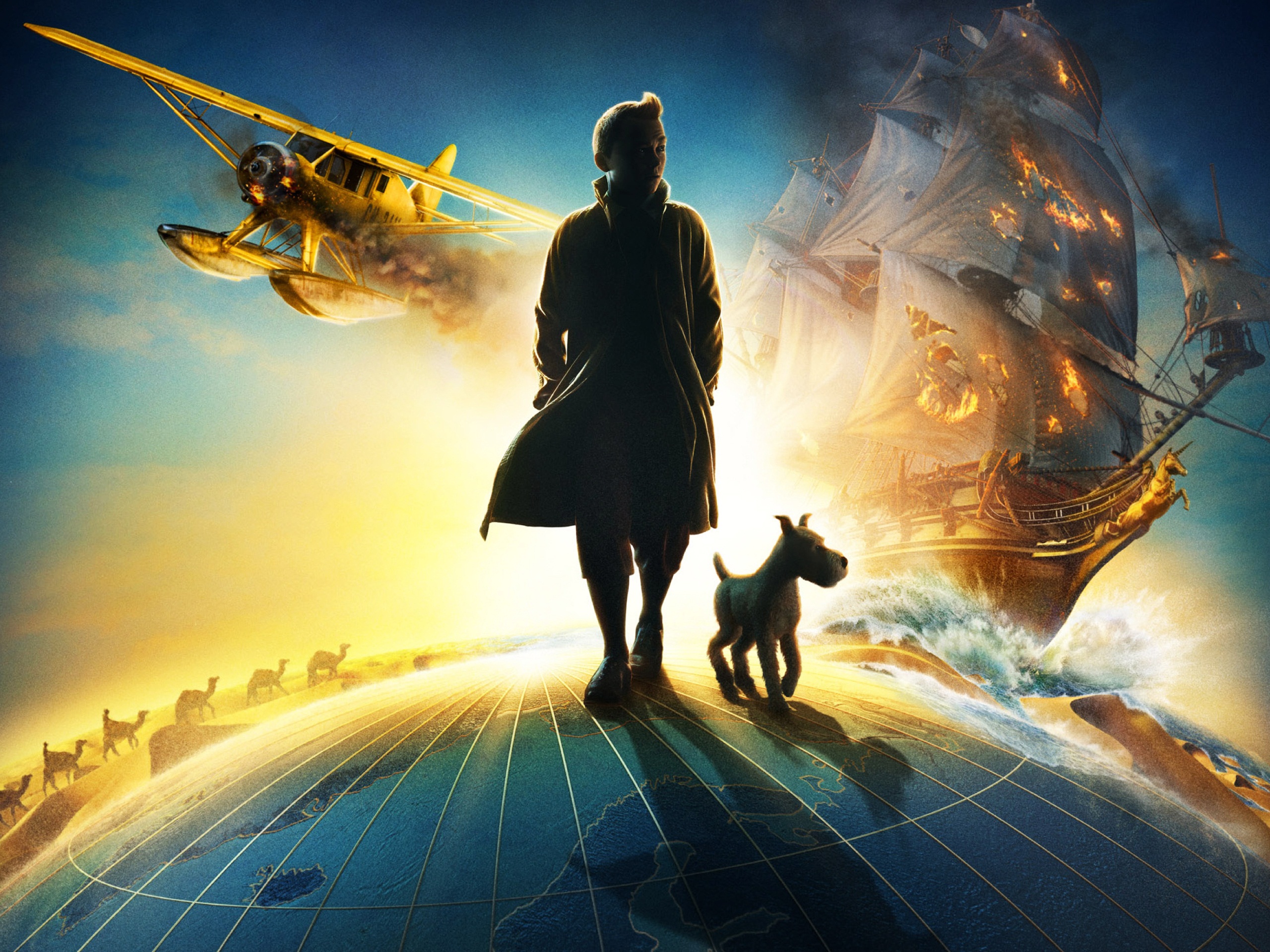
I finally watched the “new” Tintin movie.  I’m obviously biased, given that I grew up reading the Tintin books and loved them uncritically for many years, but… I thought the movie was magnificent.  There’s something spectacularly fun about the pulp adventures of Tintin, and the movie delivers the essence of that in spades.  The story is still problematic when it comes to representation, as there’re no main characters who aren’t white males, but the movie also manages to remain faithful to its source material without engaging the more racist undertones which can be found in some of the original works.

And when I say faithful to the source material, I really do mean that it’s basically all there.  The movie is a composite (plus a little something new to serve as glue) of several Tintin stories, and there are scenes which have been pulled frame for frame from the originals.  There are even references to prominent features of unused story lines, often featured as props (like the red jeep from Land of Black Gold).  The only thing that I really missed was Snowy’s constant private cynical narration, though his stunning and dogged competence was in fine form.

As I’d expected it to be, the movie was action-packed and full of nonstop excitement, accurately recreating my memories of the stories that I’d so loved as a child.  But it was able to do things which had been impossible for the original comics, with gorgeous transitions that reinforced the hallucinatory exposition of my favorite drunk, Captain Haddock.  I’m not sure that I’ve ever seen a better realized set of scene shifts, and they were made all the more possible through the excellent CGI used for the film.  There’s just something about watching the world ripple and change, transforming a landscape of sand dunes into monstrously high seas; Haddock’s impossible descriptions of his ancestor’s exploits become all the more wonderful as they are shown through his imaginatively drunken state.

Speaking of the CGI, I have to say that they really hit the nail on the head.  They managed to keep things cartoonish enough that they felt palpably unreal, while still being realistic enough to feel believable, relatable in much the same way that the comics themselves felt when I was young.  I’m really happy with how the movie felt, and I’m glad that there’s talk of making another.

So, I liked this movie a great deal and I would happily watch it again.  It doesn’t solve all the problems of the source material, but it does a good job of avoiding the source material’s larger blunders while capitalizing on its strengths.  The characterizations felt true to form, and the alterations made to the original material never felt like they were unfaithful or detracted in any way from the originals.  If you ever liked reading Tintin, my guess is that you’d like watching this movie.  If you didn’t like reading Tintin, I really can’t help you with that (and you may or may not like this movie, who knows).

p.s. Sorry to cut this one short, I have to go facilitate a hero’s journey by pretending to be an evil dean intent on shutting down Simmons’ MA in Children’s Lit and MFA in Writing for Children.

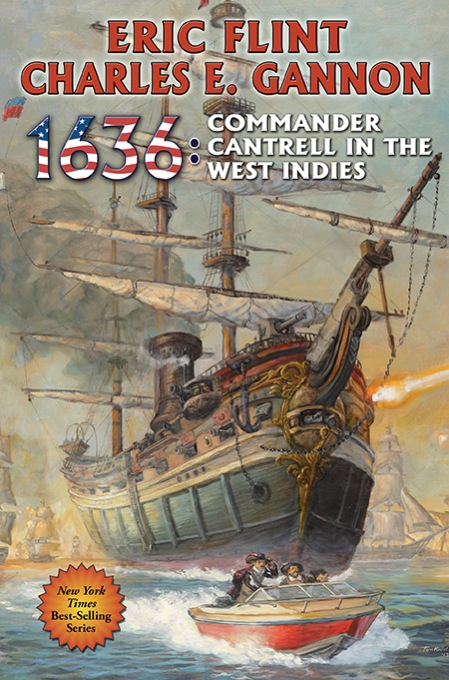
1636: Commander Cantrell in the West Indies, by Eric Flint and Charles Gannon

9781476736785

This scene doesn’t happen, but doesn’t it look nice?

My review has been delayed by other distractions, but I read most of 1636: Commander Cantrell in the West Indies before it actually came out.  You see, I’m infatuated with the 1632 universe.  I think that’s at least in part because the series offers a far more optimistic take on the world than most of the other fiction that I read.  If you already know that you don’t like the series, I doubt this book will change your mind… but if you do like them, you’ll want to take a look.  I’m not totally sold on it, and yet I still love it.

What do I mean by that?  Well, this book is a clear sequel to the Baltic War storyline, but it also incorporates at least two other storylines into the mix, with other elements thrown in from the rich milieu which has developed in the rest of the 163X stories.  It’s clearly intended to start a new set of storylines, several of which seem like they deserve their own books, or at least their own short stories.  I can see why they tried to fit so much into this book, but I feel like they ended up trying for too much and then ended up without quite enough to satisfy me with each of the individual stories.

But maybe the piecemeal way in which I read the book has done it a disservice.  I got early partial copies as soon as they became available and, like the literary glutton that I am, devoured each morsel as quickly as I could.  Like I said, it’s an infatuation.  While I doubt I’ll be able to restrain myself from reading new 163X books as fast as I can, I resolve to start over from the beginning next time once the whole book becomes available.  I’ll probably re-read 1636: Commander Cantrell in the West Indies some time soon to see just how much of my impressions came from the disjointed nature of my reading.

Now then, how about my thoughts on the material itself?

Continue reading