Vicarious Squirmy Awfulness

I used to think I loved adventure stories because I’d grown up on them. The truth, I’ve realized, is a bit stranger. I’d rather watch bloody violence and explosions than sit through those gut-wrenching nail-biting moments of social awkwardness that fill so many romances, dramas, and comedies. Those moments fill me with a vicarious squirmy awfulness—the characters may experience emotional or social anguish, but my response is visceral, often literally painful. 

When I last reflected on this in my review of Trying

Continue reading

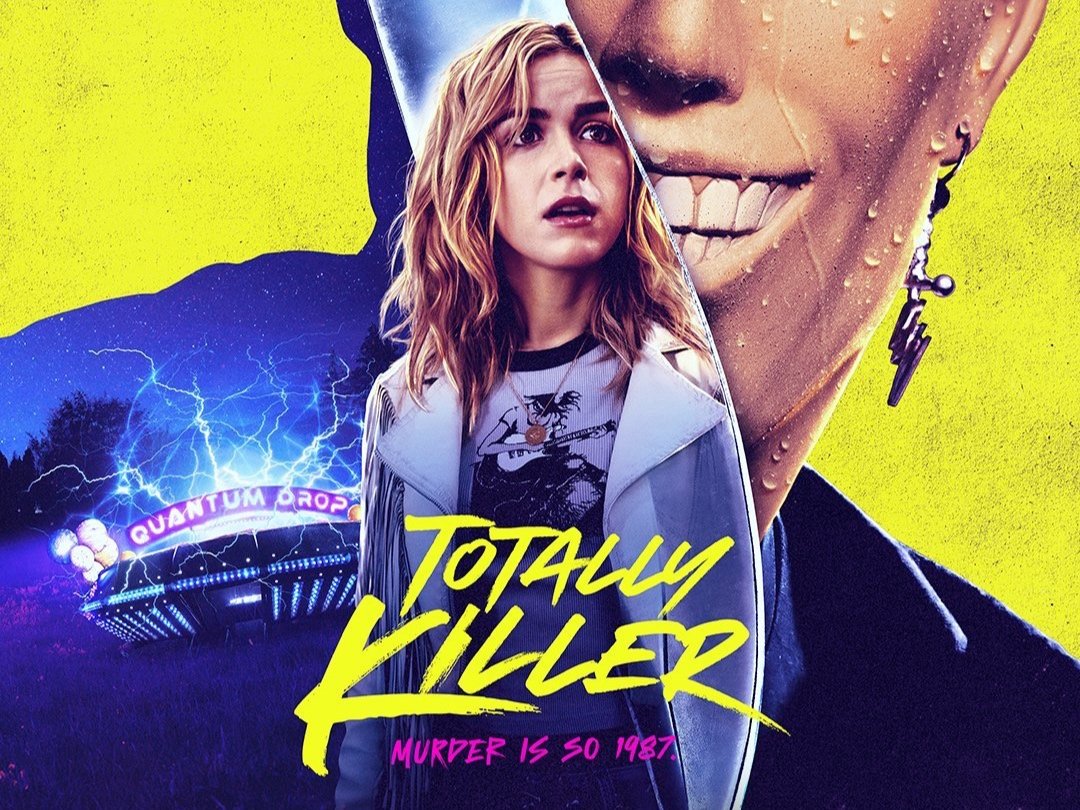
Totally Killer (2023)

Totally Killer has been sitting on my to-watch list since it came out last year.

I’m glad I finally got around to watching it. I had a damn good time. I’m very aware, however, that I was watching this movie through the lens of my love for time travel movies. I have a weakness for them. I feel less comfortable rating this movie as part of the slasher genre—I don’t have the context, it’s not a genre I know as well.

Yes, in case you missed it, this is a time travel movie that was caught in a horrific lab accident and fused with a slasher flick: teenage Jamie Hughes from 2023 is thrown back to 1987 and tries to save her mother and her mother’s friends from a serial killer, without creating a paradox that will erase herself from existence. Your mileage may vary, but I…

Continue reading

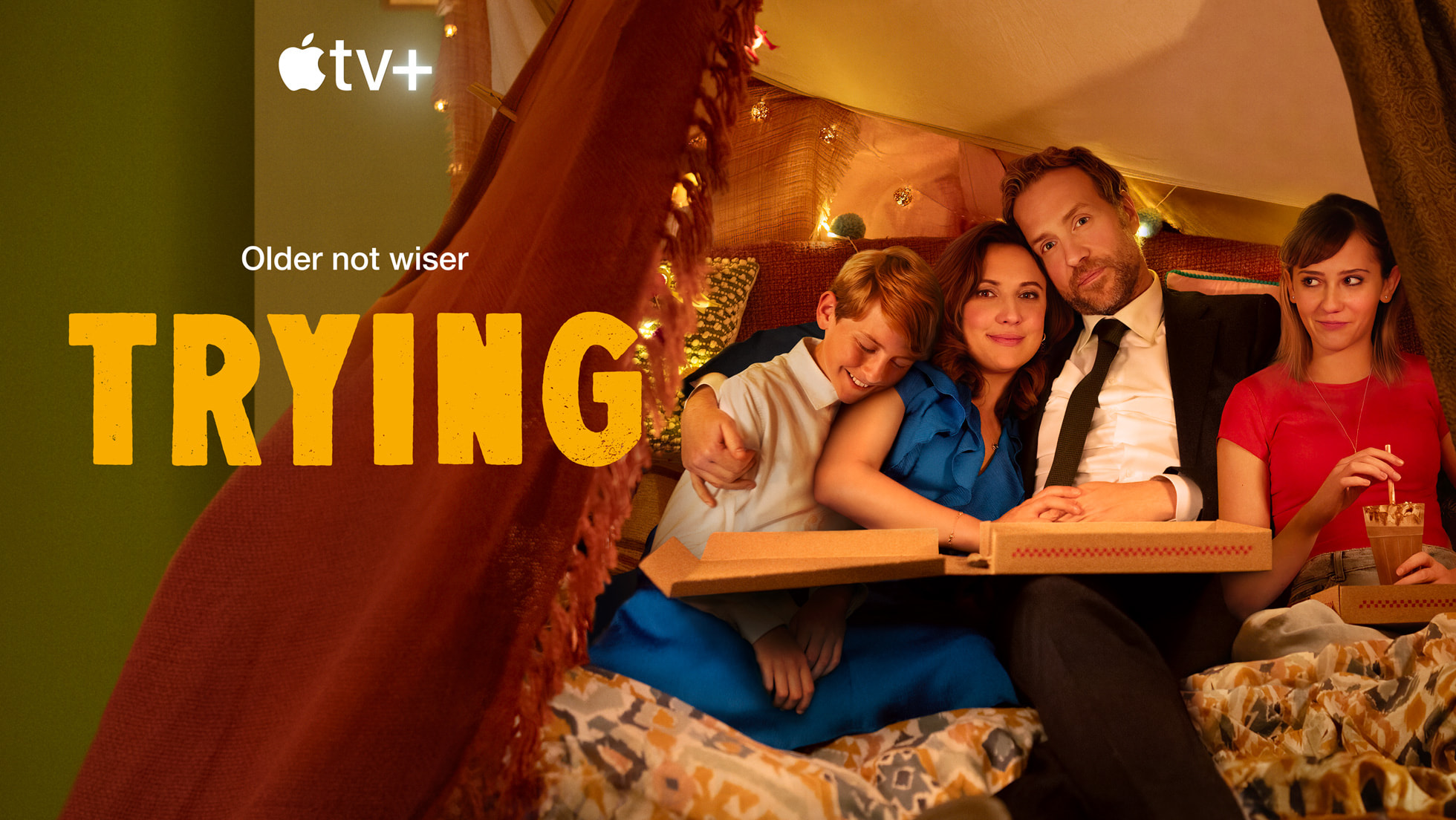
Trying (Apple TV)

There’s a particular flavor of social awkwardness or social strife in shows and movies that hits me hard in a weird squirmy spot a little below my diaphragm. It spreads from there, worming around inside me, usually moving upwards. It’s a profoundly distressing and uncomfortable experience, and it happens most often in certain kinds of dramas, social comedies, or romances.

This experience has been with me since I was a child. I can still remember wriggling in my seat on the couch while watching movies, turning myself upside down and standing on my head as I tried to untwist or escape the awful tension inside me. I haven’t yet learned precisely what kinds of awkwardness and strife cause this, perhaps because I try to avoid the experience as much as possible, but it crops up time and again.

Unfortunately, Trying hit that spot.

That’s too bad, really. I thought the first episode was consistently funny, even as it teetered between sweet and almost-painful in that squirmy way. If the second episode hadn’t hit me so hard, I think I would have continued really enjoying the show. Let me explain:

Continue reading

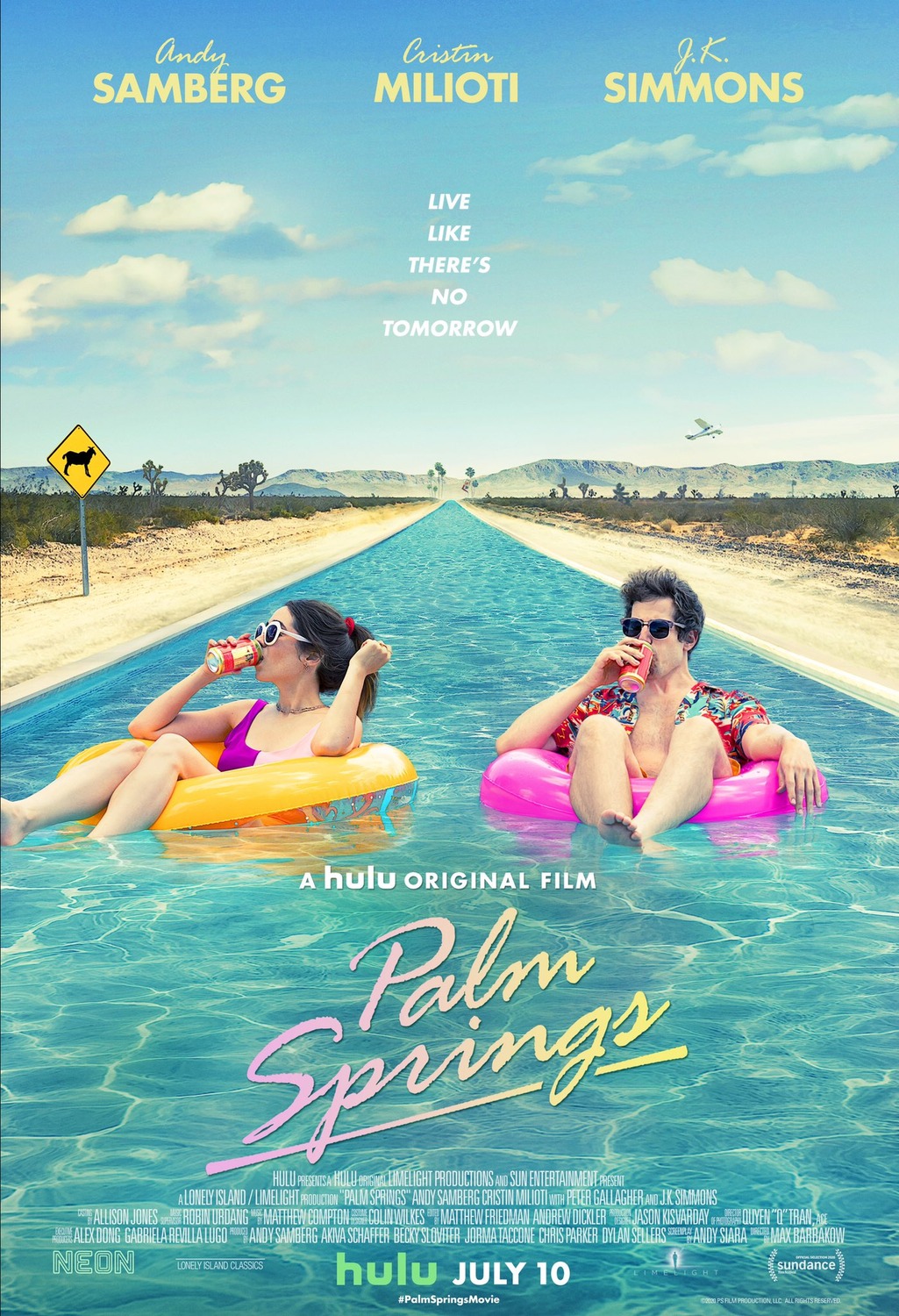
Palm Springs (2020)

So, look, Palm Springs checks a lot of boxes for me.

Palm Springs could have been half as good and would still have entertained me. Instead, this movie had me cackling and murmuring appreciatively by turns.

It’s a deeply philosophical character study wrapped up in a semi-absurdist grim comedy about life, and what it means to be a part of it. It’s my kind of good movie.

It’s got time loops. It has characters who feel believably human throughout the situations they’re stuck in. It takes the opportunity offered by playing with time loops to delve into what makes those characters tick, what they believe about the world, and how that drives the decisions that they make. There’s some love, there’re plenty of personal realizations and comedic moments, there’s a bit of enlightenment, and there’s a whole lot of dying (with very little gore).

I loved this movie.

That’s because…

First off, I’m a sucker for time travel. I’m even more of a sucker for time loops. I’ll enjoy stories built on either of those things, because they delight me even when other parts of a story aren’t as good.

Another thing I like: I like stories with characters who feel believably human. I like characters who feel internally consistent. I like characters who—even if they disavow this—have personal philosophies and worldviews that I can understand through observing the characters interacting with each other and their world.

Watching believably human characters play off each other and struggle with their beliefs about the world and life, seeing that done well, that’s a treat. It’s even better when I recognize some of the philosophical and spiritual underpinnings of the perspectives in play. 

Now, I don’t want all of my movies to be about people struggling with those perspectives on life. Nor do I want every movie I watch to be about people struggling with their worldviews as they intersect with others’. Someone no doubt argues that every story is that, probably Truby, but that’s missing my point.

Besides which, Palm Springs does all that without making it feel cumbersome. I say that it’s deeply philosophical, but none of that gets in the way of enjoying anything else going on in the movie. It’s the perfect approach to an “all-ages” philosophical text; much like those exemplary Pixar movies designed to entertain children and adults simultaneously, Palm Springs is accessible at any one of a variety of levels.

Though, uh, it’s not exactly a kid’s movie.

Still. If you want to watch Palm Springs as a romance, that’s available. If you want to watch it as an exploration of the Hindu and Buddhist teachings on reincarnation, proper action, suffering, and enlightenment, that’s there too! And if you’re looking for a grim comedy where some hooligans make a bunch of regrettable choices and suffer (somewhat) for them, that’s there in spades.

This movie will inevitably be compared with Groundhog Day, because… time loops. And because they’re so similar. Also, heh, this post is going up on Groundhog Day despite me having watched the movie maybe a month ago.

What I mean is, Groundhog Day is *the* present cultural touchstone for anything like Palm Springs. Hell, Groundhog Day digs through a lot of the same material and wrestles with many of the same philosophical questions. I doubt Palm Springs would exist without Groundhog Day. In a number of ways, Palm Springs feels like a modern update to the older story. 

That modern update makes a huge difference for me. In a good way.

Annnnnnd here we hit the *SPOILERS*.

For all that Groundhog Day and Palm Springs cover similar ground, Groundhog Day is trapped in a romance story’s paradigm. Winning the love (and belief) of someone not stuck in the time loop through engaging in proper moral action—and through showing off whatever skill you’ve developed over your eternity in this time loop—is the path out. That conclusion isn’t stated explicitly, but it’s sure as hell implied by the movie.

It’s a romance story. Love saves the day. Being a more moral human helps, and is important, but love saves the day.

Palm Springs offers that conclusion, and then explicitly rejects it. Right action, doing the right thing, atoning for previous faults or doing good wherever you can… don’t get you out of the loop. Being in love also doesn’t let you escape. Not even reaching peace and acceptance will bring you out.

But… they’re all important.

Escaping the time loop takes significant, hard work. And escaping the loop is important to the film’s plot. But it’s not achieved because “love saves the day,” it’s not “following the romantic plot brings escape from misery.” It’s something orthogonal to any of that.

No, the experience of finding peace, and of (mostly) doing the right thing by others, and of being able to love one another, those are all important for their own reasons. They have their own value. They can make existence better. And, critically for how this film compares to Groundhog Day, they ultimately aren’t the key to escaping the eternal time loop which is such an easy metaphor for existence.

Basically, Groundhog Day is a story about a trapped guy growing enough that he finally gets the girl and thereby finds freedom. Palm Springs is about people reaching enlightenment and finding joy—together, and as individuals.

I love that change. It means that Palm Springs doesn’t fall into the same Hollywood romance-logic trap. So many romance-genre stories build up romantic attachment into an impossible ideal that leaves any human relationship feeling flawed or inevitably doomed by comparison. Palm Springs nimbly vaults across that yawning chasm of bad writing which plagues so many genre stories, and feels more real and more human as a result. Because of that, I can enjoy the romance storyline without wanting to tear my hair out. I love it.

Another thing: Groundhog Day focused solely on one person. No one else was in the loop as well. That meant that there was no way for anyone else’s perspective on the world, on life, to respond to and adapt to any internal shift experienced by Bill Murray’s character. Yes, he could talk to other people, and yes they could share their whole perspective with him, and sure, he could come back and talk to them again another day with a different perspective. But everyone else was stuck in one place and time in their lives.

Palm Springs doesn’t do that. With multiple characters caught in the loop, it gives us a richer connection, more byplay between characters. The other people in the loop can come to their own realizations, they can grow and change and travel their own personal courses. They aren’t static.

That makes a phenomenal difference. What’s more, it means that when we’re given a deeper look at the life of these characters, their jumping off point for each repetition of the day, we can see how they’re trapped in turn by their own circumstances, their own pain. That, in turn, recontextualizes everything that’s come before. Laying bare the private sufferings of the characters, peeling back the layers for the audience throughout the movie, lends nuance. It makes them feel more human, and more comprehensible.

It also makes their growth, their changes, and the ways they play off each other so much richer. Those slow revelations feed neatly into how the characters’ perspectives bounce off each other over and over, changing a bit every time. It’s a well-established screenwriting technique—Truby loves it, see The Anatomy of Story—but this might be the clearest depiction of it that I’ve seen yet. It’s part of what had me muttering appreciatively, or just saying “wow,” throughout the film.

*END SPOILERS*

So.

Yes, I think you should watch it. I’m sure there are people who will see this movie and feel nothing, or be frustrated by things that I didn’t notice. Maybe if I watched it again I’d have a more critical perspective. But if you, like me, enjoy time loops and good human characters and dark comedy and a bit of romance and some philosophy… watch it.

Palm Springs is my kind of good movie.

She-Hulk (2022)

She-Hulk has been both fun and a little odd.

I’m enjoying the acting—Tatiana Maslany is great as usual. I like a lot of the writing choices. They’re often hilarious, and neatly fit the genre I think She-Hulk is aiming for. 

This show is a comedic personal drama about the life and times of Jen Walters, following the everyday trials (heh) and tribulations of her experience as an up-and-coming lawyer. It adds an extra dash of “you just can’t win” via all the ways in which getting super powers doesn’t solve Jen’s personal struggles. That almost feels like an homage to Molly Ostertag & Brennan Lee Mulligan’s Strong Female Protagonist… except this show doesn’t (yet) pay attention to the deeper ethical questions that excellent comic focused on. That’s the bit that feels odd to me.

Only a few episodes are out so far, so maybe it’ll go deeper, but…

She-Hulk is very aware of the fact that it’s commenting on struggles women (or femme-presenting people) face in their day to day lives. It brings those up in frequently hilarious (sometimes painful) ways. I appreciate and enjoy that, and I don’t want the show to stop doing that. But so far She-Hulk seems hyper-focused on those struggles from the perspective of the wealthy and privileged. It hasn’t dug much deeper, it hasn’t (yet) pushed towards deeper potential intersectionality or towards struggles beyond Jen’s. For lack of a better word, the show’s focus so far is both expansive and self-centered.

Insofar as I want to watch a slightly shallow comedic personal drama with superheroes that (thank fucking goodness) isn’t yet another male-centric story—one that does focus on the experiences of female characters—this show is great. I’m here for it. I’m glad that it’s being made. I hope She-Hulk does well, I hope it goes places and does more fun things. This show helps ease the poverty of representation for female superheroes in the MCU, and goodness knows the MCU needs that.

We still need more stories like this though, as well as more different ones. Less personally focused ones, and/or personally focused ones that include other people. This show can’t solve the issue on its own.

And there are other elements that feel like they’re fertile ground for good stories, but which have lain fallow for years (if they were ever included at all). She-Hulk has referenced them in passing so far, but hasn’t focused on them.

Specifically, I really enjoy the ways in which this show has poked at the personal and emotional lives of the various superheroes it’s mentioned. I like how it has pointed out that being a superhero doesn’t pay the bills, and that most of the existing superheroes are otherwise rich. Jessica Jones and Luke Cage and (to lesser extent) Daredevil all gave this some attention, with JJ and LC also including other intersections of gender and race. But those shows were and remain a side show in the larger MCU. Again, we need more.

And I’d really like that “more” to be good! She-Hulk nearly lost me with the fight sequence in its first episode. 

As someone who cares a lot about fight scenes, the first episode’s fight between Bruce and Jen wasn’t interesting to me. I hope the show didn’t spend too much money on it (though they probably did), because it seemed like a fight in search of a reason. There weren’t meaningful stakes or potential consequences, no meaningful discovery was made for either of the characters, it didn’t even feel like there was real character growth for anyone. It was a CGI punchfest for the sake of having a CGI punchfest.

The show has been far better on this front in the episodes since: fights haven’t dragged on, they’ve felt like they had pressing stakes, and they’ve told us new and interesting things about the characters involved and the world around them. All of that is pretty much perfect in my book. I really hope they don’t lose sight of that excellent focus in the remaining episodes. I think lacking that focus has been one of the ways other superhero movies and shows most frequently fall apart, narratively and tonally.

We’ll see.

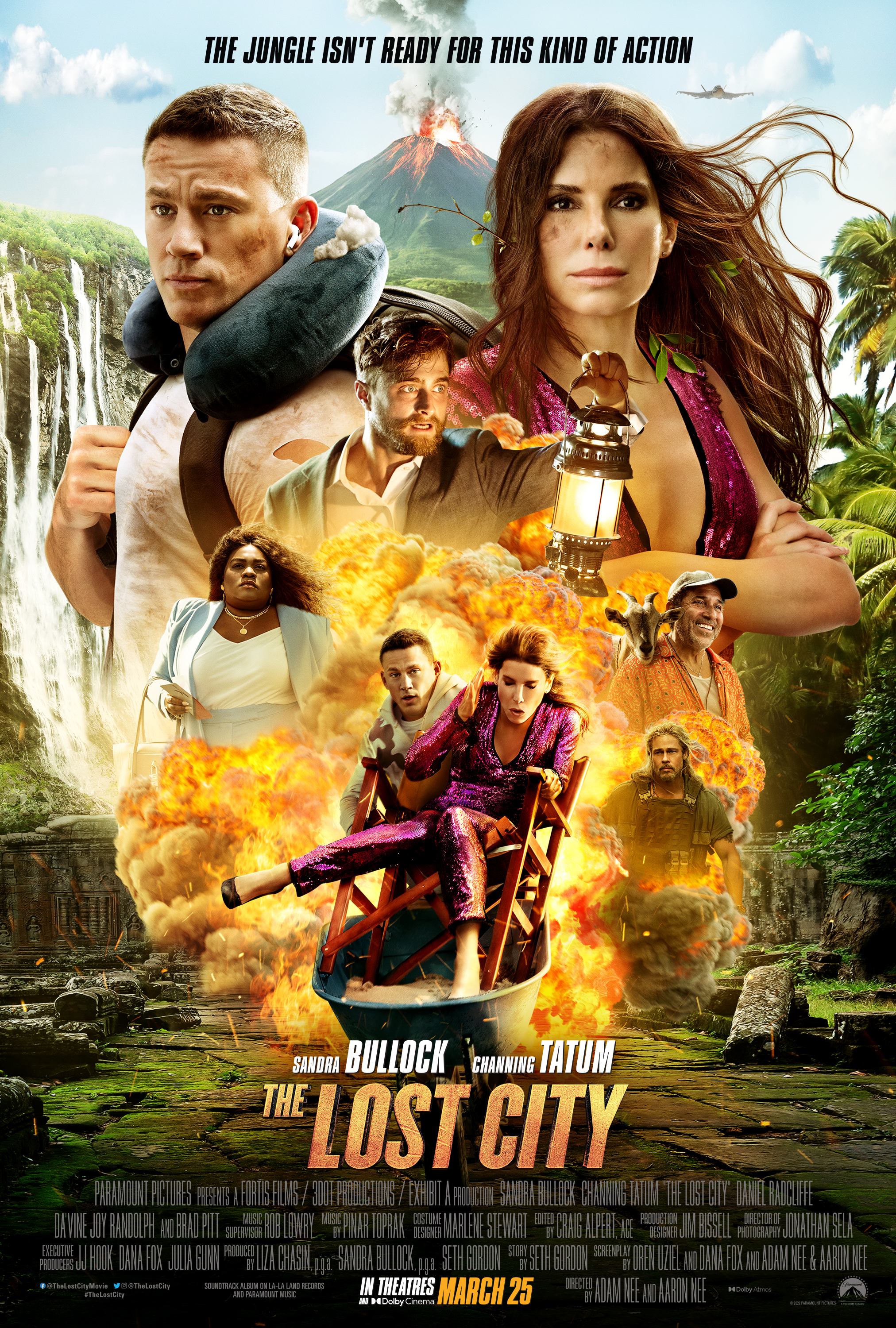
The Lost City (2022)

While I was traveling recently, I saw a number of airplane movies. Some of them were spectacular, some were crap. At least one was stuck in the middle: The Lost City with Sandra Bullock and Channing Tatum.

It’s been a while since I watched movies on an airplane; it’s been a while since I flew, period. There’s always something a little weird about airplane movies… I think I’m more inclined to like them, if only because they offer a welcome distraction from hours of monotony. My “was it fun” bar is lower.

The Lost City would have passed that bar even without being stuck on an airplane. The movie was good fun. It was absurd in a number of very appealing ways, and played with audience assumptions deftly. I would be willing to call the movie an excellent (if predictable) comedy adventure with a dash of romance, except…

Alright, look, I normally give *SPOILER* warnings, and I don’t know how to talk through this without mentioning specifics. You’ve been warned.

The movie does almost nothing to engage the problematic side of its adventure-archaeology plot. They mention it, and then… basically nothing. Yes, the villain Abigail Fairfax (thank you for chewing the scenery, Daniel Radcliffe) is obviously portrayed as Doing A Bad. Yes, the genre calls for some adventure-archaeology, and yes this movie portrays “let’s steal these ancient artifacts” less positively than, say, Indiana Jones. But given how neatly the writers played with our expectations in the other plot (the adventure of our romance author and her books’ cover model), I wish they’d done more here too.

I’ll come back to that.

I can understand why the movie focuses on the duo played by Sandra Bullock (romance author Loretta Sage) and Channing Tatum (cover model Alan NoLastName)—they’re great! The ways in which their characters comedically subvert their tropes are pure gold. I wish more movies did what The Lost City does here.

The opening of this movie had my complete buy-in. I’d hold it up as a brilliant example of good character establishment, with just enough interplay to set up the forthcoming character trope inversions and the (eventual) odd-couple romance plot. The movie’s jokes about publishing, authors, models, and our assumptions about all those things, all landed for me. It’s good stuff!

This is the part of the movie that I thought was especially excellent.

Then we get Daniel Radcliffe’s obsessed villain, and the excellence continues. There’s a scene with cheese and an airplane that… look, it was kind of dumb, but it had me cackling quietly in my seat. The whole opening of the movie is like that. The magic continues with the introduction of yet another star actor, and we’re given a treat while Tatum’s Alan plays off of this magnificent foil.

And it’s right around here where the movie sets up something that they then fail to explore well. We’re introduced to a local, Rafi played by Héctor Aníbal, who works for the villain despite disagreeing with him because there’s no other well-paid work. In a set of throwaway lines that the whole rest of this excellent opening act led me to believe would see plenty of future pay-out, our villain reveals his villainous plans; he’s bought one whole side of an island, full of ancient ruins, and is paying locals to dig up their history so that he can soothe his tender ego with some artifact-granted self-aggrandizement. He admits the locals don’t like it (so far so good, that’s more than most other archaeology-adventures do), and even says that Rafi has particularly mixed feelings about it.

The movie has gotten my hopes up at this point. With all the other set-up and payout that’s been going on, that casual aside is worth every second it takes. It tells me exactly what’s coming, and I’m excited for it.

I want to see Rafi have a character arc. I know he’s not a main character, but I want him to at least have a couple lines. And I want to get enough time with him to see how and when he turns against Fairfax. I want his dramatic shift to feel important.

It gets short-changed. We see a fragment of what I’d hoped for.

Mostly, the movie doesn’t pay attention to Rafi’s dramatic shift—despite the fact that it is central to the heroes’ survival. Those throwaway lines were there for a reason, they set up the eventual twist in exactly the way I’d expected. But Rafi’s emotional journey is given almost no play at all.

And when you take a step back, you can see similarly short shrift given to all the other POC characters. Now, I acknowledge that all the other POC characters are also side characters, and they’re given roughly as much narrative attention as any other side character. Maybe even more attention, because the side characters are mostly people of color.

The problem is, this doesn’t really solve the issue at hand. It just draws attention to the fact that all the people who have narrative focus are white despite the movie predominantly being set in a very non-white place.

They almost made a spectacular movie. As it was the performances were delightful, and a lot of the writing was excellent, and somewhere along the way someone dropped the ball and the movie just came out fun but with thorny snags. And it is fun. I had fun the whole way through, even when I was disappointed.

But my disappointment was even sharper because it was so clear that—at some point along the way—someone knew they could do more. And then they didn’t. They wrote Rafi’s character knowing he’d play a vital role at the end, and they laid the foundation for his emotional journey to be satisfying, and then they never followed through. Maybe it was lost in the edit, maybe it didn’t work during shooting, I have no idea. I just know that it should have been there and then wasn’t.

And that void doesn’t just leave the movie without a deeper emotional arc for a POC character, it also makes Fairfax’s villainy flatter. Rafi’s moral objections to the heedless extraction of his people’s history serves as a foil to Fairfax’s rabid egotism. By stripping out the development of those objections, and Rafi’s role as a reluctant-lieutenant-turned-eventual-resister, we lose the nuance and depth of Fairfax’s desperate and callous selfishness.

Now. Does an adventure movie need to have all that emotional depth?

Well, no. It doesn’t need that. This is a functional adventure movie as-is.

But it clearly has the bones of all that additional emotional depth. And it could have had a significant chunk of all that with probably only four more minutes of run-time. That would take the movie from 1h 52m to 1h 56m, and honestly that doesn’t seem like an issue to me.

Heck, those four minutes probably would have made this one of the first archaeology-adventures to give more than lip-service to the problematic history of archaeology, too. It already looked like they were trying to do that in places, via implication. They just didn’t land the whole message in the final cut. Another missed opportunity.

So.

It’s a fun movie. I’d even say that parts of it are excellent. I just wish they’d carried it a little further, because I think it was almost a spectacular movie instead of a pretty good one that sometimes left a bad taste in my mouth.

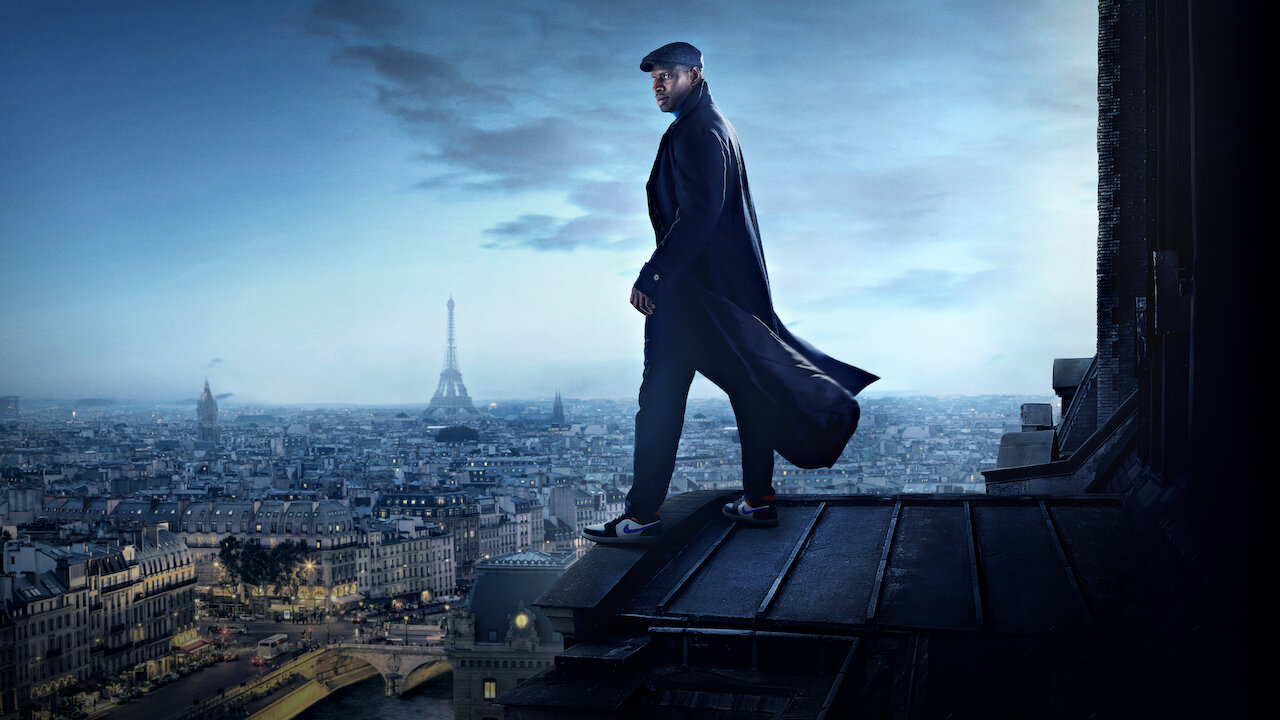
Lupin (Netflix, 2021)

Months ago I wrote about Lupin, and the course of its narrative arc. Having now finished part 2, I’ll just say it’s been a heck of a trip… and a fun one. It’s absolutely true to its genre, absolutely delivers on my expectations, and still manages all the tension and rollercoaster-ride feel that you’d want from a duplicitous and intricate master-thief drama.

I was able to call many of the narrative beats ahead of time as my partner and I neared the end of the show, enough so that I barely felt surprised. This might seem like a failing in a show that’s supposed to be twisty and surprising—but by that point in the show, I wasn’t watching it for a surprise. I’d been won over by the personal drama and the characters. I knew what was expected, I knew the primary twists that would come, but what I wanted most was to see the show land its finish and wrap things up neatly with my preferred resolutions for everyone involved. It didn’t matter that I wasn’t surprised, because the show was satisfying.

It feels good to watch a show so deeply embedded in its genre, to know and appreciate the ways in which it delivers all the required beats… and to fall for the characters in the process. Yes, I recommend it. I doubt that comes as a surprise at this point.

Lupin does an excellent job of showcasing everything you need to know about its story in the first episode. Reminiscent of what Seth Dickinson does in the first chapter of The Traitor Baru Cormorant, Lupin simply holds up its hands and says “I promise you this, and more of it.” And then it gives that. It does, of course, add more emotional depth and greater context in some truly wonderful ways, but it stays true to its promise.

If you watch the first episode and decide you don’t want more, don’t worry about it. If you’re on the fence I suggest a couple more episodes; some of the show’s emotional background is only visible with a little more context. But if you saw that first episode and were hooked, I’m glad to say you’ve got another nine to enjoy (and even more some day soon, given the confirmation of a third season).

Have fun.

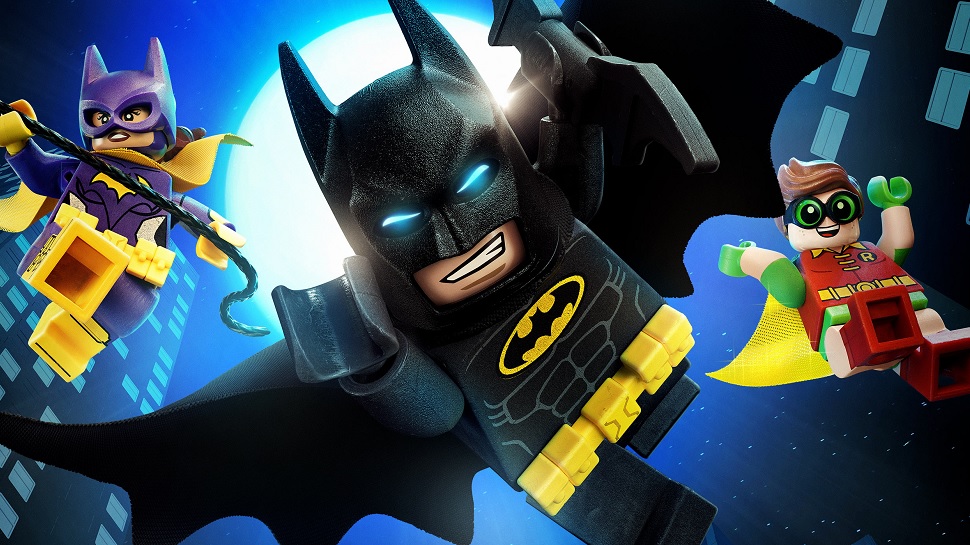
LEGO Batman: Yup, Still Good

LEGO-Batman-Exclusive-Poster

I can’t tell you how kids will feel about this movie, though based on what my brother has told me about my nephew I suspect they’d be pretty excited. Personally, I thought it was hilarious. Perhaps more impressive, Lego Batman somehow managed to reprise the meta-level commentary and self-awareness of The LEGO Movie without simply copying the same shtick. This is a Batman movie that makes Batman (and Batman movies) a part of the punchline as well as the setup, and revels in that the entire way through without feeling mean-spirited about it at any point. It helps that they’re using basically the same Batman character from The Lego Movie, appropriately heroic and usually annoying as hell at the same time. It gives him plenty of opportunities for character growth. It’s a good movie.

This movie also does something that I admire in any story that takes place in a series, or as part of an ongoing story-world: I don’t think there’s any need for the viewer to be familiar with the rest of the Batman mythos in order to enjoy this. For one thing, the movie makes most of its other setting references explicit. For another, all of the issues at hand are so well established that there’s no need for outside sources. You might benefit from knowing more about other Batman stories, but they’re not strictly necessary.

And as I implied at the top, this movie is constructed like most good children’s entertainment; the comedy and drama are constructed in variably accessible layers, with some things clearly geared towards the adult audience which will almost certainly be forced to watch the movie over and over again. It’s a good quality to have in a kids’ movie, especially since the people who actually have the money (and perhaps thus the true consumer) are the adults paying for the children’s tickets.

Overall, I don’t think I’d line this up with the best Pixar movies. I think Pixar somehow manages (managed?) to have excellent comedy alongside really good emotional content and drama, and despite feeling *good* in all those categories, this doesn’t match the emotional poignancy of a really outstanding Pixar film. But while it didn’t hit those emotional depths for me, I’d give Lego Batman solid marks. It’s fun, funny, genre savvy, and eminently self-aware. Definitely worth watching.

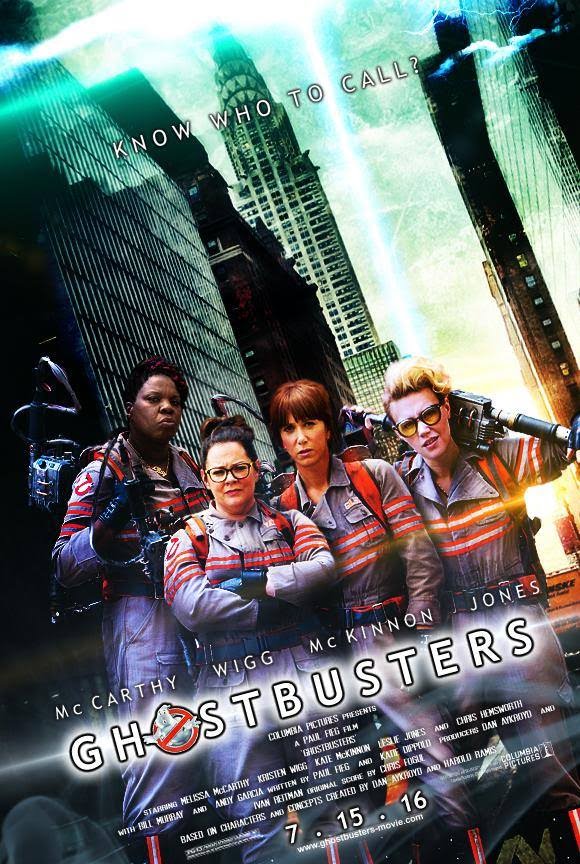
Ghostbusters (no, the 2016 one)

NewGhostbusters.jpg

My first title for this was “Deconbusting Ghoststructures,” but I’m setting my sights a bit lower than that.

New Ghostbusters and Old Ghostbusters are not the same movie. Thank goodness. I can watch both of these movies, enjoy both of them, and not have to worry that I’m stuck watching the same thing twice. There are plenty of moments that are obvious homages to the original, and they pretty obviously had to tie the new movie to the old one given the subject material and premise, but I feel like they’re different enough that the connection is almost more baggage and drag than it’s worth. The name and premise are enough to make this a target of nostalgia-hazed criticism, when it really ought to be viewed (and reviewed) as it’s own thing.

The fact is, New Ghostbusters is an enjoyable movie. It fits into the summer blockbuster mould. It made me laugh, it scared me a bit, it was fun. I have some problems with it, but on the whole I’d say it’s worth watching.

Now, with that out of the way, I’ll engage in hypocrisy and do more to compare the two.

Continue reading

Why David Weber, Why?

Reading about flat characters in E.M. Forster’s Aspects of the Novel, I have just been reminded of one of the things that routinely frustrates me in David Weber’s work.  Weber likes trying to make characters who should essentially be flat, more or less caricatures intended to draw up conflict or drama or comedy (or maybe they should be comic but he refuses to use them in that way, making them painfully comic instead… more on that later).  But instead of accepting that these characters should be flat, he tries to flesh them out.  He tries to make them round, and make me care about them.  Nine times out of ten, he fails.

Continue reading