Deep Wizardry, by Diane Duane

Deep_Wizardry_NME_2


Yes, that is a truly massive shark.  The cover of the version that I read had something to do with a whale, but I like this one better.  I thought I’d already reviewed this book, and it was only as I was sitting down to write my review of the next one in the series that I checked back through my previous posts and found that I was wrong.  So before I tell you my thoughts on High Wizardry, let me tell you how I felt about Deep Wizardry.

The quick and dirty version is as follows: Diane Duane is good at her job, and she knows how to write books about young children taking on incredible responsibilities and facing overwhelming decisions… Which is a decent description of growing up, when I think about it.  Of course, most of us aren’t given access to powerful magical forces except in a metaphorical sense.  Deep Wizardry, like So You Want To Be A Wizard, is quality children’s literature; I’ll even go further and say that it’s good enough to merit your attention and reflection too, child or not.

With the exception of the “I think I read most of this before” section, my review of Deep Wizardry really is very similar to my review of So You Want To Be A Wizard.  I’m still more than a little bit in awe of Duane, she still writes excellent YA adventure with exceptionally mature themes, and she still does an incredibly good job of not talking down to her audience.  What I hadn’t really appreciated before is just how well her chosen storyline and protagonists map onto the experience of going through puberty and becoming an adult.  Call me stupid, call me slow, but though I noticed it in the first book I took another book or two to finally decide that it was more than just a fortuitous construction of the moment.  This, of course, has simply left me more appreciative of Duane’s writing chops, and her choice of subject material.

As per usual, there’s more after the break.

Continue reading

New D&D Sneakily Poaches Inclusivity, Narrative

10325260_10152496571526071_8983892837449015744_n

I grew up playing AD&D, as my brothers introduced me to RPGs before I was 7.  I’ve since moved away from the various D&D systems, flirting with them occasionally in passing while I instead focus on other systems that I find more interesting; I’ve come to prefer more narrativist games for the most part, though my friend Zach’s super-old-school D&D certainly calls to me at times.  But with the release of the newest edition of D&D (5th ed? Next? Whatever we’re supposed to call it) I thought I’d give it a look.  I’d examined some of the playtest documents and made appreciative noises, so I thought I should take a chance.  I’m glad I did.  It seems like the new D&D has learned a few tricks from the games that pulled me away from it in the first place.

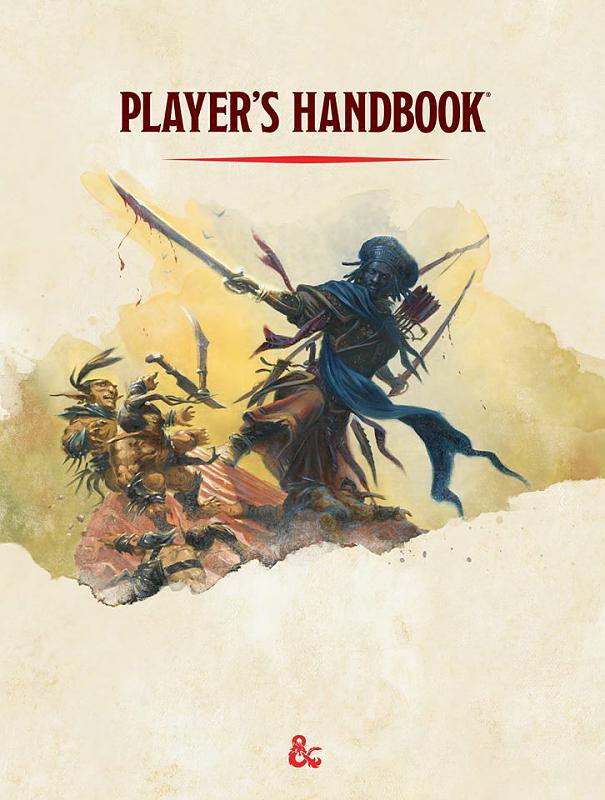
There have been a few things that have really stood out to me while I’ve been reading the new Player’s Handbook (PHB), two quite good and one that I’m not sure how to qualify.  These have nothing to do with the rules, I’ll talk about those later.  The first item is one which I understand has already been discussed elsewhere, namely the game’s specific mention of a player’s ability to construct their character’s gender- or sexual-identity, and statement that that’s a perfectly fine thing to explore in this game; the second item is D&D’s incorporation of distinct backgrounds, personalities, and motivations into character creation, including something called “bonds” which I can only presume has come from Dungeon World; the third item is the art chosen for the book, and its depictions of a diverse group of characters.  I’ll talk more about all of these, but let’s tackle that last one first.

Continue reading

Into the Storm, by Taylor Anderson

islg


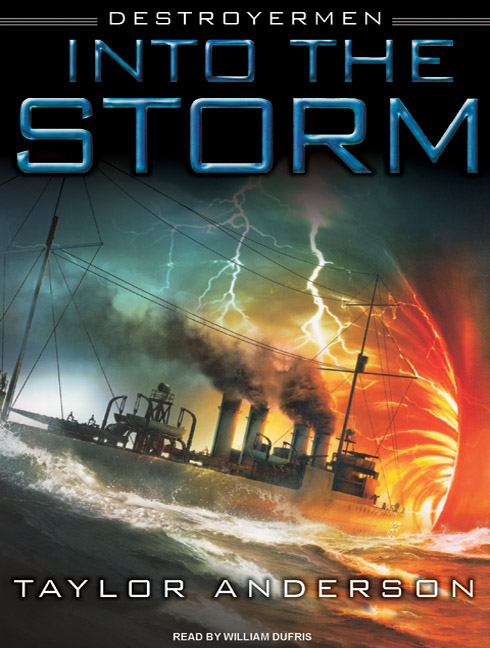
This book falls into a strangely particular sweet spot for me; there’s something about the alt-history technological bootstrapping genre that I find appealing, and the obviously idealized social dynamics presented in this book are endearing if not convincing.  Furthermore, S.M. Stirling’s cover blurb pulled me over the edge into reading it.  I was not quite as automatically engrossed as he apparently was, but Into The Storm has made excellent reading material while I’ve been laid up following an unfortunate paintball incident.

The basic concept is very simple, transposing an American WWI destroyer caught in action against the Japanese at the opening of WWII from our world into an alternate world in which (more or less) the dinosaurs never really died away.  The story is all about the destroyer’s crew doing their best to survive in a strange new world, and doing what they can to find friends who might be able to help them keep their ship operating instead of simply falling apart.  It feels a little like S.M. Stirling’s Island in the Sea of Time crossed with Eric Flint’s 1632, but instead of dealing with a town or island it focuses entirely on a very small warship.  The crew is wonderfully convincing, right down to their malicious pranking and oddly neurotic idiosyncrasies, and I enjoy following all of their various perspectives as the story progresses.  The crew actually reminds me a little of the residents of an Apocalypse World hardhold or members of a Chopper’s gang.

Now, when I say “endearing if not convincing” up above, I don’t mean to disparage the author’s conception of hierarchical systems founded on an egalitarian society.  As it’s presented, it seems to work pretty well.  But the author’s clear preference for the system by which ‘the good guys’ operate is so transparent that I feel unable to accept it at face value.  I don’t have experience with living and working on a US Navy vessel, I have no idea whether or not Anderson’s description is anything like the truth, and I suspect that what Anderson describes is closer to the ideal towards which his hierarchical system strives rather than the reality.  I’m certainly aware of many failure modes that would prevent a hierarchical system from working nearly so well as it’s presented in the book.  I think of it as a variation on the likable / wish-fulfillment protagonist problem; it’s really not actually much of a problem, so long as we remain aware of the fact that we’re idealizing the subjects of our attention, be they characters or systems of governance.

Also, I found the gender relations of the human characters (and characterizations of the male vs. female human characters) to be pretty frustrating.  I had a hard time taking the characterizations of the male and female leads seriously, because they seemed so stereotypically 1940s to me.  At a guess, Anderson was trying to ensure that these things were appropriate for a group of people in the US Navy in 1942 (unsurprising given his previous work as a technical and dialogue consultant for movies and documentaries), and I’m ok with that for the most part even though it turned me off the book to some extent (some things, methinks, are better left in the 1940s).  But he doesn’t really explore any of the disconnect between the humans’ attitudes and those of their newfound allies in this first book.  If/when he does get around to exploring that, and looking at the ramifications of further association between their two cultures, I think that has the potential to be super interesting.  If he just glosses over that topic over the next several books, I suspect I’d be a bit disappointed.

So!  If you’ve read and enjoyed Stirling’s Island in the Sea of Time, or Flint’s 1632, I suspect you’ll enjoy this book as well.  If you haven’t read them but are intrigued by the idea of a group of wanderers on the seas of time and space, doing their best to reestablish themselves safely in a dangerous and not-so-subtly different world, you’ll also probably enjoy this book.  If you don’t think you can tolerate some nearly-stereotypically-1940s gender roles, or some very nearly Apocalypse World-like shenanigans, maybe wait and see what I have to see about the next book before deciding whether this one is worth it.

Resistance, by Samit Basu

51WuUYWtYeL._SY344_BO1,204,203,200_

When I wrote about Turbulence a little more than a month ago, I agreed with the book’s cover blurb in my demand for a sequel.  But while it’s hard to make something that is truly good and worthy of others’ consumption, it’s even harder to make something as good to follow the first.  Fortunately, I think Basu succeeds where many others have failed, and offers a sequel that not only delivers on the promise of the first book, but follows it appropriately in tone and structure as well.  If you want good superhero fiction, this is an excellent place to start.  Or, rather, Turbulence is a good place to start.  Then you should read this.  And for heaven’s sake, don’t read them in the other order, you’ll just spoil lots of cool stuff from the first book.

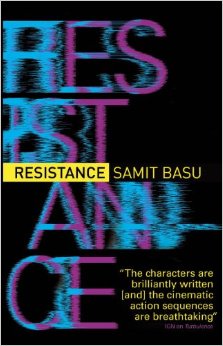
Like last time, I find myself in agreement with the cover blurb on Basu’s book, and yet again I think that the blurb misses something even more wonderful; I’m still convinced that Samit Basu is some sort of Bob Ross of words, successfully conjuring worlds out of thin air with the sparsest of descriptions.  Unlike last time, I took more than one day to finish reading this book.  Perhaps if my reading hadn’t been interrupted by working at an overnight summer camp I would have powered through this book as well.  I can’t tell whether I did not feel as drawn in by Resistance as I did by Turbulence because of those delays or because of something else, but I’m happy to give the book a pass given how much I enjoyed it anyway.

Suffice it to say that if you liked the first book, you’ll like this one too.  And if you haven’t read the first one but are down with non-American supers and women who aren’t just given the short end of the stick, you should definitely read Turbulence (and then Resistance).  If you like superhero stories at all, I suspect you’ll like Basu’s work here.  More on the details after the break…

Continue reading

Guardians of the Galaxy, Pilferers of Pocketbooks

guardianes-de-la-galaxia-poster-2

I made two trips to the theater this weekend, two nights in a row, to see Guardians of the Galaxy.  At least I watched it in Burlington instead of Boston, and thus offered my wallet some protection from the box office’s depredations.  To be perfectly honest, I want to watch the movie again; the Guardians of the Galaxy’s punchlines are a delight, and I consistently missed the followup lines in the audience’s waves of laughter.

If you’ve enjoyed the previous high points of the Marvel movie franchise and are looking for more of the same with a good dose of silly, Guardians of the Galaxy is the movie for you.  It hits its timing wonderfully well, with a great comedy-action plot well-leavened by stupid and/or greedy and selfish characters, without leaving me feeling that anyone had the idiot ball for too long (or even at the wrong time).  On my first watch-through, I enjoyed myself but was almost disoriented by the movie’s pacing as I came time and again to totally new material (well, new to me).  The second time, it felt like the film fairly well flew along, flowing seamlessly from scene to scene in a rush of drama, action, and excellent comedic timing.  Like I said before, I’m interested in seeing it a third time, though next time I’d like to be able to hear the lines I missed the first two times around.

I liked the actors, I liked their interactions and side comments, and I thought that even the completely wooden Groot was wonderfully expressive.  More tidbits after the break, including a few complaints.

Continue reading

Adventurer’s Rest, WFE Intro Game 2014

logo

I mentioned previously that I would be working at The Wayfinder Experience, and just last week I finished up my first time working there as Story staff, running the game Adventurer’s Rest.  I had a marvelous time, though I was frazzled for the first half of the week and teetered between mild euphoria and continued anxiety for the other half.  I’d do it again in a heartbeat, and I think I’d be far better prepared for the incipient chaos and drain on my personal energy the second time around.

Now that the game has actually finished, I’ve got some good stories to share with you.  I’ll even spill the beans and let you know how the game worked and came into being, though I do hope that you won’t read it all if you want to be able to play it at some point in the future.  It turns out that, despite my certainty that game would be a mess, the players had a great time both getting into character and running around with swords.  After the fact, I could see several obvious mistakes that Thom and I had made when it came to balancing the game, but I think that things both went well and still have a great deal of potential for future sessions.

First, an introduction: the game of Adventurer’s Rest was designed to offer several things that I remember being rare in many other adventure games.  Most obviously, I wanted to make it possible for nearly every single player to use magic items and magical artifacts with special abilities.  Second, I intended it to show off just how completely overpowered specific class options are, in a tremendously underplayed class.  You see, Artisans at WFE rarely get much attention, since most people would rather be almost anything else (i.e. Warriors, Wizards, Rogues, or Clerics).  Artisans create talismans that are able to empower people, but they generally require very careful forethought and good situational awareness in order to be effective.  With those things, an Artisan can take on just about anyone… but without those things, an Artisan is likely to be steamrolled by nearly anyone else in the system.  I hoped that Adventurer’s Rest would encourage players to respect the class a bit more.

Finally, I wanted to give people an opportunity to play a newer version of something like the Techna game that I remembered playing for my first intro game at Omega in 1999.  There’s something very special about introducing the option of joining the villain’s team and working against the people that you had thought were your allies.  On further reflection, it seems clear that the Techna game that I played had been better balanced than Adventurer’s Rest (possibly because it had been run more times).  It’s also now clear to me that I’d like to have a chance to play Adventurer’s Rest at a camp where I can tell the villains to go wild without fear of ruining the players’ experience.  There are certain things that are difficult to allow when you’re running an intro camp and you need to design the game around introductory expectations rather than simply allowing the fiction to run its course.

Here’s a much overdue page break.  After this, I’ll start telling you more about the game’s inner workings.

Continue reading

Finance, Ponzi Schemes, and Cards: Liar’s Poker

Lying to your friends can be exceedingly fun.  Unfortunately, other people are often angry when you mislead them in everyday interactions.  This is where Liar’s Poker comes in handy; it gives you all the satisfaction of lying to your friends, with none of the insalubrious repercussions!  I was first treated to this game last night, when I played it with my brothers and cousins, and I’m now a staunch advocate.  Please note that this is not the same as the similarly titled bar game played with $1 bills.

Liar’s Poker is very simple.  Much like in Ponzi schemes (or even the stock market), the idea of the game is to be one of the first people in, and be the very first person out.  You never want to be caught holding the overvalued collection of rubbish that is methodically working its way around the table, and you most certainly want to convince the next person in line that the crap in your hand is actually worth something.  Like I said, it’s very simple.  It also has the potential to be hilarious.

The first player is dealt a hand of five cards, looks at them, and declares a hand (anything from high card to royal flush).  They then offer the hand to the next player.  The second player (and every player after them), then has the opportunity to decide whether the offer is believable.  If they accept the offer, they receive the hand and now have the opportunity to discard face down up to three cards from the hand and draw cards to replace them.  They must then declare a hand of greater value than the one they recieved and offer it to the next player.  If they reject the offer, the rejected hand is revealed and evaluated; if the revealed hand met or exceeded the declared value of the hand (and the declaration did not substantially misrepresent the hand’s contents), the person who rejected the hand takes a point.  If the rejected hand was, in fact, the load of rubbish which the discerning player believed it to be, then the liar who tried to pass it off as something better takes a point.  The first player to 10 (or whatever you decide on for your preferred length of game) ends the game, and the person with the lowest point total wins.

While you are in possession of the hand, you may say whatever you like about its contents.  Once the hand is no longer yours, you should not declare anything about what had been in it except to repeat what you had claimed when you passed it along.  Table talk is otherwise encouraged.  Remember that all discards are done face down, so you can’t see what has moved in or out of the hand.  Also note that the next person must always claim a higher value than the one you gave them, and the only way to hurt people further around the table is by allowing a hand to keep moving.

What did I mean by “substantially misrepresent the hand’s contents”?   If you’ve got three aces in your opening hand, you could say “the highest card is an ace,” and not be in danger.  If you had a pair of twos and a king, you could simply say “pair of twos.”  If you wanted to turn up the heat, you could get more specific and claim the higher value hand, which would also narrow the range of claims available to the next player.  But if you have a straight in your opening hand and instead claim a pair, you would be in danger of taking a point if someone calls you on it, regardless of the fact that your straight certainly outdoes a pair.

So why do I like this so much?  It may simply have been a combination of sleep deprivation and alcohol, but I suspect that I would have similar results when playing this game with the right group of people.  That’s an important note: there are certainly people with whom you will not want to play this game, which may be a larger (or different) group than the usual people with whom you don’t want to play games.  Make sure that you have players who will be willing to laugh at being duped, even as they take joy in lying through their teeth to the next person in line.

Liar’s Poker requires only minor memorization, and will quickly teach familiarity with the values of poker hands, but it really shines when it comes to creating hilariously improbable situations and forces you to judge just how deep the lies really go.  It’s great fun.

To be perfectly clear, there are other games which are also called Liar’s Poker, and there is a book by Michael Lewis with the same title.  This game bears only passing resemblance to the others, but it seems far more interesting to me than the bar game.

Running a Game at Larp Camp

Hi folks.  Sorry for my disappearance on Monday.  I’ll be gone this Wednesday as well, due to being in a place with intermittent internet and huge piles of work.  I expect to resume my regular schedule next week, possibly to regale you with stories from camp.  Have fun in my absence!

So You Want To Be A Wizard, by Diane Duane

so-you-want-to-be-a-wizard

I’m more than a little bit in awe of Diane Duane.  It’s been a while since I read something of hers, and I’d forgotten how good she was at her chosen profession.  Though the genre is no longer quite so thinly populated as it was when this book first came out, I still think that Duane outdoes the young wizard competition.  When it comes to books about serious young people dealing with serious (if fantastical) problems, she’s totally on top of it.  Admittedly, I’m not the most experienced judge for this particular sub-genre, but Duane is worth reading if you like YA literature that doesn’t talk down to its readers.

So You Want To Be A Wizard follows two young newly-sworn-in wizards who are facing their very first duties, which include slowing down the entropic death of the universe and generally trying to make the world a better place.  You know, the usual.  As you might expect from a story with protagonists devoted to such expansive duties, they don’t have an easy time of things and quickly end up in way over their heads.  I admire the depth of the goals Duane sets in front of her characters, as it seems as though they never lack for things to do.  This also means that they’re facing things that are profoundly scary and difficult to deal with, which turns out to be the perfect recipe for excitement and wonderfully climactic scenes.

Without spoiling anything, I think I can safely say that this book is an excellent adventure with exceptionally mature themes for a YA story.  The themes are more cosmically oriented than those of many other YA books that I’ve seen recently, with an emphasis on the broad scope of a story that I normally associate with epics; I admire the way in which Duane manages to include an epic scope even as she keeps the story (and its narration) very personal.  It takes considerable skill to see that through, and Duane clearly has it.  If you enjoy epics, YA stories, modern fantasy, or anything similar, I expect that you’ll like this book.

Ok, so I have an odd story about my history with this book…

Continue reading

Transistor

Transistor_Wallpaper_1920x1080

There are many things that I wish to say about Transistor, but the story-related ones will have to wait for after the break.  I don’t want to spoil anything for you.

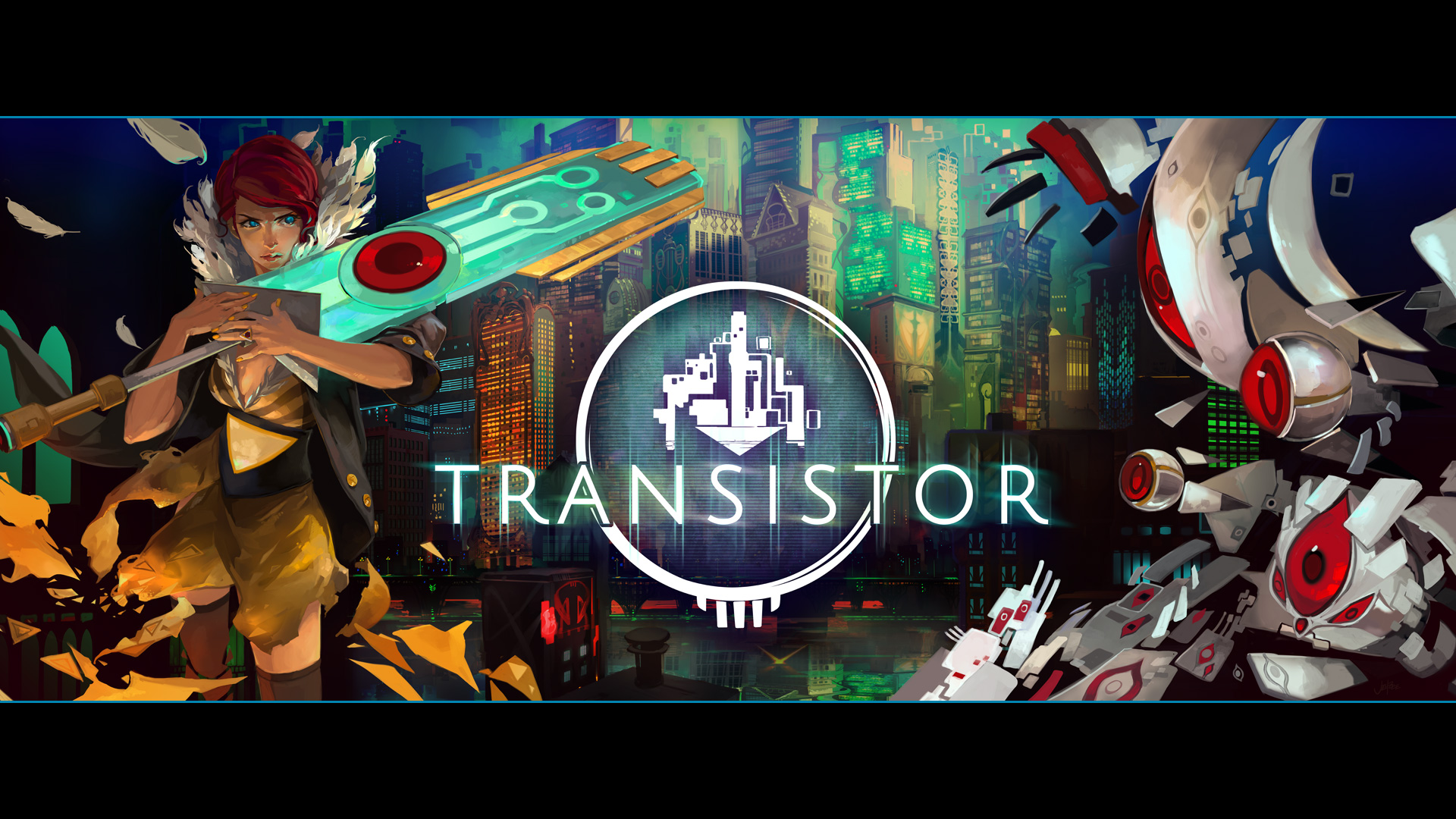
To start with, this is one of the prettiest games I have seen in a while, and it has a soundtrack that makes me want to close my eyes and sink into it.  I spent a considerable amount of time simply sitting and absorbing the game’s music, doing nothing else for fear of missing out on the songs.  I wish that the soundtrack had all of the various in-game versions of the music, including Red’s hummed accompaniment.

I’m hard pressed to peg the game to a single genre or type, but its construction and design bears a profound similarity to Bastion.  You do battle with an ever-growing variety and number of foes, following the protagonist from a third person isometric perspective as you wander through lushly painted land- or cityscapes, slowly puzzling out the backstory of the characters and learning what is happening around you.  As far as I’m concerned, what worked in Bastion works here too.

As a game, I found Transistor very appealing; designing my own powers, mixing and matching elements as I discovered new killer combos, and adapting my loadout to the situation presented were all quite satisfying.  Making sure that I wasn’t crippled when I lost one of my powers due to a mistake, and being forced to rethink my situation creatively when I failed in that, were both very rewarding as well.  And when battles became a little same-y towards the end, or failed to present me with situations that I hadn’t foreseen, I still wanted to follow the story.  Now that I’ve finished the game, I also want to see how it handles itself on a second pass-through.  But I’ve played it enough to be able to say that I like it, and that I suspect you’d enjoy it as well.  Now about those *SPOILERS*…

Continue reading