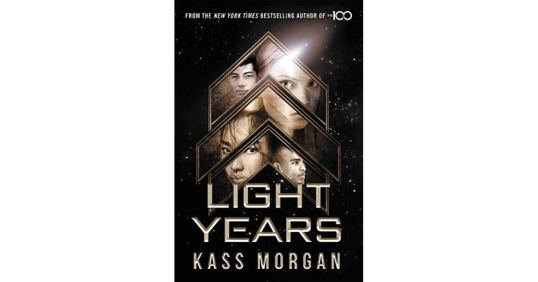
Light Years is a fine book, nestled deep in the readily-identifiable heart of its genre. It never Continue reading
Light Years is a fine book, nestled deep in the readily-identifiable heart of its genre. It never Continue reading
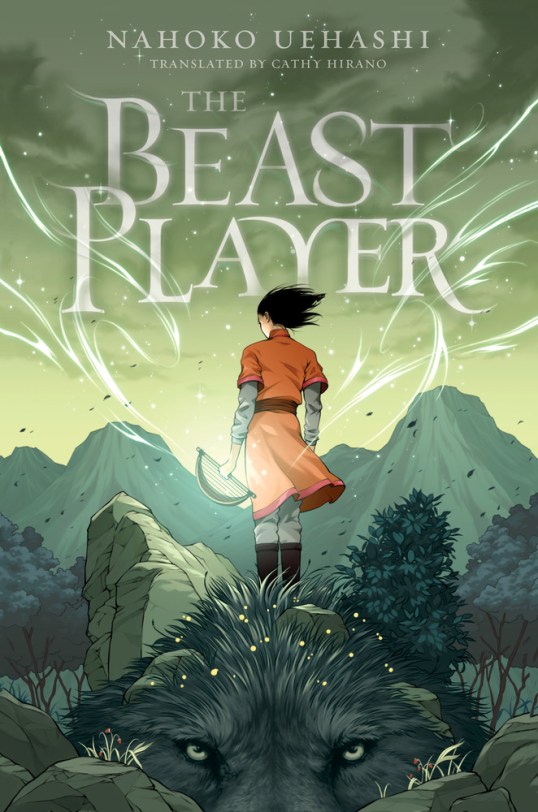
To someone well-versed in American (and more generally, Western) narrative expectations, The Beast Player is a bit of an odd duck. It is, however, a good duck.
Some of this oddness can be chalked up to the fact that Continue reading
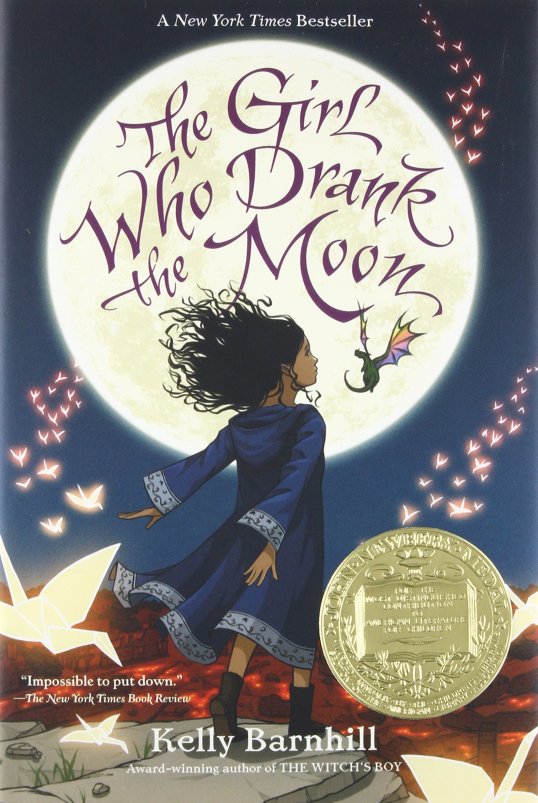
My reading log entry for this book has notes scribbled in the upper left corner: “read this again, read more Barnhill.”
Sometimes I have the pleasure of finding something that feels like it has wafted in through my window, a strangely whole remnant of a dream. It tantalizes, and though it obviously operates on a logic I only comprehend on that precipice between slumber and wakefulness, it holds together. Kelly Barnhill’s The Girl Who Drank The Moon is one of those books.
This is not to say that The Girl Who Drank The Moon is confusing or inaccessible. Rather the opposite. It is seductive, and it pulled me in as one might fall into reverie: never losing consciousness, but slowly melding from one reality into another without any clear boundaries between the two.
I admire this book.
I love the dreaminess of its fantasy, I love the elegance of its language and the way it presents its stories within stories. I marvel at how well Barnhill has tied conflicting accounts together, like strands of rope twisted against each other until they bind and form a stronger whole. Perhaps most of all, I love the ways in which this story eludes the expectations of a fairy tale while still being a fairy tale through and through.
I did feel that—at the very end—this story lost a little of the breath-taking elegance it had carried so effortlessly throughout. But that cannot detract from the story as a whole for me. It remains too good, and I know for a fact that any semblance of effortlessness is a beautiful lie made of hard work and considerable skill.
That’s why I’ve set this one aside to read again. That’s why I want to read more of Barnhill’s work. That skill, that sense of story, is something I admire and covet. I want to let it soak into my skin, let it become part of me as well.
I strongly recommend this book, especially if you’re looking for middle grade fantasy or fairy tales. I think you could probably delight younger children by reading it aloud. I know that it delighted me.
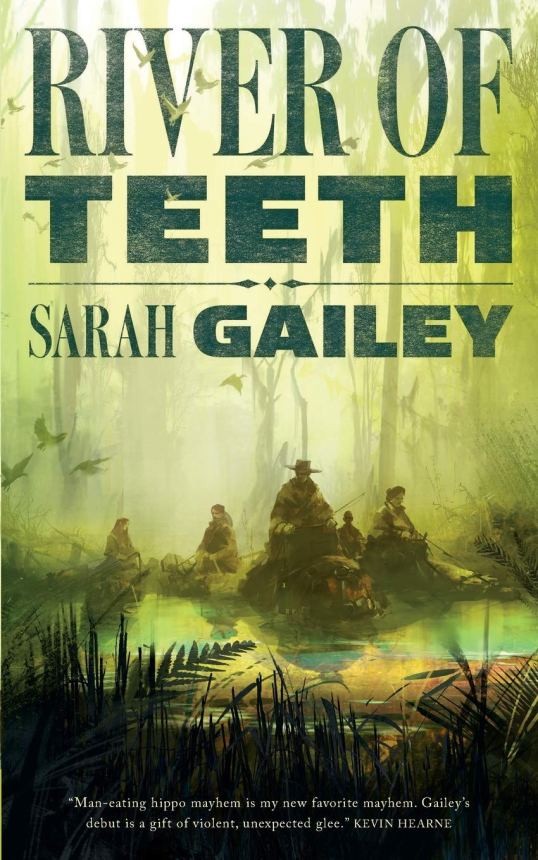
Dang, that cover is gorgeous.
I just realized that I never wrote anything about River of Teeth here.
River of Teeth is a delight. It is compelling, it is exceedingly evocative, and it cemented my tremendous respect for Sarah Gailey. That respect isn’t simply for Gailey’s fabulous what-if—though a heist western about queer hippo-riding cowboys in the swamps of Louisiana wins you lots of points in my book—no, my respect is for Gailey’s obdurate embrace of optimism, hope, and upbeat tone despite nearly every genre expectation insisting otherwise. When I read River of Teeth, I couldn’t recall the last time I’d read a book so fraught with dire struggle, and with emotional conflict, yet which somehow rose above despondency and grimdark. It’s still hard to come up with such titles, but this is one of them.
Gailey’s characters are capable, but merely mortal. They face the impossible. And somehow they never lose heart.
I think it says something that I inhaled River of Teeth, and then immediately inhaled the sequel, and only ever felt better for having done so.
River of Teeth is a small thing, and it’s a marvel that there is so much inside it. I strongly recommend both it and its sequel Taste of Marrow. If you like well-grounded weird historical what-ifs, or westerns, or heists, or stories which adamantly refuse to kill their queers and which hold tight to hope with both hands… this story is for you. If you just want a good time, this story is for you.
Please, go read the book.
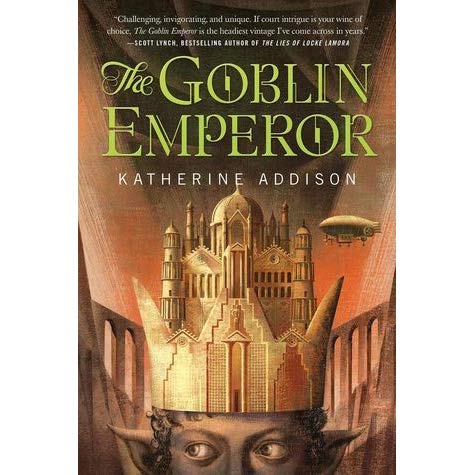
The Goblin Emperor is strangely soothing. I don’t mean that it will make you feel good the entire way through, nor that nothing bad happens; I mean that it’s touching, fun, feels real, and somehow delivers good political intrigue in a grim situation without being dark or gloomy. Also, it hooked me and kept me excited despite being a tome.
I found this book on a Tor list recommending anti-grimdark stories, and it entirely delivers. Though shelved as YA, I think everyone would like it.
You know how sometimes you don’t want a story to end? You reach the finish and sit in that lingering need to see more, stuck on the idea that surely you could get just a little more story out of the book if you squeezed it just a bit harder. That was this book for me. I wanted more, I wanted to see what came next.
But Addison timed the climax and denouement for this book extremely well: she resolved the central issues, the emotional and political struggles that swirl through the heart of the story. Then, with that resolution still in hand, she ended things; no unecessary time is spent dwelling on anything extra or outside the story. Also, no matter how much I want to read more about the good things that happen to these characters, reading about only good things would probably bore me after a while.
And, unless they launched a whole new story, I’d feel sad when things strayed from that quiet feeling of calm stability.
I have more to say. I won’t give you explicit spoilers, but bear in mind that (if you’re strongly in the anti-spoiler camp) you may glean more from my comments than you wish to know. If you want to stop here you can. You should already know by now that I recommend this book.
Anyway, you spoiler-phobes have been warned.
There’s a lot of grimdark out there. There’s an excess of stories that revel in showing us how gritty and real they are by rubbing our noses in how poorly everyone treats each other. It takes a special kind of attention, a particular exercise of will, to write political intrigue—complete with assassinations, nefarious plotting, and villains aplenty—while still clinging to an underlying optimism, and giving everyone relatable humanity.
I rarely read characters I fall in love with in political intrigue novels, people who are quite simply good. They’re usually narrative fodder, intended to show the reader how characters die. So it is an absolute joy to find that The Goblin Emperor neither ignores the dangers of trusting those who desire your power, nor casts the central character as a manipulative super-human. Instead, The Goblin Emperor allows its main character to be manipulated and suffer for his naivety, learning from his mistakes without losing his honesty and decency or being crushed beneath the novel’s narrative heel—this story doesn’t assume that to be kind one must also be stupid. It allows him to be a good person trying to do the right thing in an impossible situation, even as he struggles with the growing weight of understandable paranoia and the inability to know what choices might be the ‘right’ ones.
It helps that The Goblin Emperor doesn’t bother with irredeemable villains; even the people I came to detest still had their own reasons behind their actions. Whether obviously selfish, well-intentioned, or something else, they always felt complexly human and real.
What I’m saying, really, is that this is a good book. Katherine Addison did a good job, and made a story that I strongly recommend. It’s emotionally real, it’s sometimes grim, but it’s also hopeful. And that matters.
I’ve been busy teaching children to die well with make-believe swords. More importantly, I’ve been busy showing them that “winning” a sword fight doesn’t make you the most interesting or coolest character in the scene. Relatedly, I died a lot.
Near the end of our adventure game, shortly after I had led the campers in an oath to continue my mission (defending the land from dragons), I died to the big bad. It was a scripted death. It was also, if I may toot my own horn, a good one. I was lucky enough to have not one but several people come and pay their respects afterwards. I think a few of our campers have realized that they can have a good time and make good scenes with each other, improvising a good scene rather than struggling to win.
I’ll be very pleased if that sticks.
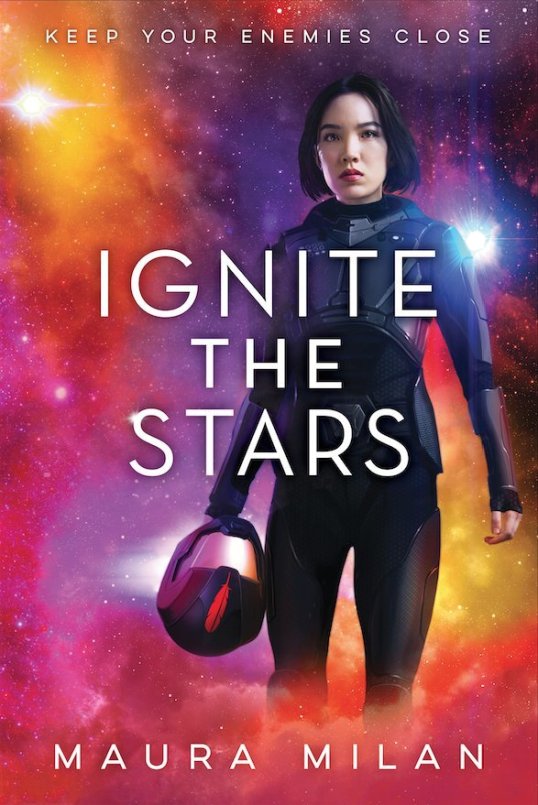
I struggled my way into this book. Not because the characters or setting didn’t compel me, but because the writing clashed with my expectations. The language of the text did not reliably flow for me, and several early conversations felt stilted or unnatural. It was jarring and distracting where I wanted it to submerge me completely.
But I persevered, and I’m glad that I did. It was the characters, the setting, and their underlying tensions that kept me going. Though it’s clear from my early jarring experience that Maura Milan and I don’t communicate on the same wavelength, her story is marvelous. I happily finished Ignite The Stars, and by the end I felt none of the disjointed language I’d experienced earlier.
Now, I haven’t re-read the start. I don’t know whether there’s simply one piece of the text that is written differently, or whether I became used to Milan’s writing and stopped noticing what had been difficult for me earlier. Other books I’ve read (like Graydon Saunders’ Commonweal series) are certainly an acquired taste that take a great deal of work to access and appreciate—and while I know that about them, I’ve lost track of how hard I worked to access them the first time. It’s not clear to me whether I’ve lost track of my difficulty accessing this book as well.
Regardless, I admire what Milan has made here. Few YA sci fi books I’ve read recently do as good a job of incorporating stories of oppression, hate, and exclusion, let alone deal with the consequences of hegemonic expansion or intolerance against refugees and ethnic groups. When they do incorporate these elements, they rarely feel as honest as this—like they’ve been tacked on to add some socially conscious edge to a story, instead of existing as part and parcel of this story’s world. Milan has done the second.
Moreover, she’s done the second while making a good story. Yes, there are some very specific genre story beats that you’ll see coming. If you’re already familiar with the particular tropes, you won’t be surprised (no I won’t spoil them). But Milan has made something that feeds all my genre expectations while still incorporating everything I mentioned above, and I admire it a great deal.
Honestly, I hope that I could do half as good a job as she does.
So yes, I recommend this book. That goes double if you want YA sci fi with a school plot and light romance elements. If you have language trouble early on, stick with it—there’s good story worth reading on the far side.
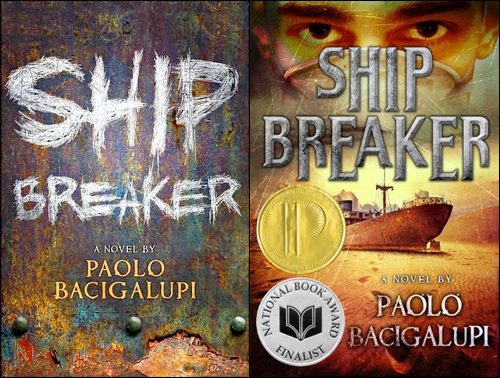
I like the one on the left more.
I’m a sucker for a good cyclical story, for plot elements interwoven early and revisited at the climax. That’s part of my love for Die Hard and Hot Fuzz. This book is neither of those movies, but it does many of the same structural things.
My feelings for Ship Breaker are slow and warm, less the quick shine of delight than the steady glow of admiration. I enjoyed it a great deal, but I was particularly impressed by the way in which Paolo Bacigalupi built up the feel of coming full circle, and filled it with excellent foreshadowing as he established the struggles to be faced. I also appreciated the book’s explorations of family, loyalty, and love, how they felt etched deep in the text, part of the world that seeped out through every pore. Despite their omnipresence, I never felt as though the book was beating me over the head with its themes; I even ignored them for a while simply because of how completely they merged with the characters and text. Like a shot from a skilled pediatrician—medicine delivered amidst pleasant distraction—they were slipped into the rest of a seamless whole, the needle unnoticed until it was gone. Not perfectly slick, but very well done.
This book is easy to read as a hero’s journey, but Bacigalupi avoids the wish-fulfillment capability-fantasy that periodically crops up in genre stories. People struggle and strive through difficulty and danger, people learn and grow, but they never feel superhuman; the main character’s most fantastical accomplishment is quickly learning to read. This preserves a rough and prosaic taste that grounds everything, making the moments of higher tension even more piquant in contrast. It’s something I like a great deal.
I haven’t even addressed the setting or characters, the way Bacigalupi enmeshes the reader in the world without explaining anything, without needing to explain anything. It’s another thing I admire and aim for in my own stories, and I want you to discover it for yourself if you haven’t already. I wasn’t surprised to see Tobias Buckell thanked in the afterword, and if you like Ship Breaker or its ilk I’d strongly recommend Buckell’s Arctic Rising and Hurricane Fever.
I’m moving, and don’t have reliable internet! I’ll be back next week.
I’m away Thursday, so here’s a little setting-seed to tide you over:
There is an island on the southern coast of Ela Cartaz, where the winds bluster chill and wet. Under the moss and rot and the hanging vines, beneath the old trees whose roots eat older mortar and clutch at broken foundation-stones like pearls, there is a warm light. This is the light sought by many, the light for which thousands died before the fall of the first Ela Cartaz. It waits in darkness, while around it the remnants of a lost past whir and click and hum.

