Obstacles to writing, 12/18/25

I’ve got a persistent computer problem; my computer will, at random intervals, lose focus on the window in which I’m working. If I’m typing, whatever I type stops being recorded. If I’m playing a game, the game stops responding to my input until I’ve clicked inside the game’s window again (yes, this gets weird with fullscreen). This has weird side effects! I’ve had my computer put the display to sleep while I was watching a video, because it lost focus on the video player and then didn’t receive any input for five minutes.

This would be merely annoying, if it weren’t for that typing problem. Having my typing interrupted because my computer lost focus on my word processor is aggravating. It’s awful.

It’s like playing music only to find that your instrument isn’t in your hands anymore. Instead, your instrument is hanging in midair, right there in front of you, but you have to reach forward and grab it again and settle back in to what you were playing. Your music only comes out in fits and starts. It is nearly impossible to relax into a flow.

If, like me, you sometimes enjoy closing your eyes and envisioning a scene and just typing until you figure out where everything is going… tough luck.

I have struggled with this. I’ve hunted through forums for similar experiences. I’ve searched for the culprits they identified, or the methods they used to find their culprits. I’ve tried setting up programming shells and running code that I found online to log whatever program keeps stealing focus. I’ve done everything… except painstakingly tagging all the documents that I want to save, copying them onto an external drive, and then reformatting my machine and starting over.

Why?

It’s a stupid reason, really: it takes time and effort that I’d rather spend writing. Or which I’d rather spend doing anything else. Yet the longer I put this off, the more time I lose and the more frustrated I become. It’s been a problem for an embarrassingly long time at this point.

I’m going to give myself a gift this holiday season. I’ll finally do the prep work necessary for a factory reset on this machine. Then, I’ll set myself up with some hot beverage(s) and a good book, and I’ll let all the necessary file transfers grind along until I can wipe this thing clean and start fresh.

Or, more likely, I’ll start this and then be busy taking care of the baby or doing house work. At least this will be done.

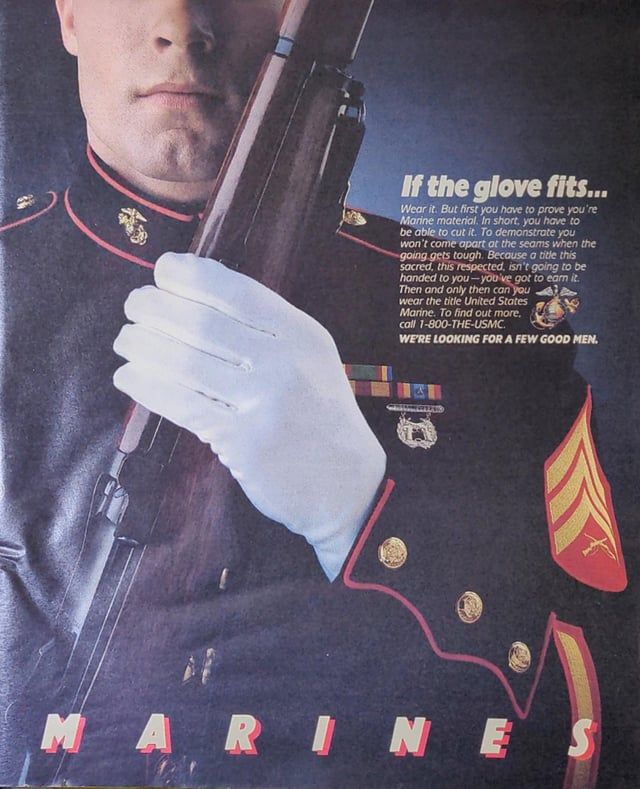
Boots, halfway through: A Marine-shaped box

The less morbid option for a Marine-shaped box

I’ve watched more of Boots, finishing episode four and just barely starting episode five. The show’s message feels clearer now. My initial curiosity is congealing into grim resignation.

Boots isn’t bad. It’s well crafted. The character portrayals and overt construction of masculinity that piqued my curiosity still remain. I can still enjoy picking through and examining them. I can enjoy stripping them for parts.

The show isn’t bad/wrong, the storytelling isn’t bad/wrong, but I like Boots less now.

Why?

Continue reading

Have baby, still sick; 11/13/25

I have a piece in the works revisiting Boots, but I’ve been doing extra baby duty this week and I’m well past the point of being sick for a month. You’ll have to wait a little longer.

Instead, please accept this (relevant) link to a video essay by Schnee about recognizing when and how you’re being propagandized. This is kind of a spoiler but I’ll be referring to Schnee’s video in that larger piece on Boots.

Rewatching Ted Lasso S1

I feel more complicated about the character of Ted Lasso as I rewatch this show. For one, as Ley says, his vibe is very much Manic Pixie Dream Coach. More importantly, I feel as though early on the show distracts from Ted’s flaws because he means well and is the protagonist… and I feel grumpy about that.

I see more of Ted’s shadow (to borrow from Jung) coming to the fore as I rewatch the show. The first time through, I was just keeping up with the writing and admiring the show’s construction and delivery. This time, I have the chance to pay more attention to what’s going on, and to notice the elements that are clearly laid out and planned for later exploration.

It’s a well-written show. Ted is a well-written character. He’s flawed, though we don’t explore that as much in the beginning of the show. He’s admirable and likable in his attempts to catalyze the personal growth of the members of his team (along with everyone around the team), and to drive their transformation into a mutually supportive whole.

In pursuit of that goal he also transgresses or ignores people’s stated boundaries while ‘trying to make things better.’ His transgressions felt off the first time around. They feel more insufferable on a rewatch.

The first example that springs to mind for me is how Ted explicitly ignores Rebecca Welton’s stated preferences when he promises to show up again the next morning despite her saying that he shouldn’t. It’s a small thing. But this small thing is done with a powerful “aw shucks I’m just trying to do right by everyone” attitude, a real “I’m a nice and earnest guy” vibe… and that attitude plus the show’s narrative focus on Ted as our protagonist blurs Ted’s transgressions into the background. 

Maybe Ted is oblivious to the ways he’s transgressing. I think I could empathize with that Ted more, even though it would still feel painful to see. But I don’t think he’s oblivious, at least not with Rebecca—he responds (in)directly to Rebecca’s request by saying that he won’t honor it. And the show validates his actions.

I know how well things will go for Ted. I know how his efforts will ultimately pay off for himself and those around him. The show might not hide that Ted is doing something disrespectful, but it certainly slides it to you in a shit sandwich with such a smooth delivery that you could blink and miss it. We’re also given a brief glimpse of Ted’s relationship with his wife that strongly implies that this sort of behavior is not exactly surprising from Ted—and yet that moment is used mostly to build emotional depth and vulnerability for Ted, rather than to point out that he might have a pattern of self-sabotage via transgressing boundaries. That makes his other boundary transgressions all the more painful to me.

Maybe I’m more sensitive to this because I know more now about Jason Sudekis’s personal life around the time of making Ted Lasso. There are some painful parallels, complete with separation and custody conflicts as he and Olivia Wilde parted. In some ways, Ted is Sudekis’s chance to tell his version of his story, to portray the best version of his story and make himself a victimized tragic hero. No doubt these parallels help Jason Sudekis play Ted Lasso (his own life mirrors his art, he can bring all those pieces to his portrayal of the character!). But I think he’s too close to the experience and too caught up in it—Sudekis’s portrayal of Ted (specifically in the third season) feels more like a polemic or like self-soothing rather than an empathetic nuanced exploration. Worse, these similarities makes the show’s blurring of Ted’s flaws feel bad in a self-indulgent way.

Now, none of this makes the show bad. I still love Ted Lasso. I still think it’s extremely well-written and well-executed. My love for it from four years ago remains. If anything, I’m more impressed by the ways in which the story’s foundations were laid so long in advance. And I’m also finding the ways that it lands differently as I rewatch it.

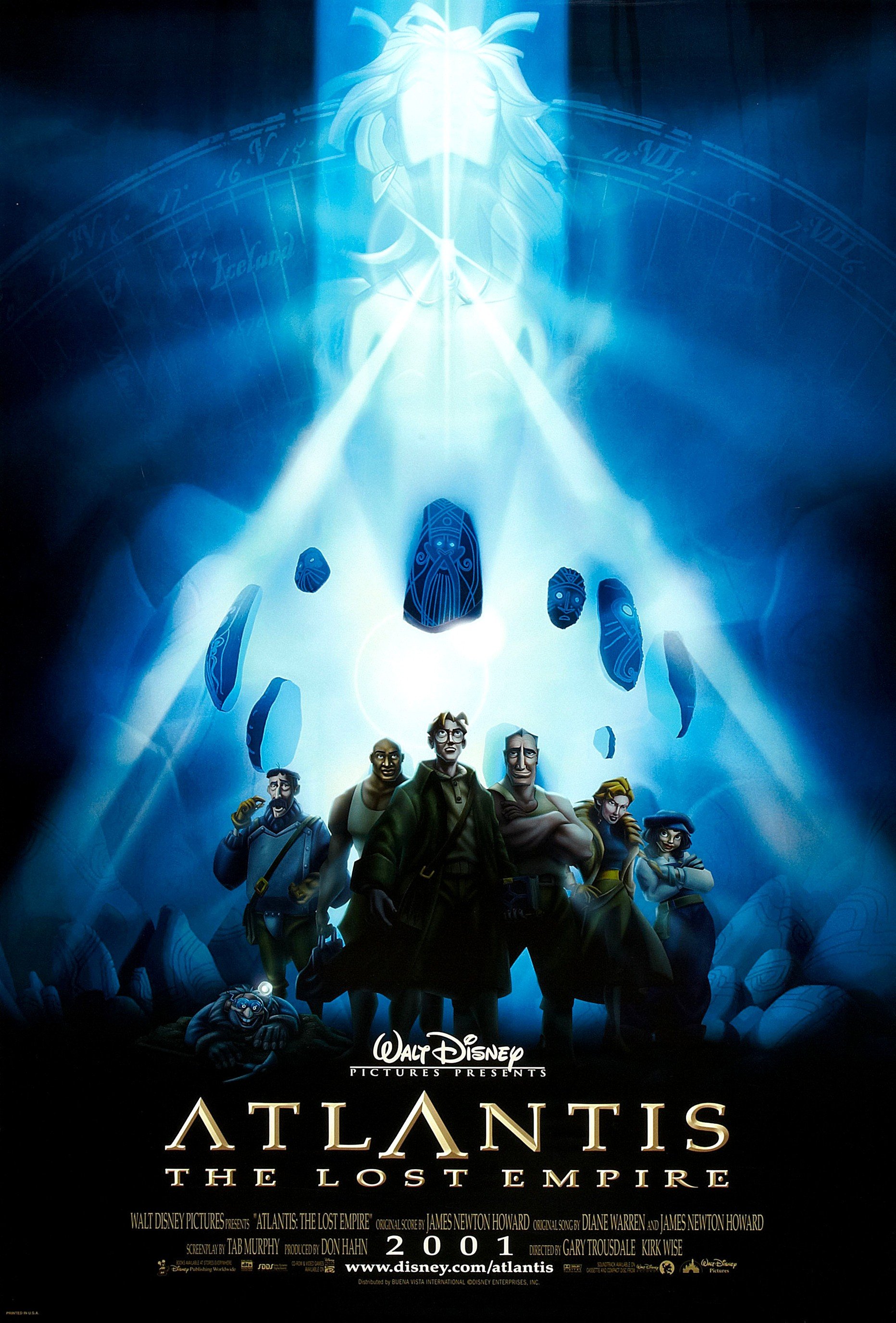
Atlantis: The Lost Empire (2001)

Visually, I love Atlantis: The Lost Empire. It’s gorgeous.

I love Mike Mignola’s style, which permeates everything in this movie. I’m very fond of his Hellboy comics, and had no trouble with this movie’s resulting un-Disney-like animation. Admittedly, some of the animation choices felt a little weird, like the animators struggled at times to convert the character designs into moving figures in ways that felt good. Yet at other points (especially in the movie’s climactic fight scenes) those same characters moved fluidly and naturally through a variety of perspectives, surpassing my expectations beautifully. My love of Mignola’s designs smoothed over the awkward bits for me, and I was very happy overall. If you don’t like Mignola’s art style, or you don’t like the movie’s character designs, you might not enjoy this as much as I did.

Narrative-wise, this movie is… fine? It’s both good and bad.

I love adventure stories, which Atlantis is. I love them so much that I’ll put up with a lot. That said…

Continue reading

Internal tumult, and comic progress

Today’s an odd one. My cat is not doing well, and I’m stressed about a lot of different things both large and small. I am, however, still making progress—the agent who offered feedback on my query liked my rewritten draft, I’ve had a very helpful conversation with my friend Lucy Bellwood about making comics, and I’ve been reading Molly Ostertag’s substack series on making graphic novels. With those last two details, I can confirm that…

Continue reading

Query Reflections

I had the opportunity to connect with an agent while I was at Arisia, a friend of a friend, and I’ve really appreciated speaking with her since. She was generous enough to share her insight on my query letter for Bury’em Deep. I’m very grateful.

My key takeaway is that my past edits of my query letter have not helped. I created distance from Barry’s emotional throughline. That made it harder for a reader to empathize with Barry, and didn’t convey the emotional intensity of the story itself.

I think I got so caught up in trying to convey the totality of the story, and in trying to make that summary snappy and engaging without being in Barry’s head, that I forgot to give the query letter heart. It doesn’t help that I have been staring at various drafts of this query letter for years at this point. Once I’ve been looking at any collection of words for long enough without clear external feedback, I stop feeling able to judge them usefully. Thus, without any useful feedback from my target audience, judging what was wrong with my query felt like making random stabs in the dark.

With this insight though I feel much better. I feel like I have a target. I might miss that on my first few tries, but at least there’s something I know I can revise towards. In fact, I started redrafting the letter in my head yesterday while I was meditating (I know, that’s not actually good meditation practice). 

That felt like good creative exercise. You know the feeling I’m talking about? There’s a certain feel to that exploration for me—it’s closest to the relaxation of freeform dance, or the undirected play of sketching and coloring, except that I do have a target. My target, as much as possible, is to write a captivating third person version of Bury’em Deep that conveys Barry’s first person emotional journey. Because of the constraints of query letters, that has to be around 250 words. More meditation may be in order.

Anyway. It’s time for yet another rewrite. Wish me luck.

Reading Gibson Again

It’s been a long time since I last read anything by William Gibson. Too long, probably. I’d forgotten his talent for sentence fragments. I suspect I’ve unconsciously emulated him in my fiction.

I’m reading The Peripheral now. I’m nearly halfway through and enjoying it. He doesn’t constantly work in metaphor, but when he does…

Continue reading

Authorial Power in RPGs, quick thoughts

There are many ways to play TTRPGs. As long as you’re all having fun you’re doing it right.

It’s easy, however, to stumble over one’s assumptions. Mismatched assumptions about creative control, who’s taking narrative initiative, and what to expect in play are a quick way to sour your fun.

This is a tangent from the “social skills of storytelling” series, working from two inspirations:

Continue reading

Worldbuilding: Theft, Inspiration, & Homage

Culturally, we put a lot of emphasis and value on originality. An undue emphasis, as far as I can tell. I believe art (and yes, worldbuilding is art) is founded more on sharing and mixing and reinventing than it is on truly novel ideas. I think we should embrace that.

For context: this follows directly from last week’s post on worldbuilding. Last week I mentioned stealing inspiration and using pieces of other stories, but I focused on embracing inconsistency. I should have also referenced my old post about leaving blank spaces. This week we’ll focus on the stealing, sampling, and paying homage side of things.

Continue reading