I’m busy celebrating with family. I hope that you and yours are well, and that you have enough to see yourself through the coming winter. Enjoy food and warmth and light, and may you find peace!
Author Archives: Henry
Filler, fight scenes, and Marvel fluff
I practiced stage combat years ago. I know how to choreograph a decent fight. I love watching skilled practitioners strut their stuff. This is why I love watching old Jackie Chan movies and the John Wick series, why I marvel at Olympic gymnasts or any other athletes where I have some basic understanding of just how utterly awesome these people are at what they do. I appreciate skill, and I admire craft.
Making a big blockbuster action sequence takes a lot of work, and can be done well. Sometimes I like that style. The first time I watched the first Avengers movie, I don’t think I was aware that the climactic fight took over twenty minutes. I enjoyed the spectacle, appreciated the work put into it, and didn’t care about how long it ran.
But many of those climactic fights feel like filler. Maybe I’ve seen too many Marvel movies, consumed them past the point of satiation. Or maybe…
Continue readingCastlevania, s1 (Netflix 2017)
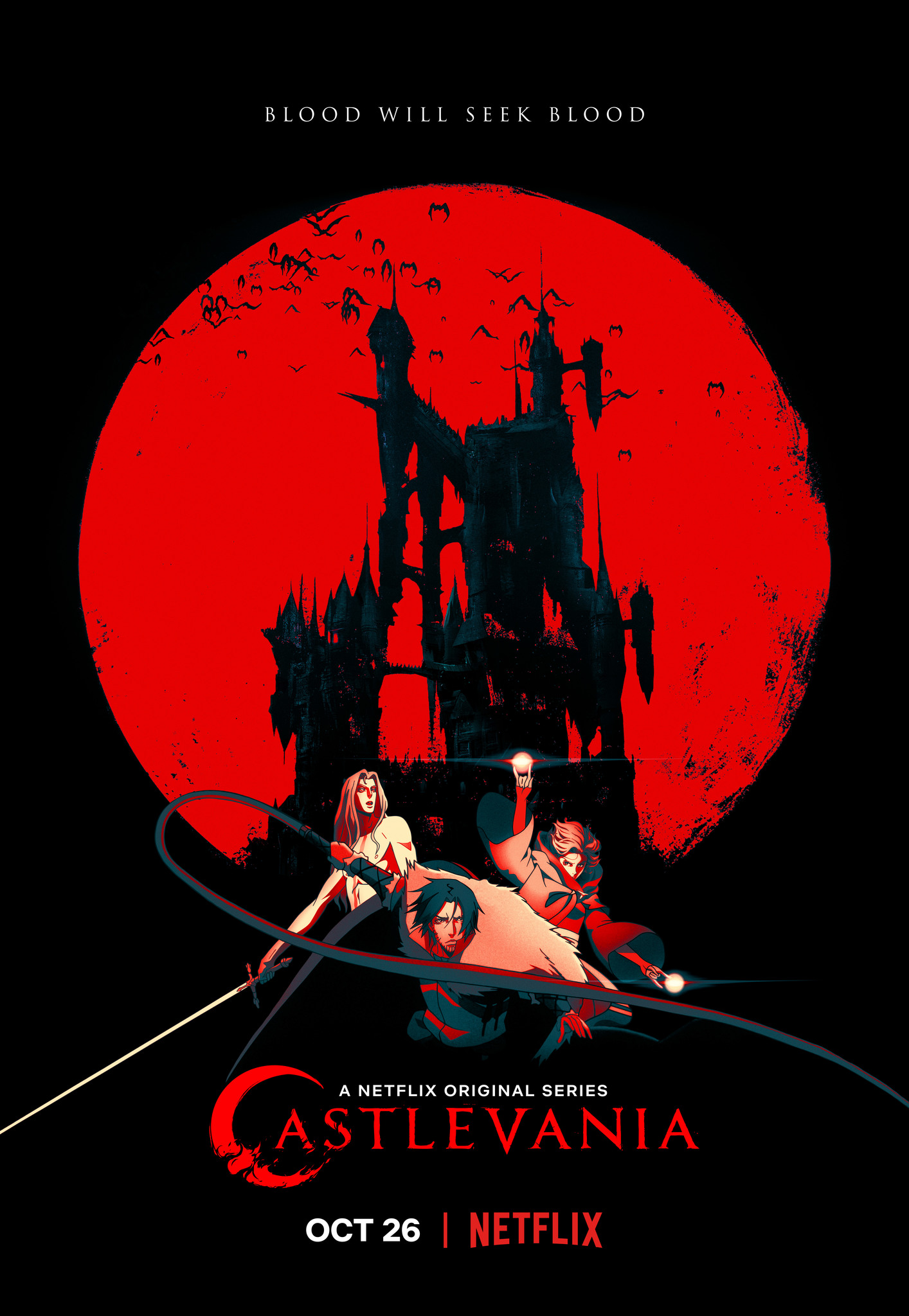
I admit, I very nearly bounced off the first couple episodes of season 1. I’m now a few episodes into season 2, and the show has improved. But has it improved enough?
Continue readingThe back-into-it roundup, 11/2/23
There’s a wall that builds itself. It stands between me and my creative work. If I pass through it every day, I can knock it down a little with each trip—moving past it is never effortless, but the wall doesn’t have a chance to grow that much. If I don’t pass through for a while, the wall climbs and solidifies. Pushing past it gets harder the longer I wait.
I shared that image, that metaphor, with Ley when it came to me recently. They nodded, and suggested the metaphor of a quickly-overgrown path that I need to frequently bushwhack and clear. That works for me too.
I’ve been busy doing other work for a week or so. I didn’t think that would be such a distraction from my other writing, but it was. Fortunately, I had the Monuments Men post ready and was almost finished with another World Seed (The Blister is now available for sale!).
But now I’m trying to decide which fiction project to return to, how I want to start bushwhacking—and I’m being pulled in yet another direction by Skip Intro’s Veronica Mars episode for the Copaganda series. Sometimes I watch or listen to interesting analysis (critique and/or appreciation) of stories and find that spark of inspiration. This was one of those times. I don’t know where I’ll take it or what I’ll do with it. Maybe I’ll hunt down more old noir and see if that gives me any new clues.
That’s my ramble for now.
Wait, I should have another review showing up on Geekly Inc soon. I reviewed A Power Unbound, which I enjoyed. I’ll probably have more for you here about that another time, and I’ll let you know when that post has gone live.
Oh, it’s already up! Enjoy.
The Monuments Men (2014)

I’d been meaning to watch this ever since it came out in 2014. I’m a sucker for WW2 stories, and I like art, so I was curious to see a WW2 story about people dedicated to protecting art (with a basis in history). I wasn’t disappointed, but the movie was an odd experience.
There’s a quote attributed to François Truffaut, “There’s no such thing as an anti-war film.” The Monuments Men might be the closest I’ve seen a movie come. But it also felt tremendously self-satisfied to me, in a way that eroded that anti-war feel. Let me explain.
Continue readingIndiana Jones and the Dial of Destiny (2023)
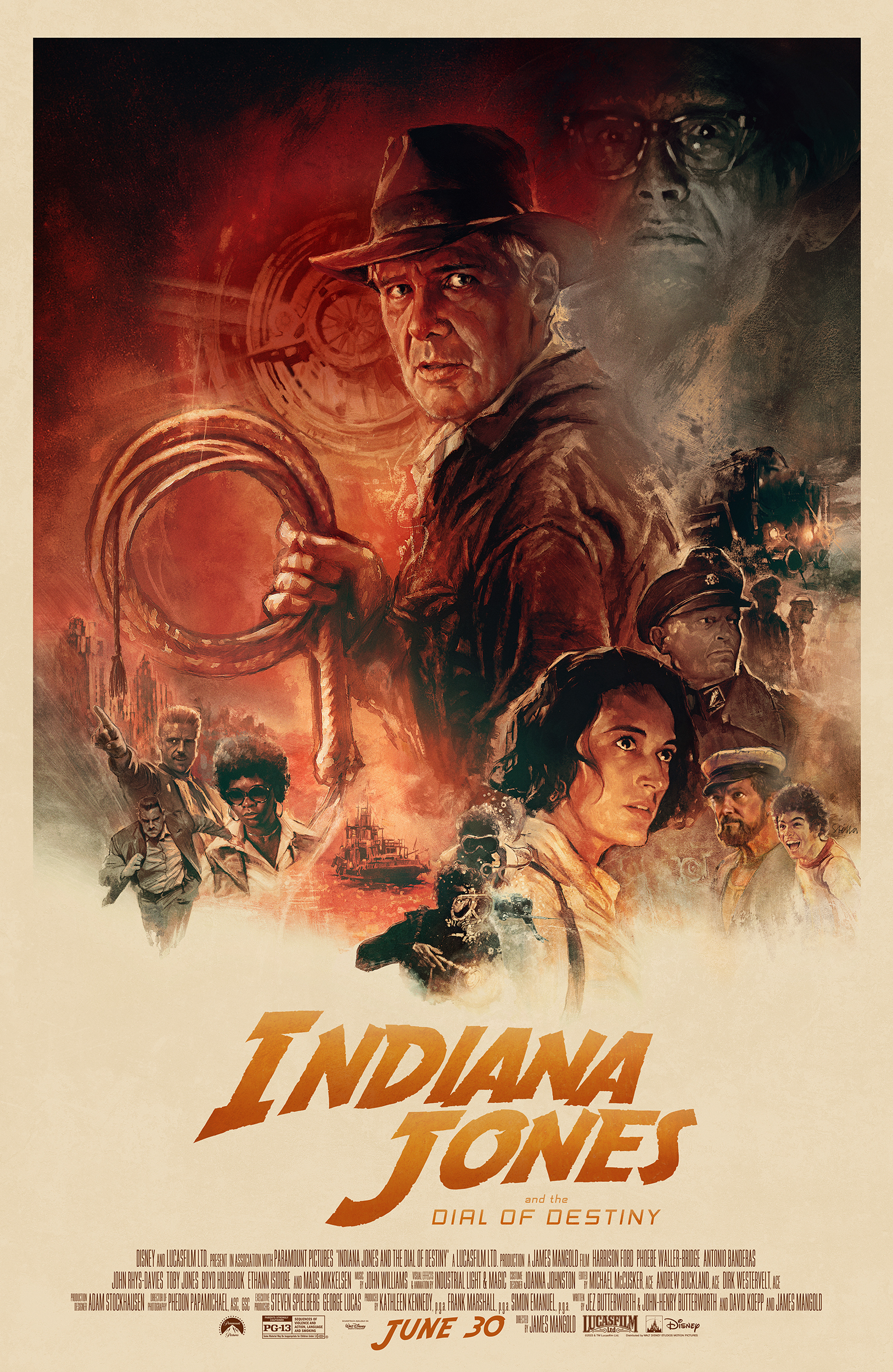
I finally saw this on a small screen. I…
I had fun?
I’m not writing about it here because it was stunning or notable. Hell, part of why I’m writing about it is because it wasn’t stunning or notable. I just rewatched the Tintin movie recently, and I would much rather rewatch that than spend much time dwelling on Indiana Jones and the Dial of Destiny. But I love adventure stories, and this movie is precisely that—and I grew up loving Indiana Jones. So why did this movie feel fun but uninspiring, and what nuggets of goodness can I still find in it?
Continue readingInspiration, Irritation, & Spite
There’s a quote from Ursula Vernon that’s stuck with me, something I think I found in one of her Author’s Notes. “Inspiration knocks now and again, but spite bangs on the door all year long.”
That doesn’t ring fully true for me—my spite-writing is usually a rant or half-formed polemic in my journal, and I struggle to turn those into fiction—but it sparked a funny question for myself the other day.
Do I write like oysters make pearls?
Continue readingNimona (Netflix 2023)
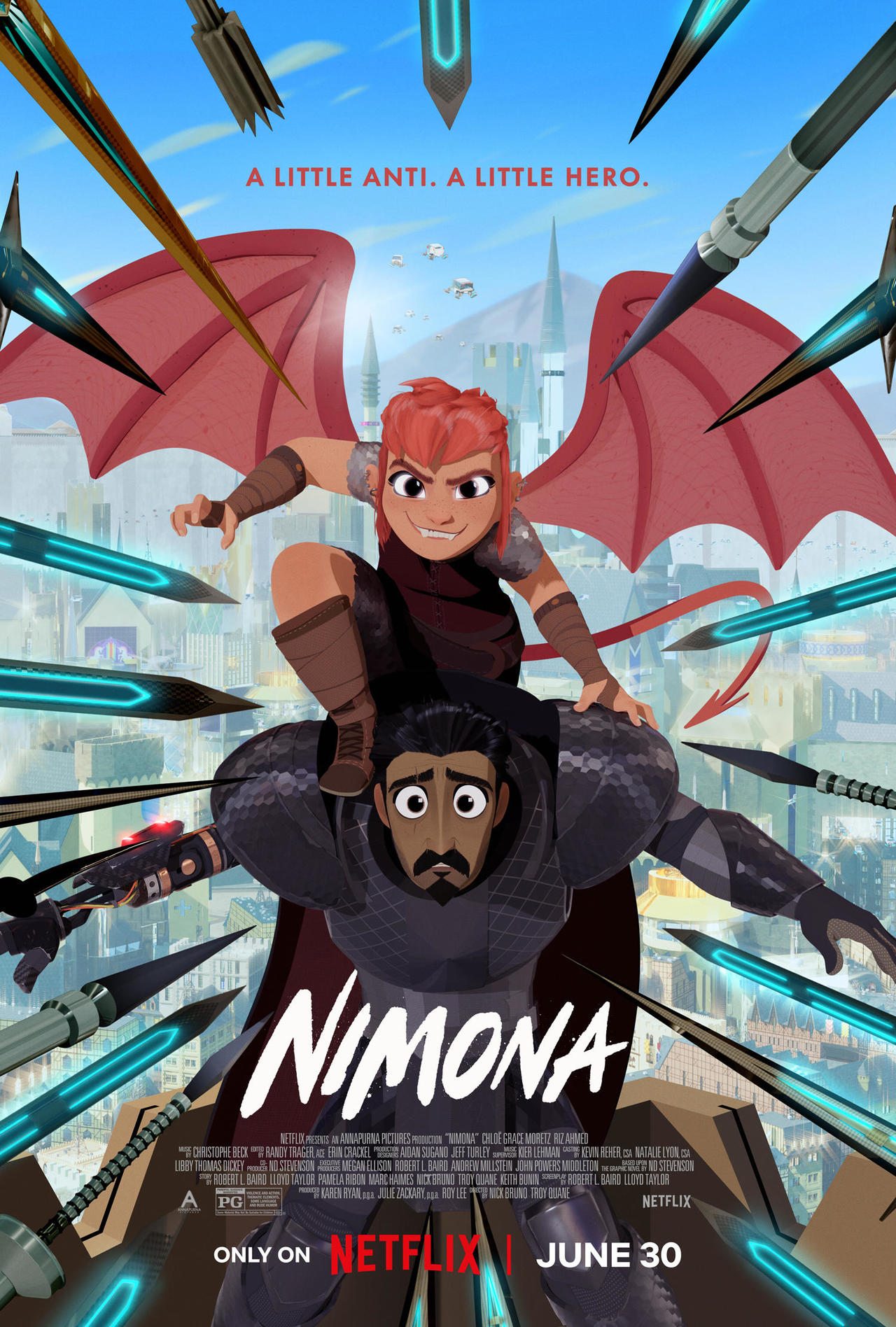
I loved the comic by ND Stevenson.
I loved this movie too, right up to the end, even though it was clearly its own take on the story. 90% of this movie, maybe 98% of this movie, did more or less everything I wanted. The actors, animators, and writers did a marvelous job. Then, at the very end, the movie really frustrated me.
I can’t meaningfully talk about this movie, and how I feel about it, without spoiling the end. Suffice to say I didn’t expect this totally predictable ending. I wish they had written a different one. I’ll mark the spoilers below.
Continue readingTraveling
I’m away, spending time with family. I’ll be back next week!
Writing hope
I’m trying to think of times in my stories when my characters feel hopeful, or when they dream big. I’m struggling.
Continue reading Fistful of Wits