I return!

Hello everyone.  I’ve been visiting family and recovering from travel for the past two weeks, but I’m ready to resume my regular schedule.  I have a few thoughts to share with you today (disparate rather than cohesive), but first I have some exciting news: I have been accepted into Simmons’ MFA in Writing for Children (and Young Adults, but that’s not mentioned in the title).  I think I mentioned this before, since I used the elements of Last Days of Loneliness that I shared here as part of my writing sample for the application.  If you haven’t read those, have a gander at parts 1, 2, and 3.  I’m not sure what this will mean for my posts in the future (I’ll start classes in January), and it may result in a slight change in content or length.  On the other hand, I might just start posting things that I write for my classes, so that you can read them too.  No worries, I’m sure I’ll burn that bridge when I come to it, thus perpetuating my deliberate misuse of common phrases.

In case you haven’t been keeping up with cool science news, reality has continued to establish the premises of the setting I created for Alison McKenzie‘s flash fiction contest (my entry is here, and some additional tooling around with the setting can be found here).  Specifically, we now have drugs (for rats) that allow for nerves to reestablish themselves (or communicate?) through intervening scar tissue.  It looks like an acceptable approximation to human nerve regeneration is en route.  This comes on top of the already existing heart-in-a-box organ preservation technology, so, you know, we’re really not that far from having chop-shops after all.  Goodness, I hope that’s false, chop-shops are scary.

As is often the way of long trips, I consumed a good deal of media while I was gone.  I finally saw Edge of Tomorrow and In Bruges, I showed Pacific Rim to someone who’d never seen it before, and I watched too many movies on planes (including A Fault in Our Stars, which I think merits some attention here, and Epic, which didn’t particularly impress me).  I read some books too, though mostly I spent time with my lovely family, enjoyed playing with my nephews, and played lots of games.

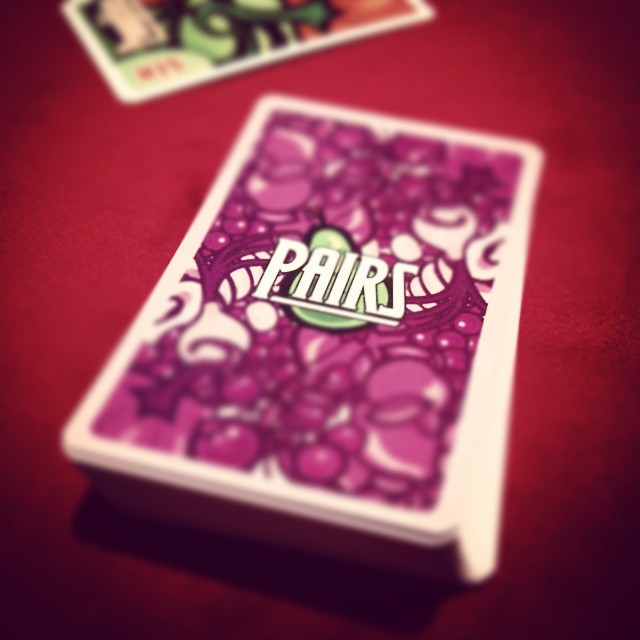
At some point I’ll have to tell you all about the card games Hanabi and Pairs, but first I should mention that I ran the opening to my new campaign for my brothers; it went over excellently, despite me leaving all my campaign notes at home, and the game ended with one of my brothers in tears after a particularly emotional scene.  His character, a paladin on the edge of death, had a moment with his god that deeply effected my brother.  I was very happy with the final result, though I was a little anxious beforehand because we all thought his character had died for at least a few minutes (and my brother wasn’t especially happy about that).  Before you ask, no, I didn’t handwave him back to life: he finally remembered he had “inspiration” (a D&D 5th ed. mechanic that allows you to roll twice and take the better of the two rolls), and used it to evade his otherwise-final death.

Ok, now that I’ve set myself a large number of reviews to share with you, I’m going to leave it here for today.  Next Monday I’ll be back to the regular schedule, and I’ll probably start by talking about one of the things I’ve mentioned here today.  Until then, I hope you’re all doing well and enjoying your early December!

Behind the scenes of the new campaign…

Monday’s post gave a taste of the game that I’m preparing, but didn’t go into any details about what would follow.  That was intentional.  If there’s any chance that I’ll run this game for you, I strongly suggest that you don’t read what comes after the break.  If you want to see some of what I’ve come up with, and maybe a bit of how I came up with it, read on.

Continue reading

A new campaign in the works…

This post is only going to include non-spoiler material, appropriate for the opening of the game.

You (the players) are the King’s officials, expected to enforce his decisions, act in his interest, and carry out his wishes in the wider Kingdom.  Mostly drawn from the wealthy and noble classes, the King’s officers are expected to outfit themselves out of their own pocket and see to their own expenses.  There are always a few exceptions to the norm of “wealth and privilege,” since an individual’s skills and qualifications for this particular job are far more important than their bloodline, but exceptions are likely to have an interesting story for how they became one of the King’s officers without the usual entrée.  In many ways, you might think of the King’s officers as Musketeers with a little less in the way of Alexandre Dumas.

The game is set in the Kingdom of Duval, and begins with the players being sent from the capitol city of Duval to the backwater county of Mont Mondal.  Count Xavier of Mont Mondal was recently imprisoned for treason against the throne, when he broke his oath of fealty.  He was executed along with many of his closest companions, and the executions have created quite a disturbance at court.  One of his companions, the wizard Castanedra, fled back to Mont Mondal on the same night that Xavier was taken prisoner: you and your compatriots have been tasked with capturing her and returning with her in your custody.  You have also been instructed to raise the county’s levies and send them to the capitol, to join with King Mander’s other forces already mustering for war against the Kingdom of Meius to the east.

While thoughts of war on the nearby eastern border weigh heavy in everyone’s mind, how are you and your companions going to run this powerful wizard to ground and bring her back to Duval?

Other things that people from the Kingdom of Duval would know:

-Meius and Duval share a border that runs through an agriculturally rich valley.  North and south of the valley the terrain becomes increasingly hilly and mountainous, leaving only one clear passage between the two kingdoms.  While the kingdoms have a long history of trade with each other they’ve recently suffered through a series of trade disputes and feuds, and there are now frequent border raids which have further angered each side.

-Count Xavier (that’s pronounced “Sh-avier,” more or less) had a meteoric rise to match his catastrophic fall.  He was ennobled and granted County Mont Mondal a little more than ten years ago, and he and his companions were widely recognized as having done a great deal to make Mont Mondal actually livable for Duvalians.  Xavier and his companions drove out a large clutch of magical aberrations which had claimed the land as their own, and then kept the local bandits in check.  While his breaking of his vow of fealty clearly put him in the wrong, some people have even gone so far as to say that they wish the king hadn’t had Xavier and his companions executed for their treason.  Not that they’re likely to have said as much to the king.  The king, after all, is known to have a bit of a temper.

-The city of Duval is slowly being surrounded by the many thousands of soldiers who have answered their liege-lords’ calls.  The various levies have been joined by a few mercenary companies looking for work, and their spirits are high as they prepare to fight against Meius.  The king’s armies only wait for a few more levies (like those of Mont Mondal) to join them before marching against Meius in the east.

Rimworld: The Magic Continues

hOGk3vJ

Correction: with Alpha 7‘s release, the space magic continues.  Or, uh, the starving frontier space magic, beset by violent thugs and now diseases.  But let’s look on the bright side of things: even as Ludeon has introduced plague, it has also given us the prosthetics and organ harvesting and transplantation, in addition to a welter of other neat new features.

The introduction of prosthetics is far more important than you might realize.  The last version, Alpha 6, introduced a complex medical system which tracks injury and debility by location, though perhaps without quite the same granularity as Dwarf Fortress‘:

DFCombatLog1

My Alpha 6 colony had a slowly growing number of people who’d lost appendages to chronic cases of gunfire and explosions.  I was forever terrified of having my wonderful and productive citizens maimed horribly while defending the colony.  Now, it looks like we can give our debilitated friends a leg up, so to speak, by building prostheses for them to replace whatever they’ve lost.  Given the constant scarcity of more advanced medical supplies, I foresee specifically targeting raiders with cybernetic prosthetics so that I can strip the things I want from their cold, dead bodies.  Or from their warm and unconscious bodies, if they somehow survive the fusillade of bullets and seem like they aren’t worth rehabilitating.

This is Rimworld, after all, and I already do my best to hunt down fleeing raiders when they’re wearing or carrying things I find especially desirable.  It’s hard to come by powered combat armor without taking it off the body of an erstwhile attacker.  Traits have already made a meaningful entry into the game, affecting everything from move- and work-speed to mental stability and opinions of cannibalism, and there’s nothing quite like having a murder-happy speed demon ready to hunt down your fleeing enemies.  You just have to make sure that they never suffer a mental break or suddenly decide to betray you.

Continue reading

Buzz Lightyear Simulator: Volo Airsport

That’s definitely falling with style.

We can probably all agree that wingsuit flying looks both insane and intriguing.  It’s not something that I think I’d be comfortable with doing, but I’m happy to watch other people throw themselves off cliffs and then whizz along at supremely high speeds in their flying-squirrel suits.  Why don’t I want to do the same?  Mostly because it scares the crap out of me.

But there’s something incredibly appealing about the idea of flying like that.  So when I found out about Volo Airsport, I thought I’d give it a try.  I’ve loved flight simulators since I was little, and the idea that I might be able to play a flight simulator without a plane really tickled my fancy.  Oh, and did I mention that the alpha is quite pretty?  Have a look:

Like I said, it’s a Buzz Lightyear Simulator, all about learning how to fall with style.  The body-mechanics based control scheme gives an extremely fine sense of control, and the game requires you to learn it well.  Turbulence and wind will buffet you relentlessly, and maintaining awareness of your control surfaces is both crucial and difficult.  Case in point, I spent my first fifteen or so runs crashing into the ground with more or less success, never quite getting the hang of what it took to stay airborne while I fiddled repeatedly with my mouse sensitivity.  The game’s splash screen suggests that you use a controller and I’m inclined to say that I agree, though I’ve yet to test how much easier that makes things.

That said, something just clicked for me around run twenty, and suddenly I was able to soar.  I’m still getting better, pushing my close proximity runs to the limit as I learn how better to deal with the vagaries of a rapidly shifting landscape flashing by beneath me.  This game isn’t deep, and it offers you only as much challenge as you decide to set for yourself, but it offers an almost meditative experience as you plummet towards the ground and then zoom off at a breakneck pace.  So, if you want a playground in the sky, check out Volo Airsport.

N.b. There’s no normal starting menu: you need to press escape in order to bring up the menu interface, which contains a grand pile of options for you to adjust as well as adaptable key-bindings.

New D&D Sneakily Poaches Inclusivity, Narrative

10325260_10152496571526071_8983892837449015744_n

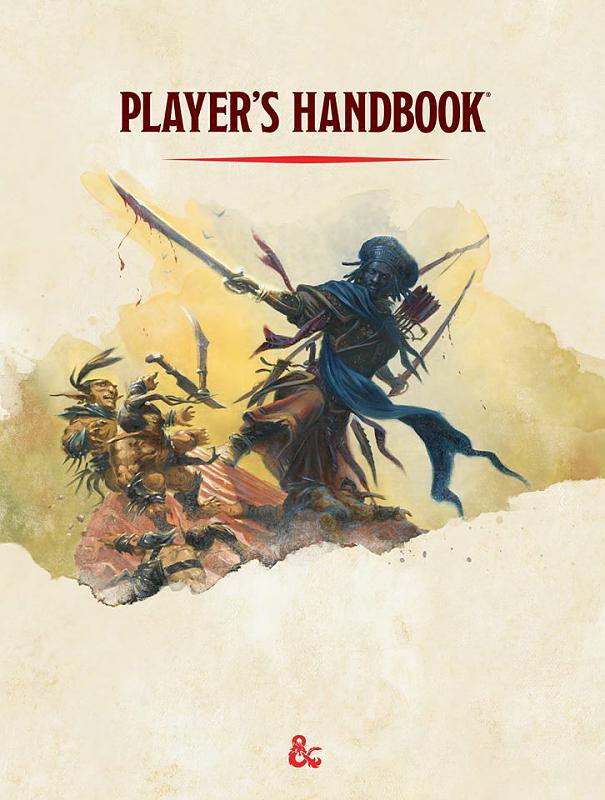
I grew up playing AD&D, as my brothers introduced me to RPGs before I was 7.  I’ve since moved away from the various D&D systems, flirting with them occasionally in passing while I instead focus on other systems that I find more interesting; I’ve come to prefer more narrativist games for the most part, though my friend Zach’s super-old-school D&D certainly calls to me at times.  But with the release of the newest edition of D&D (5th ed? Next? Whatever we’re supposed to call it) I thought I’d give it a look.  I’d examined some of the playtest documents and made appreciative noises, so I thought I should take a chance.  I’m glad I did.  It seems like the new D&D has learned a few tricks from the games that pulled me away from it in the first place.

There have been a few things that have really stood out to me while I’ve been reading the new Player’s Handbook (PHB), two quite good and one that I’m not sure how to qualify.  These have nothing to do with the rules, I’ll talk about those later.  The first item is one which I understand has already been discussed elsewhere, namely the game’s specific mention of a player’s ability to construct their character’s gender- or sexual-identity, and statement that that’s a perfectly fine thing to explore in this game; the second item is D&D’s incorporation of distinct backgrounds, personalities, and motivations into character creation, including something called “bonds” which I can only presume has come from Dungeon World; the third item is the art chosen for the book, and its depictions of a diverse group of characters.  I’ll talk more about all of these, but let’s tackle that last one first.

Continue reading

Adventurer’s Rest, WFE Intro Game 2014

logo

I mentioned previously that I would be working at The Wayfinder Experience, and just last week I finished up my first time working there as Story staff, running the game Adventurer’s Rest.  I had a marvelous time, though I was frazzled for the first half of the week and teetered between mild euphoria and continued anxiety for the other half.  I’d do it again in a heartbeat, and I think I’d be far better prepared for the incipient chaos and drain on my personal energy the second time around.

Now that the game has actually finished, I’ve got some good stories to share with you.  I’ll even spill the beans and let you know how the game worked and came into being, though I do hope that you won’t read it all if you want to be able to play it at some point in the future.  It turns out that, despite my certainty that game would be a mess, the players had a great time both getting into character and running around with swords.  After the fact, I could see several obvious mistakes that Thom and I had made when it came to balancing the game, but I think that things both went well and still have a great deal of potential for future sessions.

First, an introduction: the game of Adventurer’s Rest was designed to offer several things that I remember being rare in many other adventure games.  Most obviously, I wanted to make it possible for nearly every single player to use magic items and magical artifacts with special abilities.  Second, I intended it to show off just how completely overpowered specific class options are, in a tremendously underplayed class.  You see, Artisans at WFE rarely get much attention, since most people would rather be almost anything else (i.e. Warriors, Wizards, Rogues, or Clerics).  Artisans create talismans that are able to empower people, but they generally require very careful forethought and good situational awareness in order to be effective.  With those things, an Artisan can take on just about anyone… but without those things, an Artisan is likely to be steamrolled by nearly anyone else in the system.  I hoped that Adventurer’s Rest would encourage players to respect the class a bit more.

Finally, I wanted to give people an opportunity to play a newer version of something like the Techna game that I remembered playing for my first intro game at Omega in 1999.  There’s something very special about introducing the option of joining the villain’s team and working against the people that you had thought were your allies.  On further reflection, it seems clear that the Techna game that I played had been better balanced than Adventurer’s Rest (possibly because it had been run more times).  It’s also now clear to me that I’d like to have a chance to play Adventurer’s Rest at a camp where I can tell the villains to go wild without fear of ruining the players’ experience.  There are certain things that are difficult to allow when you’re running an intro camp and you need to design the game around introductory expectations rather than simply allowing the fiction to run its course.

Here’s a much overdue page break.  After this, I’ll start telling you more about the game’s inner workings.

Continue reading

Finance, Ponzi Schemes, and Cards: Liar’s Poker

Lying to your friends can be exceedingly fun.  Unfortunately, other people are often angry when you mislead them in everyday interactions.  This is where Liar’s Poker comes in handy; it gives you all the satisfaction of lying to your friends, with none of the insalubrious repercussions!  I was first treated to this game last night, when I played it with my brothers and cousins, and I’m now a staunch advocate.  Please note that this is not the same as the similarly titled bar game played with $1 bills.

Liar’s Poker is very simple.  Much like in Ponzi schemes (or even the stock market), the idea of the game is to be one of the first people in, and be the very first person out.  You never want to be caught holding the overvalued collection of rubbish that is methodically working its way around the table, and you most certainly want to convince the next person in line that the crap in your hand is actually worth something.  Like I said, it’s very simple.  It also has the potential to be hilarious.

The first player is dealt a hand of five cards, looks at them, and declares a hand (anything from high card to royal flush).  They then offer the hand to the next player.  The second player (and every player after them), then has the opportunity to decide whether the offer is believable.  If they accept the offer, they receive the hand and now have the opportunity to discard face down up to three cards from the hand and draw cards to replace them.  They must then declare a hand of greater value than the one they recieved and offer it to the next player.  If they reject the offer, the rejected hand is revealed and evaluated; if the revealed hand met or exceeded the declared value of the hand (and the declaration did not substantially misrepresent the hand’s contents), the person who rejected the hand takes a point.  If the rejected hand was, in fact, the load of rubbish which the discerning player believed it to be, then the liar who tried to pass it off as something better takes a point.  The first player to 10 (or whatever you decide on for your preferred length of game) ends the game, and the person with the lowest point total wins.

While you are in possession of the hand, you may say whatever you like about its contents.  Once the hand is no longer yours, you should not declare anything about what had been in it except to repeat what you had claimed when you passed it along.  Table talk is otherwise encouraged.  Remember that all discards are done face down, so you can’t see what has moved in or out of the hand.  Also note that the next person must always claim a higher value than the one you gave them, and the only way to hurt people further around the table is by allowing a hand to keep moving.

What did I mean by “substantially misrepresent the hand’s contents”?   If you’ve got three aces in your opening hand, you could say “the highest card is an ace,” and not be in danger.  If you had a pair of twos and a king, you could simply say “pair of twos.”  If you wanted to turn up the heat, you could get more specific and claim the higher value hand, which would also narrow the range of claims available to the next player.  But if you have a straight in your opening hand and instead claim a pair, you would be in danger of taking a point if someone calls you on it, regardless of the fact that your straight certainly outdoes a pair.

So why do I like this so much?  It may simply have been a combination of sleep deprivation and alcohol, but I suspect that I would have similar results when playing this game with the right group of people.  That’s an important note: there are certainly people with whom you will not want to play this game, which may be a larger (or different) group than the usual people with whom you don’t want to play games.  Make sure that you have players who will be willing to laugh at being duped, even as they take joy in lying through their teeth to the next person in line.

Liar’s Poker requires only minor memorization, and will quickly teach familiarity with the values of poker hands, but it really shines when it comes to creating hilariously improbable situations and forces you to judge just how deep the lies really go.  It’s great fun.

To be perfectly clear, there are other games which are also called Liar’s Poker, and there is a book by Michael Lewis with the same title.  This game bears only passing resemblance to the others, but it seems far more interesting to me than the bar game.

Transistor

Transistor_Wallpaper_1920x1080

There are many things that I wish to say about Transistor, but the story-related ones will have to wait for after the break.  I don’t want to spoil anything for you.

To start with, this is one of the prettiest games I have seen in a while, and it has a soundtrack that makes me want to close my eyes and sink into it.  I spent a considerable amount of time simply sitting and absorbing the game’s music, doing nothing else for fear of missing out on the songs.  I wish that the soundtrack had all of the various in-game versions of the music, including Red’s hummed accompaniment.

I’m hard pressed to peg the game to a single genre or type, but its construction and design bears a profound similarity to Bastion.  You do battle with an ever-growing variety and number of foes, following the protagonist from a third person isometric perspective as you wander through lushly painted land- or cityscapes, slowly puzzling out the backstory of the characters and learning what is happening around you.  As far as I’m concerned, what worked in Bastion works here too.

As a game, I found Transistor very appealing; designing my own powers, mixing and matching elements as I discovered new killer combos, and adapting my loadout to the situation presented were all quite satisfying.  Making sure that I wasn’t crippled when I lost one of my powers due to a mistake, and being forced to rethink my situation creatively when I failed in that, were both very rewarding as well.  And when battles became a little same-y towards the end, or failed to present me with situations that I hadn’t foreseen, I still wanted to follow the story.  Now that I’ve finished the game, I also want to see how it handles itself on a second pass-through.  But I’ve played it enough to be able to say that I like it, and that I suspect you’d enjoy it as well.  Now about those *SPOILERS*…

Continue reading

Rimworld: Sci-Fi Frontier Shipwreck Fiction, Round 2

GmX9a8LuhH

The first time I played this game, my people nearly starved to death.  I tried to solve this by getting tricksy and using sunlamps outdoors in order to boost my crop’s growth cycle, only to discover that many electrical systems explode and catch fire when exposed to rain.  I did manage to pull through in the end, but it was pretty tight for a while.

That was all several releases back.  When I last reviewed the game, I mentioned that I thought it wasn’t yet worth its $30 asking price, but that it could be if it continued to develop as well as it had thus far.  Now, here I am several releases later, ready to tell you whether or not I think it’s continued to live up to its earlier promise.

My answer is easy: it has.  I’m not saying that it’s all the way there yet, but the game is damn interesting and its central features have been expanded aggressively over the past few months.  Any given change usually feels small, but the shift from when I first played back in early March has been impressive.  In addition to there simply being more junk that I can make for my colony, the world around my colony has gotten considerably more interesting, and often far more threatening as well.  I won’t cover everything, but…

Continue reading