Rimworld: The Magic Continues

hOGk3vJ

Correction: with Alpha 7‘s release, the space magic continues.  Or, uh, the starving frontier space magic, beset by violent thugs and now diseases.  But let’s look on the bright side of things: even as Ludeon has introduced plague, it has also given us the prosthetics and organ harvesting and transplantation, in addition to a welter of other neat new features.

The introduction of prosthetics is far more important than you might realize.  The last version, Alpha 6, introduced a complex medical system which tracks injury and debility by location, though perhaps without quite the same granularity as Dwarf Fortress‘:

DFCombatLog1

My Alpha 6 colony had a slowly growing number of people who’d lost appendages to chronic cases of gunfire and explosions.  I was forever terrified of having my wonderful and productive citizens maimed horribly while defending the colony.  Now, it looks like we can give our debilitated friends a leg up, so to speak, by building prostheses for them to replace whatever they’ve lost.  Given the constant scarcity of more advanced medical supplies, I foresee specifically targeting raiders with cybernetic prosthetics so that I can strip the things I want from their cold, dead bodies.  Or from their warm and unconscious bodies, if they somehow survive the fusillade of bullets and seem like they aren’t worth rehabilitating.

This is Rimworld, after all, and I already do my best to hunt down fleeing raiders when they’re wearing or carrying things I find especially desirable.  It’s hard to come by powered combat armor without taking it off the body of an erstwhile attacker.  Traits have already made a meaningful entry into the game, affecting everything from move- and work-speed to mental stability and opinions of cannibalism, and there’s nothing quite like having a murder-happy speed demon ready to hunt down your fleeing enemies.  You just have to make sure that they never suffer a mental break or suddenly decide to betray you.

Continue reading

Buzz Lightyear Simulator: Volo Airsport

That’s definitely falling with style.

We can probably all agree that wingsuit flying looks both insane and intriguing.  It’s not something that I think I’d be comfortable with doing, but I’m happy to watch other people throw themselves off cliffs and then whizz along at supremely high speeds in their flying-squirrel suits.  Why don’t I want to do the same?  Mostly because it scares the crap out of me.

But there’s something incredibly appealing about the idea of flying like that.  So when I found out about Volo Airsport, I thought I’d give it a try.  I’ve loved flight simulators since I was little, and the idea that I might be able to play a flight simulator without a plane really tickled my fancy.  Oh, and did I mention that the alpha is quite pretty?  Have a look:

Like I said, it’s a Buzz Lightyear Simulator, all about learning how to fall with style.  The body-mechanics based control scheme gives an extremely fine sense of control, and the game requires you to learn it well.  Turbulence and wind will buffet you relentlessly, and maintaining awareness of your control surfaces is both crucial and difficult.  Case in point, I spent my first fifteen or so runs crashing into the ground with more or less success, never quite getting the hang of what it took to stay airborne while I fiddled repeatedly with my mouse sensitivity.  The game’s splash screen suggests that you use a controller and I’m inclined to say that I agree, though I’ve yet to test how much easier that makes things.

That said, something just clicked for me around run twenty, and suddenly I was able to soar.  I’m still getting better, pushing my close proximity runs to the limit as I learn how better to deal with the vagaries of a rapidly shifting landscape flashing by beneath me.  This game isn’t deep, and it offers you only as much challenge as you decide to set for yourself, but it offers an almost meditative experience as you plummet towards the ground and then zoom off at a breakneck pace.  So, if you want a playground in the sky, check out Volo Airsport.

N.b. There’s no normal starting menu: you need to press escape in order to bring up the menu interface, which contains a grand pile of options for you to adjust as well as adaptable key-bindings.

New D&D Sneakily Poaches Inclusivity, Narrative

10325260_10152496571526071_8983892837449015744_n

I grew up playing AD&D, as my brothers introduced me to RPGs before I was 7.  I’ve since moved away from the various D&D systems, flirting with them occasionally in passing while I instead focus on other systems that I find more interesting; I’ve come to prefer more narrativist games for the most part, though my friend Zach’s super-old-school D&D certainly calls to me at times.  But with the release of the newest edition of D&D (5th ed? Next? Whatever we’re supposed to call it) I thought I’d give it a look.  I’d examined some of the playtest documents and made appreciative noises, so I thought I should take a chance.  I’m glad I did.  It seems like the new D&D has learned a few tricks from the games that pulled me away from it in the first place.

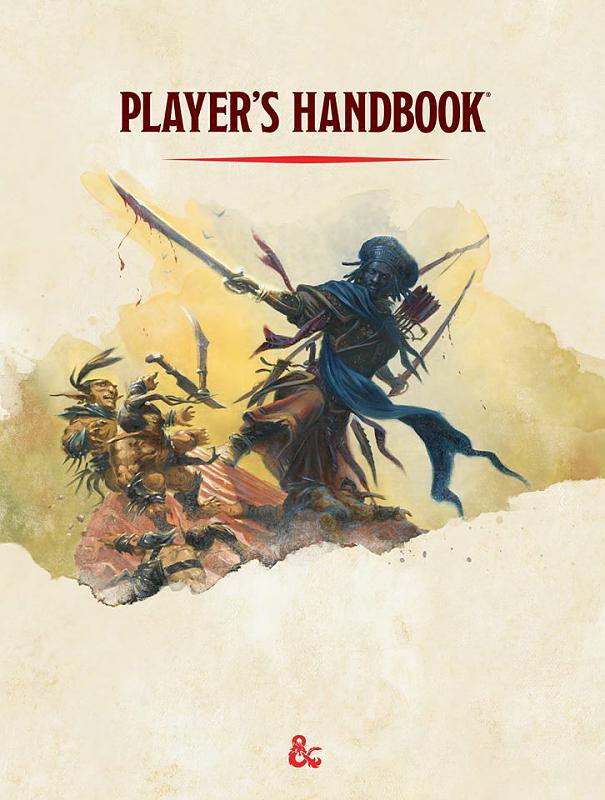
There have been a few things that have really stood out to me while I’ve been reading the new Player’s Handbook (PHB), two quite good and one that I’m not sure how to qualify.  These have nothing to do with the rules, I’ll talk about those later.  The first item is one which I understand has already been discussed elsewhere, namely the game’s specific mention of a player’s ability to construct their character’s gender- or sexual-identity, and statement that that’s a perfectly fine thing to explore in this game; the second item is D&D’s incorporation of distinct backgrounds, personalities, and motivations into character creation, including something called “bonds” which I can only presume has come from Dungeon World; the third item is the art chosen for the book, and its depictions of a diverse group of characters.  I’ll talk more about all of these, but let’s tackle that last one first.

Continue reading

Adventurer’s Rest, WFE Intro Game 2014

logo

I mentioned previously that I would be working at The Wayfinder Experience, and just last week I finished up my first time working there as Story staff, running the game Adventurer’s Rest.  I had a marvelous time, though I was frazzled for the first half of the week and teetered between mild euphoria and continued anxiety for the other half.  I’d do it again in a heartbeat, and I think I’d be far better prepared for the incipient chaos and drain on my personal energy the second time around.

Now that the game has actually finished, I’ve got some good stories to share with you.  I’ll even spill the beans and let you know how the game worked and came into being, though I do hope that you won’t read it all if you want to be able to play it at some point in the future.  It turns out that, despite my certainty that game would be a mess, the players had a great time both getting into character and running around with swords.  After the fact, I could see several obvious mistakes that Thom and I had made when it came to balancing the game, but I think that things both went well and still have a great deal of potential for future sessions.

First, an introduction: the game of Adventurer’s Rest was designed to offer several things that I remember being rare in many other adventure games.  Most obviously, I wanted to make it possible for nearly every single player to use magic items and magical artifacts with special abilities.  Second, I intended it to show off just how completely overpowered specific class options are, in a tremendously underplayed class.  You see, Artisans at WFE rarely get much attention, since most people would rather be almost anything else (i.e. Warriors, Wizards, Rogues, or Clerics).  Artisans create talismans that are able to empower people, but they generally require very careful forethought and good situational awareness in order to be effective.  With those things, an Artisan can take on just about anyone… but without those things, an Artisan is likely to be steamrolled by nearly anyone else in the system.  I hoped that Adventurer’s Rest would encourage players to respect the class a bit more.

Finally, I wanted to give people an opportunity to play a newer version of something like the Techna game that I remembered playing for my first intro game at Omega in 1999.  There’s something very special about introducing the option of joining the villain’s team and working against the people that you had thought were your allies.  On further reflection, it seems clear that the Techna game that I played had been better balanced than Adventurer’s Rest (possibly because it had been run more times).  It’s also now clear to me that I’d like to have a chance to play Adventurer’s Rest at a camp where I can tell the villains to go wild without fear of ruining the players’ experience.  There are certain things that are difficult to allow when you’re running an intro camp and you need to design the game around introductory expectations rather than simply allowing the fiction to run its course.

Here’s a much overdue page break.  After this, I’ll start telling you more about the game’s inner workings.

Continue reading

Finance, Ponzi Schemes, and Cards: Liar’s Poker

Lying to your friends can be exceedingly fun.  Unfortunately, other people are often angry when you mislead them in everyday interactions.  This is where Liar’s Poker comes in handy; it gives you all the satisfaction of lying to your friends, with none of the insalubrious repercussions!  I was first treated to this game last night, when I played it with my brothers and cousins, and I’m now a staunch advocate.  Please note that this is not the same as the similarly titled bar game played with $1 bills.

Liar’s Poker is very simple.  Much like in Ponzi schemes (or even the stock market), the idea of the game is to be one of the first people in, and be the very first person out.  You never want to be caught holding the overvalued collection of rubbish that is methodically working its way around the table, and you most certainly want to convince the next person in line that the crap in your hand is actually worth something.  Like I said, it’s very simple.  It also has the potential to be hilarious.

The first player is dealt a hand of five cards, looks at them, and declares a hand (anything from high card to royal flush).  They then offer the hand to the next player.  The second player (and every player after them), then has the opportunity to decide whether the offer is believable.  If they accept the offer, they receive the hand and now have the opportunity to discard face down up to three cards from the hand and draw cards to replace them.  They must then declare a hand of greater value than the one they recieved and offer it to the next player.  If they reject the offer, the rejected hand is revealed and evaluated; if the revealed hand met or exceeded the declared value of the hand (and the declaration did not substantially misrepresent the hand’s contents), the person who rejected the hand takes a point.  If the rejected hand was, in fact, the load of rubbish which the discerning player believed it to be, then the liar who tried to pass it off as something better takes a point.  The first player to 10 (or whatever you decide on for your preferred length of game) ends the game, and the person with the lowest point total wins.

While you are in possession of the hand, you may say whatever you like about its contents.  Once the hand is no longer yours, you should not declare anything about what had been in it except to repeat what you had claimed when you passed it along.  Table talk is otherwise encouraged.  Remember that all discards are done face down, so you can’t see what has moved in or out of the hand.  Also note that the next person must always claim a higher value than the one you gave them, and the only way to hurt people further around the table is by allowing a hand to keep moving.

What did I mean by “substantially misrepresent the hand’s contents”?   If you’ve got three aces in your opening hand, you could say “the highest card is an ace,” and not be in danger.  If you had a pair of twos and a king, you could simply say “pair of twos.”  If you wanted to turn up the heat, you could get more specific and claim the higher value hand, which would also narrow the range of claims available to the next player.  But if you have a straight in your opening hand and instead claim a pair, you would be in danger of taking a point if someone calls you on it, regardless of the fact that your straight certainly outdoes a pair.

So why do I like this so much?  It may simply have been a combination of sleep deprivation and alcohol, but I suspect that I would have similar results when playing this game with the right group of people.  That’s an important note: there are certainly people with whom you will not want to play this game, which may be a larger (or different) group than the usual people with whom you don’t want to play games.  Make sure that you have players who will be willing to laugh at being duped, even as they take joy in lying through their teeth to the next person in line.

Liar’s Poker requires only minor memorization, and will quickly teach familiarity with the values of poker hands, but it really shines when it comes to creating hilariously improbable situations and forces you to judge just how deep the lies really go.  It’s great fun.

To be perfectly clear, there are other games which are also called Liar’s Poker, and there is a book by Michael Lewis with the same title.  This game bears only passing resemblance to the others, but it seems far more interesting to me than the bar game.

Transistor

Transistor_Wallpaper_1920x1080

There are many things that I wish to say about Transistor, but the story-related ones will have to wait for after the break.  I don’t want to spoil anything for you.

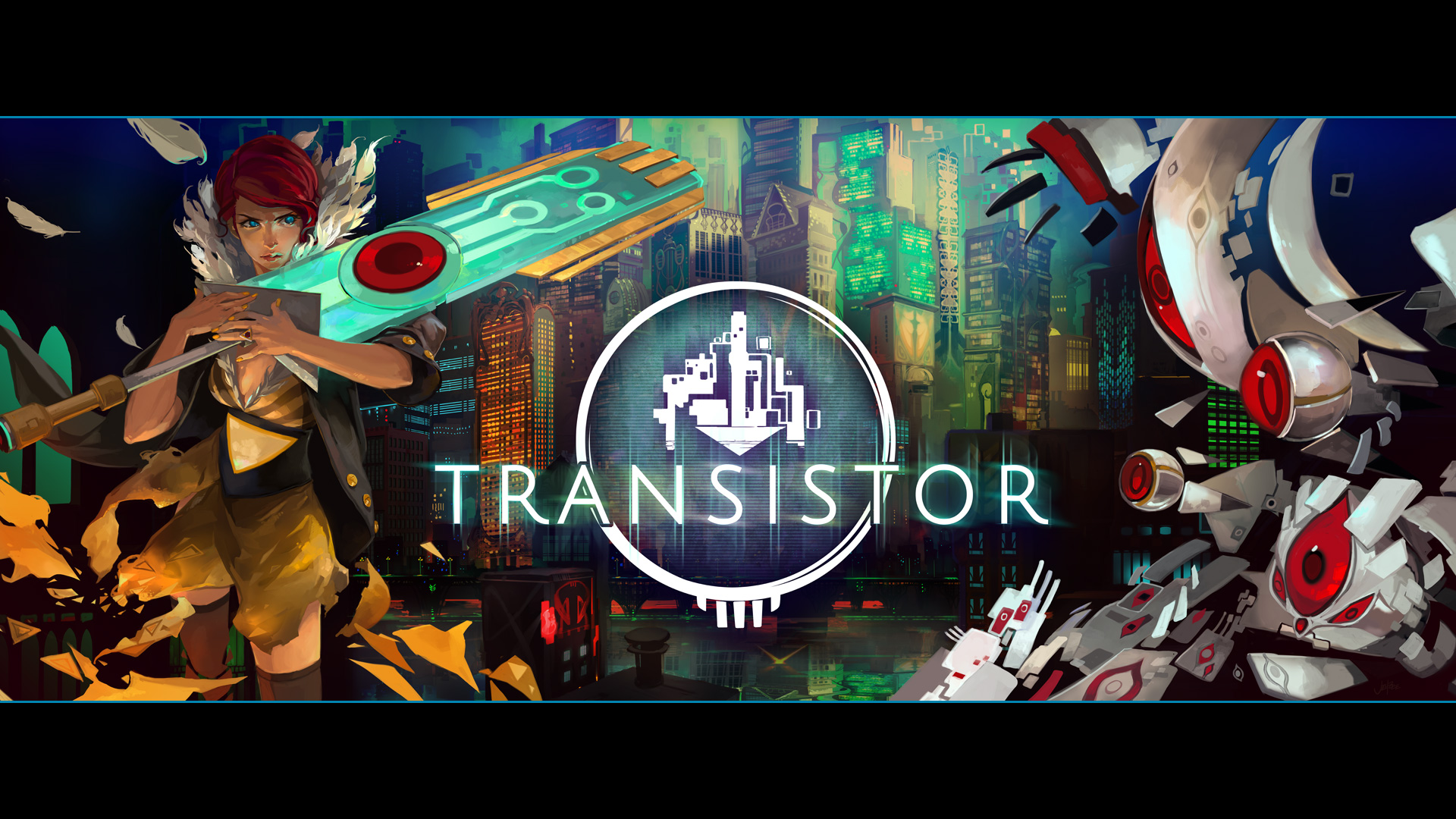
To start with, this is one of the prettiest games I have seen in a while, and it has a soundtrack that makes me want to close my eyes and sink into it.  I spent a considerable amount of time simply sitting and absorbing the game’s music, doing nothing else for fear of missing out on the songs.  I wish that the soundtrack had all of the various in-game versions of the music, including Red’s hummed accompaniment.

I’m hard pressed to peg the game to a single genre or type, but its construction and design bears a profound similarity to Bastion.  You do battle with an ever-growing variety and number of foes, following the protagonist from a third person isometric perspective as you wander through lushly painted land- or cityscapes, slowly puzzling out the backstory of the characters and learning what is happening around you.  As far as I’m concerned, what worked in Bastion works here too.

As a game, I found Transistor very appealing; designing my own powers, mixing and matching elements as I discovered new killer combos, and adapting my loadout to the situation presented were all quite satisfying.  Making sure that I wasn’t crippled when I lost one of my powers due to a mistake, and being forced to rethink my situation creatively when I failed in that, were both very rewarding as well.  And when battles became a little same-y towards the end, or failed to present me with situations that I hadn’t foreseen, I still wanted to follow the story.  Now that I’ve finished the game, I also want to see how it handles itself on a second pass-through.  But I’ve played it enough to be able to say that I like it, and that I suspect you’d enjoy it as well.  Now about those *SPOILERS*…

Continue reading

Rimworld: Sci-Fi Frontier Shipwreck Fiction, Round 2

GmX9a8LuhH

The first time I played this game, my people nearly starved to death.  I tried to solve this by getting tricksy and using sunlamps outdoors in order to boost my crop’s growth cycle, only to discover that many electrical systems explode and catch fire when exposed to rain.  I did manage to pull through in the end, but it was pretty tight for a while.

That was all several releases back.  When I last reviewed the game, I mentioned that I thought it wasn’t yet worth its $30 asking price, but that it could be if it continued to develop as well as it had thus far.  Now, here I am several releases later, ready to tell you whether or not I think it’s continued to live up to its earlier promise.

My answer is easy: it has.  I’m not saying that it’s all the way there yet, but the game is damn interesting and its central features have been expanded aggressively over the past few months.  Any given change usually feels small, but the shift from when I first played back in early March has been impressive.  In addition to there simply being more junk that I can make for my colony, the world around my colony has gotten considerably more interesting, and often far more threatening as well.  I won’t cover everything, but…

Continue reading

Teasers for Adventurer’s Rest

logo


Sorry about last Wednesday, here’s a present to make up for it.

My apologies for missing my usual post last Wednesday.  I was busy collaborating with several friends to write and produce a LARP game for Staff Week at The Wayfinder Experience (where I’ll be running another game for a considerably younger audience in a few weeks), and as such was pretty much entirely incommunicado.  I still have yet to say happy birthday to my mother and step-father.  I’ll try to get to that as soon as I finish this.

Since Wayfinder (WFE) is all still very much on my mind, I thought I’d offer you a collection of the teasers that I and my friend Thom have made for our upcoming game (Adventurer’s Rest, at WFE’s Intro Camp, July 20th-25th), and some of our thinking behind them.  If you know anyone who might be interested, you should totally tell them about it.  I want lots of players for my game!  Actual entertainment follows after the break…

Continue reading

Wednesday Digest, 4/16

There’s no narrow focus for today’s update.  Instead I have a bevy of options available for you; more thoughts on Dominions 3, a brief glance at Knights of Pen and Paper +1, a few words on Shirley Jackson, and just a tidbit on The World’s End.

The World’s End is the third in a series of parody movies starring Nick Frost and Simon Pegg, and it delivers more or less exactly what I had expected.  It was not as uproariously funny to me as Shaun of the Dead or Hot Fuzz, but it was certainly enjoyable.  Maybe I just wasn’t familiar enough with the genre that it was sending up to really notice all the especially good bits, but I actually think that The World’s End was intentionally less funny than its predecessors.  Its central characters are certainly sad enough for that to be the case, seeing as how the film revolves around a man whose last best memory is of getting shit-faced drunk 20 years prior.

On to the next piece!  I’ve been working my way through Shirley Jackson‘s The Haunting of Hill House.  It started off feeling rather inaccessible to me (apart from the first paragraph, which was great), but now that the main character has finally arrived at Hill House and started meeting and talking to other people I think I rather like it.  I haven’t been reading it at speed, but that will almost certainly change over the weekend.  It seems promising, and I’ll have more for you once I’ve finished it.

As for Knights of Pen and Paper +1… I picked it up for a pittance through a Humble Bundle, and thought I’d give it a look.  It offers a fairly standard faux-RPG experience, and then takes it a few steps towards the meta by including the players and storyteller in the game itself.  While I’ve found it entertaining, it’s not exactly challenging.  It seems to favor grinding and power-leveling, and rather than offering much of a story it has its (admittedly amusing) meta-based gimmick.  Once the novelty of having your characters sitting around a table and fighting things obviously conjured from thin air by the storyteller wears off, I’m not sure how much is left, though I should note that I haven’t yet gotten very far.  Regardless, it certainly does hit those much loved compulsive-reward circuits every time you level or buy sweet new loot.  I expect your mileage may vary.

And now for another brief moment with Dominions 3, making it the game that I have most often posted about.  Be careful who you play with and what rules you set up beforehand for how players will interact with each other.  Different people have different expectations about the veneer of civility covering players’ interactions, and Dominions 3 is designed in such a way that hurt feelings are likely to follow from “strategically optimal” play.  I put that in quotes because, well, it hardly seems strategically optimal for a game to result in hurt feelings, now does it?  My experience of playing thus far has taught me that I prefer people to be very upfront in their dealings with me, and it’s taught me that one of my housemates will take whatever he can get when he feels threatened and sees an opportunity.  I really should have seen that one coming.

Oh, and last but not least, I should have a short story for you soon!  I’ve finally managed to pull apart a piece that I’d been working on and outline something that seems acceptable, so I expect you’ll see that here some time in the next week or two.  We’ll see how editing goes.

Europa Universalis IV: Becoming Leviathan

Leviathan_by_Thomas_Hobbes
Out of many, one.

I wrote a love letter to Crusader Kings 2’s intricate dynastic backstabbing a while ago, and I thought I should let you know about the game’s semi-sequel Europa Universalis 4.  I’ll even toss in a few tidbits about the myriad DLC available for both titles at no additional charge.

First, a brief introduction: Crusader Kings 2 is strategy-as-individual, a fascinating look at the intimately personal nature of politics and power, spanning the years from 1066 CE (867 CE with Old Gods DLC) to 1453 CE.  Europa Universalis 4 follows this with a shift from the myopically personal to the strictly national, covering the years 1444 CE to 1821 CE.  With both games and the appropriate DLC, it’s possible to convert a CK2 save game into an EU4 mod, letting you pick up the reins of your budding nation-state right where your Machiavellian ruler left them.

I loved CK2 from the start, even though it took a long time for me to feel like I could play the game without stumbling over my shoelaces.  Despite having an easier time learning how to play EU4, it took longer for me to really fall into it.  I think it was because the game is simply less personal.  It certainly wasn’t because of the interface, which has only improved.

In my first game of CK2, I was presented with a moderately ugly portrait of a lecherous Irish earl, told that that was me, and told that I really ought to get married.  I lived that earl’s life with gusto, trying (and failing) to better my position in the world, and I still have fond memories of him.  I identified with him, in much the same way that I have since identified with Queen Ximena and several other rulers of mine, and I felt connected.  EU4 simply doesn’t offer that experience, and at first I was dissatisfied.  I didn’t understand why I would want to play this grand strategy game without all the little people desperately trying to grease the wheels of power in order to ease their rise to the top.  I put aside the game and didn’t come back for a few weeks.

I’m still not sure what it was that pulled me back in, but I’m glad it did.  Despite looking so similar to CK2, EU4 is a very different game; it offers you the chance to shape a state as it transitions from the deeply personal politics of feudalism to the larger scale conflicts of colonialism, nationalism, and empire.  It gives you a chance to make Thomas Hobbes proud.

Continue reading