Teasers for Adventurer’s Rest

logo


Sorry about last Wednesday, here’s a present to make up for it.

My apologies for missing my usual post last Wednesday.  I was busy collaborating with several friends to write and produce a LARP game for Staff Week at The Wayfinder Experience (where I’ll be running another game for a considerably younger audience in a few weeks), and as such was pretty much entirely incommunicado.  I still have yet to say happy birthday to my mother and step-father.  I’ll try to get to that as soon as I finish this.

Since Wayfinder (WFE) is all still very much on my mind, I thought I’d offer you a collection of the teasers that I and my friend Thom have made for our upcoming game (Adventurer’s Rest, at WFE’s Intro Camp, July 20th-25th), and some of our thinking behind them.  If you know anyone who might be interested, you should totally tell them about it.  I want lots of players for my game!  Actual entertainment follows after the break…

Continue reading

Wednesday Digest, 4/16

There’s no narrow focus for today’s update.  Instead I have a bevy of options available for you; more thoughts on Dominions 3, a brief glance at Knights of Pen and Paper +1, a few words on Shirley Jackson, and just a tidbit on The World’s End.

The World’s End is the third in a series of parody movies starring Nick Frost and Simon Pegg, and it delivers more or less exactly what I had expected.  It was not as uproariously funny to me as Shaun of the Dead or Hot Fuzz, but it was certainly enjoyable.  Maybe I just wasn’t familiar enough with the genre that it was sending up to really notice all the especially good bits, but I actually think that The World’s End was intentionally less funny than its predecessors.  Its central characters are certainly sad enough for that to be the case, seeing as how the film revolves around a man whose last best memory is of getting shit-faced drunk 20 years prior.

On to the next piece!  I’ve been working my way through Shirley Jackson‘s The Haunting of Hill House.  It started off feeling rather inaccessible to me (apart from the first paragraph, which was great), but now that the main character has finally arrived at Hill House and started meeting and talking to other people I think I rather like it.  I haven’t been reading it at speed, but that will almost certainly change over the weekend.  It seems promising, and I’ll have more for you once I’ve finished it.

As for Knights of Pen and Paper +1… I picked it up for a pittance through a Humble Bundle, and thought I’d give it a look.  It offers a fairly standard faux-RPG experience, and then takes it a few steps towards the meta by including the players and storyteller in the game itself.  While I’ve found it entertaining, it’s not exactly challenging.  It seems to favor grinding and power-leveling, and rather than offering much of a story it has its (admittedly amusing) meta-based gimmick.  Once the novelty of having your characters sitting around a table and fighting things obviously conjured from thin air by the storyteller wears off, I’m not sure how much is left, though I should note that I haven’t yet gotten very far.  Regardless, it certainly does hit those much loved compulsive-reward circuits every time you level or buy sweet new loot.  I expect your mileage may vary.

And now for another brief moment with Dominions 3, making it the game that I have most often posted about.  Be careful who you play with and what rules you set up beforehand for how players will interact with each other.  Different people have different expectations about the veneer of civility covering players’ interactions, and Dominions 3 is designed in such a way that hurt feelings are likely to follow from “strategically optimal” play.  I put that in quotes because, well, it hardly seems strategically optimal for a game to result in hurt feelings, now does it?  My experience of playing thus far has taught me that I prefer people to be very upfront in their dealings with me, and it’s taught me that one of my housemates will take whatever he can get when he feels threatened and sees an opportunity.  I really should have seen that one coming.

Oh, and last but not least, I should have a short story for you soon!  I’ve finally managed to pull apart a piece that I’d been working on and outline something that seems acceptable, so I expect you’ll see that here some time in the next week or two.  We’ll see how editing goes.

Europa Universalis IV: Becoming Leviathan

Leviathan_by_Thomas_Hobbes
Out of many, one.

I wrote a love letter to Crusader Kings 2’s intricate dynastic backstabbing a while ago, and I thought I should let you know about the game’s semi-sequel Europa Universalis 4.  I’ll even toss in a few tidbits about the myriad DLC available for both titles at no additional charge.

First, a brief introduction: Crusader Kings 2 is strategy-as-individual, a fascinating look at the intimately personal nature of politics and power, spanning the years from 1066 CE (867 CE with Old Gods DLC) to 1453 CE.  Europa Universalis 4 follows this with a shift from the myopically personal to the strictly national, covering the years 1444 CE to 1821 CE.  With both games and the appropriate DLC, it’s possible to convert a CK2 save game into an EU4 mod, letting you pick up the reins of your budding nation-state right where your Machiavellian ruler left them.

I loved CK2 from the start, even though it took a long time for me to feel like I could play the game without stumbling over my shoelaces.  Despite having an easier time learning how to play EU4, it took longer for me to really fall into it.  I think it was because the game is simply less personal.  It certainly wasn’t because of the interface, which has only improved.

In my first game of CK2, I was presented with a moderately ugly portrait of a lecherous Irish earl, told that that was me, and told that I really ought to get married.  I lived that earl’s life with gusto, trying (and failing) to better my position in the world, and I still have fond memories of him.  I identified with him, in much the same way that I have since identified with Queen Ximena and several other rulers of mine, and I felt connected.  EU4 simply doesn’t offer that experience, and at first I was dissatisfied.  I didn’t understand why I would want to play this grand strategy game without all the little people desperately trying to grease the wheels of power in order to ease their rise to the top.  I put aside the game and didn’t come back for a few weeks.

I’m still not sure what it was that pulled me back in, but I’m glad it did.  Despite looking so similar to CK2, EU4 is a very different game; it offers you the chance to shape a state as it transitions from the deeply personal politics of feudalism to the larger scale conflicts of colonialism, nationalism, and empire.  It gives you a chance to make Thomas Hobbes proud.

Continue reading

The Queen is Dead, Long Live the … Oops

2013-11-21_00004

It wasn’t my fault, I swear.

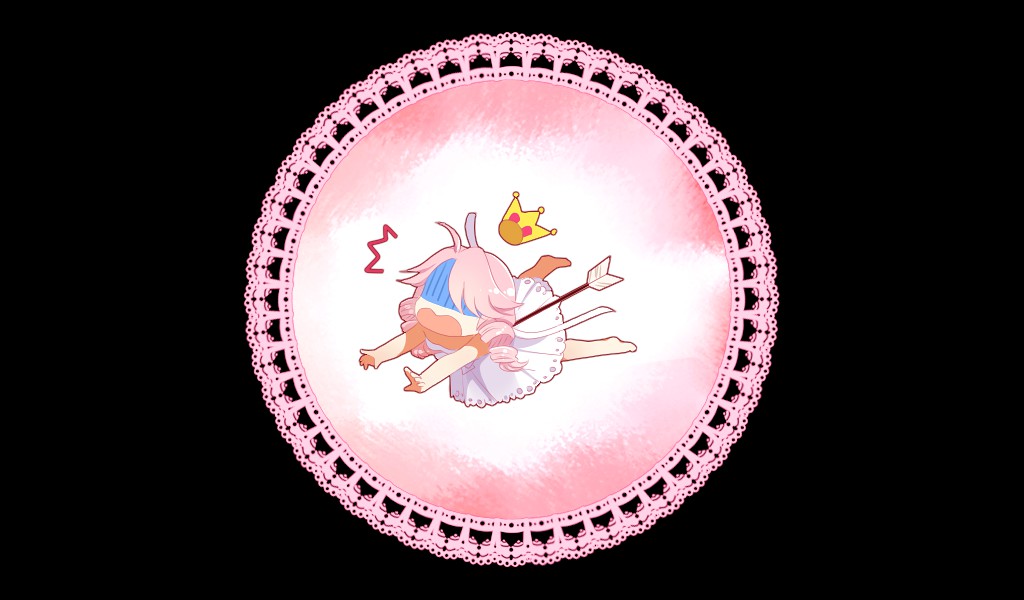
I died because I didn’t know enough battlefield medicine.  It turns out that you’re not supposed to push an arrow through yourself when it’s stuck in your chest.

It wasn’t really my fault: I’d never been lonely enough to put lots of time into mastering the basics of medical care, and I’d spent all my time focusing on intrigue, learning who’s who, and figuring out what plots I might have to worry about in the weeks before my coronation as Queen of Nova.  After my disastrous showing at the grand ball, I’d tried to play catch-up with my long neglected social skills.  Somehow I never got around to learning what to do about arrow wounds.

I just didn’t think they’d be an issue, you know?  Or at least, not as big an issue as accidentally starting a rebellion by pissing off my nobles.  I’d already had one of them assassinated, and had only succeeded because of all the time I’d put into mastering my network of agents.  Next time, I’ll make a different mistake.  I’m sure of it.  Welcome to Long Live the Queen.

Continue reading

Game Analysis: Devil’s Tuning Fork

Zeeblee

Devil’s Tuning Fork is an interesting exploration in design which seeks to weigh in on the classic question, “What is it like to be a bat?” (don’t worry, this will remain a game review and not an exercise in philosophical discourse) The game places you in control of a child who has fallen into a mysterious coma who must now explore a strange dreamscape in order to awaken. In order to escape what is eventually identified as a sort of dungeon you must rescue other children and traverse multiple platforming exercises/puzzles. And you must do this while experiencing what it is like to be a bat (sorry, I swear I’ll stop referencing Nagel’s paper.)  The overall tone of the game tickles my love of horror and the surreal.  But as it is with most things which I love, it isn’t perfect.

Continue reading

Rimworld: Sci-Fi Frontier Shipwreck Fiction

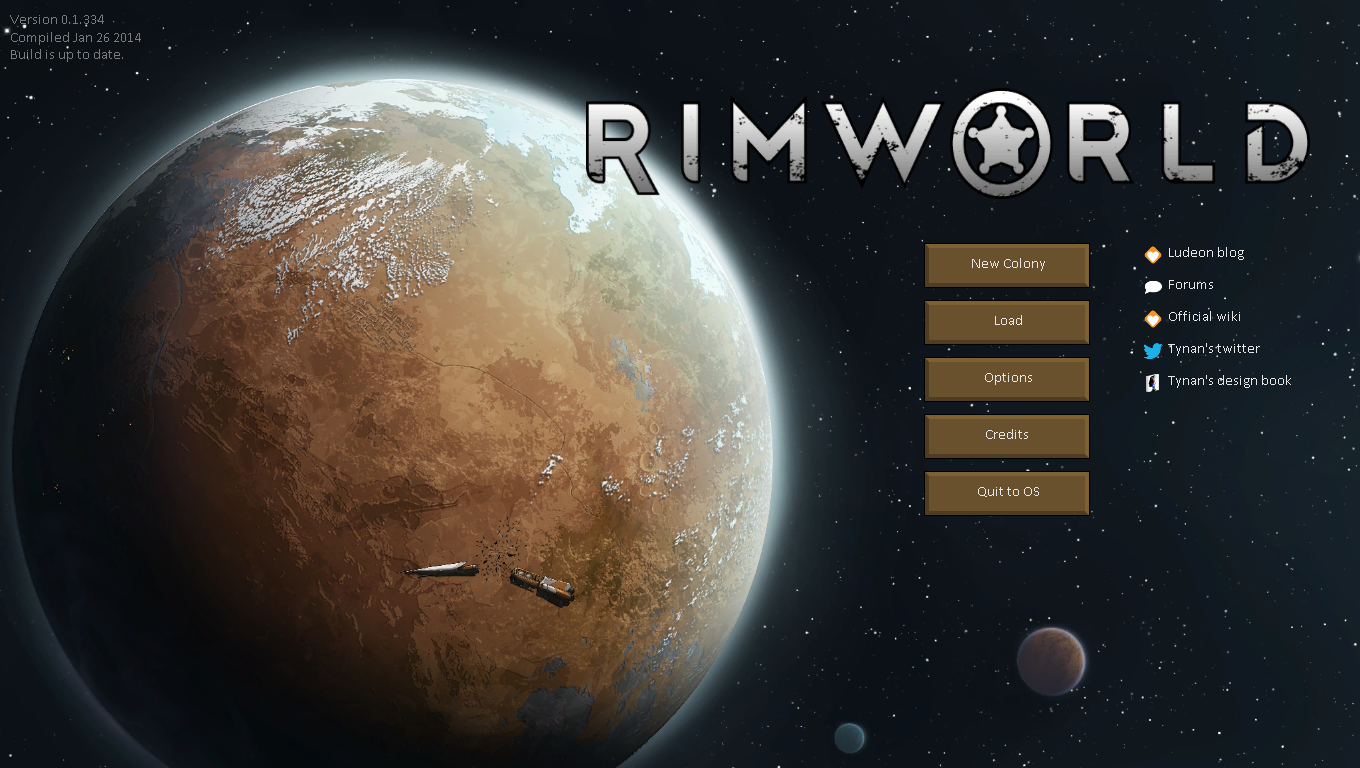
GmX9a8LuhHI set down on the planet with complete awareness of the dangers that I would face, and a steady sense that I would do better than those who had come before me.  As I established my new outpost, eagerly digging into the cliff face nearby to harvest the easily accessed metal and provide my fellow accidental colonists with shelter, I was certain that I was in the right place, doing the right thing.  I planned out my dwelling carefully, designed it with defense in mind, and laughed at the idea that I might have missed any of the silly issues which had so beset the Let’s Plays that I had watched before I picked up the game.

I forgot, of course, to plant any food.  Welcome to Rimworld.

Continue reading

Game Analysis: The Stanley Parable

Zeeblee

Before I get into any discussion I must first say that the game is wonderful and you should play it. If you have already played it, don’t plan on playing it, or just don’t care about spoilers, then you should feel free to read on. Otherwise you should go and play The Stanley Parable and then come back.  Go ahead and read Jim Sterling’s review as a way to motivate yourself.

If you’re still unmotivated to go and play before I go into my analysis, then consider this: How much choice do you really have when you play a game? Do your actions truly affect whatever narrative you are participating in? Does deviating from the defined path truly do anything? The Stanley Parable experiments with these questions in a fantastically intimate way.

Continue reading

Game Analysis: Broken Age: Act 1

Zeeblee

Many apologies for my hiatus. But I’m still around and thinking about games! In a rare occurrence I also recently finished one! The game is Broken Age by the amazing Double Fine. I think Double Fine’s strength is their writing, so an adventure game like Monkey Island or their own work Grim Fandango seems like a perfect fit.

Continue reading

What Flavor Is Your Game?

cs2012neap

I like vanilla ice cream.  I have for a very long time.  Before I knew my alphabet, much less how to read, I knew that hearing my older brother spell out “I-C-E-C-R-E-A-M” meant that I should start asking Mom for ice cream too.  Better yet, as I got older and discovered the joys of living in Vermont (home of Ben & Jerry’s before it was bought out by Unilever), I learned that there were far more flavors of ice cream available, and that many of them were exceedingly tasty as well.

When I was little, I played make-believe all the time.  A number of my friends simply couldn’t understand the appeal, and stopped playing with me, but at the tender age of seven my older siblings harnessed my ambitions and introduced me to 2nd Edition AD&D.  My introduction might actually have been earlier, but that year was the first time I can remember staying up until midnight to play RPGs with them.  Over the next few years, I was introduced to Vampire: The Masquerade (along with a bundle of other White Wolf games), D&D’s 3rd Edition, In Nomine, and GURPS.  More other games followed.  Just like with ice cream, I had discovered a whole new world of flavors to choose from.  I was very nearly overwhelmed by my enthusiasm.  These days, some people refer to me as an RPG snob.  I much prefer the term ‘connoisseur’: through dedicated consumption, I have built an appreciation for the inherent flavors of different game systems.

But what the heck do I mean by “flavor”?  And how do you figure out what a game’s flavor is?

Continue reading

The Brief Hiatus Continues

I’ve been lax in my duties to this blog.  My apologies.  I should have explained further with my post last week: I’m in Portland, Oregon, and on Monday I spent all day running my Call of Cthulhu game for a number of fellow Reedies.  Today I’ll be co-teaching a stage combat class, and Saturday will see a second run of the same scenario from Monday.

I’m afraid that all means that I won’t have new material for you this week apart from this apology.  On the plus side, I finally cast my eyes upon RimWorld, a fascinating base-building simulation with an AI-managed event-engine that I’m itching to get my hands on and tell you about (yes, I want to tell you about the event engine, follow that link and read about it).  I’m also moving ever closer to having a complete version of my Call of Cthulhu scenario, though I’m not yet certain whether my most recent alterations are progress or regression.  Either way, I’ll be back here to bother you about cool stories, games, and story games next week.