Star Trek: The Lower Decks

I have discovered that The Lower Decks is a fine entry point for new viewers to Trek. I wonder whether that was done by accident, or whether there was some co-aligned intent that made it so. Regardless, my partner really enjoyed it. We’re both looking forward to the next season coming out in a little over a month.

Did it help that I’m overly familiar with Trek? Probably.

I grew up on The Next Generation. I’m pretty sure some half-remembered version of “Remember Me” (Dr. Crusher is caught in a collapsing warp bubble, people disappearing around her while she’s the only one to notice) fused with The Nothing from The NeverEnding Story and a fragment from Bucky O’Hare to fuel a lingering childhood fear. The climactic moments of “Conspiracy” (brain parasites infest Star Fleet) were also etched in my memory.

But my Trek-neophyte partner liked it even without my input. They were laughing before I answered any of their questions.

The Lower Decks excels at being accessible to viewers who aren’t veteran Trekkies for several reasons. Reveling in its Trek-ness, the show wears the setting’s tropes on its sleeve. This earnest obviousness is a huge advantage. The show is so clearly enamored with its setting, it shares an infectious delight even while it pokes fun—and it doesn’t feel like it’s satirizing Trek so much as celebrating it and laughing at the same time. All of that made it easier for my partner to pick up on the setting of Trek without other context, while still having fun with it: several times, they cackled while asking “that’s a thing?” (They were right, it was a thing.)

Similarly, the characters are both varied and endearing while remaining plausibly Trek. They play to their comedic bits and obsessions, but the writers preserve their “humanity.” And I actually think this show does a better job of exploring the characters of its cast than Discovery does, and in far less runtime.

I’ll elaborate: this show feels more Trek than Discovery does to me, because of its unabashed embrace of the ideals of Star Fleet. In that way it feels more like the TNG I grew up with, more hopeful and earnest and less focused on following some larger dramatic arc. The important deliberations of this show are ultimately smaller in scope, and we have more time to watch people being people at people-scale instead of losing the little personal details as they’re dwarfed by the Big and Important Drama of the season.

Right now, I prefer this.

Back on track, part of what makes The Lower Decks accessible—and such an ideal entry point—is its plethora of easy references to other Treks. Normally I’d call that a bad thing. In many cases, those references would impede a new viewer with obvious missed in-jokes that feel like hostile gatekeeping. But this show references other Treks in a way that prepares viewers for the genre as a whole, ties it into the larger setting continuity, and makes those other Treks more fun later. It’s extremely well done.

Now, most times, I wouldn’t say that being a good genre starting point is an accessibility feature for a series itself. But when this show excites someone who’s never watched Trek before, it also makes them more invested in itself. It’s a virtuous cycle. It’s an admirable achievement, too.

So if you like Trek and haven’t watched The Lower Decks yet, I recommend it. If you’re wanting something that comes in manageable bites and is good fun, I recommend it. And if you’re wanting to introduce someone to Trek but you’re not sure where to start, this show is a delight.

Have fun.

Facing grief and trauma in genre fiction

I’m a fan of adventure stories and genre fiction. Genre fiction covers a lot of ground, but you can probably guess what I’m talking about: fantasy adventures, intrigue, sci-fi thrillers, that sort of thing. Not, generally, the stories that literary critics make happy noises about and call “art” or “good literature.”

I don’t think genre writers should mould themselves to the expectations of literary critics. The personal tastes of many of those critics don’t match mine very well. They have too little appreciation for plot, for things happening, to really fit my tastes. But there are a few places where I think the general approach of genre fiction feels… emotionally dishonest, stunted, or like it (sometimes) does us as readers a disservice.

This puts me at risk of agreeing with those literary critics on a few points, which makes me (as a long-time ardent genre fiction fan) a little nervous. 

As you might guess from the title, my quibble revolves around characters’ experiences of grief and trauma in genre fiction. The pattern I see is that genre fiction doesn’t deal deeply or honestly with the impact of the traumatic experiences it puts its characters through. It prioritizes the excitement, the adrenaline rush, the problem solving… and leaves healing from one’s wounds—or picking up the pieces of one’s emotional and social life, or facing one’s lasting pain—entirely out of the picture. Facing trauma and grief, to put too-small a name to it.

A general caveat: I think the patterns I’m discussing here have changed somewhat since I was a kid. It is easier now to find exceptions to the pattern I talk about here, and the pattern may be shifting. But the pattern is still visible, and will probably be recognizable to anyone who’s read certain sub-genres (mil-fic is an easy example).

Where this kind of genre fiction does deal with that trauma and grief, it frequently responds with the blaring one-note horn of limited (toxic) masculinity: anger, revenge, and action, with no time set aside for reflection or any other emotional experience (generally regardless of the gender of the characters involved). I’m not surprised, really: I see in this the parallel discomfort modern American society has had with any discussion of emotional experience, or any need for psychological aid, spiritual counseling, meditative practice, or anything else meant to soothe and heal (maybe excepting the use of drugs or sex as an escape).

I don’t want all of my adventure stories to fixate on the main characters’ desperate need for therapy. That’s not the solution I’m looking for. But it would be nice for more of our genre fiction to, as I’ve seen more examples of recently, deal honestly with the impact of going through all of these exciting, interesting times. How is it that our heroes learn to cope? How are they breaking under the pressure of being heroic? Who’s supporting them, and how? Where are the quiet little moments of Frodo leaning on Sam in the face of terrible odds and endless danger?

I want to read stories where the heroes’ struggles in the face of unyielding badness are more palpably human, less opaquely stoic. And if our heroes are stoic, I want to see the work they put into maintaining that stoicism, holding that balance, despite the exceptional lives they live. It’s the failure to show this side of our heroes that feels like a disservice to us as readers.

That’s especially true in anything that isn’t epic or mythological. What I mean by that is, the further from the banalities of life the focus of the story falls, the more leeway I give it—if you’re writing about characters who are more-than-human or even forces of nature, I don’t have beef. But I’ll add that exploring the emotional depth of those characters (even off-handedly, I don’t need whole chapters about someone’s anguish unless that’s what the book is about) nearly always builds more connection for me and gives me a better sense of the character as a person. And I like that. The more I know what characters care about, and the more ways I have of exploring that, the better as far as I’m concerned. Especially if it’s done with a deft hand and subtly incorporated.

I hope that this old pattern will change. I can see ways that it already has, in the books I’ve enjoyed most recently. You can probably see me writing about those books, those stories, elsewhere on here. Let’s see more of that change.

Loki (2021)

I’ve now seen the first two episodes. I like it. I rather like it. This show is great so far.

I’m a sucker for this for several reasons: one, it has time travel, which I love; two, the interplay between Tom Hiddleston and Owen Wilson is a delight; three, the whole Time Variance Authority and its cast is a great vibe, all the way from R. Slayer down to Casey; four, I was upset when Loki died for Thor’s character development at the start of Angry Purple Man #1 because (a) it felt like it cheapened & threw out the deeper relationship they’d built in Ragnarok, and (b) any resulting character growth for Thor was ignored in the underwhelming and too-busy Infinity War series… so watching Loki’s earnest emotional reaction to seeing all of his other self’s suffering and growth was fucking brilliant.

Honestly, giving Tom Hiddleston more of a chance to play a bigger role seems like the right choice to me. I never understood what people saw in him in the first Avengers movie (besides a pretty face with good quips), but the Loki that grew out of the subsequent movies won me over completely. On reflection, I blame Joss Whedon’s writing and the big ensemble movie’s lack of focus for anyone not dead center in the spotlight. Anyway, making this show with more room for Hiddleston (& others) to explore seems like such an obvious good move.

And in case I still had any doubts, Loki’s emotional private moments convince me that this show was a good idea. I don’t think we’ve gotten anything like as personal a view of Loki’s internal world in any previous Marvel movie. As conflicted as I feel about supporting the Mouse, I’m really enjoying watching this show and I’m glad that it’s being made. I’d absolutely go for more.

I do worry that the show will not live up to its first episode. The previous two shows (WandaVision, Falcon & the Winter Soldier) felt a bit like they suffered from being compressed—more towards the end for WandaVision, and at several different points for Falcon & the Winter Soldier. All of which makes me wonder whether Loki is going to go sideways in a few episodes and fail to live up to its promise. The fact that Loki is only supposed to have six episodes exacerbates those fears.

But the truth is, even if all we got was the first episode, I think this would have been a worthwhile jaunt. That’s how much I liked the interplay between Loki and Mobius, that’s how much I liked the emotional development of Loki in that set of interview scenes. It’s really exciting to think that we’ll get more of that.

Having now seen the second episode as well, I still have high hopes. There are more twists and I have more questions, but I’m still excited to see what comes next and don’t feel like they’ve really flubbed anything so far. That said, the six episode limit feels tight. I wonder whether the show will stick the landing.

Space Sweepers (2021)

I couldn’t help but think of Cowboy Bebop. I’ll mention Planetes too, but I still haven’t seen it so I’m only making a topical connection.

See, Space Sweepers shares so many aesthetic and tonal qualities with anime that I would be remiss not to point it out immediately. If you already know you don’t enjoy less-rigorous, more-adventurous space thrillers with lots of crunchy techno-bits slathered on for that sweet flavor, but without the density of “totally realistic” sci-fi… this probably isn’t the movie for you.

If, on the other hand, you want a dramatic space thriller with some cyberpunkish themes and just enough emotional moments to make me sniffle, check out this movie.

Why? Because even with my few quibbles, Space Sweepers is still a touching story about grief, struggling to make ends meet, and the humanity of those society has cast aside. It’s flashy, it’s fun, and despite the rough bits it has heart.

Oh, and *damn* do I enjoy the cast and the polyglot melange of this space future. The faces on-screen are incredibly diverse, and absolutely helped sell me on this movie’s setting. Sure, all the main characters are South Korean, and the big antagonist is played by Richard Armitage, but whoever was in charge of casting actually paid attention when they were asked to get a *broad* range of different people.

Having said that, I do have to add one of those quibbles I’d mentioned: this movie’s acting quality and character development are unevenly distributed. I feel like that goes hand in hand with the anime themes I mentioned above, but it’s more noticeable when watching real live humans.

The core crew feel solid to me, and I don’t feel like the script screws them over. Bits of character background and motivation seep out throughout the movie, and I *like* that. We’re not immediately clobbered with each character’s backstory. I already mentioned Cowboy Bebop, but this is yet another place where I see a connection.

Unfortunately, the villain is a tad bit cardboard. I know that Richard Armitage can do better, so I can only assume that either there was more material which never made it to the film’s theatrical edit, or the script never allowed for the character to really shine. Similarly, the whole movie is peppered with some oddly stiff moments where bit-characters talk (mostly in the background) and simply feel… contrived. Like, it made sense for someone to say a thing, so the script included it, but the delivery didn’t quite land for me.

It wasn’t a big enough issue to pull me out of the movie, or even make me dislike it.

My other quibble: there are a few plot twists that feel contrived at best. They didn’t break the movie for me, but the logical holes were… pretty big. Big enough that I simply had to embrace them as part of the story and move on—which was more difficult for me than overcoming my quibbles with the acting. I think what gave me the most trouble wasn’t the deus ex machina, but the fact that the film could have covered it (or at least justified it better) with a few small changes earlier on. It felt like an unforced error.

Of course, knowing the little I do about movie production, I realize that I may be wildly off the mark. Who knows how many variations the script went through, how many of those last scenes were cobbled together from different shoots, or how much of their budget they’d run through by the time anyone saw the same plot holes I see? It’s not like making movies is simple or easy.

Anyway. I liked this movie. If you know you like its genres, I think you’ll like it too.

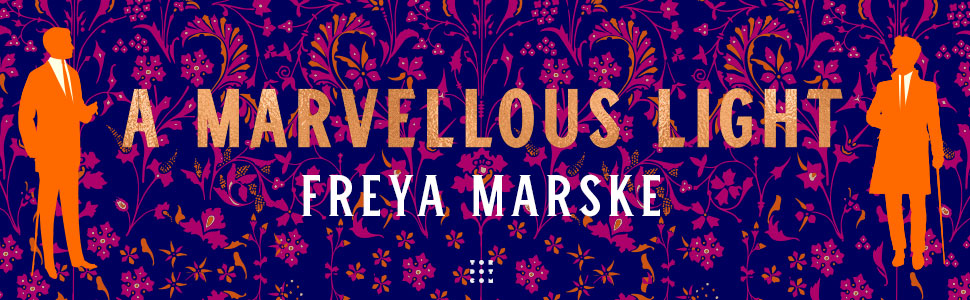
A Memory Called Empire, by Arkady Martine

Arkady Martine absolutely knocks this one out of the park. 

A Memory Called Empire is a lot of things, but at its heart is a bittersweet tension of love, admiration, and despair for a culture and civilization which will destroy one’s own. It’s about being caught on the outside, stuck as an outsider despite so much work done to fit in. And it’s a thriller about loyalty and betrayal, both expected and not, from without and within.

It’s an excellent book, as I said when I mentioned it a couple weeks ago.

I’ve struggled to write anything more here, and thrown out a few hundred words that might spoil the book for you. Exploring what Arkady Martine does so well without giving away her story is… challenging for me.

She’s managed to write a compelling culture, one in which I can see traces of several historical imperial courts and practices, and held it up for us the readers as a deep and multi-layered thing tantalizingly out of reach of our own comprehension. The fraught weight of meaning is present and palpable, but just enough is lost in translation for us to experience it mostly as our narrator does, unable to be a full part of it as anything but barbarians.

Speaking as someone who studied linguistics, and specialized in the production of ideology and ideological identity through political speech, this book is a delight. Speaking as someone who loves studying political science, international relations, history, and the rise, fall, and gradual mutations of empire, this book is marvelous. And as someone who deeply appreciates heartfelt stories juxtaposed with intrigue and danger—wow.

I’m trying not to ruin anything for you. Please just go ahead and read the book. It’s really good.

The Vast of Night

The Vast of Night had been on my to-watch list since it came out last year. I finally watched it Monday, early in the morning after my body decided three and a half hours of sleep was all I would get.

This movie was damn good.

These sorts of stories—stories with the feelings evoked by The Vast of Night—are usually pegged as horror movies. But most horror movies fail to deliver them well. Those movies are too caught up in the scare, in the burst of adrenaline and the heart-pumping thrill of being prey. Not so with The Vast of Night.

It is, at its heart, a mystery.

It’s about two young people, people who yearn for some way out of their small New Mexico town, discovering something odd and trying to chase down the truth behind it before it disappears. And it feels more like the slower paced, unsettling investigations sometimes found in The Twilight Zone or The X-Files than like any other horror movie I’ve seen in ages. I mean, damn, the movie even opens with an implied framing narrative as an episode of something like The Twilight Zone, right down to the Rod Serling-esque intro voiceover.

It’s been ages since I’ve been this captivated by watching people sit and talk to each other about things that aren’t happening on screen.

You may think that’s a joke, but seriously, I both loved it and didn’t understand it. Reflecting on the movie immediately after watching it, I couldn’t figure it out why I found that so rewarding. And yet, I did. Heck, there’s even the incredibly bold choice to simply hold on a black screen for a while, while we listen to someone speak, and it’s GOOD.

As you might expect from all that, this movie is low key. It’s grounded, both metaphorically and literally. The camera work very intentionally stays at or below shoulder height the vast majority of the time, leaving us just as stuck in this town as the main characters. There’s even a long low shot (that baffled me until I dug up more about it) which does an incredible job of tying the whole space of the town together.

There’s only one scene I can think of that really pulls out the stops and delivers the scares you might have expected from a movie listed as a sci-fi mystery thriller, and even then it’s incredibly subdued by thriller movie standards.

Instead, the movie hones its craft on a low-effects presentation that focuses more on the uncanny, the strange, and the wondrous, and it does this well. Extremely well.

A few other good notes that I must mention…

The sound design and music are great. I recommend watching the movie with a good sound system, or good set of headphones if you’re watching it alone. It’s worth it just to be sure you get all the details of everyone’s lines, all the richness of their voices.

And the consistent technical skill of the actors interacting with their props! That was really good. I don’t know if you feel the same way, but there’s something special for me about seeing characters on screen interacting with complicated machines in a way that brings both the machine and the character to life. That’s most true when the interactions are physical, and requires them to be internally consistent; that combination gives the character a feeling of expertise, and tells me more about them as a person. Part of what I appreciate about that internal consistency is that I know it’s not easy to create on set: you rarely get any of the feedback from a prop that you’d get from the actual device, so the appearance of fluid ease and competence (and the internal consistency of use that lets you learn how the machine works as they go) means that the actor put a lot of time into either learning the actual use of the machine or developing a legible acting language of use.

I could keep nerding about how much I like that for ages, but I’ll just say that it’s present in this movie and did a lot for my feeling of immersion and belief in the characters.

So. If you like investigative mysteries and the uncanny or strange, indulge yourself with The Vast of Night.

Agents of Dreamland, by Caitlin R. Kiernan

The fourth and final member of Tor’s Reimagining Lovecraft novella collection, Agents of Dreamland by Caitlin R. Kiernan, brings the weird and the uncomfortable home to roost.

Of the four stories, this is the one that felt least complete to me. It left obvious spaces open for the story to continue, implications that want some kind of follow-up… but I think I can see why the story stopped where it did. The novella contained its own neat little arc, even though the completion of the arc didn’t resolve the larger story lines this piece opened. Worth noting: there are sequels to this story, though I haven’t yet read any.

Each of the four novellas in this collection builds on a different part of the Cthulhu Mythos, and I’ve found aspects to appreciate about every one of these reinterpretations. They all draw out facets of Lovecraft’s stories—sometimes things he wrote explicitly, sometimes things he implied but failed to recognize—and I’ve enjoyed them as a return to cosmic horror, a way to engage more with stories that I’ve put aside in distaste but which still hold some good core of fright.

And that good core of fright is precisely what I think CRK captures so well here; its presence is the reason that I don’t feel at all cheated by this story. Despite leaving me wanting more resolution, more progress, Agents of Dreamland absolutely satisfied my desire for the Mythos’ pressing discomfort; Kiernan pulls from multiple pieces of Lovecraft’s work—the sometimes goofy and poorly written bizarre monsters, the fairytale otherness of (mis)understood dreaming—and delivers a horror story that holds together as whole cloth. It’s a reimagining, like it says on the novella collection, that improves on the material it draws from. Just like the other pieces in here do, but in its own distinct way (like, again, the other pieces in here do).

In many ways, I think Agents of Dreamland is the most Lovecraft-ish reimagining of the four novellas. Kiernan improves on the original content in a way that feels most comparable to the source material. Maybe that’s why I kept thinking about Call of Cthulhu and Delta Green games while reading it.

Anyway, yes, it’s another good piece in a good collection. If you like Cthulhu Mythos stories but are tired of / disgusted by Lovecraft, or could never get into those stories because of Lovecraft, I suggest these. They vary a lot from one novella to the next, but I’ve enjoyed them all a great deal.

The Tower of Péng the Unprepared, and Whimsy’s Throne

I’ve started a Patreon for the Locations that keep coming to me! You can find it here, at Whimsy’s Throne. There’s a free version of my first finished World Seed there, The Tower of Péng the Unprepared. Here’s the cover art, from my friend Worsey.

Hammers on Bone, by Cassandra Khaw

I’ve finished two good books recently, A Memory Called Empire and Hammers on Bone. They both deserve more than a passing mention, but I’m only going to talk about Hammers on Bone right now—I’ve struggled to find good ways to cover A Memory Called Empire without spoiling things, and I’m taking the easier way out.

I read Cassandra Khaw’s Hammers on Bone through the same bundle of four novellas that brought me to The Ballad of Black Tom and The Dream-Quest of Vellitt Boe. I’m glad to say that this book deserves its company. Reading this has inspired me to tell my own investigative horror stories again, through its good example and obvious love for the material; for comparison, these days Lovecraft only evokes that kind of reaction for me by way of spite and a fierce desire to do better than he did.

Perhaps that’s what drove Cassandra Khaw. Whatever the case, they succeeded.

Evocative, punchy, and more full of body-horror and gore than I’d expected, this book wears its love for the stylings of noir on its nicotine-stained sleeve. Seriously, I haven’t read about this much smoking in years. But it’s a story that comes with all the scummy details and twists I expect from old PI noir, alongside the horror of the Cthulhu mythos and a grasp of descriptive language that leaves me reeling in envy and admiration. Not everyone should try this style of evocative, nearly synesthetic detail, but DAMN does Khaw make it work for me. Their prose lays on atmosphere so thick it’s like drowning, mashed face first into the yellowed pages of cheap detective pulp.

And it works. The quasi-hallucinatory perspective, with its depth of detail, goes beyond merely fleshing out a character voice; it rapidly told me more than I’d realized about who our narrator was… and how Mr. Persons was not at all what I’d first thought.

It’s not a big book, not a long story. It’s a quick and potent read, much faster for me than most of the other pieces in the Tor.com novella collection. If you like horror and noir it’s practically a must. I definitely recommend it. Get it here. Or buy the whole bundle (which I’ve enjoyed so far) here.

The Ruins of Ghalburg

Nestled in foothills between the high peaks of the Sefghal Range, the lonely ruins of Ghalburg are only kept company by the wreckage of Ghalburg Keep on the slopes above. Though the burgeoning town was once known as a welcome stop on the way through the mountains, it has been shattered, pulled apart stone from stone, vast swathes of it put to the torch. Here and there, once-mighty timbers still stand as charred skeletons of formerly sturdy homes, memorials to their missing inhabitants.

The keep, perched in the hills above the town, is no less desolate. While it was spared from the same vast devastation, it still was broken open like a raw egg, its innards tumbling down the hill towards the town. The outer curtain wall was shattered in several places, and one whole corner of the central keep is gone, strewn across the grounds and out of the bailey. Like the town below, all the keep’s defenders are missing. No bodies remain to be found in any of the wreckage.

Now, this ruined settlement lies as a fearsome warning and an unanswered mystery. What force laid waste to the castle and its town? Was it some unknown group of raiders from the steep, storm-wracked peaks above? Or did Baroness Ghal set this horror in motion with untoward experiments in her obsessive effort to resurrect her family’s fortunes? Rumors abound, but no story yet bears the imprimatur of truth. The only certain thing is that none of the town’s residents have been seen or heard from since, and travelers through the region now avoid the once-popular town like the plague.