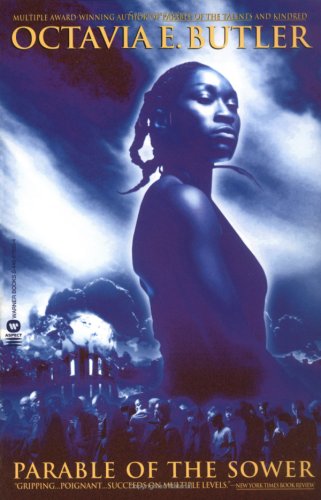
Parable of the Sower, by Octavia E. Butler

52397


Holy crap, this is a good book.  Many thanks to Monica for the recommendation and the loan.

It turns out that Octavia Butler knew what she was doing when she wrote Parable of the Sower.  She managed to create a believable (and deeply grim) future; perhaps more impressive, the grim future she envisioned in 1993 still feels like a compelling vision of our potential future, even if the dates and tech seem a little bit off.  To be perfectly honest, I find the future shown in this book to be especially frightening because of the fact that I remember imagining something very much like it in my early childhood.  Except, of course, I had no conception then of the persistent undertones of racism that are seamlessly integrated into Butler’s story.

Somehow, despite writing about a world that is so clearly dying, about people caught in the death throes of a failing state, Butler writes a protagonist who retains all the hope that you could possibly ask for.  And this isn’t because our narrator is naive or stupid: it’s because she has looked carefully at the world around her and recognized that she has a choice between giving up and killing herself, or deciding to do something to change things.  And she’s clearly unwilling to give up.  I find her really refreshing, a wonderful narrator to follow through such a wounded world.

I’m not saying that it necessarily feels good to read all the way through; the truth is that this book is quite painful at times.  But it’s also uplifting in a way that only people enduring in the face of adversity can be.  And not just enduring, but people who refuse to simply prey upon each other, and who instead try to make something better from the world around them despite how ruined it is.  I like that a lot.  I find it inspiring, and I think that because of that this story fulfills an extremely important role.

Because I’m on a tight schedule today, I’m going to make this one brief rather than going into further depth about the story or its construction.  I admire what Butler has done with this story, and I wish she were still alive for me to thank her for writing it.  I hope that you pick it up and read it too.  If you’ve read it yourself, please weigh in with your thoughts below.  I’d love to hear them.

As if the good story weren’t enough, this is yet another good example of a teen female narrator for me to learn from.  Yet another reason for me to like the book.
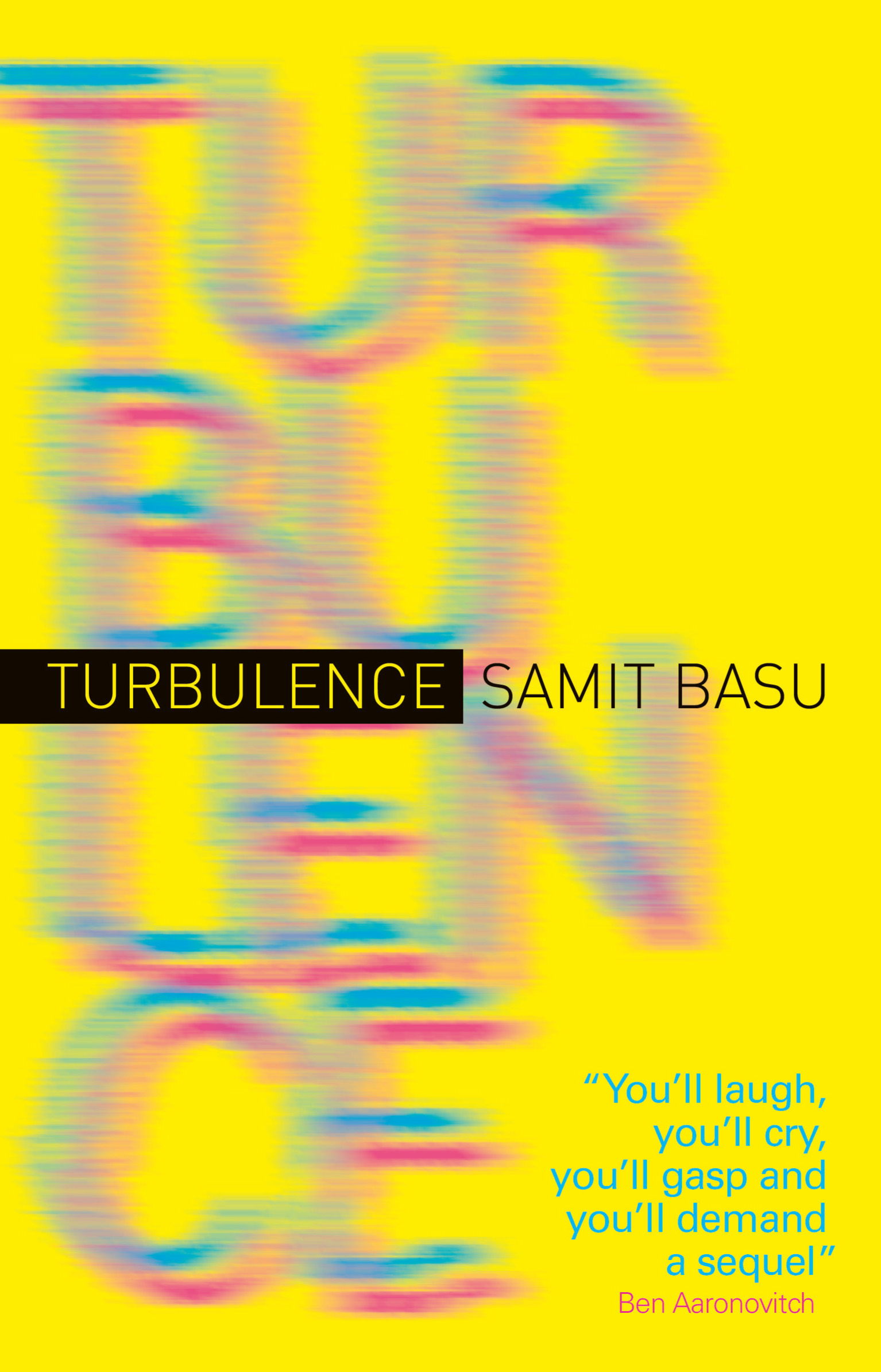
 

Turbulence, by Samit Basu

1

 The cover doesn’t do justice to the book.

To be perfectly honest, I don’t know that I laughed, cried, or gasped while reading Samit Basu‘s Turbulence.  But I also didn’t put it down once I’d picked it up, and I most certainly do demand a sequel.  I’m not sure how I couldn’t, after having happily finished the book in one day.

This book is profoundly easy to read.  Some stories are told in a way that defies accessibility, that requires you to think hard and work your way through the language to the story underneath.  This is not one of them.  Instead, Basu’s descriptions of the world surrounding our protagonists are offered offhand, seemingly effortless in the way that they paint a picture of the world.  The first analogy that comes to mind is watching Bob Ross paint his happy clouds; one minute there’s a blank blue sky, and the next there are beautiful fluffy cumulus floating in it.  He hardly seems to exert himself beyond the bare minimum necessary, and yet a whole world drifts into being over the course of a few words.  Basu certainly relies on his audience to fill in the gaps, as we always do, but each time he conjures up another tiny detail or reminds me of the appearance of some particular piece of scenery, everything flows together again.

Turbulence is the story of what happens when a single plane full of people are all granted superpowers for no apparent reason.  By focusing on the many and varied people aboard BA flight 142 from London to Delhi, Samit Basu offers a superhero story about people who aren’t American (though American superhero comics exist and are referenced), and in which women aren’t automatically relegated to the status of sex-objects.  I really liked it.  Heck, I think even Spaige would like it.  I wasn’t especially surprised by the twists that Basu provided, but I enjoyed all of them and I loved the end of the story.  Now I can’t wait for more.  Fortunately, it looks like I won’t have to, since the sequel comes out in July.

More after the break.

Continue reading →

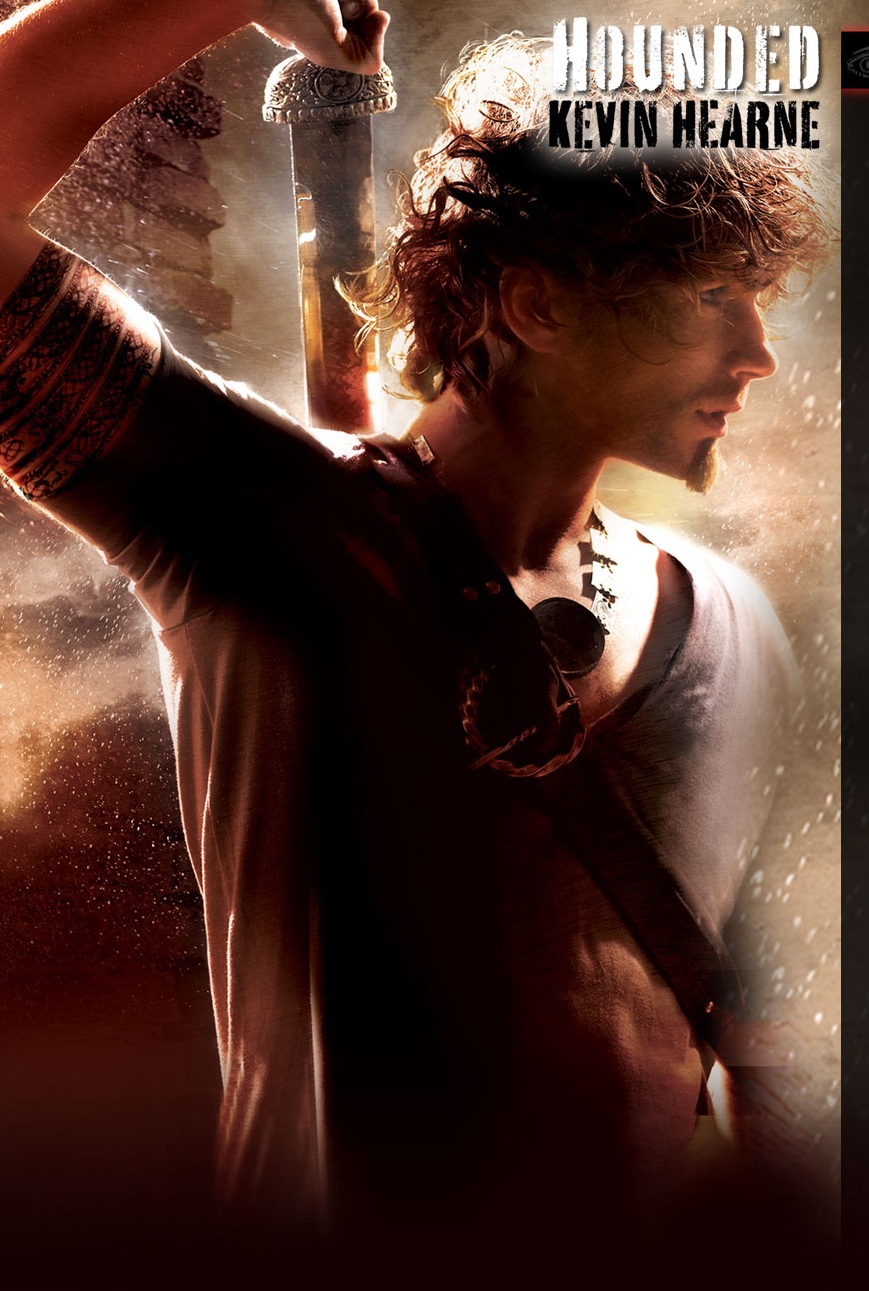
Hounded, by Kevin Hearne

hearne-hounded

So I read Skin Game (that review is over here), and I blazed through it in my usual gluttonous fashion.  One of my friends knew I’d be wanting more books of a similar ilk to fill my gaping maw while I waited for the next entry in the Dresden Files, and so he recommended Kevin Hearne‘s Iron Druid series. It turns out that Hounded, the first book of the series, pretty perfectly satisfies my aforementioned appetite.  It’s not very long, and it’s not very complicated (except insofar as there are a number of different magical beings, most of whom do not get along with each other), but it’s certainly entertaining.  I would say it’s something like literary junk food, with a small helping of mythological nutrition.  Good for a light snack.

An important note for those who have felt burned by previous experience with the Dresden Files: I don’t think this book is particularly offensive, though I should leave any final judgement to the consideration of someone with a more sensitive palate.  Specifically, there are a number of female characters who don’t feel like they’re only set dressing (it turns out Celtic goddesses show up frequently in a high-mythology urban fantasy about an ancient druid, and the few mortal women you meet aren’t helpless damsels either), but there is a Hollywood-esque imbalance in favor of the pretty, and far more attention is lavished on the descriptions of attractive women than on the descriptions of attractive men.   I don’t really see a problem with that focus, given that the narrator appears to be a straight male, but if you’re not interested in stories about a straight man in an urban fantasy setting you should probably look elsewhere.  Like I said, this book scratches a similar itch to the Dresden Files, but with less Noir and all that that entails.

Right, so how about more details on the story and setting?

Continue reading →

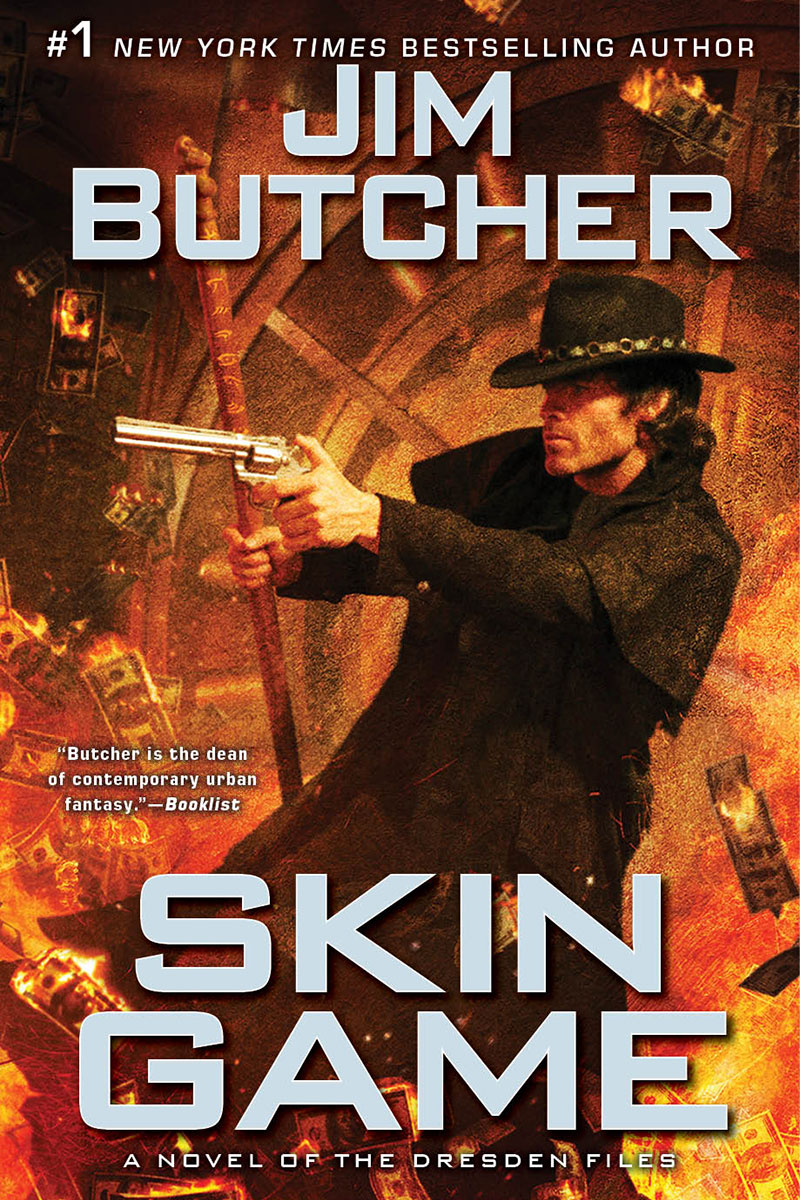
Skin Game, by Jim Butcher

skingame_lg


If you haven’t read the Dresden Files, this is not the place to start.  Similarly, if you’re not familiar with the series, I’m not quite sure how best to describe it based on this book.  The Dresden Files began as noir-inspired urban fantasy, focused on the straight white male wish-fulfillment protagonist Harry Dresden, everyone’s favorite (i.e. the only) wizard Private Investigator in Chicago.  According to Jim Butcher, the first book was originally written to prove just how awful formulaic genre writing could be.  Lo and behold, Butcher was actually very good at following genre formulae in generally gratifying ways, and the series has been quite successful.

Thankfully, though it’s still noir-inspired urban fantasy, the series has grown and changed.  Harry Dresden isn’t the same character that he was 15 books ago, and I don’t believe Butcher is still writing to prove just how terrible his writing can be.  The story’s background has grown in depth and complexity, and while not every book has been totally up to snuff (and some of them have their worse sections), I’m still quite thoroughly hooked.  In fact, Skin Game is probably my favorite book in the series to date.  I know, that whole bit about “written to prove how awful formulaic genre writing could be” isn’t exactly the best selling point.  Nor does it put “my favorite book in the series to date” in a very good light.

But the Dresden Files offers up a very specific flavor of story, and it’s one that I have found well-nigh irresistible ever since I read the first book.  It’s a little like guilty pleasure junk food, to be honest, and seeing the series get better over time just makes me feel better about my decision to keep consuming it.  It helps that the legacy of semi-covert noir-inspired misogyny has been slowly leeching out of the books, and I’m glad that the series has reached a point where Harry will more or less listen when his friends call him on his shit.

Enough about the series, how about the book?

Continue reading →

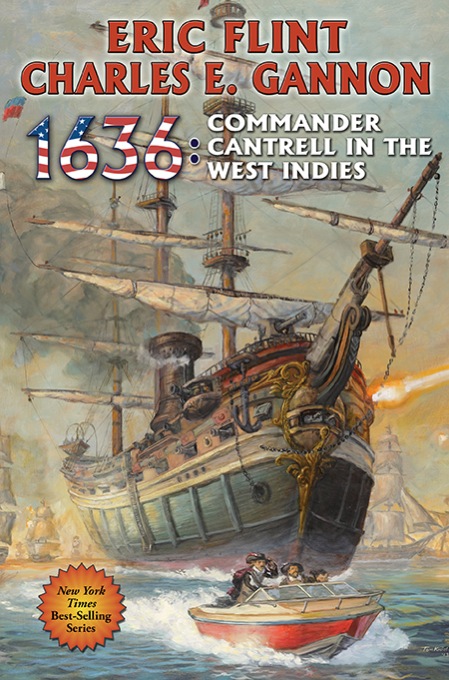
1636: Commander Cantrell in the West Indies, by Eric Flint and Charles Gannon

9781476736785

This scene doesn’t happen, but doesn’t it look nice?

My review has been delayed by other distractions, but I read most of 1636: Commander Cantrell in the West Indies before it actually came out.  You see, I’m infatuated with the 1632 universe.  I think that’s at least in part because the series offers a far more optimistic take on the world than most of the other fiction that I read.  If you already know that you don’t like the series, I doubt this book will change your mind… but if you do like them, you’ll want to take a look.  I’m not totally sold on it, and yet I still love it.

What do I mean by that?  Well, this book is a clear sequel to the Baltic War storyline, but it also incorporates at least two other storylines into the mix, with other elements thrown in from the rich milieu which has developed in the rest of the 163X stories.  It’s clearly intended to start a new set of storylines, several of which seem like they deserve their own books, or at least their own short stories.  I can see why they tried to fit so much into this book, but I feel like they ended up trying for too much and then ended up without quite enough to satisfy me with each of the individual stories.

But maybe the piecemeal way in which I read the book has done it a disservice.  I got early partial copies as soon as they became available and, like the literary glutton that I am, devoured each morsel as quickly as I could.  Like I said, it’s an infatuation.  While I doubt I’ll be able to restrain myself from reading new 163X books as fast as I can, I resolve to start over from the beginning next time once the whole book becomes available.  I’ll probably re-read 1636: Commander Cantrell in the West Indies some time soon to see just how much of my impressions came from the disjointed nature of my reading.

Now then, how about my thoughts on the material itself?

Continue reading →

Pain & Gain: Avarice at its best / worst

pain-and-gain-image10


Muscles, money, melanoma. What more could you want?

For some reason, Michael Bay decided to make a Fargo-esque movie about a real story; Pain & Gain is the “true crime” tale of three mid-90s Miami weightlifters who are too set on absolute success to realize that they’ve fucked up beyond their worst nightmares.

Unlike his film’s narrators, Bay seems to have succeeded.

Maybe he succeeded because there aren’t any giant robots, or maybe it’s because truth is stranger than fiction and this story is already good enough.  Or maybe it was because he got Mark Wahlberg, Dwayne “The Rock” Johnson, and Anthony Mackie to play his barely clued-in protago-villains (“Don’t worry, I’ve watched a lot of movies,” says Walhberg’s character on the topic of kidnapping, “I know what I’m doing.”), and then convinced Ed Harris and Tony Shalhoub to round out his cast.

I’m not saying that this movie is exceptionally good or a critical success.  I’m saying that it wildly exceeded my (admittedly low) expectations.  The movie flunks the Bechdel test, sidelining the few female characters involved in favor of focusing on a plethora of detestable assholes who feel like they came straight out of a game of Fiasco.  Their fluctuating connection to reality coupled with the greedy entitlement of Wahlberg’s character pulls the movie along like a freight train, complete with ensuing train wreck.  Their musclebound, idiotically-genius antics exemplify the phrase “hot mess.”

More specifics after the break.

Continue reading →

Strong Female Protagonist

chapter-5-cover

What if, even with your superpowers, you know you haven’t made the world a better place?

My friends Molly and Brennan have been making Strong Female Protagonist for the past two years.  It’s a super-sweet webcomic which (as they put it in their byline) follows a young middle-class American with super-strength, invincibility, and a crippling sense of social injustice.  When I first read it, I loved it so much that I went through all of it in under two weeks.  And now they’re using Kickstarter to fund the printing of the first four chapters as a physical book.

By the time of this posting, they’ve already blown way past their original goal.  This isn’t really a review, and I’m not writing this to tell you that they need your support (though I’m sure they’d love it).  I’m writing this to tell you that you should take a look at this excellent webcomic and pitch in for your own copy of it.  I’m certainly getting a copy.  Enjoy!

Unlocked, by John Scalzi

I don’t know if you follow Scalzi on Whatever, but if you don’t I strongly suggest that you take a look at what he posted today.  In addition to putting up the first chapter of his new book over at Tor, he’s also made his novella Unlocked available for free.  And it’s fascinating.

It’s an oral history of a disease that has yet to happen, and as such it feels very familiar; I kept thinking of World War Z as I read it, reminded of how well Max Brooks managed to create a world through the memories of his fictional interview subjects.  Unlocked doesn’t hit quite as high a note as World War Z did for me, but I don’t think it was meant to.  It doesn’t try to give us a worldwide view of what it was like to survive the end of the world.  Instead it serves as an introduction to the setting of his new book, and also tells a story in its own right.  The background created here sets the stage for a book that looks like it will be a very worthwhile read.

Oh, and it’s also good on its own.  It totally sidetracked me from the article that I was going to write for you today, and here I am writing about it instead.  I suggest that you check it out.

Godzilla, King of the (Summer) Movies

godzilla-2014-wallpaper-2

This is a wonderful summer movie.  It’s not good, it’s awesome.

It has its ups and downs: it starts on a high note with the opening credits sequence, briefly shows off Bryan Cranston, and then gives us a front row seat to people making inadvisable military choices.  After that, of course, we get to watch Godzilla, and once again everything is right with the world.  In short, it’s pretty much exactly what a Godzilla movie should be, as far as I can tell.

You’ll want to yell, you’ll want to cheer, and you may very well want to swear in awe.  You will obviously benefit from a huge screen, and I would also suggest a large group of enthusiastic people.  A little bit of alcohol probably wouldn’t hurt either.

Please enjoy your giant lizards responsibly.  More in-depth thoughts (with carefully segregated spoilers) after the break.

Continue reading →

Read Aliette de Bodard’s Short Stories

Thank you Spaige, for recommending Aliette de Bodard to me.

I don’t usually feel compelled to read short stories online (amusing, given that I create short stories which I post online), but I’m totally sold on Aliette de Bodard‘s work.  This post isn’t so much a review as it is a public service announcement; I’ve only read a few of the pieces that she has up so far, but I like all of the ones I’ve seen.  If you aren’t already familiar with her work, I encourage you to take a look at them.

de Bodard repeatedly creates fascinating new worlds and touching tales, each a brief brush with the unknown that promises much and delivers more.  I’m not sure how to put this, other than to say that each of the stories that I’ve read feels full of potential even when the story feels as though it has drawn to a close.  I’m very impressed.

In other news, I’ve finished a full rough draft of another short story.  It needs editing and commenting and may yet need to be entirely rewritten, but with a little luck I’ll have something new for you here soon.  That’s all for today.  I strongly encourage you to take a look at Aliette de Bodard’s short stories, they’re really good.