Feline interlude, 5/29/25

Life has been very full of baby recently. I don’t have a full post for you.

I’ve been lucky enough to play a bit of Cities Without Number with a neighbor and some friends. My other games are basically on hiatus, but being able to start early, end early, and walk less than ten minutes to and from game is amazing. There’s also no way I could be doing this without sometimes bringing baby Gibby with me, or sometimes coordinating extra support for Ley. Asking Ley to take care of the baby without any support while I go play RPGs is no good. Having a two-month old is a lot of work.

Cities Without Number, like other Kevin Crawford titles, could really use some editing. It’s… acceptable. The text is definitely better organized and written than some other RPGs or boardgames I’ve seen. Some of Crawford’s verbosity adds evocative texture to both system and setting, and his approach certainly produces consistently fun results. But…

Continue reading

Love/Hate: Priming your game with NPCs & Groups

In our own world, there are people we love and people we hate. Our feelings about others might be distant or dispassionate, or they might be personal and urgent. Sharing a love for the people of a neighborhood, a country, a sports team, or a gang is a quick and easy way to bond with someone else—as is sharing a hatred.

As storytellers, we can use this.

Continue reading

How to make deep NPCs

Are you tempted to make every NPC in your game a deep and complex character?

Don’t.

I love creating and playing NPCs in my games, and it comes easily to me. Part of this is because I’ve done improv theater—lots of improv theater. But mostly it’s because I use a few basic guidelines when I’m coming up with NPCs.

Since I apparently haven’t written anything about making or running NPCs since that article about naming them from over a decade ago, I figure this post is overdue.

Continue reading

Spectaculars, lightweight superhero fun

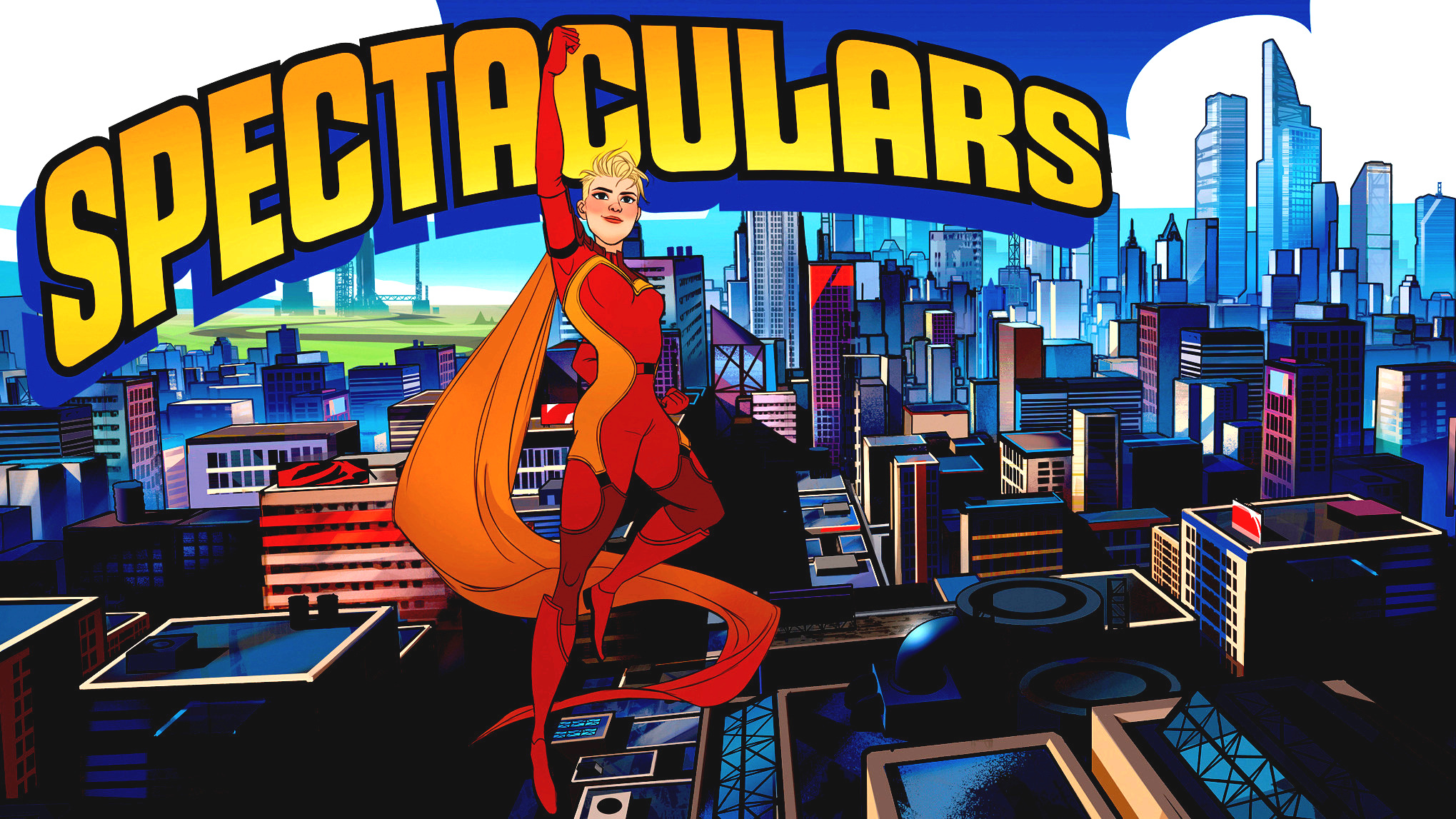
Spectaculars is a superhero RPG with a simple roll-under percentile die system. There are no cumbersome lists of modifiers, and the math required at the table should be accessible to precocious eight or nine year-olds. The game is clearly a love-letter to superhero comics, right down to players’ ability to invent backstory and create connections at the drop of a hat by spending “Continuity Tokens” to make up past issues with a relevant story detail. The game could also easily mimic the feel of superhero cartoons like Batman: The Animated Series, or any other episodic story where inventing background is expected or would be useful. Whatever your inspirations are, Spectaculars shines brightest when you’re playing episodic adventures in the context of a larger narrative arc. This is especially true if you’re more excited about your game’s larger story than you are about the gritty details of how a specific power works, or quantifying whose ”Mega Power Blast” is bigger.

Continue reading

Immersion & Worldbuilding in Co-op Video Games

Void Crew, Deep Rock Galactic, and Helldivers 2: three co-op games, three “shooters” (kind of, more on that later), and three games that build on their own self-contained fiction. I’ve played all three. I’ve enjoyed all three. So why do I only admire two of them?

Continue reading

Game system flavor & optional rules

This is pulled from a conversation I had recently about optional rules.

Rules combine to make systems, and systems create flavor by shaping the permissible and supported space of a game. Any skillful or willful group of players (the storyteller is a player too) can play outside the rules of the game system they’re using—that’s normal!—but that play isn’t supported by the system, and it isn’t part of the flavor the system creates.

Optional rules are opportunities…

Continue reading

Worldbuilding: a swashbuckling campaign

I reviewed The Three Musketeers: D’artagnan recently, but I only realized I hadn’t yet reviewed it because I was deep in the process of creating a T3M inspired setting for an RPG. I knew I wanted the intrigue, the swordplay, the ambition, and the thrill of being small players discovering a much larger political game. So I hunted for and pulled out the themes that felt crucial to T3M’s fun, trying to find ways to create a setting that would evoke those while also incorporating the elements my players contributed.

I’ll lay some of it out for you.

Continue reading

“Roleplaying” Games and the Misused RPG Label

Zeeblee

I have written a few reviews for digital roleplaying games (RPGs), but in many cases I find the label is completely inappropriate.  When I think of a “roleplaying” game, I think of a game in which I take control and can make important narrative choices.  But most digital RPGs don’t let you make narrative choices at all.  For that reason I would say that the label of RPG has come to be associated with a mechanic which is common to most RPGs, but isn’t the attribute that makes them RPGs.  The mechanic in question is that of leveling up, and I hate it*.

Continue reading

Giving Players More: Strategies for Padding Your Game

Zeeblee

Today we are going to play pretend.  We will pretend to be in the process of developing a game with the goal of being worth a particular price tag.  Since we are ambitious, we want to be just like the AAAs and charge a hefty $60 for our game.  But we are also familiar with the hours-to-dollars assessment people use to judge if the game provided enough entertainment to be worth the pricetag.  If we use the price of a new DVD as a measuring stick we can guess that our players will want their entertainment on a 10:1 ratio ($20 = 2 hours of entertainment), so for our $60 price we’ll need to provide six hours of game time.  That can be a lofty task for a single player game, so today’s article will be delving into the wonderful world of design mechanics/strategies to extend game time (for better or for worse).

Continue reading