Rewatching Ted Lasso S1

I feel more complicated about the character of Ted Lasso as I rewatch this show. For one, as Ley says, his vibe is very much Manic Pixie Dream Coach. More importantly, I feel as though early on the show distracts from Ted’s flaws because he means well and is the protagonist… and I feel grumpy about that.

I see more of Ted’s shadow (to borrow from Jung) coming to the fore as I rewatch the show. The first time through, I was just keeping up with the writing and admiring the show’s construction and delivery. This time, I have the chance to pay more attention to what’s going on, and to notice the elements that are clearly laid out and planned for later exploration.

It’s a well-written show. Ted is a well-written character. He’s flawed, though we don’t explore that as much in the beginning of the show. He’s admirable and likable in his attempts to catalyze the personal growth of the members of his team (along with everyone around the team), and to drive their transformation into a mutually supportive whole.

In pursuit of that goal he also transgresses or ignores people’s stated boundaries while ‘trying to make things better.’ His transgressions felt off the first time around. They feel more insufferable on a rewatch.

The first example that springs to mind for me is how Ted explicitly ignores Rebecca Welton’s stated preferences when he promises to show up again the next morning despite her saying that he shouldn’t. It’s a small thing. But this small thing is done with a powerful “aw shucks I’m just trying to do right by everyone” attitude, a real “I’m a nice and earnest guy” vibe… and that attitude plus the show’s narrative focus on Ted as our protagonist blurs Ted’s transgressions into the background. 

Maybe Ted is oblivious to the ways he’s transgressing. I think I could empathize with that Ted more, even though it would still feel painful to see. But I don’t think he’s oblivious, at least not with Rebecca—he responds (in)directly to Rebecca’s request by saying that he won’t honor it. And the show validates his actions.

I know how well things will go for Ted. I know how his efforts will ultimately pay off for himself and those around him. The show might not hide that Ted is doing something disrespectful, but it certainly slides it to you in a shit sandwich with such a smooth delivery that you could blink and miss it. We’re also given a brief glimpse of Ted’s relationship with his wife that strongly implies that this sort of behavior is not exactly surprising from Ted—and yet that moment is used mostly to build emotional depth and vulnerability for Ted, rather than to point out that he might have a pattern of self-sabotage via transgressing boundaries. That makes his other boundary transgressions all the more painful to me.

Maybe I’m more sensitive to this because I know more now about Jason Sudekis’s personal life around the time of making Ted Lasso. There are some painful parallels, complete with separation and custody conflicts as he and Olivia Wilde parted. In some ways, Ted is Sudekis’s chance to tell his version of his story, to portray the best version of his story and make himself a victimized tragic hero. No doubt these parallels help Jason Sudekis play Ted Lasso (his own life mirrors his art, he can bring all those pieces to his portrayal of the character!). But I think he’s too close to the experience and too caught up in it—Sudekis’s portrayal of Ted (specifically in the third season) feels more like a polemic or like self-soothing rather than an empathetic nuanced exploration. Worse, these similarities makes the show’s blurring of Ted’s flaws feel bad in a self-indulgent way.

Now, none of this makes the show bad. I still love Ted Lasso. I still think it’s extremely well-written and well-executed. My love for it from four years ago remains. If anything, I’m more impressed by the ways in which the story’s foundations were laid so long in advance. And I’m also finding the ways that it lands differently as I rewatch it.

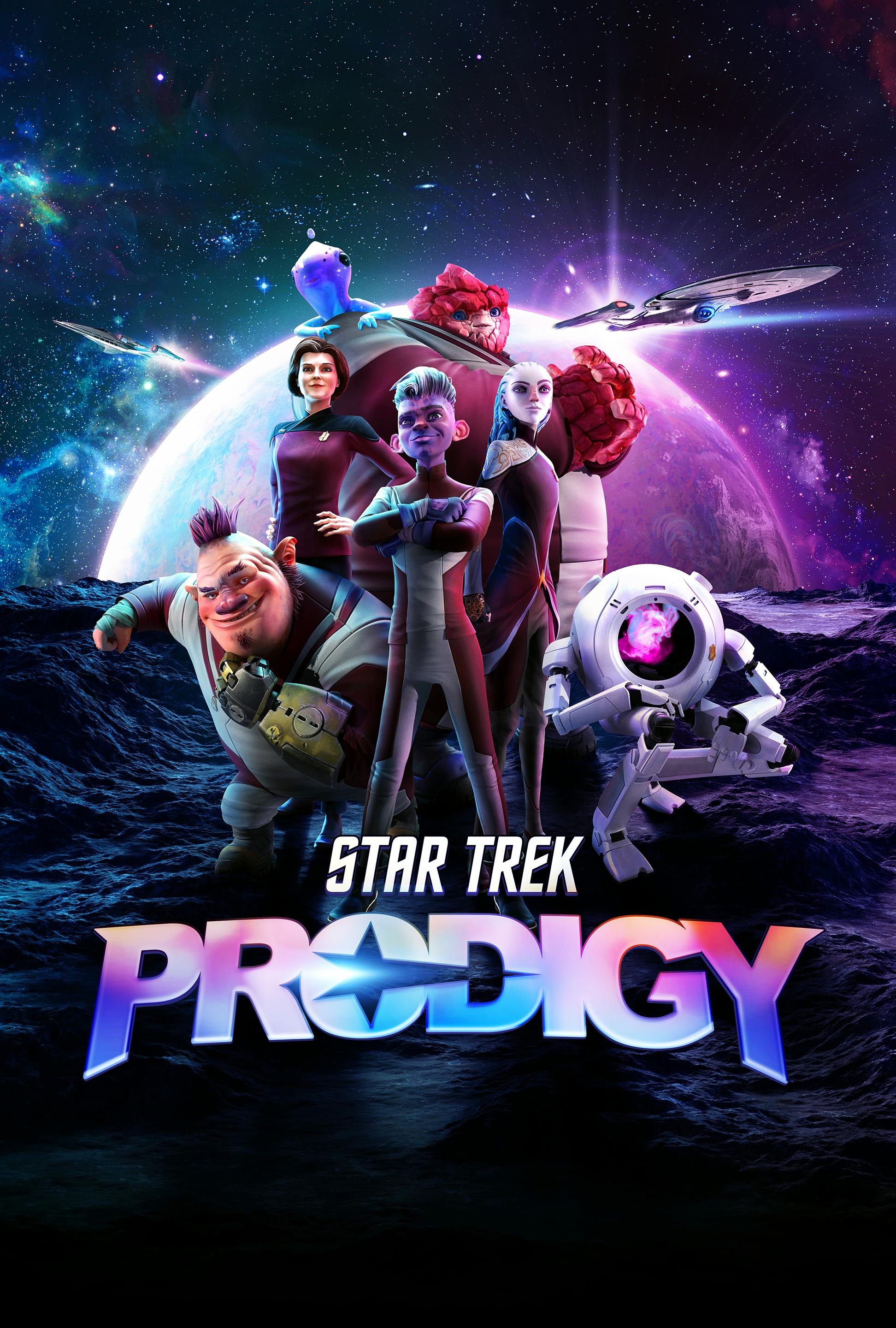
Star Trek: Prodigy follow-up

I finished the first season.

Wow.

I know I just wrote about Prodigy last week, but I have to weigh in again.

Continue reading

Star Trek: Prodigy, season one

This is for season two, but you get the idea.

As someone who grew up on Star Trek: The Next Generation, Star Trek: Prodigy didn’t quite feel like a Star Trek show until episode six. That might be a good thing. As much as I love TNG’s broad focus on an ensemble cast with highly episodic story telling, Prodigy’s early adventure-focused plots with clear continuity from one episode to another gives us a narrative throughline that TNG sometimes lacks.

That narrative throughline and dramatic adventure feels a little like Star Trek: Discovery. Discovery felt a little off to me in its first couple seasons, due to its fixation on a single overarching narrative and its exploration of Michael Burnham’s character to the detriment of the broader ensemble cast. It wore the trappings of Star Trek, but felt more like a Star Trek movie turned into a miniseries instead of a Trek TV show. Unlike Discovery, Prodigy bridges the gap from overarching-narrative to interspersed episodic and big-narrative episodes and makes a smooth landing in that Star Trek sweet spot with episodes six and seven. It starts without the Star Trek trappings, but ultimately feels more Trek to me than the first season of Discovery ever did.

Admittedly, I haven’t yet watched much further (I think I’m on episode twelve of season one). I’m not sure that matters. Even with continued exploration of the slightly-more-main characters, the show would have to veer sharply into main-character-ism to lose what it has already established. I think the tonal shift happened at the right time too. The dramatic narrative of the show’s opening episodes feels right for a space adventure, and the transformation into a Star Trek show happens as the crew finally gels and discovers that—despite their disparate backgrounds and disagreements—they share a moral core that is increasingly influenced by the ideals of Starfleet and the Federation.

That transformation feels deeply satisfying. The crew’s growing recognition of their shared moral core feels deeply satisfying too. There’s something funny about that to me; when I started watching Prodigy I wasn’t sure I’d be able to love the show. The first couple episodes felt so strongly like a kids’ show—without the idealistic themes I love and identify with Star Trek—that I feared I’d be stuck enjoying it on only one level as decent children’s fiction. The show’s growth as it moved beyond the opening episodes proved those fears wrong.

If you appreciate good children’s literature (yes, I’m using that to describe a TV show), or if you love Star Trek, then you should do yourself a favor and watch this show. My friends who recommended it to me were totally right. Prodigy takes a couple episodes to really get into gear, but it’s a delight.

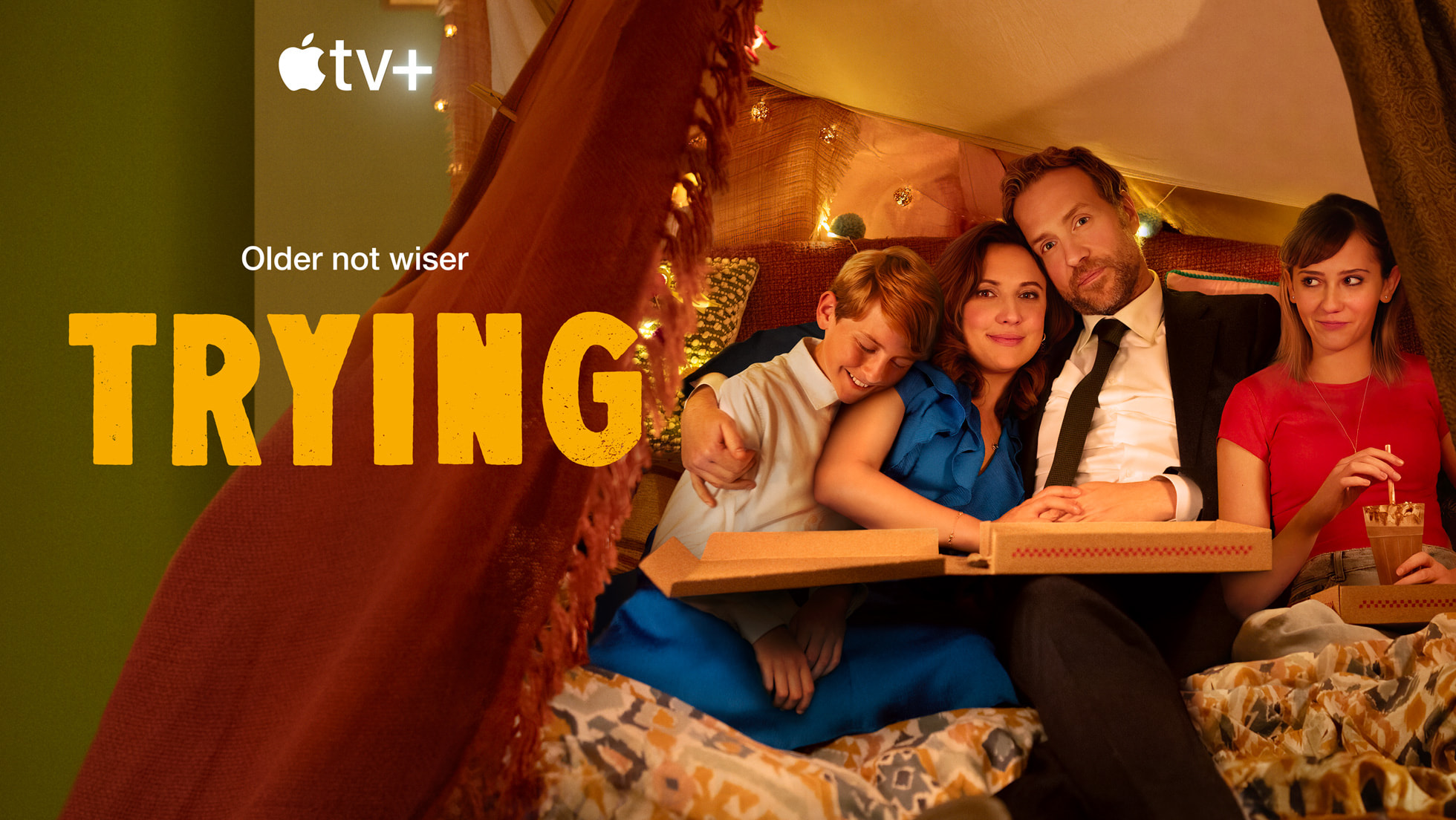
Trying (Apple TV)

There’s a particular flavor of social awkwardness or social strife in shows and movies that hits me hard in a weird squirmy spot a little below my diaphragm. It spreads from there, worming around inside me, usually moving upwards. It’s a profoundly distressing and uncomfortable experience, and it happens most often in certain kinds of dramas, social comedies, or romances.

This experience has been with me since I was a child. I can still remember wriggling in my seat on the couch while watching movies, turning myself upside down and standing on my head as I tried to untwist or escape the awful tension inside me. I haven’t yet learned precisely what kinds of awkwardness and strife cause this, perhaps because I try to avoid the experience as much as possible, but it crops up time and again.

Unfortunately, Trying hit that spot.

That’s too bad, really. I thought the first episode was consistently funny, even as it teetered between sweet and almost-painful in that squirmy way. If the second episode hadn’t hit me so hard, I think I would have continued really enjoying the show. Let me explain:

Continue reading

Expectations and Avatar: The Last Airbender

Last week I posted about expectations and Masters of the Air. I skirted around something similar in my previous live action Avatar: The Last Airbender post but, having now finished the first season of live action A:TLA, I’m going to say it directly.

This show suffers greatly from my expectations. If I’d never seen the animated show, I’d be more excited about this live action version. I also just rewatched some of the animated A:TLA because I feared that my memories of it might have been too fond, and…

Continue reading

The Only* Live Action Avatar: TLA (Netflix 2024)

*Let’s not talk about the movie

This adaptation can’t exist independently of the animated version for me. My familiarity with and love for the animated show clouds my judgment. I don’t think I can just call this show bad, because I’ve really appreciated parts of it, but I also can’t say it’s good.

I don’t like this live action Avatar: The Last Airbender as much as the animated version, for a number of reasons. The two shows feel like two different interpretations of the same starting material, and while I can see why the live action version made at least some of the choices it did, I think some of those choices will rob the show of its dramatic potential down the line. If you’re still on the fence about watching this version of Avatar, let me temper your expectations and tell you what I’ve enjoyed… as well as what I haven’t.

Oh yeah. I’m going to spoil this show. If you haven’t seen the animated version already, do yourself a favor and watch it.

Continue reading

Monarch (Apple TV 2023), update

Turns out the third episode was perfectly placed to build up my impression that there wasn’t enough character development or emotional grounding going on in the modern day storyline. I’m not going to edit my review, but

Continue reading