Sick baby part dunno of lots, 12/4/25

Once again, I am taking care of a sick baby. This time he’s less sick! By that I mean that he’s less sick than he has been in the very recent past. He was rocking a worryingly high fever until yesterday. It had just been climbing and climbing despite our best efforts. Yesterday we returned to the doctor’s office, got a solid reassessment, and were prescribed antibiotics (which Gibby has been doing his best to spray into my face while I dose him). Now his fever has dropped significantly and he’s merely hungry, sleepy, poopy, sometimes cranky, and full of head-gunk.

I’m not caring for this sick baby alone, thank goodness. Ley and I have been swapping off or stepping in for each other as extra support. I have come to feel, however, that the nuclear family model is designed to break you. A mere two adults caring for a sick baby—with baby-induced terrible sleep and everything else—is a recipe for suffering. It’s a recipe for suffering even when those two adults take time off work. There really ought to be two to four more people on call all the time so that people can sleep, or do anything other than care for the baby. Even one more person would be a big help.

I’ve had these thoughts before.

We might have been able to avoid this fever if we’d found a better way to manage his congestion from his fever two weekends ago. He produced lots of snot while fighting that (milder) fever. That was good, mucus helps! He didn’t manage to eject all that mucus though, and his resulting congestion likely fed his current ear infection—in other words, his body’s healthy reaction to the previous virus created fertile ground for this bacterial infection. Next time he gets snotty and feverish, we’ll need to find more ways to help him drain all the mucus instead of allowing it to linger and get infected.

Giving thanks, 11/27/25

I exist because strangers chose to welcome my ancestors and care for them. That willingness to welcome others, to provide for outsiders and see them through hard times, is something that I feel deeply grateful for. Whenever I hear people speak of Thanksgiving, I am reminded of these things. I am humbled and inspired.

Thinking with appreciation and humility, how have others helped and welcomed you or your ancestors? How can you offer help and welcome to others going forward? A door was opened for you or your ancestors—you were helped through hard times, or given an opportunity, or saved when life looked grim. What can you do to open that door for others to come?

Who may yet become your family?

We are all strangers to one another, until we are not. 

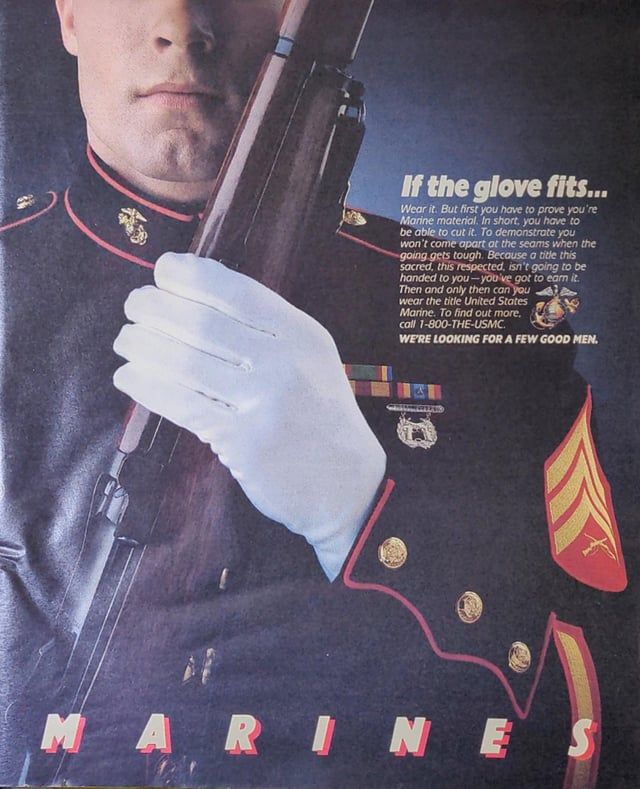
Boots, halfway through: A Marine-shaped box

The less morbid option for a Marine-shaped box

I’ve watched more of Boots, finishing episode four and just barely starting episode five. The show’s message feels clearer now. My initial curiosity is congealing into grim resignation.

Boots isn’t bad. It’s well crafted. The character portrayals and overt construction of masculinity that piqued my curiosity still remain. I can still enjoy picking through and examining them. I can enjoy stripping them for parts.

The show isn’t bad/wrong, the storytelling isn’t bad/wrong, but I like Boots less now.

Why?

Continue reading

Have baby, still sick; 11/13/25

I have a piece in the works revisiting Boots, but I’ve been doing extra baby duty this week and I’m well past the point of being sick for a month. You’ll have to wait a little longer.

Instead, please accept this (relevant) link to a video essay by Schnee about recognizing when and how you’re being propagandized. This is kind of a spoiler but I’ll be referring to Schnee’s video in that larger piece on Boots.

Does your game need more carrots?

The carrot is more effective than the stick. That’s especially true when running a game. In fact, failing to give your players enough carrots might cause them to lose interest and stop playing. But what makes a good carrot?

Continue reading

2/3rds through Cold Fire, by Tamora Pierce

I’ve gotten stuck.

I loved Tamora Pierce’s Circle of Magic series, her first quartet about Sandry, Briar, Daja, and Tris. I was eager to read the next quartet. For the most part, I still am.

I breezed through the first two books in this quartet. Sandry’s book (Magic Steps) and Briar’s book (Street Magic) both went by so quickly that I nearly inhaled them. Daja’s book, Cold Fire, has really slowed me down.

I try to find times in the day when I can sneak in a little bit of reading. Often enough this ends up being at night while I’m lying in bed. I’ll read a chapter, then set the book down. Except with Cold Fire reading a chapter leaves me feeling sick to my stomach. Stopping there doesn’t help.

I’ve discovered the hard way that I find it difficult to read a story about arson, especially when lives are lost.

Continue reading

Boots (Netflix 2025)

I’ve seen the first episode of Boots, and I have mixed feelings. 

I’m not sure how to engage with the show. It’s the sometimes funny, sometimes awful story of a young gay man named Cameron Cope who joins the Marines (in 1990, when homosexuality in the armed forces was still criminalized) without really knowing what he was getting himself into. Boots is based on the book The Pink Marine by Greg Cope White (no relation to the best of my knowledge), which is apparently a memoir of White’s own time in the Marines.

I’m unsure about Boots because I’m not sure what Boots is trying to say, or what conclusion it’s reaching towards. Does it have a negative message about being in boot camp as a young gay man in 1990? Does it have a positive message about that?

Is it both?

Continue reading

The Harm Machine

We are building a harm machine.

The harm machine is growing, and it is hungry. It needs people. It eats them.

Continue reading

Untitled, 10/9/25

I feel sick. I know what my country is facing. I know what is happening in my home, my homeland, my America. I see this administration wielding the truncheon of “law and order” eagerly, craving any response that will let the insecure and desperate men at the top (and all the way down) feel like big fucking heroes as they club down their fellow Americans for daring to disagree. I see them chasing those who aren’t white, who aren’t Christian, claiming that they’re chasing those who aren’t “American” while they draw an ever smaller circle around what it means to be American. 

My family comes from all over. Most of them are American citizens. I know that won’t matter when the administration’s circle slips a little tighter again, like a noose around our country’s neck. They’re going to go after my family, sooner rather than later.

Continue reading

Rewatching Ted Lasso S1

I feel more complicated about the character of Ted Lasso as I rewatch this show. For one, as Ley says, his vibe is very much Manic Pixie Dream Coach. More importantly, I feel as though early on the show distracts from Ted’s flaws because he means well and is the protagonist… and I feel grumpy about that.

I see more of Ted’s shadow (to borrow from Jung) coming to the fore as I rewatch the show. The first time through, I was just keeping up with the writing and admiring the show’s construction and delivery. This time, I have the chance to pay more attention to what’s going on, and to notice the elements that are clearly laid out and planned for later exploration.

It’s a well-written show. Ted is a well-written character. He’s flawed, though we don’t explore that as much in the beginning of the show. He’s admirable and likable in his attempts to catalyze the personal growth of the members of his team (along with everyone around the team), and to drive their transformation into a mutually supportive whole.

In pursuit of that goal he also transgresses or ignores people’s stated boundaries while ‘trying to make things better.’ His transgressions felt off the first time around. They feel more insufferable on a rewatch.

The first example that springs to mind for me is how Ted explicitly ignores Rebecca Welton’s stated preferences when he promises to show up again the next morning despite her saying that he shouldn’t. It’s a small thing. But this small thing is done with a powerful “aw shucks I’m just trying to do right by everyone” attitude, a real “I’m a nice and earnest guy” vibe… and that attitude plus the show’s narrative focus on Ted as our protagonist blurs Ted’s transgressions into the background. 

Maybe Ted is oblivious to the ways he’s transgressing. I think I could empathize with that Ted more, even though it would still feel painful to see. But I don’t think he’s oblivious, at least not with Rebecca—he responds (in)directly to Rebecca’s request by saying that he won’t honor it. And the show validates his actions.

I know how well things will go for Ted. I know how his efforts will ultimately pay off for himself and those around him. The show might not hide that Ted is doing something disrespectful, but it certainly slides it to you in a shit sandwich with such a smooth delivery that you could blink and miss it. We’re also given a brief glimpse of Ted’s relationship with his wife that strongly implies that this sort of behavior is not exactly surprising from Ted—and yet that moment is used mostly to build emotional depth and vulnerability for Ted, rather than to point out that he might have a pattern of self-sabotage via transgressing boundaries. That makes his other boundary transgressions all the more painful to me.

Maybe I’m more sensitive to this because I know more now about Jason Sudekis’s personal life around the time of making Ted Lasso. There are some painful parallels, complete with separation and custody conflicts as he and Olivia Wilde parted. In some ways, Ted is Sudekis’s chance to tell his version of his story, to portray the best version of his story and make himself a victimized tragic hero. No doubt these parallels help Jason Sudekis play Ted Lasso (his own life mirrors his art, he can bring all those pieces to his portrayal of the character!). But I think he’s too close to the experience and too caught up in it—Sudekis’s portrayal of Ted (specifically in the third season) feels more like a polemic or like self-soothing rather than an empathetic nuanced exploration. Worse, these similarities makes the show’s blurring of Ted’s flaws feel bad in a self-indulgent way.

Now, none of this makes the show bad. I still love Ted Lasso. I still think it’s extremely well-written and well-executed. My love for it from four years ago remains. If anything, I’m more impressed by the ways in which the story’s foundations were laid so long in advance. And I’m also finding the ways that it lands differently as I rewatch it.