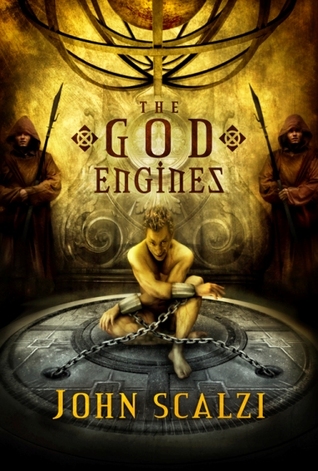
The God Engines, by John Scalzi

6470498

My apologies for the brevity of this post, I’m writing with an odd tremor in my left hand and that’s throwing me off.  Anyway…

If you’ve read my previous reviews of Scalzi‘s work, you’re already familiar with how much I love it.  There’s something about his style that I find captivating, perhaps unreasonably so.

The God Engines is no exception to my love for Scalzi’s writing.  It features space travel powered by faith and subjugated gods, and eschews many of the “upbeat” qualities (for lack of a better word) that I’ve come to recognize in Scalzi’s other pieces.  It’s short, sweet, and ultimately horrifying, and I would happily recommend it to anyone who would like to read about holy war in space.  Having just written that, yes, the setting does feel a little like Warhammer 40k, but not quite in the same grandiose grim-dark fashion for which 40k is pilloried.  I don’t want to say any more that might accidentally spoil sections of the story for the especially perceptive, I’ve already had to rewrite this bit several times to cull possible references to spoiler material.

Also, well done Scalzi for writing an entirely genderless character.  I’m not sure I understand how they fit into the larger scheme of things that you devised for this setting, but they felt wonderfully human in a way that some might have ignored.  And while I loved the appropriate ending of the story, I was sad that it meant that I wouldn’t get to learn more about the world that encompassed all these wonderful and terrible things.  I suppose that means you hit the perfect length for the piece.

I really liked the fact that no character felt like they were entirely “good.”  Some were certainly more sympathetic than others, but mostly people seemed very human: they wanted, they feared, and they cared (or didn’t) in ways that pulled me into the piece.  It never felt like we went very deep with any of them, perhaps due to space restrictions, but I got enough of a sense of them to feel connected before the end of the book.

Would I recommend this book?  Yes, definitely.  It’s short, it’s an easy read (I went through it in one sitting), and it’s a lovely look at a frightening concept.  It’s a quick piece of horror writing done well.

p.s. Oh, and here’s Scalzi’s favorite negative review of The God Engines.  It’s pretty good.
Behind the scenes of the new campaign…

Monday’s post gave a taste of the game that I’m preparing, but didn’t go into any details about what would follow.  That was intentional.  If there’s any chance that I’ll run this game for you, I strongly suggest that you don’t read what comes after the break.  If you want to see some of what I’ve come up with, and maybe a bit of how I came up with it, read on.

Continue reading

A new campaign in the works…

This post is only going to include non-spoiler material, appropriate for the opening of the game.

You (the players) are the King’s officials, expected to enforce his decisions, act in his interest, and carry out his wishes in the wider Kingdom.  Mostly drawn from the wealthy and noble classes, the King’s officers are expected to outfit themselves out of their own pocket and see to their own expenses.  There are always a few exceptions to the norm of “wealth and privilege,” since an individual’s skills and qualifications for this particular job are far more important than their bloodline, but exceptions are likely to have an interesting story for how they became one of the King’s officers without the usual entrée.  In many ways, you might think of the King’s officers as Musketeers with a little less in the way of Alexandre Dumas.

The game is set in the Kingdom of Duval, and begins with the players being sent from the capitol city of Duval to the backwater county of Mont Mondal.  Count Xavier of Mont Mondal was recently imprisoned for treason against the throne, when he broke his oath of fealty.  He was executed along with many of his closest companions, and the executions have created quite a disturbance at court.  One of his companions, the wizard Castanedra, fled back to Mont Mondal on the same night that Xavier was taken prisoner: you and your compatriots have been tasked with capturing her and returning with her in your custody.  You have also been instructed to raise the county’s levies and send them to the capitol, to join with King Mander’s other forces already mustering for war against the Kingdom of Meius to the east.

While thoughts of war on the nearby eastern border weigh heavy in everyone’s mind, how are you and your companions going to run this powerful wizard to ground and bring her back to Duval?

Other things that people from the Kingdom of Duval would know:

-Meius and Duval share a border that runs through an agriculturally rich valley.  North and south of the valley the terrain becomes increasingly hilly and mountainous, leaving only one clear passage between the two kingdoms.  While the kingdoms have a long history of trade with each other they’ve recently suffered through a series of trade disputes and feuds, and there are now frequent border raids which have further angered each side.

-Count Xavier (that’s pronounced “Sh-avier,” more or less) had a meteoric rise to match his catastrophic fall.  He was ennobled and granted County Mont Mondal a little more than ten years ago, and he and his companions were widely recognized as having done a great deal to make Mont Mondal actually livable for Duvalians.  Xavier and his companions drove out a large clutch of magical aberrations which had claimed the land as their own, and then kept the local bandits in check.  While his breaking of his vow of fealty clearly put him in the wrong, some people have even gone so far as to say that they wish the king hadn’t had Xavier and his companions executed for their treason.  Not that they’re likely to have said as much to the king.  The king, after all, is known to have a bit of a temper.

-The city of Duval is slowly being surrounded by the many thousands of soldiers who have answered their liege-lords’ calls.  The various levies have been joined by a few mercenary companies looking for work, and their spirits are high as they prepare to fight against Meius.  The king’s armies only wait for a few more levies (like those of Mont Mondal) to join them before marching against Meius in the east.

Fury should be called Trauma

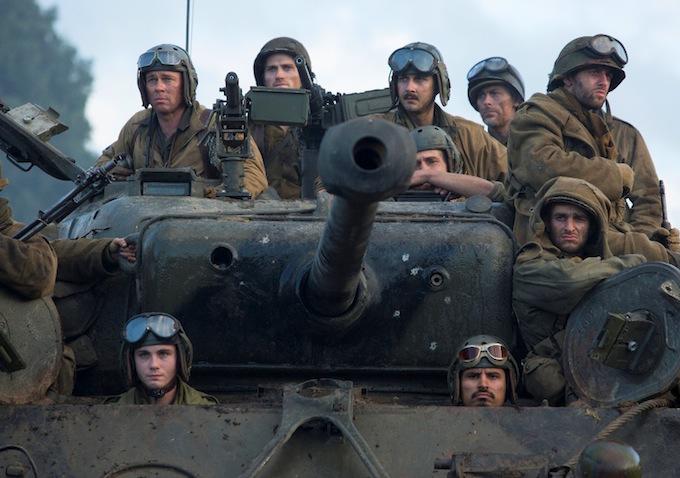
Brad-Pitt-Fury-Tank-Like a clown car, but with less comedy and more violent death.

War movies, in my mind, must tread a very fine line in order for me to consider them good.  I prefer for them to leave out bombast and propaganda, and I dislike seeing filmmakers pretty up what I regard as a fundamentally brutal and painful exercise in destroying human life.  To quote Robert E. Lee, “It is well that war is so terrible, otherwise we should grow too fond of it.”  I don’t feel comfortable with anything that purports to show real life also showing war as a ‘good’ thing.  At the very least, it should be problematic and leave you feeling conflicted.  The problem, of course, is that if the film doesn’t also tell an engaging story few will go and see it.

I also recognize that I have very different expectations and desires for what I’ll call “action movies,” and I’m somehow more ok with an action film showing combat and war in a more glamorous or unrealistic light.  The recent A-Team movie, for example, totally ignores many of the realities of war and combat (and physics), and I was ok with that.  Some old WWII movies (like Where Eagles Dare) fall into the same category, though they seem to do a far worse job of overtly signaling their lack of contact with reality.

When I saw it, I wasn’t entirely sure where Fury stood with regards to this distinction between ‘war’ and ‘action,’ and that left me uncertain of how I should feel.  As you might guess by the title of this post, much of the movie delivers an intensely traumatic view of the war… no, that’s not quite it: the movie follows a group of men who have been as traumatized by the war as seems possible, without having them break.  Even that may be pushing it, since the men certainly seem broken when you look at them more closely.  They’re just still able to do their job, which is killing others before others can kill them.  This, in my mind, is part of what makes it such a good war movie.  But I’d be remiss if I didn’t mention that Fury does have an odd change in tone at one point.  It’s almost as though it consciously tries to straddle the divide between ‘war’ and ‘action,’ and suffers for it.  This doesn’t make it a bad movie, but like I said above, it does leave me less certain of how I should feel.  I’ll give you more about this (and some other non-spoilery things) after the break.

Continue reading

Whoops! There’s been a delay.

Sorry friends, I’ll have a post for you some time tomorrow.  Or maybe Friday.  I’m visiting with my mother and step-father, and my time has been pretty well filled.  When I do return, it will be with a review of Fury.  Have fun in the meantime.

Gravity Falls: X-Files for kids, Comedy for adults

Gravity-Falls-Wallpapers-gravity-falls-27881924-640-480

I just spent much of Saturday evening blazing my way through Gravity Falls, Alex Hirsch‘s absolutely wonderful cartoon series.  Gravity Falls was first described to me as “like The X-files but with kids in rural Oregon,” which does a decent job of introducing it.  That also puts it dangerously (tantalizingly?) close to Twin Peaks territory, but fails to convey just how damn funny the show is; I was chortling the whole way through, and would happily watch many of the episodes again (a rare experience for me with most TV shows). There’re still many more episodes for me to watch, and I honestly can’t wait.  I might take a break from writing this just to watch the next one.

So yeah, Gravity Falls is what would happen if you mashed Twin Peaks and the X-Files together in a hilarious and intelligent kids show.  It chronicles the summer adventures of Dipper and Mabel, a pair of twins who’ve gone to spend the summer with their great-uncle (Grunkle) Stan.  They live with him in his house / Mystery Shack tourist attraction, and have the dubious pleasure of working for him while they try to enjoy their summer in the bizarre town and its even stranger environs.

They must face boredom:

series.828.IMAGEN4

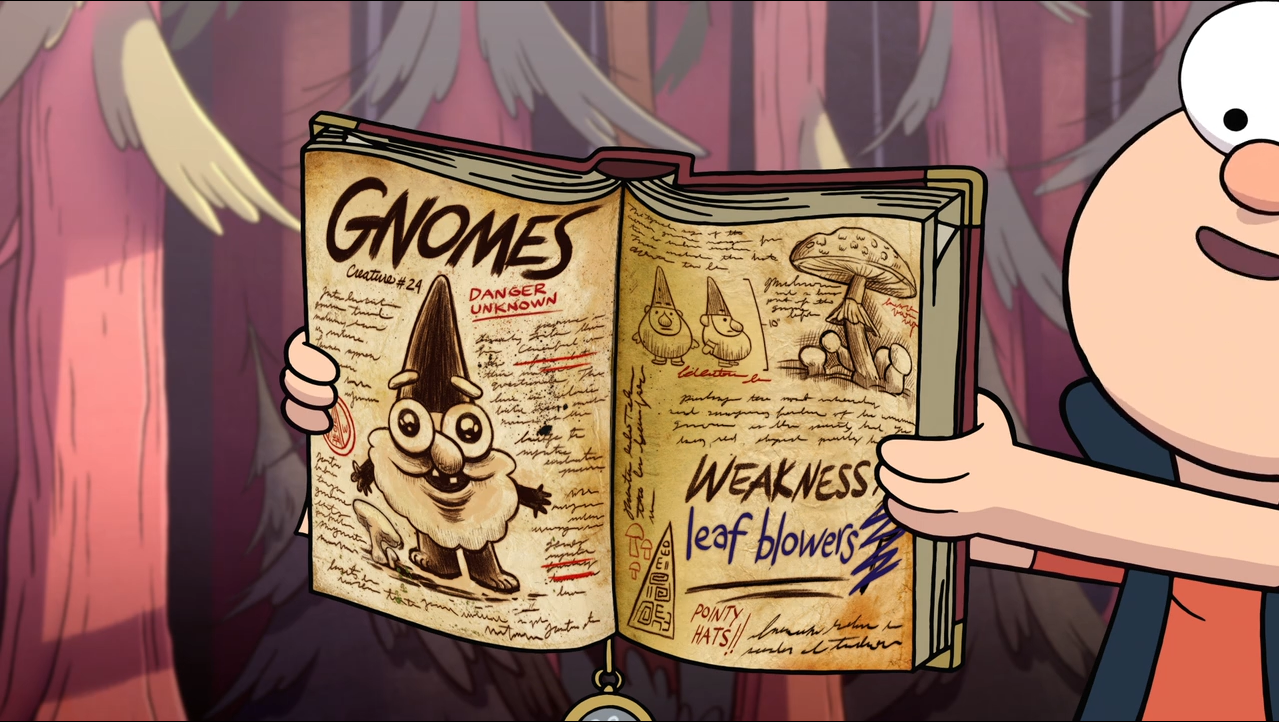
Beasts:

S1e20_The_Gnomes!

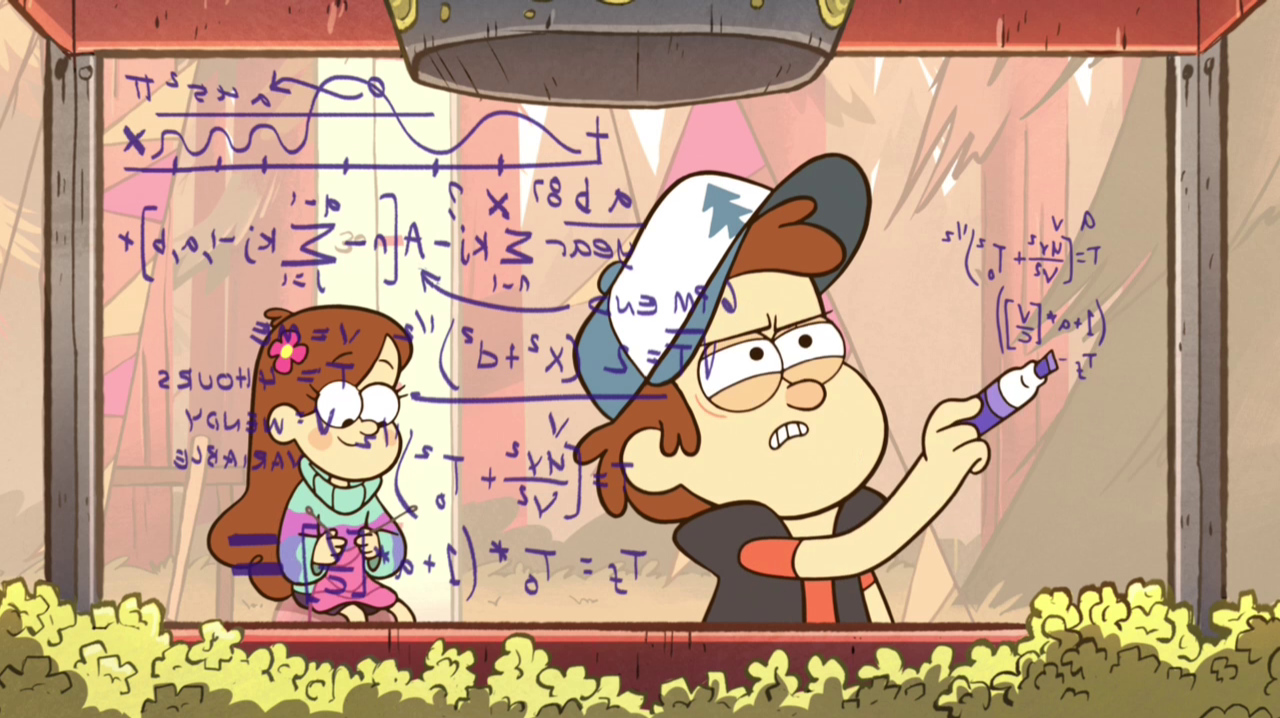
And popcorn-machine math:

S1e9_dipper_doing_math

What’s not to like?  And yes, I did just watch another episode.  Honestly, if you’re at all interested in smart animated comedies, you should give Gravity Falls a look.  It’s definitely a kids’ show, but like the best kids’ programming it uses that as a vehicle to go deeper than you’d expect, instead of holding back.  Despite the innately fantastical nature of the show, it still feels like a very real depiction of the emotional lives of its protagonists, and it doesn’t shy away from the realities of social pressure for impressionable youngsters.  Now, if you’ll pardon me, I really want to watch another episode.

Agents of SHIELD = Lazarus?

shield

If you read my previous posts about Agents of SHIELD, I’ll forgive your surprise at seeing another one.  It would be a bit harsh to say that the show should have been buried after the end of last season, but it certainly feels like the show was killed and resurrected in time for the beginning of this new season.  Though we still see many of the same people on screen, this show feels wonderfully new and different, perhaps even reborn.

Stepping back for a moment: the first two episodes felt considerably better than season one’s, but they were limited by their need to establish the transition away from season one and it wasn’t until episode three that I was really sold.  In this case, “sold” includes me cackling and clasping my hands in glee.  There have been better and worse parts of the episodes since then, but they continue to leave me excited.  It’s almost a shame that season two builds so much on the context created in the first season, because you’ll have to watch the first season if you want to really know what’s going on between the characters.  I mean, maybe you could get by without it, but you also might miss a good deal that is simply referenced in passing.

You know, I feel vaguely prescient.  When the show started up last year, I said this:

Agents of SHIELD doesn’t occupy that category of stellar TV shows which are unassailably good right off the bat, but it seems to me that the foundation is being laid for a much longer story which should gradually grow in complexity and appeal.  To be honest, I think I may prefer it this way, provided it pans out: a carefully designed and cultivated story that grows into an excellent favorite would be much better than something that starts off promising only to go sour.

I didn’t think that I’d nearly abandon it before it improved, but all’s well that seems better at the beginning of season two, right? I’m sure that’s how that quote is supposed to go.

So, there’ll be no spoilers or anything else like that in this post.  I just wanted to say that, in case you dropped it in distaste at the end of last season, you may wish to give SHIELD another chance.  At least for a little while, until I have the chance to change my mind again.

The Restoration Game, by Ken MacLeod

18lq6wx6x76xmjpg


Eastern European politics (both Soviet and post-Soviet), color revolutions, spy games, long hidden family secrets, and a quiet sci-fi premise?  Sign me up.  Ken MacLeod‘s The Restoration Game gives all of that, plus a little bit more.  Maybe that’s why I liked it so much.

It’s a quick read, with an engaging and easy-to-follow female protagonist who, as the story unfolds, comes to feel like the appropriate scion of all those who’ve come before her.  I’ll explain that, I swear.  The book gets bonus points from me for having a female narrator; I’m writing a piece with a teenaged female narrator (as I’ve mentioned previously), and everything is grist for the mill.  And I should note that while I quite liked Lucy’s narration in The Restoration Game, I’d love to hear women’s opinions of the narrator’s experience and voice in this book… I don’t exactly have a good frame of reference by which to judge it.

About that scion comment: our protagonist, Lucy Stone, opens the story with a cliffhanger and no context.  It works well, catching you quickly and pulling you in, and then the entire book becomes an extended digression to give the context for that scene, only finally reaching resolution (appropriately enough) at the very end of the piece.  At the beginning, you have no idea of what Lucy has been through, what her family history is, or what she is capable of… but by the end, things fall wonderfully into place.  It’s wonderfully done, and flows smoothly from start to finish.

Ok, that wasn’t quite right.  There’s still that initial sci-fi premise, right at the very beginning of the book before Lucy ever has a chance to speak, and I bounced off it the first two times I opened the book.  It wasn’t bad, it just wasn’t what I thought I’d set out to read and wasn’t nearly as interesting to me at the very beginning as it was by the very end.  After some reflection, I think MacLeod placed the introduction of the sci-fi premise correctly; there really isn’t a better place to put it that makes more sense and doesn’t disrupt the story further.  Without that initial introduction, later elements of the book would make very little sense and feel insufficiently well signaled (here we are back at the perils and prerequisites of good foreshadowing).  MacLeod clearly set himself a difficult project, possibly without realizing that he was doing it, but I think he managed to do a good job of it.

It looks like this post isn’t even going to have a break.  The Restoration Game is fast enough and internally intricate enough that I don’t want to ruin anything for you by accident, so I won’t bother with the usual danger of discussing potential spoiler material.  Suffice to say that it’s a good book, one worth picking up for quick fun, especially if you’re interested in a jaunt through spy games and epistemological thought experiments.

Last Days of Loneliness, a YA horror story pt. 3

This is yet another post about the YA horror novel I’ve been working on, which I roughly outlined here.  Last time I gave you the very beginning of the story (which I’ve already altered again); this time I’m going to give you the very end of the story.  This ending will undergo further changes: I already know that I need to decide whether it makes sense to have italicized thoughts-of-the-moment within the narrative, and if I like them, decide how to alter other story sections to incorporate them holistically rather than as a last minute deal.

Here’s the action climax:

Continue reading

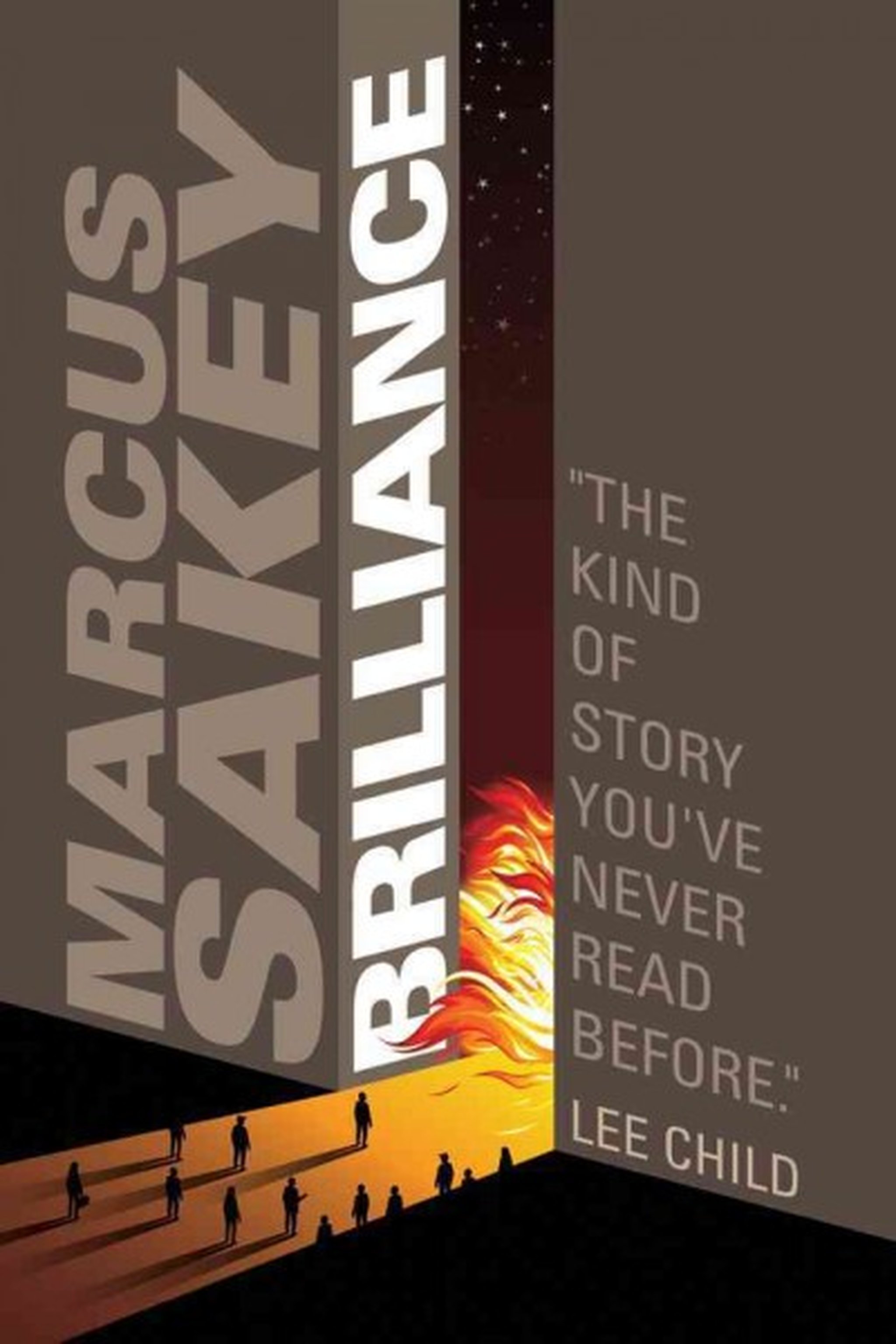
Brilliance, by Marcus Sakey

9781611099690_custom-9ba9bdb4ab35cd10ff6b1ac6d3ca5b74c98bf343-s99-c85


In my case, Lee Child’s cover blurb is highly inaccurate.  Assuming that he includes himself in the group he describes, I’d guess Lee Child hasn’t read many superhero stories; he certainly should be familiar with a number of the other elements involved in Sakey‘s Brilliance.  The book is an excellent combination of superhero fiction, “spy” thriller, and semi-dystopian intrigue, and while I haven’t read many books that combine all of those elements at once, I’m certainly familiar with each of them individually.  That familiarity leaves me well positioned to appreciate the skill with which Sakey unwinds his plot.

The story is set in a world in which some people (1% of the population, more or less) are extremely capable at pattern recognition, generally focusing on a specific subset of their environment.  Our protagonist, for example, is able to read people’s immediate intent through their body language, making him fabulously good at telling where people are going to move within the next few seconds, and at telling whether or not someone believes what they are saying to be true.  This basis for superpowers is simultaneously remarkably constrained and very wide-ranging.  It doesn’t make people superhuman in immediately noticeable ways, and Sakey does an excellent job of keeping to his original concept without breaking the plausibility of the setting.

This is a fast and fun book, and an easy read.  The main character is a quintessential representation of The Man, and the story offers pulpy action goodness, with a thick helping of intrigue, implicit duplicity, and lies.  If you enjoy quick reads that deal with a moderately dystopian alternate present filled with superhumans who are indistinguishable from the rest of us, and all the problems that entails, then I suggest you pick up this book.  You may want to pick it up even if those keywords don’t set your Must Read alarms buzzing, but I’ll save any more description for after the break, where I keep all my spoilers.

Also, just to warn you, this book definitely deals with racism and the abuse of authority.  I think it does it decently, you may think differently.  I don’t think you’d mind it, Stephanie, but I also don’t know that you’d identify with the narrator at all.

Continue reading