Lion’s Blood, by Steven Barnes

I wish I’d heard of this book years ago. I think it’s incredibly important, and I wish that it weren’t.  Why?

It is so easy, as a white man, to think that you understand troubles that others face, to think that you have read and spoken enough about a given issue to feel like you know more or less what’s going on, and why people feel and think the ways that they do.  In many cases, you have to actively search out conflicting points of view and other narratives in order to prove otherwise, and why would you bother doing that when you don’t know about them in the first place?  Why bother when you think that you’ve already got a good grasp on things?

In Lion’s Blood, Steven Barnes takes a fundamentally simple concept and uses it to explore a number of things… it’s quite simply a good and fun (if painful at times) book.  But the reason that I think it’s important and wish that it weren’t is that it confronts head on that feeling of complacent surety, the comfort of thinking that you know enough about historical (and modern) problems and don’t have to look deeper to examine your own place, your own implicit beliefs.

Lion’s Blood posits a world in which Africa rose to prominence, rather than Europe.  A world in which the slaves working the fields of the New World are white, taken from their tribal villages to work the fields of rich Muslim landowners.  Steven Barnes tells a familiar tale here, with a narrative that feels comfortably close to our expectations, but it’s one in which all the cultural and ethnic trappings have been inverted from our standard expectations.  And somehow that inversion was enough to shake me out of my “ah yes, this story again” complacency.  Better yet, it drove home yet again the violence done to people through the institution of slavery, and (I think) might help to wake some up to the systematic oppression which slavery engenders in a society.  And, of course, it tells an excellent story, one well worth reading.

Look.  I don’t want to ruin this book for you, so I’ll put it like this: this book is sad, tragic, and uplifting; this book is a marvelous adventure story; this book reminds you of why our current society is so screwed up in so many ways, as we deal with the toxic legacies and variably covert attempts to continue the oppressive power struggle at the heart of slavery. I’m deeply impressed.  I want my own alternate history to be as good as this book is.

P.s. I found Lion’s Blood on this recommended list of books by writers of color.  I intend to go back and find more to read, and would suggest that you do the same.

Tidbits to tide you over

Hello everyone!  This week I’ve set aside time to spend with my brothers, which means lots of role playing games and storytelling and laughter and yelling (also probably more food and booze than usual).  But because of all that, I’m unlikely to have much for you here.  I’m certainly unlikely to have full-scale reviews or such.  I’ll return with the usual stuff by next Monday, no worries.

But while I’m not writing as much about things, here, have a few tidbits!

Dying Light is a fascinating game: it has gameplay that I find fun and engaging, but a story and characterizations which so far repel me.  It is definitely fun playing with other people, running around the zombie apocalypse at high speed, leaping from building to building, and getting lost in the warrens while hungry monsters chase me.  But every time the story progresses, I shudder and feel that ugly cold spot in my belly; why the hell does the POV character have to be a tool?  Why do they have to make the villain choices they do?  Why did they think the misogynist themes would be worth including?  Why do I feel certain that the “strong female character” they’ve created is just going to be damseled within the next few missions?  For that matter, why are there two or three women survivors in the tower, and everyone else there that I meet is male?

As someone who loves and is fascinated by stories, I’ll probably keep watching the story cutscenes all the way through.  But that may just make me angrier and angrier about their writing choices.  It’s a good thing that the cutscenes are skippable and basically won’t matter in the long run.

On the other end of things, we have Lois McMaster Bujold’s Mirror Dance, which I just finished.  The first time that I picked it up I bounced off the main character’s narration (a first for me with any of Bujold’s books).  But when I started it this time I fell in and couldn’t climb out… which is about what I expect from Bujold at this point.  She really is fabulous.  I’m going to leave my paeans of praise for another post, when I can give this book it’s due, but if you like the other Vorkosigan series books be sure to keep at it with this one, even if the start is a little disorienting.  It’s worth it.

Okay, that’s all for now.  Enjoy yourselves.

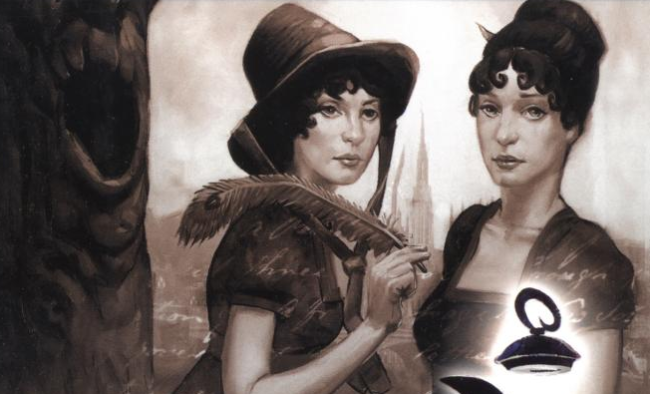
Won’t Break Your Heart: Sorcery & Cecelia, by Wrede and Stevermer

sorcery and cecilia 650

I hadn’t quite expected this to be so good.  In fact, I futzed around and failed to really start it for about four weeks (or maybe longer).  But there was some point, maybe around page 80, when I seem to have flipped a switch; suddenly all I wanted to do was finish the book.  It’s lovely and wonderful, and I would certainly recommend it to pretty much anyone who has any interest in epistolary novels, or female protagonists in post-Napoleonic Wars England, or magic, or even just fun stories.  To be clear, given how readily I’ve bounced off of other similar characters before, I had no idea how much fun they could be.

Sorcery & Cecelia (which I have learned, much to my delight, is part of a series) was written back in the 80’s as a Letter Game.  Patricia Wrede and Caroline Stevermer decided to write letters to each other in the voice of their two respective characters, relating gossip and intrigue, and telling each other about the fabulous and exciting things which they were each getting up to.  When they’d finished their game, they looked at their collection of letters and realized that they’d basically already written a novel.  With some editing for details, continuity, and pacing, they found that they had a perfectly acceptable manuscript, and then managed to get it published.  I am exceedingly glad that they did.

Look, I don’t want to ruin any of the book for you by mentioning things.  Suffice it to say that the two main characters’ adventures and intrigues make excellent reading, and Kate and Cecilia are absolutely brilliant as heroines who must vanquish their antagonists, while carefully acting within the constraints imposed on them by society.  Do yourself a favor and pick up this book.  It’s really quite good.

p.s. Thank you to the visitor who recommended this to me one morning in Mama Dorr’s kitchen.  I wish I could remember your name to thank you properly, especially after the excellent conversation we had about epistolary stories and your research into the subject. [Edit: The visitor was Naomi, but I appear to have misattributed the recommendation!  It was still an awesome conversation, but Thomas may have been the original source.  I might manage to get to the bottom of this.  Maybe.]

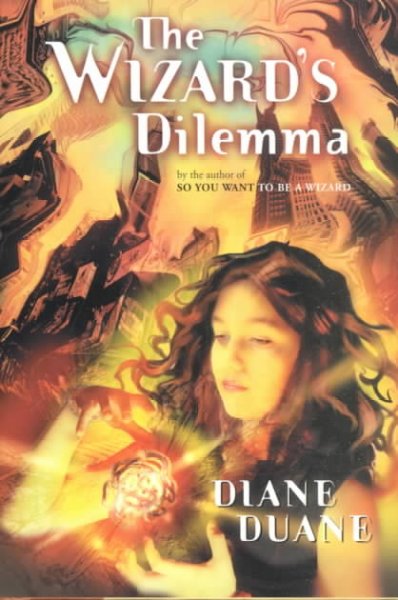
The Wizard’s Dilemma, by Diane Duane

JacketWelp, this one took me a long time to finish.  I’m still not quite sure how that happened.  Part of it was that I started the book while I had far too many things on my plate and thus got distracted.  But part of it was that at a certain point in The Wizard’s Dilemma, I felt like I could see where all of the pieces were, where they needed to go, and had a pretty good idea of how they were going to get there… and I really wanted them to just be there already, instead of making me wait.  I suspect that this is the price I pay for reading so much.  Or perhaps for being impatient.

It turns out that I was right about most of those various story beats, but seeing what Diane Duane did with them was far more satisfying than what I’d imagined.  I probably should have seen that coming, given that I’ve read the earlier books in the series and know how good Duane is at her work.  Once I finally got over my block and moved into the last parts of the book, I didn’t want to put it down.  And then, of course, the climax made me cry.  Whatever the real reasons for my reading delays, I feel quite certain in saying that this was an excellent book, one worth reading, worth recommending, and one that leaves me wanting to read the next one in the series.  Just like the previous books in the series.  I probably could have seen that coming too.

So, why the heck did this book make me cry?
Continue reading

Unsounded: Way Better Than It Sounds

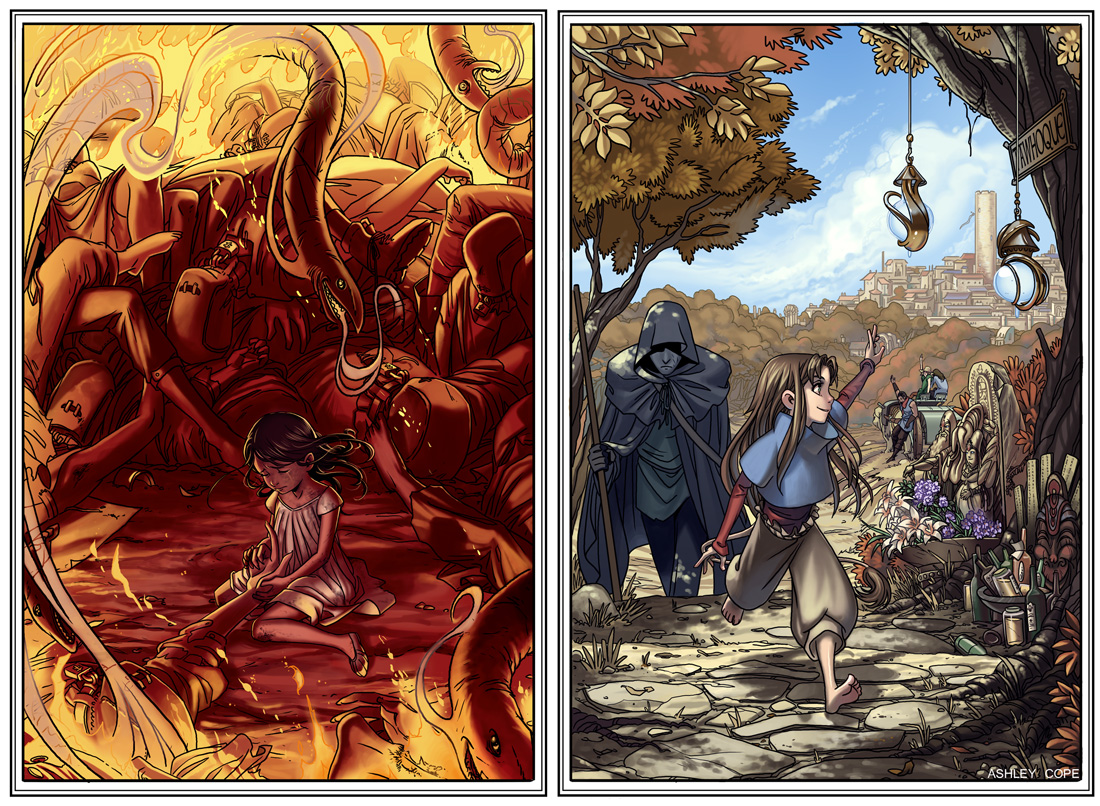
Unsounded_chapter_covers_by_ShardGlass

Ben, my housemate who hooks me up with many fine comics (along with the many other things they do), has pointed me towards Unsounded, a most excellent webcomic.  In addition to offering beautiful eye-candy (check out the designs for the covers of Chapters 2 [left] and 1 [right] above), this is a comic that already feels like a window onto a deeply thought out and well crafted world.  Maybe it’s only skin deep, but I doubt it.

Admittedly, I recommend this webcomic to you on the strengths of the printed collection of the first three chapters.  It’s remotely possible that there is some difference between the book and the webcomic version, perhaps simply in the act of holding the physical book in my hands, that changes how I feel about the comic.  Actually, if anything it would have to be the collected early sketches and two short stories added to the end of the book that would change my opinion.  But those only make me feel more certain that this is something deep and complex that I don’t yet know enough about to be able to appreciate fully… and I say that knowing that I already plan to read the rest of Unsounded’s archives.

So if you’re at all interested in reading about the stories of a young thief on a quest to prove herself to her crime lord father, and her magic-using zombie escort who’s been blackmailed into protecting her, then I suggest that you get reading.  Still not sold?  Let me put it this way: I have examined nearly every page I’ve read so far, looking at the little details, searching for another little hint, because I cannot kick the lurking feeling that I’m missing something that signals far more yet to come.  Ashley Cope has done a marvelous job so far of building a story world that all feels like it holds together, revealing new treats around every corner and hinting at far more yet to come, all without ever falling into the classic expository trap of telling instead of showing.  It’s worth reading just to see the quality of her craft.  Check it out.

p.s. I was planning to write up another flash fiction piece from the excess prompts that I generated before, but I haven’t gotten around to watching True Grit yet, and I really wanted to try combining The Matrix and True Grit.  Some other time.

Concept: A Tintin Adventure Flowchart

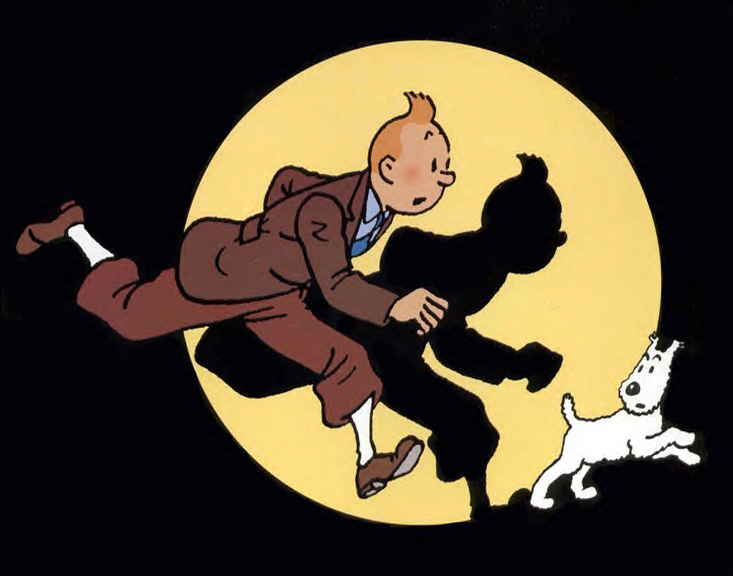
tintinI think I’ve mentioned my love of Tintin previously.  But I’ve just had a fabulous idea, so you’re going to hear about it again.

Some necessary background: Charles Stross wrote an excellent book, The Jennifer Morgue (part of the Atrocity Archives series, very much worth reading).  He based the story (careful, spoilers) on a combination of real world events and James Bond clichés, and did it excellently.  He did this in part by analyzing the Bond oeuvre (I suppose I should say the Fleming oeuvre, but Fleming really didn’t have that much to do with most of the movies) and creating flowcharts of Bond film opening scenes and general plots.

Yes, you read that correctly.  He watched all the Bond films with a friend and wrote up flowcharts to describe what they saw going on.  Here’s the flowchart of a Bond movie opening scene, and here’s the flowchart of a Bond film writ large.

Now, I love Tintin very much, but there are some problems with the old comics.  Consider:

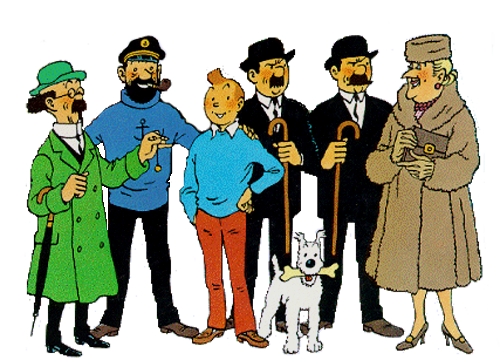
20140112153933!Tintin-mainCastI’m amazed that Castafiore is even included in the cast of characters.

Angry_King_in_Tintin

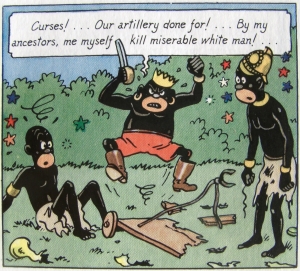
Yeah, that’s objectionable.

So I’ve been thinking that I should try writing new Tintin stories.  Well, not Tintin per se, but adventure stories like Tintin’s, without the same racist depictions and with better representation all around.  And Stross’ flowcharts have inspired me.  I plan to go through and re-read a number of old Tintin stories, and try to make a Tintin adventure flowchart that I can follow when the time comes.  It might turn out that this is impossible, and Hergé simply had too many different stories, but I suspect that I could pull something useful out of all this.  What do you think?  Are you interested?

The God Engines, by John Scalzi

6470498

My apologies for the brevity of this post, I’m writing with an odd tremor in my left hand and that’s throwing me off.  Anyway…

If you’ve read my previous reviews of Scalzi‘s work, you’re already familiar with how much I love it.  There’s something about his style that I find captivating, perhaps unreasonably so.

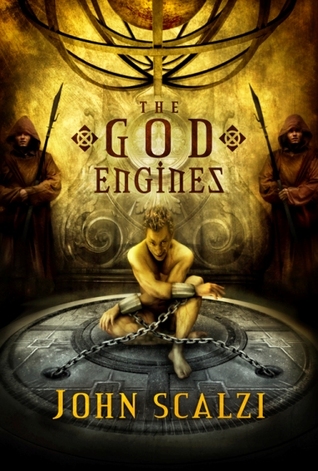
The God Engines is no exception to my love for Scalzi’s writing.  It features space travel powered by faith and subjugated gods, and eschews many of the “upbeat” qualities (for lack of a better word) that I’ve come to recognize in Scalzi’s other pieces.  It’s short, sweet, and ultimately horrifying, and I would happily recommend it to anyone who would like to read about holy war in space.  Having just written that, yes, the setting does feel a little like Warhammer 40k, but not quite in the same grandiose grim-dark fashion for which 40k is pilloried.  I don’t want to say any more that might accidentally spoil sections of the story for the especially perceptive, I’ve already had to rewrite this bit several times to cull possible references to spoiler material.

Also, well done Scalzi for writing an entirely genderless character.  I’m not sure I understand how they fit into the larger scheme of things that you devised for this setting, but they felt wonderfully human in a way that some might have ignored.  And while I loved the appropriate ending of the story, I was sad that it meant that I wouldn’t get to learn more about the world that encompassed all these wonderful and terrible things.  I suppose that means you hit the perfect length for the piece.

I really liked the fact that no character felt like they were entirely “good.”  Some were certainly more sympathetic than others, but mostly people seemed very human: they wanted, they feared, and they cared (or didn’t) in ways that pulled me into the piece.  It never felt like we went very deep with any of them, perhaps due to space restrictions, but I got enough of a sense of them to feel connected before the end of the book.

Would I recommend this book?  Yes, definitely.  It’s short, it’s an easy read (I went through it in one sitting), and it’s a lovely look at a frightening concept.  It’s a quick piece of horror writing done well.

p.s. Oh, and here’s Scalzi’s favorite negative review of The God Engines.  It’s pretty good.

The Restoration Game, by Ken MacLeod

18lq6wx6x76xmjpg


Eastern European politics (both Soviet and post-Soviet), color revolutions, spy games, long hidden family secrets, and a quiet sci-fi premise?  Sign me up.  Ken MacLeod‘s The Restoration Game gives all of that, plus a little bit more.  Maybe that’s why I liked it so much.

It’s a quick read, with an engaging and easy-to-follow female protagonist who, as the story unfolds, comes to feel like the appropriate scion of all those who’ve come before her.  I’ll explain that, I swear.  The book gets bonus points from me for having a female narrator; I’m writing a piece with a teenaged female narrator (as I’ve mentioned previously), and everything is grist for the mill.  And I should note that while I quite liked Lucy’s narration in The Restoration Game, I’d love to hear women’s opinions of the narrator’s experience and voice in this book… I don’t exactly have a good frame of reference by which to judge it.

About that scion comment: our protagonist, Lucy Stone, opens the story with a cliffhanger and no context.  It works well, catching you quickly and pulling you in, and then the entire book becomes an extended digression to give the context for that scene, only finally reaching resolution (appropriately enough) at the very end of the piece.  At the beginning, you have no idea of what Lucy has been through, what her family history is, or what she is capable of… but by the end, things fall wonderfully into place.  It’s wonderfully done, and flows smoothly from start to finish.

Ok, that wasn’t quite right.  There’s still that initial sci-fi premise, right at the very beginning of the book before Lucy ever has a chance to speak, and I bounced off it the first two times I opened the book.  It wasn’t bad, it just wasn’t what I thought I’d set out to read and wasn’t nearly as interesting to me at the very beginning as it was by the very end.  After some reflection, I think MacLeod placed the introduction of the sci-fi premise correctly; there really isn’t a better place to put it that makes more sense and doesn’t disrupt the story further.  Without that initial introduction, later elements of the book would make very little sense and feel insufficiently well signaled (here we are back at the perils and prerequisites of good foreshadowing).  MacLeod clearly set himself a difficult project, possibly without realizing that he was doing it, but I think he managed to do a good job of it.

It looks like this post isn’t even going to have a break.  The Restoration Game is fast enough and internally intricate enough that I don’t want to ruin anything for you by accident, so I won’t bother with the usual danger of discussing potential spoiler material.  Suffice to say that it’s a good book, one worth picking up for quick fun, especially if you’re interested in a jaunt through spy games and epistemological thought experiments.

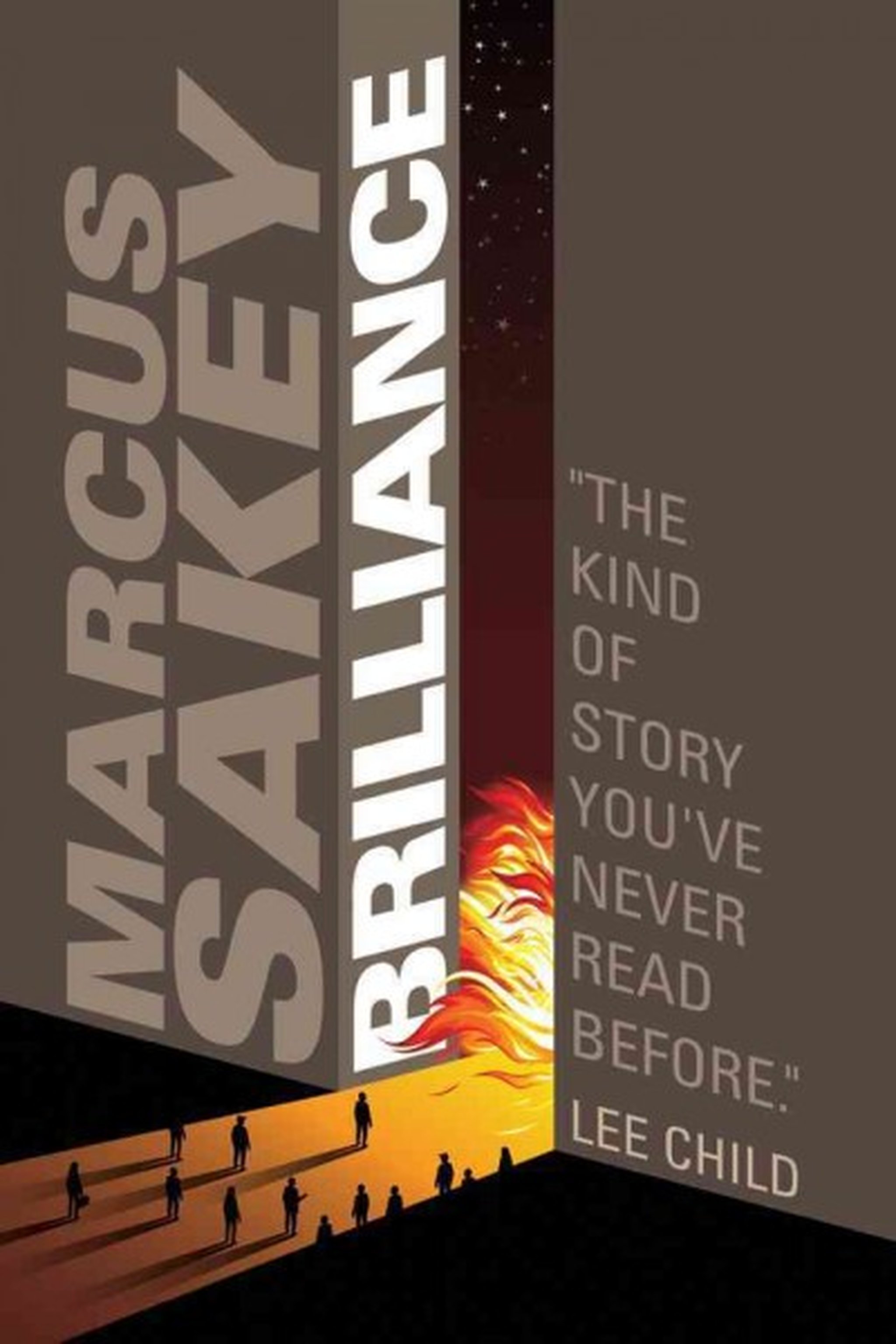
Brilliance, by Marcus Sakey

9781611099690_custom-9ba9bdb4ab35cd10ff6b1ac6d3ca5b74c98bf343-s99-c85


In my case, Lee Child’s cover blurb is highly inaccurate.  Assuming that he includes himself in the group he describes, I’d guess Lee Child hasn’t read many superhero stories; he certainly should be familiar with a number of the other elements involved in Sakey‘s Brilliance.  The book is an excellent combination of superhero fiction, “spy” thriller, and semi-dystopian intrigue, and while I haven’t read many books that combine all of those elements at once, I’m certainly familiar with each of them individually.  That familiarity leaves me well positioned to appreciate the skill with which Sakey unwinds his plot.

The story is set in a world in which some people (1% of the population, more or less) are extremely capable at pattern recognition, generally focusing on a specific subset of their environment.  Our protagonist, for example, is able to read people’s immediate intent through their body language, making him fabulously good at telling where people are going to move within the next few seconds, and at telling whether or not someone believes what they are saying to be true.  This basis for superpowers is simultaneously remarkably constrained and very wide-ranging.  It doesn’t make people superhuman in immediately noticeable ways, and Sakey does an excellent job of keeping to his original concept without breaking the plausibility of the setting.

This is a fast and fun book, and an easy read.  The main character is a quintessential representation of The Man, and the story offers pulpy action goodness, with a thick helping of intrigue, implicit duplicity, and lies.  If you enjoy quick reads that deal with a moderately dystopian alternate present filled with superhumans who are indistinguishable from the rest of us, and all the problems that entails, then I suggest you pick up this book.  You may want to pick it up even if those keywords don’t set your Must Read alarms buzzing, but I’ll save any more description for after the break, where I keep all my spoilers.

Also, just to warn you, this book definitely deals with racism and the abuse of authority.  I think it does it decently, you may think differently.  I don’t think you’d mind it, Stephanie, but I also don’t know that you’d identify with the narrator at all.

Continue reading

Wood Sprites, by Wen Spencer

81WZgAzpC-L


I can identify the plot elements, but I have no idea what’s going on with this cover.


I reviewed the first two books in this series last fall (almost exactly a year ago, as a matter of fact), and somehow failed to review the third.  But Wood Sprites, fourth in the series, has just come out, and there was no way that I’d leave it untouched after how much I enjoyed the first few.

To be perfectly honest, while the first few books were fun they were also frequently uncomfortable; Wen Spencer includes toxic interpersonal relationships, abuse, and worse trigger-warning worthy things, though from my limited perspective she treats it more honestly than many other fantasy authors do.  While Wood Sprites is a far safer read, it still doesn’t shy away from putting its protagonists through a series of terrible circumstances.  This feels appropriate, given that the protagonists are 9 year-olds in the center of a multi-generational secret war.

One thing that I should note, however, is that this book is full of spoilers.  While its events take place far from the events of the first three books, its story weaves intricately into the story told in the other books and fills in gaps that I barely even knew existed.  I would almost recommend this book as a standalone introduction to the series, but…

Continue reading