Concept: A Tintin Adventure Flowchart

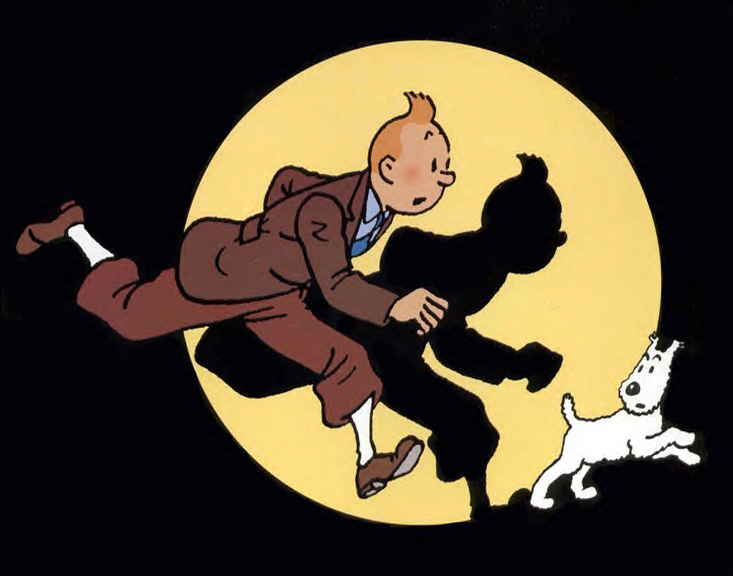
tintinI think I’ve mentioned my love of Tintin previously.  But I’ve just had a fabulous idea, so you’re going to hear about it again.

Some necessary background: Charles Stross wrote an excellent book, The Jennifer Morgue (part of the Atrocity Archives series, very much worth reading).  He based the story (careful, spoilers) on a combination of real world events and James Bond clichés, and did it excellently.  He did this in part by analyzing the Bond oeuvre (I suppose I should say the Fleming oeuvre, but Fleming really didn’t have that much to do with most of the movies) and creating flowcharts of Bond film opening scenes and general plots.

Yes, you read that correctly.  He watched all the Bond films with a friend and wrote up flowcharts to describe what they saw going on.  Here’s the flowchart of a Bond movie opening scene, and here’s the flowchart of a Bond film writ large.

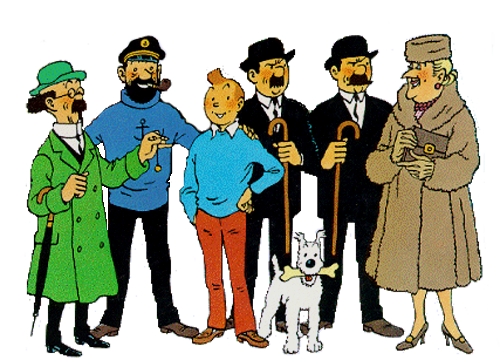
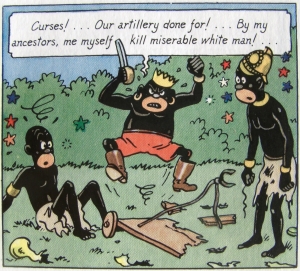
Now, I love Tintin very much, but there are some problems with the old comics.  Consider:

20140112153933!Tintin-mainCastI’m amazed that Castafiore is even included in the cast of characters.

Angry_King_in_Tintin

Yeah, that’s objectionable.

So I’ve been thinking that I should try writing new Tintin stories.  Well, not Tintin per se, but adventure stories like Tintin’s, without the same racist depictions and with better representation all around.  And Stross’ flowcharts have inspired me.  I plan to go through and re-read a number of old Tintin stories, and try to make a Tintin adventure flowchart that I can follow when the time comes.  It might turn out that this is impossible, and Hergé simply had too many different stories, but I suspect that I could pull something useful out of all this.  What do you think?  Are you interested?

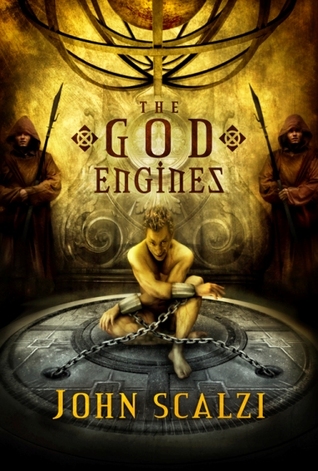
The God Engines, by John Scalzi

6470498

My apologies for the brevity of this post, I’m writing with an odd tremor in my left hand and that’s throwing me off.  Anyway…

If you’ve read my previous reviews of Scalzi‘s work, you’re already familiar with how much I love it.  There’s something about his style that I find captivating, perhaps unreasonably so.

The God Engines is no exception to my love for Scalzi’s writing.  It features space travel powered by faith and subjugated gods, and eschews many of the “upbeat” qualities (for lack of a better word) that I’ve come to recognize in Scalzi’s other pieces.  It’s short, sweet, and ultimately horrifying, and I would happily recommend it to anyone who would like to read about holy war in space.  Having just written that, yes, the setting does feel a little like Warhammer 40k, but not quite in the same grandiose grim-dark fashion for which 40k is pilloried.  I don’t want to say any more that might accidentally spoil sections of the story for the especially perceptive, I’ve already had to rewrite this bit several times to cull possible references to spoiler material.

Also, well done Scalzi for writing an entirely genderless character.  I’m not sure I understand how they fit into the larger scheme of things that you devised for this setting, but they felt wonderfully human in a way that some might have ignored.  And while I loved the appropriate ending of the story, I was sad that it meant that I wouldn’t get to learn more about the world that encompassed all these wonderful and terrible things.  I suppose that means you hit the perfect length for the piece.

I really liked the fact that no character felt like they were entirely “good.”  Some were certainly more sympathetic than others, but mostly people seemed very human: they wanted, they feared, and they cared (or didn’t) in ways that pulled me into the piece.  It never felt like we went very deep with any of them, perhaps due to space restrictions, but I got enough of a sense of them to feel connected before the end of the book.

Would I recommend this book?  Yes, definitely.  It’s short, it’s an easy read (I went through it in one sitting), and it’s a lovely look at a frightening concept.  It’s a quick piece of horror writing done well.

p.s. Oh, and here’s Scalzi’s favorite negative review of The God Engines.  It’s pretty good.

The Restoration Game, by Ken MacLeod

18lq6wx6x76xmjpg


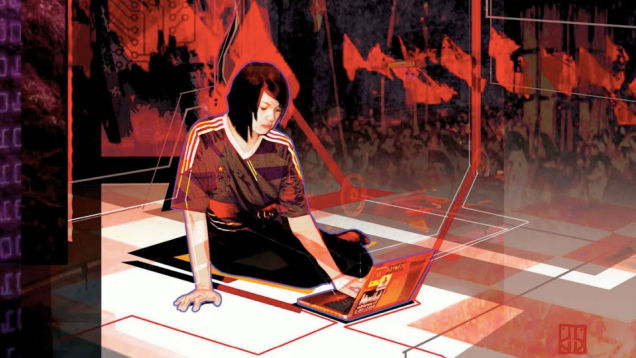
Eastern European politics (both Soviet and post-Soviet), color revolutions, spy games, long hidden family secrets, and a quiet sci-fi premise?  Sign me up.  Ken MacLeod‘s The Restoration Game gives all of that, plus a little bit more.  Maybe that’s why I liked it so much.

It’s a quick read, with an engaging and easy-to-follow female protagonist who, as the story unfolds, comes to feel like the appropriate scion of all those who’ve come before her.  I’ll explain that, I swear.  The book gets bonus points from me for having a female narrator; I’m writing a piece with a teenaged female narrator (as I’ve mentioned previously), and everything is grist for the mill.  And I should note that while I quite liked Lucy’s narration in The Restoration Game, I’d love to hear women’s opinions of the narrator’s experience and voice in this book… I don’t exactly have a good frame of reference by which to judge it.

About that scion comment: our protagonist, Lucy Stone, opens the story with a cliffhanger and no context.  It works well, catching you quickly and pulling you in, and then the entire book becomes an extended digression to give the context for that scene, only finally reaching resolution (appropriately enough) at the very end of the piece.  At the beginning, you have no idea of what Lucy has been through, what her family history is, or what she is capable of… but by the end, things fall wonderfully into place.  It’s wonderfully done, and flows smoothly from start to finish.

Ok, that wasn’t quite right.  There’s still that initial sci-fi premise, right at the very beginning of the book before Lucy ever has a chance to speak, and I bounced off it the first two times I opened the book.  It wasn’t bad, it just wasn’t what I thought I’d set out to read and wasn’t nearly as interesting to me at the very beginning as it was by the very end.  After some reflection, I think MacLeod placed the introduction of the sci-fi premise correctly; there really isn’t a better place to put it that makes more sense and doesn’t disrupt the story further.  Without that initial introduction, later elements of the book would make very little sense and feel insufficiently well signaled (here we are back at the perils and prerequisites of good foreshadowing).  MacLeod clearly set himself a difficult project, possibly without realizing that he was doing it, but I think he managed to do a good job of it.

It looks like this post isn’t even going to have a break.  The Restoration Game is fast enough and internally intricate enough that I don’t want to ruin anything for you by accident, so I won’t bother with the usual danger of discussing potential spoiler material.  Suffice to say that it’s a good book, one worth picking up for quick fun, especially if you’re interested in a jaunt through spy games and epistemological thought experiments.

Brilliance, by Marcus Sakey

9781611099690_custom-9ba9bdb4ab35cd10ff6b1ac6d3ca5b74c98bf343-s99-c85


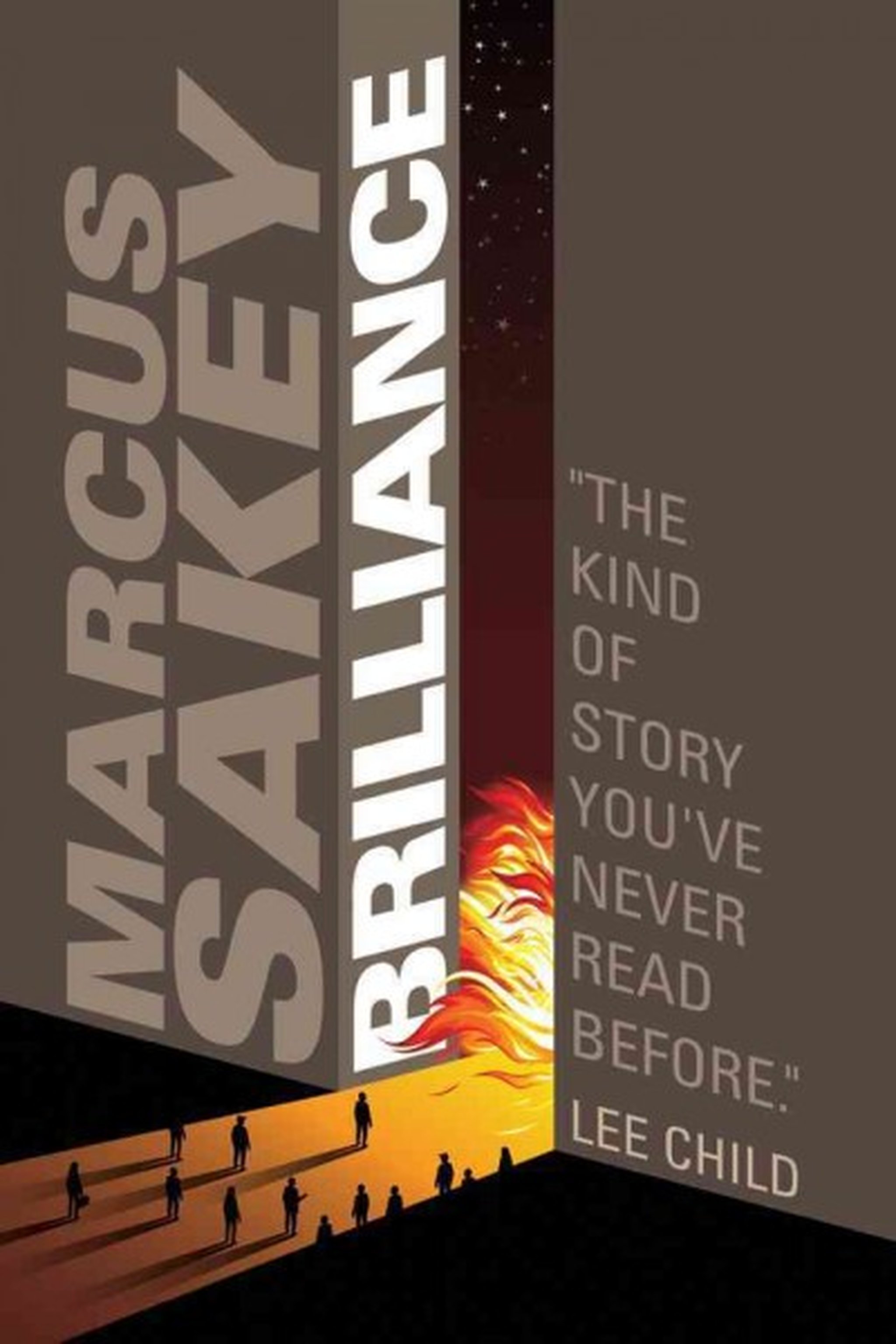
In my case, Lee Child’s cover blurb is highly inaccurate.  Assuming that he includes himself in the group he describes, I’d guess Lee Child hasn’t read many superhero stories; he certainly should be familiar with a number of the other elements involved in Sakey‘s Brilliance.  The book is an excellent combination of superhero fiction, “spy” thriller, and semi-dystopian intrigue, and while I haven’t read many books that combine all of those elements at once, I’m certainly familiar with each of them individually.  That familiarity leaves me well positioned to appreciate the skill with which Sakey unwinds his plot.

The story is set in a world in which some people (1% of the population, more or less) are extremely capable at pattern recognition, generally focusing on a specific subset of their environment.  Our protagonist, for example, is able to read people’s immediate intent through their body language, making him fabulously good at telling where people are going to move within the next few seconds, and at telling whether or not someone believes what they are saying to be true.  This basis for superpowers is simultaneously remarkably constrained and very wide-ranging.  It doesn’t make people superhuman in immediately noticeable ways, and Sakey does an excellent job of keeping to his original concept without breaking the plausibility of the setting.

This is a fast and fun book, and an easy read.  The main character is a quintessential representation of The Man, and the story offers pulpy action goodness, with a thick helping of intrigue, implicit duplicity, and lies.  If you enjoy quick reads that deal with a moderately dystopian alternate present filled with superhumans who are indistinguishable from the rest of us, and all the problems that entails, then I suggest you pick up this book.  You may want to pick it up even if those keywords don’t set your Must Read alarms buzzing, but I’ll save any more description for after the break, where I keep all my spoilers.

Also, just to warn you, this book definitely deals with racism and the abuse of authority.  I think it does it decently, you may think differently.  I don’t think you’d mind it, Stephanie, but I also don’t know that you’d identify with the narrator at all.

Continue reading

Wood Sprites, by Wen Spencer

81WZgAzpC-L


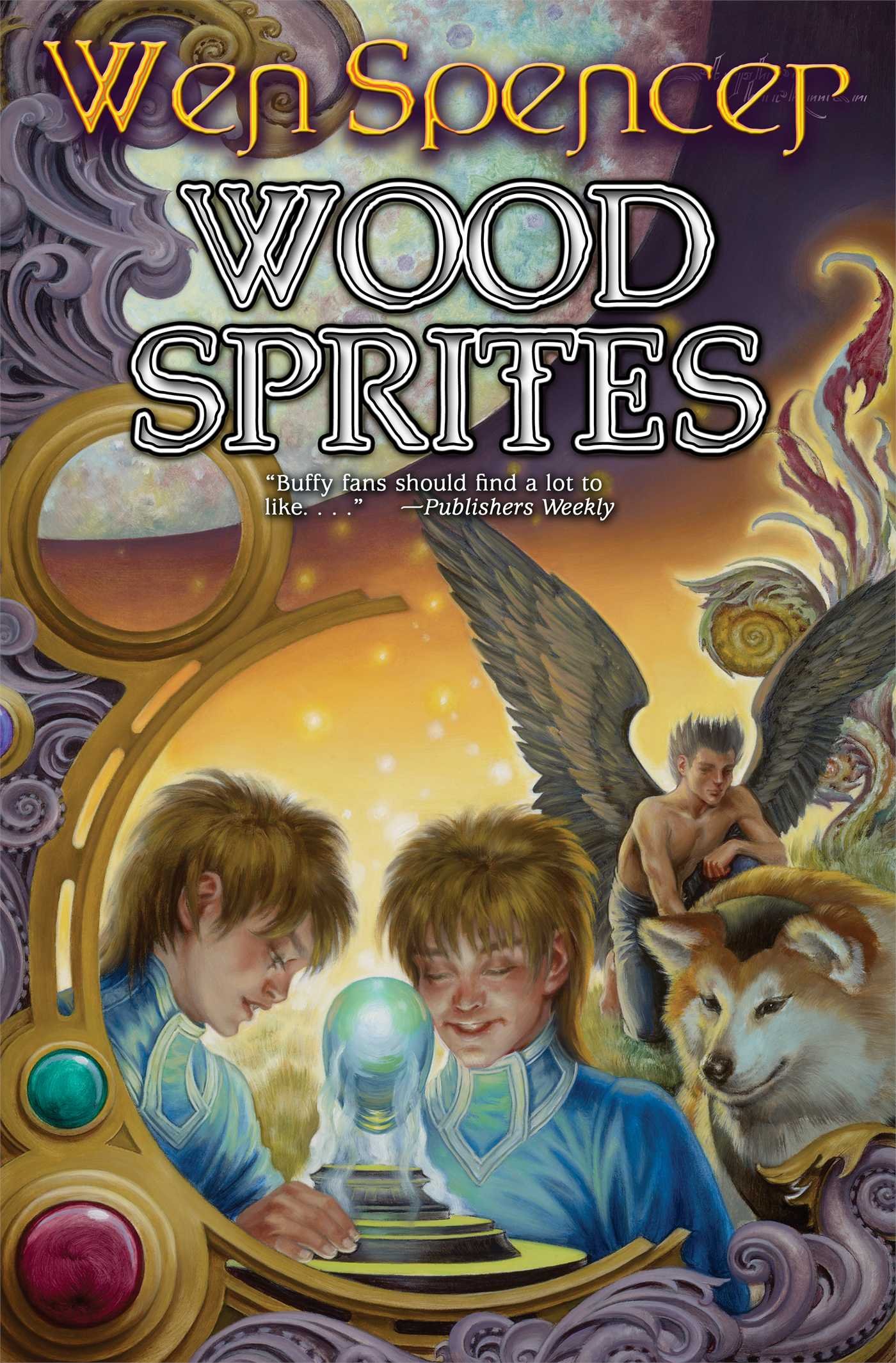
I can identify the plot elements, but I have no idea what’s going on with this cover.


I reviewed the first two books in this series last fall (almost exactly a year ago, as a matter of fact), and somehow failed to review the third.  But Wood Sprites, fourth in the series, has just come out, and there was no way that I’d leave it untouched after how much I enjoyed the first few.

To be perfectly honest, while the first few books were fun they were also frequently uncomfortable; Wen Spencer includes toxic interpersonal relationships, abuse, and worse trigger-warning worthy things, though from my limited perspective she treats it more honestly than many other fantasy authors do.  While Wood Sprites is a far safer read, it still doesn’t shy away from putting its protagonists through a series of terrible circumstances.  This feels appropriate, given that the protagonists are 9 year-olds in the center of a multi-generational secret war.

One thing that I should note, however, is that this book is full of spoilers.  While its events take place far from the events of the first three books, its story weaves intricately into the story told in the other books and fills in gaps that I barely even knew existed.  I would almost recommend this book as a standalone introduction to the series, but…

Continue reading

The Adventures of Tintin: The Secret of the Unicorn

2011_the_adventures_of_tintin-normal


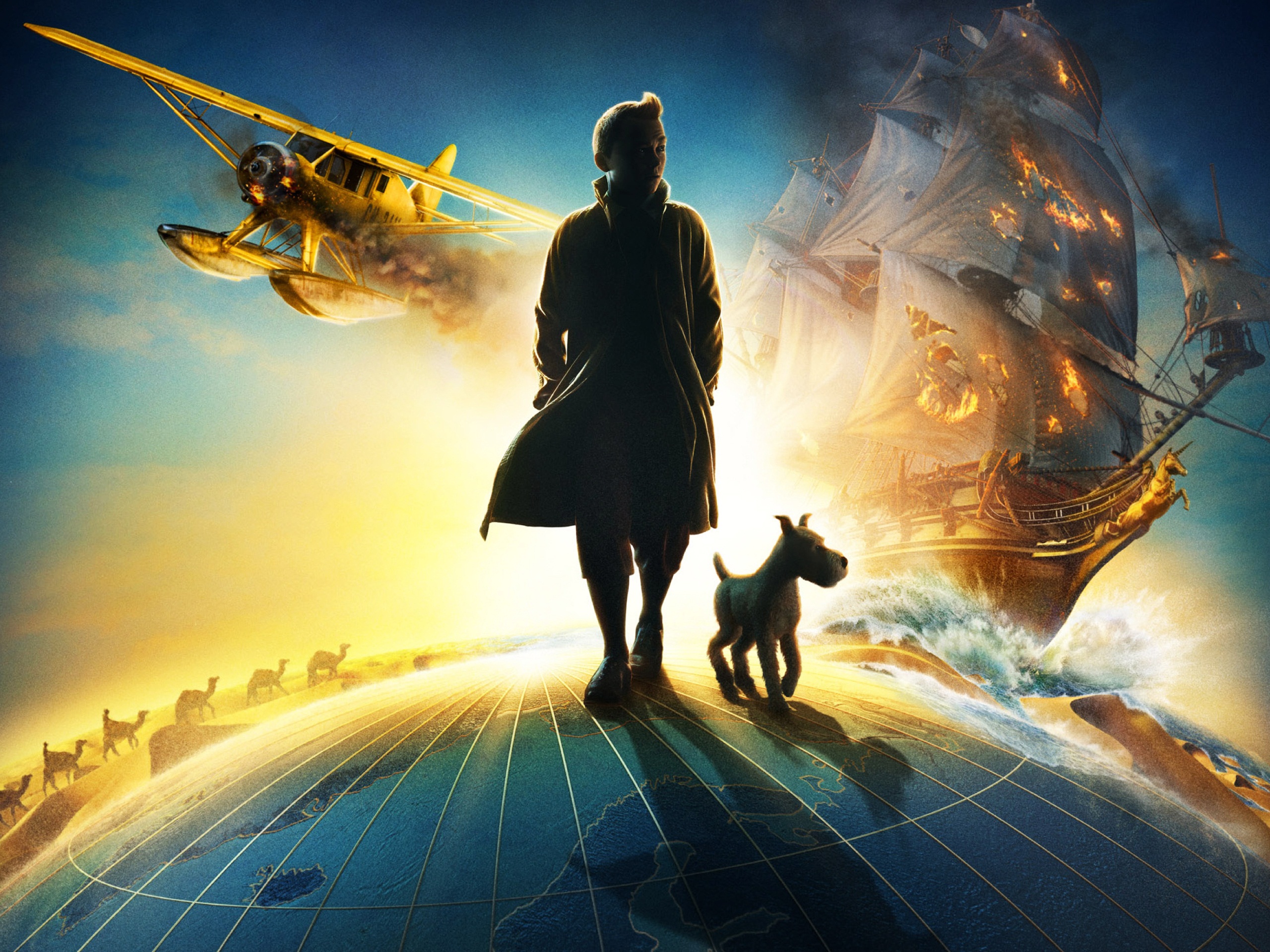
I finally watched the “new” Tintin movie.  I’m obviously biased, given that I grew up reading the Tintin books and loved them uncritically for many years, but… I thought the movie was magnificent.  There’s something spectacularly fun about the pulp adventures of Tintin, and the movie delivers the essence of that in spades.  The story is still problematic when it comes to representation, as there’re no main characters who aren’t white males, but the movie also manages to remain faithful to its source material without engaging the more racist undertones which can be found in some of the original works.

And when I say faithful to the source material, I really do mean that it’s basically all there.  The movie is a composite (plus a little something new to serve as glue) of several Tintin stories, and there are scenes which have been pulled frame for frame from the originals.  There are even references to prominent features of unused story lines, often featured as props (like the red jeep from Land of Black Gold).  The only thing that I really missed was Snowy’s constant private cynical narration, though his stunning and dogged competence was in fine form.

As I’d expected it to be, the movie was action-packed and full of nonstop excitement, accurately recreating my memories of the stories that I’d so loved as a child.  But it was able to do things which had been impossible for the original comics, with gorgeous transitions that reinforced the hallucinatory exposition of my favorite drunk, Captain Haddock.  I’m not sure that I’ve ever seen a better realized set of scene shifts, and they were made all the more possible through the excellent CGI used for the film.  There’s just something about watching the world ripple and change, transforming a landscape of sand dunes into monstrously high seas; Haddock’s impossible descriptions of his ancestor’s exploits become all the more wonderful as they are shown through his imaginatively drunken state.

Speaking of the CGI, I have to say that they really hit the nail on the head.  They managed to keep things cartoonish enough that they felt palpably unreal, while still being realistic enough to feel believable, relatable in much the same way that the comics themselves felt when I was young.  I’m really happy with how the movie felt, and I’m glad that there’s talk of making another.

So, I liked this movie a great deal and I would happily watch it again.  It doesn’t solve all the problems of the source material, but it does a good job of avoiding the source material’s larger blunders while capitalizing on its strengths.  The characterizations felt true to form, and the alterations made to the original material never felt like they were unfaithful or detracted in any way from the originals.  If you ever liked reading Tintin, my guess is that you’d like watching this movie.  If you didn’t like reading Tintin, I really can’t help you with that (and you may or may not like this movie, who knows).

p.s. Sorry to cut this one short, I have to go facilitate a hero’s journey by pretending to be an evil dean intent on shutting down Simmons’ MA in Children’s Lit and MFA in Writing for Children.

The Sorcerer’s House, by Gene Wolfe

sorcerershouse-strip1


I should probably re-read this book.  In fact, from what I understand I should probably read and then re-read a good deal of Gene Wolfe‘s work.  There’s a lot of it that I haven’t bothered to pick up at all, but the attention he pays to the construction of his novels is something from which I stand to learn a great deal.  It’s no surprise, then, that The Sorcerer’s House is a slowly unfolding marvel of consistent inconsistency, even on my first read-through.  And what the devil do I mean by that?

I’ll start with the narrator.  We are treated to the sometimes pleasing, sometimes grating prose of one Baxter “Bax” Dunn, as the entire story is told through the lens of his letters (with the addition of a few letters that were sent to him).  It is an epistolary, and as such we are entirely at the mercy of Bax’s representation of events as he begins to deal with moving into (squatting in, really) what appears to be a supernaturally expanding house.  But one of the few things that we know of Bax is that he was recently released from prison after being convicted for fraud.  There are other confounding factors at play as well, hinted at but generally sidelined as being of little relative importance, but I’ll leave those for you to discover when you read the book.  Suffice to say that the narrator is tremendously unreliable, to the extent that I’m not sure how much of the book actually happened (I’m certainly unsure how much happened as he represented it, and I think I’ve caught at least one lie).  As if that wasn’t enough, he often walks forward or back through the course of events until you’re working hard just to keep the timeline straight in your head.

On a similar note, I’m impressed by how palatable Wolfe manages to make a character I so grew to dislike.  Dislike might be the wrong word for it; there were so many things about Bax which I found so unlikeable or frustrating, but he exuded such amiable bonhomie that I found it difficult to hate him for very long, as he’s perhaps the very definition of sleazy but charming.  I can only imagine it was second nature to him.  The fact that I’m able to tell you all of this about Bax is part of what I so admire about Gene Wolfe.

There’s a great deal more to say about this, but as per usual I’m going to segregate the spoilers.  So for my pre-final closing thoughts, or whatever you call this bit, I just want to say that this is a fascinating read even if you don’t end up liking Bax very much.  And if you can deal with the several-decades-old gender relations.

Continue reading

When You Reach Me, by Rebecca Stead

whenyoureachme


This book came highly recommended, and it seems only appropriate to pass on the favor to you.  It’s not a long read, nor is it a difficult one, and I can’t say that the ending came as much of a surprise to me… but I simply loved reading it.  It felt both extremely real and wonderfully thought out; it contained a loving homage to another children’s novel which I adore, and yet was clearly its own story, laid out as a puzzle with all of the pieces lying there right before your eyes, waiting for you to put them together.

You know, usually I’m able to talk about a story without giving away any spoilers that I think will unduly influence your understanding of the book.  Or else I’m able to sequester all of the relevant spoilers in a place just for those who’ve already read it or are willing to spoil themselves.  But this time I think I have to leave it be.  I’ll even say that you shouldn’t bother reading the dust jacket’s inner flaps.  Just pick up the book.  I doubt you’ll take more than two days to read it, and you could probably go through it in an afternoon if you had the time.  There’s something too good to spoil about following the narrator’s journey as she slowly tells us how it is that she pieced together the puzzle, and I’m impressed with the narrator’s consistency as she reflects back on the events she describes in the book.  It’s a skillfully told story, and I hope that you’ll take my word for it and pick it up.  Find it here at Rebecca Stead‘s website, or find it at your local library!

Arctic Rising, by Tobias Buckell

9780091953522


Tobias Buckell has made me very happy indeed.  I can’t decide whether I prefer Arctic Rising to Hurricane Fever, and I really liked Hurricane Fever (seriously, read my review).  It’s rare that I have the pleasure of reading a fast paced high-tension thriller set in a brilliantly developed near-future, let alone reading two of them back to back.  Buckell’s world-building is a tremendous draw for me.  It’s quality shines through in the ease with which he introduces the near-future to the reader; he keeps his obvious enthusiasm for the world he’s created tightly leashed, only revealing it in dribs and drabs, more often than not as an in-character rumination or observation that feels entirely appropriate.  Better yet, I didn’t find any gaping implausibilities.  I’ll admit that I didn’t take a fine-toothed comb to the books and their established background, but they hold together well enough to offer a compelling (and somewhat distressing) view of an imminent future.  If you want to treat yourself to a jaunt down “doesn’t this seem likely…” lane, and you want some hair-raising hijinks in the bargain, try either of these books.  If you don’t want to be spoiled for either book before you read it, be sure to read Arctic Rising first, though I did it in the opposite order and still enjoyed myself immensely.

Why did I enjoy it so much?  Well…

Continue reading

Hurricane Fever, By Tobias S. Buckell

NewImage4

I first heard about this book through Scalzi’s Big Idea feature on his blog.  I was captivated by Buckell‘s premise, a spy novel set in the Caribbean with a protagonist who actually lived and grew up there instead of simply going there to vacation, infiltrate, or establish a villainous lair.  It pays special attention to what it’s like to have your home relegated to the status of a playground for the wealthy, and how a pan-Caribbean federation might look in the near future.  Hurricane Fever is a fast paced delight that delivers on its premise and offers the best Bond movie I’ve read in years.  It’s a violent and active spy-thriller, and one in which the main character is more often mistaken for a member of the waitstaff than a tourist.  I found it both engaging and refreshing, and now I want to read Buckell’s other work.

Read on for more detail.  Don’t worry, I’ll protect you from undue spoilers.

Continue reading