Reading about flat characters in E.M. Forster’s Aspects of the Novel, I have just been reminded of one of the things that routinely frustrates me in David Weber’s work. Weber likes trying to make characters who should essentially be flat, more or less caricatures intended to draw up conflict or drama or comedy (or maybe they should be comic but he refuses to use them in that way, making them painfully comic instead… more on that later). But instead of accepting that these characters should be flat, he tries to flesh them out. He tries to make them round, and make me care about them. Nine times out of ten, he fails.
Category Archives: Books
Rat Queens kicks ass

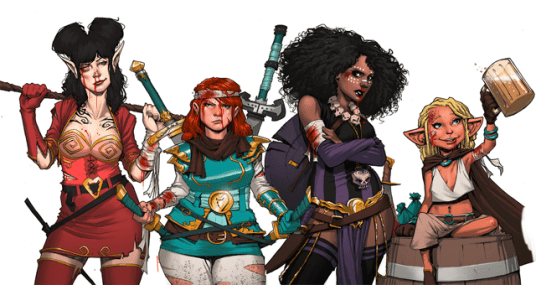
Have you got a hankering for classic badass swords & sorcery adventures? How about a comic full of that, but with four women as the central characters instead of the usual sausagefest?
Rat Queens makes me want to tell epic and gritty fantasy stories like nothing else does. This is a comic that left me scrawling “RAT QUEENS IS INSPIRATIONAL” on random notes late at night so that I wouldn’t be able to let it pass me by. And of course somehow I forgot to tell YOU about it.
This is where you should go to order your fix online. If you have a decent local comic store, you should go there instead!
Holy fuck I love this comic.
Child of a Hidden Sea, by A.M. Dellamonica

Wheee, portal fiction! When done well, this stuff is great. I got this book for free somehow, though I can’t remember why. I’m glad that I did. It’s quite enjoyable. I’ve already seen the next book in the series in my local library, and I’m looking forward to getting my hands on it.
I don’t want to spoil the fun for you, but I do want to say a few more words in favor of you reading this book. It’s got a female protagonist and non-hetero characters, it’s got lots of sailing and boats, and it has a climax that I found very appealing. Lots of fun. It’s intrigue and sea-adventure wrapped up in a portal fiction premise. What’s not to like?
Code Name Verity, by Elizabeth Wein

There are a number of covers I’ve seen for this book, and while they all ostensibly represent the book, the one above is the only one I saw in person that feels appropriate. It’s a very good book, definitely worth reading, and more than a little dark. Here’s the other one I’ve seen in print for a spot of comparison:
The Golden Princess, by S.M. Stirling

It’s been a while since I read any S.M. Stirling, and I picked this one up more on a whim than anything else. I’d gotten tired of the most recent spate of Change novels, probably because of a disconnect between my expectations and what Stirling was delivering. I wanted Stirling to write an active story about a smaller group of characters, with palpable progress in the plot achieved in the course of each book. Stirling did create that progress but it was far slower than I’d hoped for, and he spent more time focused on the milieu of the story rather than advancing the story that I wanted to see resolved. In fact, after the first trilogy the pace of progress slowed precipitously, until it was almost a crawl.
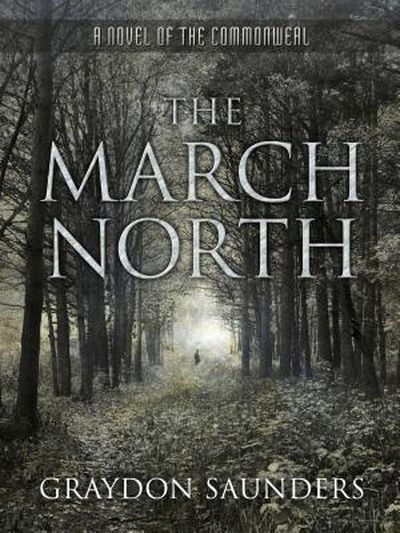
The Golden Princess doesn’t change that pattern. What did change was my expectations of what I’d find in reading the book. And I have to say: reading these books as milieu fiction, as much about the world in which they take place as they are about any of the characters, is far more fun and rewarding than reading them with expectations of tight and fast plot. Definitely worth starting up the series again.
Lion’s Blood, by Steven Barnes

I wish I’d heard of this book years ago. I think it’s incredibly important, and I wish that it weren’t. Why?
It is so easy, as a white man, to think that you understand troubles that others face, to think that you have read and spoken enough about a given issue to feel like you know more or less what’s going on, and why people feel and think the ways that they do. In many cases, you have to actively search out conflicting points of view and other narratives in order to prove otherwise, and why would you bother doing that when you don’t know about them in the first place? Why bother when you think that you’ve already got a good grasp on things?
In Lion’s Blood, Steven Barnes takes a fundamentally simple concept and uses it to explore a number of things… it’s quite simply a good and fun (if painful at times) book. But the reason that I think it’s important and wish that it weren’t is that it confronts head on that feeling of complacent surety, the comfort of thinking that you know enough about historical (and modern) problems and don’t have to look deeper to examine your own place, your own implicit beliefs.
Lion’s Blood posits a world in which Africa rose to prominence, rather than Europe. A world in which the slaves working the fields of the New World are white, taken from their tribal villages to work the fields of rich Muslim landowners. Steven Barnes tells a familiar tale here, with a narrative that feels comfortably close to our expectations, but it’s one in which all the cultural and ethnic trappings have been inverted from our standard expectations. And somehow that inversion was enough to shake me out of my “ah yes, this story again” complacency. Better yet, it drove home yet again the violence done to people through the institution of slavery, and (I think) might help to wake some up to the systematic oppression which slavery engenders in a society. And, of course, it tells an excellent story, one well worth reading.
Look. I don’t want to ruin this book for you, so I’ll put it like this: this book is sad, tragic, and uplifting; this book is a marvelous adventure story; this book reminds you of why our current society is so screwed up in so many ways, as we deal with the toxic legacies and variably covert attempts to continue the oppressive power struggle at the heart of slavery. I’m deeply impressed. I want my own alternate history to be as good as this book is.
P.s. I found Lion’s Blood on this recommended list of books by writers of color. I intend to go back and find more to read, and would suggest that you do the same.
Tidbits to tide you over
Hello everyone! This week I’ve set aside time to spend with my brothers, which means lots of role playing games and storytelling and laughter and yelling (also probably more food and booze than usual). But because of all that, I’m unlikely to have much for you here. I’m certainly unlikely to have full-scale reviews or such. I’ll return with the usual stuff by next Monday, no worries.
But while I’m not writing as much about things, here, have a few tidbits!
Dying Light is a fascinating game: it has gameplay that I find fun and engaging, but a story and characterizations which so far repel me. It is definitely fun playing with other people, running around the zombie apocalypse at high speed, leaping from building to building, and getting lost in the warrens while hungry monsters chase me. But every time the story progresses, I shudder and feel that ugly cold spot in my belly; why the hell does the POV character have to be a tool? Why do they have to make the villain choices they do? Why did they think the misogynist themes would be worth including? Why do I feel certain that the “strong female character” they’ve created is just going to be damseled within the next few missions? For that matter, why are there two or three women survivors in the tower, and everyone else there that I meet is male?
As someone who loves and is fascinated by stories, I’ll probably keep watching the story cutscenes all the way through. But that may just make me angrier and angrier about their writing choices. It’s a good thing that the cutscenes are skippable and basically won’t matter in the long run.
On the other end of things, we have Lois McMaster Bujold’s Mirror Dance, which I just finished. The first time that I picked it up I bounced off the main character’s narration (a first for me with any of Bujold’s books). But when I started it this time I fell in and couldn’t climb out… which is about what I expect from Bujold at this point. She really is fabulous. I’m going to leave my paeans of praise for another post, when I can give this book it’s due, but if you like the other Vorkosigan series books be sure to keep at it with this one, even if the start is a little disorienting. It’s worth it.
Okay, that’s all for now. Enjoy yourselves.
Won’t Break Your Heart: Sorcery & Cecelia, by Wrede and Stevermer
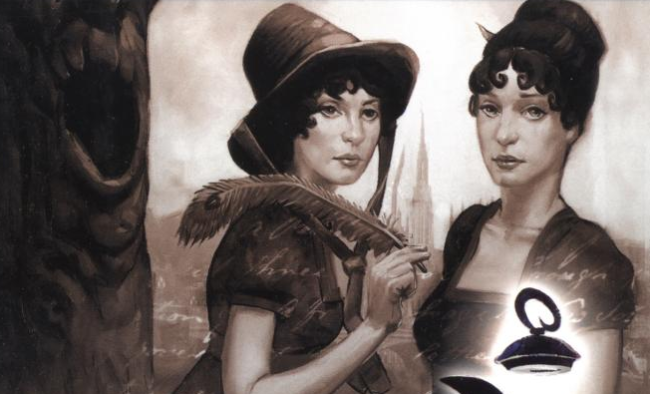
I hadn’t quite expected this to be so good. In fact, I futzed around and failed to really start it for about four weeks (or maybe longer). But there was some point, maybe around page 80, when I seem to have flipped a switch; suddenly all I wanted to do was finish the book. It’s lovely and wonderful, and I would certainly recommend it to pretty much anyone who has any interest in epistolary novels, or female protagonists in post-Napoleonic Wars England, or magic, or even just fun stories. To be clear, given how readily I’ve bounced off of other similar characters before, I had no idea how much fun they could be.
Sorcery & Cecelia (which I have learned, much to my delight, is part of a series) was written back in the 80’s as a Letter Game. Patricia Wrede and Caroline Stevermer decided to write letters to each other in the voice of their two respective characters, relating gossip and intrigue, and telling each other about the fabulous and exciting things which they were each getting up to. When they’d finished their game, they looked at their collection of letters and realized that they’d basically already written a novel. With some editing for details, continuity, and pacing, they found that they had a perfectly acceptable manuscript, and then managed to get it published. I am exceedingly glad that they did.
Look, I don’t want to ruin any of the book for you by mentioning things. Suffice it to say that the two main characters’ adventures and intrigues make excellent reading, and Kate and Cecilia are absolutely brilliant as heroines who must vanquish their antagonists, while carefully acting within the constraints imposed on them by society. Do yourself a favor and pick up this book. It’s really quite good.
p.s. Thank you to the visitor who recommended this to me one morning in Mama Dorr’s kitchen. I wish I could remember your name to thank you properly, especially after the excellent conversation we had about epistolary stories and your research into the subject. [Edit: The visitor was Naomi, but I appear to have misattributed the recommendation! It was still an awesome conversation, but Thomas may have been the original source. I might manage to get to the bottom of this. Maybe.]
The Wizard’s Dilemma, by Diane Duane
Welp, this one took me a long time to finish. I’m still not quite sure how that happened. Part of it was that I started the book while I had far too many things on my plate and thus got distracted. But part of it was that at a certain point in The Wizard’s Dilemma, I felt like I could see where all of the pieces were, where they needed to go, and had a pretty good idea of how they were going to get there… and I really wanted them to just be there already, instead of making me wait. I suspect that this is the price I pay for reading so much. Or perhaps for being impatient.
It turns out that I was right about most of those various story beats, but seeing what Diane Duane did with them was far more satisfying than what I’d imagined. I probably should have seen that coming, given that I’ve read the earlier books in the series and know how good Duane is at her work. Once I finally got over my block and moved into the last parts of the book, I didn’t want to put it down. And then, of course, the climax made me cry. Whatever the real reasons for my reading delays, I feel quite certain in saying that this was an excellent book, one worth reading, worth recommending, and one that leaves me wanting to read the next one in the series. Just like the previous books in the series. I probably could have seen that coming too.
So, why the heck did this book make me cry?
Continue reading
Unsounded: Way Better Than It Sounds
Ben, my housemate who hooks me up with many fine comics (along with the many other things they do), has pointed me towards Unsounded, a most excellent webcomic. In addition to offering beautiful eye-candy (check out the designs for the covers of Chapters 2 [left] and 1 [right] above), this is a comic that already feels like a window onto a deeply thought out and well crafted world. Maybe it’s only skin deep, but I doubt it.
Admittedly, I recommend this webcomic to you on the strengths of the printed collection of the first three chapters. It’s remotely possible that there is some difference between the book and the webcomic version, perhaps simply in the act of holding the physical book in my hands, that changes how I feel about the comic. Actually, if anything it would have to be the collected early sketches and two short stories added to the end of the book that would change my opinion. But those only make me feel more certain that this is something deep and complex that I don’t yet know enough about to be able to appreciate fully… and I say that knowing that I already plan to read the rest of Unsounded’s archives.
So if you’re at all interested in reading about the stories of a young thief on a quest to prove herself to her crime lord father, and her magic-using zombie escort who’s been blackmailed into protecting her, then I suggest that you get reading. Still not sold? Let me put it this way: I have examined nearly every page I’ve read so far, looking at the little details, searching for another little hint, because I cannot kick the lurking feeling that I’m missing something that signals far more yet to come. Ashley Cope has done a marvelous job so far of building a story world that all feels like it holds together, revealing new treats around every corner and hinting at far more yet to come, all without ever falling into the classic expository trap of telling instead of showing. It’s worth reading just to see the quality of her craft. Check it out.
p.s. I was planning to write up another flash fiction piece from the excess prompts that I generated before, but I haven’t gotten around to watching True Grit yet, and I really wanted to try combining The Matrix and True Grit. Some other time.