The Adventures of Tintin: The Secret of the Unicorn

2011_the_adventures_of_tintin-normal


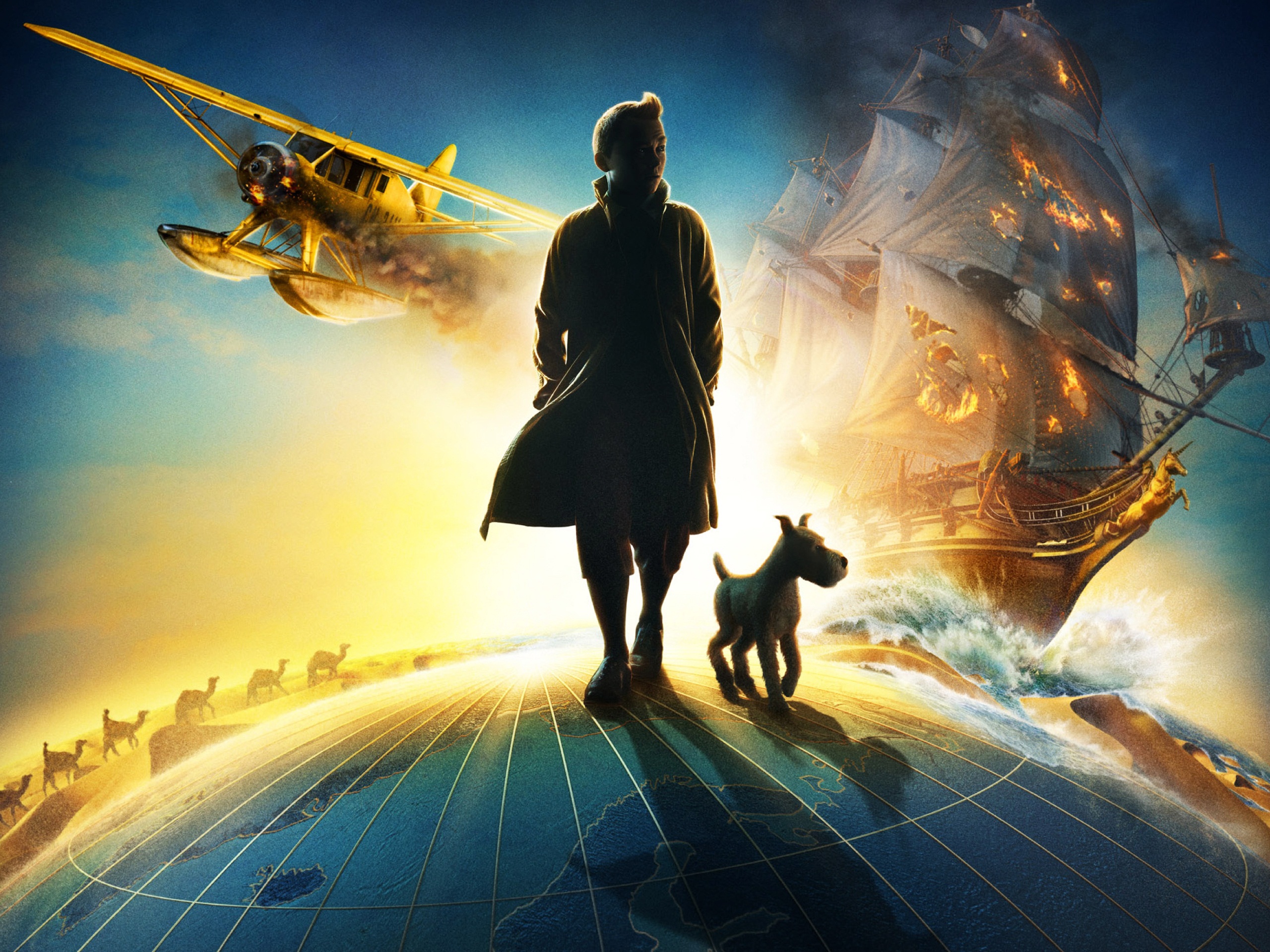
I finally watched the “new” Tintin movie.  I’m obviously biased, given that I grew up reading the Tintin books and loved them uncritically for many years, but… I thought the movie was magnificent.  There’s something spectacularly fun about the pulp adventures of Tintin, and the movie delivers the essence of that in spades.  The story is still problematic when it comes to representation, as there’re no main characters who aren’t white males, but the movie also manages to remain faithful to its source material without engaging the more racist undertones which can be found in some of the original works.

And when I say faithful to the source material, I really do mean that it’s basically all there.  The movie is a composite (plus a little something new to serve as glue) of several Tintin stories, and there are scenes which have been pulled frame for frame from the originals.  There are even references to prominent features of unused story lines, often featured as props (like the red jeep from Land of Black Gold).  The only thing that I really missed was Snowy’s constant private cynical narration, though his stunning and dogged competence was in fine form.

As I’d expected it to be, the movie was action-packed and full of nonstop excitement, accurately recreating my memories of the stories that I’d so loved as a child.  But it was able to do things which had been impossible for the original comics, with gorgeous transitions that reinforced the hallucinatory exposition of my favorite drunk, Captain Haddock.  I’m not sure that I’ve ever seen a better realized set of scene shifts, and they were made all the more possible through the excellent CGI used for the film.  There’s just something about watching the world ripple and change, transforming a landscape of sand dunes into monstrously high seas; Haddock’s impossible descriptions of his ancestor’s exploits become all the more wonderful as they are shown through his imaginatively drunken state.

Speaking of the CGI, I have to say that they really hit the nail on the head.  They managed to keep things cartoonish enough that they felt palpably unreal, while still being realistic enough to feel believable, relatable in much the same way that the comics themselves felt when I was young.  I’m really happy with how the movie felt, and I’m glad that there’s talk of making another.

So, I liked this movie a great deal and I would happily watch it again.  It doesn’t solve all the problems of the source material, but it does a good job of avoiding the source material’s larger blunders while capitalizing on its strengths.  The characterizations felt true to form, and the alterations made to the original material never felt like they were unfaithful or detracted in any way from the originals.  If you ever liked reading Tintin, my guess is that you’d like watching this movie.  If you didn’t like reading Tintin, I really can’t help you with that (and you may or may not like this movie, who knows).

p.s. Sorry to cut this one short, I have to go facilitate a hero’s journey by pretending to be an evil dean intent on shutting down Simmons’ MA in Children’s Lit and MFA in Writing for Children.
The Sorcerer’s House, by Gene Wolfe

sorcerershouse-strip1


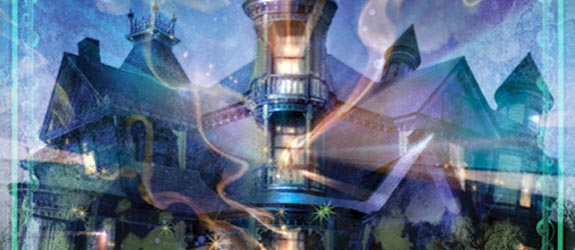
I should probably re-read this book.  In fact, from what I understand I should probably read and then re-read a good deal of Gene Wolfe‘s work.  There’s a lot of it that I haven’t bothered to pick up at all, but the attention he pays to the construction of his novels is something from which I stand to learn a great deal.  It’s no surprise, then, that The Sorcerer’s House is a slowly unfolding marvel of consistent inconsistency, even on my first read-through.  And what the devil do I mean by that?

I’ll start with the narrator.  We are treated to the sometimes pleasing, sometimes grating prose of one Baxter “Bax” Dunn, as the entire story is told through the lens of his letters (with the addition of a few letters that were sent to him).  It is an epistolary, and as such we are entirely at the mercy of Bax’s representation of events as he begins to deal with moving into (squatting in, really) what appears to be a supernaturally expanding house.  But one of the few things that we know of Bax is that he was recently released from prison after being convicted for fraud.  There are other confounding factors at play as well, hinted at but generally sidelined as being of little relative importance, but I’ll leave those for you to discover when you read the book.  Suffice to say that the narrator is tremendously unreliable, to the extent that I’m not sure how much of the book actually happened (I’m certainly unsure how much happened as he represented it, and I think I’ve caught at least one lie).  As if that wasn’t enough, he often walks forward or back through the course of events until you’re working hard just to keep the timeline straight in your head.

On a similar note, I’m impressed by how palatable Wolfe manages to make a character I so grew to dislike.  Dislike might be the wrong word for it; there were so many things about Bax which I found so unlikeable or frustrating, but he exuded such amiable bonhomie that I found it difficult to hate him for very long, as he’s perhaps the very definition of sleazy but charming.  I can only imagine it was second nature to him.  The fact that I’m able to tell you all of this about Bax is part of what I so admire about Gene Wolfe.

There’s a great deal more to say about this, but as per usual I’m going to segregate the spoilers.  So for my pre-final closing thoughts, or whatever you call this bit, I just want to say that this is a fascinating read even if you don’t end up liking Bax very much.  And if you can deal with the several-decades-old gender relations.

Continue reading

When You Reach Me, by Rebecca Stead

whenyoureachme


This book came highly recommended, and it seems only appropriate to pass on the favor to you.  It’s not a long read, nor is it a difficult one, and I can’t say that the ending came as much of a surprise to me… but I simply loved reading it.  It felt both extremely real and wonderfully thought out; it contained a loving homage to another children’s novel which I adore, and yet was clearly its own story, laid out as a puzzle with all of the pieces lying there right before your eyes, waiting for you to put them together.

You know, usually I’m able to talk about a story without giving away any spoilers that I think will unduly influence your understanding of the book.  Or else I’m able to sequester all of the relevant spoilers in a place just for those who’ve already read it or are willing to spoil themselves.  But this time I think I have to leave it be.  I’ll even say that you shouldn’t bother reading the dust jacket’s inner flaps.  Just pick up the book.  I doubt you’ll take more than two days to read it, and you could probably go through it in an afternoon if you had the time.  There’s something too good to spoil about following the narrator’s journey as she slowly tells us how it is that she pieced together the puzzle, and I’m impressed with the narrator’s consistency as she reflects back on the events she describes in the book.  It’s a skillfully told story, and I hope that you’ll take my word for it and pick it up.  Find it here at Rebecca Stead‘s website, or find it at your local library!

Arctic Rising, by Tobias Buckell

9780091953522


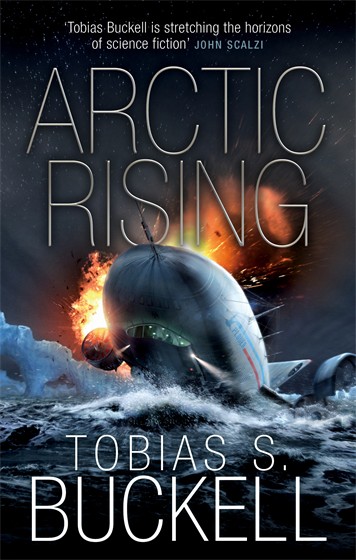
Tobias Buckell has made me very happy indeed.  I can’t decide whether I prefer Arctic Rising to Hurricane Fever, and I really liked Hurricane Fever (seriously, read my review).  It’s rare that I have the pleasure of reading a fast paced high-tension thriller set in a brilliantly developed near-future, let alone reading two of them back to back.  Buckell’s world-building is a tremendous draw for me.  It’s quality shines through in the ease with which he introduces the near-future to the reader; he keeps his obvious enthusiasm for the world he’s created tightly leashed, only revealing it in dribs and drabs, more often than not as an in-character rumination or observation that feels entirely appropriate.  Better yet, I didn’t find any gaping implausibilities.  I’ll admit that I didn’t take a fine-toothed comb to the books and their established background, but they hold together well enough to offer a compelling (and somewhat distressing) view of an imminent future.  If you want to treat yourself to a jaunt down “doesn’t this seem likely…” lane, and you want some hair-raising hijinks in the bargain, try either of these books.  If you don’t want to be spoiled for either book before you read it, be sure to read Arctic Rising first, though I did it in the opposite order and still enjoyed myself immensely.

Why did I enjoy it so much?  Well…

Continue reading

Hurricane Fever, By Tobias S. Buckell

NewImage4

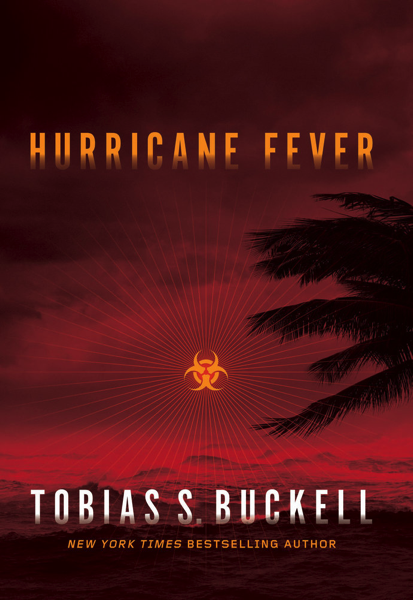
I first heard about this book through Scalzi’s Big Idea feature on his blog.  I was captivated by Buckell‘s premise, a spy novel set in the Caribbean with a protagonist who actually lived and grew up there instead of simply going there to vacation, infiltrate, or establish a villainous lair.  It pays special attention to what it’s like to have your home relegated to the status of a playground for the wealthy, and how a pan-Caribbean federation might look in the near future.  Hurricane Fever is a fast paced delight that delivers on its premise and offers the best Bond movie I’ve read in years.  It’s a violent and active spy-thriller, and one in which the main character is more often mistaken for a member of the waitstaff than a tourist.  I found it both engaging and refreshing, and now I want to read Buckell’s other work.

Read on for more detail.  Don’t worry, I’ll protect you from undue spoilers.

Continue reading

Maelstrom, by Taylor Anderson

b9_6348481_0_TaylorAnderson_MaelstromDestroyermen


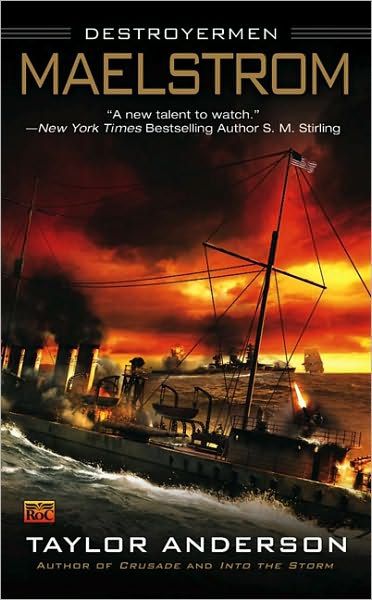
Having just finished reading Maelstrom, I’m officially downgrading this series from “potentially profoundly interesting” to “some variety of popcorn lit.”  You know, the stuff that you’ll compulsively eat without thinking too hard about it: sometimes it’s exactly what you’re looking for, but more often it’s just there and you don’t bother to stop yourself.  This series is alt-history tech-bootstrapping military fiction with a very particular set of idealized social dynamics, and as of now it doesn’t look like it will stretch beyond that.  I’m not saying that it’s bad; popcorn lit is definitionally good enough that I’ll pick it up and breeze through it simply for the pleasure of reading it, provided I’m in the right mood.  But it also hasn’t lived up to my hopes of offering more introspection on any of its various conflicts, or breaking further from its genre precedents in an interesting fashion.

I should note that it’s hard for most novels to make it past my popcorn lit category, and the category itself encompasses an almost unhelpfully wide spread of books; furthermore, I can’t pretend to be better than that myself, as I doubt any of my own short stories would qualify as anything but popcorn lit.

I won’t say that the series can’t ever be anything but popcorn lit.  Some of the future books may deliver answers to the niggling contentions I’m sharing with you here.  But thus far my hopes for what I’ll call “deeper” material have not been met.  Specifically, I want Anderson to go deeper into examining the cultural conflicts inherent between the Americans and their various allies, and I especially want him to include the perspective of Lemurians who truly don’t have specified gender roles or gender/sex expectations.  It seems like he’s introduced the Lemurians (the cat-/lemur-like creatures with whom the Americans allied in the first book) as being without specific gender roles, but when we’re treated to the perspective of a Lemurian there are a number of basic social operating assumptions that appear to be based in a society more similar to our own, one which certainly embraces a number of implicitly gender- or sex-based values.  If Anderson wants to write the human perspectives in his book with those value assumptions in place, that’s ok by me, even if I don’t like it.  But much like my love for and disappointment with the use of Drax in Guardians of the Galaxy, I find it frustrating that Anderson should introduce an ostensibly gender- and sex- blind culture and then not do them the justice of writing from a gender- and sex-blind perspective.  I have to give Taylor Anderson credit for trying, and it seems like he might not be aware of how he’s failing to deliver here, but that doesn’t make it un-frustrating.

More after the break.

Continue reading

Crusade, by Taylor Anderson

Crusade

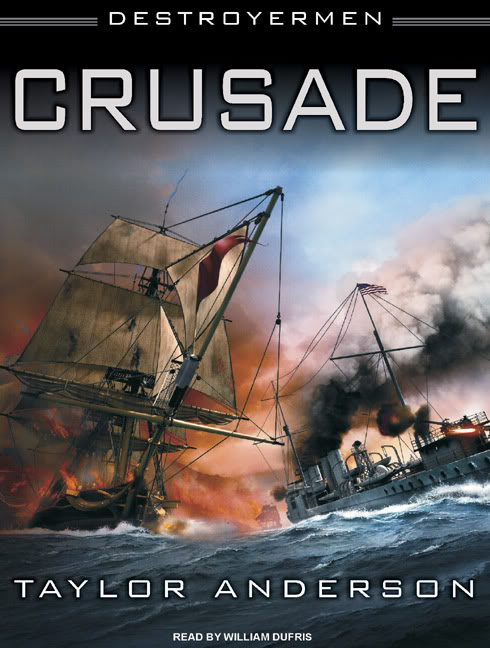
I just finished reading Crusade last night, the second book in Taylor Anderson’s Destroyermen series.  It still hits that oddly specific sweet spot I mentioned before, with alt-history technological bootstrapping and idealized social dynamics being the name of the game.  I believe I referred to Into the Storm as a strange mix of Stirling and Flint, but I’ve come to a better understanding of these books’ oddly specific conflux of flavors.  To envision Anderson’s style, strip away most of Stirling‘s semi-religious influences and replace what remains with faith in Honor and Doing What’s Right, convert Flint‘s cheerfully proletariat bonhomie into something just a bit more hierarchical, and toss in Weber or Ringo‘s blood-spattered military adventurism.  Now you’ve got a good approximation of Anderson.  (Just to be clear, I don’t expect any Oh John Ringo No! moments).

This second book in the series sticks with the same characters we met in the first one, and expands the cast slightly to give us a better perspective of the foes our protagonists face.  The setting remains the same, and the various characters on the ship are still wonderful to follow around.  I still sometimes felt like I was reading about a Chopper’s gang from Apocalypse World, and the sometimes aggressive, sometimes malicious pranking and posturing of the crew is reminiscent of my own experiences of living with a large group of other young men.  People are convincingly selfish and obsessive about their various areas of responsibility, and I’ve really enjoyed seeing the gradual induction of non-human characters into the ship’s crew and watching how they adapt to their duties and adopt the mannerisms of the other characters around them.

Ok, speaking of adapting, I need to mention something that I brought up last time as a concern; Anderson very carefully carries through on representing stereotypical 1940s gender roles, and I found that a bit off-putting (not the accuracy, but the roles and expectations themselves).  Fortunately, since the American humans aren’t the only culture in the book, there are groups of characters who aren’t bound by those gender-strictures.  But Crusade doesn’t look much deeper into the disconnect between the human conceptions of propriety and the conceptions of their new Lemurian allies.  I said that I’d be dissatisfied if that didn’t change… and it didn’t really change, and I am dissatisfied.  At the same time, the topic has certainly been discussed (briefly, or as a source of disconcertion) by the characters even if not much has come of it thus far, and it looks like there may be more change coming down the line.  My guess would be that such change will inevitably be lower priority for the story than the themes of military and honor, but I’ll keep reading and keep hoping that the change will come some point soon.  At a guess, the alteration of gender expectations will come about as a fait accompli as more of the humans die and are replaced by Lemurians.  Go figure.

Those quibbles aside, I’m still enjoying the series.  If you liked the sound of the style amalgamation I described above, you’ll probably enjoy it too.

Deep Wizardry, by Diane Duane

Deep_Wizardry_NME_2


Yes, that is a truly massive shark.  The cover of the version that I read had something to do with a whale, but I like this one better.  I thought I’d already reviewed this book, and it was only as I was sitting down to write my review of the next one in the series that I checked back through my previous posts and found that I was wrong.  So before I tell you my thoughts on High Wizardry, let me tell you how I felt about Deep Wizardry.

The quick and dirty version is as follows: Diane Duane is good at her job, and she knows how to write books about young children taking on incredible responsibilities and facing overwhelming decisions… Which is a decent description of growing up, when I think about it.  Of course, most of us aren’t given access to powerful magical forces except in a metaphorical sense.  Deep Wizardry, like So You Want To Be A Wizard, is quality children’s literature; I’ll even go further and say that it’s good enough to merit your attention and reflection too, child or not.

With the exception of the “I think I read most of this before” section, my review of Deep Wizardry really is very similar to my review of So You Want To Be A Wizard.  I’m still more than a little bit in awe of Duane, she still writes excellent YA adventure with exceptionally mature themes, and she still does an incredibly good job of not talking down to her audience.  What I hadn’t really appreciated before is just how well her chosen storyline and protagonists map onto the experience of going through puberty and becoming an adult.  Call me stupid, call me slow, but though I noticed it in the first book I took another book or two to finally decide that it was more than just a fortuitous construction of the moment.  This, of course, has simply left me more appreciative of Duane’s writing chops, and her choice of subject material.

As per usual, there’s more after the break.

Continue reading

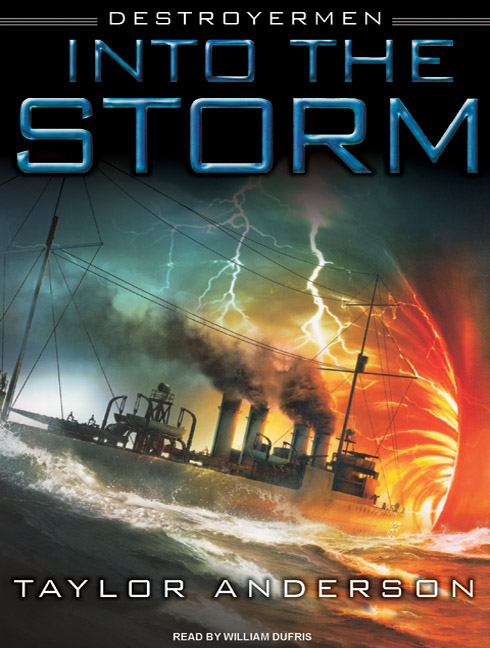
Into the Storm, by Taylor Anderson

islg


This book falls into a strangely particular sweet spot for me; there’s something about the alt-history technological bootstrapping genre that I find appealing, and the obviously idealized social dynamics presented in this book are endearing if not convincing.  Furthermore, S.M. Stirling’s cover blurb pulled me over the edge into reading it.  I was not quite as automatically engrossed as he apparently was, but Into The Storm has made excellent reading material while I’ve been laid up following an unfortunate paintball incident.

The basic concept is very simple, transposing an American WWI destroyer caught in action against the Japanese at the opening of WWII from our world into an alternate world in which (more or less) the dinosaurs never really died away.  The story is all about the destroyer’s crew doing their best to survive in a strange new world, and doing what they can to find friends who might be able to help them keep their ship operating instead of simply falling apart.  It feels a little like S.M. Stirling’s Island in the Sea of Time crossed with Eric Flint’s 1632, but instead of dealing with a town or island it focuses entirely on a very small warship.  The crew is wonderfully convincing, right down to their malicious pranking and oddly neurotic idiosyncrasies, and I enjoy following all of their various perspectives as the story progresses.  The crew actually reminds me a little of the residents of an Apocalypse World hardhold or members of a Chopper’s gang.

Now, when I say “endearing if not convincing” up above, I don’t mean to disparage the author’s conception of hierarchical systems founded on an egalitarian society.  As it’s presented, it seems to work pretty well.  But the author’s clear preference for the system by which ‘the good guys’ operate is so transparent that I feel unable to accept it at face value.  I don’t have experience with living and working on a US Navy vessel, I have no idea whether or not Anderson’s description is anything like the truth, and I suspect that what Anderson describes is closer to the ideal towards which his hierarchical system strives rather than the reality.  I’m certainly aware of many failure modes that would prevent a hierarchical system from working nearly so well as it’s presented in the book.  I think of it as a variation on the likable / wish-fulfillment protagonist problem; it’s really not actually much of a problem, so long as we remain aware of the fact that we’re idealizing the subjects of our attention, be they characters or systems of governance.

Also, I found the gender relations of the human characters (and characterizations of the male vs. female human characters) to be pretty frustrating.  I had a hard time taking the characterizations of the male and female leads seriously, because they seemed so stereotypically 1940s to me.  At a guess, Anderson was trying to ensure that these things were appropriate for a group of people in the US Navy in 1942 (unsurprising given his previous work as a technical and dialogue consultant for movies and documentaries), and I’m ok with that for the most part even though it turned me off the book to some extent (some things, methinks, are better left in the 1940s).  But he doesn’t really explore any of the disconnect between the humans’ attitudes and those of their newfound allies in this first book.  If/when he does get around to exploring that, and looking at the ramifications of further association between their two cultures, I think that has the potential to be super interesting.  If he just glosses over that topic over the next several books, I suspect I’d be a bit disappointed.

So!  If you’ve read and enjoyed Stirling’s Island in the Sea of Time, or Flint’s 1632, I suspect you’ll enjoy this book as well.  If you haven’t read them but are intrigued by the idea of a group of wanderers on the seas of time and space, doing their best to reestablish themselves safely in a dangerous and not-so-subtly different world, you’ll also probably enjoy this book.  If you don’t think you can tolerate some nearly-stereotypically-1940s gender roles, or some very nearly Apocalypse World-like shenanigans, maybe wait and see what I have to see about the next book before deciding whether this one is worth it.

Resistance, by Samit Basu

51WuUYWtYeL._SY344_BO1,204,203,200_

When I wrote about Turbulence a little more than a month ago, I agreed with the book’s cover blurb in my demand for a sequel.  But while it’s hard to make something that is truly good and worthy of others’ consumption, it’s even harder to make something as good to follow the first.  Fortunately, I think Basu succeeds where many others have failed, and offers a sequel that not only delivers on the promise of the first book, but follows it appropriately in tone and structure as well.  If you want good superhero fiction, this is an excellent place to start.  Or, rather, Turbulence is a good place to start.  Then you should read this.  And for heaven’s sake, don’t read them in the other order, you’ll just spoil lots of cool stuff from the first book.

Like last time, I find myself in agreement with the cover blurb on Basu’s book, and yet again I think that the blurb misses something even more wonderful; I’m still convinced that Samit Basu is some sort of Bob Ross of words, successfully conjuring worlds out of thin air with the sparsest of descriptions.  Unlike last time, I took more than one day to finish reading this book.  Perhaps if my reading hadn’t been interrupted by working at an overnight summer camp I would have powered through this book as well.  I can’t tell whether I did not feel as drawn in by Resistance as I did by Turbulence because of those delays or because of something else, but I’m happy to give the book a pass given how much I enjoyed it anyway.

Suffice it to say that if you liked the first book, you’ll like this one too.  And if you haven’t read the first one but are down with non-American supers and women who aren’t just given the short end of the stick, you should definitely read Turbulence (and then Resistance).  If you like superhero stories at all, I suspect you’ll like Basu’s work here.  More on the details after the break…

Continue reading