I was talking with a friend of mine recently about worldbuilding and how to teach the skill, and I realized that I’m not sure where to start.
I think my perspective is warped. I’ve been making up worlds for stories and games for so long, the whole process has become second nature. I haven’t consciously examined the process of worldbuilding in a long time.
Given that I’m planning to run a class for people who want to be DMs (or GMs, or storytellers, or whatever the hell you want to call the person running your roleplaying game), I think I need a clearer approach. I do have some ideas.
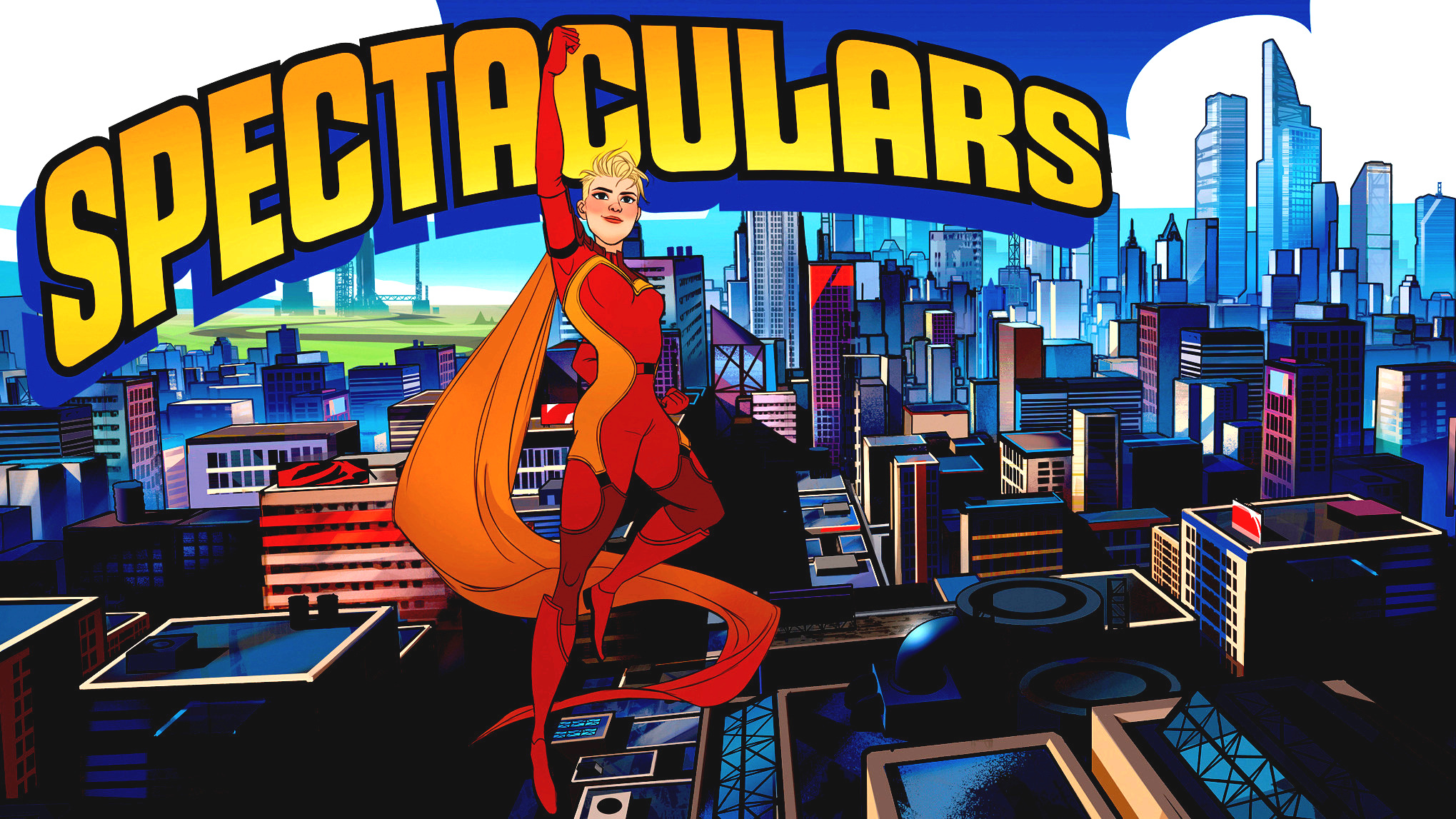
Spectaculars is a superhero RPG with a simple roll-under percentile die system. There are no cumbersome lists of modifiers, and the math required at the table should be accessible to precocious eight or nine year-olds. The game is clearly a love-letter to superhero comics, right down to players’ ability to invent backstory and create connections at the drop of a hat by spending “Continuity Tokens” to make up past issues with a relevant story detail. The game could also easily mimic the feel of superhero cartoons like Batman: The Animated Series, or any other episodic story where inventing background is expected or would be useful. Whatever your inspirations are, Spectaculars shines brightest when you’re playing episodic adventures in the context of a larger narrative arc. This is especially true if you’re more excited about your game’s larger story than you are about the gritty details of how a specific power works, or quantifying whose ”Mega Power Blast” is bigger.
Void Crew, Deep Rock Galactic, and Helldivers 2: three co-op games, three “shooters” (kind of, more on that later), and three games that build on their own self-contained fiction. I’ve played all three. I’ve enjoyed all three. So why do I only admire two of them?
The 5e alignment system is a useful shorthand and a misleading trap. The Outer Planes as presented in the 2014 Player’s Handbook and Dungeon Master’s Guide only make the alignment system’s problems worse. The perfect overlap between alignments and planes—and the total lack of alternative Outer Planes—reinforces the alignment system’s worst inclinations: easy stereotyping, reductionist thinking, and a restriction of creative possibilities.
Hot take: clerics in D&D 5e feel like the blandest superheroes. Without a clear relationship with a greater power or a faith, it’s easy for them to float in the narrative void like a cornucopia of bandaids. The solution lies in placing more expectations on them, constraining them, and giving them a deeper connection with the story’s world and whatever they serve.
I love fantasy strategy games. I’ve played piles of them. That includes most of the Age of Wonders series, Master of Magic (the original and the new version), Warlock, Fallen Enchantress, Heroes of Might and Magic 1 through 5, and more. But Dominions outshines those games in multiple ways.
If you’re already someone who plays the Dominions games, you’ll have heard about Dominions 6 and you’ll (probably) already have it—or you’re waiting for the right moment to buy it. I’m more interested in those of you who haven’t played Dominions.
The last time I wrote at length about a Dominions game was a decade ago (damn), for Dominions 3. I said around then that I feared falling into the game, feared losing myself in its intricacies. That fear was appropriate. But I also wrote about the lure of a game that offered such stories—can my demon monkey kingdom raise enough hordes of undead and bleed the land dry fast enough to destroy the other would-be godly tyrants?—and I was right about that too. Dominions 6 isn’t accessible in the same way that I’d want if I were introducing novices to strategy games, but if you’re willing to dig into this game it will scratch itches that other games could never satisfy.
Check out a game that will let you turn your warriors’ skin to tree bark, throw fireballs, hunt the minds of enemy mages, accelerate time so that the whole world withers and dies, and steal the sun.
This is pulled from a conversation I had recently about optional rules.
Rules combine to make systems, and systems create flavor by shaping the permissible and supported space of a game. Any skillful or willful group of players (the storyteller is a player too) can play outside the rules of the game system they’re using—that’s normal!—but that play isn’t supported by the system, and it isn’t part of the flavor the system creates.
I reviewed The Three Musketeers: D’artagnan recently, but I only realized I hadn’t yet reviewed it because I was deep in the process of creating a T3M inspired setting for an RPG. I knew I wanted the intrigue, the swordplay, the ambition, and the thrill of being small players discovering a much larger political game. So I hunted for and pulled out the themes that felt crucial to T3M’s fun, trying to find ways to create a setting that would evoke those while also incorporating the elements my players contributed.
Vast is admirably ambitious. It’s designed for up to five interlocking, competing, asymmetrical roles that all fit together beautifully to make this boardgame a nail-biting, neck-and-neck race toward victory. With a few important caveats, each player has their own rules reference sheet for their role, encompassing everything they could need to know in order to play the game. And with another few important caveats, everything can flow smoothly as each player chases their own victory conditions, pushing the game onward towards a thrilling conclusion.
I was trying to convince my sibling to play Blades in the Dark with me, and kept running into a wall. They just didn’t want to—more than that, they said it felt icky. I, like a good little sibling, kept poking at them until truth poured out.