Love/Hate: Priming your game with NPCs & Groups

In our own world, there are people we love and people we hate. Our feelings about others might be distant or dispassionate, or they might be personal and urgent. Sharing a love for the people of a neighborhood, a country, a sports team, or a gang is a quick and easy way to bond with someone else—as is sharing a hatred.

As storytellers, we can use this.

Continue reading

Goofs vs Feels: The Emotional Tenor Of Your Game

You’ve all made your PCs. You’re all ready to dig into a big game. This time, you think, the game will be serious and deep, full of emotional complexity and resonance. And then someone makes a bunch of fart sounds, Boblin the Goblin is the only recurring non-player character and he’s obviously a joke, and your biggest emotional payoff is a PC’s binge-drinking celebration of their big gambling win.

You want a serious game full of big feels. You get a goofy game full of jokes and idiocy. The heartfelt depth and emotional bleed you came here for are nowhere in sight. Why? And how can you change that?

Continue reading

How to make deep NPCs

Are you tempted to make every NPC in your game a deep and complex character?

Don’t.

I love creating and playing NPCs in my games, and it comes easily to me. Part of this is because I’ve done improv theater—lots of improv theater. But mostly it’s because I use a few basic guidelines when I’m coming up with NPCs.

Since I apparently haven’t written anything about making or running NPCs since that article about naming them from over a decade ago, I figure this post is overdue.

Continue reading

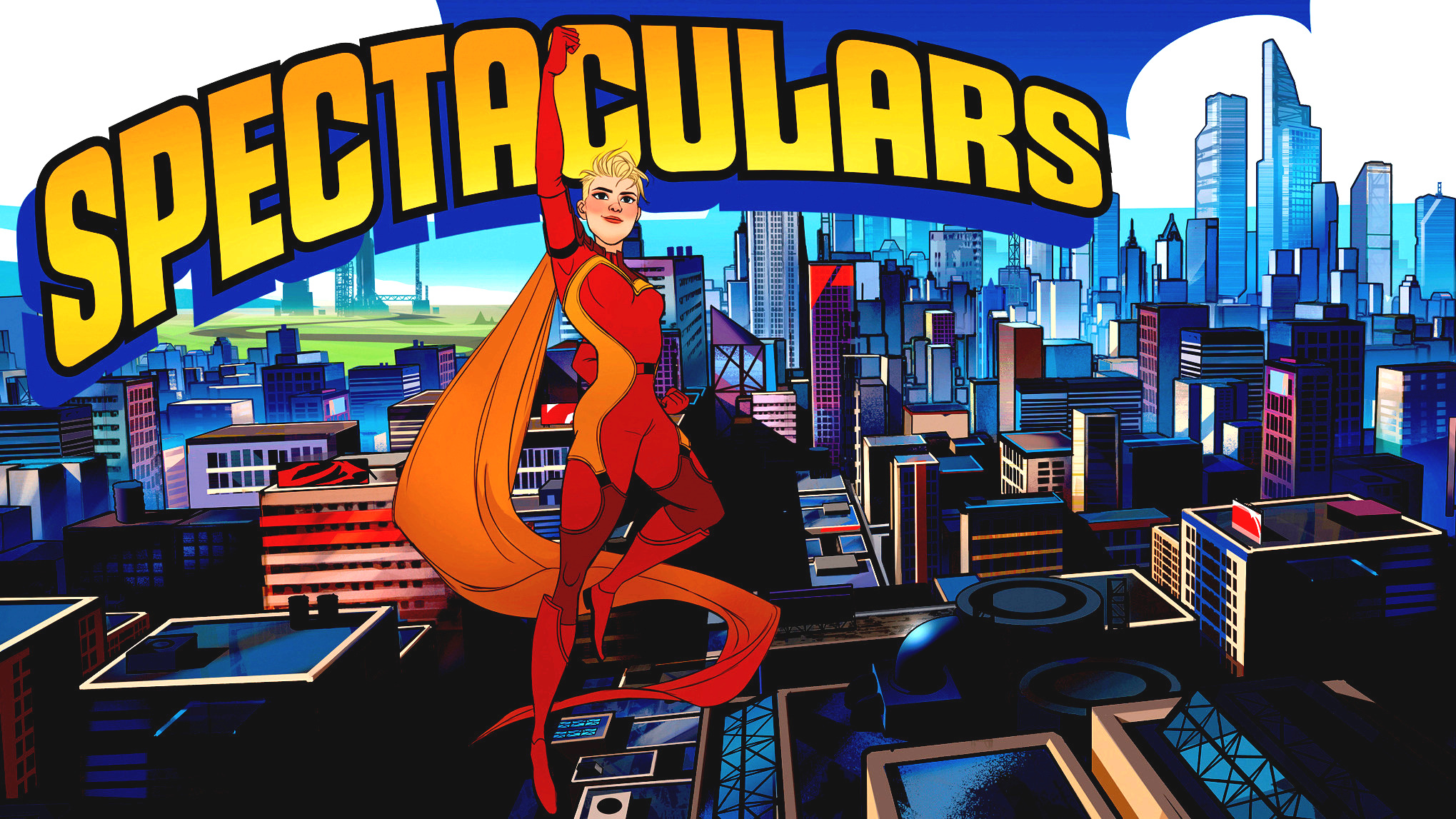
Spectaculars, lightweight superhero fun

Spectaculars is a superhero RPG with a simple roll-under percentile die system. There are no cumbersome lists of modifiers, and the math required at the table should be accessible to precocious eight or nine year-olds. The game is clearly a love-letter to superhero comics, right down to players’ ability to invent backstory and create connections at the drop of a hat by spending “Continuity Tokens” to make up past issues with a relevant story detail. The game could also easily mimic the feel of superhero cartoons like Batman: The Animated Series, or any other episodic story where inventing background is expected or would be useful. Whatever your inspirations are, Spectaculars shines brightest when you’re playing episodic adventures in the context of a larger narrative arc. This is especially true if you’re more excited about your game’s larger story than you are about the gritty details of how a specific power works, or quantifying whose ”Mega Power Blast” is bigger.

Continue reading

No more bland-aids: make your Clerics interesting

Hot take: clerics in D&D 5e feel like the blandest superheroes. Without a clear relationship with a greater power or a faith, it’s easy for them to float in the narrative void like a cornucopia of bandaids. The solution lies in placing more expectations on them, constraining them, and giving them a deeper connection with the story’s world and whatever they serve.

Continue reading

Game system flavor & optional rules

This is pulled from a conversation I had recently about optional rules.

Rules combine to make systems, and systems create flavor by shaping the permissible and supported space of a game. Any skillful or willful group of players (the storyteller is a player too) can play outside the rules of the game system they’re using—that’s normal!—but that play isn’t supported by the system, and it isn’t part of the flavor the system creates.

Optional rules are opportunities…

Continue reading

Banality and slow-burn horror

What if horror games are actually driven by banality? Is Call of Cthulhu best when it’s mostly full of the everyday?

Continue reading

Worldbuilding: leave room for later

Leave yourself room for later. If there’s anything I’ve learned from doing lots of worldbuilding—for my own linear fiction and for the collaborative fiction of RPGs—it’s that trying to fill every last nook and cranny of a setting is a daunting task. And actually filling up everything is choking, stifling. Don’t fill up everything. It leaves no room for the future, and it leaves no room for anyone else.

Continue reading

Dogs in the Vineyard, moral conundrums, quick thoughts

Somehow, despite a decade of posts on this blog, I’ve never gone in-depth into Dogs in the Vineyard or what I love so much about it. There’s more to Dogs than I could easily cover in a single post: cooperative story-telling and turn-taking, cinematic descriptive and narrative tools, a conflict mechanic that encourages brinksmanship and escalation, a well-articulated method for understanding what’s at stake… all those elements are a delight.

But there’s another piece that Dogs explicitly encourages groups to home in on. That’s the experience of wrestling with moral conundrums, something many modern CRPGs both want—and struggle—to deliver. That’s what I’m focused on today.

Continue reading

Characterization & Character Creation, WH40k Darktide

This is not a full-on review of the game. If you like the developer FatShark’s previous title Vermintide 2 (Vt2) or other games in the Left 4 Dead co-op genre, and you’re willing to experience the teething problems of a game that needs a few more updates for performance and stability, then you might enjoy this. It’s certainly the best L4D genre game I’ve played despite still feeling rough at times. I’m having fun playing it with friends. 

Also, the setting is Warhammer 40K, which is such a powerfully cynical and dystopian flavor as to be nearly intolerable (it’s certainly intolerant). If you know you hate the fiction of 40K, you probably don’t want to engage with this either. I waffle on the topic of 40K: my enjoyment of it relies on knowing my fellow players aren’t actually unironic fash-enthusiasts.

But this post isn’t about all that. It’s about how Darktide’s character customization systems work, what they imply to me, and how they affect the game. 

Darktide’s character creation is fascinating to me. But it’s especially fascinating because of how it differs from Vermintide 2, and from other games available right now.

Vt2 has five different basic characters to choose from. They’re distinguished from each other in many ways (gender, voice, appearance, play style), and each has a large number of voice lines—some one-liners, and some conversations which emerge when different characters are present in a given mission. All those things, and especially the voices, have a big impact on how the character is portrayed in my mind. I’ve played enough of the game, and heard enough of their conversations repeated across the missions, that I can talk along with them at times.

Honestly, that reminds me a little of how much I played the original GTA 3. I listened to GTA3’s radio for so long that I could sing along or talk along with all the different stations.

But like those radio stations, Vt2’s characters and their voice lines are static. They eventually repeat. Each mission, you pick from the several different character options, each one with a distinct voice. I’ve played enough—and their voices are distinct enough—that I can tell who’s talking whenever someone speaks. Sometimes the characters are amusing, sometimes they are awful, sometimes they tease each other in a ridiculous fashion. Anyone who’s played the game for a while knows who I am if I call someone else “lumberfeet.”

Other multiplayer FPS games have done similar things to Vt2 with their characters’ voice lines. Apex Legends has a host of different characters, each with a distinct personality and voice. They don’t have mid-game conversations per se, but they do have intro and outro lines and do automatically vocalize things that you’re doing (there are barks for your reloads, for you pointing out a location, for changes in the game state as the arena shrinks, etc.). Apex Legends’ in-game characterization is evocative and gradual, slowly revealing more details about them and their view of life as you play them longer and experience more of their barks. They also have tie-in comics sometimes, and little movies for each update. But the characters aren’t really conversing with each other much in-game, or building up the setting’s fiction mid-match.

And, as with Vt2, characters in Apex come pre-made. You choose the flavor you want, you don’t make your own.

Contrast that all with Deep Rock Galactic. DRG makes frequent use of voice lines, with different voices for each of the four classes in game. But while you can customize your dwarf’s appearance in far more detail than is possible in Apex Legends (DRG pays a lot of attention to hair, facial and otherwise), your dwarf remains something of a cipher. You’re just another dwarf mining in space for the Company.

Darktide has taken a different approach here.

There are character classes, archetypal options a little like those that were baked into the characters of Vermintide 2. But there are so many more options to choose from during character creation. Choosing an archetype is just the first step, followed by choosing a childhood, a profession, a defining moment… you’re making a backstory for your RPG character.

And it’s not yet evident to me how they affect the final game.

Some of them, I think, play into what voice lines your character uses. Certainly your choice of voice is restricted by what planet your character comes from. But I can’t tell whether my choices have much impact in the game beyond that. Maybe in the future FatShark will introduce elements of the game that are dependent on characters’ backgrounds (presumably cosmetic, so that you needn’t pick a given background for mechanical reasons). I’d happily give my Ogryn a floppy hat specific to his youth on an agricultural world, where he spent all his time herding great big beasts. Or maybe FatShark will record more voice lines that have to do with those backgrounds, and my friendly Ogryn will opine on farming.

But while I’m fascinated by how customizable character creation is right now, it doesn’t yet feel like it’s living up to its full potential. The plethora of options available, and the considerable difference they imply, feel like they should have more impact in-game than I’ve found so far. And I suspect that developing that further is on FatShark’s todo list—somewhere behind all the technical fixes they’ve already pushed out, and whatever other fixes they’re still planning to implement.

A funny side-note: I almost do a double take whenever I hear the voice actors from Vt2 voicing new characters in Darktide. Vt2’s writers and voice actors did an excellent job of tying together voice and character, and I’m really glad the voice actors got more work in Darktide—it’s a little like hearing old friends. But it’ll take me a while to get used to hearing them without them being one of the Übersreik Five.

I also don’t want to downplay the value of Darktide’s character creation as it currently exists. I’ve made up little backstories for my two characters so far, and had great fun with that. Part of that is because of who I am, and my predilection for story-making. But it’s more possible because of the smart move on FatShark’s part of making that bit of background more accessible to players. I certainly feel like my Darktide characters are more “mine” than any character I played in Vt2 ever was.

This means that even if FatShark never does anything more with the character backgrounds, even if they leave them as-is, they’ll still have done more to make character creation feel personal than any other FPS I currently play. No, it’s not up to my expectations as storyteller. And yes, I see more they could do with it. But I like it, and we shouldn’t underestimate readers’ creative role and the value of head cannon.