Butterfly in the Sky (2022)

I have started (but not yet finished) Butterfly in the Sky, the documentary about the creation of Reading Rainbow. I stopped when I did because I knew that if I kept watching I’d watch all the way through, and I had work to do. The documentary hooked me and delighted me—much as the show did when I was little.

I grew up on Reading Rainbow (and Star Trek: The Next Generation, which created some confusion for young me). Young me didn’t understand why Geordi La Forge didn’t need his visor when he was telling me about books…

Continue reading

The Three Musketeers: D’artagnan (movie, 2023)

I saw this months ago, and only just realized I’d never mentioned it here.

I thought The Three Musketeers: D’artagnan was fabulous. Maybe I was brain-addled, or drugged without my knowledge, but by the end of the film I felt happy, and satisfied, and excited, and… just wow. I was floating. I really liked this movie. It’s one of the rare movies I’ve seen that made me immediately want to watch it again.

If you hate swashbuckling, swordplay, skullduggery, or the idea of watching a combination spy thriller and political drama full of swordfights set in 17th century France… clearly we have different tastes.

On the other hand, if any of that sounds fun to you… this might be the best version of The Three Musketeers I’ve seen.

Continue reading

Filler, fight scenes, and Marvel fluff

I practiced stage combat years ago. I know how to choreograph a decent fight. I love watching skilled practitioners strut their stuff. This is why I love watching old Jackie Chan movies and the John Wick series, why I marvel at Olympic gymnasts or any other athletes where I have some basic understanding of just how utterly awesome these people are at what they do. I appreciate skill, and I admire craft.

Making a big blockbuster action sequence takes a lot of work, and can be done well. Sometimes I like that style. The first time I watched the first Avengers movie, I don’t think I was aware that the climactic fight took over twenty minutes. I enjoyed the spectacle, appreciated the work put into it, and didn’t care about how long it ran.

But many of those climactic fights feel like filler. Maybe I’ve seen too many Marvel movies, consumed them past the point of satiation. Or maybe… 

Continue reading

The back-into-it roundup, 11/2/23

There’s a wall that builds itself. It stands between me and my creative work. If I pass through it every day, I can knock it down a little with each trip—moving past it is never effortless, but the wall doesn’t have a chance to grow that much. If I don’t pass through for a while, the wall climbs and solidifies. Pushing past it gets harder the longer I wait.

I shared that image, that metaphor, with Ley when it came to me recently. They nodded, and suggested the metaphor of a quickly-overgrown path that I need to frequently bushwhack and clear. That works for me too.

I’ve been busy doing other work for a week or so. I didn’t think that would be such a distraction from my other writing, but it was. Fortunately, I had the Monuments Men post ready and was almost finished with another World Seed (The Blister is now available for sale!).

But now I’m trying to decide which fiction project to return to, how I want to start bushwhacking—and I’m being pulled in yet another direction by Skip Intro’s Veronica Mars episode for the Copaganda series. Sometimes I watch or listen to interesting analysis (critique and/or appreciation) of stories and find that spark of inspiration. This was one of those times. I don’t know where I’ll take it or what I’ll do with it. Maybe I’ll hunt down more old noir and see if that gives me any new clues.

That’s my ramble for now.

Wait, I should have another review showing up on Geekly Inc soon. I reviewed A Power Unbound, which I enjoyed. I’ll probably have more for you here about that another time, and I’ll let you know when that post has gone live.

Oh, it’s already up! Enjoy.

The Monuments Men (2014)

I’d been meaning to watch this ever since it came out in 2014. I’m a sucker for WW2 stories, and I like art, so I was curious to see a WW2 story about people dedicated to protecting art (with a basis in history). I wasn’t disappointed, but the movie was an odd experience. 

There’s a quote attributed to François Truffaut, “There’s no such thing as an anti-war film.” The Monuments Men might be the closest I’ve seen a movie come. But it also felt tremendously self-satisfied to me, in a way that eroded that anti-war feel. Let me explain.

Continue reading

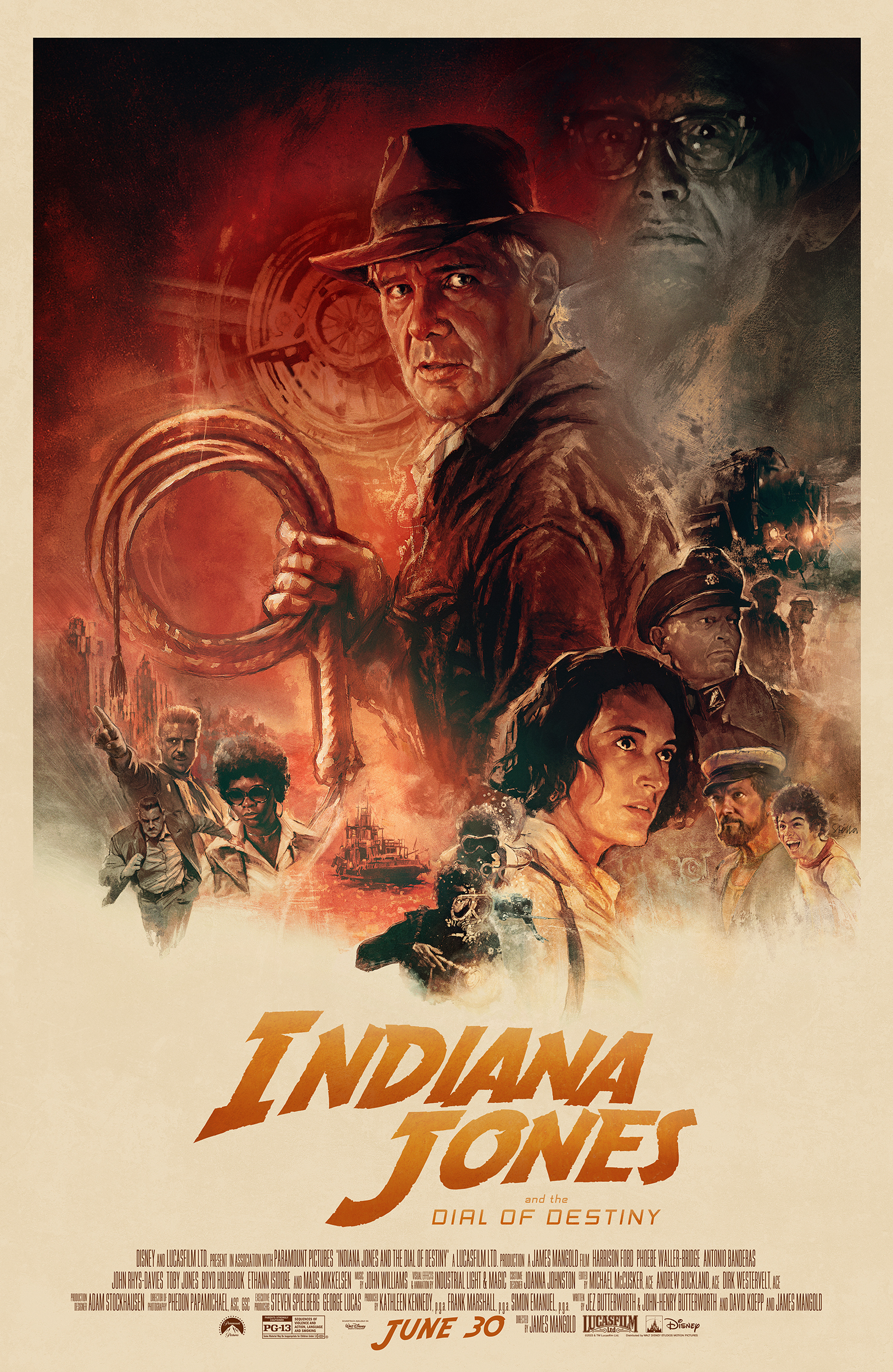
Indiana Jones and the Dial of Destiny (2023)

I finally saw this on a small screen. I…

I had fun?

I’m not writing about it here because it was stunning or notable. Hell, part of why I’m writing about it is because it wasn’t stunning or notable. I just rewatched the Tintin movie recently, and I would much rather rewatch that than spend much time dwelling on Indiana Jones and the Dial of Destiny. But I love adventure stories, and this movie is precisely that—and I grew up loving Indiana Jones. So why did this movie feel fun but uninspiring, and what nuggets of goodness can I still find in it?

Continue reading

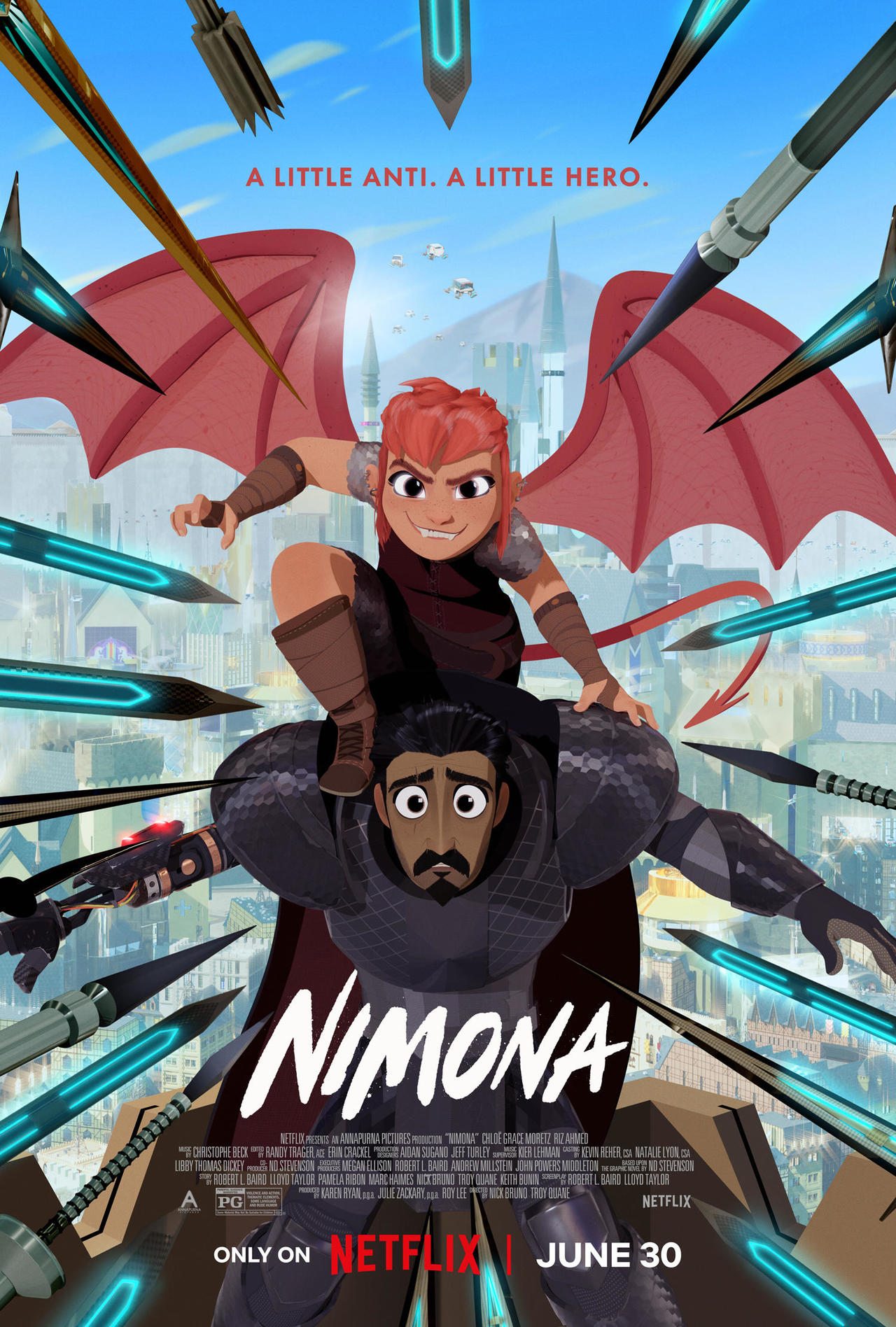
Nimona (Netflix 2023)

I loved the comic by ND Stevenson

I loved this movie too, right up to the end, even though it was clearly its own take on the story. 90% of this movie, maybe 98% of this movie, did more or less everything I wanted. The actors, animators, and writers did a marvelous job. Then, at the very end, the movie really frustrated me.

I can’t meaningfully talk about this movie, and how I feel about it, without spoiling the end. Suffice to say I didn’t expect this totally predictable ending. I wish they had written a different one. I’ll mark the spoilers below.

Continue reading

Traveling

I’m traveling, hence missing my regular post yesterday. I have some thoughts to share in short essay form some time soon, but I didn’t manage to finish writing them before I left. Because I was traveling I also saw some movies, so here’re some quick sleep-deprived impressions.

Continue reading

Palm Springs (2020)

So, look, Palm Springs checks a lot of boxes for me.

Palm Springs could have been half as good and would still have entertained me. Instead, this movie had me cackling and murmuring appreciatively by turns.

It’s a deeply philosophical character study wrapped up in a semi-absurdist grim comedy about life, and what it means to be a part of it. It’s my kind of good movie.

It’s got time loops. It has characters who feel believably human throughout the situations they’re stuck in. It takes the opportunity offered by playing with time loops to delve into what makes those characters tick, what they believe about the world, and how that drives the decisions that they make. There’s some love, there’re plenty of personal realizations and comedic moments, there’s a bit of enlightenment, and there’s a whole lot of dying (with very little gore).

I loved this movie.

That’s because…

First off, I’m a sucker for time travel. I’m even more of a sucker for time loops. I’ll enjoy stories built on either of those things, because they delight me even when other parts of a story aren’t as good.

Another thing I like: I like stories with characters who feel believably human. I like characters who feel internally consistent. I like characters who—even if they disavow this—have personal philosophies and worldviews that I can understand through observing the characters interacting with each other and their world.

Watching believably human characters play off each other and struggle with their beliefs about the world and life, seeing that done well, that’s a treat. It’s even better when I recognize some of the philosophical and spiritual underpinnings of the perspectives in play. 

Now, I don’t want all of my movies to be about people struggling with those perspectives on life. Nor do I want every movie I watch to be about people struggling with their worldviews as they intersect with others’. Someone no doubt argues that every story is that, probably Truby, but that’s missing my point.

Besides which, Palm Springs does all that without making it feel cumbersome. I say that it’s deeply philosophical, but none of that gets in the way of enjoying anything else going on in the movie. It’s the perfect approach to an “all-ages” philosophical text; much like those exemplary Pixar movies designed to entertain children and adults simultaneously, Palm Springs is accessible at any one of a variety of levels.

Though, uh, it’s not exactly a kid’s movie.

Still. If you want to watch Palm Springs as a romance, that’s available. If you want to watch it as an exploration of the Hindu and Buddhist teachings on reincarnation, proper action, suffering, and enlightenment, that’s there too! And if you’re looking for a grim comedy where some hooligans make a bunch of regrettable choices and suffer (somewhat) for them, that’s there in spades.

This movie will inevitably be compared with Groundhog Day, because… time loops. And because they’re so similar. Also, heh, this post is going up on Groundhog Day despite me having watched the movie maybe a month ago.

What I mean is, Groundhog Day is *the* present cultural touchstone for anything like Palm Springs. Hell, Groundhog Day digs through a lot of the same material and wrestles with many of the same philosophical questions. I doubt Palm Springs would exist without Groundhog Day. In a number of ways, Palm Springs feels like a modern update to the older story. 

That modern update makes a huge difference for me. In a good way.

Annnnnnd here we hit the *SPOILERS*.

For all that Groundhog Day and Palm Springs cover similar ground, Groundhog Day is trapped in a romance story’s paradigm. Winning the love (and belief) of someone not stuck in the time loop through engaging in proper moral action—and through showing off whatever skill you’ve developed over your eternity in this time loop—is the path out. That conclusion isn’t stated explicitly, but it’s sure as hell implied by the movie.

It’s a romance story. Love saves the day. Being a more moral human helps, and is important, but love saves the day.

Palm Springs offers that conclusion, and then explicitly rejects it. Right action, doing the right thing, atoning for previous faults or doing good wherever you can… don’t get you out of the loop. Being in love also doesn’t let you escape. Not even reaching peace and acceptance will bring you out.

But… they’re all important.

Escaping the time loop takes significant, hard work. And escaping the loop is important to the film’s plot. But it’s not achieved because “love saves the day,” it’s not “following the romantic plot brings escape from misery.” It’s something orthogonal to any of that.

No, the experience of finding peace, and of (mostly) doing the right thing by others, and of being able to love one another, those are all important for their own reasons. They have their own value. They can make existence better. And, critically for how this film compares to Groundhog Day, they ultimately aren’t the key to escaping the eternal time loop which is such an easy metaphor for existence.

Basically, Groundhog Day is a story about a trapped guy growing enough that he finally gets the girl and thereby finds freedom. Palm Springs is about people reaching enlightenment and finding joy—together, and as individuals.

I love that change. It means that Palm Springs doesn’t fall into the same Hollywood romance-logic trap. So many romance-genre stories build up romantic attachment into an impossible ideal that leaves any human relationship feeling flawed or inevitably doomed by comparison. Palm Springs nimbly vaults across that yawning chasm of bad writing which plagues so many genre stories, and feels more real and more human as a result. Because of that, I can enjoy the romance storyline without wanting to tear my hair out. I love it.

Another thing: Groundhog Day focused solely on one person. No one else was in the loop as well. That meant that there was no way for anyone else’s perspective on the world, on life, to respond to and adapt to any internal shift experienced by Bill Murray’s character. Yes, he could talk to other people, and yes they could share their whole perspective with him, and sure, he could come back and talk to them again another day with a different perspective. But everyone else was stuck in one place and time in their lives.

Palm Springs doesn’t do that. With multiple characters caught in the loop, it gives us a richer connection, more byplay between characters. The other people in the loop can come to their own realizations, they can grow and change and travel their own personal courses. They aren’t static.

That makes a phenomenal difference. What’s more, it means that when we’re given a deeper look at the life of these characters, their jumping off point for each repetition of the day, we can see how they’re trapped in turn by their own circumstances, their own pain. That, in turn, recontextualizes everything that’s come before. Laying bare the private sufferings of the characters, peeling back the layers for the audience throughout the movie, lends nuance. It makes them feel more human, and more comprehensible.

It also makes their growth, their changes, and the ways they play off each other so much richer. Those slow revelations feed neatly into how the characters’ perspectives bounce off each other over and over, changing a bit every time. It’s a well-established screenwriting technique—Truby loves it, see The Anatomy of Story—but this might be the clearest depiction of it that I’ve seen yet. It’s part of what had me muttering appreciatively, or just saying “wow,” throughout the film.

*END SPOILERS*

So.

Yes, I think you should watch it. I’m sure there are people who will see this movie and feel nothing, or be frustrated by things that I didn’t notice. Maybe if I watched it again I’d have a more critical perspective. But if you, like me, enjoy time loops and good human characters and dark comedy and a bit of romance and some philosophy… watch it.

Palm Springs is my kind of good movie.

Hoping for more Thufir Hawat

This is about Dune. It has some spoilers.

I saw news about filming for Dune: Part Two, and got excited again. I’ll try to explain a little bit of why.

First off, a warning for the unfamiliar. The book Dune has… problems. Plenty of them. It has uncomfortable themes of colonialism and orientalism baked into the original text, and those are still present in most interpretations of its story. It has white savior tropes. It has the gender norms and judgments of a White American man from the 1950s and 60s, complete with a fixation on effeminacy that would fit right in with creepy racist 1800s anthropology. Heck, Dune so exemplifies the troublesome and implicitly misogynistic “hard times make hard men” mythos that Bret Devereaux named his dissection of that mythos “the Fremen Mirage” when writing about it at ACOUP.

But in all that mess there are beautiful, very human stories–and I’d absolutely recommend watching Dune: Part One (preferably on a large screen with a very good sound system). One of those stories, one I’m desperately hoping to see finished on the screen in Denis Villeneuve’s Dune: Part Two, is the tragedy of Thufir Hawat. It’s a sad story of personal loyalty, betrayal and manipulation, and love, and it carries with it all the weight of classical dramatic feudal intrigue.

See, while Dune came out in the era of classic hard science fiction, and certainly takes place in a setting with interstellar travel and many other things we associate with hard sci fi, it’s focused on society and people rather than technology. It is feudal intrigue and political maneuvering in space, an extremely human-focused story exploring the impacts of a technologically constrained setting built from a wide variety of different inspirations. In many ways this is socially and personally focused “soft” sci fi, much as Ursula Le Guin’s work was (maybe the only time I’ll say Dune is like Le Guin’s work). 

Perhaps that personal focus is why Thufir Hawat’s story would fit as neatly in a Shakespearean tragedy as it would in any novel of spaceships and distant worlds.

I love Thufir Hawat in the 2021 version of Dune. Stephen McKinley Henderson does a phenomenal job. It’s Henderson’s performance which anchors my love for Hawat, and which leaves me hoping to see the rest of the mentat’s tragedy. I don’t recall having such deep and abiding affection for the character when I read the book (decades ago) or saw the David Lynch version of the movie (also long ago). Perhaps I would feel that connection if I reread the book today, but I wager my fondness would also be a reflection of how I feel for Henderson’s portrayal.

The relationship between Thufir Hawat and Paul Atreides is close. It’s avuncular. This rings true for basically all the Atreides retainers, even Dr. Wellington Yueh in his moment of betrayal, but you can see Hawat’s love for Paul—and his scathing self-judgment—in his immediate and anguished reaction to the assassination attempt against Paul. That continues through the rest of his time on screen, especially when we see his stone-faced, pained stiffness as people commend Paul for outsmarting the hunter-killer.

In fact, 2021’s Dune does a spectacular job of showing us the constellation of House Atreides’ retainers. Villeneuve put so much work into showing us the Atreides as a tight-knit family, as Paul’s family. And the actors played that family to the hilt. It was beautiful. The twisting of their emotional ties as they are caught up in the complex machinations intended to destroy them, the way Paul and each other family member reacts as they see their loved ones shorn away by treachery… it makes the fall of House Atreides all the more tragic.

No doubt that poignant tragedy is why I’m so caught up in the drama of the fall of House Atreides. And why I’m so looking forward to seeing Henderson return as Hawat in Dune: Part Two

I know what the book has in store. Thufir Hawat rises to prominence within House Harkonnen, replacing the Mentat Piter De Vries (poisoned following the Harkonnen attack on Arrakis). In his new position as Mentat for the Harkonnen, Hawat does his best to keep himself alive while setting the Harkonnen against themselves (moreso than they already were). When he finally learns the truth, that Paul survived, he kills himself rather than follow Baron Harkonnen’s orders to kill Paul.

It’s Shakespearean.

Denis Villeneuve has been remarkably faithful to the book thus far. And so I’m extremely excited to see Stephen McKinley Henderson bring all his remarkable talent to the sad path that awaits Thufir Hawat. Thufir Hawat is an excellent tragic hero, and I trust Henderson to once again remind me why I love a good tragedy.

I just hope that the full arc of Hawat’s story makes the cinematic cut.

This is me, sitting with fingers crossed, waiting for Dune: Part Two.