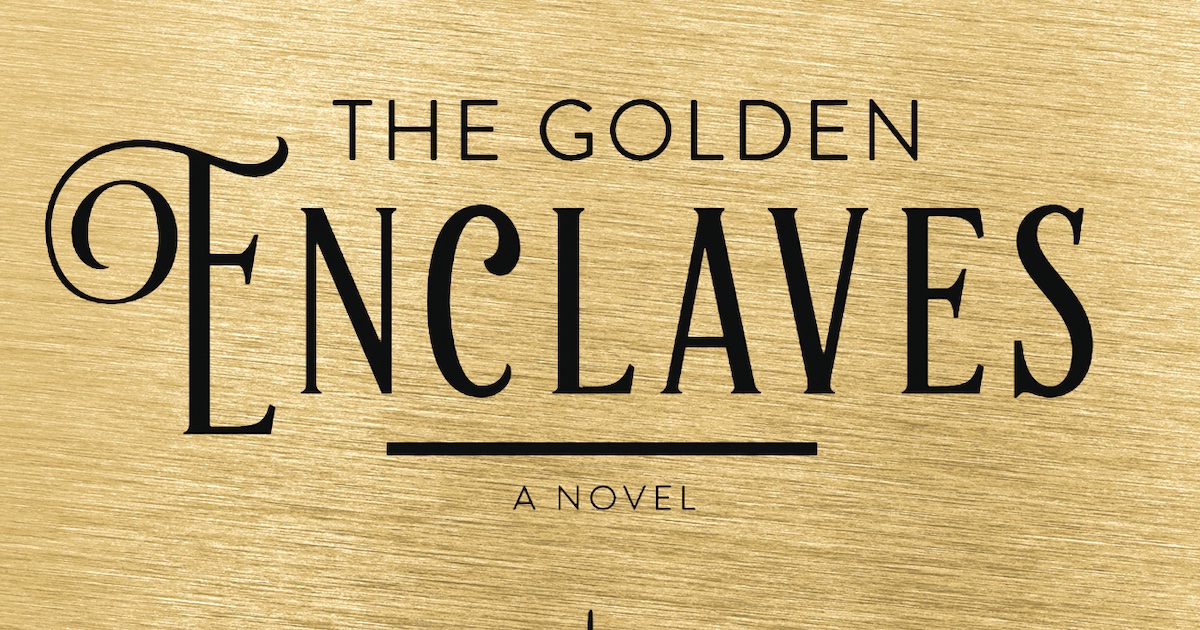
The Golden Enclaves, by Naomi Novik

I’ve deeply enjoyed reading Naomi Novik’s Scholomance series. I’ve recommended it to many people. And now, having finished it, I’m going to recommend it to you again.

This is how I started my review for the first book in the series:

“[W]hat if Harry Potter, but the school is *literally* a death trap full of monsters and there aren’t any adults around to ‘help?’” Add some socioeconomic inequality, teen drama, a pinch of prophecy, and an antisocial and justifiably angry teen girl for a narrator, and you’ll have a pretty good idea of what Naomi Novik’s A Deadly Education is like.

The Golden Enclaves delivers a solid close to that story. It is the third and final book in the series and—while the book ends with room available for more sequels if Novik changes her mind—the story is definitely concluded here in ways that will satisfy most readers. “Most,” because I know some folks will just want the story to keep going with these characters forever, which I believe is all according to plan for Novik (or at least a feature rather than a bug).

This book does what I wanted it to do. It resolves many hanging plot threads, it answers a series of questions I’d had since the first book, and—maybe most importantly—it dreams up a future in which people are able to make the world a better place, by hook or by crook. It has hope.

*That’s* the bit I’m most impressed by. That hope.

This book is full of a lot of struggle. It’s full of lots of traumatized kids. People die, or are hurt in awful ways.

But it’s hopeful. And it’s not hopeful in the Harry Potter “let’s go back to the world as it was, and pretend that without resolving any of the issues we’ve discovered everything will be fine” kind of way. It’s hopeful in the “let’s do our damndest to make the world a better place, without destroying it in the meantime” kind of way. The whole series has been hopeful like that, but this book really sticks the landing. And I love it for that.

So many YA and YA-adjacent stories are dystopian, and the resolutions to their dystopian problems rarely feel hopeful or real to me. Either the dystopian world remains awful, or the attempted fix doesn’t work, or the fix works but reeks of deus ex machina and only works because the author says it does.

Novik set up a whole bevy of problems in the first two books and made it clear that the world was an unfair and often awful place. She offered (difficult, dangerous) ways for her characters to work around those problems.And this book, like its series as a whole, manages to follow that thread through to the end without either disappointing me with a total lack of plausibility or falling into hopelessness.

Annnnnnd I hadn’t realized until now that I never reviewed The Last Graduate, the second book in this trilogy. That was an oversight. I’m not going to rectify it before I finish this post though, so here goes.

A warning: if you didn’t like El’s voice as the narrator in the first two books, this series might not be for you. Novik was extremely successful with her creation of her narrator’s voice. She does a good job of keeping everything inside El’s head, and of maintaining El’s voice as a consistent thing. Novik also manages to weave her story and world through El’s unreliability as a narrator without leaving us, her readers, totally bereft of clues that El might not be the most objective and reliable observer. I really admire that. It’s one of the things I love about these books. If that bothers you… you’re out of luck. Try a different series.

A separate warning: one of my friends mentioned El knowing or narrating a few things in this book that seemed outside of her scope of knowledge. I didn’t notice those as I was reading—I was quite caught up in the story and may have missed them. You might stub your toe on them though.

I’m not planning to dive deep into the plot of this book, but I will say that reading more will probably spoil you for the previous books with implications if nothing else. I’ll also casually drop in a few spoilers after this paragraph without further warning. If you care about that, I suggest giving the first book a go. I loved all three, I recommend them, and Novik has done a good job of starting this series as she meant to continue it. The series isn’t bereft of twists, but it’s very thematically consistent—if you like the first book you’ll probably like the rest, and vice versa.

The Golden Enclaves picks up precisely where The Last Graduate leaves off. Very precisely. And the rest of the story doesn’t honestly take all that much time as the setting reckons it. There’s a little slow period near the beginning as El tries to recover from her time in the Scholomance (more or less a machine for traumatizing children until they’ve survived hell). But after that, things move a bit faster. And they snowball wildly out of control, as El finds out what’s been going on outside the Scholomance while she and all the other kids were locked in hell.

Despite this—or actually because of it—there’s still plenty of time for Novik to ladle in several more hefty servings of revolution and commentary on inequality, until they become a driving factor of the story. That’s perfect, because it’s part of what I’m here for. She also adds more queerness, as she did in The Last Graduate, but where it felt unforced in The Last Graduate here it feels more like a surprise.

Don’t get me wrong, I’m still here for it. I’m glad that Novik added more queerness, I’m glad to see it in this story. And next time I would love to see her do more of that earlier in a series. Having El find out that she’s surprise-bi in book three, however, felt a bit like a curveball given how carefully Novik sets up almost every other story element, like Novik improvised that element where she’d planned all the rest. Or maybe I was too oblivious, because one of my friends was shipping El and Chloe really hard at the end of book one.

Anyways. My words and thoughts are wandering.

If you want to read about wizard revolutions, or about magically obstinate people warping the world around them into a less destructive and more just place, this is for you.

I love this book. I love this series. I recommend them both. I hope that you enjoy them too.

p.s. my partner pointed out that I gushed more about this book in person than I did here, and I’ve made a couple edits following that. Don’t hold my gray brain weather’s bland tone against this series, I really did delight in these books, and in sharing them by reading them aloud to my partner.

Review of A Restless Truth on Geekly Inc

I’ve got another review on GeeklyInc for you, here. This one’s about A Restless Truth, sequel to A Marvellous Light, both of which I enjoyed a great deal. Spy fiction, high society drama, romance, magical intrigue… it all fits well together. I may give you more of my thoughts on the book here in the future, but for now I suggest heading over to Geekly Inc to see my words!

The tl;dr: Freya Marske does an excellent job blending sapphic romance, murder, magical society drama, and sexy times. I continue to be delighted by her blending of spy fiction and society drama, and I’m looking forward to book three!

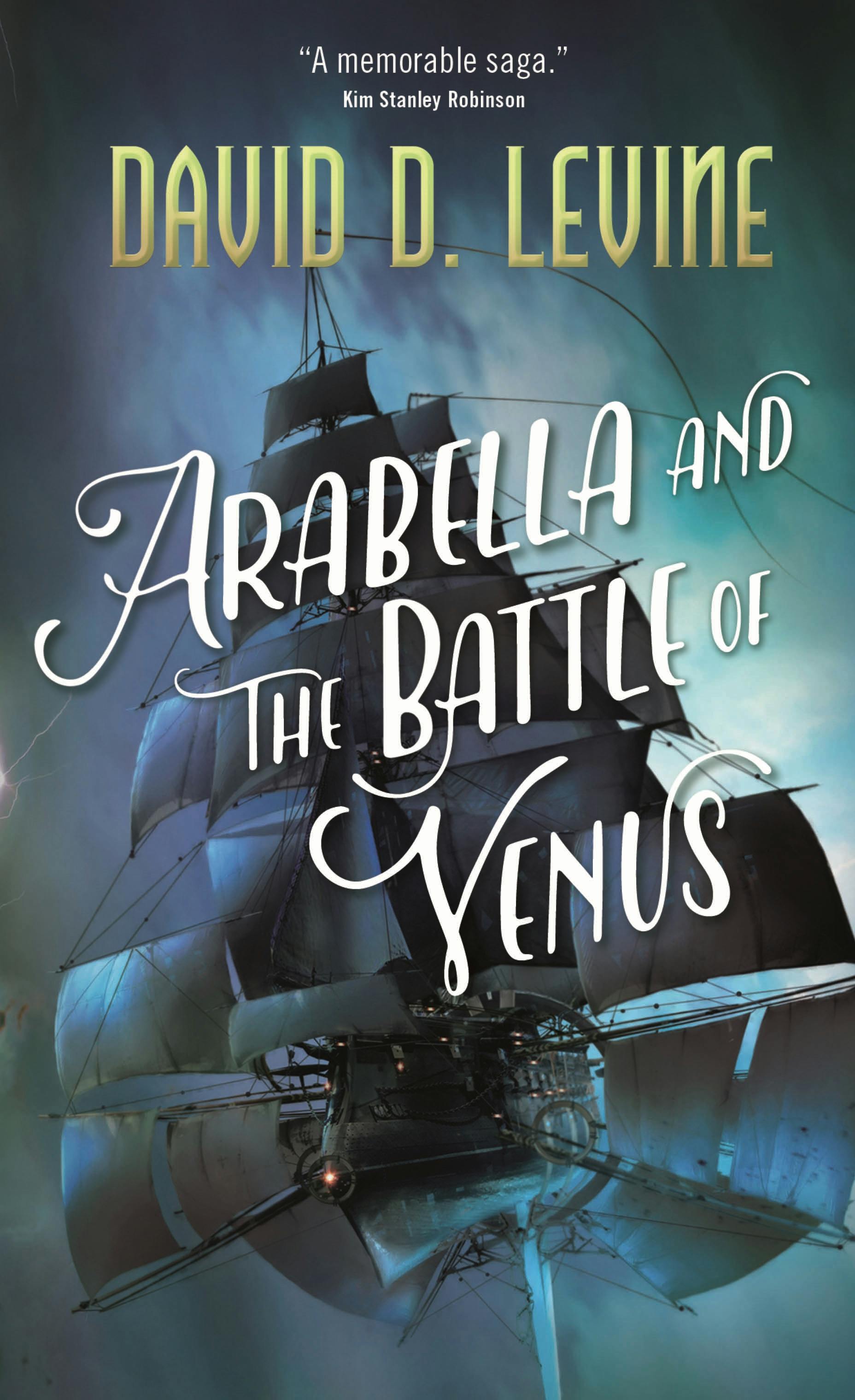
Arabella of Mars, by David D Levine

David D. Levine’s Arabella of Mars is an excellent Age of Sail sci-fi adventure story replete with the drama of Regency-era social expectations.  It has all the requisite ingredients: imperiled family in need of aid, dangerous shipboard voyages (between planets!), subdued romance, personal rebellion, social maneuvering, and a little bit of marriage. I inhaled this book.

I read perhaps a couple pages on Thursday last week and then spent almost all of Friday devouring the rest of the story. I very wisely did not take the book to bed with me on Thursday night, for which I’m glad. I probably wouldn’t have slept much if I had. As it was, I requested the next two books as soon as I finished on Friday afternoon.

This is the kind of story that I love… and having finished it, I have some concerns. I’ll focus on the things I loved first. Just know that (depending on the course of the next two books in this series) I might have to refile this from “delicious new candy” to “problematic fave“ on account of colonialism.

Also, there are a few things that I’ll cover here which might constitute very mild spoilers. I doubt any of them would surprise someone who’s already familiar with the genres involved, but if you want to avoid spoilers entirely I recommend you skip ahead to the last paragraph.

So. First off, I love the setting.

In the late 1600s, Captain Kidd sailed to Mars. There he explored, met and befriended the bug-like locals, and ultimately sailed back home. There are now human colonies elsewhere in the solar system (including on Mars), and ships which regularly make the voyage from planet to planet across the great rivers of air in between. Clockwork exists and automata are an advanced art, and coal gases are used in great quantities to fill the lift envelopes of airships until they’ve crossed “the falling line”—the elevation high enough for a ship to sail out of a planet’s orbit. 

A quibble: I’ve seen this book called steampunk, and I don’t agree. Not yet at least. There are genre similarities, but this story is deeply rooted in the British Regency-era of the Age of Sail. Heck, it’s all set in 1812 or 1813, and the Napoleonic wars are still underway. While certain setting elements overlap with steampunk (clockwork and automata, airships, alternative versions of space) the story has more similarity to Novik’s Temeraire books and other Age of Sail adventures (e.g. C.S. Forester’s Hornblower, or O’Brian’s many naval novels). What’s more, there’s no concern with industrialization or the pressures thereof. So while there’s a little steampunk-ish set dressing, and I can understand using that as a marketing term in 2016 when this book was published, I don’t think it’s accurate.

Back to the setting! Despite the alternate history, social expectations have remained much the same. British Regency Era gender and class conventions are still potent forces, shaping our protagonist Arabella’s world(s). Her taste of something different, what with being raised on Mars by a Martian nanny with very different ideas of gender and class roles, is tantalizing. Levine establishes all of this with admirable efficacy in his quick prologue, setting the stage for the rest of the story and all the conventions that will stymie Arabella in her quest to aid her family.

Actually, I admire Levine’s writing here in general. He’s adopted a markedly period voice, straitlaced and constrained in a way that emphasizes the social restrictions and expectations without sacrificing the feel of personal insight into Arabella’s world. He’s skillful, and it shows. Even when things are predictable (in good, genre-confirming ways) they don’t feel forced.

And, maybe because of all that, this book has lots of fun (mostly quiet) social commentary going for it. Arabella’s struggles and observations around gender and class feel fitting to the genre, and give us a window into Arabella’s growth of her own perspective on what is right, proper, and moral, departing from the ”received perspective” she starts the story with. I really enjoy that growth, and it feels good to see it take place.

But I can’t mention that growth without discussing those concerns I mentioned above.

Stories in the Regency Era, and especially any kind of story involving the creation of colonies in a place with intelligent locals, will unavoidably engage with colonialism. I don’t think it’s possible to avoid in this kind of story, and pretending colonialism (and its problems) doesn’t exist is usually just a way to be an apologist for it. Fortunately, that isn’t the approach this story takes.

Okay, more implicit spoilers ahead, though they should remain pretty general.

For all that Arabella of Mars doesn’t ignore colonialism per se, it also doesn’t address it directly. Partly, I think that’s due to the narrator’s proximity to Arabella’s own perspective; there’s a lot that Arabella hasn’t examined deeply about the social order and her role in it, never mind the ways in which humans and Martians interact. There are, however, many overt hints that Arabella disagrees with or isn’t aligned with the common colonialist assumptions of her society.

This comes out in the little details: Arabella notices the ways in which English depictions of Martians are wrong, and they irk her; Arabella corrects others a number of times, and signals dissatisfaction with their racist and colonialist assumptions; and she is unwilling to embrace the racist and colonialist arguments of others even when they’re not focused on Mars and Martians. As I said, all the little hints are there.

Actually, reflecting on those little details, I wonder whether some of my enjoyment of this story is tied to similarities with how my mother spoke of her childhood in Uganda and the US.

Back to this book, Arabella’s rejection of English colonialism, or her opposition to it, isn’t fully articulated in the way that I think the setting (and the story thus far) calls for. Her own estimations of her fellow landed English gentry start mostly neutral and grow more negative. And she clearly feels more attuned to the social conventions of Martians (or even the crew she serves with) than to the conventions of her peers. But while she appears to judge the existing system as lacking and feels estranged from it, she’s still a part of it and hasn’t articulated a different position.

About par for the course in book one of a series, really. This is part of my reason for both liking the book and trying to reserve judgment.

Anyway. The story thus far feels poised to dive deeper into this struggle with colonialism. And so far, it feels like it’s aware of that. That’s all well and good. But it hasn’t (yet) made that confrontation its focus. If it doesn’t dive into that confrontation with colonialism, or at least face it along its narrative path, I’ll have to revise my opinion of the story.

So.

If you were avoiding reading the spoiler-ish above material, rest assured this is the *END OF SPOILERS*.

I like the book. I like it a lot, and absolutely recommend it to anyone who likes Age of Sail adventure with a splash of Regency drama and a hint of Jules Verne. If you want alternate history science fiction on interplanetary sailing ships, this is your best bet. And if you know a younger reader looking for these sorts of things, this is accessibly YA-ish to boot.

Collaborative ideas for Blades in the Dark

I’ve been wanting to play Blades in the Dark for a while. Despite having had the system for several years, I still haven’t played it. I’ve played a game inspired by its sci-fi hack, Scum & Villainy, but my friend running that game paid very little attention to the system’s rules despite using the rules as reference material. The game was fun. It didn’t really let me see how any of the things that make BitD distinct actually work when run as designed.

Now it looks like I may finally have a chance to play! One of my friends is putting a group of players together, people I enjoy playing with. I’m looking forward to it.

And, even as I’m looking forward to game, I’m thinking through all the ways the system looks most likely to break, or where it looks like the GM will be carrying the heaviest workload. That’s reflex at this point. The spot most likely to be lost in the shuffle, as best as I can tell, is the storyteller’s implementation of the faction system—probably followed by tracking debt and its effects.

So I’m coming up with ways to share the load.

For context, Blades in the Dark comes with a whole host of background material. I don’t think any of it is necessary for a fun game. All the supplied narrative fluff can absolutely be ignored, as long as you have some forces in play that replicate the pressures those pieces of fluff offer: corrupt cops, competing gangs, and bigger and more powerful gangs (and individuals) scuffling for power far beyond the PCs immediate grasp. Groups should be able to come up with their own versions of Duskvol without any trouble, and fill them with the characters and groups they want to see.

But alongside that pre-supplied narrative fluff, the game also has a whole system set up for how to track the relationships and power of the different groups in the setting. I think tracking those is extremely important. That’s how the game tracks that pressure I mentioned above.

Now, there’s no reason the storyteller couldn’t bullshit their way through all of that tracking. That would be pretty normal, in my book. But much as the rules of Traveller are designed to simulate a crew’s constant struggle to pay off their ship’s mortgage, impelled into ever more risky and (hopefully) profitable exploits to stay a few credits ahead of their operating costs and debt payments, I think BitD is designed to push the PCs into bold action at the risk of utter catastrophe. 

I really want to see how that works. I really want the group I play with to try using those interlocking systems (with debt, faction favor & power, etc). I don’t want to lose that in the overwhelmed-GM shuffle.

This is where my ideas about sharing the load come in.

Apocalypse World had some very functional ways to play a two person game, where people would take turns running different Fronts and groups of NPCs for each other. I see no reason not to do something similar in BitD. Each player could handle the basic duties for tracking countdown clocks and behind-the-scenes action for a few of the different factions, and divvy up the responsibility for maintaining a living, vibrant, dangerous world instead of putting most of that on the storyteller.

The obvious sacrifice here is a lack of surprise around some NPC actions. And players would have to be willing to hand over the various factions’ agency to the GM, or else take a turn as the storyteller when their managed faction have center stage. But with a bit of conferring between players and the storyteller, I think it’s perfectly manageable (we’ll have a group of players that I trust to play well together).

I also think it’s worthwhile to encourage or require players to manage factions that their PC is not allied or friendly with. That reduces the temptation to use NPCs to treat their own PC favorably.

I’m curious about doing this in other systems too. I think it doesn’t work as well in games with more adversarial dynamics or hidden information. But there are always chances to offload work from the GM, and to give other players more time playing off each other and with the game’s world. Always a plus.

I really hope this game comes together and actually works out. If it does, I’m sure I’ll have more details to share here in some months. If this idea works, and if that plus having players track all our various debts and whatnot lets us dig into how the system-as-written forces more audacious play, I’ll be pretty happy. Honestly, I’ll be happy to just play some BitD.

Back to LARP writing

I’m writing LARP material again!

It’s been a while. I’ve sat on an idea of mine for a little over a year, and I’m finally having the excited conversations with other LARP friends that keep pushing me to develop it. It’s a good feeling.

I’ve also been writing material for a different LARP that my friends are running. This means taking limited information about national histories, and group goals, and maybe a sentence or two about group flavor, and turning that into 400-500 words of group background with coherent flavor. It’s a rewarding exercise, something I haven’t done recently but have plenty of experience with. Plus, it’s wonderful being able to just produce creative work and share it with people immediately.

I’ve stopped doing that here, for a number of reasons, and I regret that sometimes. Maybe I’ll change that again in the future.

As for the fun LARP ideas I’ve been having, they’re tied to a combination of old story ideas I’ve mused over for about five years and a set of scene ideas that have inspired me in the past two years at Wayfinder. The basic concept: PC groups of treasure hunters and historians return to the ancient places of their ancestors in the Shunned Lands to recover lost relics, and in the process discover both why their old stories refer to a prior golden age and why that golden age ended in catastrophe. The rest of the game is all about facing the consequences of releasing the disastrous remnants of that ancient history.

My excited conversations have mostly been about puzzling through how to produce specific scenes, and what we’d need to make them work. It feels really good, engaging with my WFE friends like this outside of the camp season. That collaborative problem solving and supportive creativity is something I always miss during the rest of the year, when I spend most of my time staring at words and trying to cudgel them into some more effective shape.

Perhaps I’ll be able to work more of that into my other writing routines, and carry that excitement forward.

The Lincoln Lawyer, season one (Netflix 2022)

I didn’t know that “feel-good legal drama” was a genre.

Don’t get me wrong, there’s plenty of stuff going on around the edges of The Lincoln Lawyer that is potentially bad for our main characters. The show isn’t afraid of playing with imperiling people or dumping more problems in our characters’ laps. Not everything is fluffy bunnies and cuddles, and the show does open with a murder. 

But our main characters are, by and large, portrayed extremely sympathetically. Their relationships with each other are largely fun and supportive. Unlike more relationship-drama centered shows, there are relatively few moments that hit my emotional-duress cringe reflex. I have to assume that this series isn’t everyone’s cup of tea, but I’ve really enjoyed it!

I should also note here that there is a movie with the same title, based on the same books, that looks waaay more stressful (judgment based solely on the trailer I watched). I haven’t touched that. Nor have I read any of the books by Michael Connelly that this show is based on. I’m sticking with this show.

I’ve watched through episode eight (of ten). So while I can’t give you an end-of-season perspective, I can say that this has been a fun ride. It’s one of the first shows that I’ve felt comfortable playing in the background while I cook, only occasionally rewinding a bit if I need to catch some visual clue that I missed. The banter, the distinct voices of the different characters, do such a wonderful job conveying so much for me that this nearly feels like watching a very pretty audiobook.

It’s funny… going back to my “emotional-duress cringe reflex“ comment, I think part of my enjoyment of the show is derived from its remarkably non-toxic portrayal of a messy web of relationships. If the show’s drama focused on strife between the different main and supporting characters, I’d be out. Instead, there’s what feels like a mostly-healthy but still complicated web of mutually supportive people. Some of them still have feels for each other despite past breakups, divorces, etc., but at the end they know that they’re each others’ fans where it really counts. And sometimes the exes are platonic friends! It’s sweet, really. It’s wonderful. It’s a show that’s taught me I can trust these characters do their best to support and help each other, even if they fuck it up. That has helped me relax a great deal.

You might have guessed from my watching-while-cooking comment, but I’m also aware that I’m not watching this with a very critical eye. I’m not digging into the ways it engages with other art in the same genres, and I’m not consciously doing deeper media analysis. I’m primarily watching it to relax instead of to engage, like the popcorn-literature of television. It’s been good for that.

Reflecting on what I’ve said above, a big part of my ability to relax while watching The Lincoln Lawyer comes from the ways this show avoids rubbing me the wrong way.

Firstly, the show isn’t another celebration of punishing wrongdoers. I’ve watched enough cop-centric shows. I don’t need another.

The Lincoln Lawyer has cops, and even has some cops who might be sympathetic, but it’s focused on the other side of the coin. The titular lead, Mickey Haller, is a criminal defense attorney and he (and the show) are both ready and willing to point out the ways in which police and the American justice system will grind people down and treat them unfairly every step of the way. I suspect a good deal of this show is legal-fantasy, but watching someone champion the underdog has a lot of that classic Robin Hood / David versus Goliath appeal. In many ways it’s one of those classic trickster stories, firmly on the side of the little person, dedicated to taking the hubristic and power-drunk giant down a peg or three.

Now, I doubt The Lincoln Lawyer will win awards for progressive depictions of gender or sexuality. It feels in many ways like a progressive vision from ‘00s TV, mostly focused on straight white people (hispanic or not) with several gay characters (sometimes gay people of color). But the material this show is based on was written in the ‘00s, so that feels oddly fitting—and in a huge improvement over most ‘00s media, this show doesn’t make queer people’s queerness their central character quirk. Another improvement over bog-standard American media: the two male protagonists (Mickey and his PI Cisco) eschew much of the toxic masculinity that laces so many TV shows, or they are at least comfortable enough with themselves that they don’t reek of that special gendered brand of insecurity.

I’m having fun with this show. I recommend it.

Oh, and I watched the ninth episode before finishing this, and uh… probably don’t cook during that one. It has some twists to deliver while setting up for the tenth and final episode. And it ends in a cliffhanger. Just so you know.

News, LARP writing, Pomodoro

One of my writing group friends suggested I try writing in 30 minute sprints, with a little (also pre-measured) time off between sprints for breaks, other work, other projects. It’s a minimally different variation on the Pomodoro technique. I’m surprised I hadn’t learned this work method before.

I was hesitant to take their suggestion. I usually struggle to fall into the zone that I find so helpful for writing. Writing without being in the zone feels like pulling teeth, getting into the zone takes a while, and… round and round the problem goes. But I’ve been pretty desperate to get more writing done, so I tried it.

It’s fucking phenomenal. I don’t know why it’s working for me right now. And I’m not going to look a gift writing-hack in the mouth.

The other important piece of implementing this for myself has been stricter limits on what I can and can’t do before I start writing in the morning. Listening to music is good, physical movement is good, but reading anything is dangerous, and watching a video is right out (doesn’t seem to matter whether it’s news, documentary, someone’s Let’s Play, or what). I could probably find something that would be okay for me to watch (maybe a sped up painting process for a fantasy landscape), but that would require me to navigate past lots of other enticing videos which would drag my eyes in.

Safer not to risk it. More productive not to risk it.

This is a little awkward, since it means I can’t safely read news before writing. Not even the tech news I use to doublecheck my various sci-fi projects. I also have to avoid responding to any notifications on my phone, which pile up quickly. In fact, this makes it difficult to use my phone at all, even though it’s currently my alarm clock, morning music source, and timer for this approach.

But the upside to this improved morning mental hygiene is that when I set that 30 minute timer I make significantly more progress.

A little context.

I used to regularly produce 2k words a day, mostly without a struggle. Being in that rhythm felt a lot like any other fitness regimen: it hurt to get up to speed, and every so often one of those days would be a total drag. But when I was regularly writing 2k a day, it felt… familiar. Not necessarily comfortable, but certainly not onerous. And at the end of producing that 2k, I felt good. Energized.

Writing with this timer system, with better morning mental hygiene, feels like that. I’m reaching rates close to my 2k a day. It feels great. And when the timer goes off, I can do something else that’s been weighing on my mind before I go back to writing… because I’m free of the need to be writing. I’m not constantly should-ing myself, scolding myself for insufficient focus or insufficient productivity.

I think that’s the biggest lesson I’ve found so far. This external practice frees up my internal judgements. When the timer is on I know it’s time to go. When the timer is off I know it’s okay that I’m not going. That state of being okay with not writing is incredible for my state of mind.

I’ve felt able to let go and make more new stuff that isn’t connected to anything else (yet). That isn’t helpful to my pre-existing projects, but it feels good, like I’m clearing out old pipes that had rusted nearly shut with arterial blockage. Setting aside time like this lets me turn off the voice that’s constantly worrying about what I should be doing right now, what I should be doing next, and just make stuff.

I guess what I’m trying to say is… I’m really appreciating this. I don’t know to what degree this is better brain weather, or better mental hygiene, or a useful way to guide my brain in the right direction. I don’t especially care. I’ll probably try tweaking the lengths of work sprints and breaks, but I’m definitely keeping this.

It’s even helped me feel so much less stuck that I’ve felt free to help friends with material for their LARP. I’m putting together group backgrounds based on a few objectives and a thin thread of preexisting setting, and its rewarding to quickly share those with an appreciative audience. Helps to remind me that I’m competent at this, pulling voice and larger worlds together from a few scraps.

She-Hulk (2022)

She-Hulk has been both fun and a little odd.

I’m enjoying the acting—Tatiana Maslany is great as usual. I like a lot of the writing choices. They’re often hilarious, and neatly fit the genre I think She-Hulk is aiming for. 

This show is a comedic personal drama about the life and times of Jen Walters, following the everyday trials (heh) and tribulations of her experience as an up-and-coming lawyer. It adds an extra dash of “you just can’t win” via all the ways in which getting super powers doesn’t solve Jen’s personal struggles. That almost feels like an homage to Molly Ostertag & Brennan Lee Mulligan’s Strong Female Protagonist… except this show doesn’t (yet) pay attention to the deeper ethical questions that excellent comic focused on. That’s the bit that feels odd to me.

Only a few episodes are out so far, so maybe it’ll go deeper, but…

She-Hulk is very aware of the fact that it’s commenting on struggles women (or femme-presenting people) face in their day to day lives. It brings those up in frequently hilarious (sometimes painful) ways. I appreciate and enjoy that, and I don’t want the show to stop doing that. But so far She-Hulk seems hyper-focused on those struggles from the perspective of the wealthy and privileged. It hasn’t dug much deeper, it hasn’t (yet) pushed towards deeper potential intersectionality or towards struggles beyond Jen’s. For lack of a better word, the show’s focus so far is both expansive and self-centered.

Insofar as I want to watch a slightly shallow comedic personal drama with superheroes that (thank fucking goodness) isn’t yet another male-centric story—one that does focus on the experiences of female characters—this show is great. I’m here for it. I’m glad that it’s being made. I hope She-Hulk does well, I hope it goes places and does more fun things. This show helps ease the poverty of representation for female superheroes in the MCU, and goodness knows the MCU needs that.

We still need more stories like this though, as well as more different ones. Less personally focused ones, and/or personally focused ones that include other people. This show can’t solve the issue on its own.

And there are other elements that feel like they’re fertile ground for good stories, but which have lain fallow for years (if they were ever included at all). She-Hulk has referenced them in passing so far, but hasn’t focused on them.

Specifically, I really enjoy the ways in which this show has poked at the personal and emotional lives of the various superheroes it’s mentioned. I like how it has pointed out that being a superhero doesn’t pay the bills, and that most of the existing superheroes are otherwise rich. Jessica Jones and Luke Cage and (to lesser extent) Daredevil all gave this some attention, with JJ and LC also including other intersections of gender and race. But those shows were and remain a side show in the larger MCU. Again, we need more.

And I’d really like that “more” to be good! She-Hulk nearly lost me with the fight sequence in its first episode. 

As someone who cares a lot about fight scenes, the first episode’s fight between Bruce and Jen wasn’t interesting to me. I hope the show didn’t spend too much money on it (though they probably did), because it seemed like a fight in search of a reason. There weren’t meaningful stakes or potential consequences, no meaningful discovery was made for either of the characters, it didn’t even feel like there was real character growth for anyone. It was a CGI punchfest for the sake of having a CGI punchfest.

The show has been far better on this front in the episodes since: fights haven’t dragged on, they’ve felt like they had pressing stakes, and they’ve told us new and interesting things about the characters involved and the world around them. All of that is pretty much perfect in my book. I really hope they don’t lose sight of that excellent focus in the remaining episodes. I think lacking that focus has been one of the ways other superhero movies and shows most frequently fall apart, narratively and tonally.

We’ll see.

Contracts, Art, and making World Seeds

My World Seed creation process has slowed down. The hard part isn’t the words, though.

The hard part is finding artists. Locations keep coming to me, but without art I’m reluctant to publish the Seeds. I know I have good written content, but the art really helps. It convinces me that I’m offering something more than my own words (the value of which I’m far too ready to dismiss).

Sorry, I was wrong about the hard part. The hard part is having a contract I’m willing to use with artists. I’m sure I can find artists via several different channels, if I reached out through those. I have a short list of places to put calls for art, after all. But I don’t want to reach out without a written contract.

I might be letting the perfect be the enemy of the good. Unfortunately, from the horror stories I’ve heard I’m also confident that having a bad contract can and will come back to bite me.

My first two World Seeds have art made by people with whom I have some kind of personal relationship; either I know the artist myself, or they’re within my immediate circle. There’s some basis for mutual trust. There’s some history of collaboration with myself or with someone else I know.

Without that, I don’t want to move forward on a wing and a prayer. Is that a mistake? Maybe. It certainly feels like one. It feels like I’m sitting on my hands and doing nothing, even though I keep adding to my collection of location descriptions to use in the future. I’ve posted forty nine of those so far to Patreon, and have thirty one more finished first drafts waiting in the wings (eighty in total). I average a little over a new one every week, more or less.

I have a few leads on contracts and contract advice, and expect to receive those reference materials in the near future… but there isn’t a clear timeline for that beyond “soon.”

Maybe, then, the right choice is to put together art-free versions and sell them for less. At least if I do that I’ll be moving finished products out the door, things that will require a minimum of additional work to fill with art once I have a contract ready. Doing that would allow me to publish an art-free Seed within a couple weeks, and another one within a couple months.

That isn’t what I’d dreamed of for this project—I’d thought about selling art-free Seeds while first developing this project, but incorporating visual art was always the goal. Sadly, that’s not where I am right now. If I want to make visible progress, it’s time to change course and ship something while I wait for the contracts and visual art to catch up.

Expect to see those art-free versions come out soon. In the meantime, if you want to see the currently available World Seeds, check out my stuff on DriveThruRPG.com.

The Last Dreamwalker review is up!

My first review for GeeklyInc is out, and you can read it here! Enjoy.