Finance, Ponzi Schemes, and Cards: Liar’s Poker

Lying to your friends can be exceedingly fun.  Unfortunately, other people are often angry when you mislead them in everyday interactions.  This is where Liar’s Poker comes in handy; it gives you all the satisfaction of lying to your friends, with none of the insalubrious repercussions!  I was first treated to this game last night, when I played it with my brothers and cousins, and I’m now a staunch advocate.  Please note that this is not the same as the similarly titled bar game played with $1 bills.

Liar’s Poker is very simple.  Much like in Ponzi schemes (or even the stock market), the idea of the game is to be one of the first people in, and be the very first person out.  You never want to be caught holding the overvalued collection of rubbish that is methodically working its way around the table, and you most certainly want to convince the next person in line that the crap in your hand is actually worth something.  Like I said, it’s very simple.  It also has the potential to be hilarious.

The first player is dealt a hand of five cards, looks at them, and declares a hand (anything from high card to royal flush).  They then offer the hand to the next player.  The second player (and every player after them), then has the opportunity to decide whether the offer is believable.  If they accept the offer, they receive the hand and now have the opportunity to discard face down up to three cards from the hand and draw cards to replace them.  They must then declare a hand of greater value than the one they recieved and offer it to the next player.  If they reject the offer, the rejected hand is revealed and evaluated; if the revealed hand met or exceeded the declared value of the hand (and the declaration did not substantially misrepresent the hand’s contents), the person who rejected the hand takes a point.  If the rejected hand was, in fact, the load of rubbish which the discerning player believed it to be, then the liar who tried to pass it off as something better takes a point.  The first player to 10 (or whatever you decide on for your preferred length of game) ends the game, and the person with the lowest point total wins.

While you are in possession of the hand, you may say whatever you like about its contents.  Once the hand is no longer yours, you should not declare anything about what had been in it except to repeat what you had claimed when you passed it along.  Table talk is otherwise encouraged.  Remember that all discards are done face down, so you can’t see what has moved in or out of the hand.  Also note that the next person must always claim a higher value than the one you gave them, and the only way to hurt people further around the table is by allowing a hand to keep moving.

What did I mean by “substantially misrepresent the hand’s contents”?   If you’ve got three aces in your opening hand, you could say “the highest card is an ace,” and not be in danger.  If you had a pair of twos and a king, you could simply say “pair of twos.”  If you wanted to turn up the heat, you could get more specific and claim the higher value hand, which would also narrow the range of claims available to the next player.  But if you have a straight in your opening hand and instead claim a pair, you would be in danger of taking a point if someone calls you on it, regardless of the fact that your straight certainly outdoes a pair.

So why do I like this so much?  It may simply have been a combination of sleep deprivation and alcohol, but I suspect that I would have similar results when playing this game with the right group of people.  That’s an important note: there are certainly people with whom you will not want to play this game, which may be a larger (or different) group than the usual people with whom you don’t want to play games.  Make sure that you have players who will be willing to laugh at being duped, even as they take joy in lying through their teeth to the next person in line.

Liar’s Poker requires only minor memorization, and will quickly teach familiarity with the values of poker hands, but it really shines when it comes to creating hilariously improbable situations and forces you to judge just how deep the lies really go.  It’s great fun.

To be perfectly clear, there are other games which are also called Liar’s Poker, and there is a book by Michael Lewis with the same title.  This game bears only passing resemblance to the others, but it seems far more interesting to me than the bar game.


Running a Game at Larp Camp

Hi folks.  Sorry for my disappearance on Monday.  I’ll be gone this Wednesday as well, due to being in a place with intermittent internet and huge piles of work.  I expect to resume my regular schedule next week, possibly to regale you with stories from camp.  Have fun in my absence!

So You Want To Be A Wizard, by Diane Duane

so-you-want-to-be-a-wizard

I’m more than a little bit in awe of Diane Duane.  It’s been a while since I read something of hers, and I’d forgotten how good she was at her chosen profession.  Though the genre is no longer quite so thinly populated as it was when this book first came out, I still think that Duane outdoes the young wizard competition.  When it comes to books about serious young people dealing with serious (if fantastical) problems, she’s totally on top of it.  Admittedly, I’m not the most experienced judge for this particular sub-genre, but Duane is worth reading if you like YA literature that doesn’t talk down to its readers.

So You Want To Be A Wizard follows two young newly-sworn-in wizards who are facing their very first duties, which include slowing down the entropic death of the universe and generally trying to make the world a better place.  You know, the usual.  As you might expect from a story with protagonists devoted to such expansive duties, they don’t have an easy time of things and quickly end up in way over their heads.  I admire the depth of the goals Duane sets in front of her characters, as it seems as though they never lack for things to do.  This also means that they’re facing things that are profoundly scary and difficult to deal with, which turns out to be the perfect recipe for excitement and wonderfully climactic scenes.

Without spoiling anything, I think I can safely say that this book is an excellent adventure with exceptionally mature themes for a YA story.  The themes are more cosmically oriented than those of many other YA books that I’ve seen recently, with an emphasis on the broad scope of a story that I normally associate with epics; I admire the way in which Duane manages to include an epic scope even as she keeps the story (and its narration) very personal.  It takes considerable skill to see that through, and Duane clearly has it.  If you enjoy epics, YA stories, modern fantasy, or anything similar, I expect that you’ll like this book.

Ok, so I have an odd story about my history with this book…

Continue reading →

Transistor

Transistor_Wallpaper_1920x1080

There are many things that I wish to say about Transistor, but the story-related ones will have to wait for after the break.  I don’t want to spoil anything for you.

To start with, this is one of the prettiest games I have seen in a while, and it has a soundtrack that makes me want to close my eyes and sink into it.  I spent a considerable amount of time simply sitting and absorbing the game’s music, doing nothing else for fear of missing out on the songs.  I wish that the soundtrack had all of the various in-game versions of the music, including Red’s hummed accompaniment.

I’m hard pressed to peg the game to a single genre or type, but its construction and design bears a profound similarity to Bastion.  You do battle with an ever-growing variety and number of foes, following the protagonist from a third person isometric perspective as you wander through lushly painted land- or cityscapes, slowly puzzling out the backstory of the characters and learning what is happening around you.  As far as I’m concerned, what worked in Bastion works here too.

As a game, I found Transistor very appealing; designing my own powers, mixing and matching elements as I discovered new killer combos, and adapting my loadout to the situation presented were all quite satisfying.  Making sure that I wasn’t crippled when I lost one of my powers due to a mistake, and being forced to rethink my situation creatively when I failed in that, were both very rewarding as well.  And when battles became a little same-y towards the end, or failed to present me with situations that I hadn’t foreseen, I still wanted to follow the story.  Now that I’ve finished the game, I also want to see how it handles itself on a second pass-through.  But I’ve played it enough to be able to say that I like it, and that I suspect you’d enjoy it as well.  Now about those *SPOILERS*…

Continue reading →

Rimworld: Sci-Fi Frontier Shipwreck Fiction, Round 2

GmX9a8LuhH

The first time I played this game, my people nearly starved to death.  I tried to solve this by getting tricksy and using sunlamps outdoors in order to boost my crop’s growth cycle, only to discover that many electrical systems explode and catch fire when exposed to rain.  I did manage to pull through in the end, but it was pretty tight for a while.

That was all several releases back.  When I last reviewed the game, I mentioned that I thought it wasn’t yet worth its $30 asking price, but that it could be if it continued to develop as well as it had thus far.  Now, here I am several releases later, ready to tell you whether or not I think it’s continued to live up to its earlier promise.

My answer is easy: it has.  I’m not saying that it’s all the way there yet, but the game is damn interesting and its central features have been expanded aggressively over the past few months.  Any given change usually feels small, but the shift from when I first played back in early March has been impressive.  In addition to there simply being more junk that I can make for my colony, the world around my colony has gotten considerably more interesting, and often far more threatening as well.  I won’t cover everything, but…

Continue reading →

The Expendables 2: How Did They Count That High?

the-expendables-2-50742cc10c3cb

Watching them is a guilty pleasure, but it’s mostly guilt.

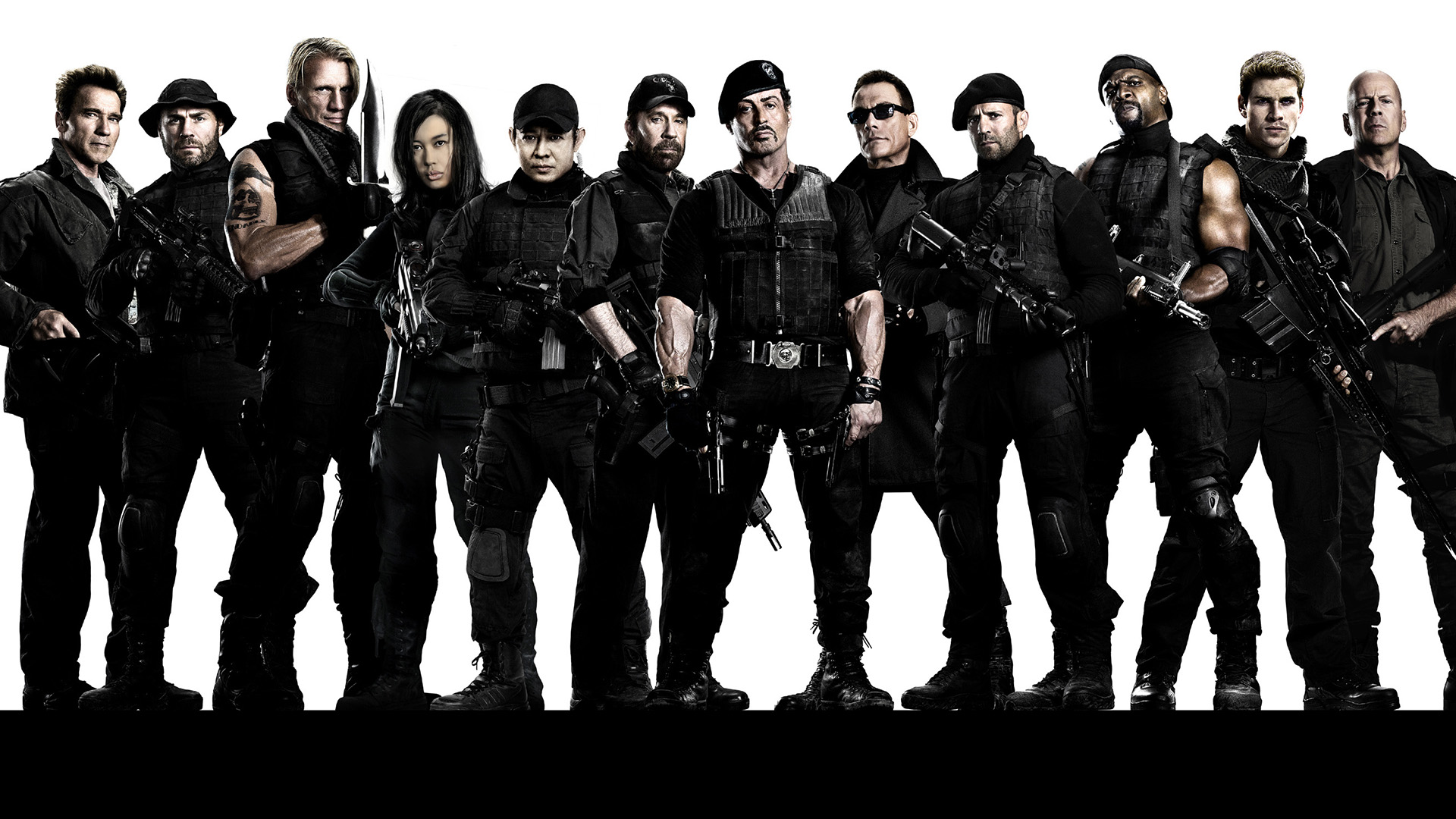
Have you ever spent two hours wondering why you’re staring at an overstuffed sausage?  Watching Stallone in The Expendables 2 feels a little bit like that, especially when they give you closeups of his veiny, muscular arms.  Or maybe the experience is more like watching a slightly stiff bulldog trying to be more athletic than its bulky frame will allow.  It charges about at decent speed, its jowls swinging back and forth determinedly as it tries its best to be fierce and intimidating… yet from the safe distance of my screen, it looks more funny than frightening.

That failed delivery might be the real take away message here.  I never watched the first movie, so I don’t know whether this is true for both of them, but The Expendables 2 feels like someone has distilled the essence of the overblown action movie and made an occasionally palatable bounce liquor* instead of something really worth drinking.  There were moments when its ridiculousness so exceeded my expectations that I couldn’t help but marvel at it, but for the most part it wasn’t as good as the vintage it was attempting to refine.  I say ‘for the most part’ because there are some truly terrible action movies out there, and I don’t want to go to the effort of deciding how this compares.  I’m pretty sure it’s better than some of them, if only because The Expendables 2 clearly had more budget for stuntmen and action scenes.

Speaking of “more”…

Continue reading →

Eric Flint and Determined Optimism

I love reading Eric Flint’s books.  Even when they’re not especially “good,” per se, I still go out of my way to get my hands on them.  There’s something special about the way that he constructs story-worlds that I find captivating, and I think I may finally have some of the right words for it.  Time and again, I’m struck by the way in which his stories convey a rigorously optimistic, idealistic world view; his protagonists work together to create a better world, or a better future, or a better something else, but there’s always the underlying presence of cooperating with others in order to improve upon what already exists.  I don’t always agree with everything that he writes, but given a choice between an Eric Flint-esque book and something less hopeful, I’ll pretty much always pick Flint (or at least return to Flint after a jaunt elsewhere).

Part of it has to do with inspiration, and part of it has to do with my personal headspace.  I consistently reference the need for inspiration towards something better when I review Flint’s books, often referring back to my article on Schindler’s List.  I sometimes feel willfully self-deceptive when I consciously shape my media consumption like this, but I find that my own outlook on life is far more positive and constructive when I make sure that I balance my media intake with more hopeful and inspiring stories.

All of which is to say that I find that Flint’s writing serves a very distinct purpose.  I like his work more for the fact that he very specifically introduces such positive people and/or groups into his stories; I find it tremendously reassuring to read about people consciously working together to create a better world, and I often feel more empowered to do the same after reading his work.  It makes a nice counterweight to my research into things like sex slavery, MKUltra, or Operation Condor.  There’s something refreshing to Flint’s idealistic community organizing that helps to clean out the toxicity of the horribly sinister things that we human beings have routinely done to each other.

I think there’s more to be covered here, but I’ll leave it at that for the moment.  What do you think?  Do you have similar mental health management strategies?  Do you actively seek inspiration in the media that you consume?

Teasers for Adventurer’s Rest

logo


Sorry about last Wednesday, here’s a present to make up for it.

My apologies for missing my usual post last Wednesday.  I was busy collaborating with several friends to write and produce a LARP game for Staff Week at The Wayfinder Experience (where I’ll be running another game for a considerably younger audience in a few weeks), and as such was pretty much entirely incommunicado.  I still have yet to say happy birthday to my mother and step-father.  I’ll try to get to that as soon as I finish this.

Since Wayfinder (WFE) is all still very much on my mind, I thought I’d offer you a collection of the teasers that I and my friend Thom have made for our upcoming game (Adventurer’s Rest, at WFE’s Intro Camp, July 20th-25th), and some of our thinking behind them.  If you know anyone who might be interested, you should totally tell them about it.  I want lots of players for my game!  Actual entertainment follows after the break…

Continue reading →

The Long Earth, by Terry Pratchett and Stephen Baxter

Stepper-Diagram

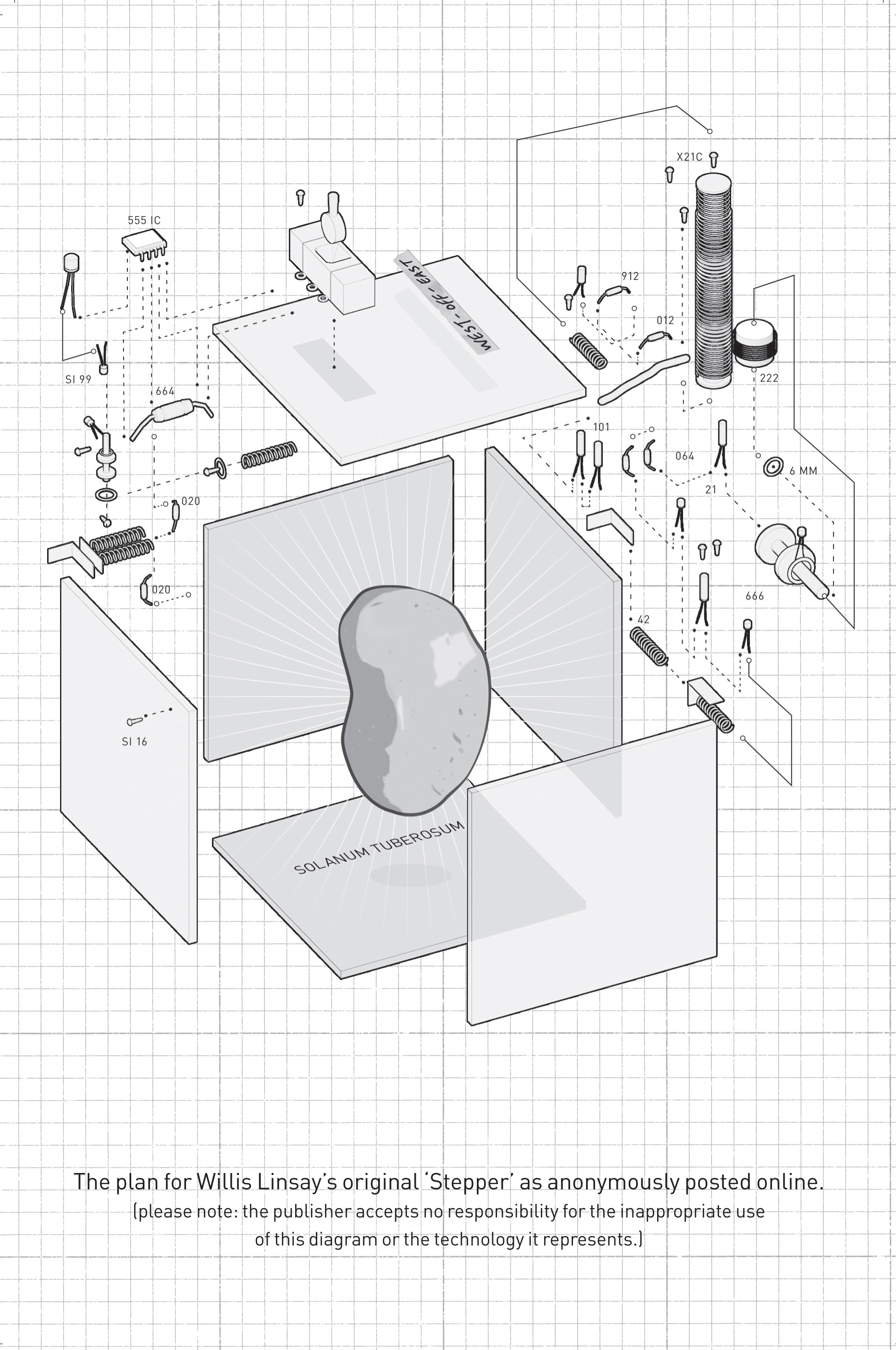
You too can construct a magical potato box.

The Long Earth is special, and I don’t say that just because it opens with a diagram of a potato in a box of electrical components.  It reminds me of Pandora’s Star, but without the epic not-exactly-space opera and intricate plotting.  They’re actually very different books, and The Long Earth requires nowhere near as much investment of time and energy as Peter F. Hamilton‘s sprawling story… but there is a crucial way in which they are the same: unlike with most books, I’m not angry when these two finish with a teaser rather than a conclusion.  Somehow, as with Pandora’s Star, when this happens in The Long Earth I simply take it in stride and look for the next book.

Maybe I’m tolerant of The Long Earth’s odd ending because I’m so partial to its strange mix of writing styles?  Pratchett‘s almost flippant whimsey leavens the still-serious storyline that he and Baxter have put together, and their look at the ramifications of partially accessible parallel Earths is engrossing.  The fact that they know how to establish a good set-up for future conflict (and how to pull you into reading about that) only makes things better.  I certainly plan to pick up the next book as soon as I go back to the library.

So what sort of book is this, if it’s like Pandora’s Star, but not?  And what if you haven’t read Pandora’s Star to know what I’m talking about?

Continue reading →

“Dawn Breaks” Background Setting Construction

I mentioned a while back that I was having trouble with the setting that I had “developed” for my earlier piece of flash fiction.  I put “developed” in quotes because, let’s face it, I really just made stuff up and went with it at the time.  I didn’t care about making anything make much sense, I just wanted to follow the flavor that I had found in the first few moments of thinking about what I’d do with my catalyst phrase.

But I’ve been thinking further about the setting, and about what would be necessary to make a few basic tenets of the setting possible.  What do I know definitely exists?  It’s a little messy, but here’s a rough list:

  • Brain transplants are possible, shifting from an old body to a new one.
  • There are things called “chop-shops,” and chop-shop gangs, and they are basically analogous to auto chop-shops except that they deal with human tissue instead of car parts.
  • Therefore, there is widespread black market expertise in surgery and tissue transplantation, and presumably lower rates of tissue rejection than there are in our current world.
  • There is a notable criminal underground, and elements of it have penetrated and corrupted law enforcement.
  • Criminal predation on civilians is fairly common, as witnessed by general warnings against travel through specific areas of the setting’s city.
  • The city has dock and warehouse districts, which are strongly influenced (if not controlled by) the criminal underground.

If I want this to all fit together without it simply being bio-fantasy, I need to come up with some good reasons for these various things existing, let alone coexisting.

Starting with the brain transplants, I decided that it would make sense to say that there was some technology that made it easier to regenerate nerve tissue and repair damage.  As best as I understand from Wikipedia, we’re perfectly capable of putting a brain in a new body at present… the real problem is that we can’t hook up the brain to anything in the new body because we can’t regenerate nerve tissue.  So if I dream up a product called Neurogen (let’s ignore the fact that there’s already something by that name, I didn’t know that at the time that I came up with the name), we can pretend that it is essentially something that causes nervous tissue to regrow and form new connections with other nervous tissue in close proximity.  It is a modified function of the body’s normal growth, so this doesn’t solve neurological disorders.  It does, however, make it possible to reconnect severed nerves far faster and more easily than is currently the case.  Let’s just say that, as long as I’m dreaming up a miracle, it will also reduce the amount of time necessary to retrain newly connected nerves and muscles, dropping the necessary recovery time from years to … months or weeks, perhaps.  We’re already transplanting or reattaching limbs, so this seems like a mostly acceptable future jump.

This means that there are far fewer people with paralysis due to trauma, and spinal damage is far less debilitating in the long term than it used to be.  Maybe this enables more adrenaline junkies, but the treatment is probably also relatively expensive, and (based on my understanding of how this works) it won’t stop things like ALS.

On to the chop shops.  There are several things that stand out to me about the concept of human chop-shops: there are problems with disease transmission, there are problems with tissue rejection, there are societal conditions needed to make widespread black market transplants practicable, and there are technological barriers to maintaining healthy tissues beyond a just-in-time supply chain.

Taking those in order, I’m going to ignore the whole disease transmission problem.  I figure some chop shops will be more careful than others, and your chances of getting an infection will vary by where you get your new kidney.

With tissue rejection, I posit that advances in immunosuppression drugs should make this less of a concern.  We’re already fairly good at dealing with this, and (as I understand it) the health of the transplanted organ is generally more of an issue.  That is, more rejection problems and followup complications can be solved by improving tissue health prior to and during transplantation than would be quickly solved with better immunosuppression drugs, especially true given that immunosuppression drugs hurt the body’s chances of fighting off any infection introduced by the new tissue or during the transplantation.  That should be partially addressed by my consideration of the last point.

But what about those societal conditions?  Previous black market transplantation has thrived in areas with legal organ transplants, a sufficiently large body of medical knowledge, basic medical facilities, easy travel, and a relatively large disadvantaged population (prisoners, the unprotected poor, etc.).  My real life examples for this are India in the early 90s, China for an unknown period of time, and the Philippines until 2008.  There are reports of kidnappings in Mexico tied to organ trafficking rings, and regardless of how accurate those reports are I find that idea intriguing, so I’ll add kidnapping victims to that list.  To me, the simultaneous requirements for a large body of medical knowledge, medical facilities, easy travel, and a large vulnerable population suggest a society with a large wealth imbalance.  This goes nicely with the kidnapping idea, since the unprotected poor are more likely to be vulnerable to predation by criminal gangs associated with chop shops, and any roughly middle class kidnapping victim can be given the choice between paying ransom and being used for transplantation, if they aren’t simply given the millionaire’s tour.

Wealth imbalance coupled with weak public institutions lends itself to easy corruption of public institutions, since the average worker will be looking for whatever they can get to pad out their meager paycheck.  This means that there will be wealthy members of society with sections of the public security apparatus on their private payroll, and some of those wealthy members of society will be criminals (when you routinely break the law, owning the public security apparatus is a good business investment).  I think that’s enough on that topic for the moment, though it no doubt deserves further examination.

Which brings us to that last point, and the super cool heart-in-a-box.  We now have hardware that can maintain healthy function of organs post-removal, reducing the time pressure that normally surrounds any transplant operation and potentially giving doctors the opportunity to monitor extracted tissue and treat some pre-existing conditions prior to implantation.  Apparently this is an especially big deal with lung transplants.

I think that answers most of the issues above, if not all of them.  I’ll do more investigation on this topic later.

****

Well shit.  My friend just told me about 3D printing of organs.  I’m not sure what this does, though maybe this is a disruptive technology in this story world, one being fought by the traditional organleggers in a luddite-like response to the potential destruction of their source of revenue.  Time to go burn down the organ-printers, and chop up the scientists for their organs.  Or something.

I had previously disregarded the disruptive effects of cloning based on the premise that growing and maintaining most organs until they were sufficiently mature for healthy & functional transplant would be more expensive than grabbing “user-guaranteed” organs from a relatively healthy abductee.  But this 3D printing stuff may require me to start over with some of this in order to incorporate it without breaking the setting.  Or maybe I just need to break the setting after all.