Real life intrudes, and art by Nate Powell

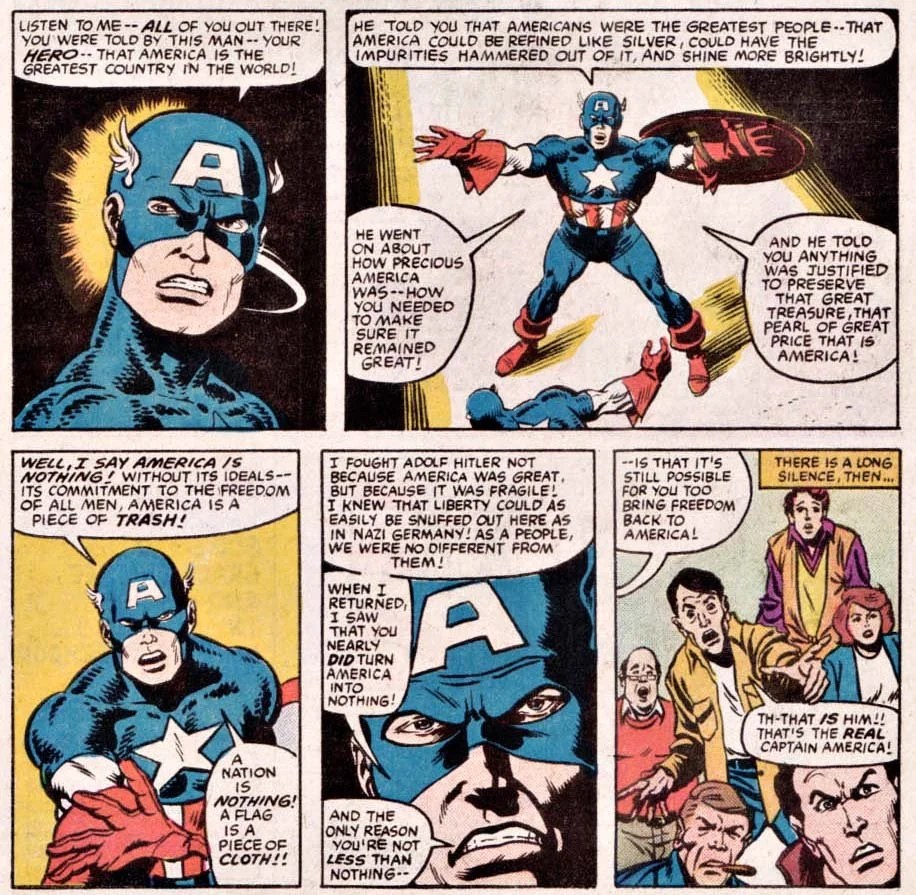
This week’s post has been delayed by hospital visits. I might have more for you on that topic next week. For now, I wanted to call your attention to About Face, a comic by Nate Powell about symbols, identity, and the normalization of the language of force. It’s an excellent piece, though perhaps not an uplifting one. It does, however, make me wonder whether Nate Powell would be interested in working with me on Ironsides.

Powell also made the March series (book 1, book 2, book 3), creating the art for the late Representative John Lewis‘s nonfiction work about the American civil rights movement. I haven’t yet picked those up, but I’m really looking forward to reading them. I think you might like them too.

Internal tumult, and comic progress

Today’s an odd one. My cat is not doing well, and I’m stressed about a lot of different things both large and small. I am, however, still making progress—the agent who offered feedback on my query liked my rewritten draft, I’ve had a very helpful conversation with my friend Lucy Bellwood about making comics, and I’ve been reading Molly Ostertag’s substack series on making graphic novels. With those last two details, I can confirm that…

Continue reading

Spectaculars, lightweight superhero fun

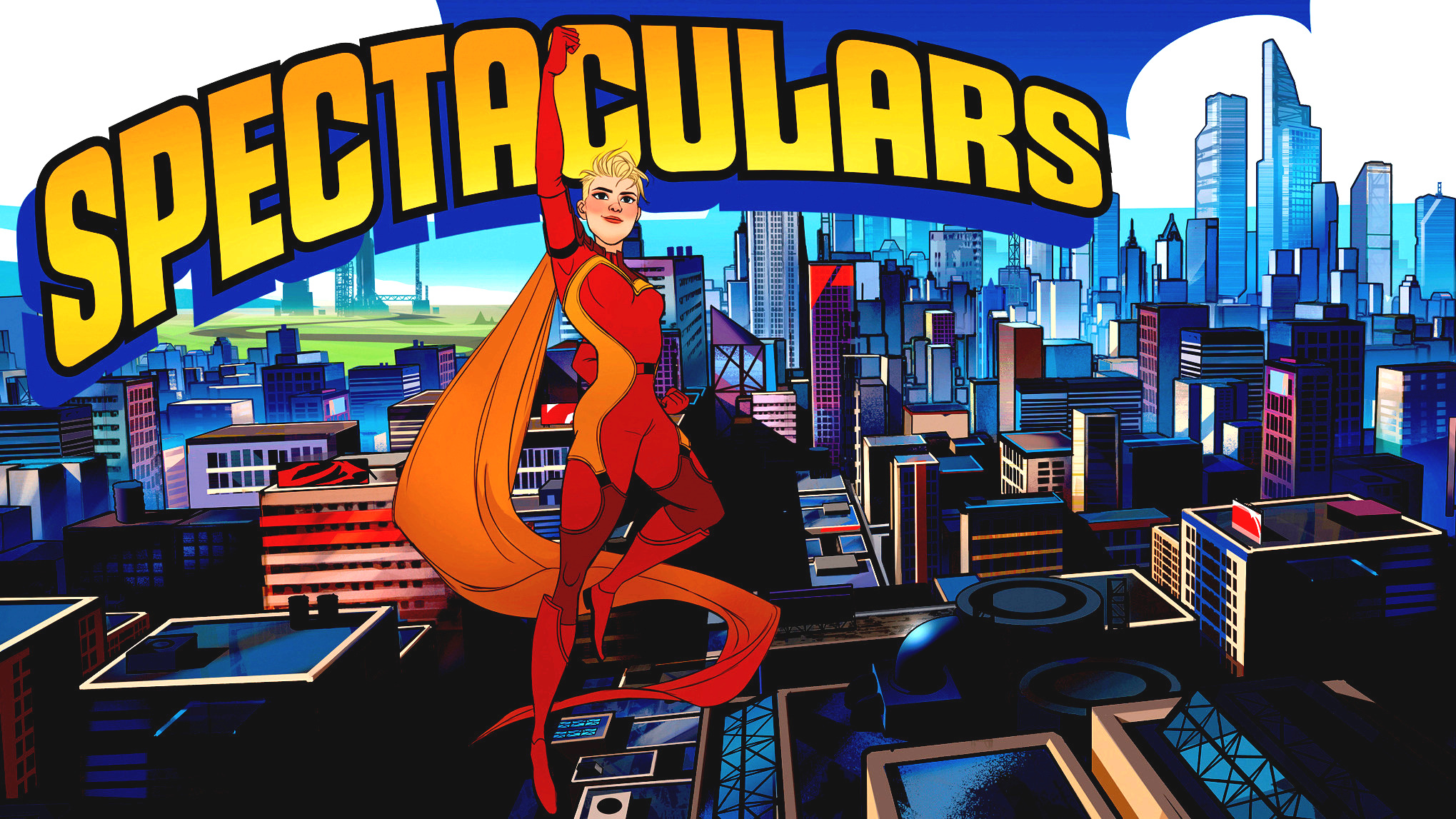
Spectaculars is a superhero RPG with a simple roll-under percentile die system. There are no cumbersome lists of modifiers, and the math required at the table should be accessible to precocious eight or nine year-olds. The game is clearly a love-letter to superhero comics, right down to players’ ability to invent backstory and create connections at the drop of a hat by spending “Continuity Tokens” to make up past issues with a relevant story detail. The game could also easily mimic the feel of superhero cartoons like Batman: The Animated Series, or any other episodic story where inventing background is expected or would be useful. Whatever your inspirations are, Spectaculars shines brightest when you’re playing episodic adventures in the context of a larger narrative arc. This is especially true if you’re more excited about your game’s larger story than you are about the gritty details of how a specific power works, or quantifying whose ”Mega Power Blast” is bigger.

Continue reading

Green Hornet (2011) should have been about Kato and Lenore

I watched this movie totally ready to have fun and enjoy it.

I grew up with a collection of comics from my older sibs, just another of the many good things about being at least a decade younger than them. Those comics were part of what convinced me to read. Among that collection were a few Green Hornet comics, and I loved them. The comic collection wasn’t especially organized, and little-me hunted through them repeatedly for more Green Hornet, overjoyed every time I found another. I don’t have strong memories of what those Green Hornet comics were about, but the imagery—and my enthusiasm—stuck with me.

I was excited every time I heard of, or thought about, 2011’s Green Hornet movie. That excitement changed, waned as years went by without me watching it or hearing anything about it, but some of it remained.

My excitement for this movie didn’t last through the movie’s middle.

Honestly, I almost paused it and stopped watching. The only reason I didn’t was because I am some mixture of stubborn and slow; I took too long to decide whether I’d ditch the movie, and I wanted to see whether it would save itself. As you might have guessed by now, it didn’t really manage the trick.

That’s a damn shame, because with the cast this movie had it could have been truly awesome. It wasn’t. Not even having Cameron Diaz, Edward James Olmos, Christoph Waltz, Tom Wilkinson, and David Harbour as support could manage to rescue this.

Honestly, I think it’s because I never came to like Seth Rogen’s Britt Reid (the eponymous Green Hornet), and because I never felt like Jay Chou’s Kato was allowed to be more than a caricature.

Rogen’s Reid starts off with few redeeming qualities beyond the desire (at some deep-seated childhood level) to be a hero and help others. But over the course of the movie, he never really resolves any of the things that I didn’t like about him. A wannabe Don Juan and endless flirt who won’t take no for an answer is a pretty hard sell, especially when there’s basically no heroic transformation. He’s like a worse version of Robert Downey Jr’s Iron Man.

All of which means that the person who’s supposedly at the center of the story was consistently infantile and awful, and never discovered his redeeming qualities. I started the movie thinking that I’d be able to enjoy watching him become a better person—he’s an ass at the start—but the few ways in which he changes were insufficient to improve my opinion of him and didn’t feel like they carried the narrative or emotional weight I’d want to see to make him actually sympathetic—he’s still an ass at the end, and not in a “shucks I guess that’s cute” way.

I think the joke here is supposed to be that Kato is the real hero. And I get that. It’s obviously true. But while the movie winks and nods at this, it never *does* much of anything with it. Worse, the time and space given to Jay Chou’s Kato, the narrative room for him to be more than a quirky cardboard cutout, is insufficient. The few times that we can see deeper into Kato’s life, or his experiences, he’s cut whole cloth from the background of a perfect Golden Age comic book hero: orphaned, grew up fending for himself, autodidact and genius polymath. But he’s so perfectly stuck in Green Hornet’s shadow that not even a movie that’s hinting at and pointing at these things is willing to give him room to grow. It’s painful, really. And it makes me wonder just how bad the comics I read and loved as a kid were.

Honestly, Cameron Diaz’s Lenore Case isn’t in a much better situation. Never mind the fact that she winds up as the brains of the Green Hornet (thank goodness, because Britt Reid seems to have none); she’s forced to constantly fend off or suffer under Britt’s harassment without him suffering any repercussion. Which, like, okay—sure maybe this movie is doing realism now, but DAMN, if I’m going to watch something that is already divorced from reality does it have to keep that?

Which brings me to the writing and directing credits for the movie. Michel Gondry directed (Eternal Sunshine of the Spotless Mind, The Science of Sleep, Be Kind Rewind), and Seth Rogen and Evan Goldberg have writing credits. Movies aren’t made by only three people, so presumably there were other folks involved. Maybe studio execs had a hand in it. I don’t honestly care. They made a very run-of-the-mill movie that doesn’t stand up well to the passage of time.

Someone decided that this was what they were going to ship. I honestly feel kind of sorry for them. Looking at this movie in the context of 2011 films, I guess I can understand why they might think it was fine… but it wasn’t anything more than that. And while my childhood love of Green Hornet is still somewhere inside me, it’s not thanks to this movie.

Watch it for dumb shit, I guess, maybe while in an altered state. Maybe Seth Rogen and Evan Goldberg thought they were making another Superbad / Pineapple Express? I don’t know. All I know is that that isn’t what I wanted from a Green Hornet movie. I can’t really recommend this movie. Just watch The Old Guard again instead.

The Old Guard, quick thoughts

I love The Old Guard because it upends so many of the constraints of its genre, even as it faithfully delivers exactly what the genre demands. The Old Guard is a modern action adventure story with fantastical elements. In movies (and other media) “action adventure with fantastical elements” usually means straight white male protagonists and lots of male gaze… and that’s thrown out the window here.

There’s no doubt that is partially due to the influence of the comic’s writer (Greg Rucka, who also wrote the screenplay)—but I want to draw attention to director Gina Prince-Bythewood. The movie was a hell of a lot of fun, and I quite honestly appreciate the eye, the connections, and the humanizing focus she brings. It didn’t matter that the movie’s plot was straightforward enough for my partner and I to call the twists in the first fifteen minutes, because the movie was a delight.

This will be a strange comparison, but… I watched The Old Guard the same day that I saw Beautiful Boy (a serious drama about mental illness, drug abuse, addiction). They’re so wildly different that I doubt anyone would put them together unless forced to by the fact of their shared medium. I didn’t know how Beautiful Boy would end, it left tears in my eyes and wound my chest up tight, and while I appreciate it I absolutely don’t want to watch it again right now. The Old Guard is the opposite. I felt freer, lighter, and unlike other stories in its genre I never felt like the film was a guilty pleasure.

Look, there were multiple points where my partner and I paused, rewound, and giggled in delight as we rewatched a scene from The Old Guard. Having already seen some of the movie repeatedly, I would happily watch the whole thing again. Why? It’s so DAMN refreshing for both leads of an action adventure to be women, one of whom is black. Even better (thank you Gina Prince-Bythewood) those leads both feel like they’re played and filmed as human beings rather than eye-candy. The delicious garnish? The side-character scene stealing lovers are an adorable gay couple who’ve been together for a millennium.

This might not be your kind of movie. That’s fine. All I have to say is: it’s delightful and I absolutely recommend it to anyone who enjoys action adventure but can’t stomach how those stories are usually written.

DIE, and other RPG development

I’ve been lucky to be part of several different people’s thoughts about RPGs in the past month.

At the beginning of April I was fortunate enough to playtest Kieron Gillen’s DIE RPG, which was Continue reading

Hell Yes Roller Derby

I’ll have the next section of Chapter 3 of Miska up for you soon. But first I wanted to point out that I’ve been reading several comics about roller derby recently, and they’re all *good* comics.

Aimed at a slightly younger crowd (middle grade and up), we have Roller Girl by Victoria Jamieson. I love its depiction of pre-teen social strife and self-discovery; it feels emotionally honest in that painfully real way, without dwelling too long on any given story beat. I can see why it won the Newbery. I think what struck me most (*slight spoilers*) was the fact that Astrid doesn’t magically recover her friendship with her old best friend. There is no miraculous kiss-and-make-up to mend broken friendships, just learning from previous mistakes and trying to do better the next time around. (*end spoilers*). I like it a lot. I suspect I’ll be recommending this one to just about everybody. I’d suggest ordering from your local comics shop or bookstore.

And for slightly older readers who want more of that sweet derby fix, SLAM! is absolutely wonderful. Created by Pamela Ribon and Veronica Fish, it hits many of the same emotional notes as Roller Girl but with a slightly more mature focus, as two women struggle to learn more about who they are and who they can be. Once again, self-discovery and friendship both play an important role. But things get a little more complicated and emotionally fraught here, not least because, damn it, Pamela Ribon is cruel enough (read, deservedly confident enough) to leave the reader’s (read, my) emotions hanging in hopeful tatters between the end of one issue and the beginning of the next. You can save yourself from some of this by buying the trade copy collecting the first four issues, which I believe is coming out soon. At least you won’t be stuck at the end of issue #3, heart in your throat, waiting for #4 to come out.

MICE: Lady Knights Comics Ride Forth

While I was at MICE (Massachusetts Independent Comics Expo) a little while ago I found two new comics about female knights, both of which seemed worth following and sharing. In the hopes that you too may enjoy these good things, check this out: Hannah Fisher’s Cosmoknights is a gorgeous webcomic and promises lady knights in space upending the patriarchy, and Alyssa Maynard has an excellent short piece called “I Am Not A Knight” which is intended as the opening of a much larger story.

These both look seriously good. I hope you can find and enjoy them. I’ll try to update this with a direct link to “I Am Not A Knight” when I can find one, but until then I suggest that you check out some of Alyssa Maynard’s other rad art.

Unsounded: Way Better Than It Sounds

Unsounded_chapter_covers_by_ShardGlass

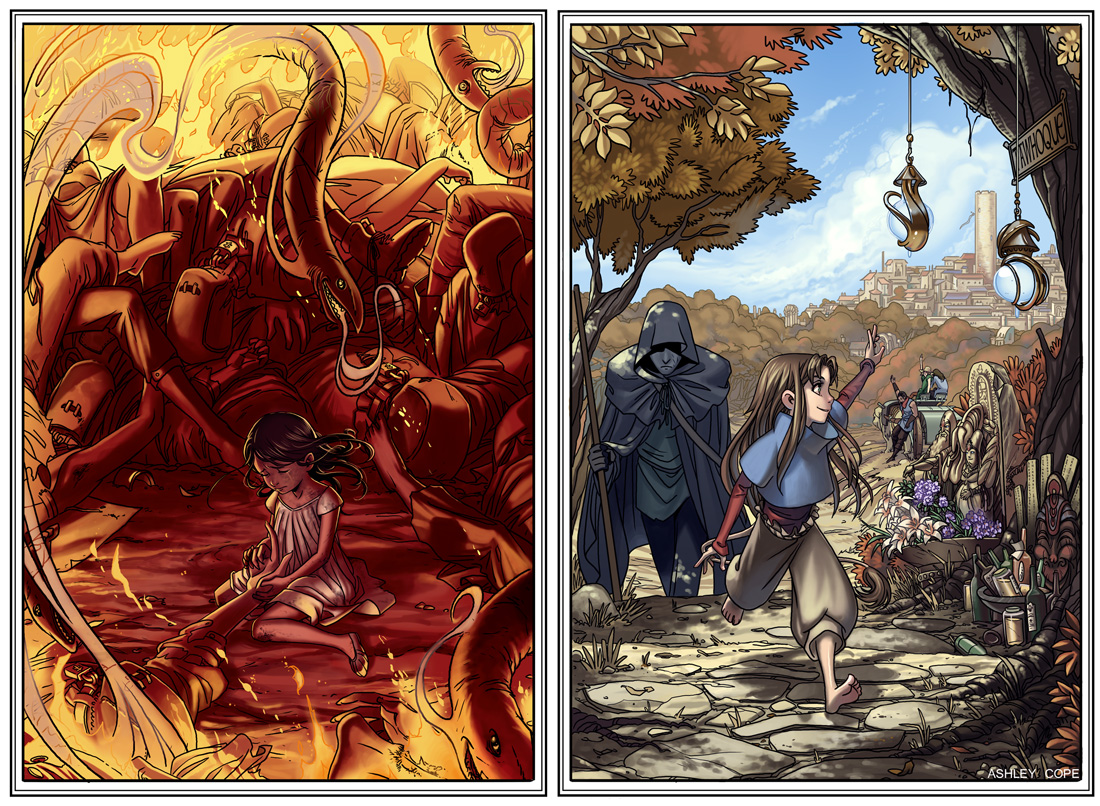
Ben, my housemate who hooks me up with many fine comics (along with the many other things they do), has pointed me towards Unsounded, a most excellent webcomic.  In addition to offering beautiful eye-candy (check out the designs for the covers of Chapters 2 [left] and 1 [right] above), this is a comic that already feels like a window onto a deeply thought out and well crafted world.  Maybe it’s only skin deep, but I doubt it.

Admittedly, I recommend this webcomic to you on the strengths of the printed collection of the first three chapters.  It’s remotely possible that there is some difference between the book and the webcomic version, perhaps simply in the act of holding the physical book in my hands, that changes how I feel about the comic.  Actually, if anything it would have to be the collected early sketches and two short stories added to the end of the book that would change my opinion.  But those only make me feel more certain that this is something deep and complex that I don’t yet know enough about to be able to appreciate fully… and I say that knowing that I already plan to read the rest of Unsounded’s archives.

So if you’re at all interested in reading about the stories of a young thief on a quest to prove herself to her crime lord father, and her magic-using zombie escort who’s been blackmailed into protecting her, then I suggest that you get reading.  Still not sold?  Let me put it this way: I have examined nearly every page I’ve read so far, looking at the little details, searching for another little hint, because I cannot kick the lurking feeling that I’m missing something that signals far more yet to come.  Ashley Cope has done a marvelous job so far of building a story world that all feels like it holds together, revealing new treats around every corner and hinting at far more yet to come, all without ever falling into the classic expository trap of telling instead of showing.  It’s worth reading just to see the quality of her craft.  Check it out.

p.s. I was planning to write up another flash fiction piece from the excess prompts that I generated before, but I haven’t gotten around to watching True Grit yet, and I really wanted to try combining The Matrix and True Grit.  Some other time.

Resistance, by Samit Basu

51WuUYWtYeL._SY344_BO1,204,203,200_

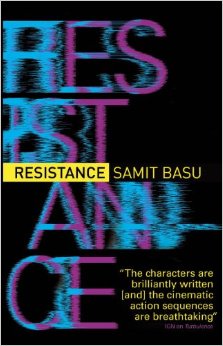
When I wrote about Turbulence a little more than a month ago, I agreed with the book’s cover blurb in my demand for a sequel.  But while it’s hard to make something that is truly good and worthy of others’ consumption, it’s even harder to make something as good to follow the first.  Fortunately, I think Basu succeeds where many others have failed, and offers a sequel that not only delivers on the promise of the first book, but follows it appropriately in tone and structure as well.  If you want good superhero fiction, this is an excellent place to start.  Or, rather, Turbulence is a good place to start.  Then you should read this.  And for heaven’s sake, don’t read them in the other order, you’ll just spoil lots of cool stuff from the first book.

Like last time, I find myself in agreement with the cover blurb on Basu’s book, and yet again I think that the blurb misses something even more wonderful; I’m still convinced that Samit Basu is some sort of Bob Ross of words, successfully conjuring worlds out of thin air with the sparsest of descriptions.  Unlike last time, I took more than one day to finish reading this book.  Perhaps if my reading hadn’t been interrupted by working at an overnight summer camp I would have powered through this book as well.  I can’t tell whether I did not feel as drawn in by Resistance as I did by Turbulence because of those delays or because of something else, but I’m happy to give the book a pass given how much I enjoyed it anyway.

Suffice it to say that if you liked the first book, you’ll like this one too.  And if you haven’t read the first one but are down with non-American supers and women who aren’t just given the short end of the stick, you should definitely read Turbulence (and then Resistance).  If you like superhero stories at all, I suspect you’ll like Basu’s work here.  More on the details after the break…

Continue reading