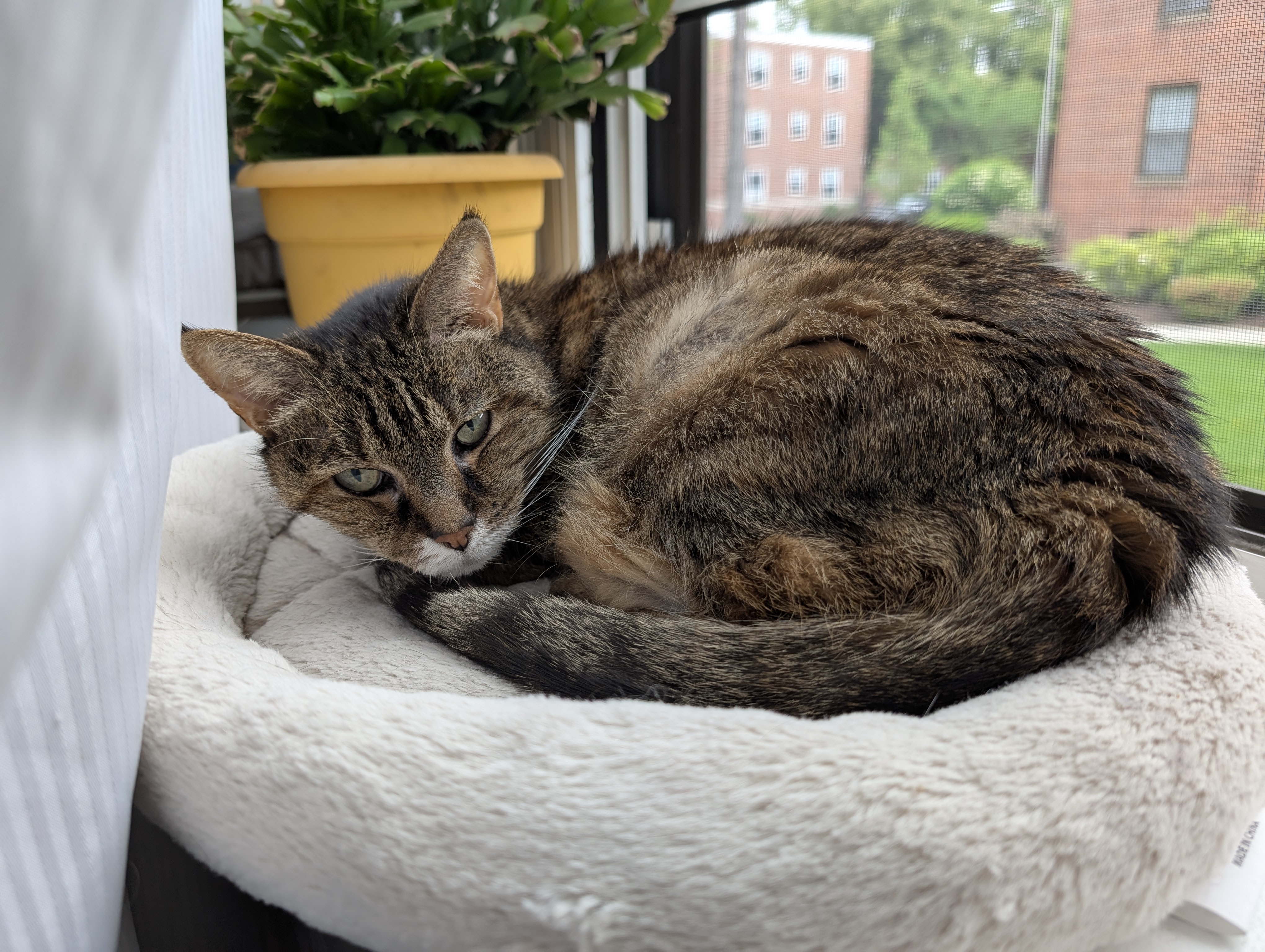
Feline interlude, 5/29/25

Life has been very full of baby recently. I don’t have a full post for you.

I’ve been lucky enough to play a bit of Cities Without Number with a neighbor and some friends. My other games are basically on hiatus, but being able to start early, end early, and walk less than ten minutes to and from game is amazing. There’s also no way I could be doing this without sometimes bringing baby Gibby with me, or sometimes coordinating extra support for Ley. Asking Ley to take care of the baby without any support while I go play RPGs is no good. Having a two-month old is a lot of work.

Cities Without Number, like other Kevin Crawford titles, could really use some editing. It’s… acceptable. The text is definitely better organized and written than some other RPGs or boardgames I’ve seen. Some of Crawford’s verbosity adds evocative texture to both system and setting, and his approach certainly produces consistently fun results. But…

Continue reading

Query Reflections

I had the opportunity to connect with an agent while I was at Arisia, a friend of a friend, and I’ve really appreciated speaking with her since. She was generous enough to share her insight on my query letter for Bury’em Deep. I’m very grateful.

My key takeaway is that my past edits of my query letter have not helped. I created distance from Barry’s emotional throughline. That made it harder for a reader to empathize with Barry, and didn’t convey the emotional intensity of the story itself.

I think I got so caught up in trying to convey the totality of the story, and in trying to make that summary snappy and engaging without being in Barry’s head, that I forgot to give the query letter heart. It doesn’t help that I have been staring at various drafts of this query letter for years at this point. Once I’ve been looking at any collection of words for long enough without clear external feedback, I stop feeling able to judge them usefully. Thus, without any useful feedback from my target audience, judging what was wrong with my query felt like making random stabs in the dark.

With this insight though I feel much better. I feel like I have a target. I might miss that on my first few tries, but at least there’s something I know I can revise towards. In fact, I started redrafting the letter in my head yesterday while I was meditating (I know, that’s not actually good meditation practice). 

That felt like good creative exercise. You know the feeling I’m talking about? There’s a certain feel to that exploration for me—it’s closest to the relaxation of freeform dance, or the undirected play of sketching and coloring, except that I do have a target. My target, as much as possible, is to write a captivating third person version of Bury’em Deep that conveys Barry’s first person emotional journey. Because of the constraints of query letters, that has to be around 250 words. More meditation may be in order.

Anyway. It’s time for yet another rewrite. Wish me luck.

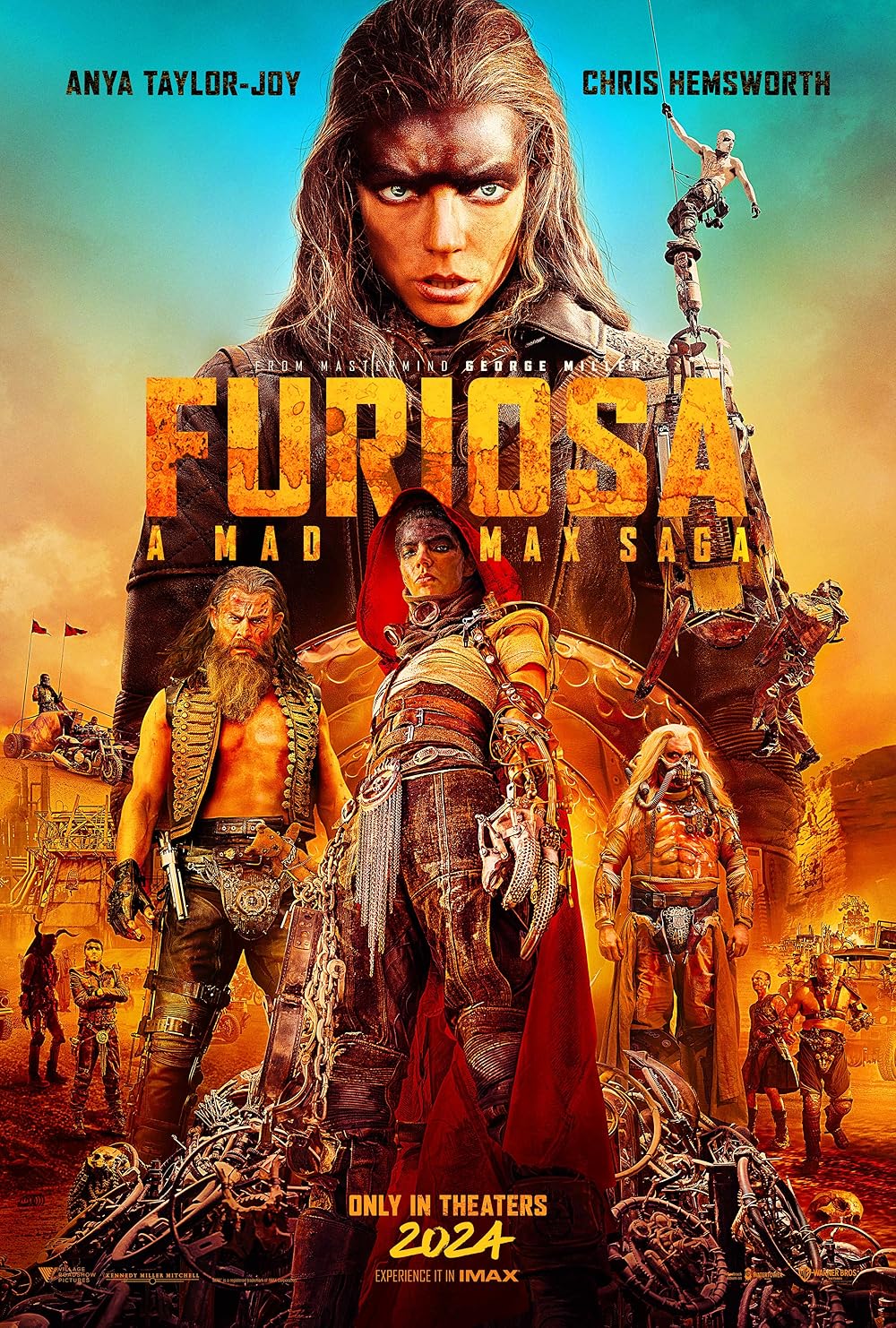
Furiosa: A Mad Max Saga (2024)

The more I think about it, the more I think it’s unfair to compare Furiosa to Fury Road. The problem is that I keep making that comparison anyway.

I keep making that comparison despite the fact that they’re fundamentally different styles of movie. It doesn’t help that they’re both in the same setting, no other movie in the setting came out between them, and their storylines tie directly together. Somehow it doesn’t matter that one was honed to a razor edge of high speed clarity while the other literally has “saga” in the name (sagas, not exactly known for being fast paced stories).

Fury Road told an extremely snappy story with its boot firmly on the accelerator at all times. Furiosa tells a rather long story at a slower pace, split into multiple segments by literal chapter breaks. Fury Road builds all of its characters’ backgrounds up through quick snippets and rapid-fire context clues, while Furiosa sits us down and tells us—in detail—how things came to be. They’re in the same setting, but they have wildly different approaches to storytelling. They just happen to exist next to each other in both story-time and release date.

What I’m saying is…

Continue reading

Another slow week, & The Work of Art

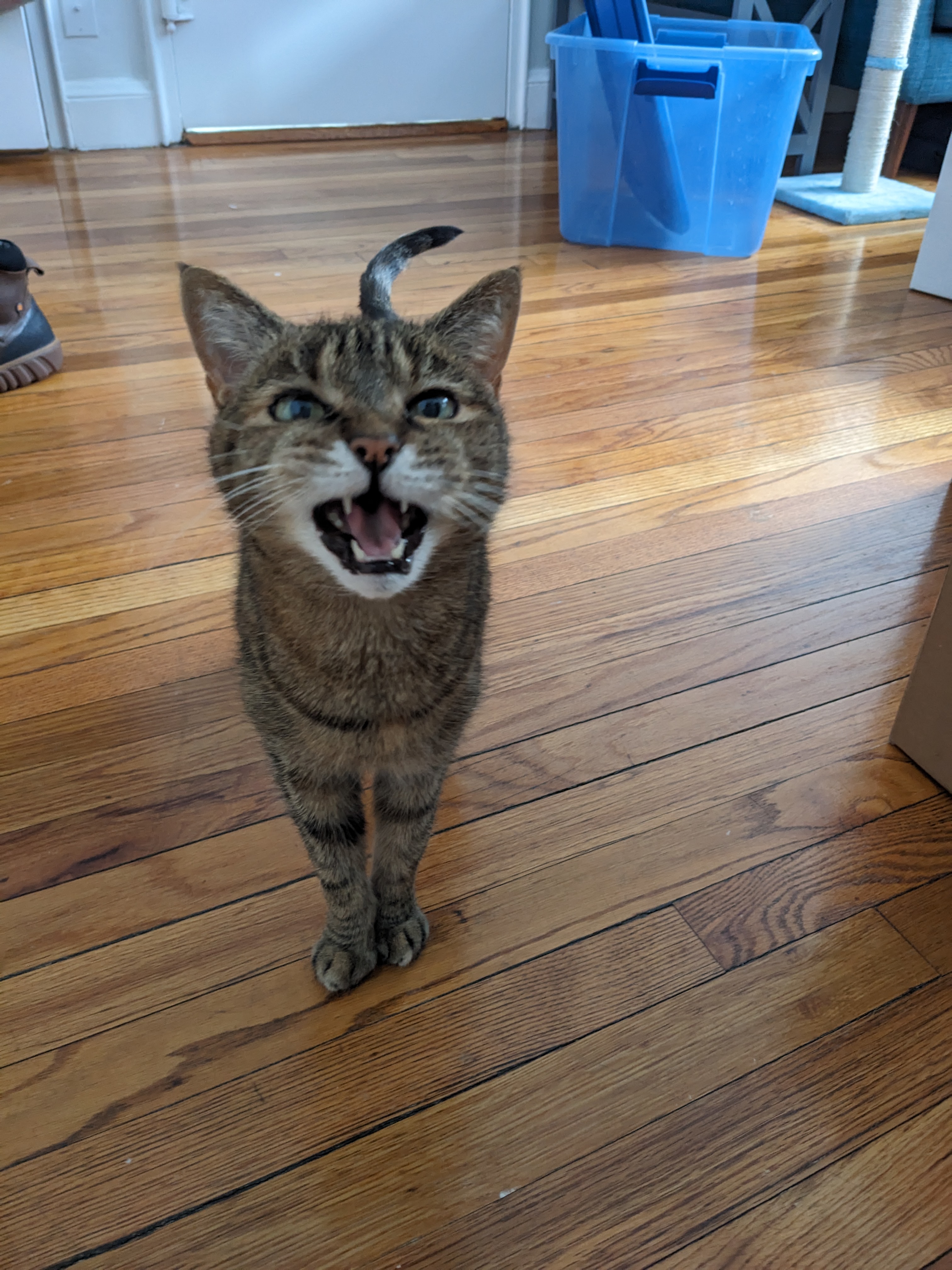
Alex demands tribute
Continue reading

Expectations and Avatar: The Last Airbender

Last week I posted about expectations and Masters of the Air. I skirted around something similar in my previous live action Avatar: The Last Airbender post but, having now finished the first season of live action A:TLA, I’m going to say it directly.

This show suffers greatly from my expectations. If I’d never seen the animated show, I’d be more excited about this live action version. I also just rewatched some of the animated A:TLA because I feared that my memories of it might have been too fond, and…

Continue reading

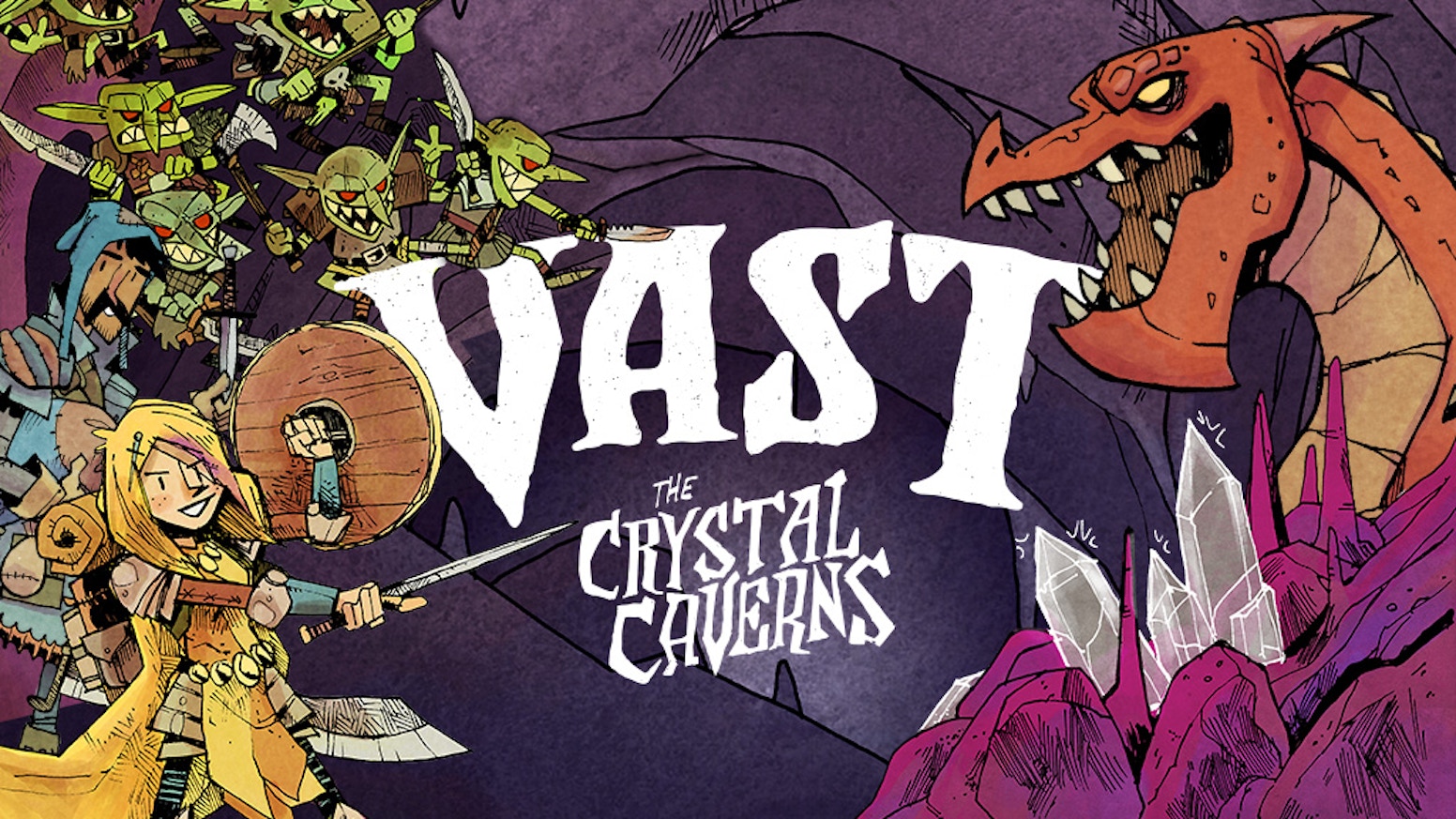
Vast: The Crystal Caverns (boardgame, 2016)

What an incredible premise. What a fun game! If only it were playable without constantly referencing reams of paper on rules, errata, and commentary on the rules and errata.

Vast is admirably ambitious. It’s designed for up to five interlocking, competing, asymmetrical roles that all fit together beautifully to make this boardgame a nail-biting, neck-and-neck race toward victory. With a few important caveats, each player has their own rules reference sheet for their role, encompassing everything they could need to know in order to play the game. And with another few important caveats, everything can flow smoothly as each player chases their own victory conditions, pushing the game onward towards a thrilling conclusion.

Those caveats?

Continue reading

All Ornamentation Must Be Load Bearing

Given my druthers, I overwrite.

Overwriting is the only way I can get the words out. If I think about what should or shouldn’t be on the page, everything gets gummed up. So when I’m being productive, words pour out and I don’t bother sorting which ones should stay.

There’s a fitting apocryphal Mark Twain quote: “Writing is easy. All you have to do is cross out the wrong words.”

I get lots of practice crossing out the wrong words.

Rewriting Bury’em Deep was a big step. I cut it (with wonderful help from Story Boyle) from ~70k down to ~45k and then built back up to ~50k. That showed me what was possible, in much the same way that writing my college thesis reassured me that I could write a large text in the first place.

My World Seeds keep my editing in shape. For those, I regularly crop sections running between 1.5k and 2k down to 750 words. I sometimes worry that I’m losing a little of the magic I want, stripping something special out of my World Seeds in the process. Mostly I feel accomplished.

Plus, if I want to fit my text in my template I need to make those cuts.

All this practice does have some side effects, of course. I now regularly want to strike out chunks of text from the fiction or RPG books I read. I want to strip them down, reshape them, clarify them. I know that I’m enjoying a book when I stop thinking about editing it. I know a book is really good when I feel like every piece of text is doing important work.

That comes back to a phrase I came up with while working with my friend Story: “All ornamentation must be load bearing.” Shit, I guess that’s the title of this post now. The phrase came out mid-crit session, and stuck with me clearly enough that I inked it onto my clipboard. I refresh it every time it fades.

All this cutting and shaping is trickier when editing other people’s work. It takes time to learn their voice—my editing is harmful if I homogenize their style, or replace it with my own. Sometimes pieces are meant to be wordier—but that’s usually period pieces, or something mimicking a specific style. If you want to stay wordy, you need good reasons.

Why am I writing about this now?

Easy: I did it again this week, paring 1.6k down to 860 words in one pass. I’ll cut around 100 words more before I’m finished with that section. I have another chunk, about the same length, that I’m about to start trimming down to roughly 750 words. I’ve got editing on the brain.

The flip side is that it’s difficult for me to switch quickly from editing to writing and back again. I need to separate the activities. With enough of a break, I can do both in the same day. More often, I hyperfixate on one and don’t look up until I’m bleary-eyed and hours have disappeared.

Let’s see if I can get back to editing.

Slushpiles and Rejection Letters

My day today has been rather full.  After reading homework in the library, I had the privilege of spending three hours going through a slushpile for someone I know (for the uninformed, a “slushpile” is what you call the vertiginous heaps of unsolicited submissions received by agents and publishing houses).

It was enlightening, and somehow encouraging and discouraging at the same time.  It puts me in mind of the internal rejection notes from Houghton Mifflin Company that I read while doing research last spring; I found reading committee notes on why HMCo shouldn’t print Poul Anderson, Philip K Dick, or even George Selden’s The Cricket in Times Square.  That’s two iconic mid-1900s sci-fi authors and the 1961 Newbery Honor recipient, all rejected with pithy and sometimes caustic internal notes exchanged between the various submissions readers.

It was enlightening because I found myself rejecting anything that didn’t closely match the guidelines I’d been given, even things that I thought might have been perfectly decent books.  There were no hard feelings, the submission simply wasn’t *exactly* what I was looking for.  It was encouraging, because a number of them weren’t very good and I’d like to think that I could do a better job than that.  And it was discouraging, because in order to submit something and get an editor you need a finished manuscript, and finishing a manuscript that would be accepted is much easier with an editor.

Basically, you could do it if they’d let you, but they won’t let you until you do it.

It’s a mess.

So, it’s time for me to figure out how to finish my work.  Again.

And if your work has been rejected by people, don’t give up.  Submit again and again and again.  Everywhere you can.  Maybe you should tweak things, but do keep trying.

Brotherhood of the Wolf and the Importance of Editing

Monday night I introduced two of my friends to the oddly enjoyable mystery-adventure movie The Brotherhood of the Wolf.  At least, that’s what I thought would happen.  Instead, we suffered through an interminable introduction, nonsensical pacing, a piss-poor mystery plot that was never explained well enough to make the reveal make any sense, and some CGI that has aged a little harder than I remembered.  It was a train-wreck of a film, and I’m not sure who exactly signed off on releasing it.  I was at a complete loss and repeatedly apologized to my friends, because the movie that we watched was not the movie that I remembered seeing years ago.

It turns out that it wasn’t the same film at all.  Oh, the actors were all the same, and the footage was clearly all collected at the same time.  I doubt that the CGI aged any more gracefully in the version that I do remember, but at least the rest of the movie would still be there to back it up.  The problem, you see, was that we watched what we could only guess was the edit intended for UK theatrical release.  It was atrocious.

The version of the film that I first saw, and the one which I would recommend to my friends, is a lovely action-mystery-thriller which features slowly building tension surrounding a series of wild animal attacks, culminating in a wonderful set of reveals and some good old ass-kicking.  The protagonists gradually piece together that the mysterious beast responsible for the local deaths is no natural creature, and recognize that there are connections between the beast’s killings and a secret society which appears to be trying to supplant the King’s authority in the land.  The film is still a trifle weird, but it has pretty costumes, fun action scenes, and a rewarding reveal of a conspiracy plot.  It has inspired several of my own RPGs, and I would consider it decent background material for anyone looking for adventure ideas.

And thus we come around to the importance of editing.  I was already aware of how much influence editing can have on others’ impressions of your work, but I’d never seen such a painfully clear example of it with something which titillated in one form and disappointed in another.  The experience reminded me of Alison J. McKenzie’s good article on drafts, an intimately related topic, and to be honest I’m quite glad that I have chosen an art form in which the overhead costs for creating and prototyping new drafts are so low.  The costs and scheduling associated with film make it far less forgiving.

Unfortunately for the version of Brotherhood of the Wolf that I just watched, I can’t really bring myself to forgive it.  The experience that I wanted to share with my friends, the one that I thought I was sharing right up until the film started to diverge from my memories of it, was effectively ended by the bizarre editing choices that went into that version of the movie.  It was bad enough that I can’t really blame my friends for not wanting to find and watch the version that I remember.

I would still recommend Brotherhood of the Wolf to you for all of the same reasons that I wanted to show it to my friends, but be sure that you’re watching the more standard US release.  Otherwise, you may be sorely disappointed.