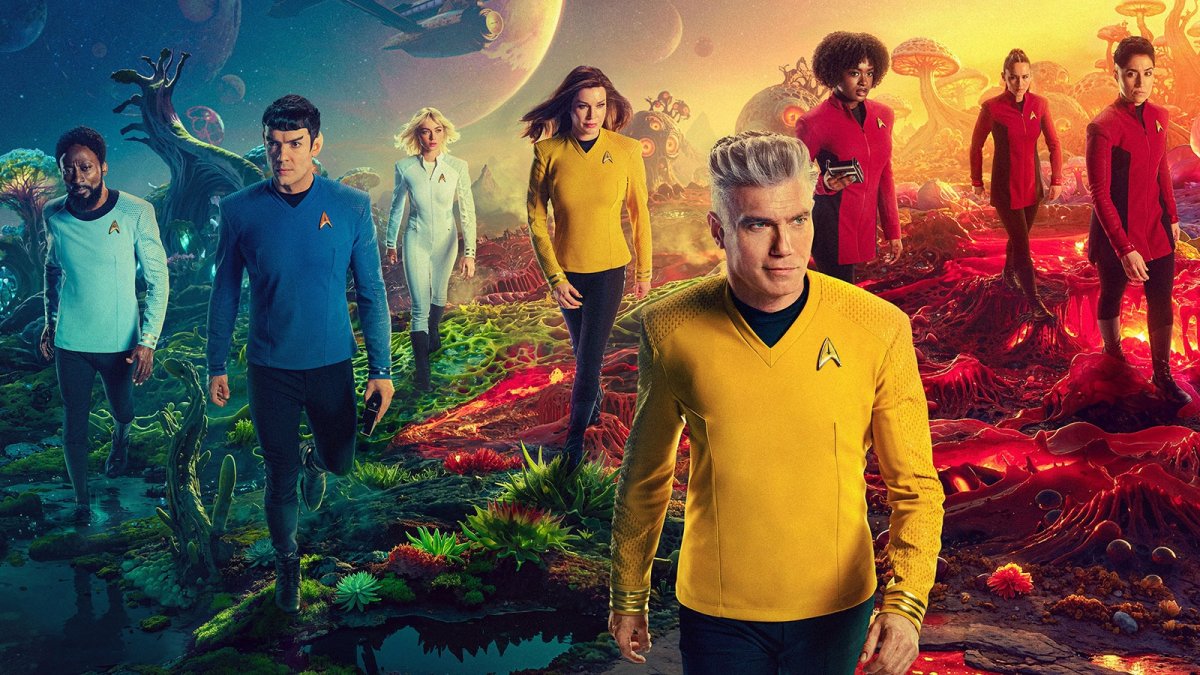
Strange New Worlds season 3

I recall seeing some negative reviews of Strange New Worlds’ third season, reviews complaining about tonal whiplash. I think those reviewers didn’t understand the premise of episodic television.

I admit, the first two episodes of season three were VERY different from each other in tone. The first episode was the conclusion to a two-part episode cliffhanger that has had me on tenterhooks for over a year. The second episode was more like SNW getting back into the swing of things.

I was even glad that I watched the episodes a week apart instead of back to back (as they were released). But I’m not going to insist that a show I love for being episodic only release tonally similar episodes when they air two on the same day. Instead, I am glad to be gifted with more Star Trek to enjoy. I could use more hopeful sci-fi these days.

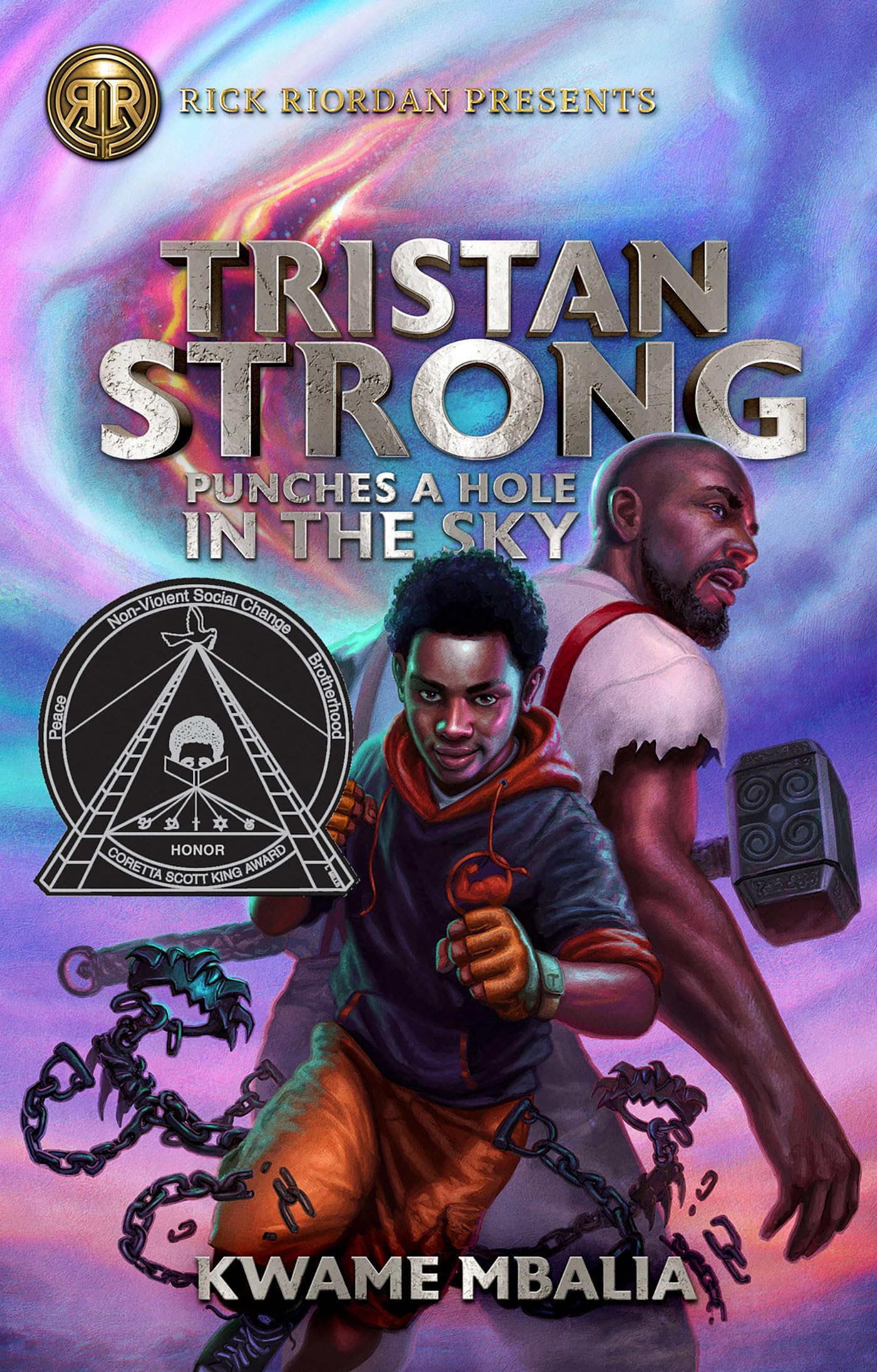
Tristan Strong Punches A Hole In The Sky, by Kwame Mbalia

I love a good middle grade adventure story. That’s precisely what this is. As you might expect from something published under Rick Riordan’s imprint, it’s full of mythology and folk tales and legends. Tristan Strong Punches a Hole in the Sky, by Kwame Mbalia, is all about one young boy’s discovery that the stories he’s grown up with (African-American stories with American folk heroes like John Henry, African trickster figures like Anansi, and those who blur the lines like Brer Rabbit) are all far more real than he ever could have believed. It’s fun, it’s pretty fast, it’s (heh) punchy. This is a good book.

I admit, my appreciation for this book is influenced by my desire for more high quality middle grade adventure stories aimed at boys. There’s a lot more to unpack there, some of which can be better understood by reading Of Boys And Men by Richard V Reeves. Read on for some of those details, as well as my few quibbles with Tristan Strong.

Continue reading

Star Trek: Prodigy follow-up

I finished the first season.

Wow.

I know I just wrote about Prodigy last week, but I have to weigh in again.

Continue reading

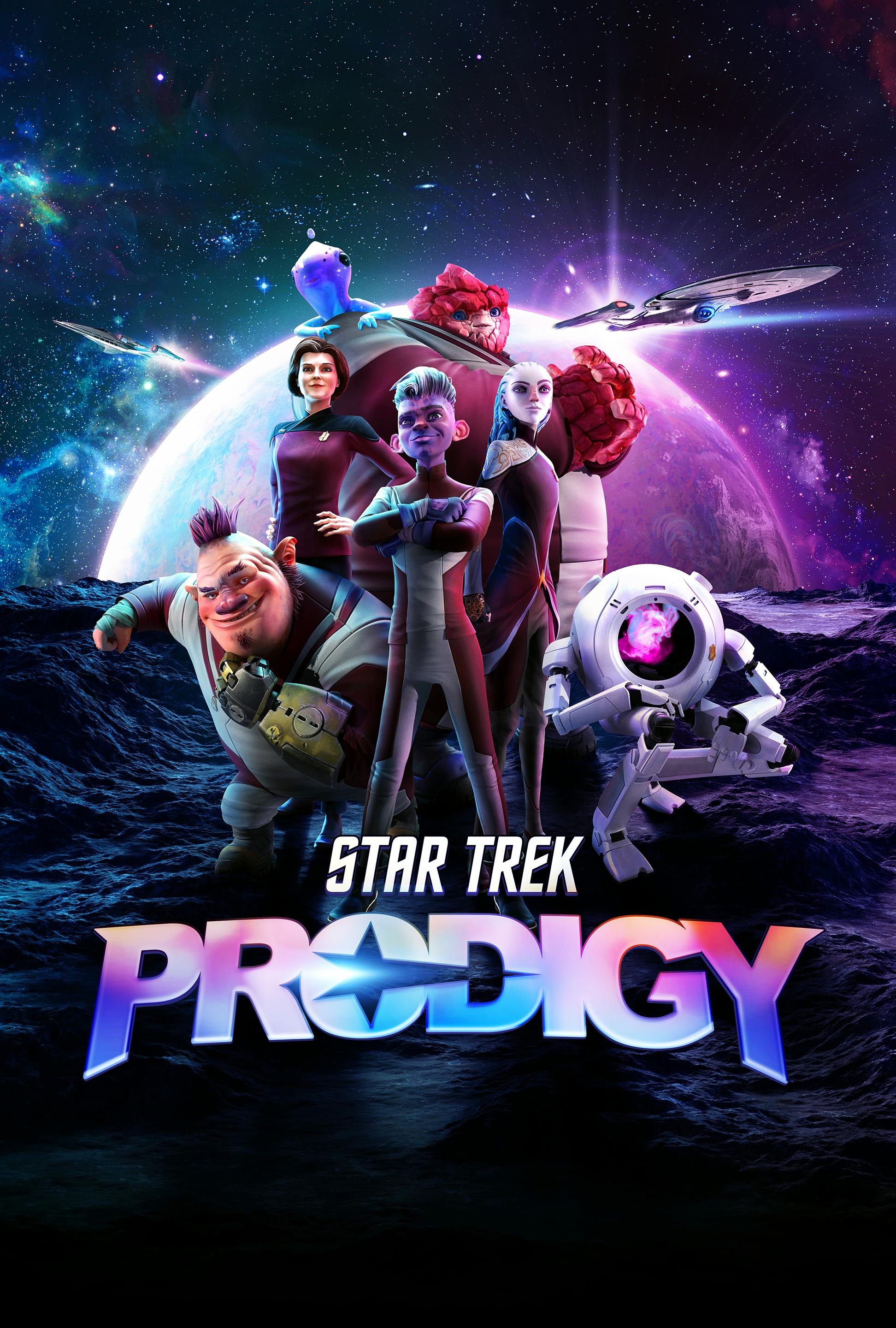
Star Trek: Prodigy, season one

This is for season two, but you get the idea.

As someone who grew up on Star Trek: The Next Generation, Star Trek: Prodigy didn’t quite feel like a Star Trek show until episode six. That might be a good thing. As much as I love TNG’s broad focus on an ensemble cast with highly episodic story telling, Prodigy’s early adventure-focused plots with clear continuity from one episode to another gives us a narrative throughline that TNG sometimes lacks.

That narrative throughline and dramatic adventure feels a little like Star Trek: Discovery. Discovery felt a little off to me in its first couple seasons, due to its fixation on a single overarching narrative and its exploration of Michael Burnham’s character to the detriment of the broader ensemble cast. It wore the trappings of Star Trek, but felt more like a Star Trek movie turned into a miniseries instead of a Trek TV show. Unlike Discovery, Prodigy bridges the gap from overarching-narrative to interspersed episodic and big-narrative episodes and makes a smooth landing in that Star Trek sweet spot with episodes six and seven. It starts without the Star Trek trappings, but ultimately feels more Trek to me than the first season of Discovery ever did.

Admittedly, I haven’t yet watched much further (I think I’m on episode twelve of season one). I’m not sure that matters. Even with continued exploration of the slightly-more-main characters, the show would have to veer sharply into main-character-ism to lose what it has already established. I think the tonal shift happened at the right time too. The dramatic narrative of the show’s opening episodes feels right for a space adventure, and the transformation into a Star Trek show happens as the crew finally gels and discovers that—despite their disparate backgrounds and disagreements—they share a moral core that is increasingly influenced by the ideals of Starfleet and the Federation.

That transformation feels deeply satisfying. The crew’s growing recognition of their shared moral core feels deeply satisfying too. There’s something funny about that to me; when I started watching Prodigy I wasn’t sure I’d be able to love the show. The first couple episodes felt so strongly like a kids’ show—without the idealistic themes I love and identify with Star Trek—that I feared I’d be stuck enjoying it on only one level as decent children’s fiction. The show’s growth as it moved beyond the opening episodes proved those fears wrong.

If you appreciate good children’s literature (yes, I’m using that to describe a TV show), or if you love Star Trek, then you should do yourself a favor and watch this show. My friends who recommended it to me were totally right. Prodigy takes a couple episodes to really get into gear, but it’s a delight.

Butterfly in the Sky (2022)

I have started (but not yet finished) Butterfly in the Sky, the documentary about the creation of Reading Rainbow. I stopped when I did because I knew that if I kept watching I’d watch all the way through, and I had work to do. The documentary hooked me and delighted me—much as the show did when I was little.

I grew up on Reading Rainbow (and Star Trek: The Next Generation, which created some confusion for young me). Young me didn’t understand why Geordi La Forge didn’t need his visor when he was telling me about books…

Continue reading

After one season of Strange New Worlds

For all my love of Star Trek, I hadn’t thought of myself as a Trekkie per se. There were always other fans more passionate about the setting, the stories, the characters… all the minutiae that are so often obsessed over by a particular class of nerd. Yes, I am a nerd, but I wasn’t hooked on those details in the same way.

It didn’t help that I grew up implicitly believing you could be either a Star Wars super-fan or a Star Trek super-fan, but not both. Ridiculous I know, and confusing for a kid who (re)watched both regularly. I still don’t believe that I’m tied to one fandom over the other. But there’s something special about Star Trek’s focus on seeking to do the right thing that I find uplifting. Watching the first season of Strange New Worlds has reminded me of that, and of how big a part that plays in my love for Star Trek. 

There’s a lot of science fiction that does an excellent job of making dramatic and exciting stories. People struggle against some kind of oppression, or fight villains, or try to make a place for themselves in an uncaring world. Right and wrong are often painted across the story in all-caps, and there’s little question of who or what is good or bad. It’s simplistic. In some ways, that simplicity is soothing; we don’t have to think anything through, we know who needs punching (it’s the nazis).

Yet other science fiction drags us all down into the muck. Everyone is bad, and at best you can be the least bad. And as much as I enjoy those stories at times, they are depressing. They don’t offer any route forward, just a series of grim dead ends. No wins for humanity or people in general, just losses and maybe a draw.

Star Trek, for all that it falls victim to the foibles of its various writers, doesn’t do that. Instead, it has a clear set of ideals and a broad faith that people will rise to the occasion for the sake of others when things are at their worst. Star Trek’s heroes are people who struggle to make moral and ethical decisions in difficult situations, and act to help others. They have ideals, and a model for good and ethical behavior, and they aren’t afraid to question that model and acknowledge when and where it falls short.

Something I hadn’t known while growing up on The Next Generation, but which makes a lot of sense in retrospect: Eugene Roddenberry, the man who first conceived of Star Trek, had first-hand experience with average people acting heroically in terrible circumstances. He survived multiple airplane crashes, during and after World War 2, and served as a crash investigator for a time. In his third crash, while deadheading a Pan-Am flight from Karachi to Istanbul, he repeatedly re-entered the burning wreckage to rescue survivors despite having just broken two ribs during the crash. Regardless of any of his personal failings, that sort of heroism fits with the spirit of the show he created.

And that sort of heroism feels better to me than the heroism of blowing up the Death Star. It feels broader and deeper, even if it may not be as big or flashy. That heroism is within the reach of the average person, not limited to the force-sensitives or the fighter pilots. That’s what comes through for me in so many of Star Trek’s stories.

But for all this talk of heroism and ethics, I’m neglecting the delightfully weird and wacky places that Star Trek goes at the same time. Strange New Worlds has shenanigans. It wanders off in odd directions, and plays with the setting in ways that feel both irreverent and extremely true to the absurd lineage that preceded it. For better or worse, the pressure to create episodes for syndicated TV shows has pushed Star Trek into some bizarre and hilarious places over the years. Rather than looking at the weirdness as something imperfect, something to be surgically removed in this era of TV, Strange New Worlds is willing to purposefully embrace it.

This show is willing to be serious, yes. But it’s also able to laugh at itself. Without being comedy-focused in the same way as The Lower Decks (another excellent show), Strange New Worlds repurposes the weirdness to let off steam while investigating characters’ personal storylines. The combination of deeply personal and emotional story with moments of absurdity feels just right, a moment of lightness that offers poignant relief from the gravitas of Star Fleet.

So yes. Having now finished the first season of Strange New Worlds, I have to say that it lived up to my expectations and then some. Even with a few frustrating spots, it reminded me of what I love about Star Trek. It proved that the good and hopeful feelings that I remembered from watching Star Trek as a child, along with the occasional bizarre comedy, can still be found in Star Trek today. I wrote weeks ago that I was excited for more, and I’m glad to say that—after having watched the whole first season—I still am.

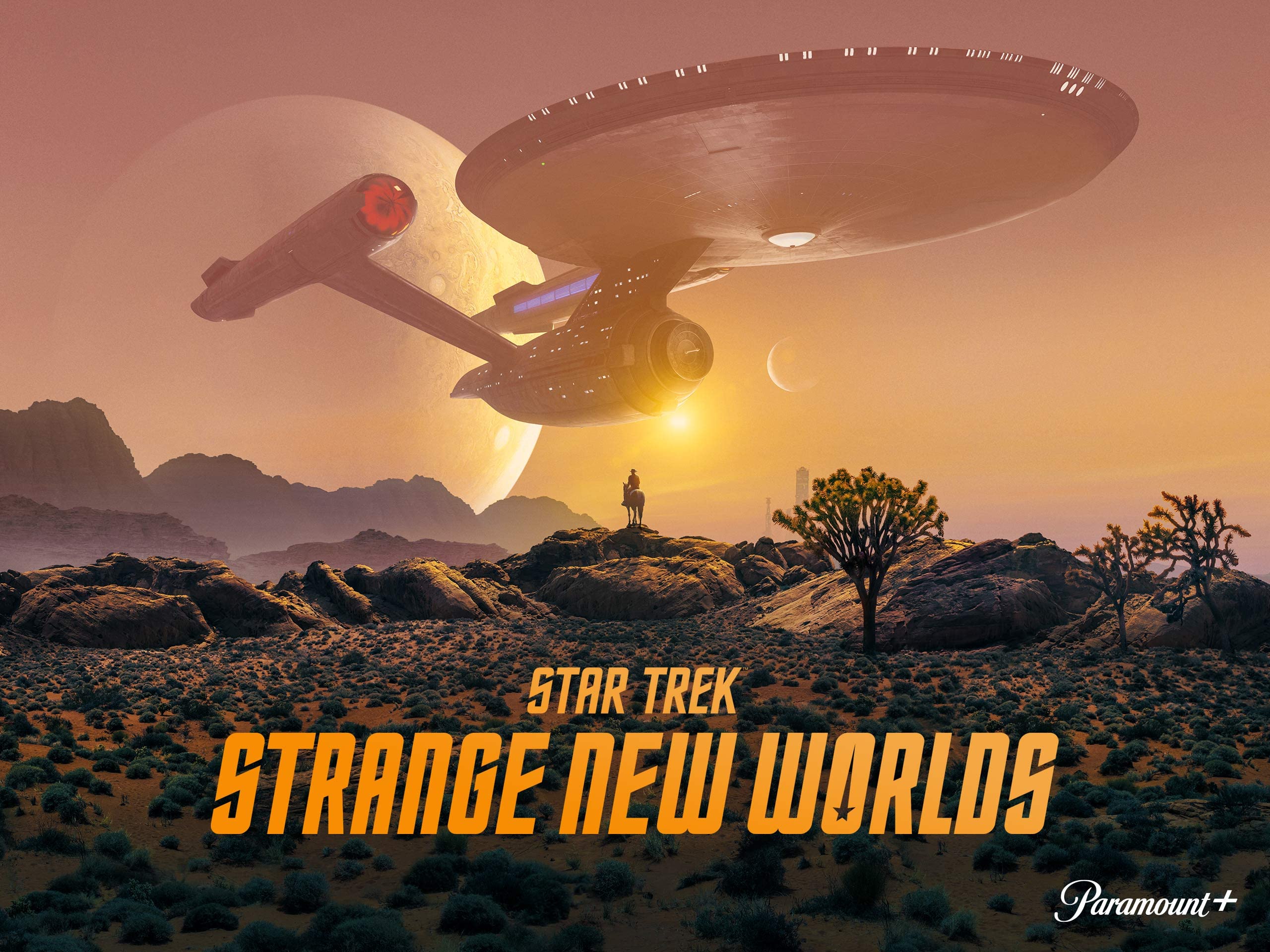
Star Trek: Strange New Worlds

I’ve only seen the first episode. I loved it. I’m really excited for more.

It’s hard for me to see this show without immediately comparing it to Star Trek: Discovery. Obviously, the two shows are connected by their events and characters. And, very mild but necessary spoilers, if you watch the first episode of Star Trek: Strange New Worlds you will be spoiled for the end of Discovery’s second season. Given the continuity of experience for several main characters (and especially Captain Pike), that’s inevitable.

Most of the details of Discovery aren’t brought up because they’re classified in-setting and there’s little reason for anyone to actually divulge anything. But the vital bits come out in a few conversations, or are heavily hinted at and shown in characters’ internal struggles. This means that you don’t need to have seen Discovery in order to enjoy this show, and all the plot-relevant emotional strife that grew out of the previous show’s events is made accessible to new viewers.

That’s all for the best. I have mixed feelings about Discovery, and I think Strange New Worlds made the right choice by making itself more accessible to new viewers. Moreover, I think Discovery’s emotional and narrative tone felt more like a grim Star Trek movie… and Strange New Worlds feels like a marvelous return to the tone of Star Trek as a TV show.

I’ve written about this here before. Discovery had piles of narrative tension, and character development, and drama… and it felt like watching a high production-value miniseries set in the Star Trek universe, with all the bubbling idealism stripped out. When I watched it, I did not feel hope. I was engaged by the story, and I appreciated the growth seen throughout each season. But Discovery was fundamentally about season-spanning dramatic narrative arcs. 

Star Trek benefits from dramatic narrative arcs. Yet for all my love of a good narrative, Star Trek has long been more focused on exploration, and on ethical, moral, and intellectual engagement with difficult subjects. Sometimes it does that well, sometimes it doesn’t. And sometimes it leavens itself with exciting narrative interludes. But it’s a series anchored in idealism, hope, and a willingness to engage critically with its setting (with varying levels of success).

Strange New Worlds delivers that. Watching Strange New Worlds felt like watching the next iteration of the old Star Trek shows, in the best possible way. I loved it.

I know there are some people who have seen it and don’t like it. I understand that a number of people are upset about the bridge crew being both mostly non-white and/or women. Fuck ‘em. If that’s seriously their gripe with the show, they haven’t paid enough attention to the whole rest of the show’s history—and they’re apparently unsatisfied with the fact that the captain is still a white dude.

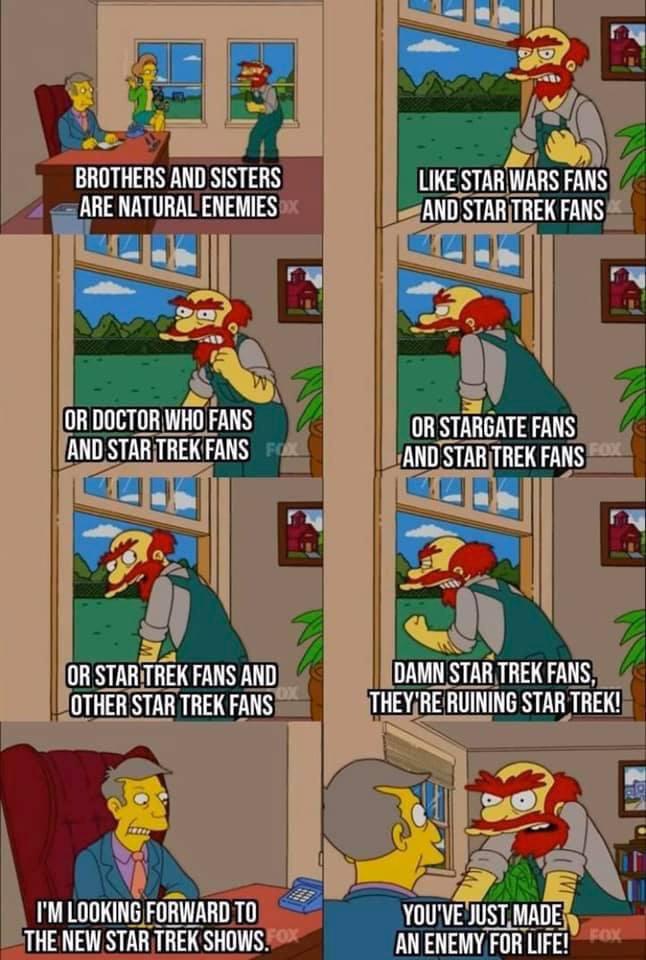
I haven’t yet heard other people’s critiques of the show, and I’d be more curious to hear those. This meme applies, to be sure:

But not only does this new Trek feel hopeful, I once again trust that the show will continue in the optimistic and idealistic traditions of older Star Trek shows rather than chase ”serious drama” at the expense of its emotional and philosophical tone. I am so excited for more.

Ted Lasso

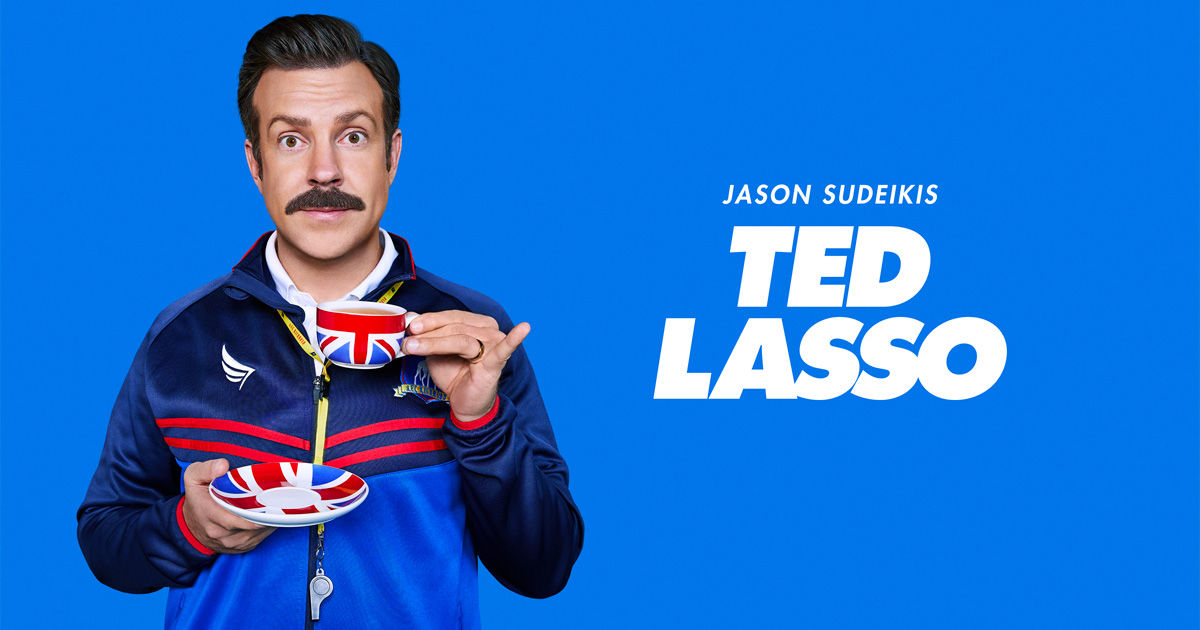
I’ve been recommending Ted Lasso to friends recently, and now it’s your turn.

Ted Lasso is hard for me to pin down. The closest genre-bucket it fits into is “dramatic comedy,” but that feels misleading; this show doesn’t feel like many other dramatic comedies I’ve seen recently—or maybe ever. It feels absurdly kind, in a wonderful way.

Ted Lasso is most certainly a comedy. And it has dramatic elements, not shying away from the personal struggles facing the characters or the (mostly social) challenges they’re up against. But the only comparable shows I know are… more cruel? They don’t build my trust in them. The other shows I’ve watched in this genre don’t feel like they really honestly love their main characters, or like they’re written with empathy for the characters and their struggles.

In my experience, when most other dramedies explore tough emotional situations, they feel like misery-porn. At best, they’re wry and a little removed from the action. At worst, they draw out the pathos and angst and awkward personal struggles, and then they stew in those feelings until they finally make their audience feel better several (long) episodes later by offering relief… after they’ve created another suffering magnet for another character in the show. But the audience’s resting state is discomfort, leavened by brief flashes of humor at someone’s expense, and the characters rarely feel lovable or leave me cackling in delighted glee.

I guess, when it comes down to it, I usually don’t feel like those other shows care about whether they make me happy. They’d much rather be serious and funny, or just painful and funny. It’s as though they’re fine with being depressing as long as they get a chuckle out of me.

That’s not Ted Lasso.

I trust the writers of Ted Lasso in ways that I don’t trust other show’s writers. They’ve proven to me that they can take an absurd premise (American football coach is hired to coach a British Premier League Football [soccer] team), weigh it down with some serious personal and interpersonal issues for dramatic ballast, and then plot a steady course that leaves me smiling in happy admiration.

They do it in 30 minute chunks. They make fast and robust characterization look effortless. And then they make rewarding character development look easy too. And the editing! Whoever’s behind the way this show skips directly to the important parts, whether that happened in the cutting room or in the writers’ room or wherever, they deserve a prize.

Oh, and the show brings up those painful and serious issues that I mentioned above and then handles them gracefully. Things don’t always turn out perfectly, but they feel good in a way that I’d forgotten was possible in a TV show. It doesn’t feel dishonest, it just feels… hopeful.

And I love that.

Honestly, some people probably won’t like that. Not everyone will be as happy with Ted’s incredible positivity as I am. And perhaps some people might dislike how the show sometimes leans into its goofy bits, or pushes for the happier and healthier resolution. It might not always deliver the feeling of “reality” that those people want.

But I’m sad and scared and anxious more of the time than I’d like. So much TV that I see only embraces that, like a deeply critical cynic insisting that they’re a realist… and then laughing at me and calling me foolish to hope for anything.

Ted Lasso doesn’t do that.  It does the opposite.

In some strange way this show and its hopefulness are reminiscent of what I love about Star Trek. It’s idealistic. Not blindly so, and not in the same way that Star Trek is, but… that uplifting feeling is still there.

Ted Lasso feels refreshing, and brave, and honest in ways that both feel healthy and are damn funny. I don’t know that I want every show to be like this one, but I could really use a few more like it.

Star Trek: The Lower Decks

I have discovered that The Lower Decks is a fine entry point for new viewers to Trek. I wonder whether that was done by accident, or whether there was some co-aligned intent that made it so. Regardless, my partner really enjoyed it. We’re both looking forward to the next season coming out in a little over a month.

Did it help that I’m overly familiar with Trek? Probably.

I grew up on The Next Generation. I’m pretty sure some half-remembered version of “Remember Me” (Dr. Crusher is caught in a collapsing warp bubble, people disappearing around her while she’s the only one to notice) fused with The Nothing from The NeverEnding Story and a fragment from Bucky O’Hare to fuel a lingering childhood fear. The climactic moments of “Conspiracy” (brain parasites infest Star Fleet) were also etched in my memory.

But my Trek-neophyte partner liked it even without my input. They were laughing before I answered any of their questions.

The Lower Decks excels at being accessible to viewers who aren’t veteran Trekkies for several reasons. Reveling in its Trek-ness, the show wears the setting’s tropes on its sleeve. This earnest obviousness is a huge advantage. The show is so clearly enamored with its setting, it shares an infectious delight even while it pokes fun—and it doesn’t feel like it’s satirizing Trek so much as celebrating it and laughing at the same time. All of that made it easier for my partner to pick up on the setting of Trek without other context, while still having fun with it: several times, they cackled while asking “that’s a thing?” (They were right, it was a thing.)

Similarly, the characters are both varied and endearing while remaining plausibly Trek. They play to their comedic bits and obsessions, but the writers preserve their “humanity.” And I actually think this show does a better job of exploring the characters of its cast than Discovery does, and in far less runtime.

I’ll elaborate: this show feels more Trek than Discovery does to me, because of its unabashed embrace of the ideals of Star Fleet. In that way it feels more like the TNG I grew up with, more hopeful and earnest and less focused on following some larger dramatic arc. The important deliberations of this show are ultimately smaller in scope, and we have more time to watch people being people at people-scale instead of losing the little personal details as they’re dwarfed by the Big and Important Drama of the season.

Right now, I prefer this.

Back on track, part of what makes The Lower Decks accessible—and such an ideal entry point—is its plethora of easy references to other Treks. Normally I’d call that a bad thing. In many cases, those references would impede a new viewer with obvious missed in-jokes that feel like hostile gatekeeping. But this show references other Treks in a way that prepares viewers for the genre as a whole, ties it into the larger setting continuity, and makes those other Treks more fun later. It’s extremely well done.

Now, most times, I wouldn’t say that being a good genre starting point is an accessibility feature for a series itself. But when this show excites someone who’s never watched Trek before, it also makes them more invested in itself. It’s a virtuous cycle. It’s an admirable achievement, too.

So if you like Trek and haven’t watched The Lower Decks yet, I recommend it. If you’re wanting something that comes in manageable bites and is good fun, I recommend it. And if you’re wanting to introduce someone to Trek but you’re not sure where to start, this show is a delight.

Have fun.

Star Trek, Discovery, Idealism

Star Trek has been a part of my life since I was tiny. I grew up on The Next Generation, watching it curled up on the couch with my older sibs. While I remember the death of Tasha Yar, I don’t remember Riker without a beard (I see the impossibility there, presumably my brain edits out most of the worse stuff).

I was, arguably, too young for the show. I know it wasn’t geared towards toddlers. Some of my earliest nightmares grew out of Star Trek episodes. Those did not stop me from watching.

Of course, the same can be said for watching my sibs play Doom. Maybe toddler-Henry’s judgement just wasn’t that good. Toddler-Henry almost certainly valued spending time with sibs more than not having nightmares. That’s still true.

All of which is to say, Star Trek has a special place in my heart. Moreover, at a formative age Star Trek fed me an underlying idealism that serves as the keystone for good Star Trek stories. If you’ve watched enough older Trek you know what I’m talking about. When it isn’t there, the Star Trek-ness of the story just falls apart.

That idealism isn’t always well-written. But I admire it all the same. With it, generations of Star Trek have tried to do something that much of the rest of its contemporary narrative milieu dismissed as naive, or uninteresting, or hopelessly unrealistic. Unlike those other stories, well-written Star Trek refuels me.

All of which brings me around to Star Trek: Discovery. I’m working my way through it, bit by bit, but as much as I’m having fun seeing science fiction in the Star Trek universe it still doesn’t feel quite like Trek. This won’t surprise anyone who’s familiar with both Discovery and older Trek. Discovery’s first (and second, so far) season are dramatic and often exciting, and they have more character growth and development than I remember from TOS or TNG, but… they don’t hold the Trek idealism that I love. There are glimpses of it, moments when that idealism comes through, but it’s mostly hidden behind their larger threatening story arcs.

The most Star Trek thing I’ve seen in them so far have been Captain Pike and Number One, part of why I’m so excited for Star Trek: Strange New Worlds.

I have heard good things about Discovery’s third season, however. I’ve heard that it feels more full of the old idealism. I could really use that right now. So I’m still plugging away, doing my best to appreciate the science fiction show wearing Star Trek’s skin, and looking forward to it growing into something more hopeful and idealistic.