We’ve had another week of sickness here in my home. This meant that I missed Arisia, much to my dismay. My apologies if you had hoped to see me there. I hope you enjoyed it without me.
Perhaps this is a good time to reflect on the newest Star Trek show (Starfleet Academy) and the last one I watched (Strange New Worlds season 3).
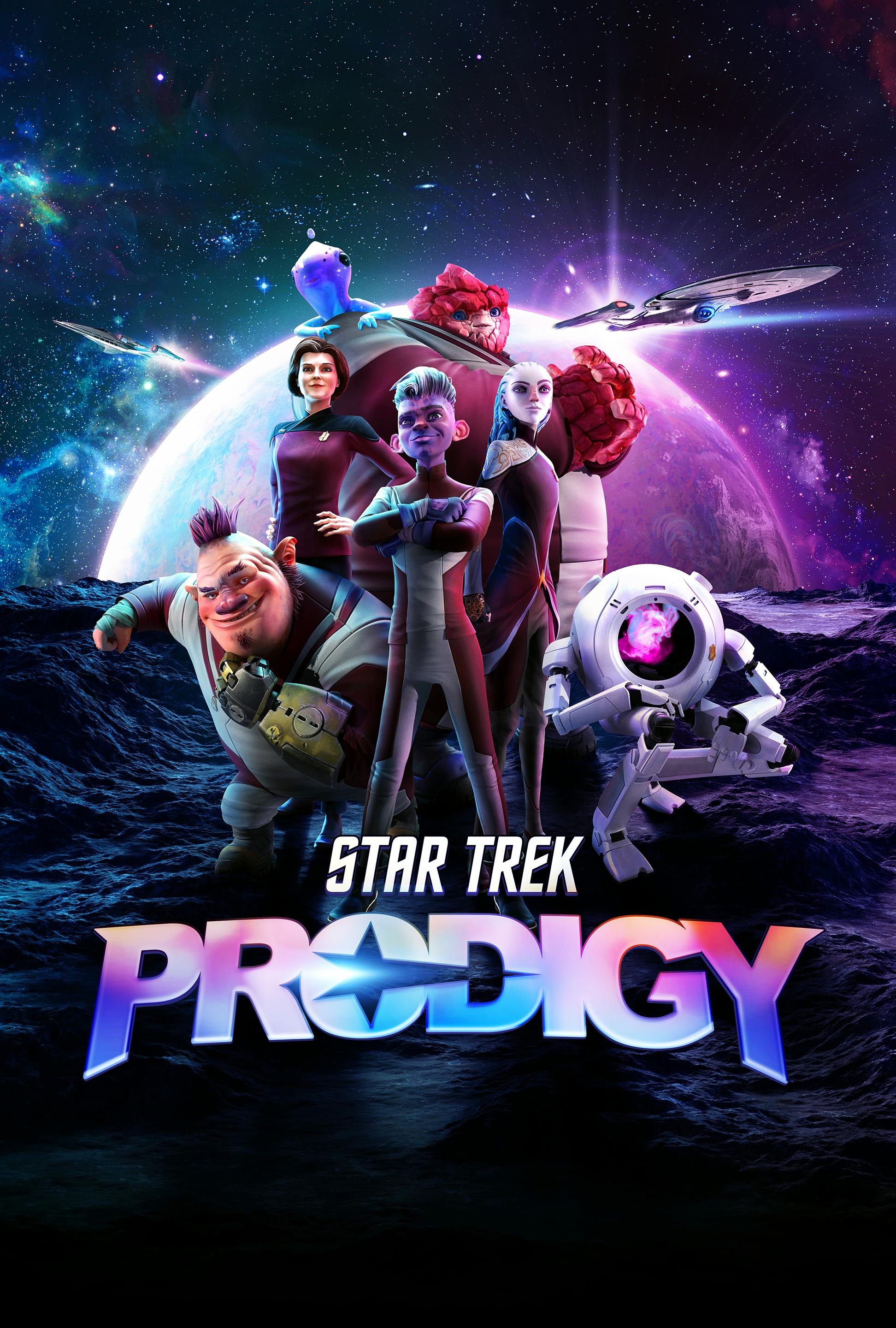
As someone who grew up on Star Trek: The Next Generation,Star Trek: Prodigy didn’t quite feel like a Star Trek show until episode six. That might be a good thing. As much as I love TNG’s broad focus on an ensemble cast with highly episodic story telling, Prodigy’s early adventure-focused plots with clear continuity from one episode to another gives us a narrative throughline that TNG sometimes lacks.
That narrative throughline and dramatic adventure feels a little like Star Trek: Discovery. Discovery felt a little off to me in its first couple seasons, due to its fixation on a single overarching narrative and its exploration of Michael Burnham’s character to the detriment of the broader ensemble cast. It wore the trappings of Star Trek, but felt more like a Star Trek movie turned into a miniseries instead of a Trek TV show. Unlike Discovery, Prodigy bridges the gap from overarching-narrative to interspersed episodic and big-narrative episodes and makes a smooth landing in that Star Trek sweet spot with episodes six and seven. It starts without the Star Trek trappings, but ultimately feels more Trek to me than the first season of Discovery ever did.
Admittedly, I haven’t yet watched much further (I think I’m on episode twelve of season one). I’m not sure that matters. Even with continued exploration of the slightly-more-main characters, the show would have to veer sharply into main-character-ism to lose what it has already established. I think the tonal shift happened at the right time too. The dramatic narrative of the show’s opening episodes feels right for a space adventure, and the transformation into a Star Trek show happens as the crew finally gels and discovers that—despite their disparate backgrounds and disagreements—they share a moral core that is increasingly influenced by the ideals of Starfleet and the Federation.
That transformation feels deeply satisfying. The crew’s growing recognition of their shared moral core feels deeply satisfying too. There’s something funny about that to me; when I started watching Prodigy I wasn’t sure I’d be able to love the show. The first couple episodes felt so strongly like a kids’ show—without the idealistic themes I love and identify with Star Trek—that I feared I’d be stuck enjoying it on only one level as decent children’s fiction. The show’s growth as it moved beyond the opening episodes proved those fears wrong.
If you appreciate good children’s literature (yes, I’m using that to describe a TV show), or if you love Star Trek, then you should do yourself a favor and watch this show. My friends who recommended it to me were totally right. Prodigy takes a couple episodes to really get into gear, but it’s a delight.
There’s a particular flavor of social awkwardness or social strife in shows and movies that hits me hard in a weird squirmy spot a little below my diaphragm. It spreads from there, worming around inside me, usually moving upwards. It’s a profoundly distressing and uncomfortable experience, and it happens most often in certain kinds of dramas, social comedies, or romances.
This experience has been with me since I was a child. I can still remember wriggling in my seat on the couch while watching movies, turning myself upside down and standing on my head as I tried to untwist or escape the awful tension inside me. I haven’t yet learned precisely what kinds of awkwardness and strife cause this, perhaps because I try to avoid the experience as much as possible, but it crops up time and again.
That’s too bad, really. I thought the first episode was consistently funny, even as it teetered between sweet and almost-painful in that squirmy way. If the second episode hadn’t hit me so hard, I think I would have continued really enjoying the show. Let me explain:
I’m two episodes into Dead Boy Detectives and I’m having a blast. Something about this feels wonderfully light and playful, despite the show’s somber, grisly, and morbid elements.
I’ve been packing, clearing out, and moving into a smaller space (plus storage). This is, as ever, revealing. It’s also a tremendously time-hungry pain in the ass.
I’ve had less time for consuming media as a result of all this, but I’ve sometimes watched an episode of Fallout as a way of relaxing in the evenings. And I do mean relaxing. But why is this show about awful stuff not awful?
This show suffers greatly from my expectations. If I’d never seen the animated show, I’d be more excited about this live action version. I also just rewatched some of the animated A:TLA because I feared that my memories of it might have been too fond, and…
The first episode of Netflix’s The Gentlemen reminds me of Michael Bay’s Pain & Gain without the leavening of self-awareness. Pain & Gain leaves us, the audience, with enough room to see the idiocy and toxic obsession involved. From the movie’s first moments we are offered a perspective that might empathize with the main characters, but doesn’t ask us to sympathize with or believe them. In that way, Pain & Gain feels like a critique of the stupidity and myopic ambition of its characters.
The Gentlemen might critique its characters’ beliefs… maybe. But The Gentlemen doesn’t offer the distance and outside perspective that Pain & Gain does. Even when it showcases the absurd, the first episode of The Gentlemen takes the main characters seriously and takes their perspectives. It believes its own hype. Instead of offering a self-aware critique of people’s unwillingness to admit that they’re stuck swimming laps in a shallow pool, this first episode puts us inside the fishbowl, trying to find a better fishman.
It’s flashy and stylish and dramatic. It also feels a bit stupid.
This adaptation can’t exist independently of the animated version for me. My familiarity with and love for the animated show clouds my judgment. I don’t think I can just call this show bad, because I’ve really appreciated parts of it, but I also can’t say it’s good.
I don’t like this live action Avatar: The Last Airbender as much as the animated version, for a number of reasons. The two shows feel like two different interpretations of the same starting material, and while I can see why the live action version made at least some of the choices it did, I think some of those choices will rob the show of its dramatic potential down the line. If you’re still on the fence about watching this version of Avatar, let me temper your expectations and tell you what I’ve enjoyed… as well as what I haven’t.
Oh yeah. I’m going to spoil this show. If you haven’t seen the animated version already, do yourself a favor and watch it.
My lack of interest in most of the monsters turned out just fine! That didn’t detract from the show, because Monarch is far more focused on people, and humanity, than on giant stompy monsters. And it was Monarch’s focus on people that I loved.
I think there are some interesting details in why I loved the parts I loved, and what didn’t work as well for me. Come check it out.




 Fistful of Wits