The Lootbound demo fascinates me. It scratched a series of my itches, handily eating an hour and a half of my Saturday evening and keeping me up past my bedtime. Days after playing it, I find my mind returning to gnaw at its design choices.
It is not, I think, the game for me. But it might be the game for you.
Lootbound is a game of several disparate parts. There’s a spatial management puzzle, as you fit as many oddly shaped equipment-blocks into your inventory as you can while also maximizing adjacency bonuses. There’s the attribute boosting puzzle inside that spatial management puzzle, as you choose which weirdly shaped blocks to carry based on the improvements they offer or fit different types of equipment beside each other for their magical powers. There’s a line-up-and-fight classic JRPG-esque combat system where you put those attributes (and your read of the fight) to the test. And there are a few small risk-management puzzles in which you choose how many of your available resources you’ll spend in the hopes of improving your capabilities (with varying certainty of a reward). Each of those puzzles grabbed my attention, though it was the spatial inventory management and adjacency bonus maximizing puzzles that had the strongest grip.
That imbalance, my fixation on the inventory management, might actually have been part of my problem with the game. The inventory management was so much more engaging to me than the game’s other puzzles that the other puzzles felt lackluster by comparison. I never felt sufficiently squeezed for resources to NOT spend them on getting cool artifacts, and after learning how the risk/reward die-rolling mechanics worked I consistently took the reliable boost of the low- or medium-risk options. Those choices didn’t feel tricky, they felt clear. Worst of all, my decisions in the JRPG-esque combat felt unimportant or mostly-obvious—I had one reliable move and I almost never used anything else. With a few small exceptions, I felt like the combat either didn’t need my input or had a straightforward optimal choice. Maybe I just needed to keep playing for longer—maybe my disengagement came from playing through the game’s easy starting area.
Even with most other puzzles feeling lackluster, that spatial management puzzle WAS rewarding. Finding layouts for my cool new pieces of gear felt good. Prioritizing one group of items over another came with interesting tradeoffs. Maximizing my attribute bonuses felt satisfying. How my good layouts empowered me in the game’s combat system also felt validating… and may have exacerbated how simple the fights felt. All of these pieces felt good enough that I chased that loop of fun for an hour past my bedtime.
But despite the game’s clear focus on this loop, I felt like there was some missing catalyst. I wanted the game’s other puzzles to feel more meaningful, or to otherwise connect more strongly with the decisions I made in the inventory management loop. More painfully, I wanted the combat to feel engaging in its own right. I wanted my choices in combat to have some kind of weight. Alternatively, if my choices in combat really were as obvious as they felt, I would have preferred to not be making choices during the fights at all.
I understand that some of this may be genre-defined. The line-up-and-fight genre has a long tradition of grinding combats, and of requiring a certain amount of player-input during fights regardless of whether or not that input (or the fighting) means anything in a larger sense. Unfortunately for Lootbound, I realized years ago that I don’t care much for that genre. I would much rather play Lootbound as an autobattler, or see Lootbound’s combat otherwise redesigned.
Going down that what-if design rabbit hole… if Lootbound were an autobattler, my combat choices (and those of my companions) could be determined by the equipment loadout I fit into my inventory. Items might both determine my characters’ attributes and what kinds of attacks they’re able to make and when. Some items might influence the targeting of my characters’ abilities. Or some equipment might allow me to make additional (or alternate) attacks that are distinct from my characters’ normal abilities. Loop Hero did some of this, except that it applied its spatial management puzzle to the geography surrounding the game’s eponymous loop. If anything, I think this inventory-controlled autobattler approach could emphasize Lootbound’s underlying inventory puzzle while avoiding the largely pre-solved busywork of JRPG-esque combat.
But Lootbound isn’t that game right now, and my rumination on this has only left me thinking again about The Bazaar. That’s kind of a problem. The Bazaar has so clearly defined its own version of the inventory management autobattler that—if you’re going to make an inventory management autobattler—you have to be ready to distinguish yourself (favorably) from The Bazaar. Lootbound’s (not automated) JRPG-esque combat currently makes that distinction. That distinction doesn’t feel like a favorable enough one for me.
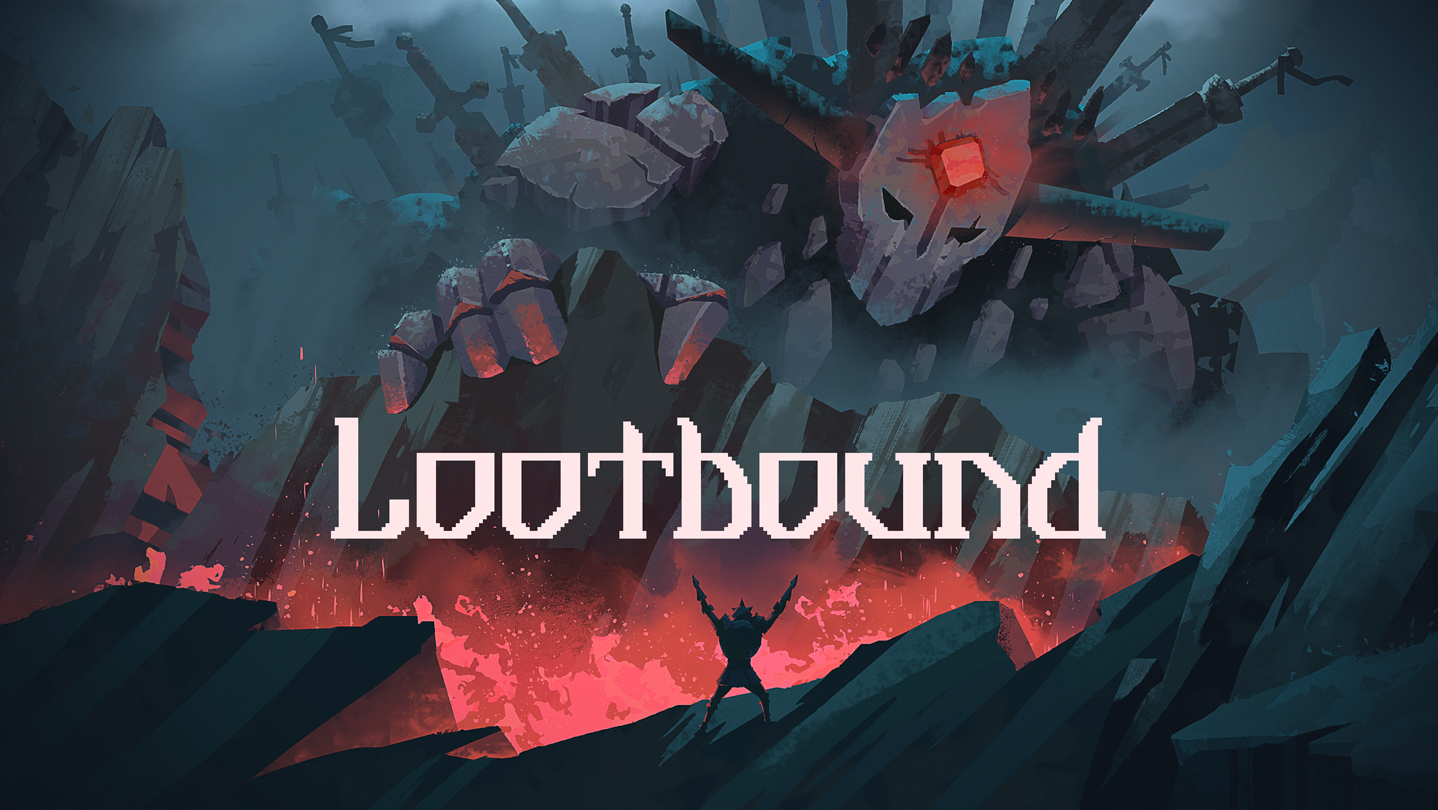
I do see a space for Lootbound. As I said at the beginning, Lootbound was compelling enough to keep me up past my bedtime. It has left me gnawing at it in my mind, trying to understand why it felt so compelling. If nothing else, it’s distinguished itself from The Bazaar by not pushing microtransactions for cosmetics and unlockable content. That’s a huge plus. I also like Lootbound’s art and environment design, and I’m curious about the implied story (although I wasn’t hooked by the game’s narrative in my first hour and a half).
I plan to come back to Lootbound for at least a little bit. I want to finish my run and find out how and whether the game incorporates progression between runs. Maybe that progression will feel good enough to me to change my perspective, or perhaps it will let me reach a higher and more engaging difficulty.
Either way, Lootbound is certainly an interesting collection of puzzles. While I feel like something needs to change before Lootbound is the game for me, I have no doubt that it is the game for someone out there.
Check out the demo on Steam. The first hit’s free, kid.

