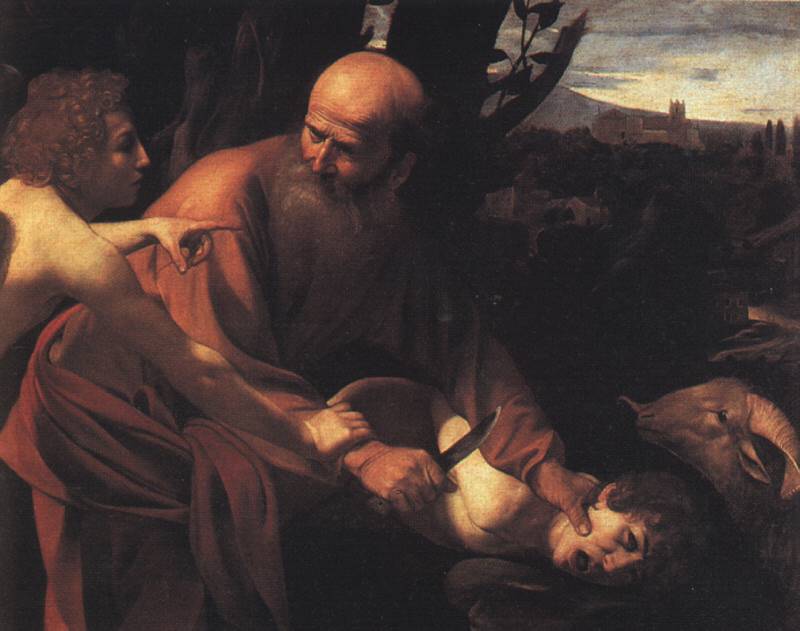
Schindler’s List, and stories that inspire us

It is rare for a movie to reduce me to tears.  Not just tears, but quiet sobbing too.  Schindler’s List does it.

Schindler’s List tells a powerful, horrifying, and moving story, one which ought to be heard by everyone.  It is more than a story of persecution and salvation, it’s a story of inspiration and hope.

Continue reading

Temple in the Sands: A Musical Teaser

I’ve been working on a module for Call of Cthulhu for several years now, and I’ve finally found a model I like for organizing my written content.  It’s not fancy, and I’ll have to alter a few things eventually when I get around to posting maps and pictures alongside the text, but it will mean that other people can play the game that I’ve made without me running it for them.  But the module isn’t done yet, and is already far longer than most of our posts.  So with that in mind…

Continue reading

The Daylight War, by Peter V. Brett

The Daylight War is the third installment in Peter V. Brett‘s slowly growing Demon Cycle.  I enjoyed it, though my reading of it was rudely interrupted by HPMoR rearing its really rather fetching head.  While not as horrifyingly addictive as its fanfic competitor, The Daylight War does offer a great deal of demon fighting, moderate doses of political intriguing, and a few dashes of vaguely awkward sex scenes.  Oh, and I guess I wasn’t paying attention when I read the first two books several years ago, but there’s a decent helping of weird cultural stuff going on too.  Maybe I’m not being fair?

Continue reading

HPMoR: Its Appeal is Surprisingly Reasonable

Early last week I finally gave in to the steadily building pile of recommendations and started reading Harry Potter and the Methods of Rationality.  By Friday I had barely managed to keep up with my other commitments and had forcibly redistributed my sleep cycle; but I finished all 87 chapters that are presently out, and was left wanting more.  I hadn’t understood why so many other people had thought that I would like the story: I’m not normally attracted to any sort of fanfic, and while I enjoyed the Harry Potter series I didn’t think it was the alpha and omega of wizardly fiction.  But now…

Continue reading

Held at Gunpoint

There’s a lovely new game that came out very recently.  It’s called Gunpoint.  Perhaps you may have heard of it…

Continue reading

Choose Your Own Adventure!

Edit: Part 2a has been written, and can be found here.  Part 2b has been written as well, and can be found here.

I made this short choose-your-own-adventure story a while back, and only just realized that I could try to put it together in a functioning format on this site.  I haven’t managed to separate the sections as much as I’d like, so if you want the full experience try to avoid reading more than one segment at a time. The uppermost section is the one to keep your eyes on. Have fun!

#

You come to your senses after a long night of studying in the library and find yourself standing on a narrow dirt path running through the woods. You don’t know how you got here, and it doesn’t look like any place that you’ve ever been before. After wandering along for a brief while, you hear hoofbeats behind you. Do you:

a) Hide behind a nearby tree. Paranoia is the best survival trait after all.

b) Stand on the side of the road. Horses move quickly and you don’t want to be in their way.

c) Look for the horsey! You’ve loved horses for as long as you can remember, and you haven’t gotten to see any recently.

Continue reading

Mistress of the Catacombs, by David Drake

Mistress of the Catacombs is the fourth book in David Drake‘s Lord of the Isles series.  Published in 2001, it continues to deliver on the promise of the first few books.  I’m not sure I have new words to describe the delightful admixture of classical influences that form this heady concoction of Roman and Greek culture and technology, Sumerian religion, and ancient Mediterranean magic.  Suffice to say that it comes across with an appropriately Atlantean feel, and *itty bitty spoilers* that the various wanderings through other worlds never break the feeling of the world(s) that Drake has created.  Magic is powerful and scary, and this is made clear not just by the ways in which people react to it but also through the consequences of people’s use of magic.  And more than ever before in this series, Drake makes clear his own thoughts about violence as a solution to your problems.

Continue reading

Gamer Typology a la Robin Laws

We’ve been talking a lot about improvisation and working with your players, but we haven’t given you nearly enough background for the topic.  There’s a book that I found years ago called Robin’s Laws of Good Game Mastering, and I lend or recommend it to every one of my friends who asks me for tips on how to be a good storyteller.  I like it so much that when I started looking through my old copy again while I was starting this article, I had to stop myself from simply quoting the book word for word.  It’s more than just a good place to start; the book has an impressively down-to-earth approach that will give you a basis for campaign and adventure design, for preparing easy improvisation, and for reading and managing your gaming group’s social (and problem solving) dynamics.  It also offers a very simple gamer typology that should allow you to identify what drives you and your players and what rewards them most in the realm of RPGs.  If you’re interested in gaming or in group dynamics, I couldn’t recommend a better read.

Continue reading

Not a Gun Show; Total War: Shogun 2

With Rome 2 looming on the horizon, it’s time to look back at where the last game left us.  Shogun 2 represented a fairly impressive step forward from the previous games (Empire, Medieval 2), offering a slick new heir to the already prestigious line of Total War games.  All of the buzz about Rome 2 suggests that Creative Assembly is ready to do it again.  But how does Shogun 2 really stand up to the previous Total War games?  What should CA look to keep, and what should be revised or removed?

Continue reading

Player Knowledge and the History of RPGs

First, two quotes to start us off:

“No plan survives contact with the enemy.” (paraphrased quote from Helmuth von Moltke the Elder, a man who was actually quite keen on extensive planning and who might be considered the great-grandfather of RPGs)

“The players are the enemy.” (the storyteller’s corollary to the first quote, promoted in old gaming literature and still embraced by some gamers today)

***

I’ve often heard these quoted, seriously or jokingly, by my RPG playing friends.  The first one I agree with: opposition is a chaotic force, and will often ruin your most carefully laid plans.  The second one I only agree with insofar as players are an inherently chaotic force.  They are other people, and will often do the unexpected.  Unfortunately, the second quote is often interpreted literally.  Players are seen as the opposition and their characters are therefore meant to be outwitted, led by the nose, and then set upon while at a disadvantage.

Worryingly enough, I most often hear these quotes spoken seriously by my friends who have not yet run many games.  With a literal interpretation, where the hell do those two quotes lead us?  If the players are the enemy, it stands to reason that everything the storyteller does is in opposition to the players.  More to the point, it sets up a clearly antagonistic relationship between the players and the storyteller in which the two sides have no reason to cooperate with each other.  It’s like they’re not actually playing a game together.

If they are playing a game together, it’s more like a strategy wargame in which all details are included solely to “get” the players.  This is, of course, where the genre originated: the first games that we would recognize as RPGs grew out of wargames, as the logical result of a progression towards smaller and smaller unit sizes.  Eventually, each player had control of only one individual instead of many units, laying the foundation for the RPG genre that we know today.  The influence of modern gaming’s military history is still visible: the habits of secrets and hostile surprises that we have come to see as part and parcel of the RPG experience come from this background of wargaming.

But even as someone who enjoys wargames, I don’t always want to play a wargame when I sit down to play an RPG.  There’s an opportunity here to explore gaming without those holdouts baked in, and some game designers have been pushing in that direction for years.  Yet if we aren’t following in the habits of our wargaming ancestors, what do we do?

Continue reading