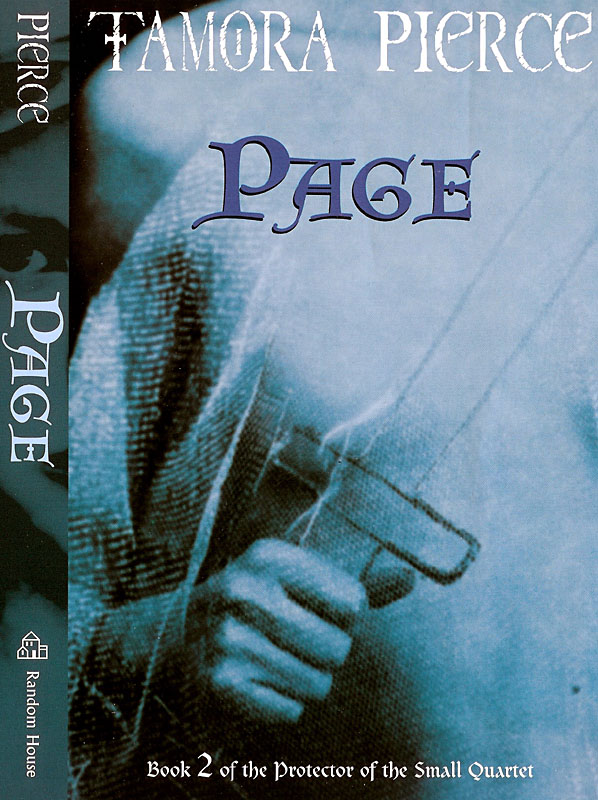
I’m clobbered again today, but I’m alert enough to tell you that this Tamora Pierce series continues to be good. Page is great. I devoured it despite my sleep deprived state.
Continue reading
I’m clobbered again today, but I’m alert enough to tell you that this Tamora Pierce series continues to be good. Page is great. I devoured it despite my sleep deprived state.
Continue reading
First Test, by Tamora Pierce, was published in 1999. It’s an excellent middle grade fantasy story grounded in one girl’s struggle against gender discrimination, hazing, and abuse while she pursues her dream of knighthood. First Test takes place in Tortall, the same story world as Tamora Pierce’s series about Alanna the Lioness. Where Alanna sought and (spoilers for that series) achieved knighthood while hiding that she was a girl, our protagonist Keladry seeks to follow openly in Alanna’s footsteps. But while that path is now officially open to a girl, reality hasn’t yet caught up. If you want a middle grade story about a young girl facing adversity and misogyny in a hostile school environment, this is a solid option.
First Test is, first and foremost, a story about a young girl and her struggles. Young Henry probably would have loved it… but he probably wouldn’t have read it (I mean, I didn’t read it, but I also wouldn’t have). Even if it had caught my interest, being mocked by my peers for reading ”a girl’s book” was a real and pressing concern. That was a big part of why I missed the Alanna books when I was young.
Oddly, that social pressure also feels connected to First Test’s message.
Continue readingI’ve just finished Some Desperate Glory by Emily Tesh. It is excellent. It is more than a little painful, especially right now. It is also lovely and full of hope. I hope to talk more about it here at some point.
For now our political crises continue to worsen, books like Some Desperate Glory feel more relevant, and I have a baby to take care of. I’m not yet such a professional papa that I can care for my child and get lots of work done at the same time (or much work at all). Please continue to enjoy pictures of Alex.

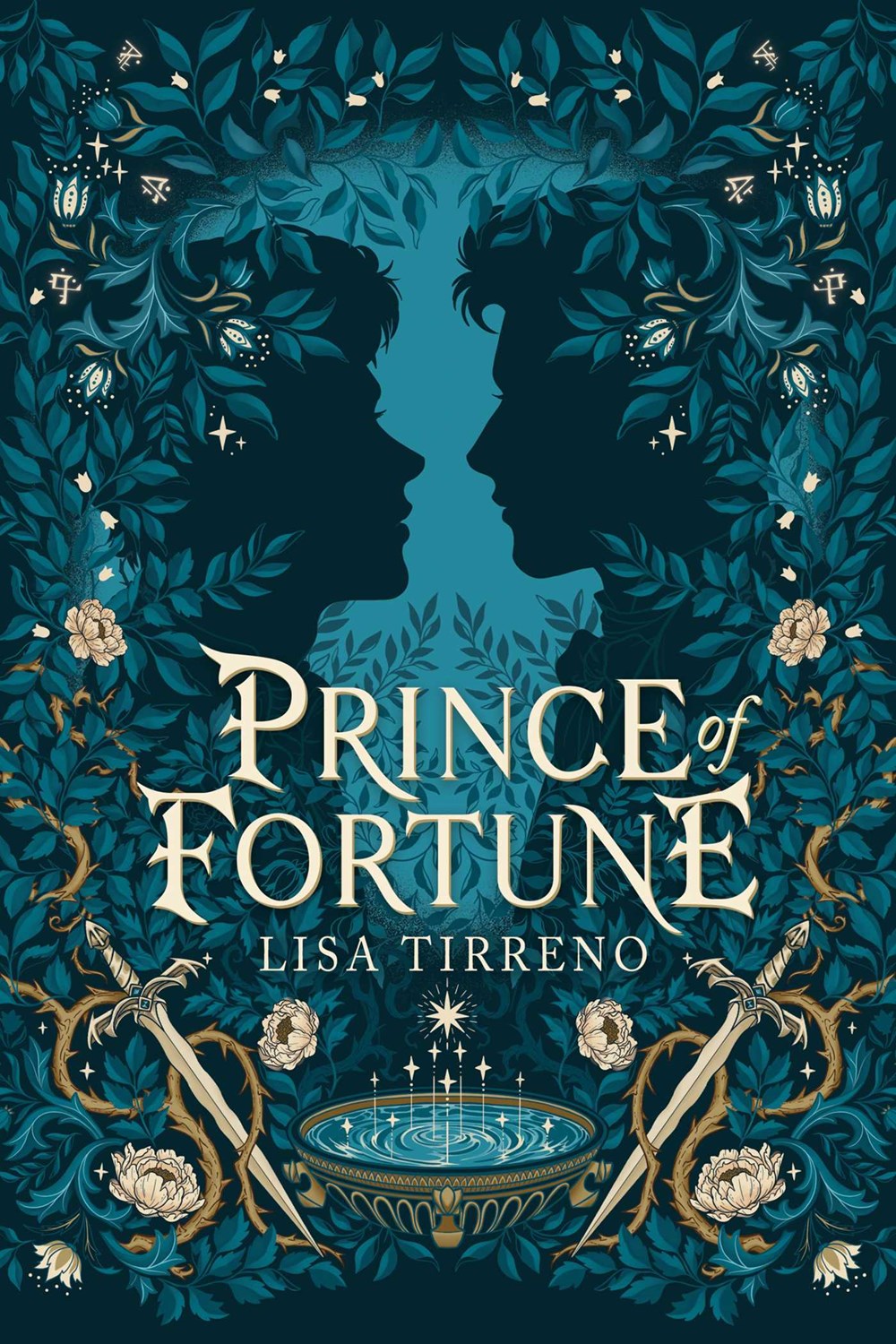
Lisa Tirreno’s Prince of Fortune is a romance in a fantasy setting with strong Regency era vibes, gender equality, and open queerness. It’s sweet, cute, heartwarming, and feel-good despite a hefty dose of political intrigue and a small helping of combat and war. Even better, it doesn’t try to make itself a series; you can pick this book up, enjoy the story’s gay romance and warm fuzzies, and know that everything has come to a close when you put the book down at the end. I found that soothing.
Would I want more?
Yes. And (kind of) no.
Continue readingA Practical Guide to Evil is a YA-ish fantasy web serial set in a world with capitalized Good and Evil. The gods (which definitely exist) created this world to settle a wager about whether Good or Evil would triumph, but it is up to the world’s occupants to determine which way the contest will go. Of course, not every person is equal in this contest.
By a combination of exertion, will, strife, and trauma people can take on the mantle of a Name (an archetypal role) on either side of the conflict. Those Names are bound to tropes (varying by the person’s side in the conflict) which can entrap or empower. Some Names (Black Knight) are clearly on one side of the conflict (Evil), but others (Apprentice) can arise on either side. No two people can hold the full power of one name at a time; where there are multiple pretenders to a Name, those pretenders must settle whose vision of the Name and its purpose will win (Evil tends to do this with violence, Good rarely has multiple contenders).
I love all of that. This wholehearted embrace of archetypal story as a narrative toy and tool for a larger fantasy series is great. It’s what convinced me to read it in the first place.
Better yet, people in the series are aware of these Names and tropes. They embrace the study of Name-lore, learning the ways in which a Name may be caught by trope and pattern and story. They try to use that knowledge to their advantage. That’s a delight.
But it’s not all a bed of roses.
Continue readingThis week’s post has been delayed by hospital visits. I might have more for you on that topic next week. For now, I wanted to call your attention to About Face, a comic by Nate Powell about symbols, identity, and the normalization of the language of force. It’s an excellent piece, though perhaps not an uplifting one. It does, however, make me wonder whether Nate Powell would be interested in working with me on Ironsides.
Powell also made the March series (book 1, book 2, book 3), creating the art for the late Representative John Lewis‘s nonfiction work about the American civil rights movement. I haven’t yet picked those up, but I’m really looking forward to reading them. I think you might like them too.
The Peripheral is a science fiction novel from William Gibson set in an awfully recognizable near future and a slightly less recognizable but still palpable further future—there’s kind-of-time-travel, but not quite. It’s been so long since I last read Gibson. I’d forgotten how wild and weird his books can feel, while also feeling so grounded in our own reality. I wrote a little about this last week. I have more observations now.
Continue readingI had the opportunity to connect with an agent while I was at Arisia, a friend of a friend, and I’ve really appreciated speaking with her since. She was generous enough to share her insight on my query letter for Bury’em Deep. I’m very grateful.
My key takeaway is that my past edits of my query letter have not helped. I created distance from Barry’s emotional throughline. That made it harder for a reader to empathize with Barry, and didn’t convey the emotional intensity of the story itself.
I think I got so caught up in trying to convey the totality of the story, and in trying to make that summary snappy and engaging without being in Barry’s head, that I forgot to give the query letter heart. It doesn’t help that I have been staring at various drafts of this query letter for years at this point. Once I’ve been looking at any collection of words for long enough without clear external feedback, I stop feeling able to judge them usefully. Thus, without any useful feedback from my target audience, judging what was wrong with my query felt like making random stabs in the dark.
With this insight though I feel much better. I feel like I have a target. I might miss that on my first few tries, but at least there’s something I know I can revise towards. In fact, I started redrafting the letter in my head yesterday while I was meditating (I know, that’s not actually good meditation practice).
That felt like good creative exercise. You know the feeling I’m talking about? There’s a certain feel to that exploration for me—it’s closest to the relaxation of freeform dance, or the undirected play of sketching and coloring, except that I do have a target. My target, as much as possible, is to write a captivating third person version of Bury’em Deep that conveys Barry’s first person emotional journey. Because of the constraints of query letters, that has to be around 250 words. More meditation may be in order.
Anyway. It’s time for yet another rewrite. Wish me luck.
It’s been a long time since I last read anything by William Gibson. Too long, probably. I’d forgotten his talent for sentence fragments. I suspect I’ve unconsciously emulated him in my fiction.
I’m reading The Peripheral now. I’m nearly halfway through and enjoying it. He doesn’t constantly work in metaphor, but when he does…
Continue reading
I love a good middle grade adventure story. That’s precisely what this is. As you might expect from something published under Rick Riordan’s imprint, it’s full of mythology and folk tales and legends. Tristan Strong Punches a Hole in the Sky, by Kwame Mbalia, is all about one young boy’s discovery that the stories he’s grown up with (African-American stories with American folk heroes like John Henry, African trickster figures like Anansi, and those who blur the lines like Brer Rabbit) are all far more real than he ever could have believed. It’s fun, it’s pretty fast, it’s (heh) punchy. This is a good book.
I admit, my appreciation for this book is influenced by my desire for more high quality middle grade adventure stories aimed at boys. There’s a lot more to unpack there, some of which can be better understood by reading Of Boys And Men by Richard V Reeves. Read on for some of those details, as well as my few quibbles with Tristan Strong.
Continue reading