Try this: set off a totally awesome fireworks show without every being able to look at your own hands, relying instead on what your friends tell you about what your hands are doing.. I can’t say that Hanabi is exactly that in game form, but it does a good job of approximating it. It’s can be difficult, but that very difficulty also makes it rewarding. Sometimes, of course, you misunderstand what others are telling you and everything blows up in your face. Read on for more detail.
Category Archives: Game Reviews
Rimworld: The Magic Continues
Correction: with Alpha 7‘s release, the space magic continues. Or, uh, the starving frontier space magic, beset by violent thugs and now diseases. But let’s look on the bright side of things: even as Ludeon has introduced plague, it has also given us the prosthetics and organ harvesting and transplantation, in addition to a welter of other neat new features.
The introduction of prosthetics is far more important than you might realize. The last version, Alpha 6, introduced a complex medical system which tracks injury and debility by location, though perhaps without quite the same granularity as Dwarf Fortress‘:
My Alpha 6 colony had a slowly growing number of people who’d lost appendages to chronic cases of gunfire and explosions. I was forever terrified of having my wonderful and productive citizens maimed horribly while defending the colony. Now, it looks like we can give our debilitated friends a leg up, so to speak, by building prostheses for them to replace whatever they’ve lost. Given the constant scarcity of more advanced medical supplies, I foresee specifically targeting raiders with cybernetic prosthetics so that I can strip the things I want from their cold, dead bodies. Or from their warm and unconscious bodies, if they somehow survive the fusillade of bullets and seem like they aren’t worth rehabilitating.
This is Rimworld, after all, and I already do my best to hunt down fleeing raiders when they’re wearing or carrying things I find especially desirable. It’s hard to come by powered combat armor without taking it off the body of an erstwhile attacker. Traits have already made a meaningful entry into the game, affecting everything from move- and work-speed to mental stability and opinions of cannibalism, and there’s nothing quite like having a murder-happy speed demon ready to hunt down your fleeing enemies. You just have to make sure that they never suffer a mental break or suddenly decide to betray you.
Buzz Lightyear Simulator: Volo Airsport
That’s definitely falling with style.
We can probably all agree that wingsuit flying looks both insane and intriguing. It’s not something that I think I’d be comfortable with doing, but I’m happy to watch other people throw themselves off cliffs and then whizz along at supremely high speeds in their flying-squirrel suits. Why don’t I want to do the same? Mostly because it scares the crap out of me.
But there’s something incredibly appealing about the idea of flying like that. So when I found out about Volo Airsport, I thought I’d give it a try. I’ve loved flight simulators since I was little, and the idea that I might be able to play a flight simulator without a plane really tickled my fancy. Oh, and did I mention that the alpha is quite pretty? Have a look:
Like I said, it’s a Buzz Lightyear Simulator, all about learning how to fall with style. The body-mechanics based control scheme gives an extremely fine sense of control, and the game requires you to learn it well. Turbulence and wind will buffet you relentlessly, and maintaining awareness of your control surfaces is both crucial and difficult. Case in point, I spent my first fifteen or so runs crashing into the ground with more or less success, never quite getting the hang of what it took to stay airborne while I fiddled repeatedly with my mouse sensitivity. The game’s splash screen suggests that you use a controller and I’m inclined to say that I agree, though I’ve yet to test how much easier that makes things.
That said, something just clicked for me around run twenty, and suddenly I was able to soar. I’m still getting better, pushing my close proximity runs to the limit as I learn how better to deal with the vagaries of a rapidly shifting landscape flashing by beneath me. This game isn’t deep, and it offers you only as much challenge as you decide to set for yourself, but it offers an almost meditative experience as you plummet towards the ground and then zoom off at a breakneck pace. So, if you want a playground in the sky, check out Volo Airsport.
N.b. There’s no normal starting menu: you need to press escape in order to bring up the menu interface, which contains a grand pile of options for you to adjust as well as adaptable key-bindings.
New D&D Sneakily Poaches Inclusivity, Narrative
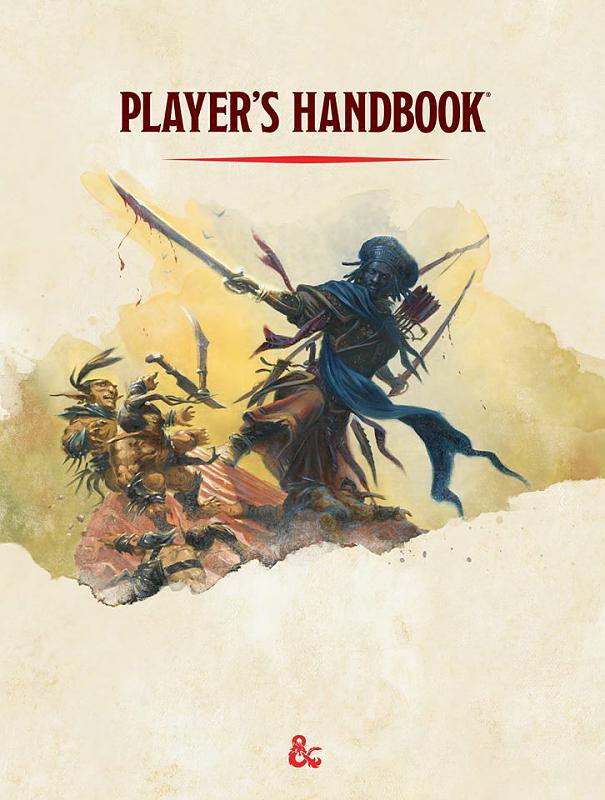
I grew up playing AD&D, as my brothers introduced me to RPGs before I was 7. I’ve since moved away from the various D&D systems, flirting with them occasionally in passing while I instead focus on other systems that I find more interesting; I’ve come to prefer more narrativist games for the most part, though my friend Zach’s super-old-school D&D certainly calls to me at times. But with the release of the newest edition of D&D (5th ed? Next? Whatever we’re supposed to call it) I thought I’d give it a look. I’d examined some of the playtest documents and made appreciative noises, so I thought I should take a chance. I’m glad I did. It seems like the new D&D has learned a few tricks from the games that pulled me away from it in the first place.
There have been a few things that have really stood out to me while I’ve been reading the new Player’s Handbook (PHB), two quite good and one that I’m not sure how to qualify. These have nothing to do with the rules, I’ll talk about those later. The first item is one which I understand has already been discussed elsewhere, namely the game’s specific mention of a player’s ability to construct their character’s gender- or sexual-identity, and statement that that’s a perfectly fine thing to explore in this game; the second item is D&D’s incorporation of distinct backgrounds, personalities, and motivations into character creation, including something called “bonds” which I can only presume has come from Dungeon World; the third item is the art chosen for the book, and its depictions of a diverse group of characters. I’ll talk more about all of these, but let’s tackle that last one first.
Finance, Ponzi Schemes, and Cards: Liar’s Poker
Lying to your friends can be exceedingly fun. Unfortunately, other people are often angry when you mislead them in everyday interactions. This is where Liar’s Poker comes in handy; it gives you all the satisfaction of lying to your friends, with none of the insalubrious repercussions! I was first treated to this game last night, when I played it with my brothers and cousins, and I’m now a staunch advocate. Please note that this is not the same as the similarly titled bar game played with $1 bills.
Liar’s Poker is very simple. Much like in Ponzi schemes (or even the stock market), the idea of the game is to be one of the first people in, and be the very first person out. You never want to be caught holding the overvalued collection of rubbish that is methodically working its way around the table, and you most certainly want to convince the next person in line that the crap in your hand is actually worth something. Like I said, it’s very simple. It also has the potential to be hilarious.
The first player is dealt a hand of five cards, looks at them, and declares a hand (anything from high card to royal flush). They then offer the hand to the next player. The second player (and every player after them), then has the opportunity to decide whether the offer is believable. If they accept the offer, they receive the hand and now have the opportunity to discard face down up to three cards from the hand and draw cards to replace them. They must then declare a hand of greater value than the one they recieved and offer it to the next player. If they reject the offer, the rejected hand is revealed and evaluated; if the revealed hand met or exceeded the declared value of the hand (and the declaration did not substantially misrepresent the hand’s contents), the person who rejected the hand takes a point. If the rejected hand was, in fact, the load of rubbish which the discerning player believed it to be, then the liar who tried to pass it off as something better takes a point. The first player to 10 (or whatever you decide on for your preferred length of game) ends the game, and the person with the lowest point total wins.
While you are in possession of the hand, you may say whatever you like about its contents. Once the hand is no longer yours, you should not declare anything about what had been in it except to repeat what you had claimed when you passed it along. Table talk is otherwise encouraged. Remember that all discards are done face down, so you can’t see what has moved in or out of the hand. Also note that the next person must always claim a higher value than the one you gave them, and the only way to hurt people further around the table is by allowing a hand to keep moving.
What did I mean by “substantially misrepresent the hand’s contents”? If you’ve got three aces in your opening hand, you could say “the highest card is an ace,” and not be in danger. If you had a pair of twos and a king, you could simply say “pair of twos.” If you wanted to turn up the heat, you could get more specific and claim the higher value hand, which would also narrow the range of claims available to the next player. But if you have a straight in your opening hand and instead claim a pair, you would be in danger of taking a point if someone calls you on it, regardless of the fact that your straight certainly outdoes a pair.
So why do I like this so much? It may simply have been a combination of sleep deprivation and alcohol, but I suspect that I would have similar results when playing this game with the right group of people. That’s an important note: there are certainly people with whom you will not want to play this game, which may be a larger (or different) group than the usual people with whom you don’t want to play games. Make sure that you have players who will be willing to laugh at being duped, even as they take joy in lying through their teeth to the next person in line.
Liar’s Poker requires only minor memorization, and will quickly teach familiarity with the values of poker hands, but it really shines when it comes to creating hilariously improbable situations and forces you to judge just how deep the lies really go. It’s great fun.
To be perfectly clear, there are other games which are also called Liar’s Poker, and there is a book by Michael Lewis with the same title. This game bears only passing resemblance to the others, but it seems far more interesting to me than the bar game.
Transistor
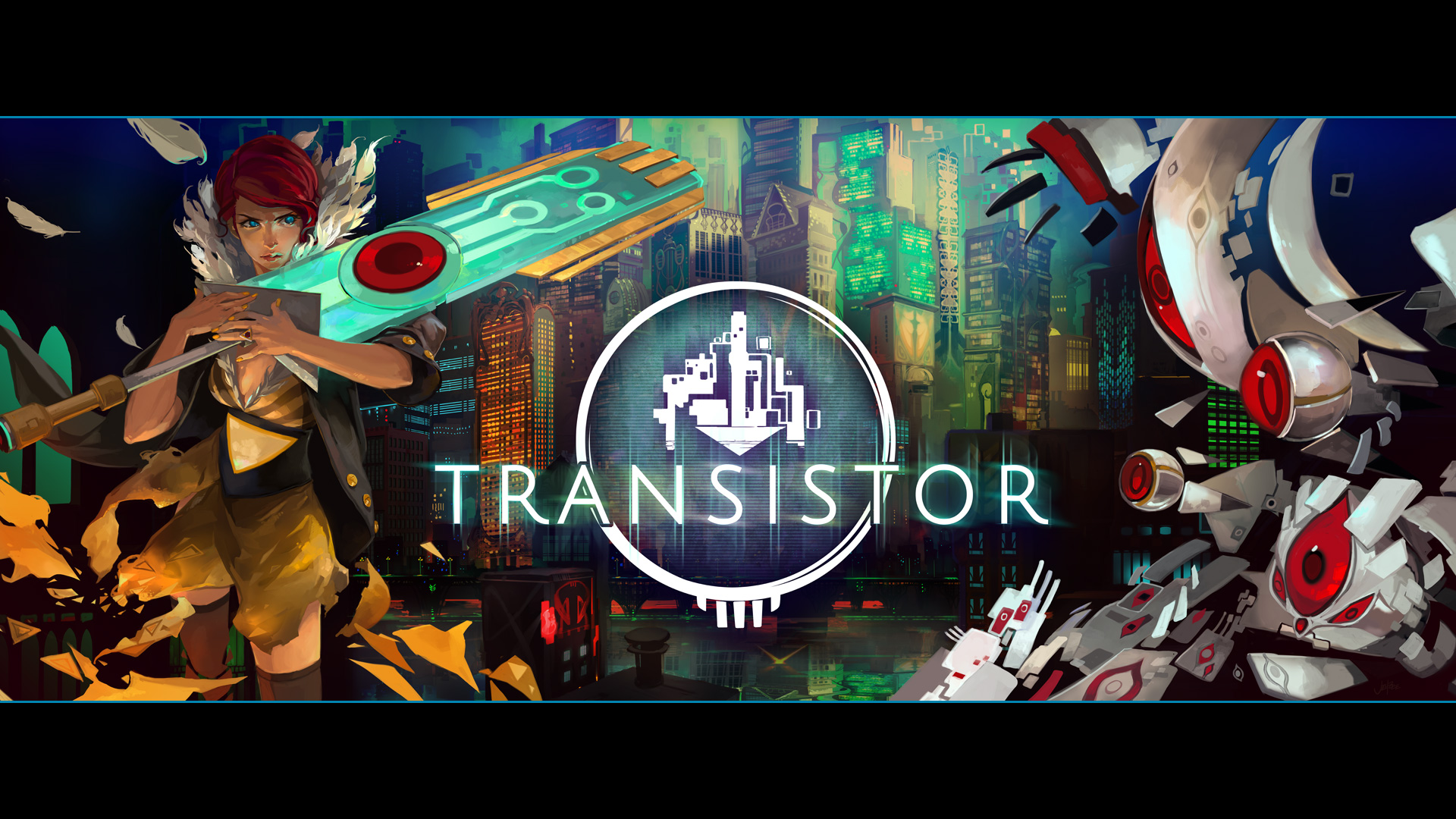
There are many things that I wish to say about Transistor, but the story-related ones will have to wait for after the break. I don’t want to spoil anything for you.
To start with, this is one of the prettiest games I have seen in a while, and it has a soundtrack that makes me want to close my eyes and sink into it. I spent a considerable amount of time simply sitting and absorbing the game’s music, doing nothing else for fear of missing out on the songs. I wish that the soundtrack had all of the various in-game versions of the music, including Red’s hummed accompaniment.
I’m hard pressed to peg the game to a single genre or type, but its construction and design bears a profound similarity to Bastion. You do battle with an ever-growing variety and number of foes, following the protagonist from a third person isometric perspective as you wander through lushly painted land- or cityscapes, slowly puzzling out the backstory of the characters and learning what is happening around you. As far as I’m concerned, what worked in Bastion works here too.
As a game, I found Transistor very appealing; designing my own powers, mixing and matching elements as I discovered new killer combos, and adapting my loadout to the situation presented were all quite satisfying. Making sure that I wasn’t crippled when I lost one of my powers due to a mistake, and being forced to rethink my situation creatively when I failed in that, were both very rewarding as well. And when battles became a little same-y towards the end, or failed to present me with situations that I hadn’t foreseen, I still wanted to follow the story. Now that I’ve finished the game, I also want to see how it handles itself on a second pass-through. But I’ve played it enough to be able to say that I like it, and that I suspect you’d enjoy it as well. Now about those *SPOILERS*…
Rimworld: Sci-Fi Frontier Shipwreck Fiction, Round 2
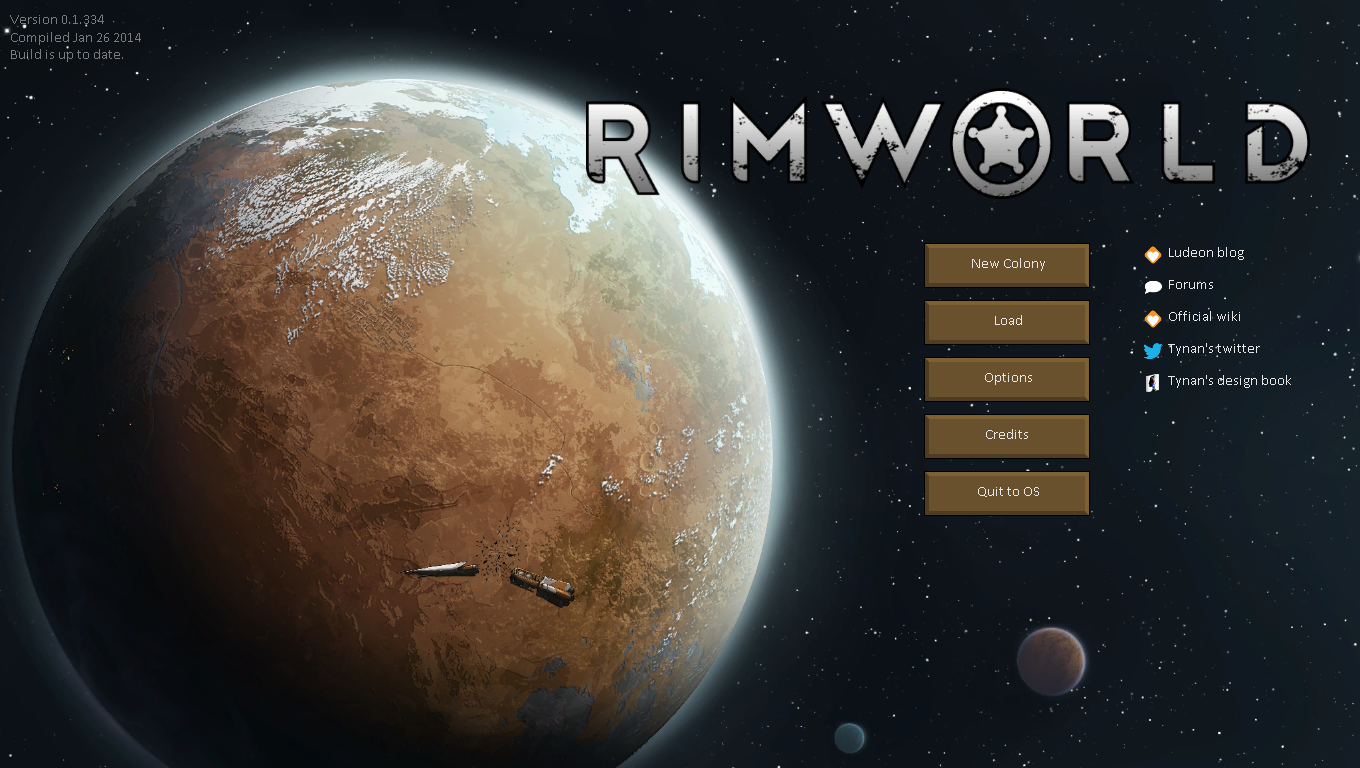
The first time I played this game, my people nearly starved to death. I tried to solve this by getting tricksy and using sunlamps outdoors in order to boost my crop’s growth cycle, only to discover that many electrical systems explode and catch fire when exposed to rain. I did manage to pull through in the end, but it was pretty tight for a while.
That was all several releases back. When I last reviewed the game, I mentioned that I thought it wasn’t yet worth its $30 asking price, but that it could be if it continued to develop as well as it had thus far. Now, here I am several releases later, ready to tell you whether or not I think it’s continued to live up to its earlier promise.
My answer is easy: it has. I’m not saying that it’s all the way there yet, but the game is damn interesting and its central features have been expanded aggressively over the past few months. Any given change usually feels small, but the shift from when I first played back in early March has been impressive. In addition to there simply being more junk that I can make for my colony, the world around my colony has gotten considerably more interesting, and often far more threatening as well. I won’t cover everything, but…
Europa Universalis IV: Becoming Leviathan
I wrote a love letter to Crusader Kings 2’s intricate dynastic backstabbing a while ago, and I thought I should let you know about the game’s semi-sequel Europa Universalis 4. I’ll even toss in a few tidbits about the myriad DLC available for both titles at no additional charge.
First, a brief introduction: Crusader Kings 2 is strategy-as-individual, a fascinating look at the intimately personal nature of politics and power, spanning the years from 1066 CE (867 CE with Old Gods DLC) to 1453 CE. Europa Universalis 4 follows this with a shift from the myopically personal to the strictly national, covering the years 1444 CE to 1821 CE. With both games and the appropriate DLC, it’s possible to convert a CK2 save game into an EU4 mod, letting you pick up the reins of your budding nation-state right where your Machiavellian ruler left them.
I loved CK2 from the start, even though it took a long time for me to feel like I could play the game without stumbling over my shoelaces. Despite having an easier time learning how to play EU4, it took longer for me to really fall into it. I think it was because the game is simply less personal. It certainly wasn’t because of the interface, which has only improved.
In my first game of CK2, I was presented with a moderately ugly portrait of a lecherous Irish earl, told that that was me, and told that I really ought to get married. I lived that earl’s life with gusto, trying (and failing) to better my position in the world, and I still have fond memories of him. I identified with him, in much the same way that I have since identified with Queen Ximena and several other rulers of mine, and I felt connected. EU4 simply doesn’t offer that experience, and at first I was dissatisfied. I didn’t understand why I would want to play this grand strategy game without all the little people desperately trying to grease the wheels of power in order to ease their rise to the top. I put aside the game and didn’t come back for a few weeks.
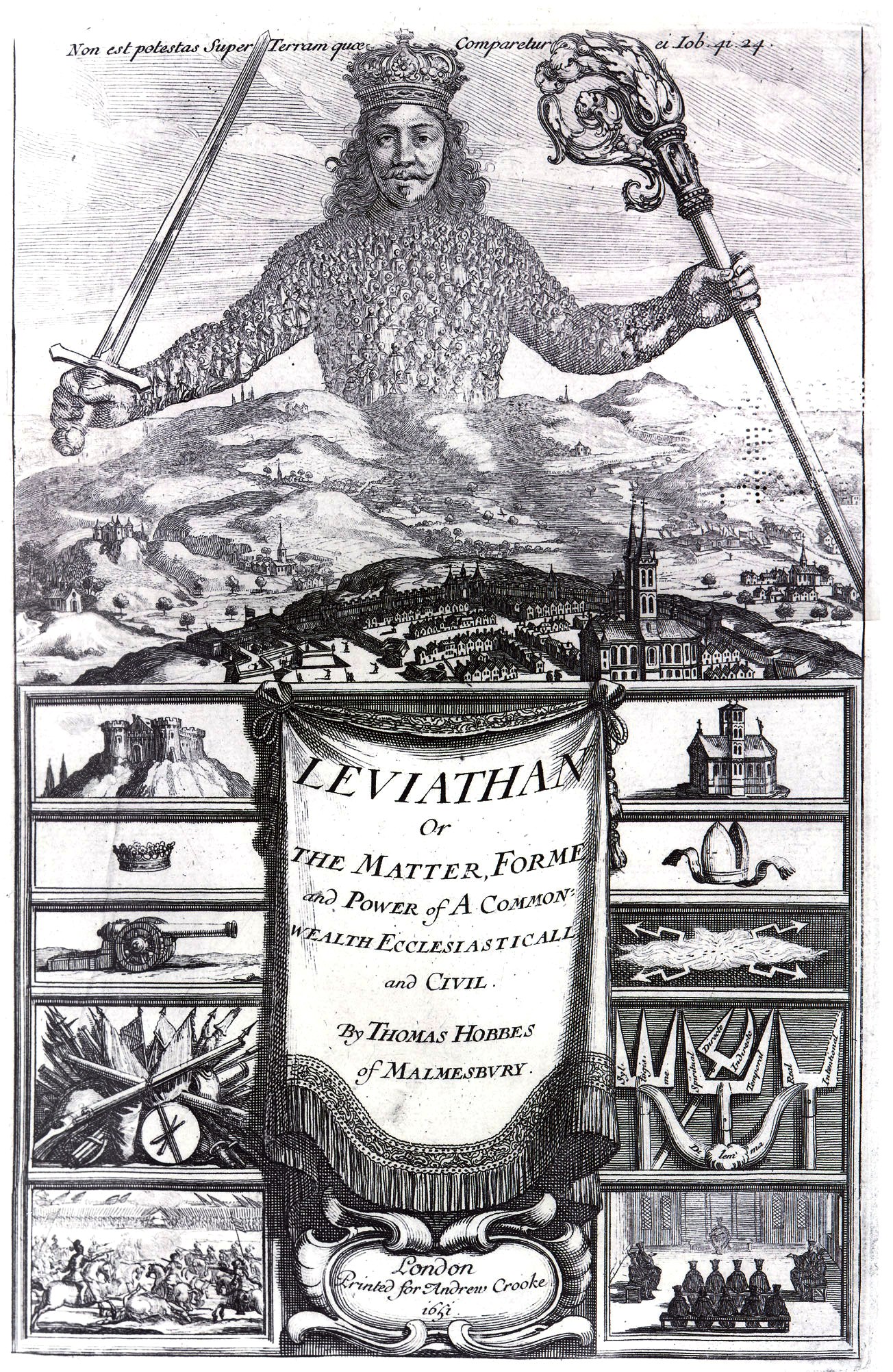
I’m still not sure what it was that pulled me back in, but I’m glad it did. Despite looking so similar to CK2, EU4 is a very different game; it offers you the chance to shape a state as it transitions from the deeply personal politics of feudalism to the larger scale conflicts of colonialism, nationalism, and empire. It gives you a chance to make Thomas Hobbes proud.
The Queen is Dead, Long Live the … Oops
It wasn’t my fault, I swear.
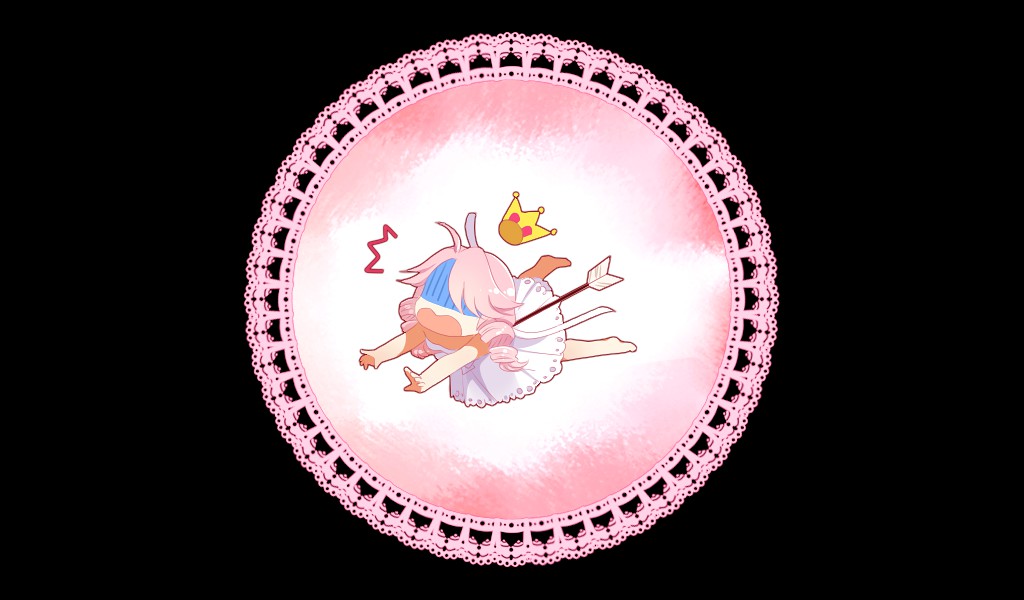
I died because I didn’t know enough battlefield medicine. It turns out that you’re not supposed to push an arrow through yourself when it’s stuck in your chest.
It wasn’t really my fault: I’d never been lonely enough to put lots of time into mastering the basics of medical care, and I’d spent all my time focusing on intrigue, learning who’s who, and figuring out what plots I might have to worry about in the weeks before my coronation as Queen of Nova. After my disastrous showing at the grand ball, I’d tried to play catch-up with my long neglected social skills. Somehow I never got around to learning what to do about arrow wounds.
I just didn’t think they’d be an issue, you know? Or at least, not as big an issue as accidentally starting a rebellion by pissing off my nobles. I’d already had one of them assassinated, and had only succeeded because of all the time I’d put into mastering my network of agents. Next time, I’ll make a different mistake. I’m sure of it. Welcome to Long Live the Queen.
Game Analysis: Devil’s Tuning Fork
Devil’s Tuning Fork is an interesting exploration in design which seeks to weigh in on the classic question, “What is it like to be a bat?” (don’t worry, this will remain a game review and not an exercise in philosophical discourse) The game places you in control of a child who has fallen into a mysterious coma who must now explore a strange dreamscape in order to awaken. In order to escape what is eventually identified as a sort of dungeon you must rescue other children and traverse multiple platforming exercises/puzzles. And you must do this while experiencing what it is like to be a bat (sorry, I swear I’ll stop referencing Nagel’s paper.) The overall tone of the game tickles my love of horror and the surreal. But as it is with most things which I love, it isn’t perfect.