Filler, fight scenes, and Marvel fluff

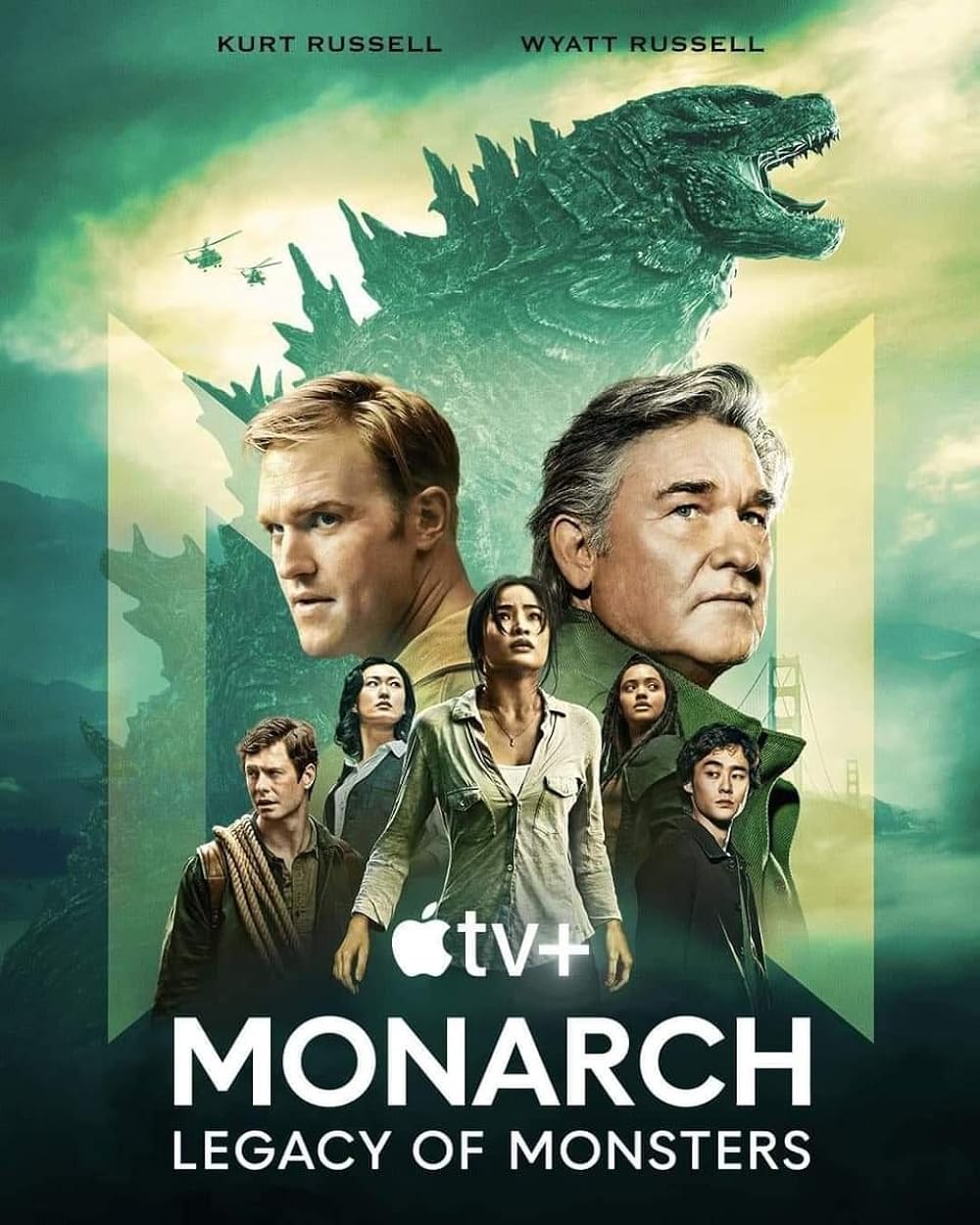
I practiced stage combat years ago. I know how to choreograph a decent fight. I love watching skilled practitioners strut their stuff. This is why I love watching old Jackie Chan movies and the John Wick series, why I marvel at Olympic gymnasts or any other athletes where I have some basic understanding of just how utterly awesome these people are at what they do. I appreciate skill, and I admire craft.

Making a big blockbuster action sequence takes a lot of work, and can be done well. Sometimes I like that style. The first time I watched the first Avengers movie, I don’t think I was aware that the climactic fight took over twenty minutes. I enjoyed the spectacle, appreciated the work put into it, and didn’t care about how long it ran.

But many of those climactic fights feel like filler. Maybe I’ve seen too many Marvel movies, consumed them past the point of satiation. Or maybe… 

Continue reading

The back-into-it roundup, 11/2/23

There’s a wall that builds itself. It stands between me and my creative work. If I pass through it every day, I can knock it down a little with each trip—moving past it is never effortless, but the wall doesn’t have a chance to grow that much. If I don’t pass through for a while, the wall climbs and solidifies. Pushing past it gets harder the longer I wait.

I shared that image, that metaphor, with Ley when it came to me recently. They nodded, and suggested the metaphor of a quickly-overgrown path that I need to frequently bushwhack and clear. That works for me too.

I’ve been busy doing other work for a week or so. I didn’t think that would be such a distraction from my other writing, but it was. Fortunately, I had the Monuments Men post ready and was almost finished with another World Seed (The Blister is now available for sale!).

But now I’m trying to decide which fiction project to return to, how I want to start bushwhacking—and I’m being pulled in yet another direction by Skip Intro’s Veronica Mars episode for the Copaganda series. Sometimes I watch or listen to interesting analysis (critique and/or appreciation) of stories and find that spark of inspiration. This was one of those times. I don’t know where I’ll take it or what I’ll do with it. Maybe I’ll hunt down more old noir and see if that gives me any new clues.

That’s my ramble for now.

Wait, I should have another review showing up on Geekly Inc soon. I reviewed A Power Unbound, which I enjoyed. I’ll probably have more for you here about that another time, and I’ll let you know when that post has gone live.

Oh, it’s already up! Enjoy.

Inspiration, Irritation, & Spite

There’s a quote from Ursula Vernon that’s stuck with me, something I think I found in one of her Author’s Notes. “Inspiration knocks now and again, but spite bangs on the door all year long.”

That doesn’t ring fully true for me—my spite-writing is usually a rant or half-formed polemic in my journal, and I struggle to turn those into fiction—but it sparked a funny question for myself the other day.

Do I write like oysters make pearls?

Continue reading

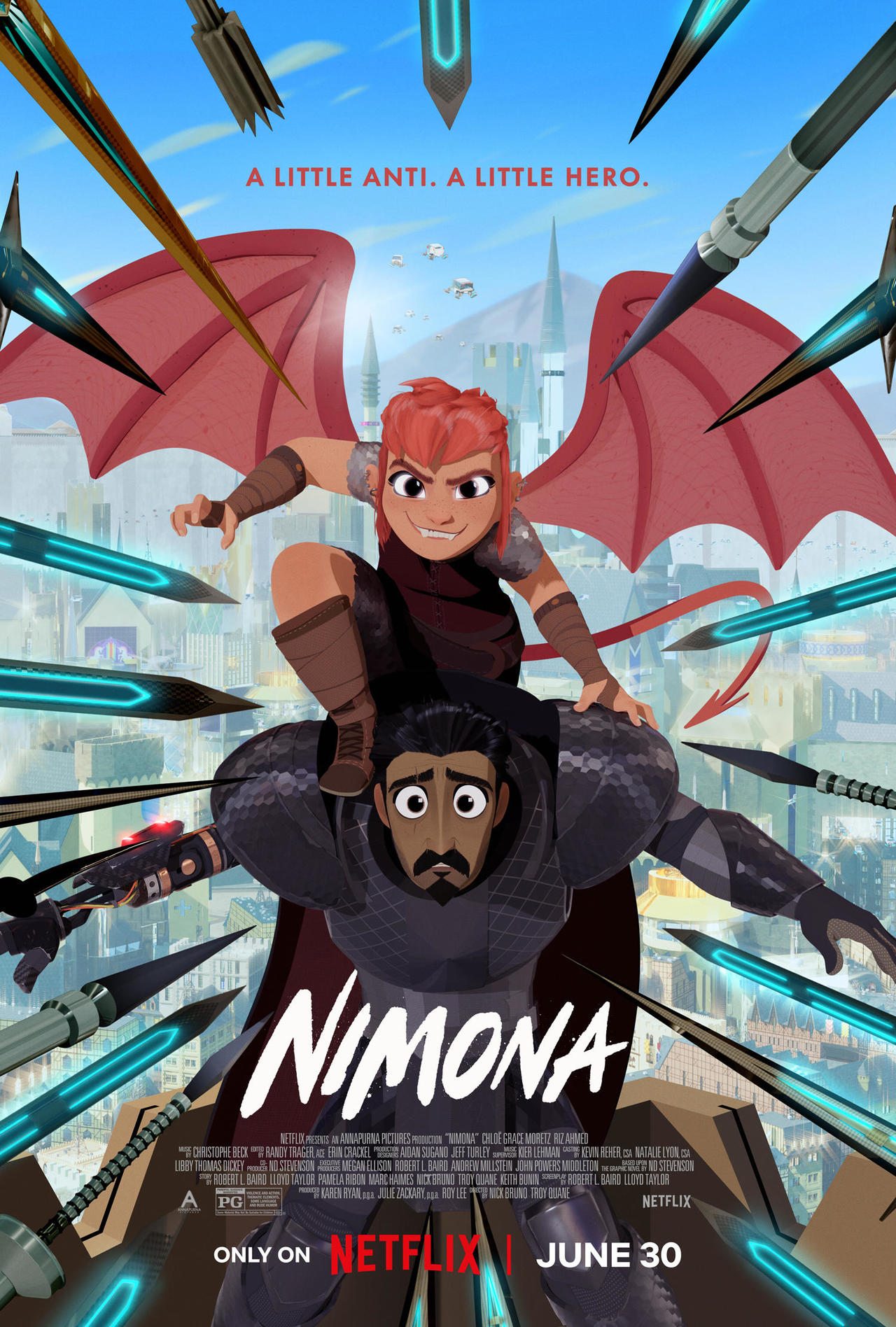
Nimona (Netflix 2023)

I loved the comic by ND Stevenson

I loved this movie too, right up to the end, even though it was clearly its own take on the story. 90% of this movie, maybe 98% of this movie, did more or less everything I wanted. The actors, animators, and writers did a marvelous job. Then, at the very end, the movie really frustrated me.

I can’t meaningfully talk about this movie, and how I feel about it, without spoiling the end. Suffice to say I didn’t expect this totally predictable ending. I wish they had written a different one. I’ll mark the spoilers below.

Continue reading

Writing hope

I’m trying to think of times in my stories when my characters feel hopeful, or when they dream big. I’m struggling.

Continue reading

All Ornamentation Must Be Load Bearing

Given my druthers, I overwrite.

Overwriting is the only way I can get the words out. If I think about what should or shouldn’t be on the page, everything gets gummed up. So when I’m being productive, words pour out and I don’t bother sorting which ones should stay.

There’s a fitting apocryphal Mark Twain quote: “Writing is easy. All you have to do is cross out the wrong words.”

I get lots of practice crossing out the wrong words.

Rewriting Bury’em Deep was a big step. I cut it (with wonderful help from Story Boyle) from ~70k down to ~45k and then built back up to ~50k. That showed me what was possible, in much the same way that writing my college thesis reassured me that I could write a large text in the first place.

My World Seeds keep my editing in shape. For those, I regularly crop sections running between 1.5k and 2k down to 750 words. I sometimes worry that I’m losing a little of the magic I want, stripping something special out of my World Seeds in the process. Mostly I feel accomplished.

Plus, if I want to fit my text in my template I need to make those cuts.

All this practice does have some side effects, of course. I now regularly want to strike out chunks of text from the fiction or RPG books I read. I want to strip them down, reshape them, clarify them. I know that I’m enjoying a book when I stop thinking about editing it. I know a book is really good when I feel like every piece of text is doing important work.

That comes back to a phrase I came up with while working with my friend Story: “All ornamentation must be load bearing.” Shit, I guess that’s the title of this post now. The phrase came out mid-crit session, and stuck with me clearly enough that I inked it onto my clipboard. I refresh it every time it fades.

All this cutting and shaping is trickier when editing other people’s work. It takes time to learn their voice—my editing is harmful if I homogenize their style, or replace it with my own. Sometimes pieces are meant to be wordier—but that’s usually period pieces, or something mimicking a specific style. If you want to stay wordy, you need good reasons.

Why am I writing about this now?

Easy: I did it again this week, paring 1.6k down to 860 words in one pass. I’ll cut around 100 words more before I’m finished with that section. I have another chunk, about the same length, that I’m about to start trimming down to roughly 750 words. I’ve got editing on the brain.

The flip side is that it’s difficult for me to switch quickly from editing to writing and back again. I need to separate the activities. With enough of a break, I can do both in the same day. More often, I hyperfixate on one and don’t look up until I’m bleary-eyed and hours have disappeared.

Let’s see if I can get back to editing.

Portals and the hero’s journey

I figured out what I like about isekai and portal fiction—and why some of it feels so bad.

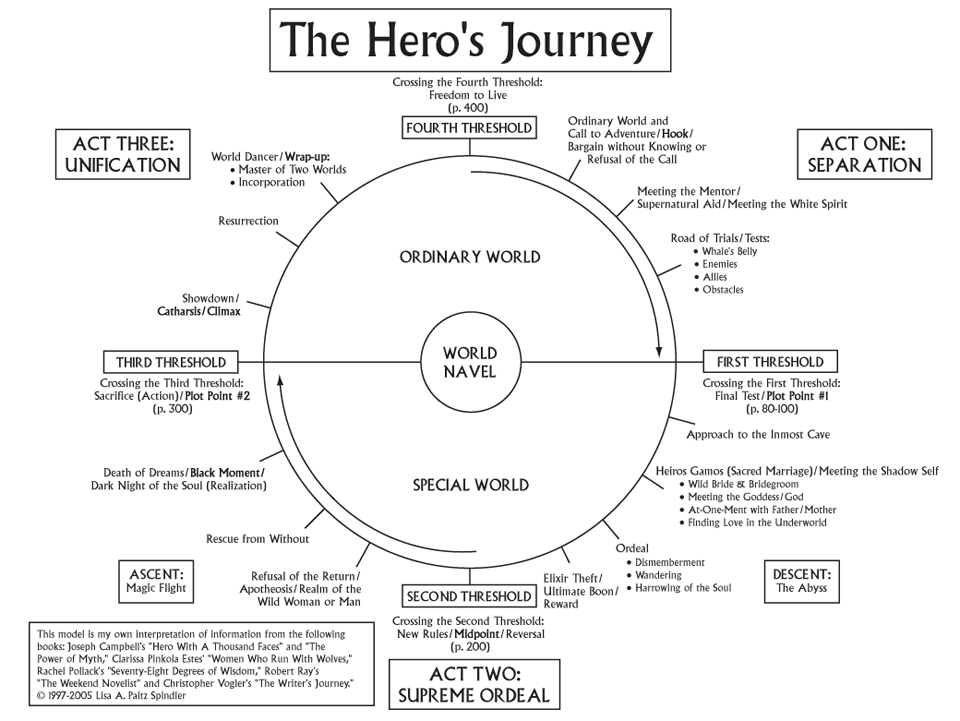
The portal fiction I love most plays with the hero’s journey. It is, at its core, about characters traveling into the unknown and experiencing growth through trials and tribulations. It’s the same pattern that so much adventure fiction I love adheres to.

The hero’s journey puts a big emphasis on coming home to confront the ways one has grown (in the image above, the Act Three segment saying “Master of Two Worlds” & “Incorporation”). But it’s confronting that growth which is the important part; what home you’re coming home to doesn’t particularly matter, as long as the recognition, confrontation, and resolution with past-self happens. The hero could literally return to their home world, or recognize any space within their new world as sufficiently home-like to be their new home—as long as they have that final confrontation and resolution.

And that’s the thought I had when everything clicked.

Continue reading

City of Bones by Martha Wells, and the evolution of character archetypes

I am such a sucker for this art style.

It’s odd, reflecting on the ways in which an author I love has grown (and stayed the same) over the years.

I’m specifically thinking about Martha Wells. I recently read City of Bones, which was originally published in 1995. I’m in the middle of reviewing City of Bones, because it’s being rereleased this year in trade paperback by Tor. I’ll have my review of that up on GeeklyInc in the not-too-distant future.

City of Bones is intrigue, archaeology, lost civilizations and past apocalypses. It’s a thriller, a mystery, it’s got political machinations and murder… you know, the good stuff. What stood out to me though, was…

Continue reading

Ghosts, a tiny post

This is just a brief one, but…

I’ve been reading A Lesson in Vengeance, been part way through it for a while. The combination of that book, plus my own meditations, has left me musing on the nature of ghosts and how they work in stories. I don’t think I’m saying anything revolutionary when I say that, while ghosts are often said to have unfinished business, they can also be interpreted as the unfinished business of those they haunt.

Ghosts make a neat device for unwelcome and intrusive thoughts.

Continue reading

Worldbuilding: leave room for later

Leave yourself room for later. If there’s anything I’ve learned from doing lots of worldbuilding—for my own linear fiction and for the collaborative fiction of RPGs—it’s that trying to fill every last nook and cranny of a setting is a daunting task. And actually filling up everything is choking, stifling. Don’t fill up everything. It leaves no room for the future, and it leaves no room for anyone else.

Continue reading